
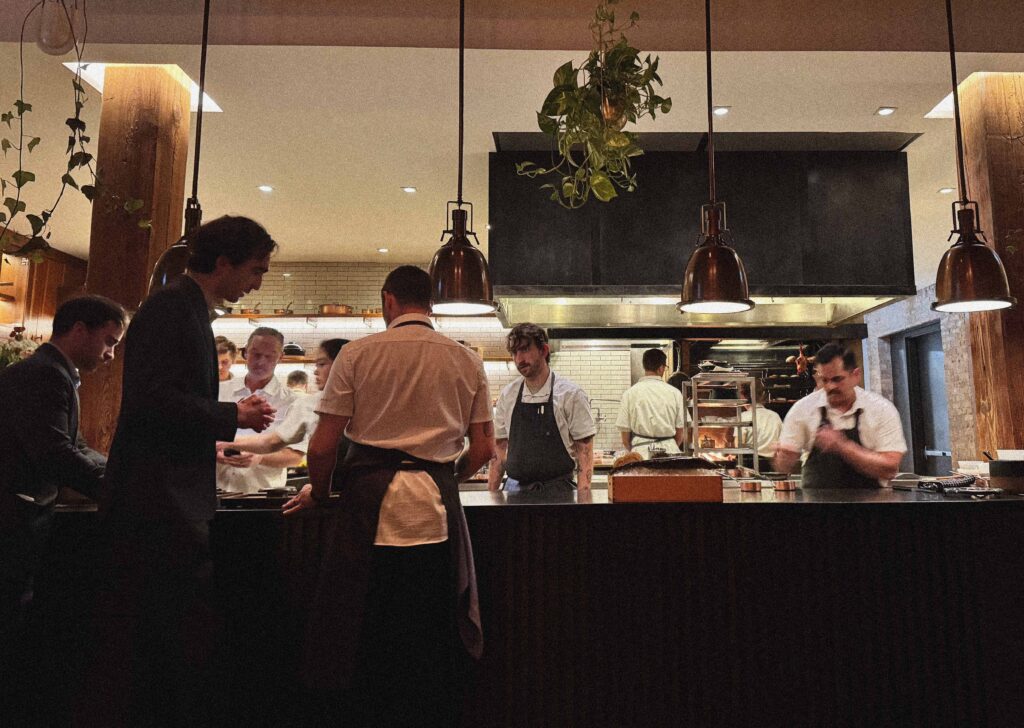
This feels like the meal I’ve been waiting for all year, and it’s something of an atypical one.
It’s been a full 26 days since my last visit: ample time for the kitchen to delve further into the fall bounty and indulge their creative impulses. Yet, tonight, I find a menu that is substantively the same as September’s.
Yes, there are a few new recipes on display—mere bites that only make up a meager proportion of the meal. But the evening is almost entirely constituted of familiar dishes with enduring titles whose capacity for further refinement (and downright transformation) is obscured by their consistent naming conventions.
Sometimes (as you will also see) simply playing with the established order of courses can unlock their hidden potential, revealing a depth of pleasure one only really needed to be properly primed to sense.
It may also be worth mentioning that I’m here on a Thursday (as opposed to the usual Friday or Saturday), so the team might be more fresh and less stressed by the demands of a weekend audience. Though, at this level, do we really want to concede such a possibility?
I think it’s even more enlightening to consider that this is my first visit to the restaurant after the launch of its new pricing scheme: one that excised both the “Smyth Menu” ($420) and “Chef’s Menu” ($550) in favor of a singular “extended Chef’s Menu” that costs $510 on Tuesdays and Wednesdays and $570 through Saturday.
The reservation is now also entirely prepaid: a decision that might help to allay sticker shock when the bill is presented and sidestep any controversy that bringing back a 20% “service charge” (in its previous incarnation, the subject of complaints from customers who felt pressured to tip on top of it) might entail.
The real genius of the maneuver is the fact that those sums—$510 and $570—are already inclusive of the service charge, which is outlined at checkout in such a way that you’re really only paying $425 to $475 for the menu itself (exclusive of tax). From this perspective, the increase is rather paltry for what amounts to a longer tasting.
Plus, for all we know, charging only a $100 deposit per person was leaving the concept exposed to too many reschedulings or last-minute cancellations that (even against stated policy) were convincing enough to avoid any penalty. This is not to even broach the topic of diners who, perhaps due to the concept’s international prestige and their home country’s own customs against tipping, were not providing staff with the kind of gratuity that was expected.
Speculation aside, the benefits of such a transition are obvious. The chefs’ and cooks’ efforts are now entirely trained on the execution of a solitary menu. They need not worry about those few parties who paid a premium for special fare, which breaks the wider rhythm of the dining room while also subjecting the resulting food to even higher expectations. All diners (barring dietary restrictions) are now equal. The kitchen, correspondingly, can achieve the highest degree of efficiency possible, which leaves more room to ensure every recipe has been executed to perfection.
Undoubtedly, on the consumer side, the barrier to entry has slightly (though only really at the level of perception) risen. But does anyone splurging on a “three-Michelin-star experience” at the “best restaurant in Chicago” (or North America) really want to feel like they missed out on a longer, better, more luxurious menu that—especially if they’re left feeling in any way disappointed by dinner—might have pleased them more?
Those used to the original “Chef’s Menu” will find that the value proposition has not really changed—they may actually be getting something of deal. In fact, I only count one fewer course than what I sampled last month (i.e., a medium-sized plate of lamb sweetbread).
Certainly, nobody coming to a place like this wants to miss out on a precious serving of meat. However, the improvements found throughout the rest of the meal more than make a case for the changes afoot.
Let us begin.
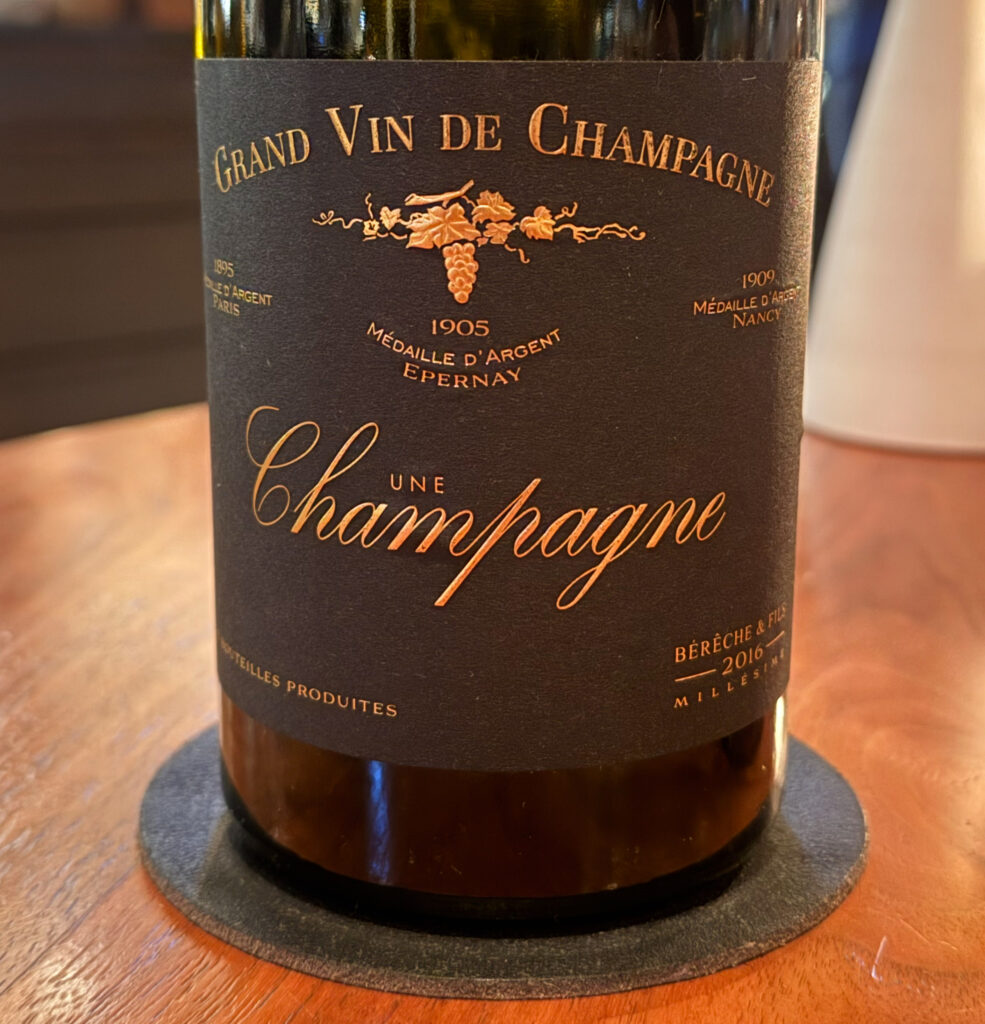
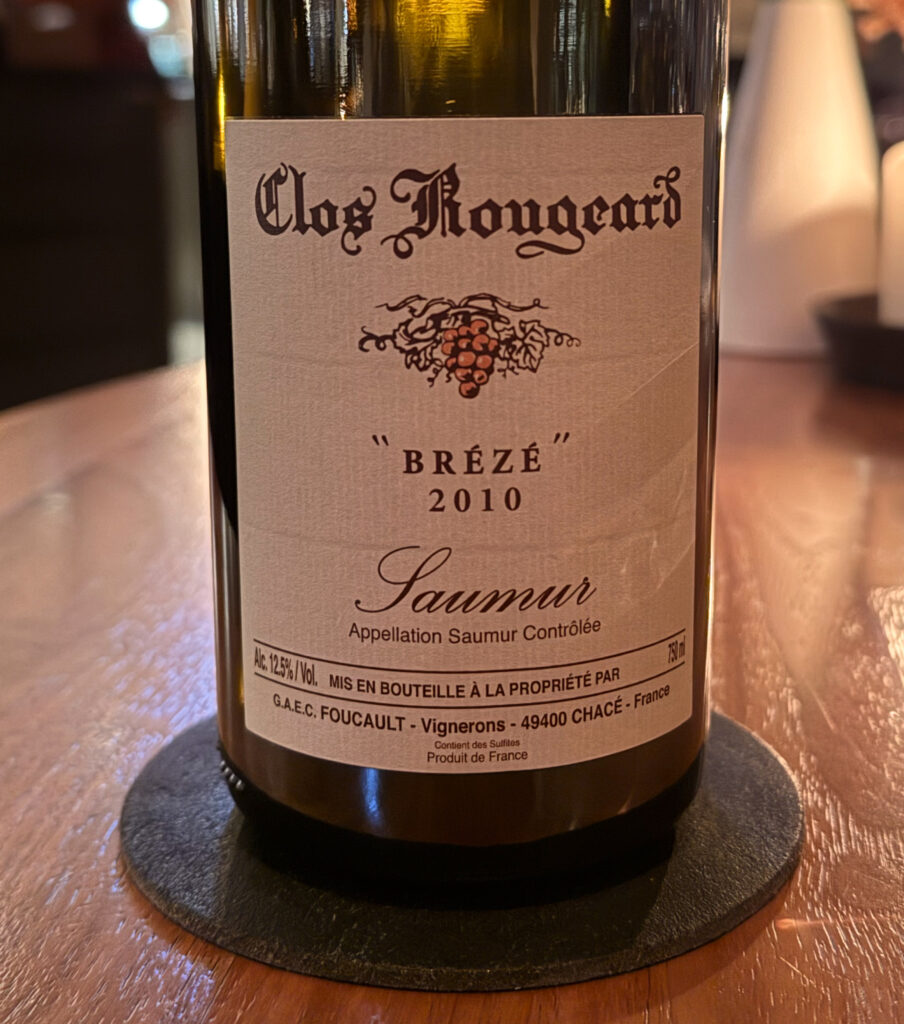
Alongside the rise in the cost of the tasting menu, Smyth’s “Reserve Pairing” has also seen its price grow by 20% (or, from $475 to $570).
On the surface, it’s an eye-popping extravagance that maintains parity with the meal itself (an alignment of expenditure on food and wine that is actually treated as a rule of thumb in some circles). Though, once again, this increase corresponds solely to the fact that the aforementioned service charge is being added up-front.
Now, the restaurant’s bottle list is arguably the best in Chicago, and—all the better—markups tend to land somewhere in the 50% to 75% range. There are myriad options in the $100 to $300 range that, when combined, would make for a full night of vinous delight.
Yet, anyone looking to really splurge will find that $475 gets you a bottle of Jérôme Prévost “Les Béguines” or Ulysse Collin “Les Maillons” while doubling that sum (say, for a party of two) doesn’t quite get you into the realm of Soldera ($1,035), Dujac Grand Cru ($1,265), or Rayas ($1,375).
Personally, I think you can still drink like a king at Smyth without climbing those particular heights. My point is only to provide a sense of the relative value suggested by the “Reserve Pairing,” and to affirm that Louis Fabbrini is the rare wine director who can be relied upon to utterly transcend the pricing structure of his bottle list when entrusted with such a sizable sum of money.
The lineup, at present, comprises:
- 2016 Bérêche et Fils Champagne “UNE” [$875 at local retail]
- 2024 Elias Muster “Coprivus” [$69 at national retail]
- 2022 Antica Terra “Aequorin” Chardonnay [$281 at national retail]
- 2024 Poetson “Late Harvest” Kerner [$29 at local retail]
- 2010 Clos Rougeard Saumur Blanc Brézé [$338 at national retail]
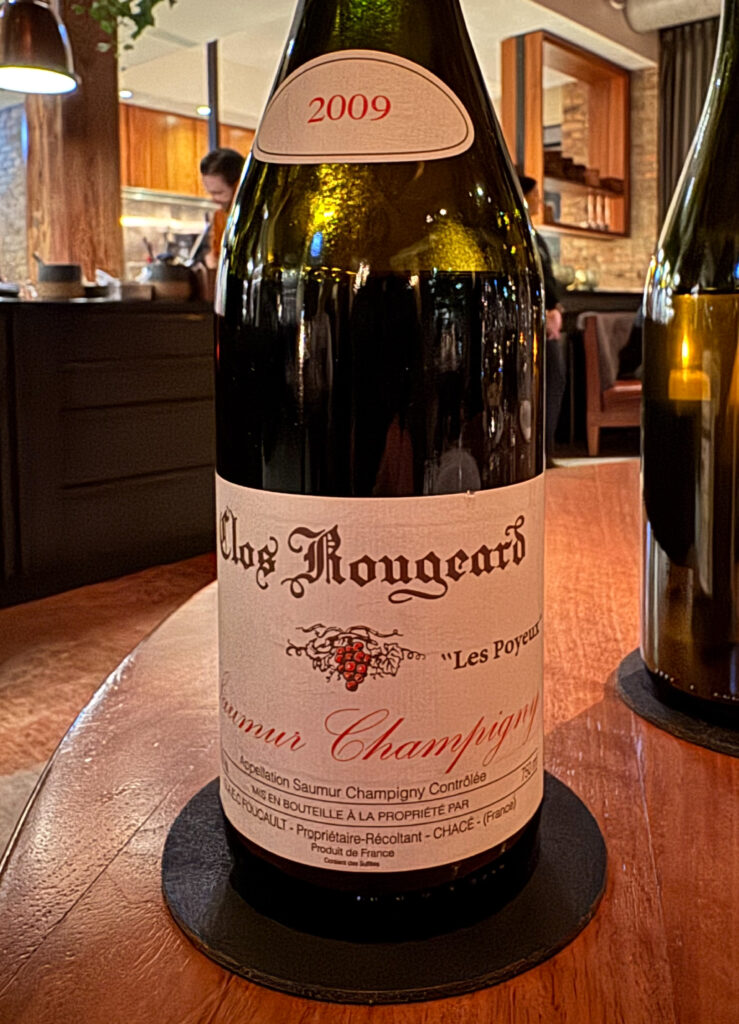
- 2009 Clos Rougeard Saumur-Champigny “Les Poyeux” [$789 at national retail]
- 2018 Clos Saron “Tickled Pink” [$65 direct to consumer]
- 2014 Bruno Giacosa Barolo Riserva “Falletto Vigna Le Rocche” [$400 at local retail]
- 2001 Domaine Leroy Gevrey-Chambertin “Les Combottes” [$4,400 at local retail]
- 2024 La Stoppa “Vino del Volta” [$50 at national retail]
- 1946 Bodegas Toro Albalá “Don PX Convento Selección” [$375 at national retail]
Structurally, I quite like how the present pairing diverges from what I found in October, when dueling bottles of Bizot and Arnoux-Lachaux made for a rousing finale to the savory portion of the meal.
No doubt, the big guns are here: that Domaine Leroy forming the latest in a series of bottles Fabbrini has presented from the mythical estate. Served alongside a dish of gently smoked wagyu, dehydrated beets, and a sour cream nage, this headlining Burgundy’s archetypal elegance shines.
Nonetheless, by spreading the rest of the budget around a little more, the sommelier shapes a few other moments of considerable emotion: a top, blended expression of Bérêche with the opening few bites; a study of Clos Rougeard in the Foucault era via Chenin Blanc (with scallop) and sandy-soiled Cabernet Franc (with abalone); a lifted Giacosa Riserva (used to accompany truffled quail); and a pour of eighty-year-old Pedro Ximenez that somehow matches—and further enhances—the incredible decadence of that stunning koji chocolate and caviar dessert.
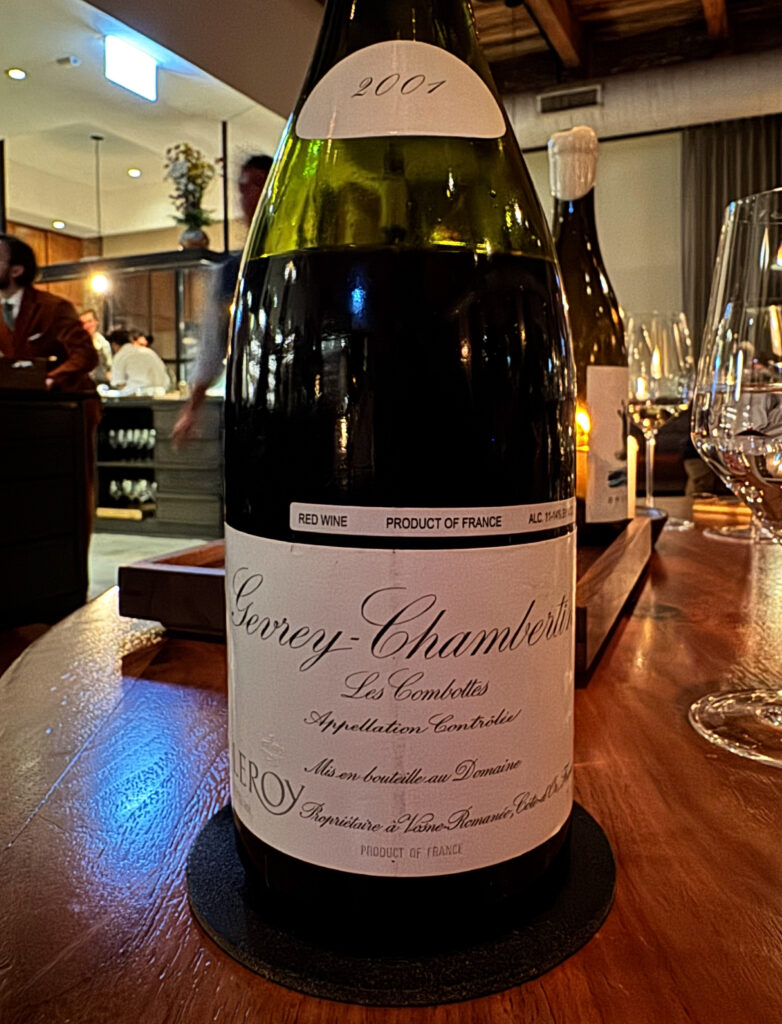
Simply put, at most restaurants you’d be lucky to find even one of these producers in your glass. And I’m not even including a rich, expressive Antica Terra Chardonnay that makes a preparation of Maine lobster feel even more luscious.
Counterbalancing all these highlights, we have what I tend to affectionately call the “weird stuff.” But, on this occasion, the “Coprivus” (a Styrian Sauvignon Blanc), Poetson (a sweet, oxidative Kerner from Michigan), “Tickled Pink” (a volcanic rosé of Syrah), and “Vino del Volta” (a honeyed sweet wine made from sun-dried grapes) are all easy to enjoy. Indeed, it’s their ability to offer character and soul at such a modest price that empowers Fabbrini’s selections on the other, more glamorous end of the spectrum.
Overall, this ranks as another superlative “Reserve Pairing” that surpasses pretty much any other offering I have encountered, at this price, around the world.
Certainly, it remains a special splurge for anyone who just wants to get their foot in the door here, yet it also speaks to how deeply the beverage team engages with their work. Yes, those who take the plunge will find a celebration of wine that is every bit as memorable as what the chefs do with the food.
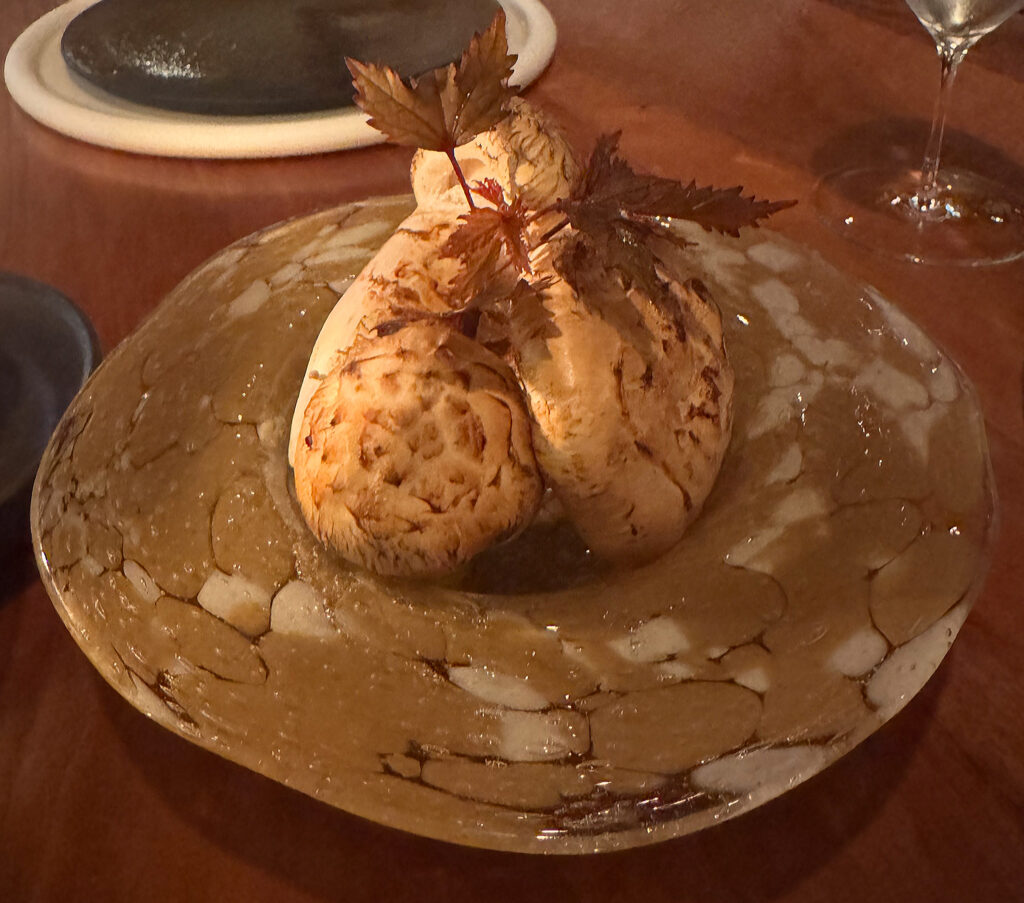
Turning now to the cuisine, we find an encore performance of the “Matsutake Tea” preparation that impressed me so much last month. This time around, the coveted are first presented (along with some artful leaves) in one of Smyth’s favorite bowls.
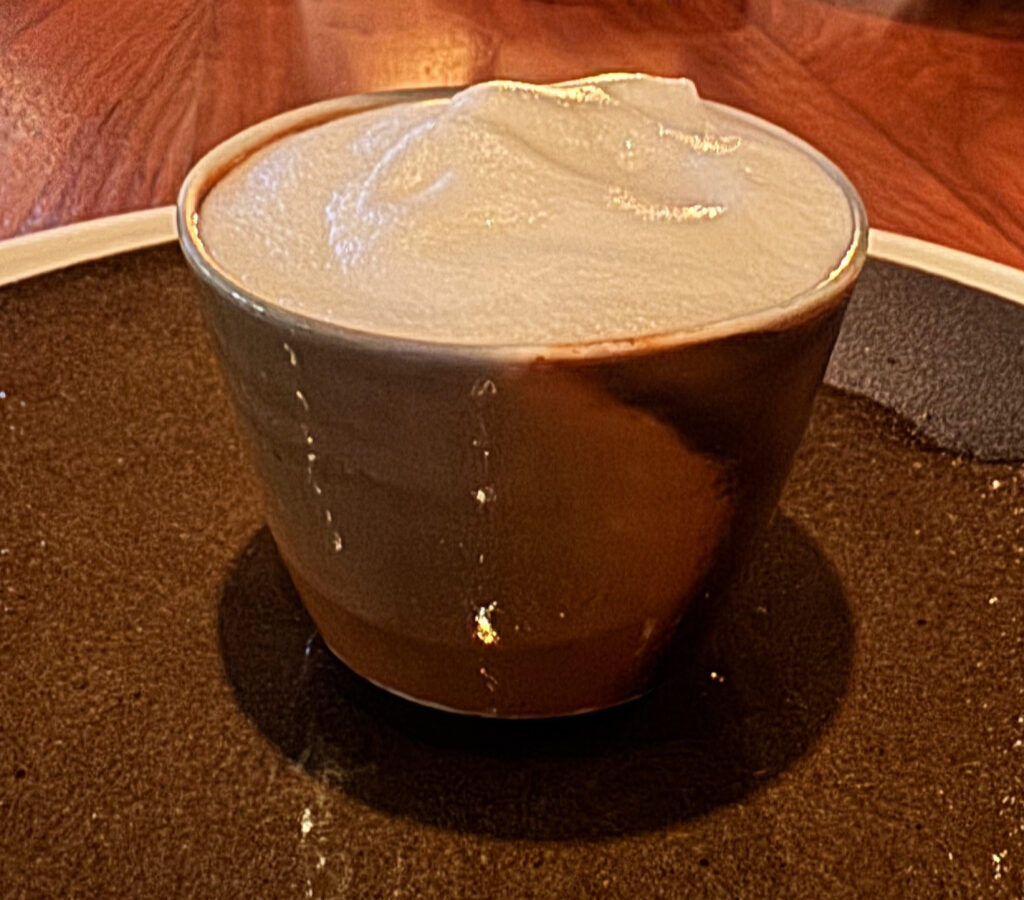
Then, on a separate tray, the captain proceeds to steep slices of the fungus in a miso-yeast consommé. While that happens, they also froth a dairy foam flavored with pine oil garum.
Once the brew is ready, it is strained and topped and served as a deceptively simple “matsulatte,” whose seamless blend of deep umami, subtle sweetness, and uplifting woodsiness is absolutely striking. Truly, this is a “welcome drink” like no other in Chicago, and it forms a memorable introduction to the Smyth house style.
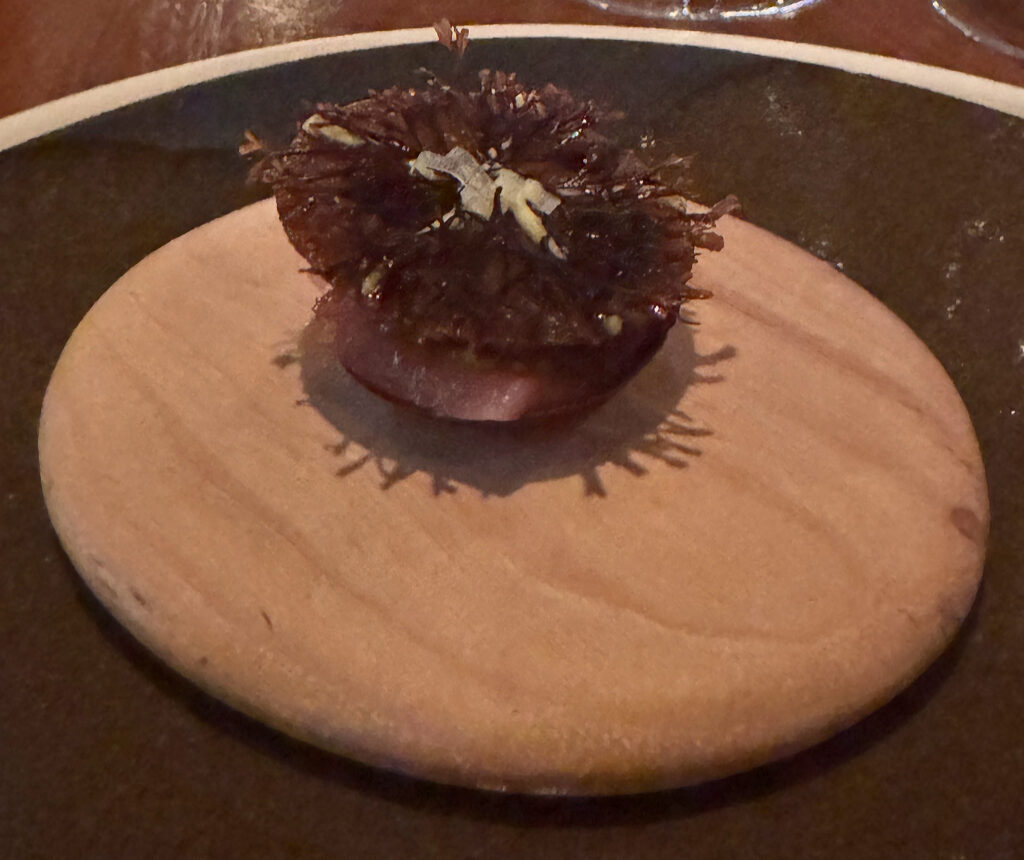
The first bite on offer tonight—and the first in an opening series of three—is titled “Bluefin Tuna Chu-Toro.” The recipe, which debuted last month, comprises a tart shell base (flavored with Sungold) that is filled with the titular medium-fatty belly, a spoon of caviar, and some citrus cream. A second layer of tart shell crowns the top, serving as a canvas for a tangle of dulse seaweed and (new to me) a few curls of Japanese ginger.
Texturally, the construction almost seems too complex for its own good. However, on the palate, the shell’s absolute delicacy ensures that any of the dulse or ginger’s crunch is smoothly subsumed into the cream and oozing fat of the filling. When that happens, waves of acidity, tomato sweetness, and salty brine come to the fore: unlocking the full depth of the tuna’s umami and steering this humble tart toward an outsized degree of satisfaction. Yes, as I’ve said before, this ranks among the kitchen’s best efforts in what has been a very long history with the form.
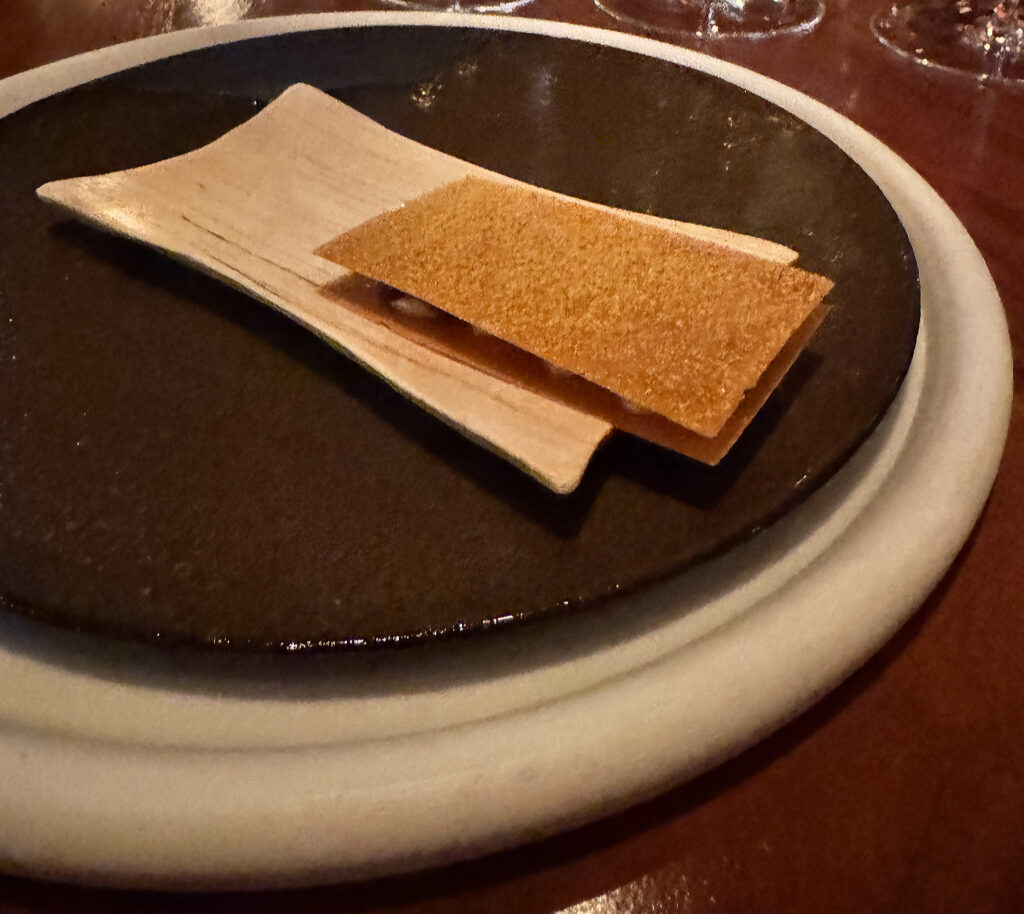
The “Quail Liver Pâté & Masa” that arrives next can be thought of as an impossibly slender wafer sandwich: one featuring (as in October) myriad expressions of corn. This includes the crackers themselves, an inner layer of butter, and a fermented powder dusted over the top. However, while the nature of the starring pâté remains the same, the dish’s present iteration sees hoja santa leaves substituted for Thai basil.
In practice, such a switch does not cause any dramatic change. If anything, by lacking the former herb’s sassafras notes, the latter helps to shape a sensation that is even more straightforwardly savory. Indeed, this gossamer presentation is matched by a superb saltiness and toastiness that enhances the offal’s intense meatiness. There are still tinges of tanginess and anise-kissed sweetness at hand, yet I like how they are integrated into a sharp, peppery attack. Overall, while the tuna tart felt hard to beat, this corn-infused morsel offers even more savory power and, for me, ranks just a hair ahead.
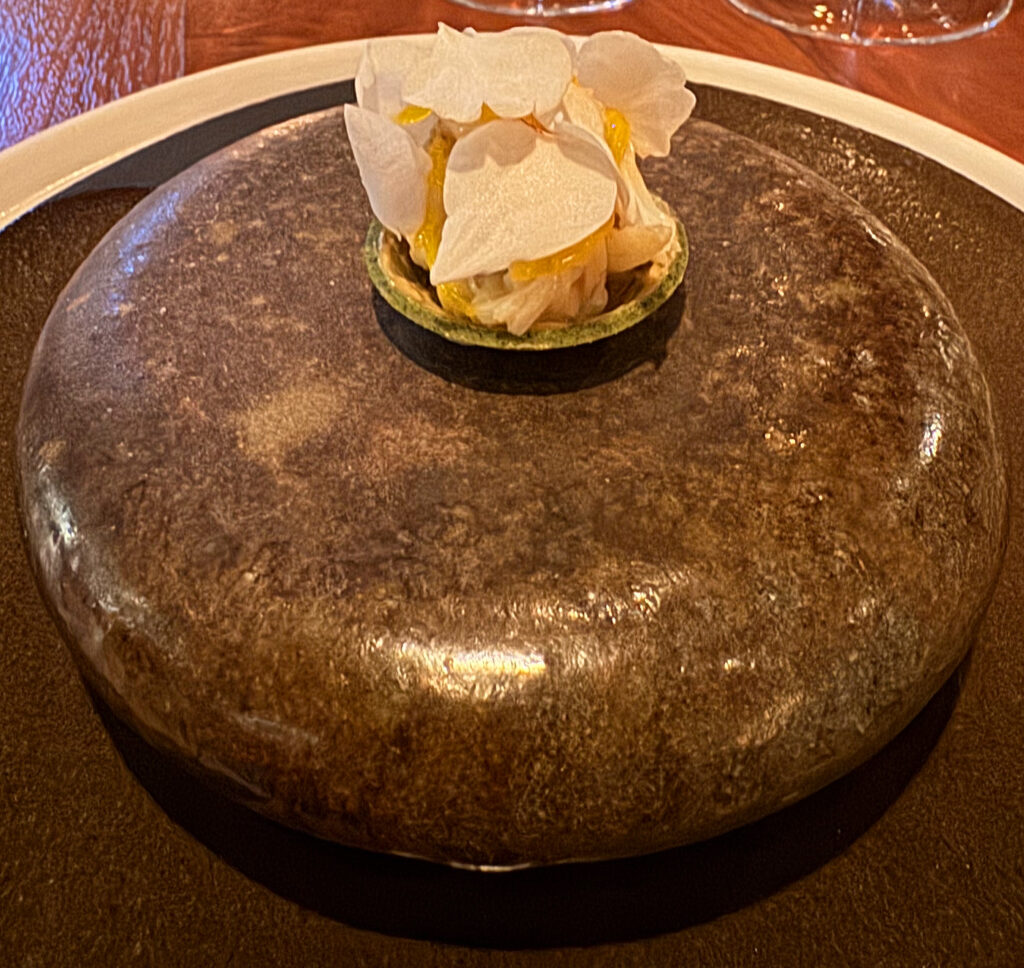
Closing out the sequence, we have the “Dungeness Crab & Sea Lettuce,” a preparation that (though by no means unpleasant) clearly ranked as the weakest of the three last time around. While, at first glance, the Lady of the Night petals signal that the construction has not really changed, the sea lettuce-infused tart shell now features crab butter and a scrambled egg cream alongside segments of the headlining crustacean.
On the palate, this creates a sensation that is clearly less drying than what I encountered before. Yes, instead I find crispness, juiciness, and a seamless, mouthcoating creaminess that carries through to a long, elegantly sweetened finish. Ultimately, this bite might lack the level of tongue-tingling umami I found so appealing in the previous two, but it excels in its own right as a soft, soothing expression of shellfish. A nice improvement.
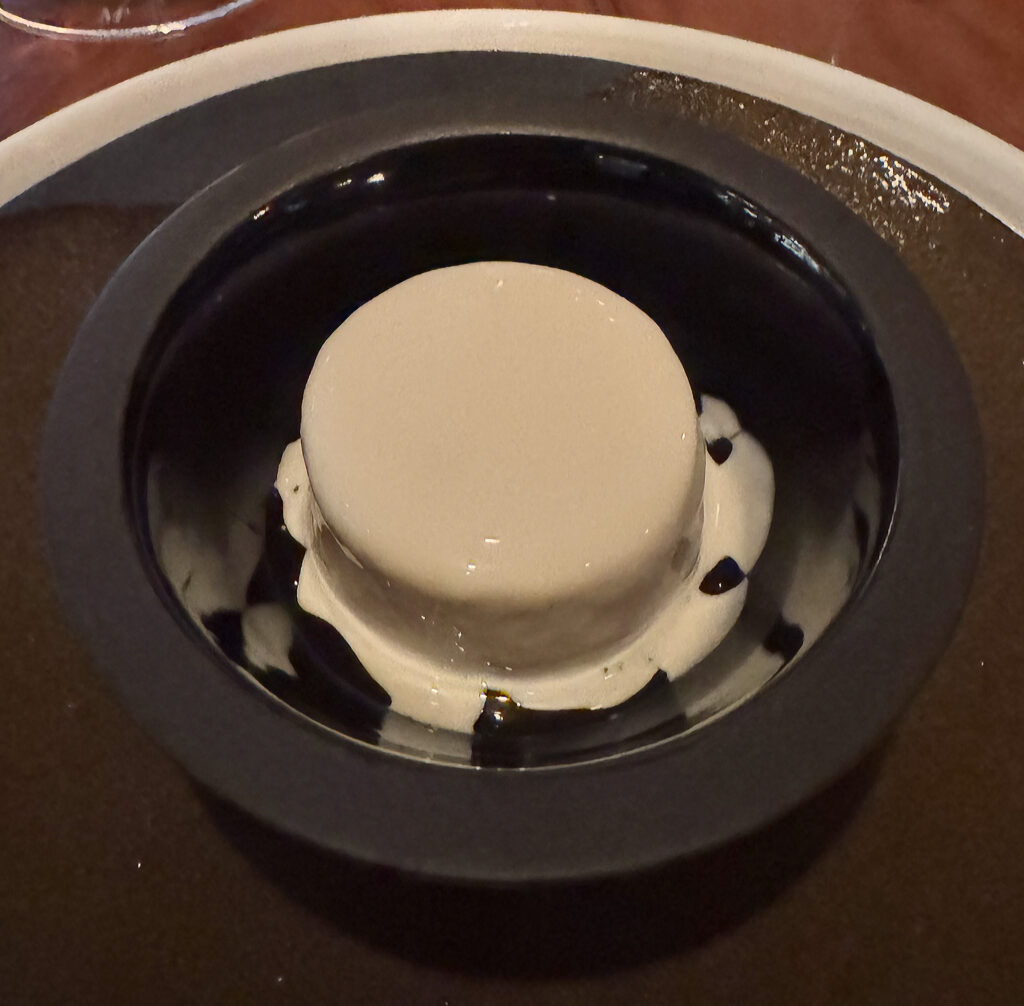
The “Tofu & Caviar” has formed one of the best testaments to Shields’s imagination as of late, with the course being principally composed of Janie’s Mill soybeans that have been whipped into a meringue then shaped into a central puck. Nonetheless, for my taste, the ingenuity of the “tofu” conceit has not wholly been matched by accompanying flavor.
On this occasion, the supporting N25 Kaluga is smartly transferred from the side of the bowl to the very base. There, it is joined by a preserved Sungold jelly that—almost as if answering my critique—charges the meringue’s mouthfilling fluffiness with more than enough tang and sweetness to avoid tasting bland. The caviar, for what it’s worth, doesn’t strike me with enough salt or nutty caramelization to really shine. Yet this evolution of the recipe is a clear step in the right direction, and I’m eager to see how the tofu will continue to develop over time.
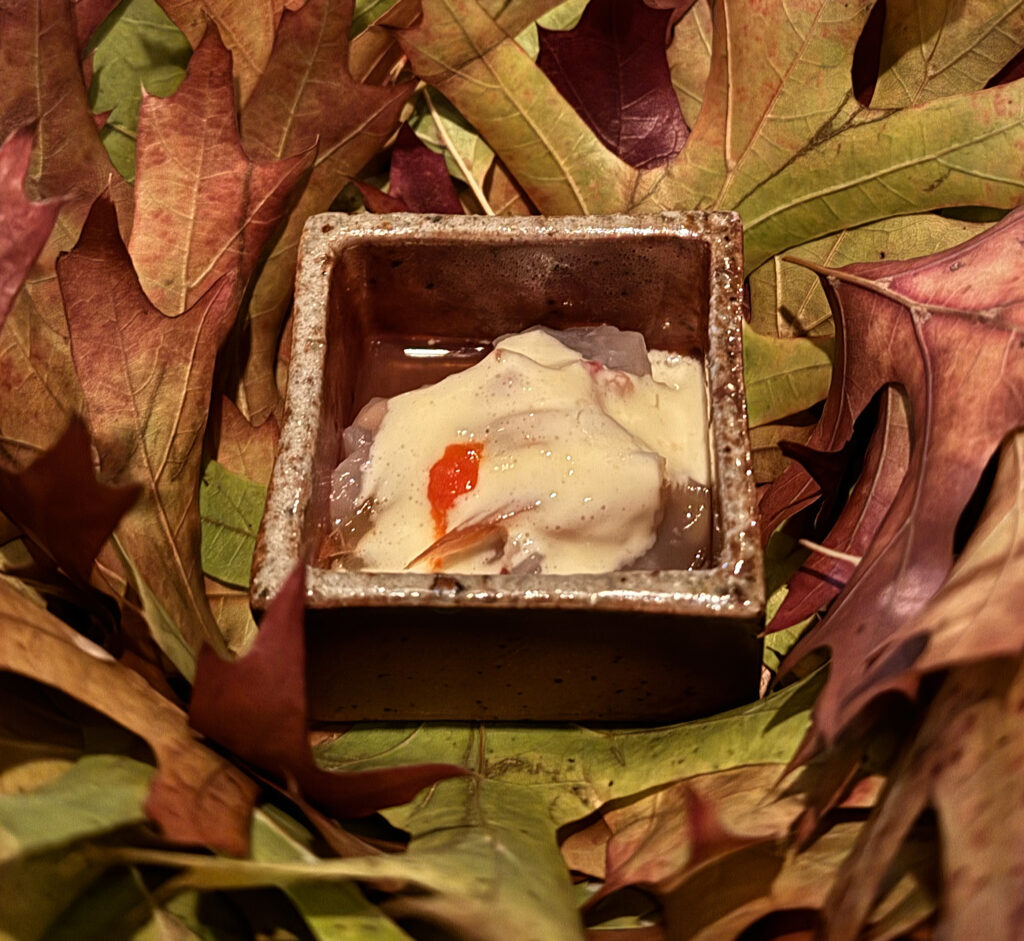
When the “Maine Lobster & Lemon Verbena” arrives at the table, one gets the impression that the restaurant is serving them some kind of sneaky edible leaf. However, underneath the fall tableau, diners find a familiar ramekin (home to innumerable shellfish custards over the years) filled in a whole new way.
Chunks of the starring lobster come dressed with a wild rice amazake and an oil made from the titular herb, yielding spoonfuls of beautifully plump meat with sweet, oceanic depth and a striking nutty-earth finish. This all makes for a simple construction (by Smyth standards) but one that is also utterly delicious. It ranks as a perfect, uniquely approachable distillation of the house style I would love to sample again.
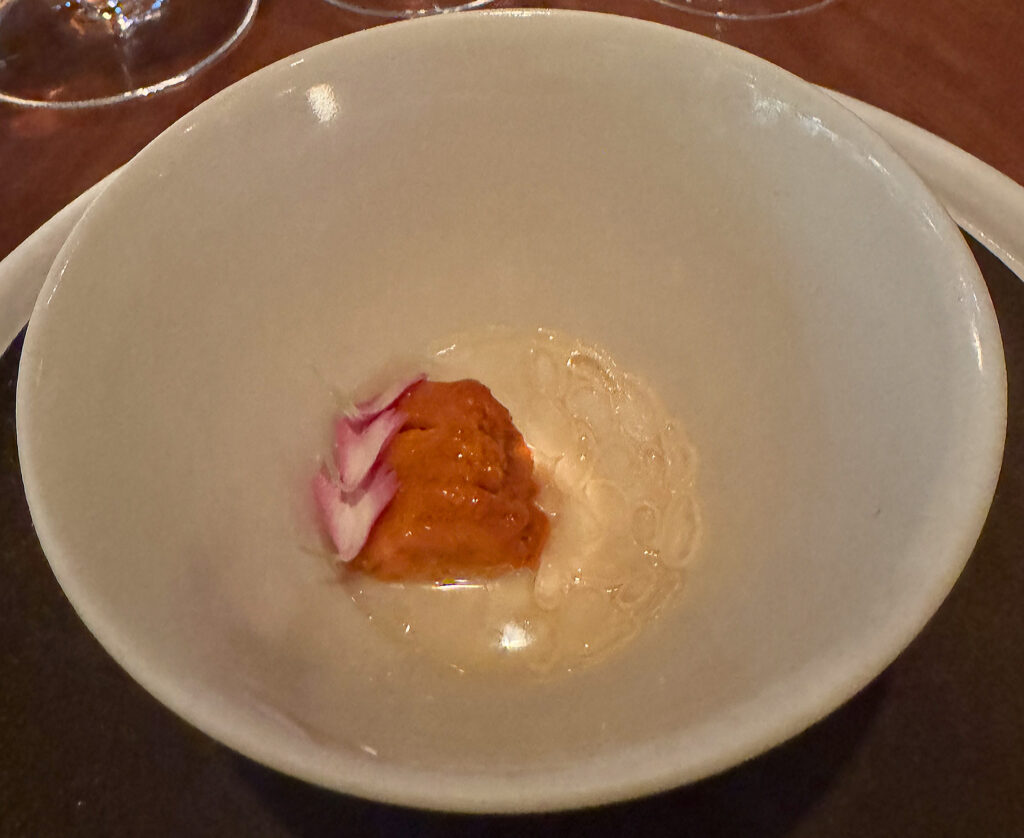
The “Maine Uni & Cashew” can be thought of as a slight variation of a preparation that formerly featured lobster. Indeed, the base of the composition (a panna cotta made from the titular nut in combination with Japanese ginger) remains the same, as do toppings of preserved green almond, dianthus flower, and amazake. Nonetheless, the jackfruit element has now been excised (no doubt to avoid detracting from the sea urchin’s delicacy), and a drizzle of horseradish oil has been added to the mix instead.
This shapes a textural effect that is less about meatiness (so amply provided by the preceding ramekin) and more about harmonizing layers of milkiness and meltiness only broken by the subtle crispness of the occasional flower petal. I worry if there will be enough accompanying flavor to bring the dish home, but—even if the horseradish falls short of any noticeable spice—a persistent (if mild) sweetness takes hold. It then broadens: incorporating bright notes of ginger and buttery cashew before ending with a haunting, oceanic quality that honors the uni’s essential character. Without a doubt, this version of the recipe is every bit as good as its predecessor.
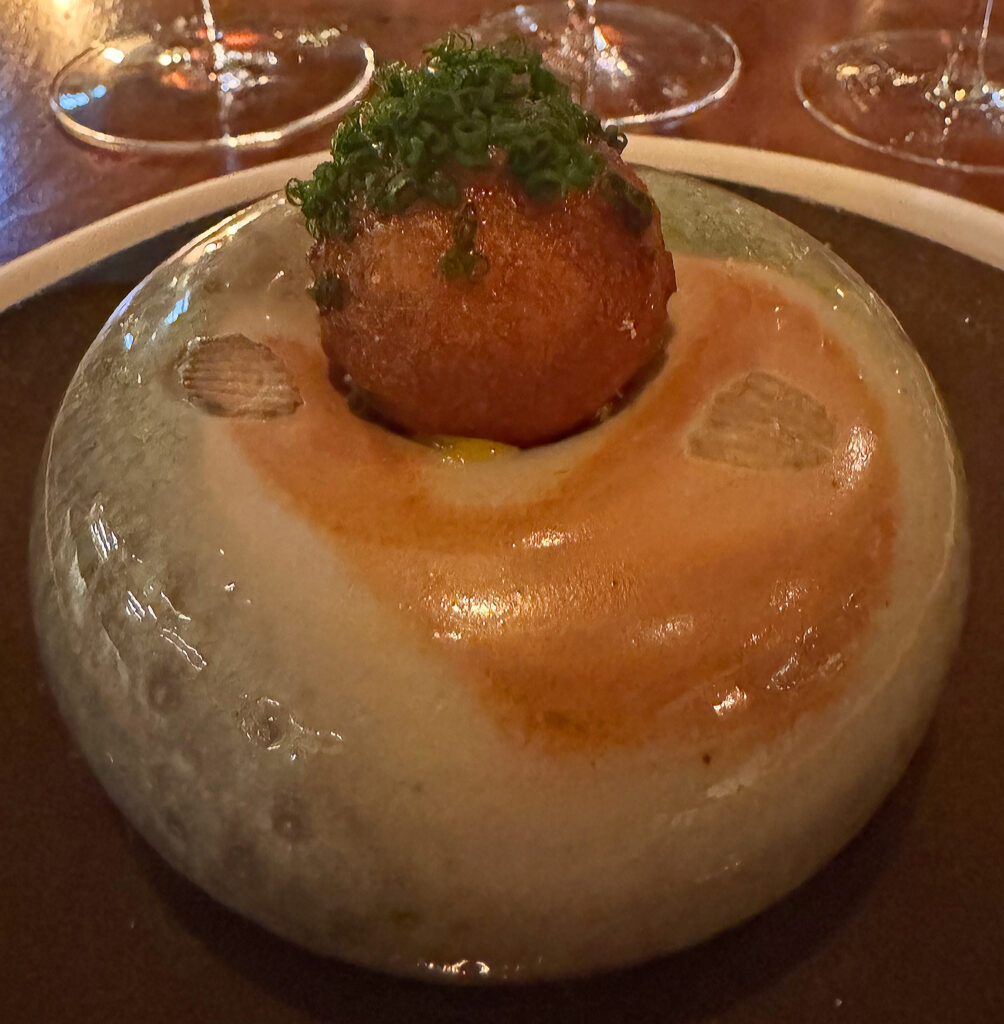
The arrival of the “Smoked Trout Donut” signals the start of a sequence that has proven to be one of the restaurant’s most enduring throughout 2026: a celebration of the spring-raised fish cultivated by Virginia’s Smoke in Chimneys hatchery.
For the opening bite, the kitchen tucks a filling of trout belly and pastry cream into the heart of the donut before (as in October and September) topping it with a bottarga made from the fish’s roe. However, the present iteration now benefits from a drizzle of “trout honey” and plenty of chives: shifting the dish’s expression from barely sweet (and deeply savory) to freshly, richly sweet with just enough underlying umami to avoid feeling confected. Yes, for my palate, the use of allium here is a triumph, and it makes for one of the finest examples of the signature donut I have tasted in many months (if not years).
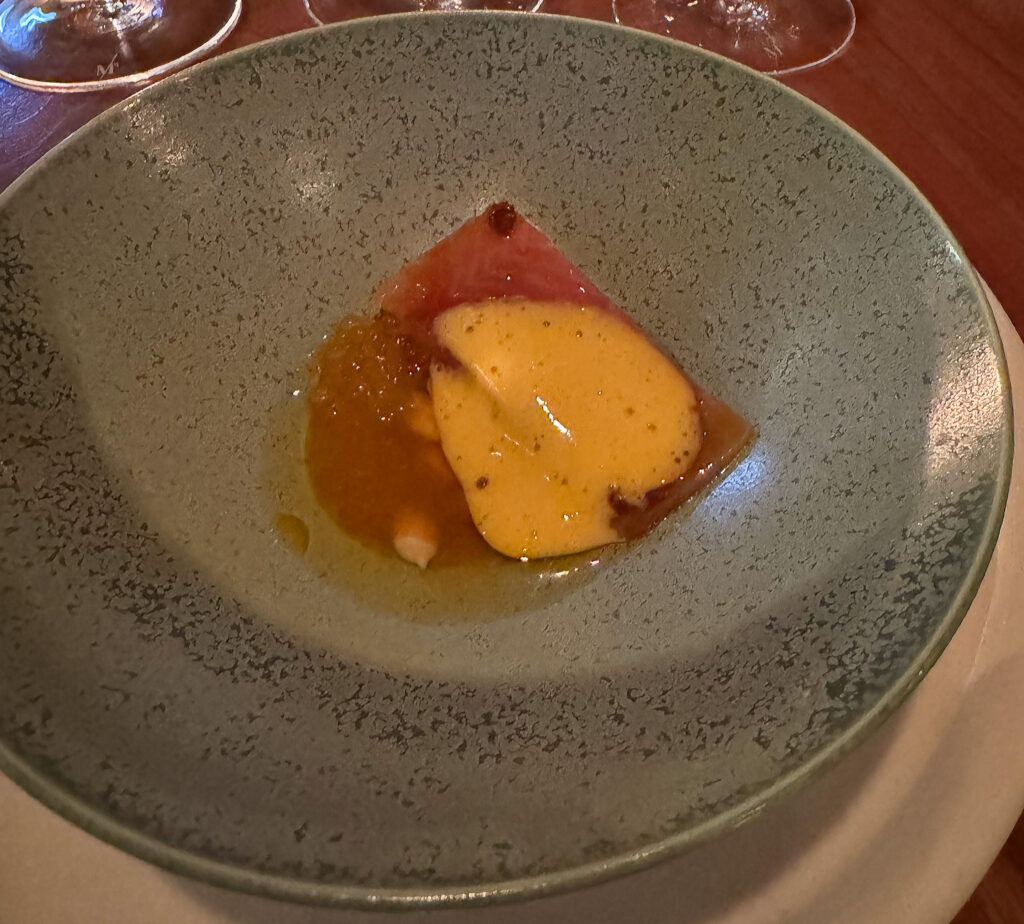
The “Rainbow Trout & Red Kuri Squash Ponzu” sees a brined, brown butter-poached piece of the fish’s loin come dressed in the titular sauce and (as it was in October) paired with bits of pumpkin seed, fresh roe, and a mussel-saffron mousseline for good measure.
The trout itself, now extricated from the donut, displays a smooth, luscious consistency that immediately affirms why the kitchen has granted it such pride of place. (Opposite the flesh—and all those slick sauces—the buttery seeds form a nice counterpoint too.) Flavor here centers on the sweet, nutty nature of the squash yet also sees it electrified by plenty of citrus. There’s umami and brine and a bit of butteriness to speak of as well. Compared to last time, I am left feeling this course is now a little more “intriguing” and a little less exuberantly decadent. Still, it lands squarely on the side of enjoyment, and this is ultimately a fish/sauce combination well worth pursuing further.
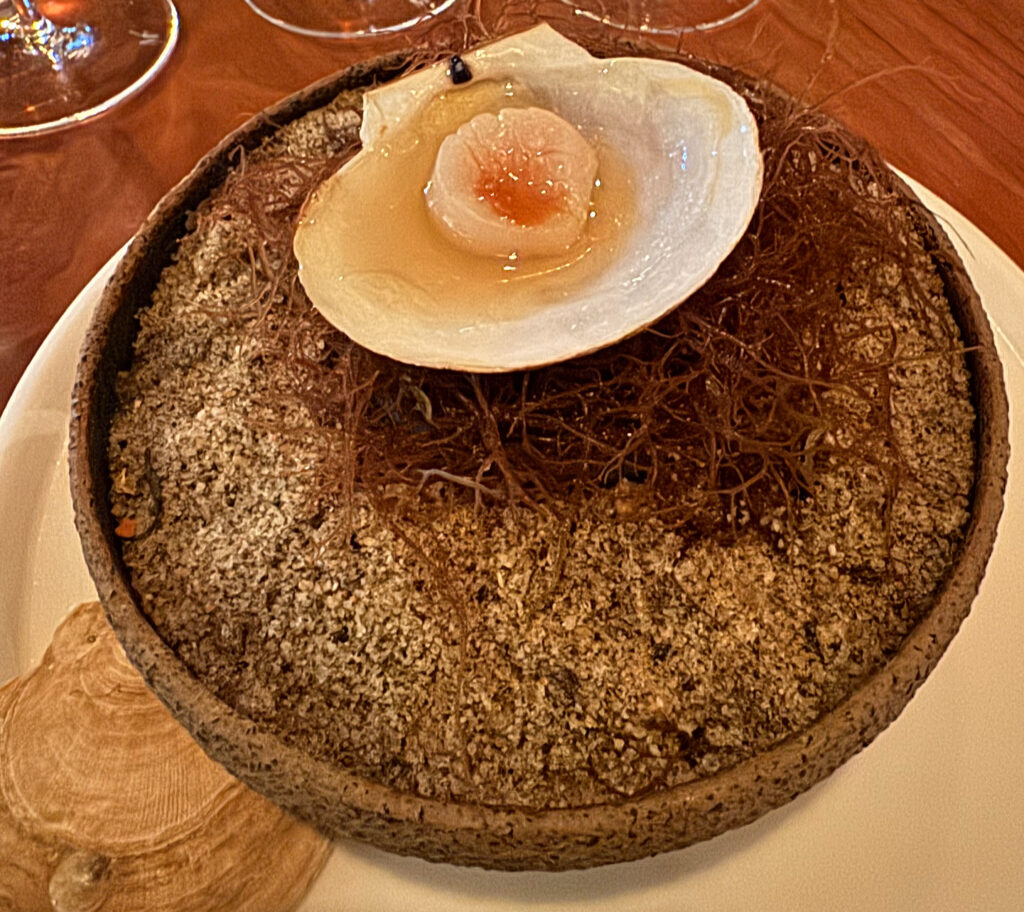
Arriving next, the “Penobscot Bay Scallop” actually left me feeling a tad underwhelmed when it made its debut in October. Indeed, while I enjoyed prying open the mollusk’s shell to see what was inside, a lobe of funky, torched sea urchin caused the preparation to be blemished by notes of funkiness and bitterness.
Tonight, there’s no trace of the uni—only the same dressing drawn from muscadine and a touch of tomato honey. Nonetheless, while I find the tenderness and meatiness of the scallop to be appealing, the accompanying sweet-savory flavor falls short of being memorable. I don’t really think it’s a question of balance either, for the grapiness manages to be pronounced without ever feeling sickly. Rather, I think this idea of shellfish plus musky, honeyed fruit simply needs more development: an endpoint that is more extreme and that measures up to the pleasure derived from the trout.
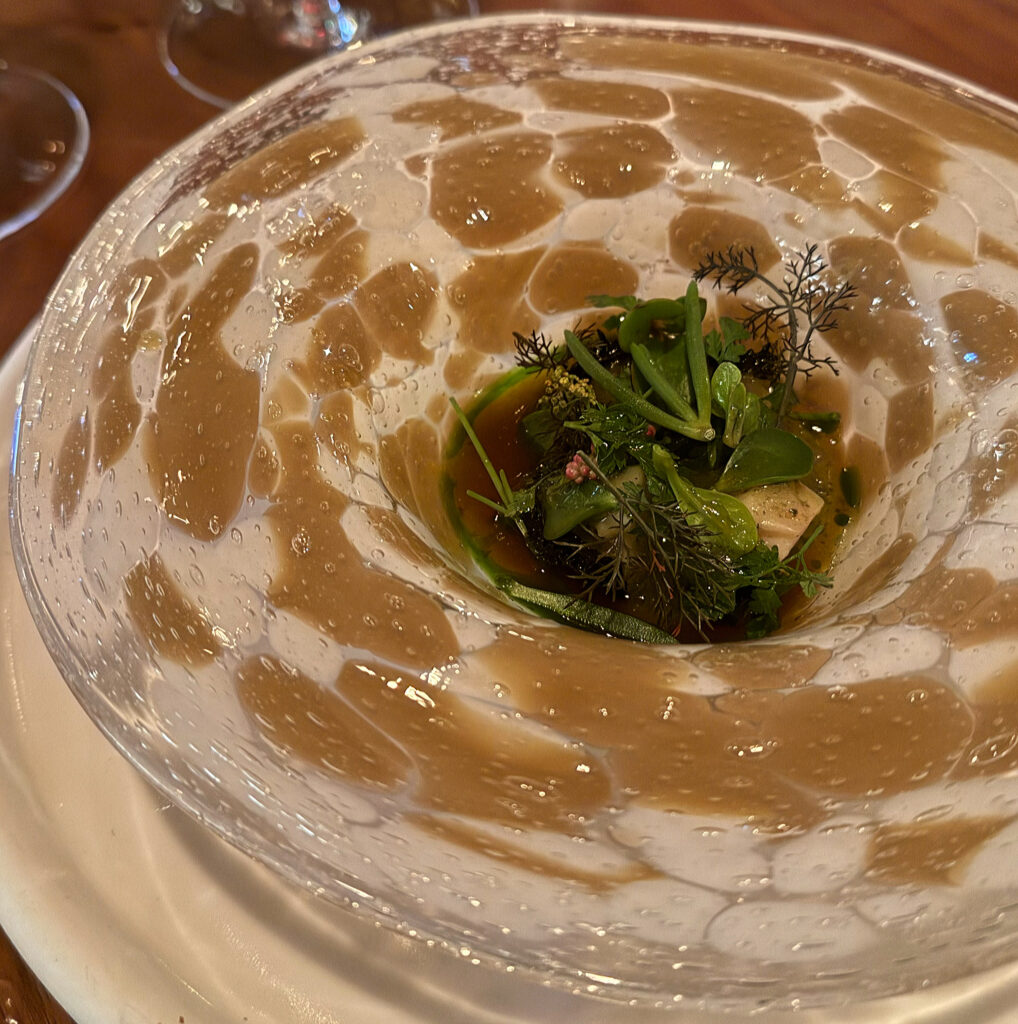
The “Abalone & Maitake” has ranked as both the very best (in October) and very worst (in September) recipe during my past two meals: a shaky reputation—certainly—but one that also speaks to the extremes of pleasure (sometimes veering toward disgust) Smyth chooses to aim for.
On this occasion, the dish retains much of the quality it displayed last month while seeing elements like a veal cream substituted for one made from chicken and some velvet horn swapped out for fermented nori. The beech mushrooms have been excised altogether, leaving behind a simpler juxtaposition of rich, tender mollusk, meaty maitake, and crisp herbs. Meanwhile, the accompanying sauce (made from the abalone’s scraps) establishes a powerful baseline of umami. This note is echoed—and brightened—by the notes of chicken only to take on shades of funk, earth, and a fresh, fleeting sweetness through the finish. Overall, this example does not reach the “best of the year” caliber of the previous iteration, yet it remains a successful take on the luxurious shellfish.
The first of two final savory courses tonight arrives in two parts: familiar offerings that frequently strike me as being among the weakest items the kitchen serves.
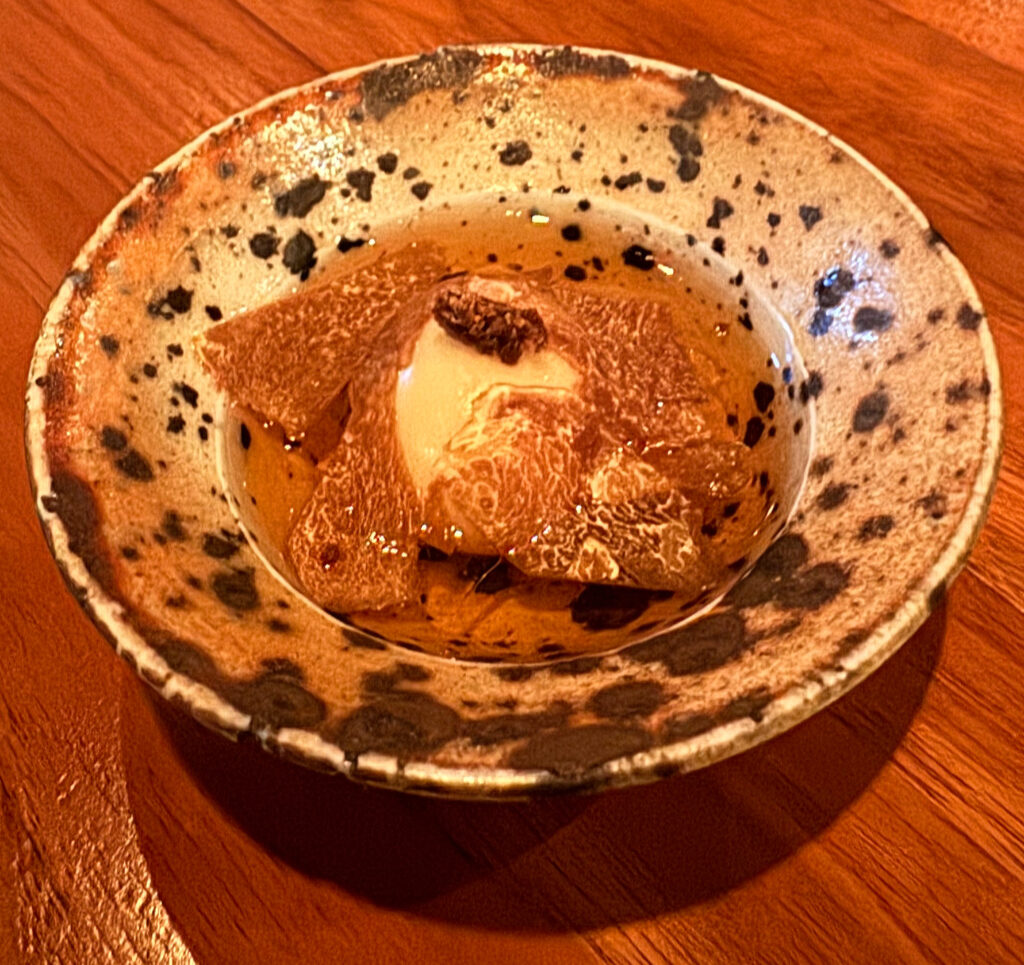
First, there’s the “Black Walnut Cured Quail Egg”—a proudly plump and gooey bite I’ve never been shy about saying can leave me feeling queasy. However, over the past few visits, someone (either me or the egg) has turned a corner.
I find the present composition, dressed with English walnut, fig leaf oil, and Umbrian truffle, to be straightforwardly savory and even salty on the finish. Never mind that, once again, the egg itself is actually stuck into the gelatin rather than being coated in it. Ultimately, the recipe goes down easy (offering hints of buttery, earthy intrigue), and I can even see myself going for another mouthful if it was offered.
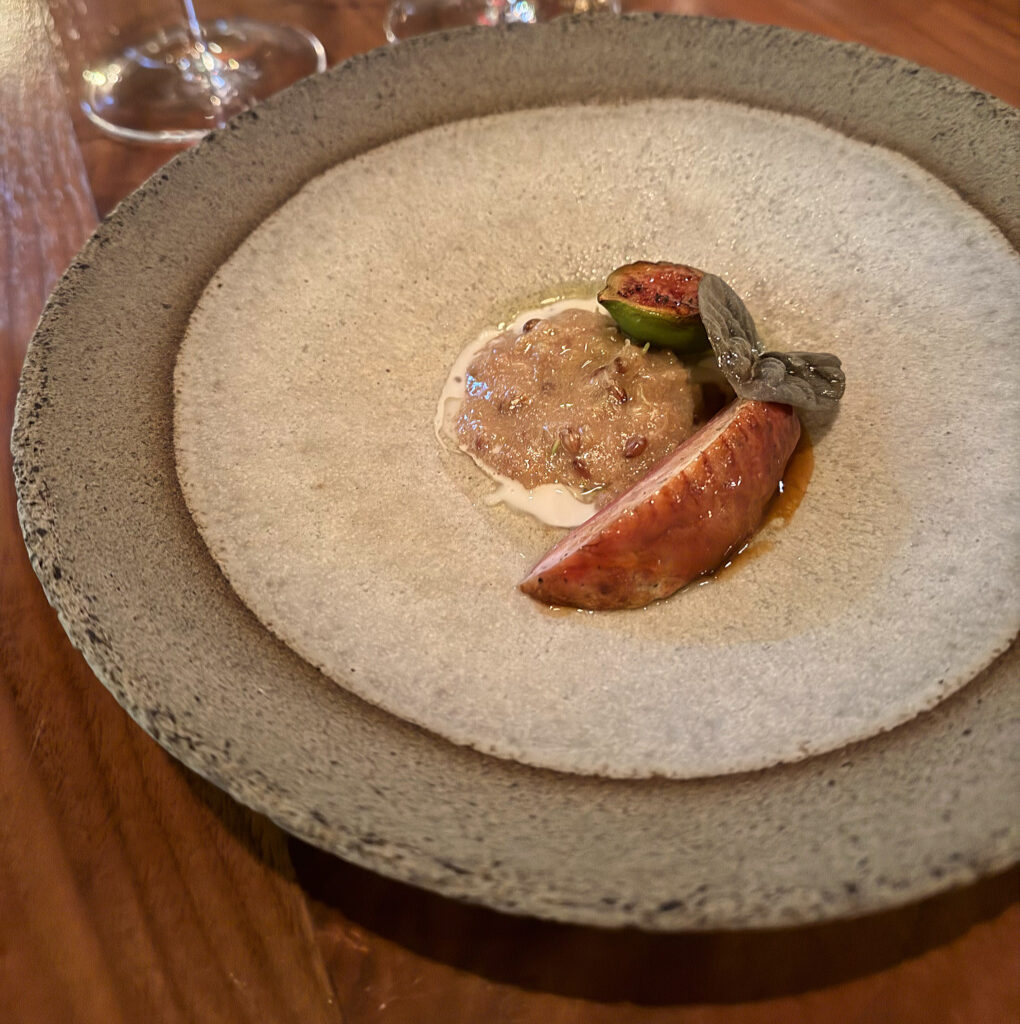
The main plate, titled “Vermont Quail & Sprouted Porridge,” has formed more of a disappointment given the fact that it is structured like an actual entrée. And, at this level, it’s heart to stomach a rare (in the context of a seafood-forward meal) cut of meat that turns out all sinewy all bland.
Technically, it was a preparation of squab that drew my ire last time. However, the current bird is dressed in very much the same way with the titular porridge (made from amaranth, buckwheat, and wheatgrass), some peanut milk, a shiso leaf, and a brûléed piece of fig all featuring.
The key here is the truffle farce tucked into the meat of the quail’s breast: a new added layer that ensures the flesh feels particularly plump and juicy. This component also builds a natural bridge to the earthy-sweet flavor of the porridge and the more exuberant (though well integrated) honeyed notes of the fruit. Yes, cohesiveness is the word that comes to mind—with hints of masa and creamy peanut ensuring this entrée delivers the kind of deep satisfaction befitting its place on the menu.
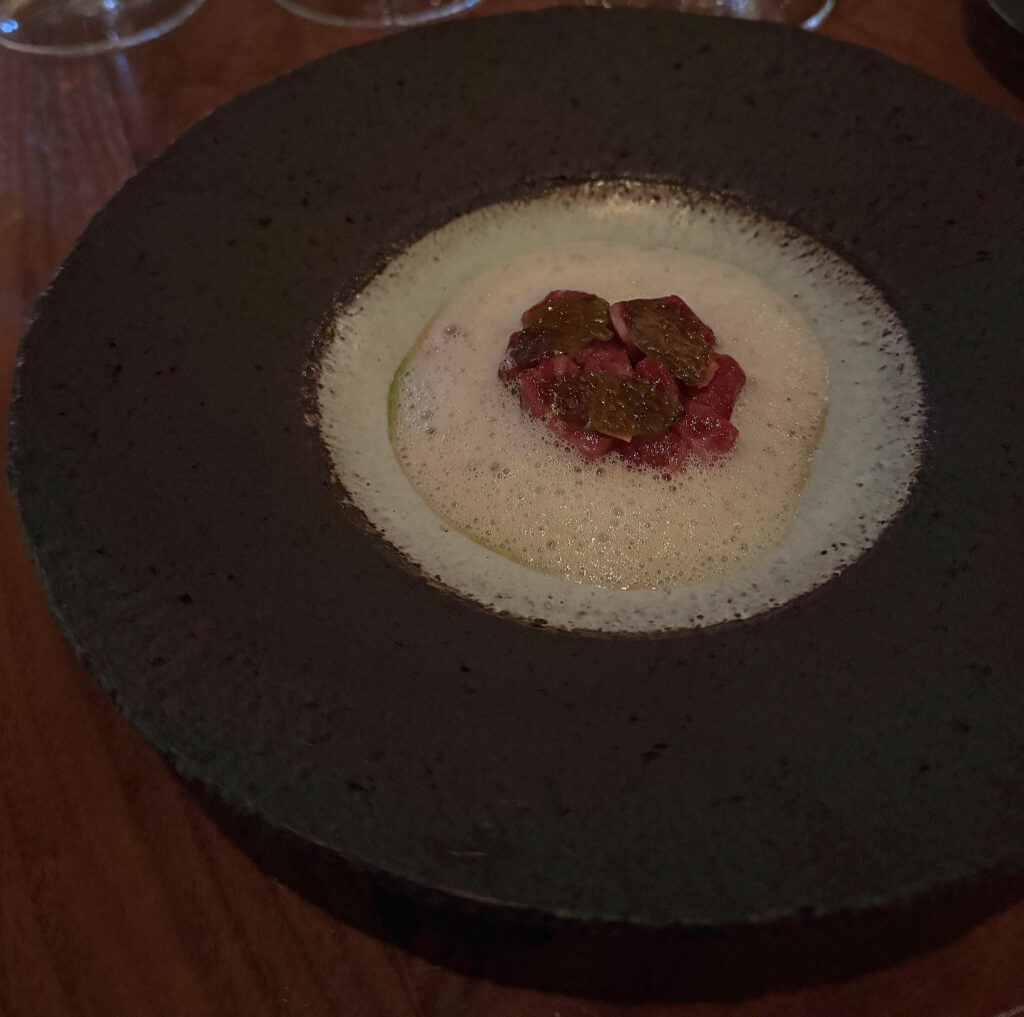
The final savory course of the evening has, interestingly enough, seen its place in the order change. I speak of the “Lone Mountain Wagyu & Sour Cream,” which as always formed a likable recipe but whose composition (i.e., a lightly smoked tartare in a pool of foam) has always lent itself to being served before an actual, cuttable portion of game.
This time around, the chunks of wagyu comprise more sizable, noticeable pile (rather than being obscured by the sour cream nage). Dehydrated beets have also been added to the mix for good measure: lending the softly tender beef a dimension of smoky-fruity sweetness and underlying earth that, once it joins with the froth’s subtle tang, tastes something like barbecue sauce. In other words, the recipe achieves a startling degree of nostalgia and decadence from only a few mere components. This ranks as one of the surprises of the night and the kind of dish that is more than capable of anchoring the savory fare.
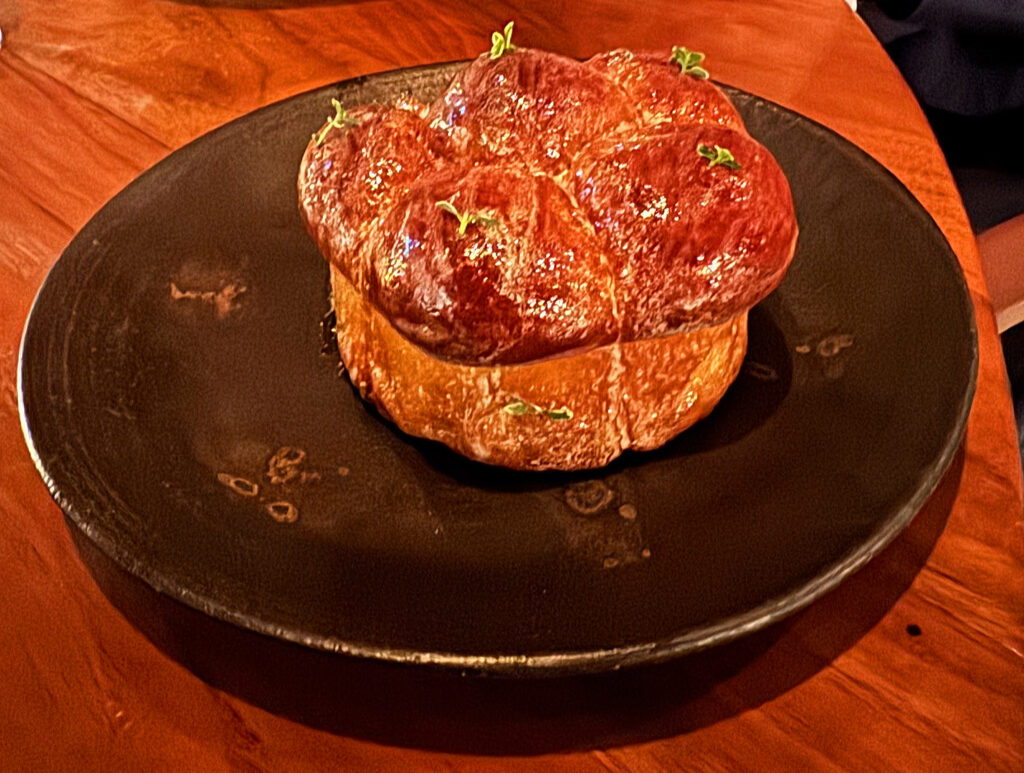
The “Malted Milk Bread” served alongside the wagyu continues a run of relatively unadorned presentations that I have quite liked. Yes, free from its usual sticky glaze, the buns (brushed with a black garlic butter) balance crispness, fluffiness, savory depth, and—yes—a trace of sweetness in a manner I find more adaptable and enjoyable so many years later.
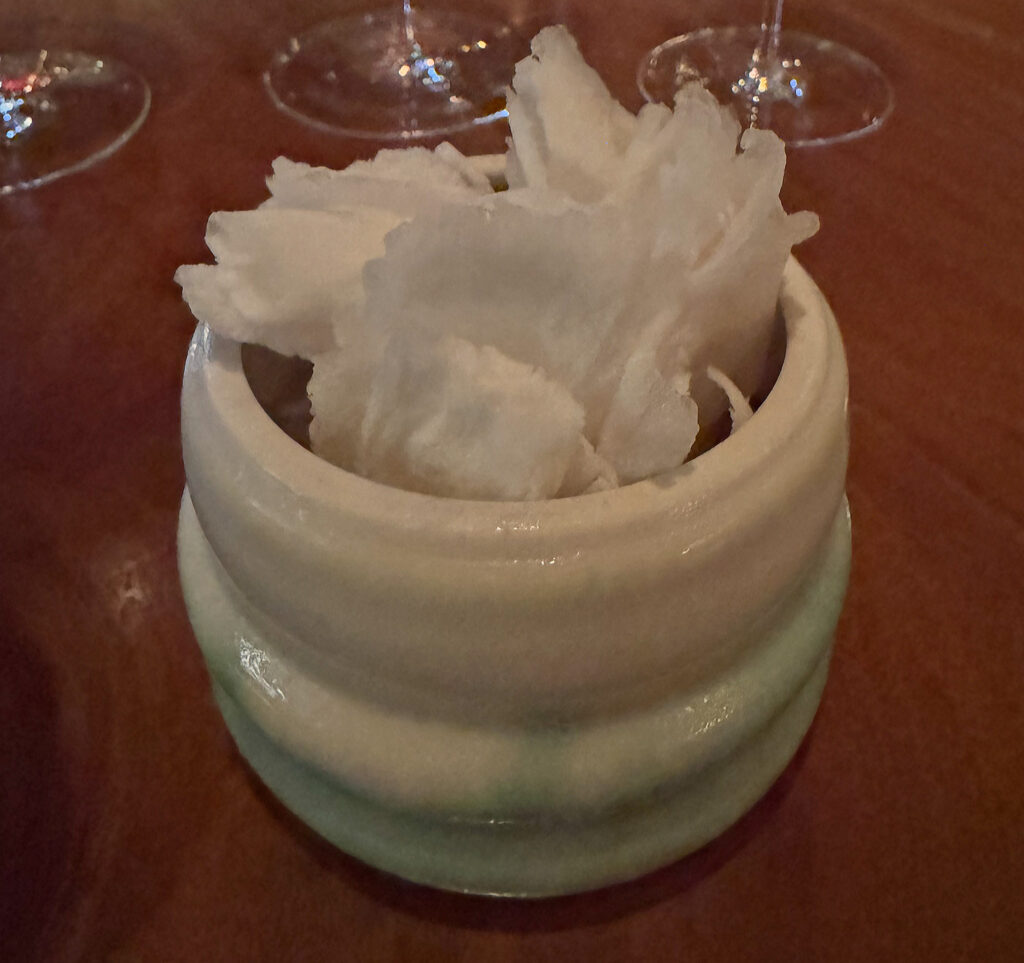
Turning toward dessert, we find a brand-new course titled “Jarrahdale Squash & Pumpkin Seed.” The preparation serves to replace an earlier palate cleanser that centered on various expressions of grape in combination with a wine jelly yet, in doing so, aims at the same kind of refreshment.
Layered with dehydrated melon, squash sorbet, squash vinaigrette, and shaved ice (which itself has been infused with pink lemon and yuzu) the bowl showcases a range of sticky, subtly crunchy, and gently melty textures. Nonetheless, what feels frivolous at first blush strikes with a unique intensity: bracing acidity, followed by musky sweetness, then a rich nuttiness, and even a tinge of salt on the finish. If I were to nitpick, the various elements do not cohere as smoothly as I expect (and that the previous palate cleanser fulfilled). But, on debut, this remains a delicious exploration of the starring squash.
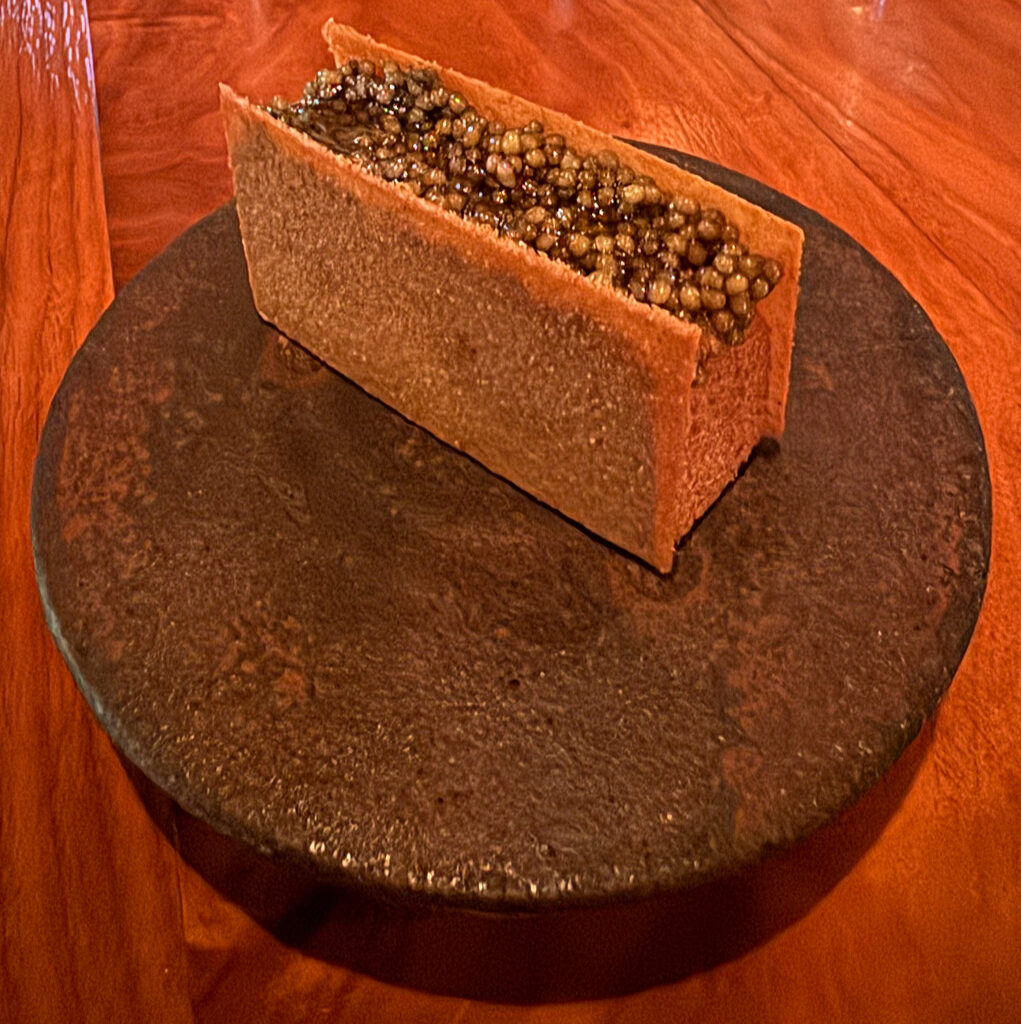
Following something new, the “Koji Chocolate Ice Cream Sandwich” offers something comparably old: a sandwich made from barley-koji chocolate tuiles wrapped around a barley-koji chocolate mousse then dressed with peanut oil and Osetra caviar.
This recipe really only debuted a few months ago, yet I think it might rank as the signature Smyth creation of 2026. On the palate, the bite’s series of crisp, slick, frozen, and melty sensations remains beautifully packaged, and the resulting flavor—bursting with Cocoa Puffs intensity while matching it with ample umami—is superlative. There’s a reason the kitchen has served this dish so many times with no real tweaks that I can think of. It represents a true, canonical representation of the house style that should be cherished.
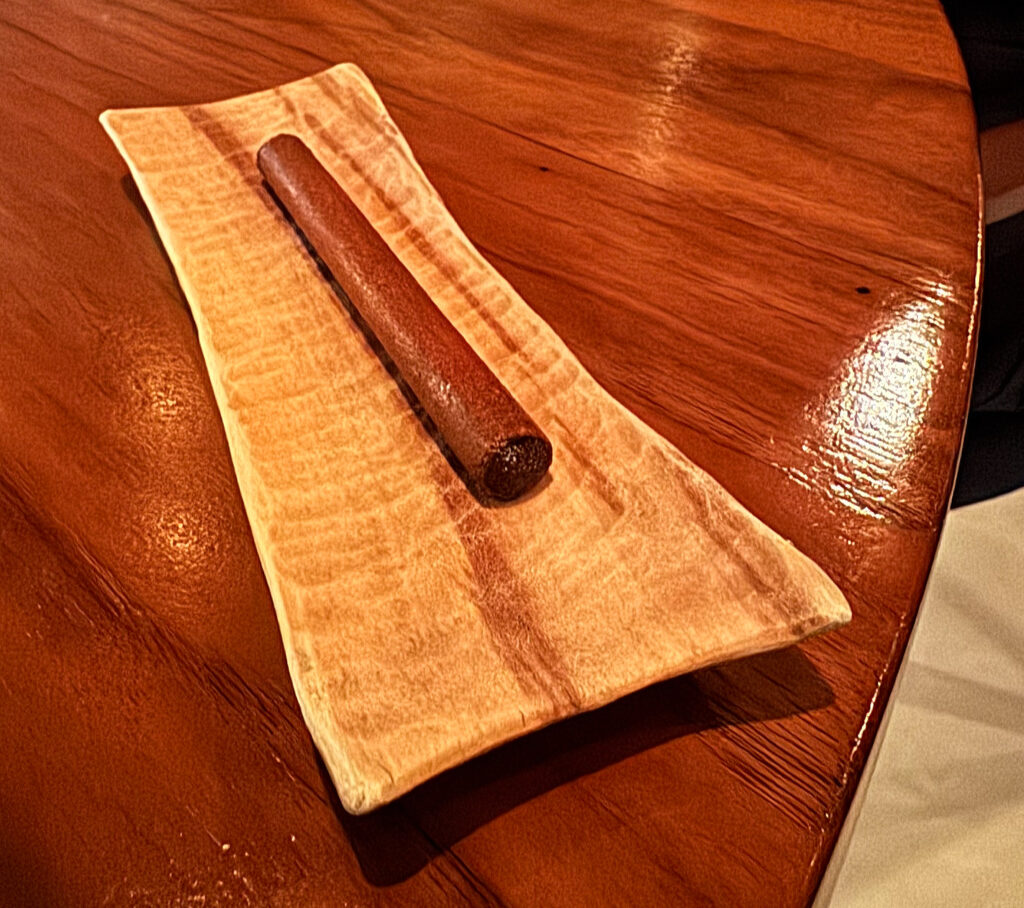
The penultimate course of the evening is titled “Potato Cannoli,” and the name brings me back to myriad savory constructions (frequently appearing at the very start of the meal) that characterized the team’s work from 2022 to 2024.
Here, the pastry is rendered as a potato tuile filled with potato caramel and a dab of whipped crème fraîche. Indeed, there’s no mistaking this delicate morsel as anything other than a sweet, but I really prize the absolute depth of caramelization displayed by the cannolo. It’s so roasted and toasted and then veers toward a tang finish that cuts the intensity, thus unlocking a breadth of sweetness. Overall, this small-but-mighty bite is well worth a permanent spot alongside the closing petit fours.
As in October, those final items include:
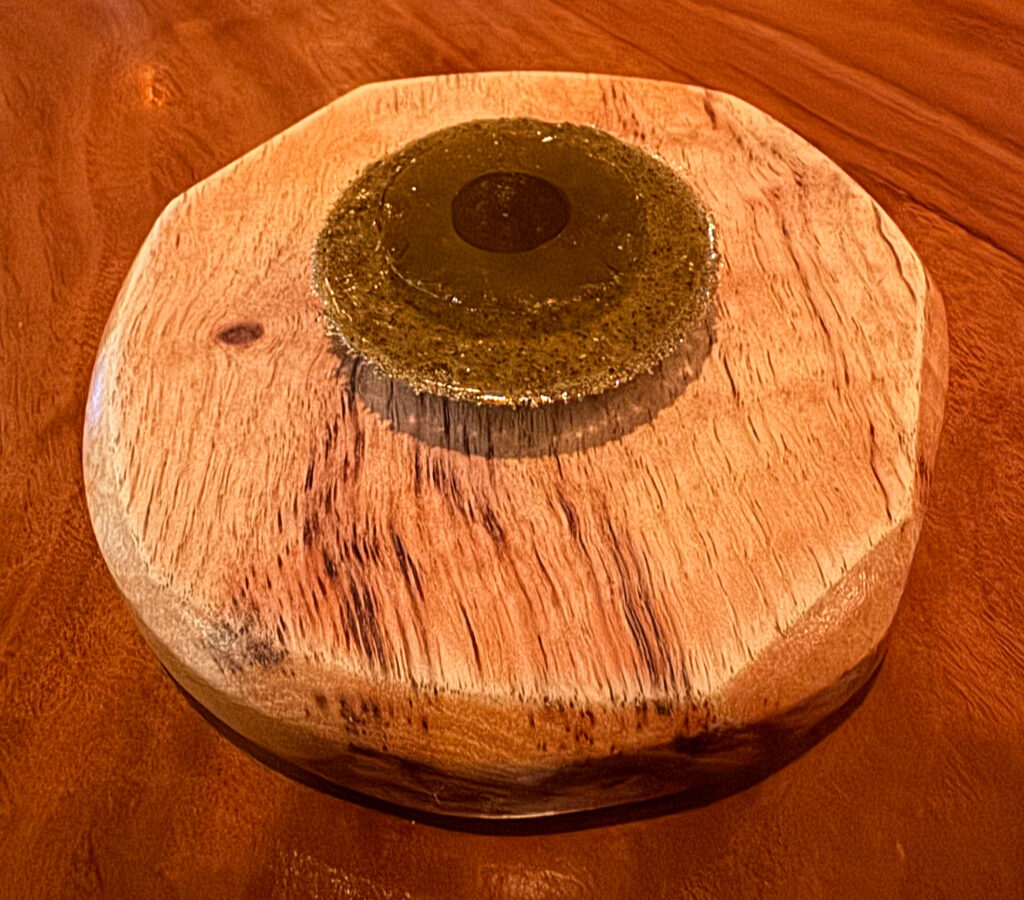
A bright—then mouthcoating, monumentally nutty—“Preserved Pistachio Tart.”
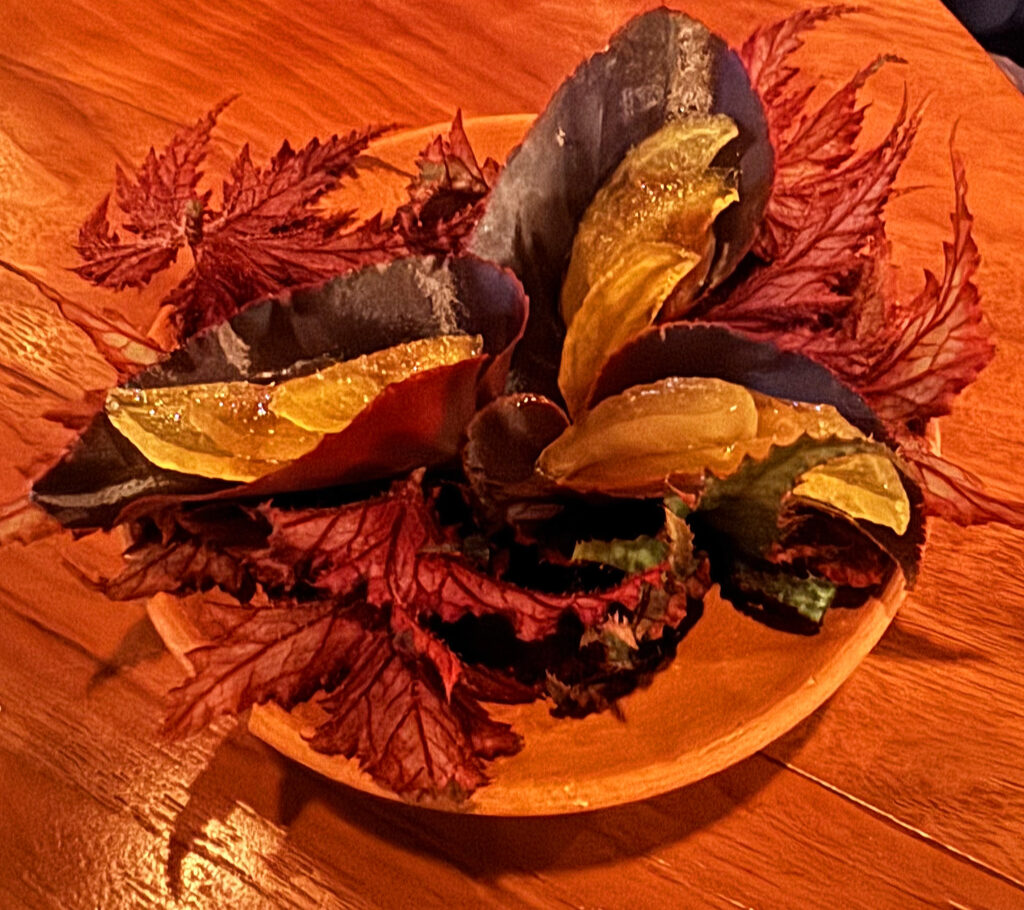
The wonderfully crisp, caramelized, and jammy-sweet “Begonia & Apple.”
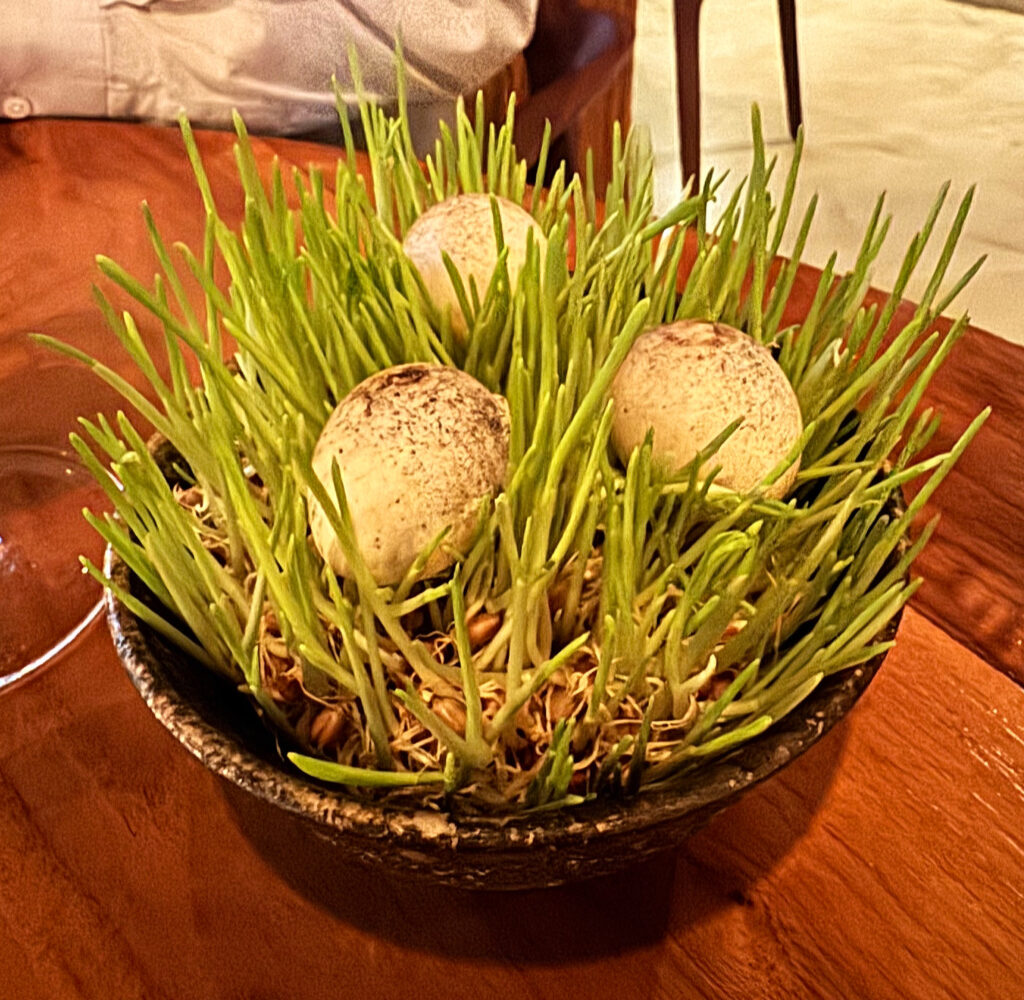
The crumbly, tart, and sugary “Cadbury™ Quail Egg” (which, like its savory counterpart, has recently become much more likable to me).
Three hours later, the meal reaches its conclusion: confident pacing (as always) for a menu comprising 21 distinct offerings spread across 17 individual courses and showcasing all the intricacy one might expect from a three-Michelin-star concept in the flush of its fame.
The bill, when it comes, does so with the full effect of the service charge already baked in. Any additional gratuity remains additional (though one always hopes the team has earned something above the requisite 20%).
And, without any lingering confusion, maybe it’s ultimately easier to dream about when one might someday dine here again.
In ranking the evening’s dishes:
I would place the “Quail Liver Pâté & Masa,” “Maine Lobster & Lemon Verbena,” “Vermont Quail & Sprouted Porridge,” and “Koji Chocolate Ice Cream Sandwich” in the highest category: superlative recipes that stand among the best things I will be served in any restaurant this year.
The “Matsutake Tea,” “Bluefin Tuna Chu-Toro,” “Dungeness Crab & Sea Lettuce,” “Maine Uni & Cashew,” “Smoked Trout Donut,” “Rainbow Trout & Red Kuri Squash Ponzu,” “Abalone & Maitake,” “Lone Mountain Wagyu & Sour Cream,” “Malted Milk Bread,” “Jarrahdale Squash & Pumpkin Seed,” “Potato Cannoli,” “Preserved Pistachio Tart,” “Begonia & Apple,” and “Cadbury™ Quail Egg” all land in the next stratum: great items that achieved a truly memorable degree of pleasure. I would love to encounter any of these again.
Finally, we have the “Tofu & Caviar,” “Penobscot Bay Scallop,” and “Black Walnut Cured Quail Egg”—good—even very good—preparations I would always be happy to sample again (but that just failed to elicit an extra degree of emotion).
Overall, this makes for a hit-rate of 100% with some 86% of dishes meeting the “would love to have again” standard and 19% reaching that “best of the year” level of quality. These figures largely accord with those I reported in October (i.e., 95%, 64%, 27%), September (i.e., 95%, 64%, 14%) July (i.e., 95%, 64%, 9%), May (i.e., 91%, 55%, 18%), and March (i.e., 95%, 70%, 20%)—except for the fact that the first two metrics have now reached their very highest values of 2026.
At the start of the piece, I already revealed that this was the case: that this was the kind of magical Smyth meal I’ve been waiting for all year. Certainly, I would have loved to see a couple more recipes reach that very highest level tonight. But who can argue with a cuisine that is so resolutely experimental, yet also so broadly successful, and that makes you overwhelmingly want to revisit each novel texture and flavor without ever veering toward polarizing excess?
Yes, I frequently characterize the menus here as being “challenging yet rewarding.” However, an experience like this one just feels effortless. The food remains singular and never runs short on intellectual appeal. At the same time, there’s no need to intellectualize what is being presented or grasp for some hidden meaning in order to counterbalance a lack of bonafide pleasure.
I don’t know if it all has to do with where we are in the season: a point in time when nature’s bounty overflows with seafood and the kind of squash, mushrooms, potatoes, and grains that ensure they’re matched by a sense of comforting richness and umami. (In turn, is it any surprise that my dinners in May and July—very much the peak of a brighter, greener sort of cookery at the restaurant—ranked as the least successful of the year?)
Maybe, as I speculated earlier, the quality found this evening has something to do with the fact that so many preparations were carried over from October. The kitchen’s overflowing dynamism was, in a sense, slowed. They were provided a chance to really refine the same ideas over the course of a month, and, through their commitment to that process, the team transformed “interesting” plates into ones that were consistently profound.
Whatever the explanation, the composition of the tasting was electrifying:
- There was the pageantry of the opening tea service and a trio of best-in-the-city snacks.
- Followed by a comparably subdued serving of “Tofu & Caviar” (that is nonetheless inching toward greatness) and two winning compositions of lobster (in the totemic ramekin) and uni (acting as a substitute for the preceding crustacean alongside cashew).
- The “Smoked Trout Donut,” always doomed to be compared to its beef fat predecessor, shined thanks to a new addition on chive while the main cut of the fish, flavored with squash and mussel reduction, maintained its quality from last month.
- The “Penobscot Bay Scallop,” again, left me feeling more confused than satisfied. Yet, clearly, the bivalve has positively evolved since October, and a subsequent serving of abalone and maitake (tweaked just a bit) built on the immense improvement shown by the previous version.
- Entrées saw the quail egg (which has improved dramatically in its own right) joined by a preparation of the bird’s breast that completely reversed the disappointment of the past two iterations. If I had to pick just one moment, the redemption of this course—going from among the weakest to among the greatest items—did the most to assert this menu’s overarching success.
- That said, the deliciousness of the “Lone Mountain Wagyu” (now appearing later in the lineup alongside dehydrated beets) more than held its own. So, too, did the milk bread (whose lack of the usual sticky glaze continues to delight me).
- Dessert debuted with a refreshing—and promising—new construction of citrus-infused shaved ice, squash sorbet, and dehydrated melon before indulging in the outright decadence of the “Koji Chocolate” (a signature in the making if there ever was one).
- Finally, we had a set of four closing bites both old and new. The “Potato Cannoli” made a case for its inclusion in the established trio while the “Begonia & Apple” just might have distinguished itself (despite how reliably pleasing the “Pistachio Tart” has proven) as the best of the whole bunch.
Overall, this makes for the kind of meal that—with every bite—makes you turn to the other members of your party in quasi-disbelief.
On any given night, Smyth will always show glimpses of this immense power. However, the only reason anyone would be compelled to visit over and over again is to chase this most superlative representation of Shields’s craft: one that only rears its head with maddening infrequency but that, when it does, seems to justify the pursuit of gastronomy altogether.
Indeed, evenings such as this are life-affirming, and I think of no better way to cap off a year of creative effort and exploration before all the changes that a new head chef will inevitably bring.