
This final Feld meal of the summer comes at a time when ingredients like tomatoes, corn, peppers, stone fruit, and melons—all of which shaped my experiences in July and August—continue to define the menu.
And chef Jake Potashnick is the first to admit that this period, however bountiful, forces the team to pursue greater and greater manipulation of the produce they are consistently sourcing while awaiting the arrival of fall’s distinctive textures and flavors.
As I’ve said before, this forms a worthy challenge for a concept whose fundamental dynamism and deployment of novelty do much to cushion a bold (maybe even challenging) process of experimentation. Indeed, as the kitchen works with the same products for weeks or months at a time, is it not right to expect a certain degree of mastery? Does Feld’s work, at some level, not begin to resemble that of countless other restaurants serving tasting menus that roughly accord with the broader motions of “seasonality”?
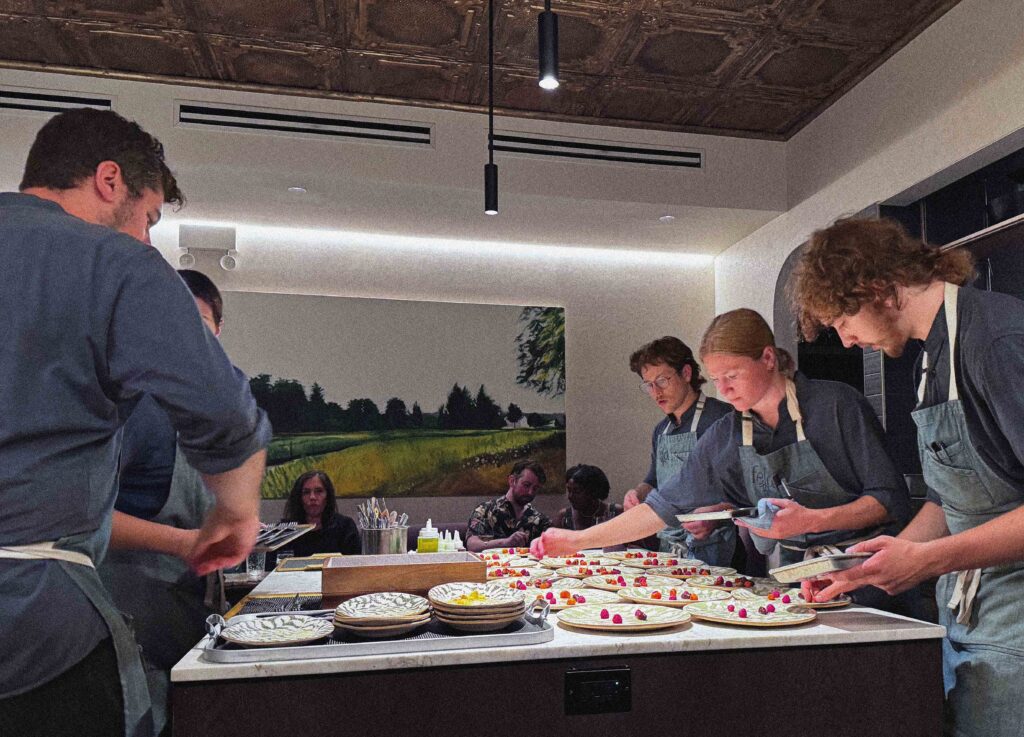
The advantage, of course, is that the Feld format—a counter-like encirclement of tables inviting close interaction with the staff—lends itself so well to explaining the genesis and growth of individual recipes whenever they reappear. This is not to mention the whole “relationship to table” motif, which primarily acts as a narrative thread and allows each dish to be presented with some degree of insight into what Potashnick’s chosen purveyors think of their crop at this very moment.
So, however liminal or familiar or downright repetitive this sixteenth meal may end up being, there will undoubtedly be something to chew over.
In fact, menus such as this one might actually form the best yearly entry point for first-timers who want to get a taste of the Feld canon without exposing themselves to the more polarizing creations that can characterize those comparably meager stretches of cultivation.
Let us begin.
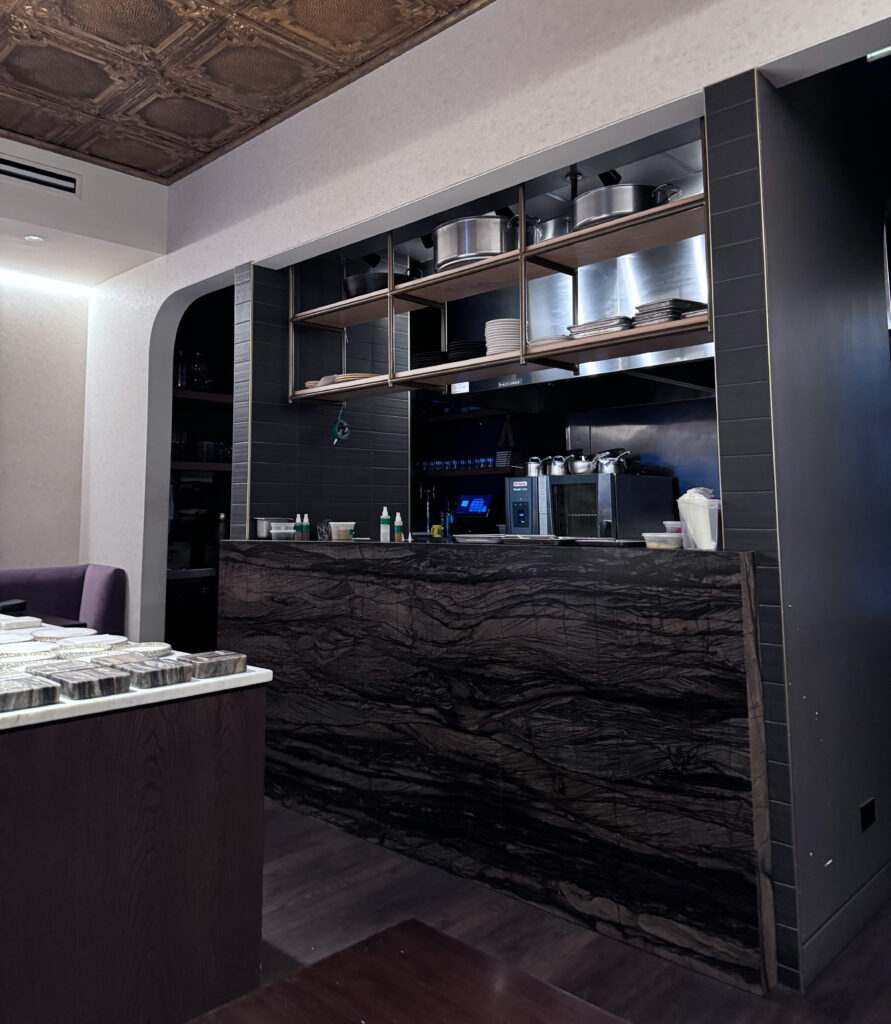
After stepping through the front door and being met by the staff’s communal greeting, I trace a familiar path down the hallway and into the dining room. Tonight, my table is located on the other side of the kitchen (in the corner closest to the hearth), which doesn’t afford much of a view of what’s going on inside.
Nonetheless, this off-center perch allows me to turn and observe the broader workings of the main space: the huddle of cooks around the counters, the flow of plates between them, the symphony of spiels that accompany each course, and the nature of the audience itself (a demographic that features more of an older, gray-haired crowd than one might expect).
The assembled diners seem particularly interested in the beverage program this evening, which is great news for general manager/sommelier Nathan Ducker. I’m not sure I spot a single party without a bottle or two (or, otherwise, an array of glassware) in front of them, and this kind of engagement suggests the change in corkage policy has not come at any cost to guest engagement with the restaurant’s own offerings.
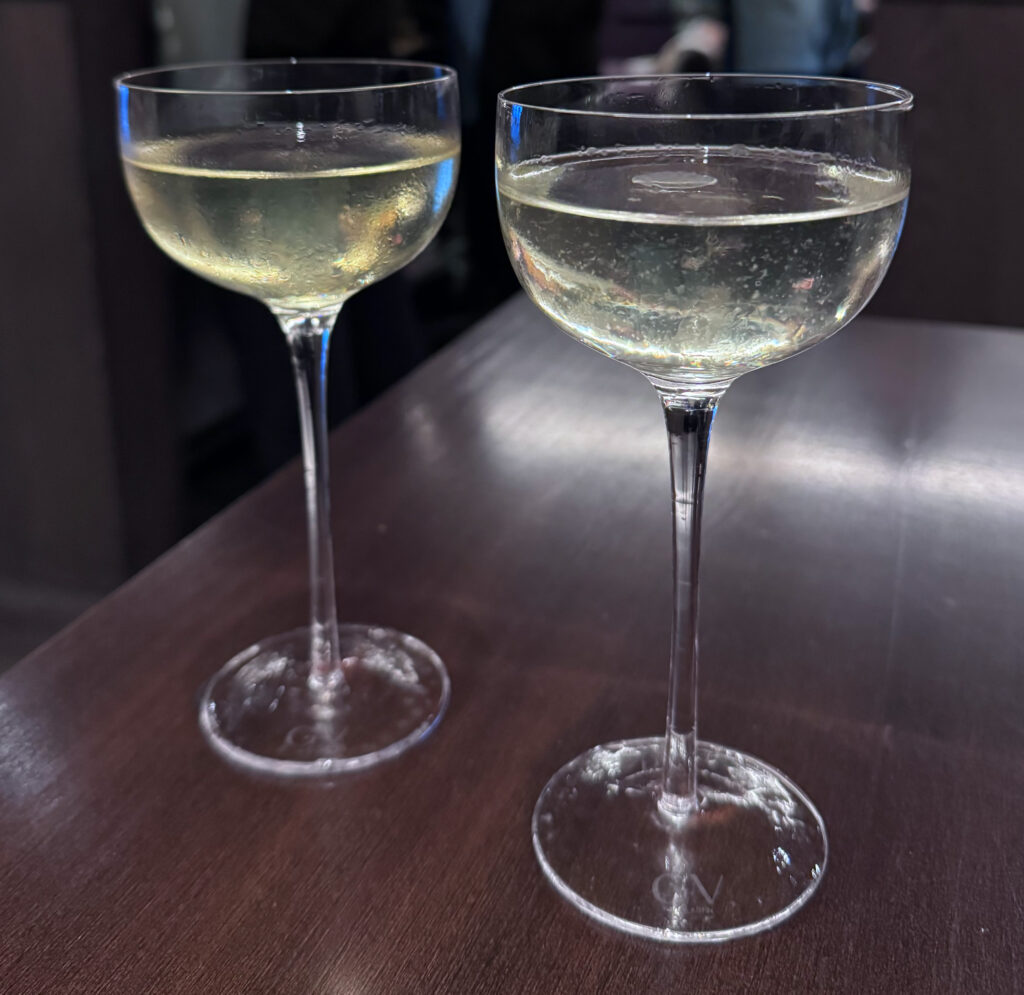
On this occasion, I decide to start by sampling Feld’s “Freezer Door Cocktails”—a clever means of pouring libations without placing any undue demands on a staff that has myriad other duties to attend to.
The “Seafood Martini” ($20) is the more longstanding of the two items. Composed of Matchbook Gin, a kombu vermouth, lobster oil, and lemon, the drink displays a rather burnished, boozy profile that diverges from the crisp, clean takes on the recipe I typically prefer (and that have proven so successful at places like Elske). Still, despite sensing a bit of heat on the finish, I appreciate the clarity with which the base spirit is expressed as well as the smooth integration of the crustacean’s subtly rich and briny notes. That said, I would probably avoid ordering this again in favor of something softer.
The ”Clarified Tomato Margarita” ($20) represents one entry in a long line of seasonal, rotating cocktails that frequently draw on the menu’s most emblematic ingredients. Here, the titular produce is skillfully blended with tequila and passionfruit: making for a cocktail charged with tanginess on entry that then broadens into a seamless, fruity-sweet profile before revealing a hint of agave depth on the finish. Overall, I would be happy to order this again. However, it will likely be substituted for something else by the next time I visit (which, I guess, forms part of the fun).
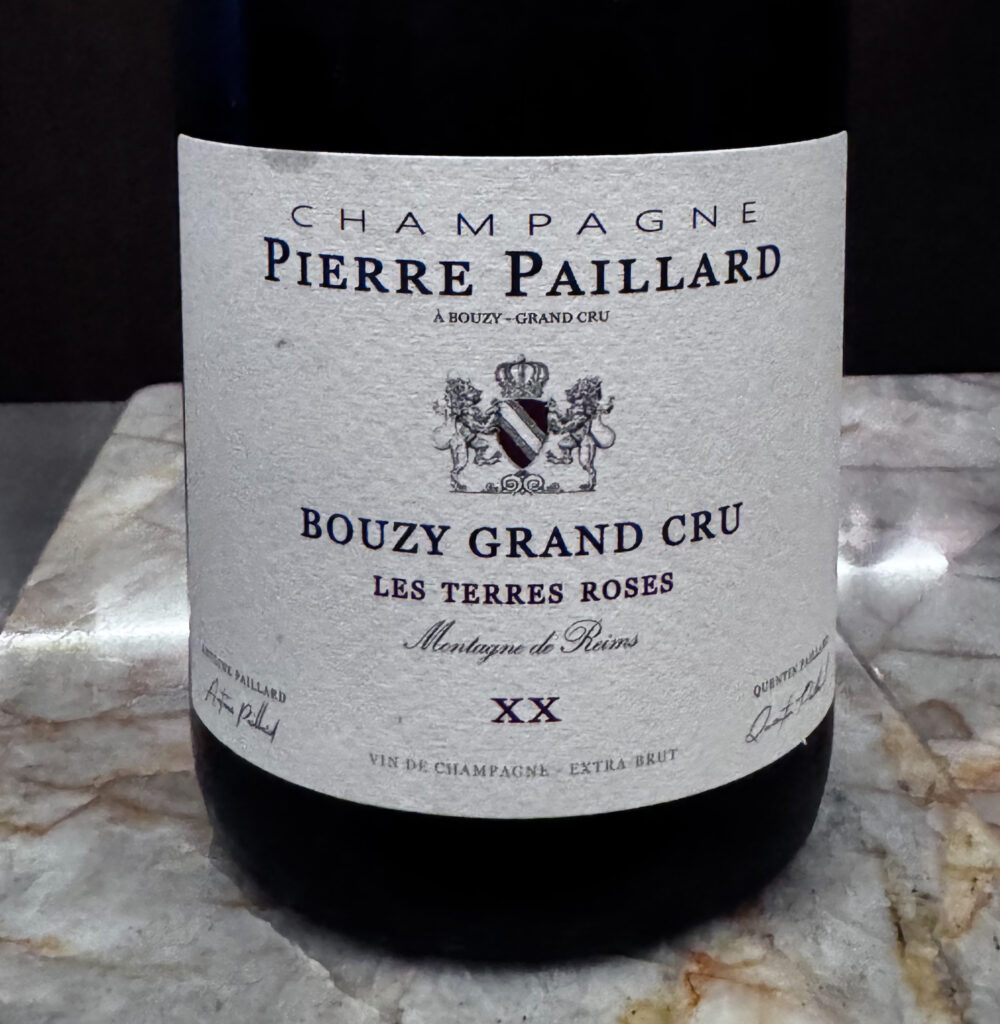
Having enjoyed my tipple, I move on to the “Cellar Flight” ($325): a premium lineup of wines that Ducker proudly states has changed significantly (with an aim toward ever-increasing value) since my previous encounter with it in July.
The pairing comprises:
- NV Pierre Paillard Champagne Rosé “Les Terres Roses XX” [$79.99 at local retail]
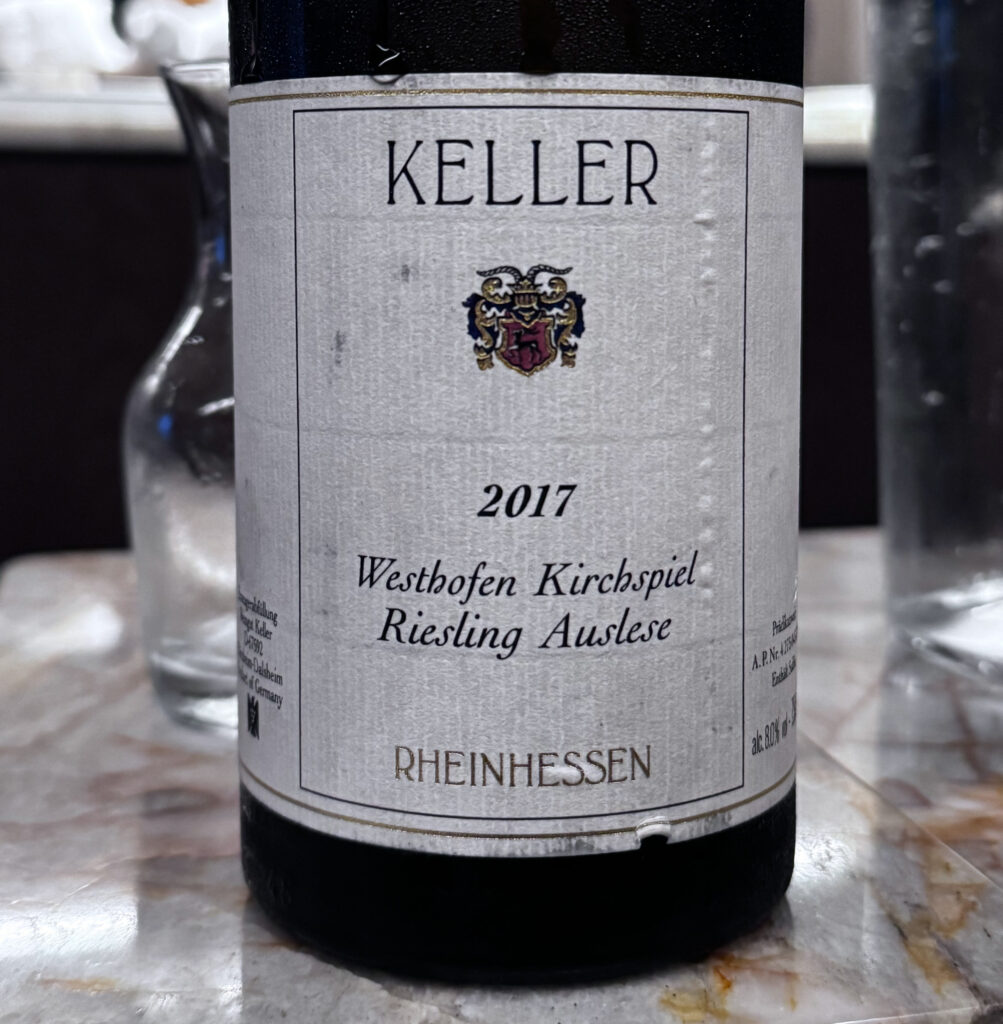
- 2017 Weingut Keller “Westhofener Kirchspiel” Riesling Auslese [$109.01 at international retail]
- 2012 Domaine Michel Gros Vosne-Romanée 1er Cru “Clos des Réas” [$175 at local retail]
- 2006 Mathilde et Yves Gangloff Côte-Rôtie “La Serène Noire” [$481.63 at international retail]
- 2007 Alois Kracher “#10 – Nouvelle Vague” Chardonnay Trockenbeerenauslese [$69.99 at national retail]
Structurally, these chosen bottles span a range of popular styles (like sparkling rosé, sweet Riesling, Pinot Noir, Syrah, and an even sweeter rendition of Chardonnay). Yet, viewed in a broader context, they also boast an admirable amount of age and showcase the visions of producers who are crafting noteworthy or even downright iconic expressions of hallowed terroir.
While the low availability of some of the selections makes it hard to calculate the exact degree of value being offered, I think—at an emotional level—the Michel Gros and Gangloff impart a feeling of generosity (and of drinking something truly special) that strikes me rather distinctive this time around. Balancing them out, the Paillard, Keller, and Kracher are not only easy to like but also equipped to impress snobs who may only gravitate toward rarer, refined versions of these unique forms.
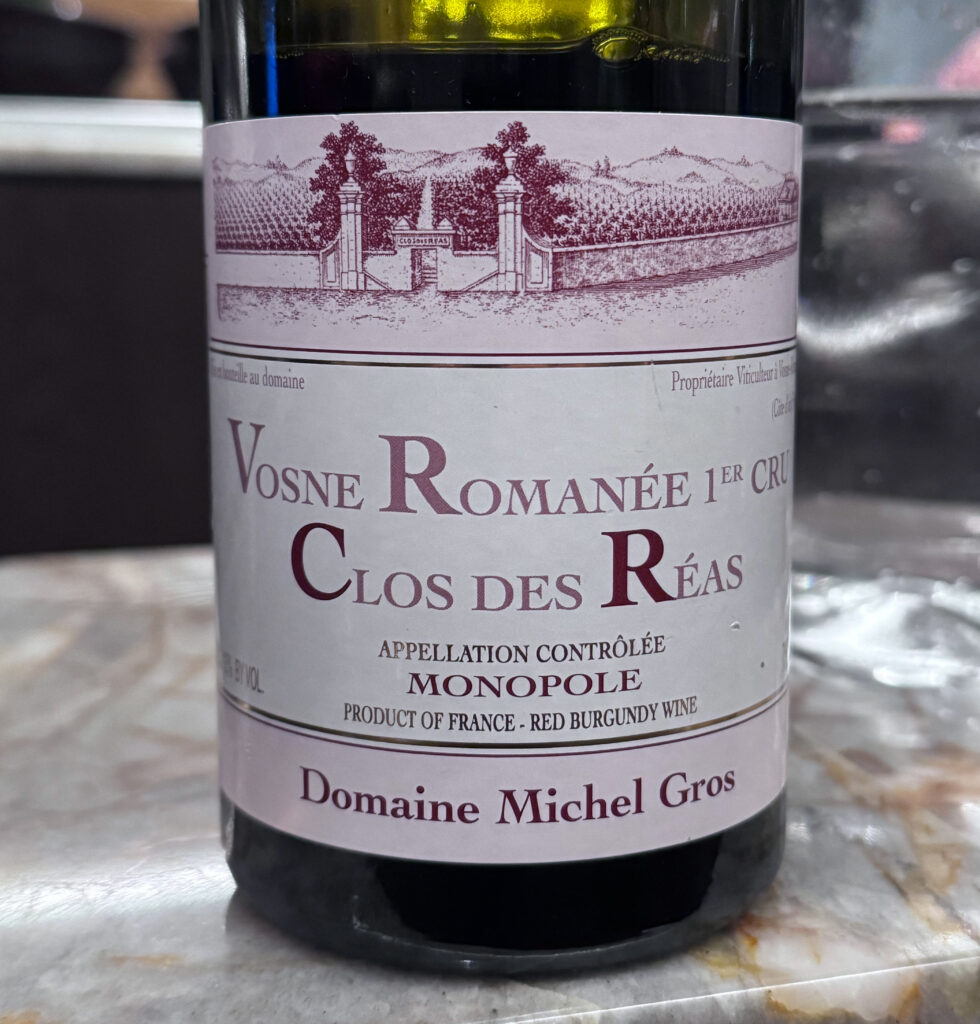
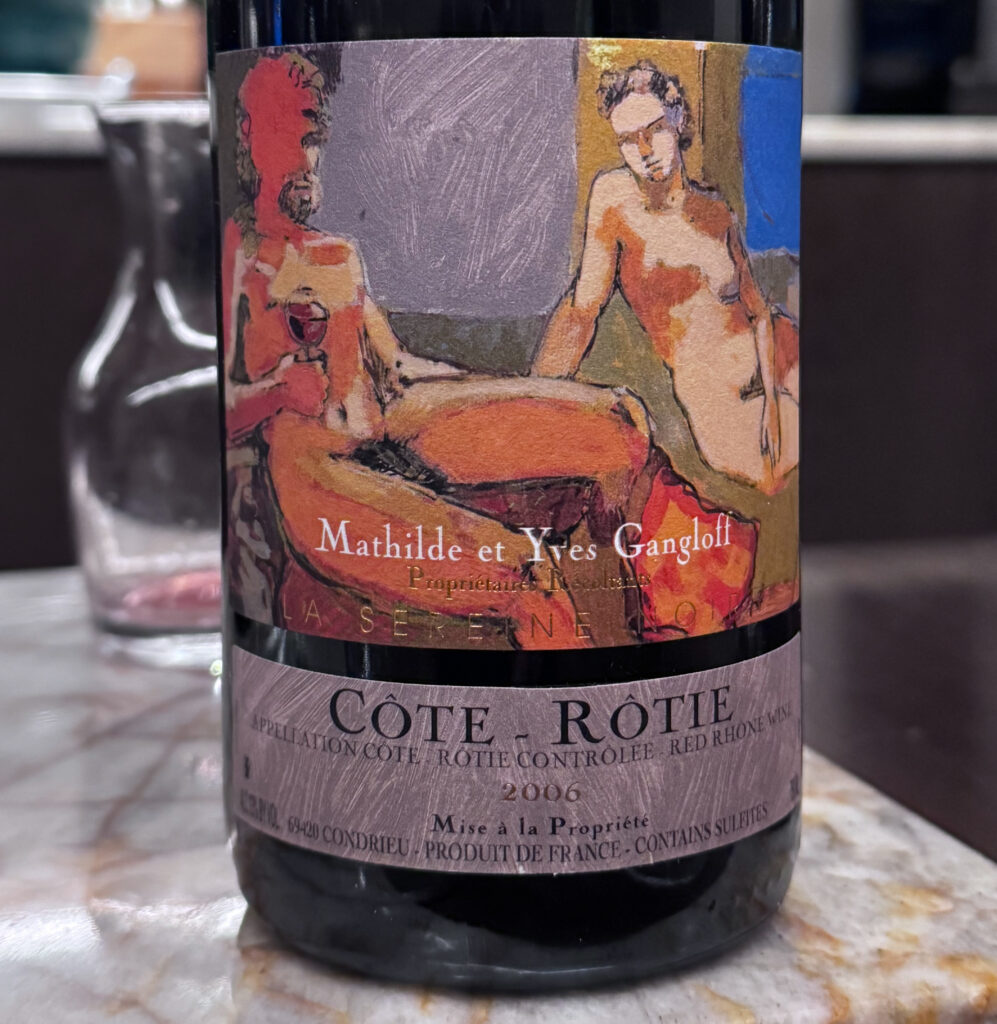
Ducker’s own excitement when sharing these wines is also palpable, and it means that Feld’s program (backed by a bottle list that offers plenty of attractive options in its own right) has moved well beyond the point of being simply serviceable or good and actually stands among the most exciting and rewarding in the city.
Before grappling with the food, I’d also like to reflect on a small hospitality gesture that really impressed me during this visit. Namely, the newest member of the team took the time to come over and introduce themself: chatting for a bit, formalizing some kind of connection, and effectively melding their own distinct personality with the larger feeling of warmth and familiarity that the staff has nurture over the course of so many visits.
It’s not the first time I’ve seen this done here, yet I felt particularly impressed by the confidence and smoothness of the conversation tonight. I have also come to view this sense of ownership and continuity of service as key markers for any restaurant that really hopes to cultivate and foster regulars over a period of many years. Indeed, while staffing changes are an inevitable part of this industry, the propagation of a certain shared emotion and culture infuses the concept with a pervading spirit that can weather the loss of any individual talent.
Tonight, as always, the menu actually begins with a pour of something that is presented at almost the exact moment guests sit down: an offering that establishes a feeling of being cared for while simultaneously introducing one’s palate to the Feld house style.
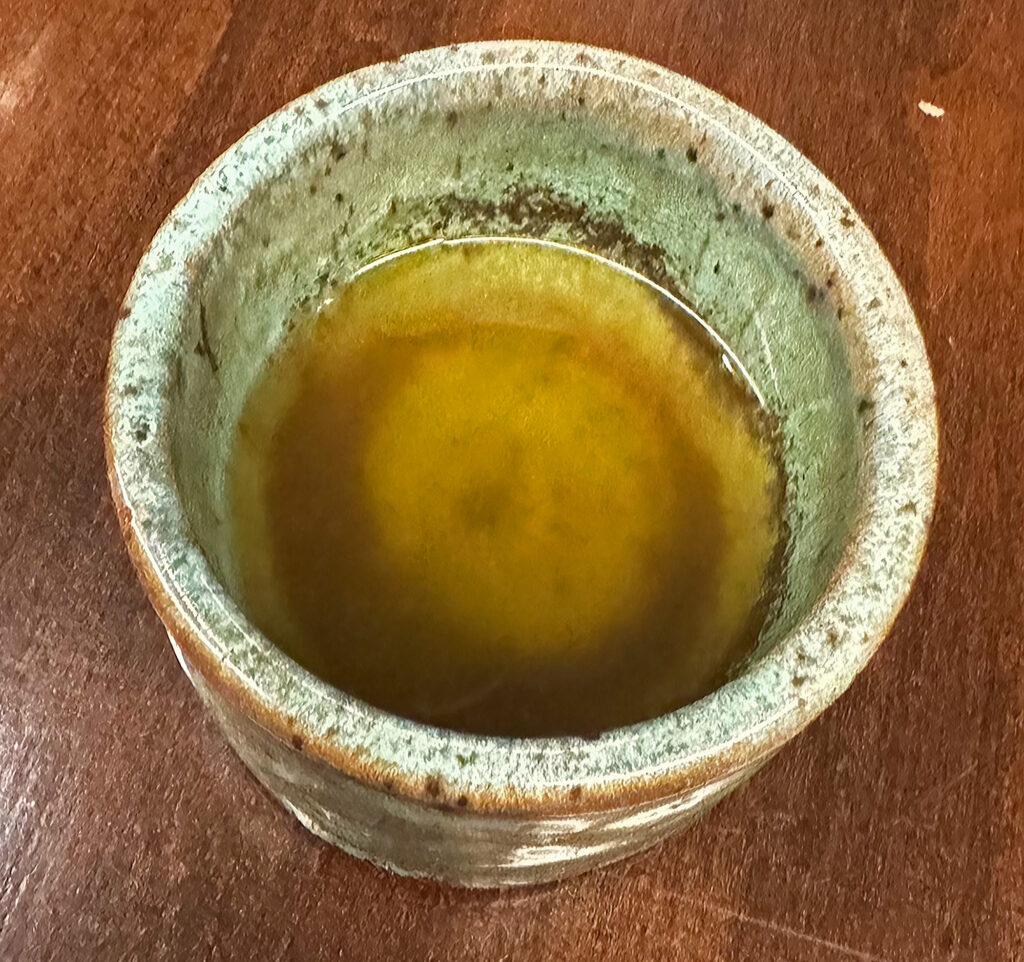
Presently, the kitchen serves a “Corn Husk Broth” that, bolstered by lamb trimmings and fennel oil, totally diverges from the refreshing juices and teas I encountered earlier during the summer. Still, the cup possesses a perfect, gentle warmth, and its contents cover a whole range of savory, salty, and subtly earthy tones that will be echoed by many of the evening’s most memorable dishes. In short, this makes for a successful opening tipple even if it lacks the extra degree of excitement that past examples have shown.
Of course, it’s the opening salvo known as “The Drop” that really kicks off any Feld meal, and, while the current iteration comprises only nine small plates (down from a high of 11 in January), this total number of bites reflects a clear improvement on the mere seven components (a low) I encountered in August and July.
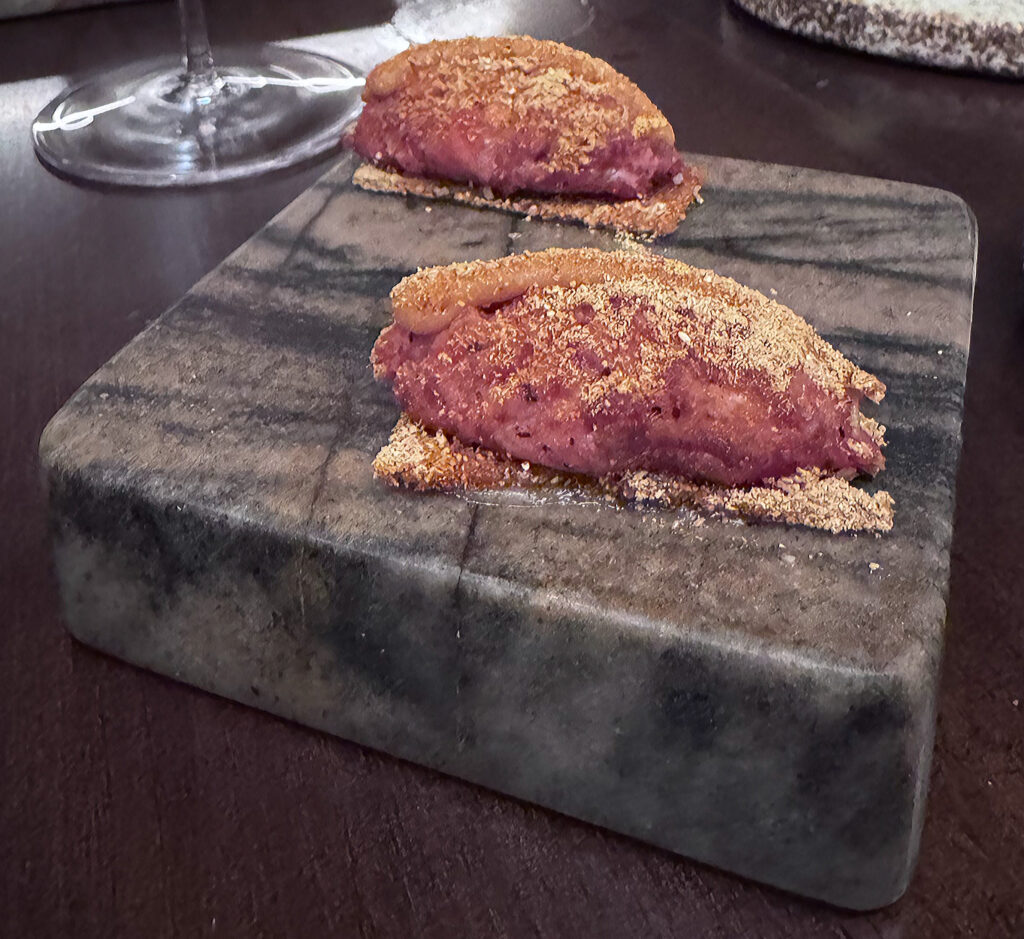
To start, there’s the “Lamb Tartare Crostini,” a repeat item from last month that’s meant to provide another “peek” at one of the menu’s headlining meats. Nonetheless, the chosen vessel (a rye cracker) proves fragile, and the flavor of the starring ingredient (which I hope to be powerfully savory) is obscured by a strong note of buckwheat. Still, I can at least appreciate the lamb’s textural refinement, for it feels rather smooth going down.
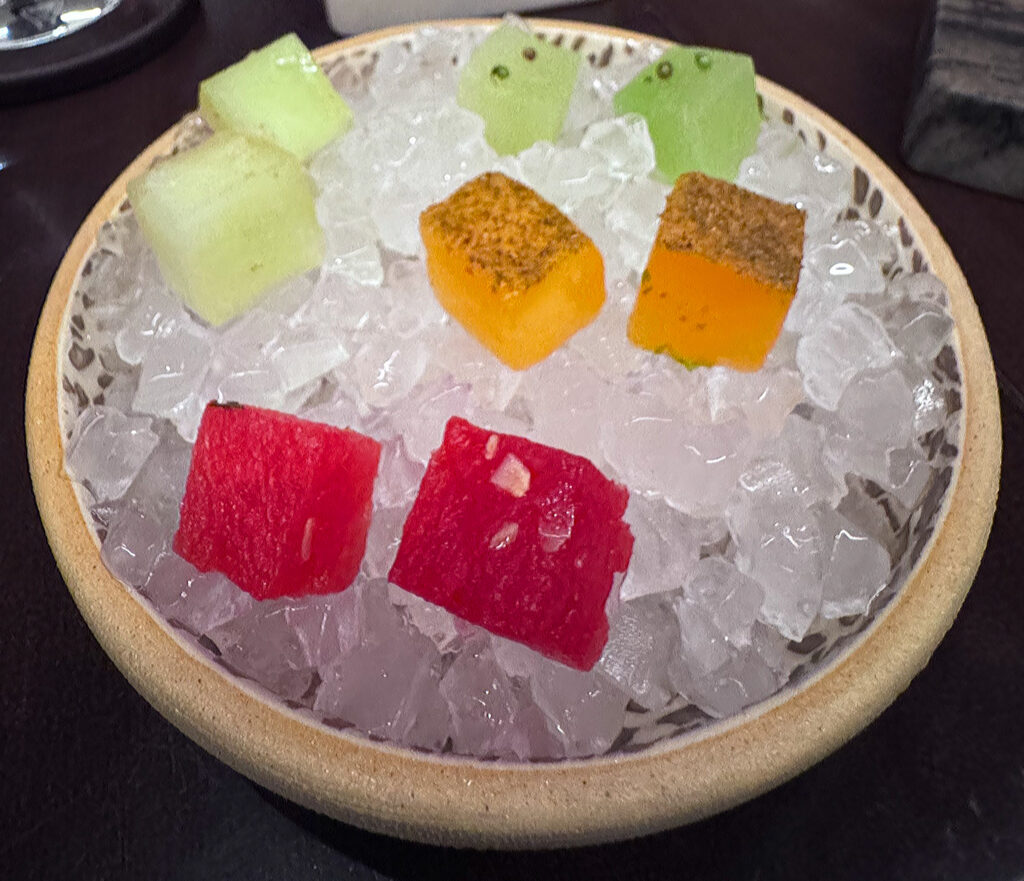
The next sequence also builds on an idea that first appeared in August (while adding one new part), fashioning herbs and melons from Chicago Patchwork Farms into a range of bites modeled after cocktails.
There’s the “Honeydew Mule,” with its crisp flesh, whiskey-ginger undertones, and startling concentration of coriander flavor. The “Cantaloupe Margarita,” topped with house Tajín, also sees any soothing, musky character obscured by the outright pungency of the chili-epazote blend. But the “Watermelon & Mint” (styled after a mojito) offers the kind of sweetness I am after with an uplifting, rum-kissed finish for good measure. And the “Lambkin & Passionfruit,” utilizing a somewhat obscure “toad skin” variety of melon, is likably sharp and tangy in its lemon salt-inflected take on a Sidecar.
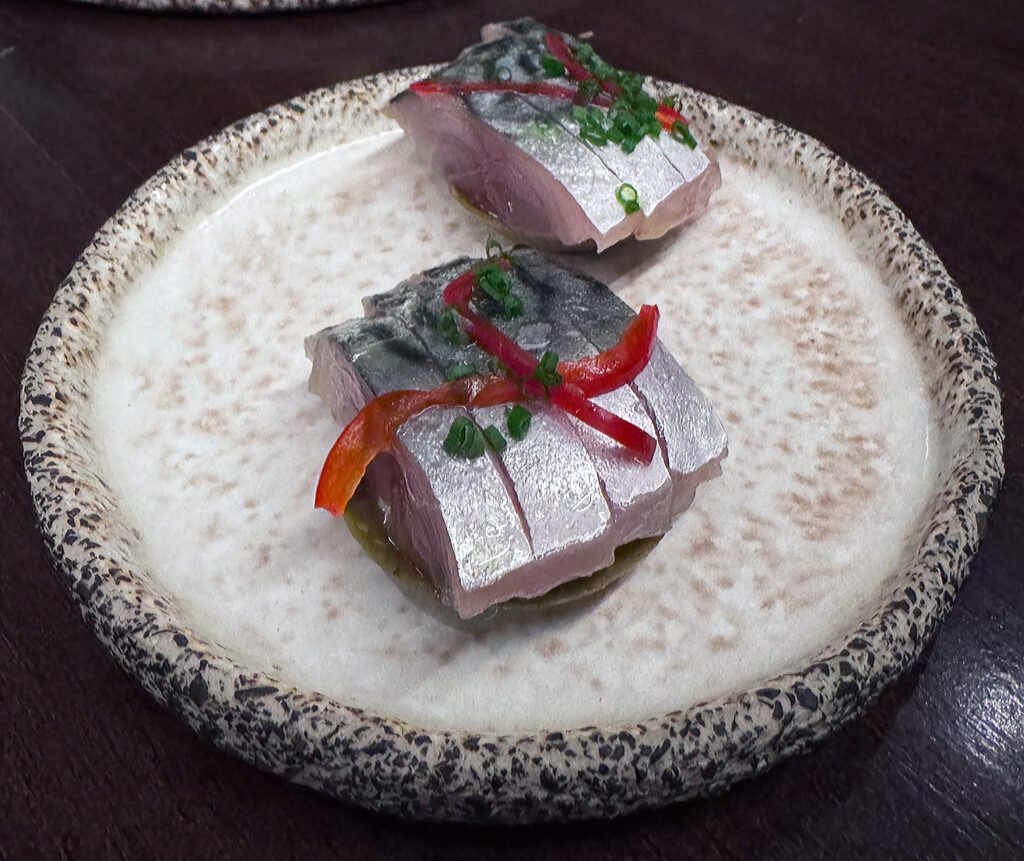
Moving on, a “Mackerel Tart” ups the ante from the simpler varieties I’ve seen this summer. Yes, while those iterations have centered solely on produce, this marriage of a basil tartlet shell, a yogurt filling, the cured fish topping, and bits of chive and Calabrian chili makes for the best example yet.
On entry, the tart displays a beautiful brittleness before turning creamy and mouth-filling with total cohesion. Flavor, too, is remarkably clean given the portion of mackerel on display. However, a depth of earthiness and allium and just a tinge of fruity heat helps to provide definition, shaping a finish that is just savory enough to be convincingly delicious. Overall, this recipe is so skillfully composed and really marks a high point in the kitchen’s work with the form.
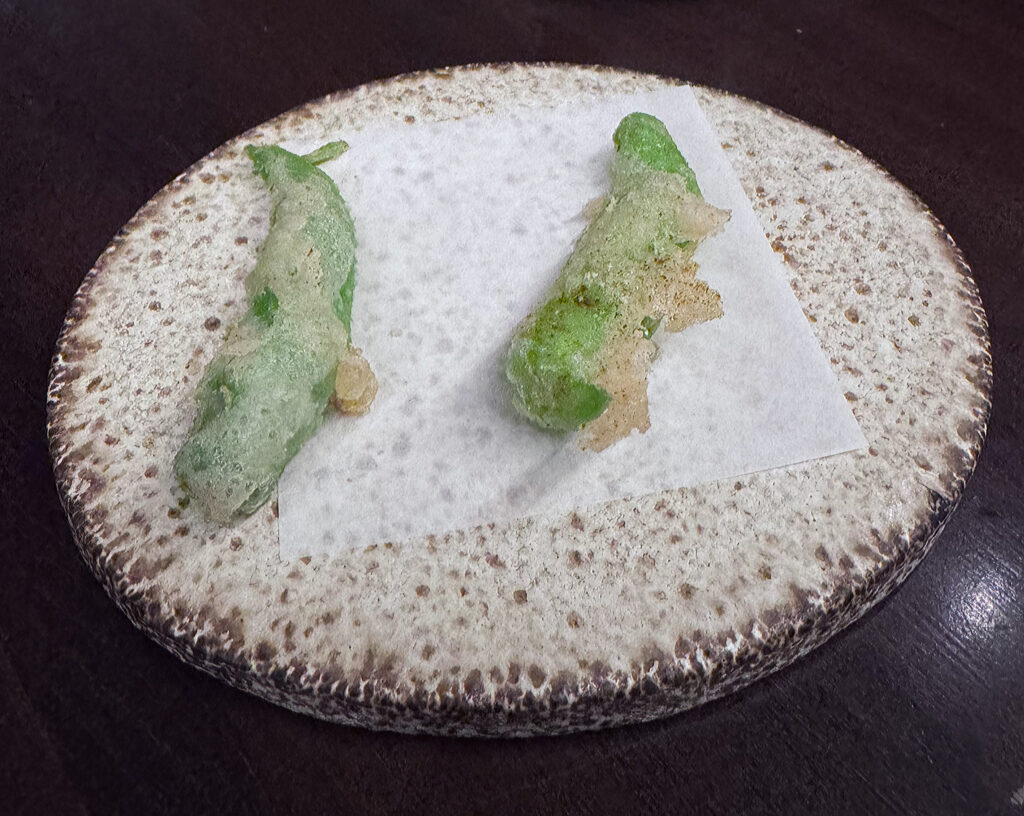
The “Tempura Shishito” enters into a long line of battered-and-fried items that have defined the restaurant from the very moment of its opening. In fact, there are few other techniques that so clearly demonstrated how far Potashnick has come.
Here, the pepper arrives encased in an airily crisp wrapper that frames the snappy flesh below. The textural effect—essentially a double crunch—is adeptly managed. Meanwhile, applications of salt, cayenne pepper, and vinegar powder enhance the shishito’s own mild heat in a way that draws out a subtly sweet finish. In sum, this is the kind of confident tempura that leave me eager to see which ingredient will be given the treatment on each successive visit.
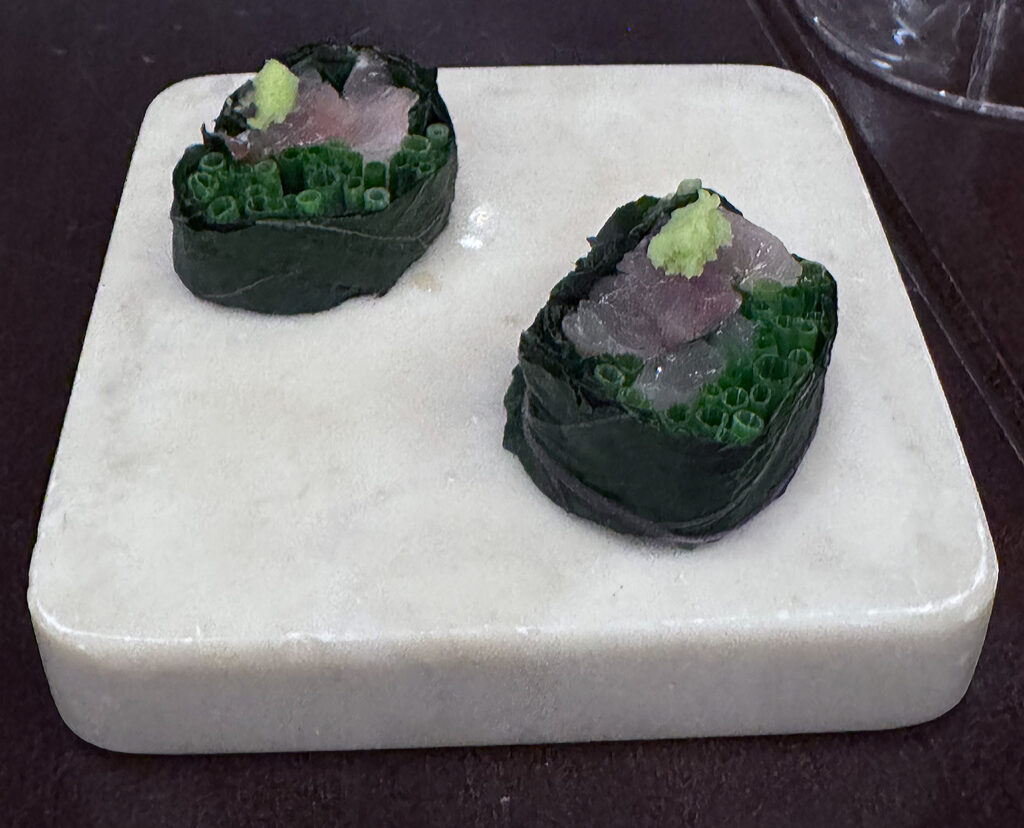
A ”Shiso Roll”—filled with salted mackerel, chive, and Oregon wasabi—represents the team’s latest take on what might roughly be termed a sushi roll. Visually and conceptually, I love what I see. Nonetheless, the leafy wrapper proves a little awkward (and that domestic wasabi a little too subdued) when enjoyed alongside the crunching allium and tender, savory fish. Ultimately, it’s not hard to see this recipe becoming wildly successful with a little more tweaking.
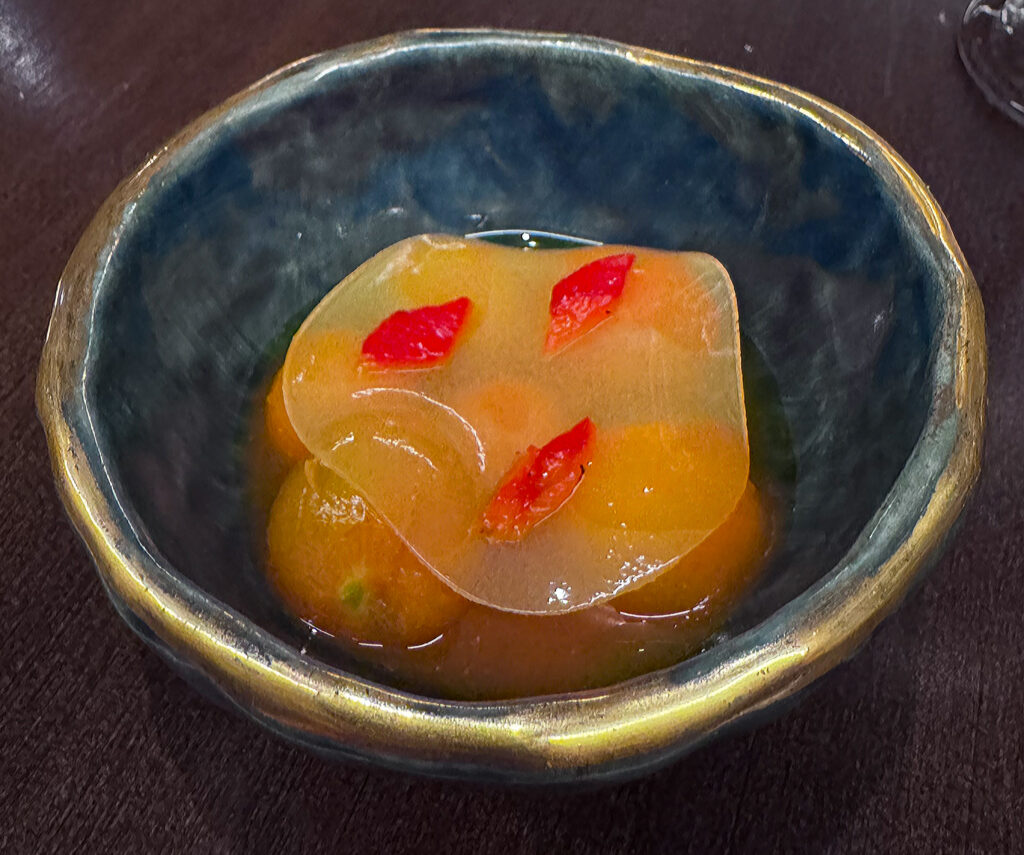
Closing out “The Drop,” the “Peeled Sungolds—Jimmy Nardello” is reminiscent of a dish that appeared as part of a separate, three-part tomato sequence in August. However, the notes of fennel and gooseberry that characterized the previous preparation are now substituted for the titular peppers (which have been fire roasted) alongside a one-two punch of melon vinaigrette and gel.
Texturally, the blanched-and-peeled Sungolds display an attractive plumpness and softness that is matched by a more subdued expression of sweetness than I am sometimes used to. Instead, recipe’s flavor profile is defined more by roundness and fruitiness with a persistent acidity that helps to tie everything together. In some sense, it feels like cheating to put a full-fledged item like this alongside such tiny bites of food. Yet I cannot deny that it ranks as the highlight of this entire opening flourish.
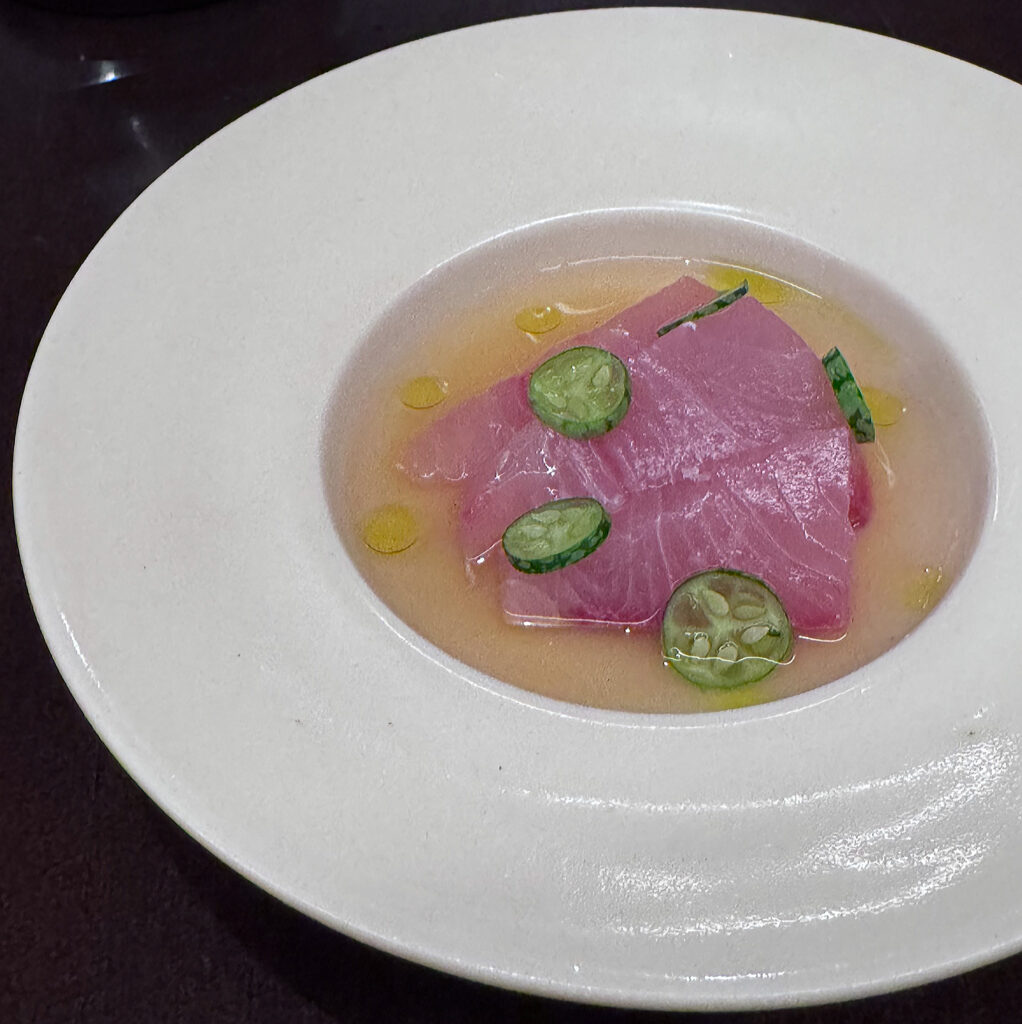
The first proper, composed course of the night is titled “Yellowtail Sashimi,” and it represents the evolution of an idea that first appeared (under a similar name) in July before later substituting albacore in August. On this occasion, the titular fish has been hung for a day before being processed into slices of both the loin and belly. A tomato-fennel water and some slices of cucamelon act as the dressing: framing the yellowtail’s firm, satisfying mouthfeel with a rather bright, cleansing flavor that only turns vaguely savory on the finish. As always, I crave more umami, but I must admit that this makes for a nice—even satisfying—sashimi.
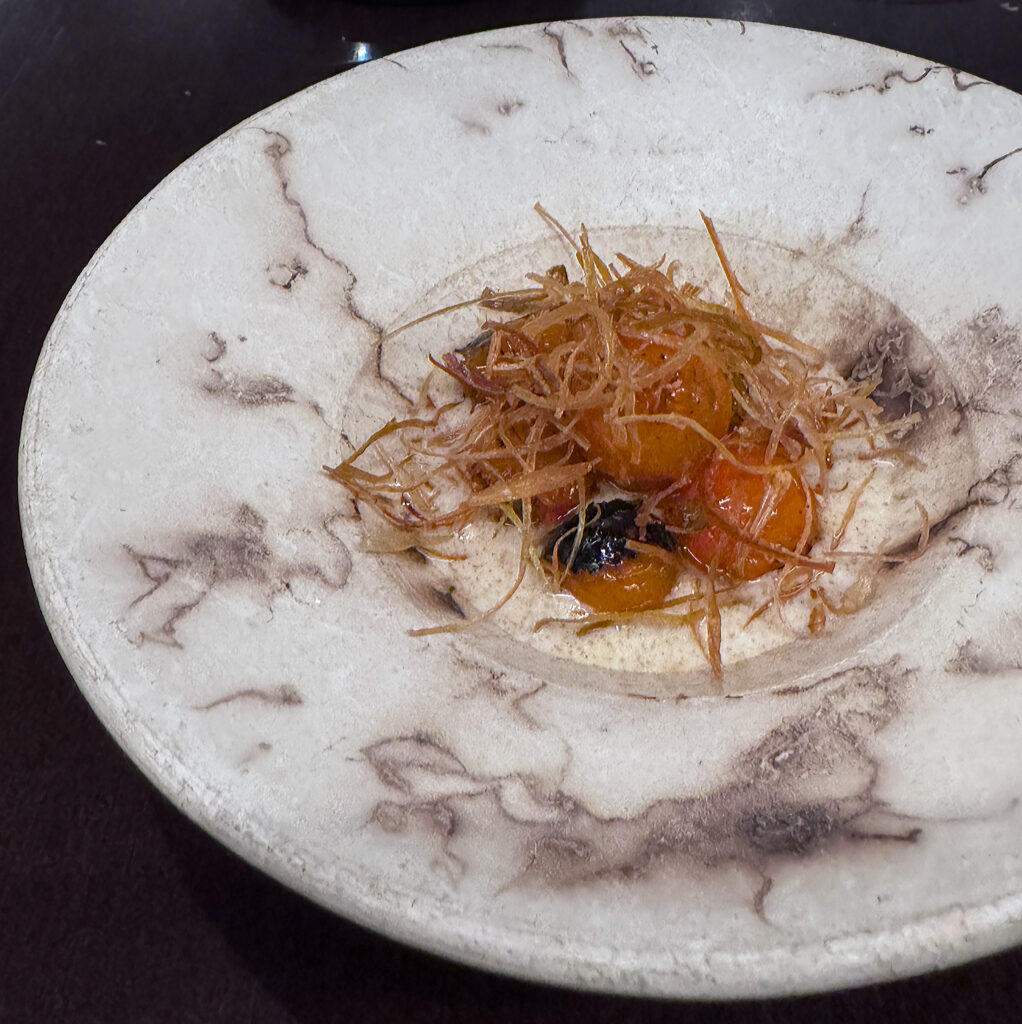
Arriving next, the “Grilled Sungolds—Ajo Blanco” revives one of my last meal’s most winning recipes while plating it (now extricated from that same three-part tomato sequence I mentioned earlier) a little more elegantly.
On the palate, the juxtaposition of plump, yielding Sungolds, the creamy surrounding sauce, and crispy shallot topping remains sound (not to mention wholly pleasing). However, it’s really the combination of the ajo blanco—a white gazpacho made from rye bread, almonds, olive oil, and garlic—and accompanying shallot emulsion that proves decisive: blanketing the smoky, jammy tomatoes with a dimension of sweet, nutty, and earthy depth that helps their latent umami really sing. As before, this remains one of the evening’s biggest highlights.
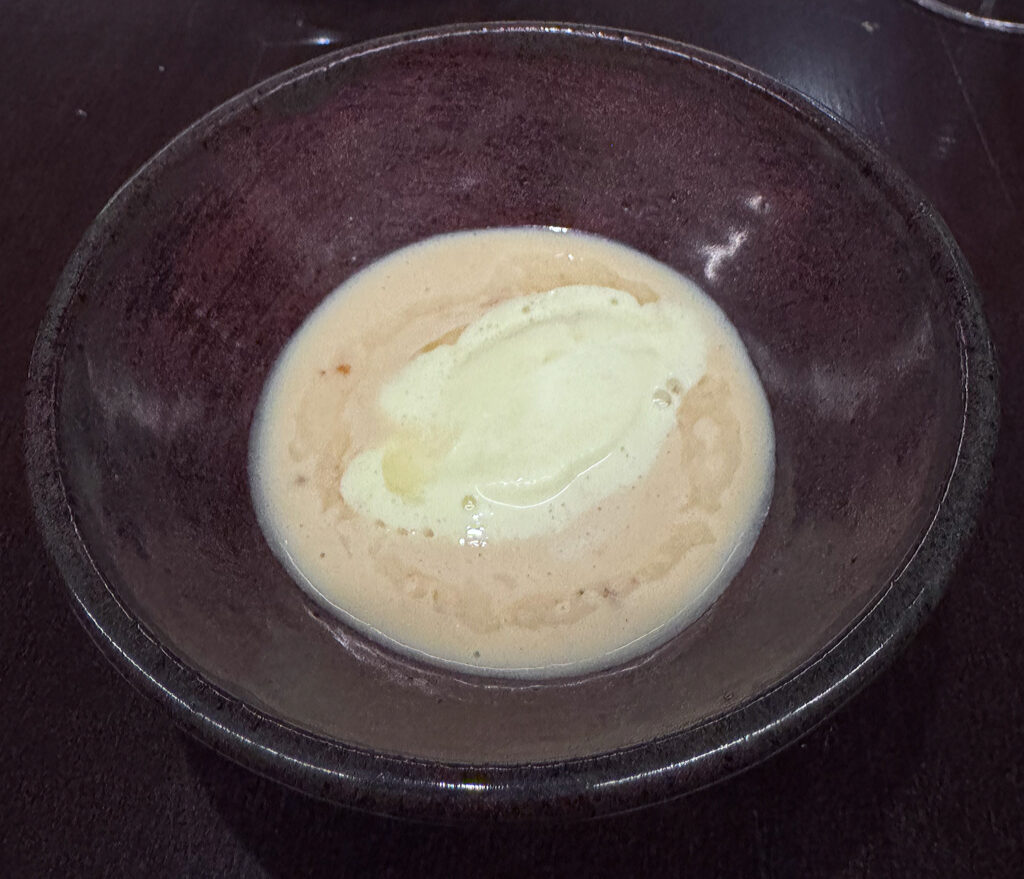
The “Corn Soup—Coriander” is somewhat similar to the sashimi in the sense that it offers an evolution of a recipe that featured prominently—and rather successfully—in both July and August. This time around, the kitchen makes use of a purple, late-maturing variety of the crop known by the name Ultraviolet (and being sourced from Indiana’s Hayloft Homestead). Coriander, in this case, also serves to replace the bay leaf that distinguished the earlier two iterations.
Structurally, the dish continues to center on the interplay of hot corn soup and cool (though it could be colder) coriander seed ice cream. There’s no sign of the crispy Benton’s ham that previously provided an extra thrill. Nonetheless, the push-pull of sweet and savory flavors remains highly attractive even as I note a sharper, warmer depth on the finish. Ultimately, I prefer the bay leaf version due to both the temperature of the ice cream and its more straightlaced profile (to say nothing of the porky decadence). Still, this evolution continues to capture what made the original preparation so enjoyable.
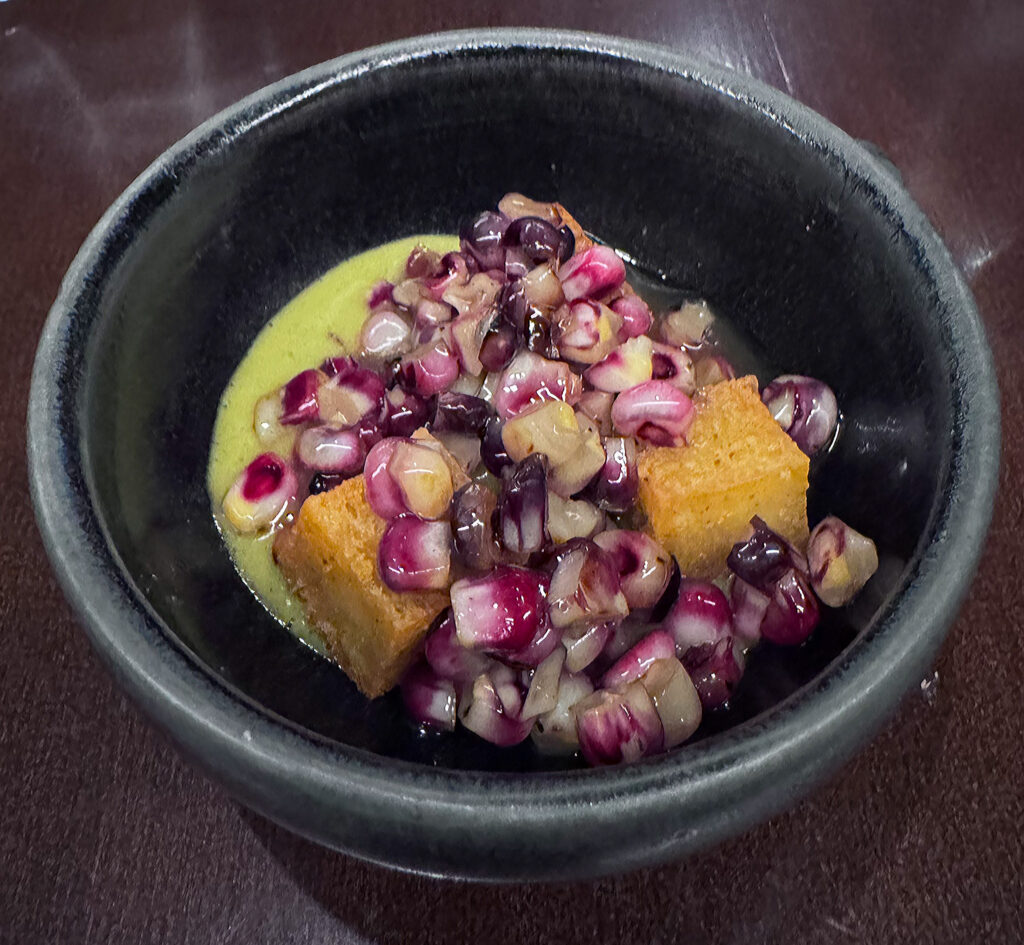
With the arrival of the “Ultraviolet Corn,” we delve even deeper into what this “sweet but not saccharine” variety has to offer. Yes, rather than being liquified, the colorful kernels are now grilled (with some green coriander) then placed atop a corn and poblano pepper emulsion alongside some fried masa cubes.
The latter elements are certainly reminiscent of the “Masa Tamal” preparation I encountered during my past two meals. Yet, now granted more of a supporting role, these creamy and crisp components lend the dish a depth of earthiness—and mild heat—that plays well with the starring produce. Yes, while the Ultraviolet is plenty sweet, it’s the blending of this character with hints of smoke, citrus, and that fruity pepper/dried corn quality that really impresses me. The world “seamless” comes to mind, and I am left feeling that this ranks as one of the kitchen’s most thoughtful explorations of a new ingredient to date.
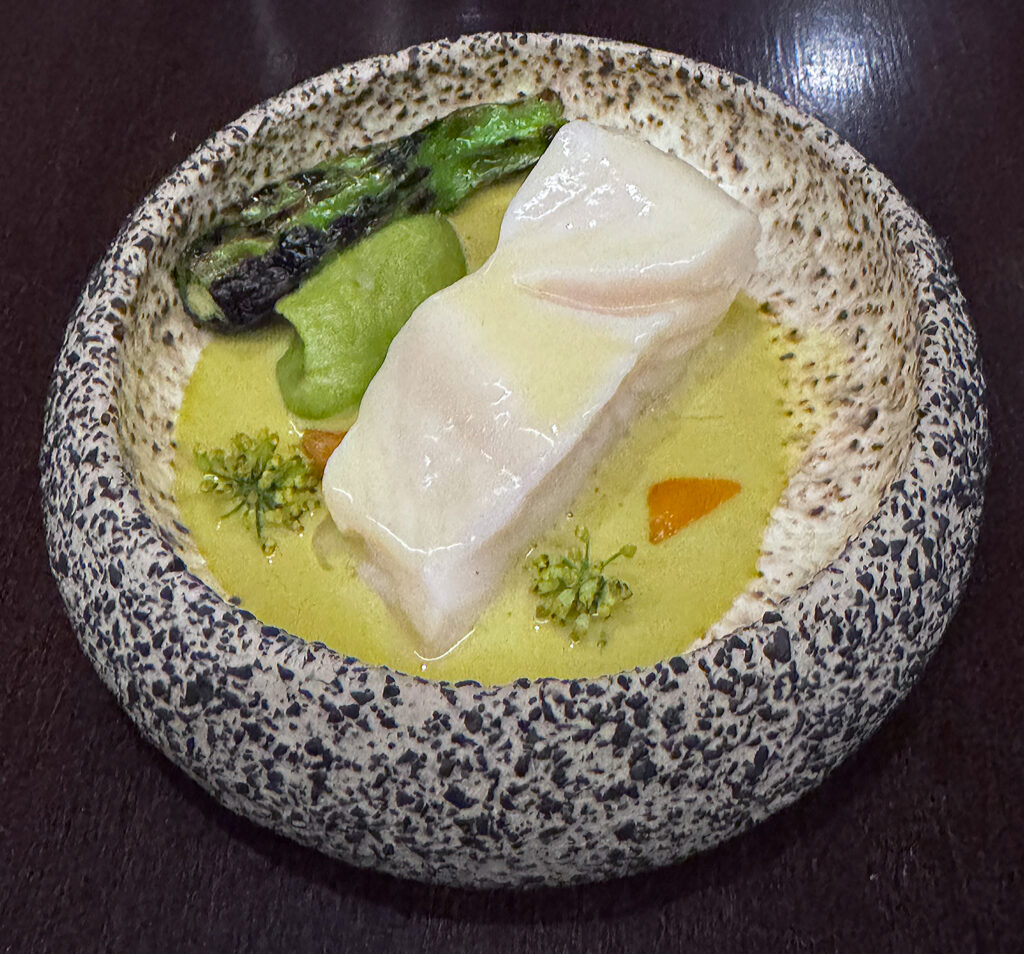
The “Black Cod—Fennel” represents an evolution of a similar preparation (utilizing the same fish) I tasted last month. However, the supporting medley of eggplant and tomato has now been traded for garlic vinaigrette, a mussel emulsion, the titular parsley-fennel emulsion, a piece of grilled shishito, and a couple of kumquats that were pickled last year.
On the palate, the steamed black cod continues to be transcendent, with the sizable fillet displaying a perfect balance of fleeting, flaky structure and outright butteriness. When it comes to flavor, the notes of allium and shellfish do just enough to establish a baseline of umami. But the dish is really defined by the most elegant expression of greenness and brightness with a little anise-tinged sweetness on the finish. Frankly, this is hardly the kind of profile I tend to gravitate toward. Still, the saucework is executed beautifully, and I am left admiring the recipe—one of the evening’s highlights—all the same.
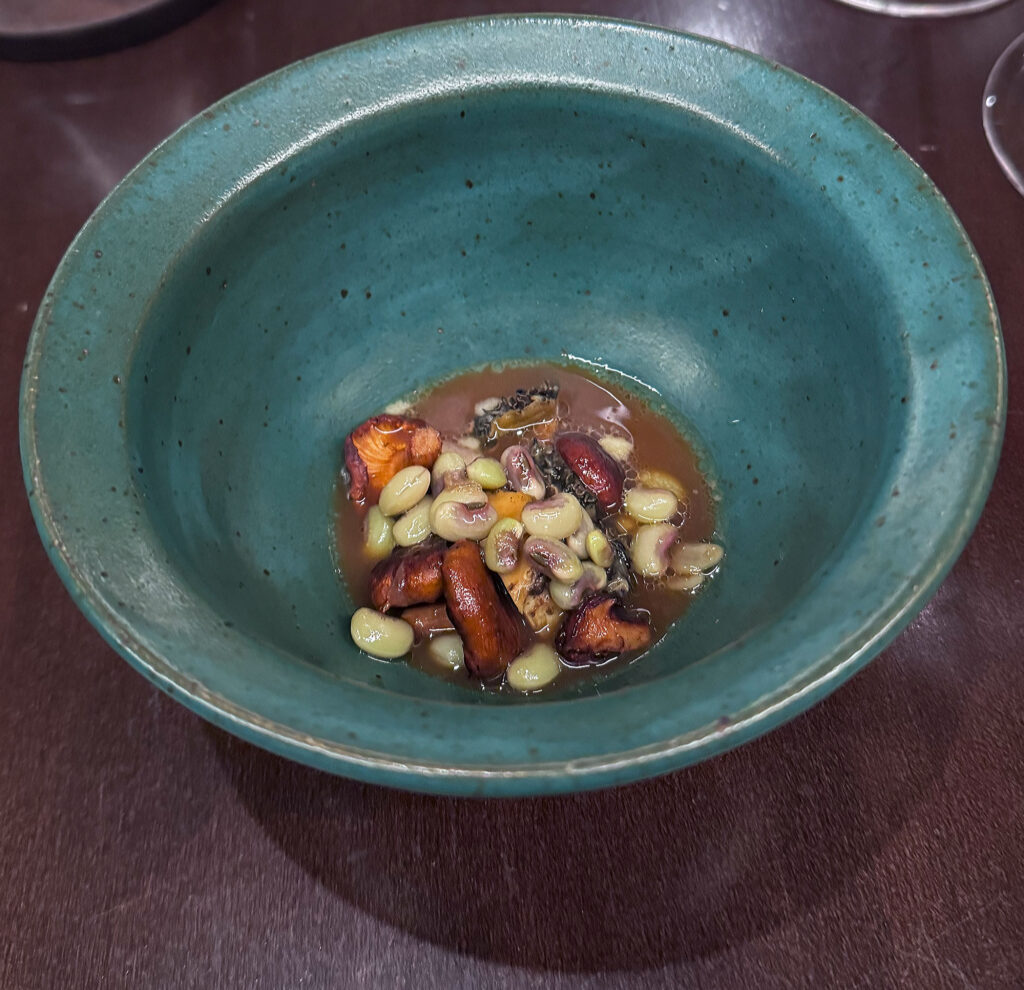
“Abalone—Seaweed” takes the same name as a preparation that debuted back in August. That said, there’s a twist. The mollusk is still served in its kombu–laced braising liquid with a few chanterelle mushrooms. Nonetheless, the accompanying chicken fat emulsion and strips of crispy chicken skin (elements that assured a certain degree of deliciousness before) have now been traded for a handful of humble crowder peas sourced from Indiana.
Undoubtedly, such a change leaves very little room for error. Yet, texturally, the chunks of abalone possess an attractive meatiness and tenderness with no trace of jarring crunch. The mushrooms and peas, wetted by the broth, offer their own yielding mouthfeel before seemingly melting against the shellfish. They ultimately serve to supercharge the starring ingredient’s considerable depth of umami, steering it toward an even richer, earthier expression that surpasses the high standard set by the previous incarnation. Truly, this ranks as one of the finest recipes Feld has ever served, and, even if one must acknowledge that the mollusk is something more of a traditional luxury totem, I think the kitchen still knows how to tailor the abalone to its particular vision.
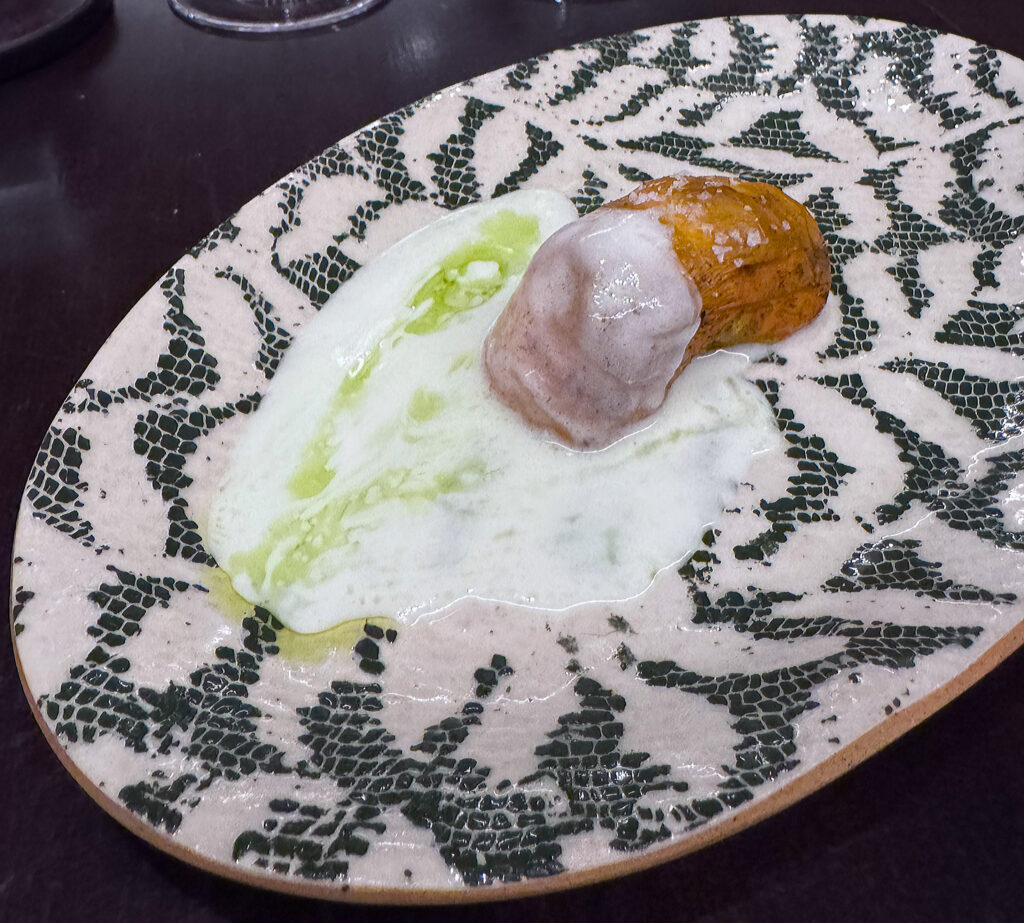
The “Heirloom Tomato—Honey” is seemingly another repeat, but it might be best to think of this title as more of a general framework for how the restaurant might look to treat different examples of the produce. Indeed, while the previous version of the dish landed just before dessert, the present one precedes both of the meal’s headlining meats.
On this occasion, the Striped German variety (sourced from Froggy Meadow Farm) forms the star: being smoked until its flesh takes on a leathery appearance then dressed simply with flaky salt, olive oil, and a sauce made from blitzed Famiglia Andreotti burrata. While I love the thought process here—which seems so worshipful and traditional in its conception—the tomato is not as soft and jammy as expected. Instead, it features harder interior segments that are difficult to process and lacks the kind of concentrated sweetness one expects to invigorate the rather minimalist seasoning. Ultimately, the recipe strikes me more as being bland (was there actually honey in this?) than objectionable. Still, I think the team just needs to gain more familiarity with the smoking technique.
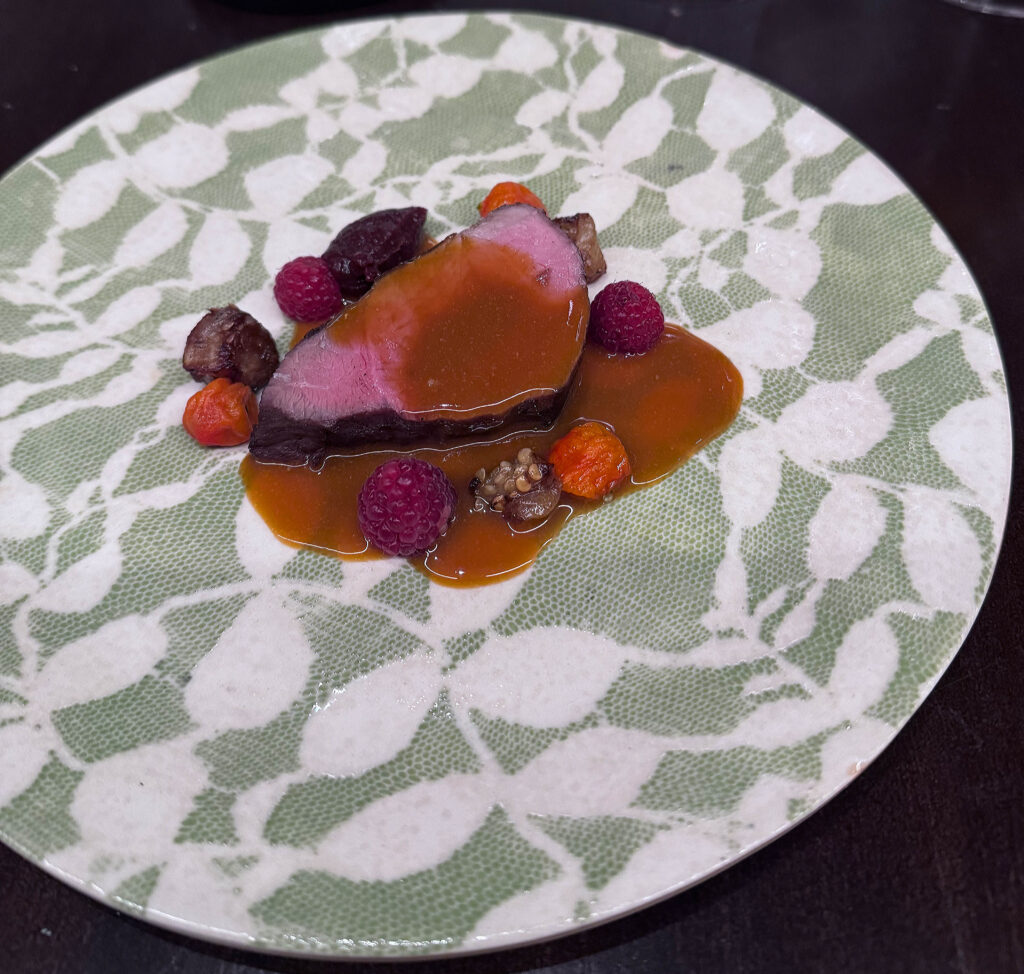
Forming the first of the night’s entrées, the “Lamb—Eggplant” offers a new take on one of Feld’s favorite proteins. Though my previous menu also showcased a cut of the animal’s belly, the present preparation centers simply on the loin (coming from the same Krazy Kluckers Farms Katahdin breed). Accompaniments, which included fresh za’atar and grilled honeydew in the past, now comprise pieces of the titular, grilled nightshade, a dab of plum sofrito, and an encompassing fermented tomato-foie gras fat jus alongside bits of dehydrated Sungold and raspberry.
It all makes for a colorful assemblage of pinkish, orangish, and brownish tones encircling the meat—and the lamb, to its credit, marries a slight degree of chew with a juicy, salty, and satisfying finish. Of the supporting cast, the deep sweetness of the tomato and plum (themselves possessing good savory balance) does the most to amplify pleasure. The raspberry, in turn, adds a jolt of tangy contrast while the eggplant, being a little seedy and stringy, is the only element that falls flat. Still, it’s easy to see how the nightshade might have further enhanced the loin, and I hope I’ll have the chance to see this flavor combination executed again with even more finesse.
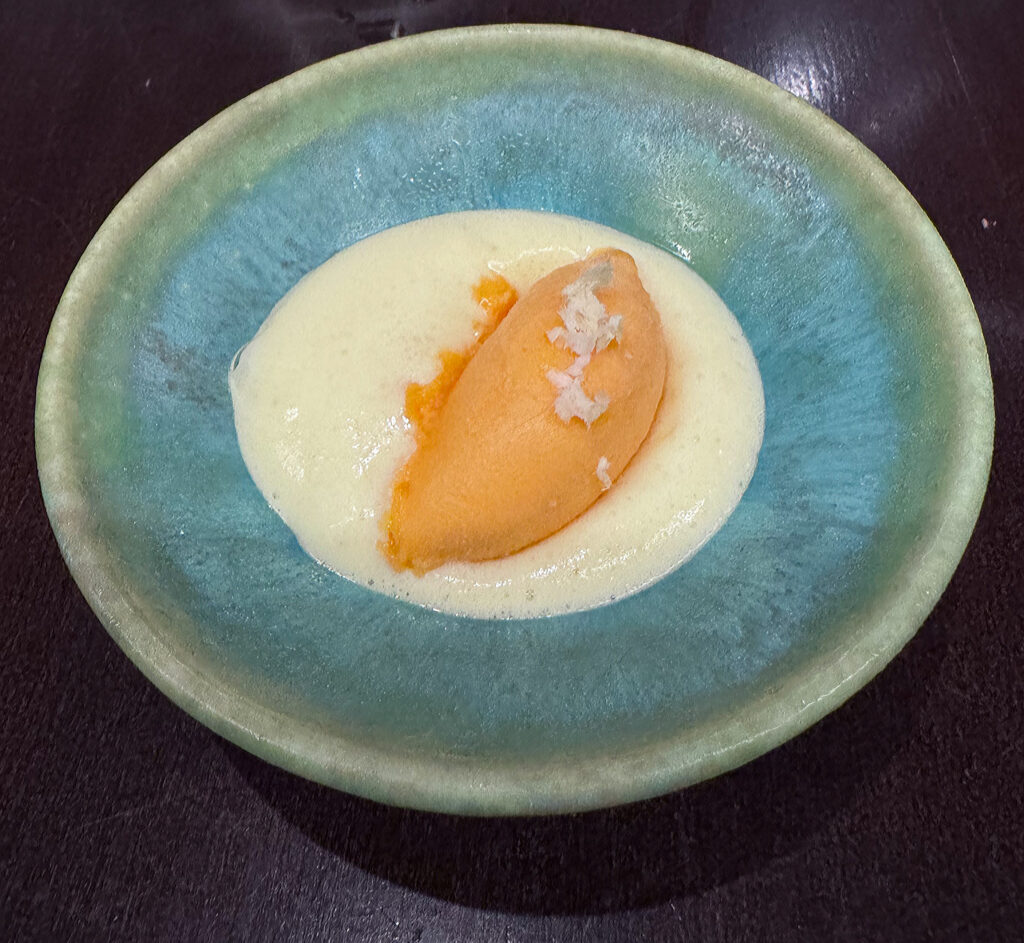
The “Sungold Sorbet” has formed a staple of my last two meals—being served alternatingly with a buttermilk peach sherbet (as part of dessert) and a burrata-shiso oil sauce (as part of an early tomato sequence).
Tonight, the sorbet comes dressed with tomato vinegar, a vinegar-spiked sabayon, and a dab of horseradish. Behind the smooth and creamy textures, one finds an immense concentration of acidity that, nonetheless, is effortlessly countered by the Sungold’s own powerful sweetness. The sum effect is bracing but skillfully managed, and I think it’s quite clever to situate this unique recipe as a kind of palate cleanser between the two main courses.
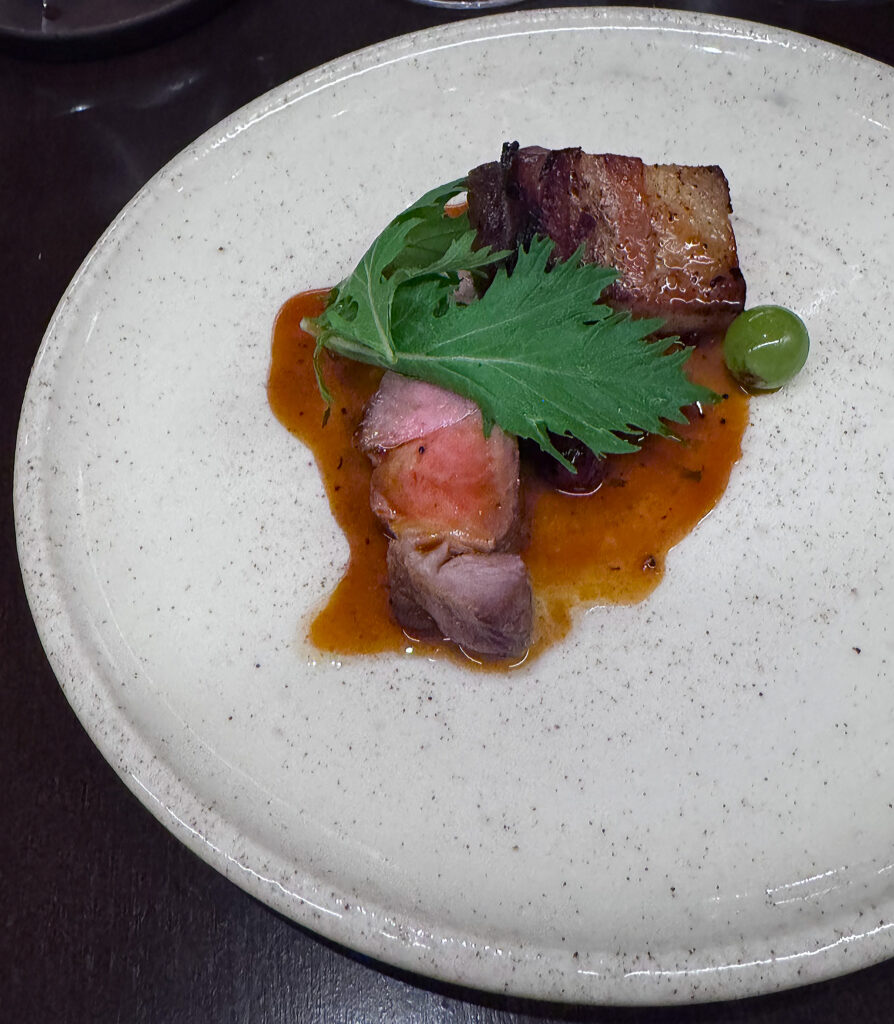
Closing out the savory section of the menu, the “Pork Loin & Belly—Grapes” subtly echoes the opening sashimi (on account of its kindred cuts). Yet the composition diverges from anything I’ve seen this protein (usually rendered as coppa) or that yellowtail pursue.
The meat is paired simply enough with pickled and grilled grapes, some za’atar jus, a shiso vinaigrette, and a couple leaves of mizuna (i.e., Japanese mustard greens). However, the interplay of the loin (fleetingly firm, resoundingly juicy), the belly (charred, unctuous) the saucework (wonderfully savory with sharp, zesty backing), the greens (lightly peppery, subtly sweet), and the fruit (more intensely tangy and sweet) is masterfully managed. At the same time, there’s no question that the pork—imparting such a convincing degree of satisfaction—is the star. In fact, I think this course ranks as one of the finest entrées Feld has ever served.
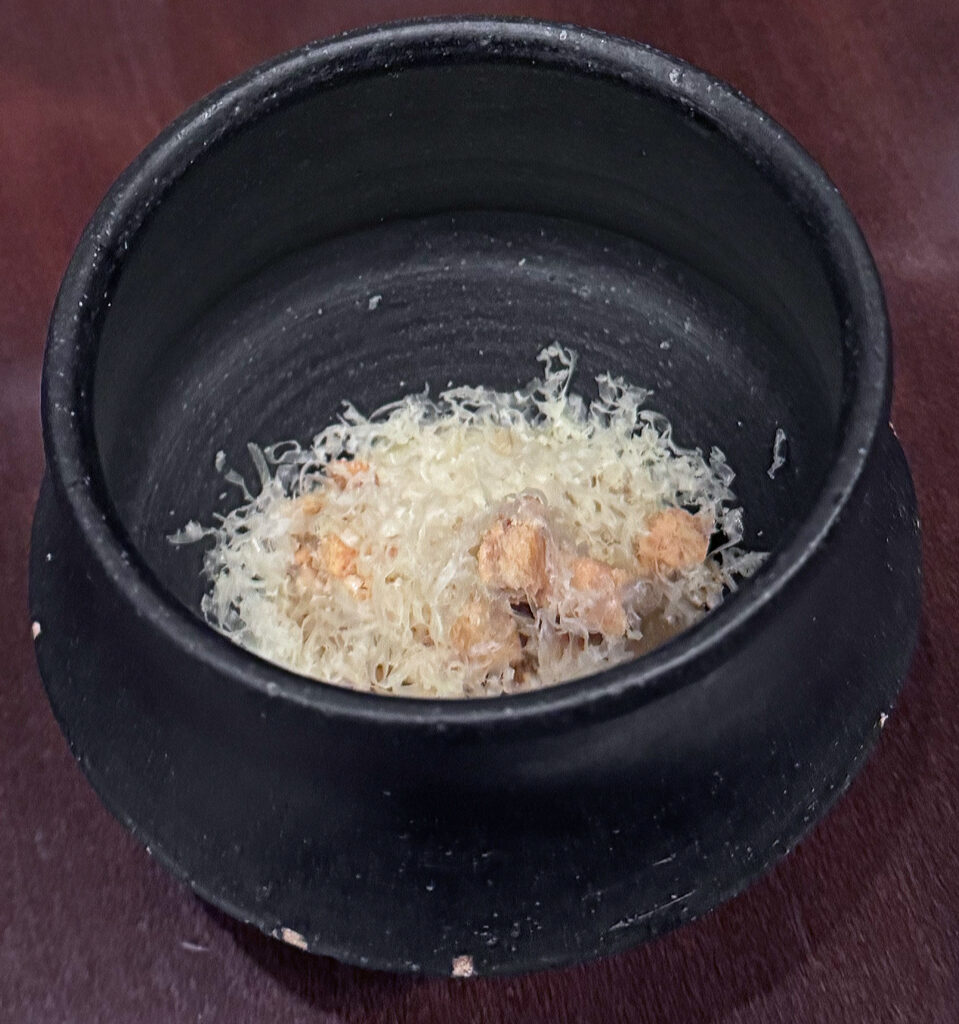
The turn toward dessert takes a familiar form: a preparation titled “Caramelized Pear—Pleasant Ridge” that reimagines the corn pudding versions of this recipe seen in July and August.
Here, the headlining cheese (so emblematic of the restaurant) is still rendered as chunks of shortbread and shavings over the top. The fruit element is hidden somewhere within. But a rosemary emulsion proves decisive: imbuing the rounded, mildly sweet notes in the bowl with an uplifting, piney quality that unlocks a shockingly decadent, appropriately caramelized depth through the finish. Indeed, while it’s hard to imagine the corn pudding being replaced by a mere herb, this evolution is so cohesive and oh so good.
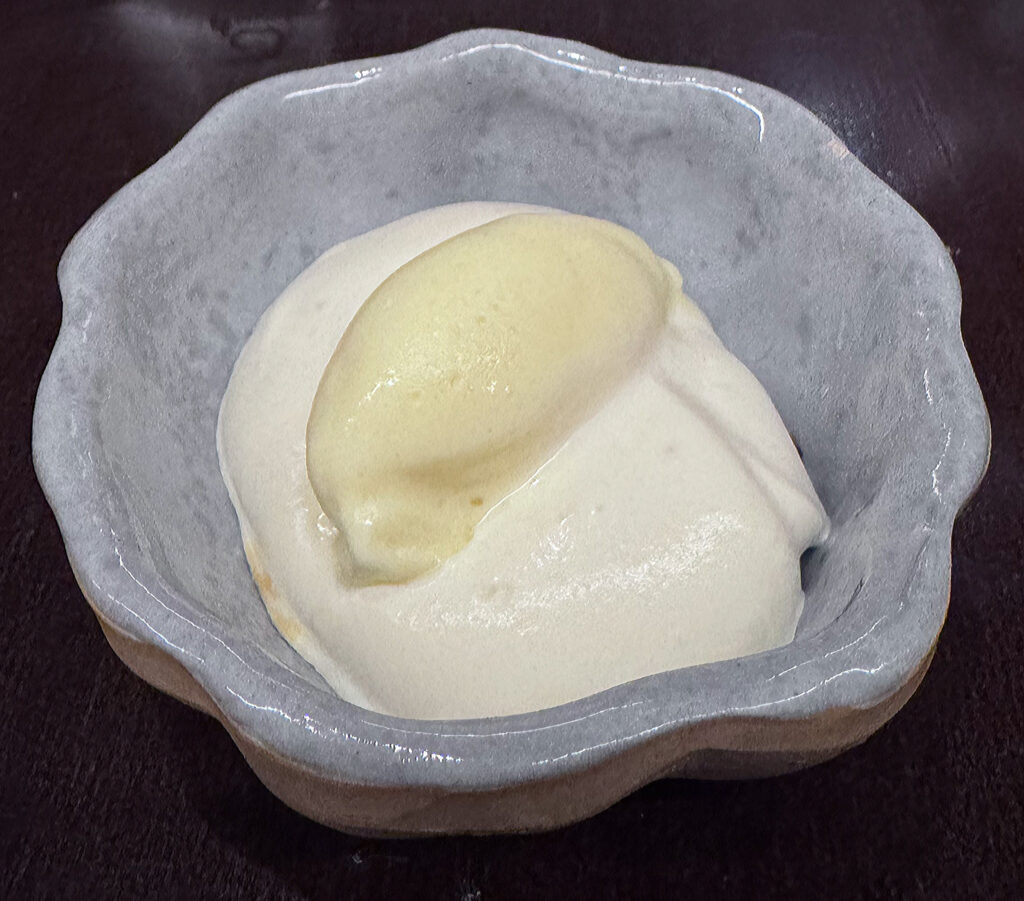
In a night filled with repeats and reimaginations, the “Oat—Lavender” is entirely new. It offers another layered construction made from toasted oats and blackberry (on the bottom) with a honey custard and lavender cream over the top.
When combined, the crisp and juicy and double creamy constituents actually make for good bedfellows: spanning earthy, darkly jammy, and floral-sweet flavors without veering toward tart, bitter, or sickly excess. Yes, this is a nice dish, and it comes together well. But the recipe misses the sort of memorable component and emotional quality required to stand among the best.
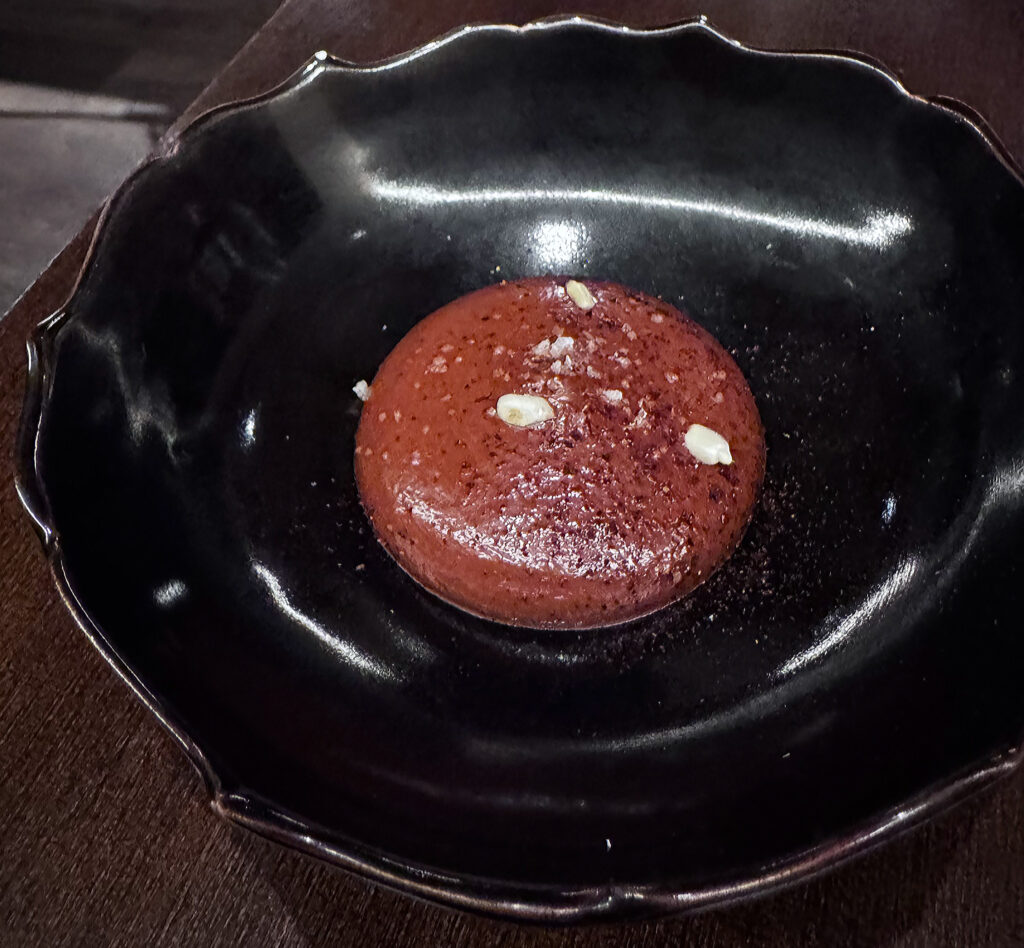
Of all the reboots this evening, the “Chocolate Mousse—Rhubarb Balsamic” might be the most welcome, for it brings back one of Feld’s most totemic ingredients. Yes, Sweden’s Svenska Kakao has formed one of Potashnick’s favorite purveyors since before the concept even opened (if I recall correctly, he worked there). After a recent visit, the chef brought home a seven-kilogram chunk of their 74% Tanzanian blend and, thus, can now reimagine his signature mousse.
In this iteration, the richly creamy base of dark chocolate is seasoned with tomato powder, peeled sunflower seeds, flaky salt, and a drizzle of two-and-a-half-year-old rhubarb vinegar that has been aged in-house. On the palate, any sense of bitterness one might expect from the mousse is totally subsumed by the latter dressing. This allows the most vibrant, fruit- and nut-inflected sweetness to come to the fore: joining with the chocolate’s own jammy notes then giving way to a long, satisfying, and cocoa-driven finish. Years later, this recipe has never been better.
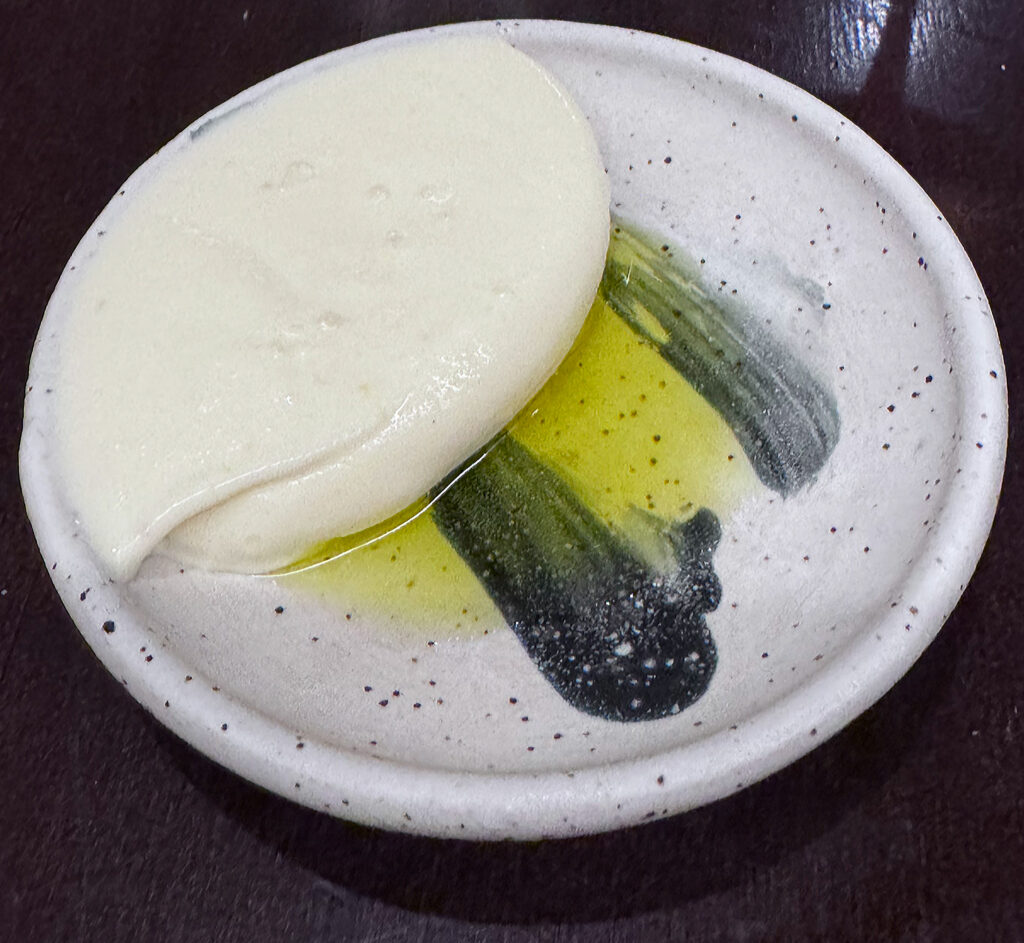
The final composed dish of the meal is, perhaps, the one that has changed the least. After all, the “Gelato—Corn Cob” (fresh-churned and seasoned with nothing more than olive oil and salt) ranked among the year’s highlights in July.
Last month, the preparation seemed to falter just a bit: tending toward a more blatantly sugary, artificial-feeling (if not actually so) expression while still remaining broadly successful. However, tonight, I am happy to report that the gelato—flawlessly smooth with enough freshly earthy depth to balance out the sweetness—has just about returned to its full power. There’s no doubt that this recipe should form one of the kitchen’s seasonal staples. In turn, they do such great work with ice cream that, with the novelty value of this particular flavor starting to fade, I am eager to taste what comes next.
The menu’s closing sequence arrives in two parts (one familiar, the other entirely new):
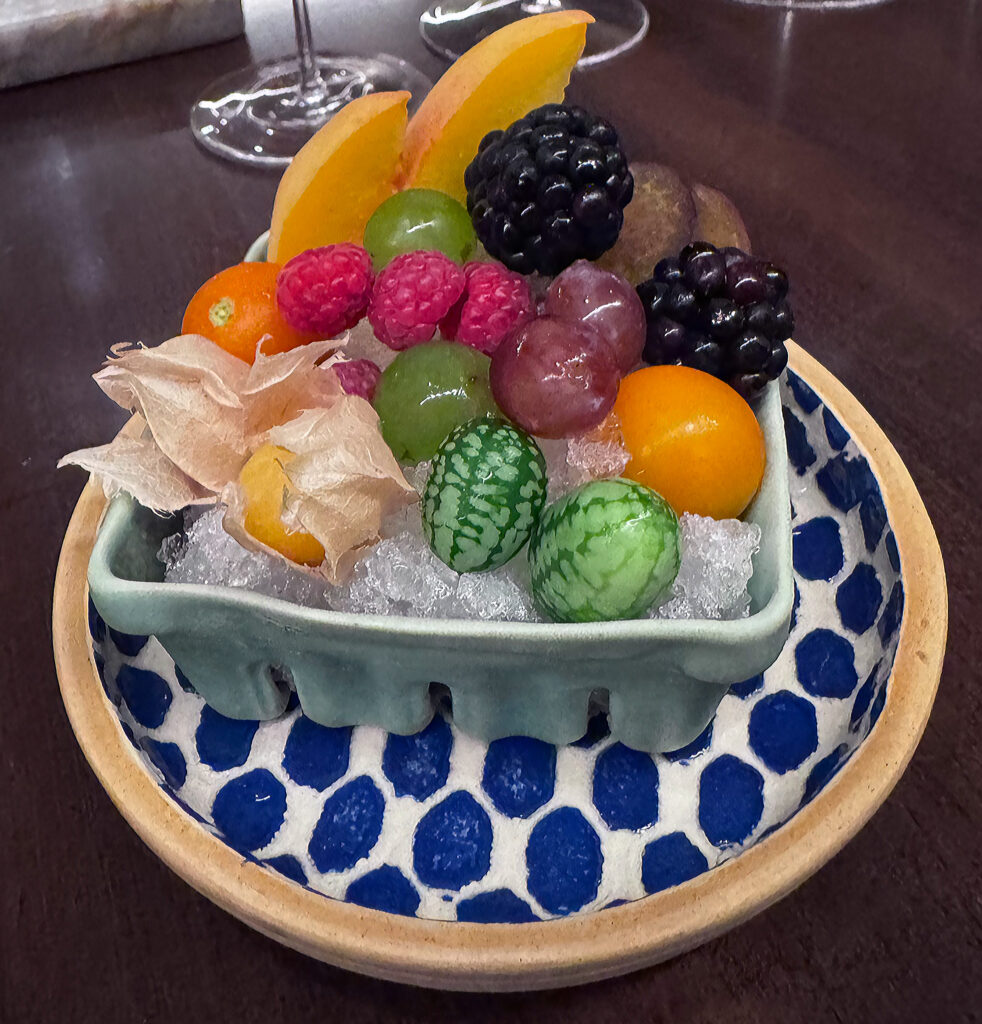
First, there’s the old “Fresh Fruit on Ice,” which is never quite superlative but is more or less pleasing on the back of the peach, green grape, and red grapes pieces contained within. (The plums, cucamelons, blackberries, tomatoes, and husk cherries make less of an impression without being disagreeable.)
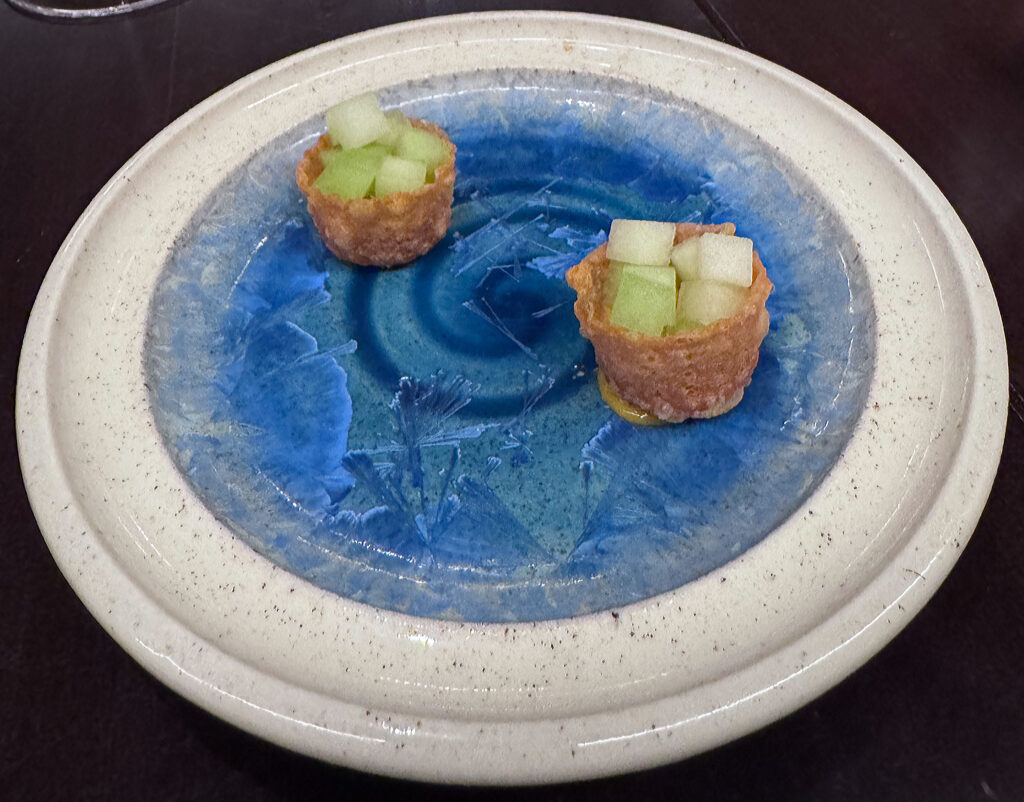
Second, we have the “Tomato Curd Crostade,” which is tasked with replacing the canelés that (particularly the spiceberry flavor) have proven so successful over time. Visually, it’s hard to see this little bite ever rivaling a bonafide pastry.
Yet, the buttery, brittlely crisp shell beautifully combines the tropical sweetness of the Sungold filling with the juicy, creamy, and honeyed cubes of sapo melon stacked over the top. Overall, it’s a fitting swan song for a couple ingredients that, in their various guises, have done so much to define the tasting.
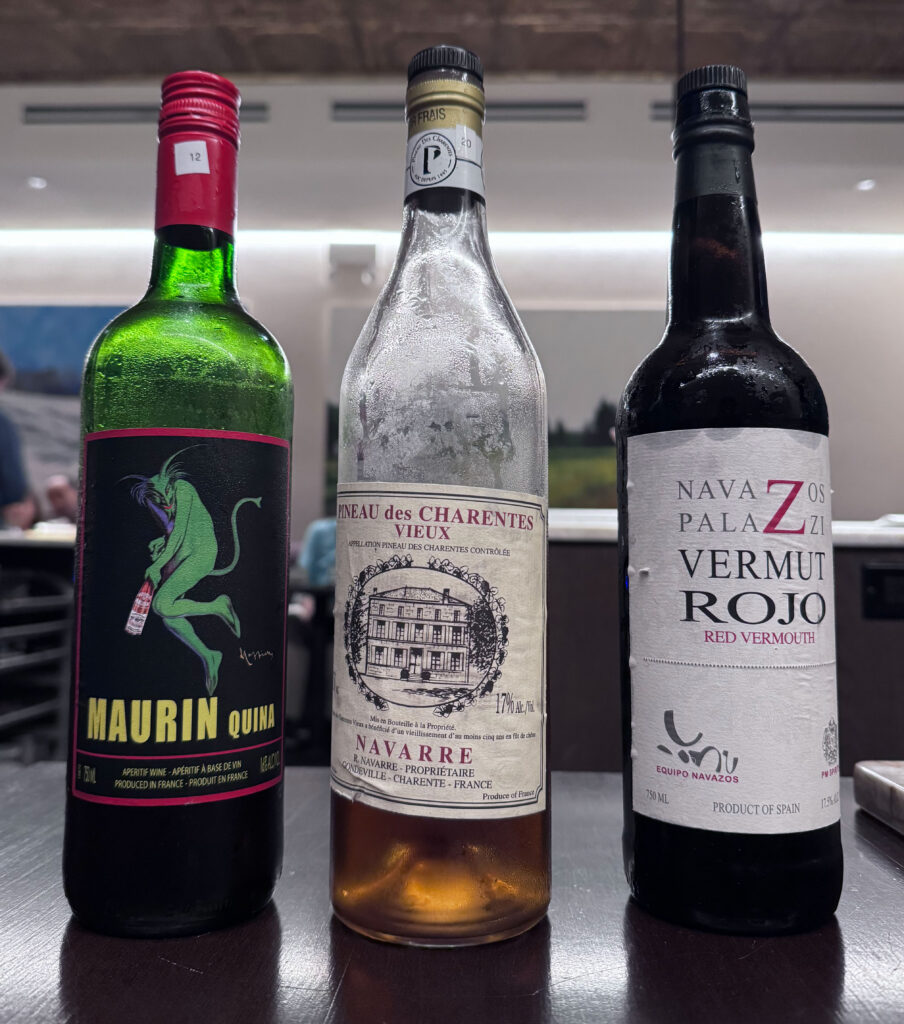
With that, the after-dinner drinks are now carted out (with a few new selections to sample), the guestbooks await their latest entries, the menus tell the tale of what was just served, and—after checks are paid—s’mores provide a final note of indulgence (equal parts nostalgic and sacrilegious depending on how one feels about the classic ingredients).
As always, this moment in the garden offers patrons the chance to step away from the breakneck energy of the dining room’s performance (some 26 creations served in a little under two hours!), to mingle with each other and further cement some connection with the chef.
Potashnick, in this role of fire-tender and marshmallow slinger, is a consummate host. He always was. But Feld’s cuisine now truly matches its creator’s ambition, and his easygoing, gracious manner in these moments has grown all the more striking.
In ranking the evening’s dishes:
I would place the “Black Cod—Fennel,” “Abalone—Seaweed,” “Pork Loin & Belly—Grapes,” and “Gelato—Corn Cob” in the highest category: superlative items that stand among the best things I will be served in any restaurant this year.
The “Watermelon & Mint,” “Mackerel Tart,” “Tempura Shishito,” “Peeled Sungolds—Jimmy Nardello,” “Grilled Sungolds—Ajo Blanco,” “Corn Soup—Coriander,” “Ultraviolet Corn,” “Lamb—Eggplant,” “Sungold Sorbet,” “Caramelized Pear—Pleasant Ridge,” “Chocolate Mousse—Rhubarb Balsamic,” and “Tomato Curd Crostade” land in the following stratum: great recipes that achieved a truly memorable degree of pleasure. I would love to encounter any of these again.
Next come the “Corn Husk Broth,” “Honeydew Mule,” “Cantaloupe Margarita,” “Lambkin & Passionfruit,” “Shiso Roll,” “Yellowtail Sashimi,” “Oat—Lavender,” and “Fresh Fruit on Ice”—good—even very good—preparations I would always be happy to sample again (but that just failed to elicit an extra degree of emotion).
Finally, there’s the “Lamb Tartare Crostini” and “Heirloom Tomato—Honey”—merely good (or maybe just average) items that fell short when it came to texture and/or flavor. Given that I’ve seen these ideas executed more successfully in the past, I think they could easily be redeemed with a little more tweaking.
Overall, this makes for a hit-rate of 92% with some 62% of offerings reaching that “would love to have again” level of quality: figures that largely match the numbers I reported in August (i.e., 96% and 56%), July (i.e., 96% and 63%), June (i.e., 100% and 52%), May (i.e., 100% and 54%), and April (i.e., 96% and 54%). If we consider the number of “best of the year” dishes (four, compared to four in August, three in July, six in June, five in May, and four in April), the results also remain more or less consistent.
Structurally, if we discount the fact that only one component of “The Drop” and one other savory construction came up a little short, the present meal actually felt hugely successful. The proportion of items in that “would love to have again” category (nearly tying July for the highest I have ever witnessed) makes that point clear.
However, what really impresses me tonight is the run of recipes from the “Grilled Sungolds” through the “Corn Soup,” “Ultraviolet Corn,” “Black Cod,” “Abalone,” “Lamb,” “Sungold Sorbet,” and Pork Loin & Belly”—a series of delectable courses that affirms the kitchen’s virtuosity with fresh produce (even when using the same ingredient across successive presentations) and headlining proteins alike. Indeed, these preparations were so strong that I can totally overlook the fact that the “Heirloom Tomato—Honey” faltered right in the middle of them.
Dessert, as usual, delivered ample pleasure, with three of the four composed plates ranking among the highlights of the menu and the remaining one—the “Oat—Lavender”—still meeting a baseline of satisfaction.
Ultimately, it’s actually “The Drop” (with its more frivolous bites) that frequently deflates Feld’s numbers. Yet this drop-off really has more to do with the sequence’s essential dynamism and capacity for experimentation than any habitual errors.
On this occasion, the “Watermelon & Mint,” “Mackerel Tart,” “Tempura Shishito,” and “Peeled Sungolds” led the opening flourish to one of its most successful performances—one in which almost half of the components transcended their meager size and actually ranked, as well, among the evening’s highlights.
Thus, while there is always still more room to grow (imagine if “The Drop” ever comprises a full nine or ten items that are all truly superlative), I can only admire the progress Potashnick and his team continue to make.
This was a meal in which every major section had more than a few valuable things to say—and one, at times, where a pervading rhythm took hold and transformed bits and pieces of seasonality into a profound expression of pleasure.
I am eager to taste what the first of fall’s bounty brings later this month.