
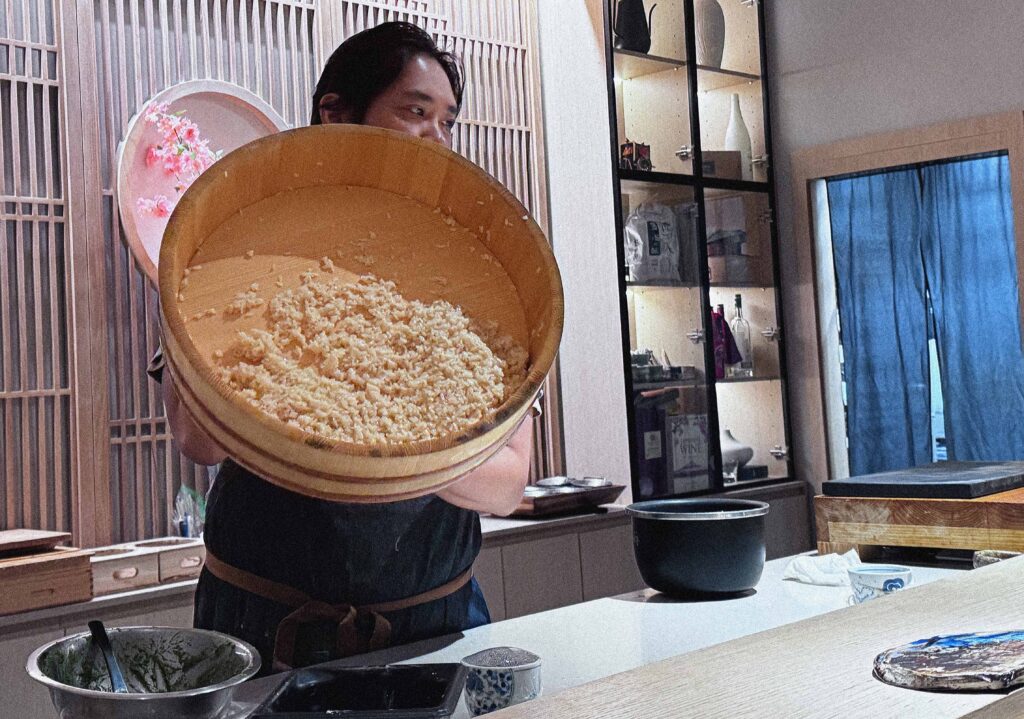
It’s been a little over a month since my last visit to Kyōten, which was headlined by one of the greatest pieces of ōtoro I can ever remember eating here (or anywhere for that matter).
Thus, as eagerly as I await each new meal at Chicago’s most expensive and eccentric sushi counter, this one almost seems destined to be a disappointment. Indeed, while chef Otto Phan’s tuna is reliably exceptional—even superlative—the best examples strike like lightning and keep us coming back, thoroughly hooked, with the hope that we may get so lucky a second or third time.
Inevitably, there will be some drop-off in the interim: from a life-changing degree of quality to a level that aligns more with expectations (though certainly lofty ones given the price being charged). Tonight, the ōtoro actually strikes me as being particularly strange—almost jarring—in its composition, undermining what I’ve come to see as the very core of the omakase’s value proposition and sending me into a state of confusion.
It doesn’t help that the neighboring party really wants to converse, which complicates any effort to record detailed appraisals of the food. Plus, given the nature of wild fish (Kyōten’s hallmark) and the dynamic nature of the restaurant’s menu, don’t we just have to accept a certain degree of inconsistency and occasional disappointment as the cost of enjoying the singular craft of a single chef who must ride the wave of far-flung sourcing while forever honing his technique.
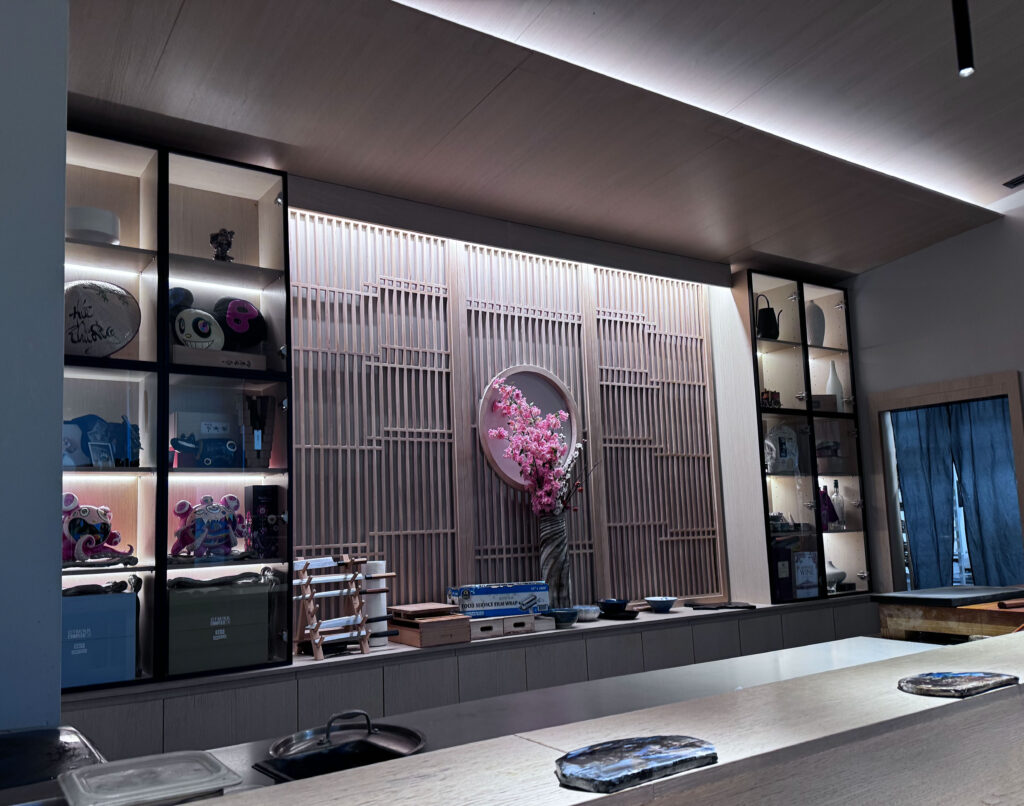
Yes, it would be easy to write this meal off and pretend it didn’t happen: to help protect the dignity of a frequently misunderstood concept whose work is directly associated with the efforts of just one man.
But, if I am serious about evaluating the small set of establishments I have chosen to focus on this year, it is impossible to ignore those performances that feel markedly weaker than what I know each team is capable of. In fact, the corresponding change in perspective can be uniquely illuminating.
To wit, in a format like this, the floundering of the headlining tuna effectively restructures the meal and, ironically, actually helps to reveal and celebrate the menu’s more understated providers of pleasure.
Through this process, one gets a stronger sense of all the time and effort being applied to the so-called “lesser fish” who, effectively (in accordance with the peak–end rule), safeguard the evening’s wider success.
For that reason, an experience of this nature—however unfortunate—may truly make for the perfect test. For it strips the chef of their luxury totems, denies the audience their accompanying emotional highs, and prompts a careful consideration of substance (and only substance) as it exists outside of the conventional spotlight.
Let us begin.
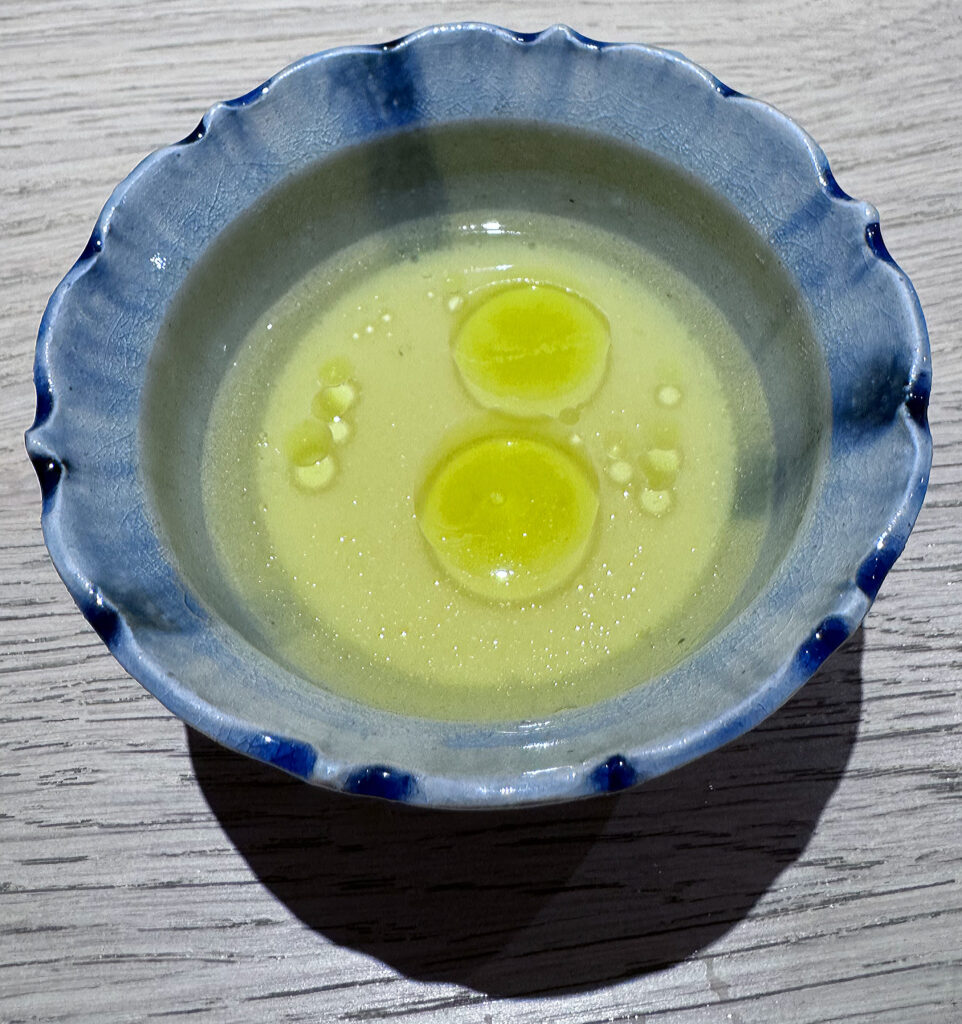
For all I’ve said about the forthcoming ōtoro, Phan gets off to a strong start. His “Chawanmushi”—a totally novel recipe for Kyōten—begs comparison to the versions I have tasted at restaurants like Smyth, Oriole, and Kumiko over the past couple months. These other examples, each studded with shellfish, are undoubtedly more elaborate, so leave it to the sushi chef to, counterintuitively, put forth a version that has nothing to do with seafood.
That said, Phan’s tamago has long formed one of the menu’s signatures, and I find his execution of this steamed egg custard to be equally confident. Here, the fleetingly firm, perfectly creamy base is paired with a cold tomato broth made from Froggy Meadow Farm Sungolds and a drizzle of olive oil. This makes for a series of bites that start rich and soothing yet veer toward mild acidity, moderate sweetness, and fruity (as well as faintly bitter) depth on the finish. In short, this simple chawanmushi is beautifully composed and makes for a refreshing, invigorating beginning during these last weeks of summer.
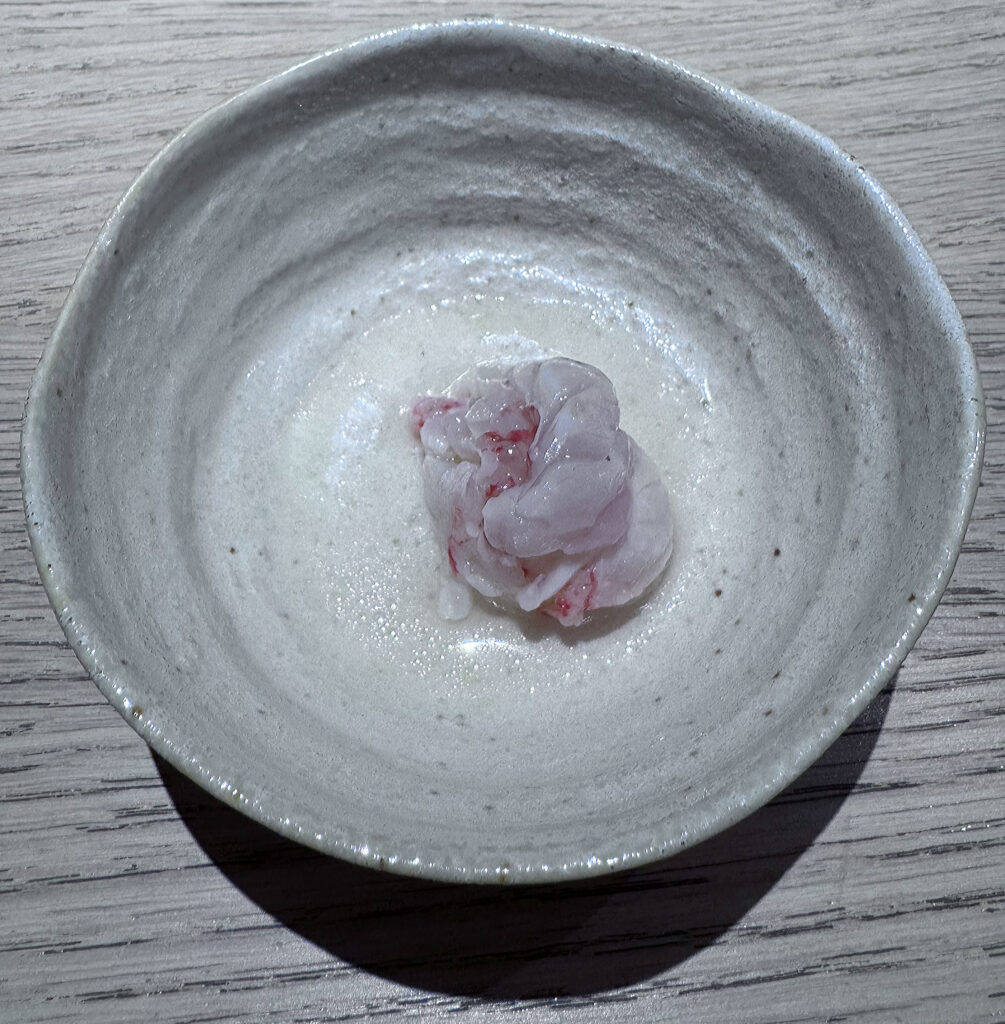
The “Aka Ebi,” by comparison, has formed one of the omakase’s stalwarts during the course of the year. I last encountered this red, deep-water prawn (sourced from Hawaii) in the early part of July. Tonight, it returns in a somewhat colorless form with its customary dressing of lemon juice and dashi.
On the palate, the resulting curls of flesh combine a plump, pleasing attack with a fine, creamy mouthfeel upon further mastication. Flavor, on the back of the tomato broth, feels clean without being too overwhelmingly tangy. Rather, I appreciate that the citrus is well matched by a persistent note of umami that carries through the finish. Ultimately, while I have found myself tiring of this dish at times, the present example (especially with the chawanmushi acting as a preceding counterpoint) serves to build the meal’s momentum in an elegant, approachable way.
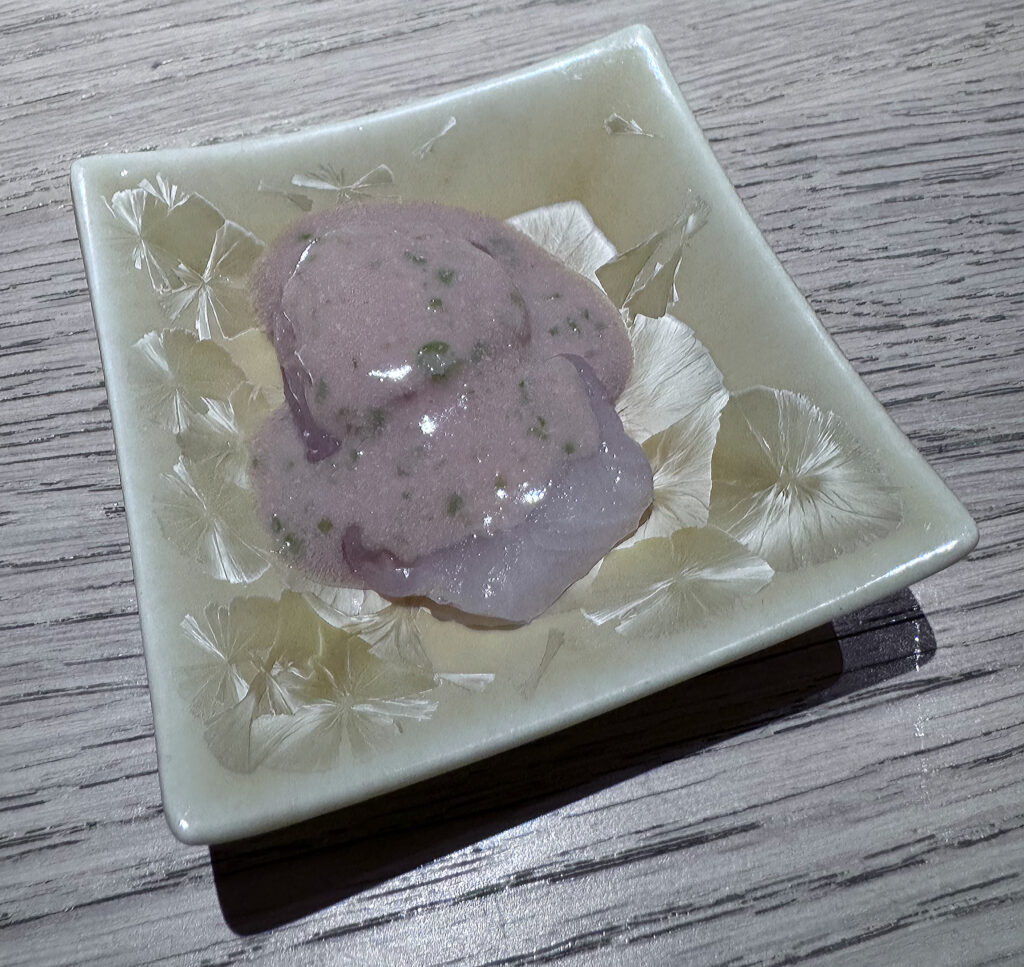
Given that the “Kawahagi” (or filefish) arrives next, the prawn’s friendlier character might truly form an essential foil. I only count two occasions when Phan has worked with this particular ingredient before: one, on this occasion, that is prepared as sashimi but seasoned in the traditional manner with its liver (which has been pressed raw then paired with dashi and green onion).
Texturally, the filefish possesses a firm—yet smooth—consistency that becomes more mouthcoating and creamy with the help of its sauce. Indeed, while the liver feels appropriately rich, its flavor expression is also rather clean and, perhaps, falls a little short of total decadence. Nevertheless, the allium note on the finish is quite nice, and I observe that the other guests at the counter find this somewhat challenging bite to be likable in the present form. Compared to the chef’s past examples, this kawahagi shows real promise.
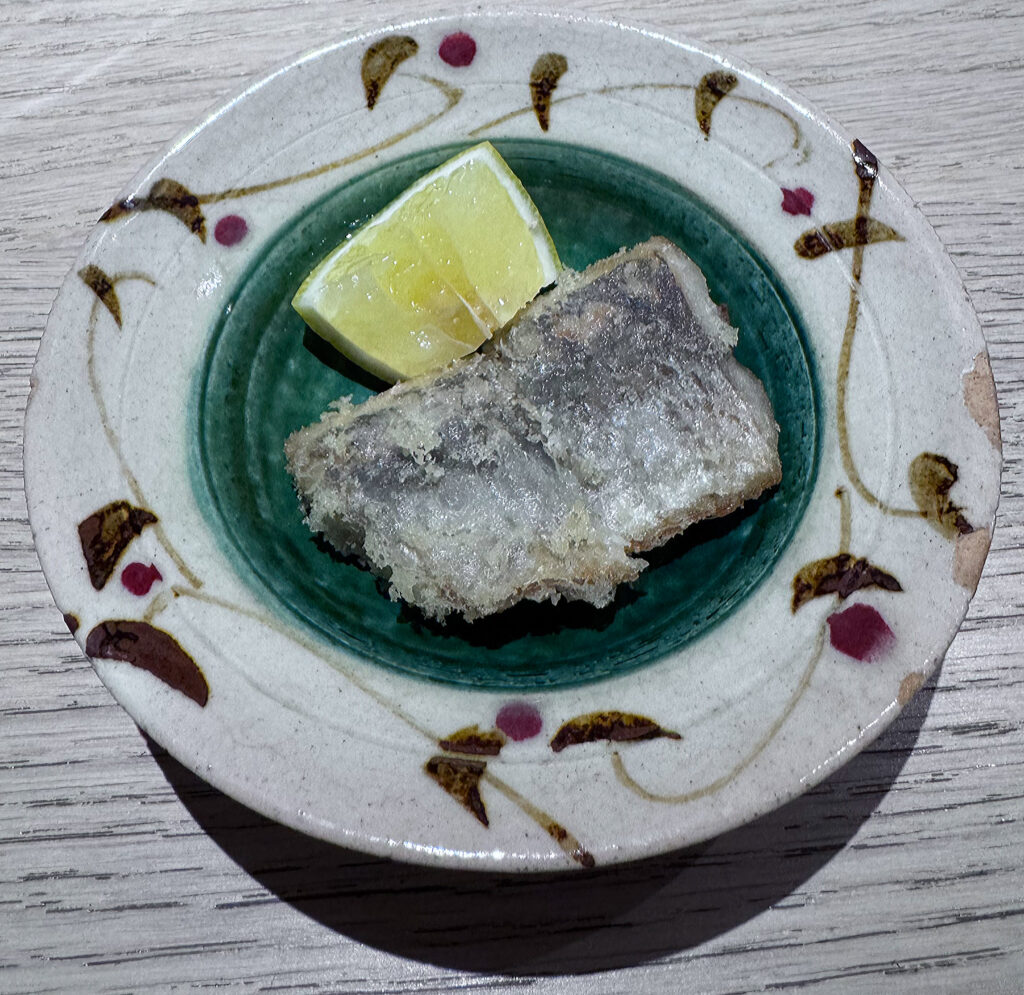
The “Aji Tempura” enters into a long line of fried preparations that have, over the past couple years, formed the posterchildren for Kyōten’s ever-widening technical breadth. I’ve never seen the chef draw upon horse mackerel for one of these recipes, so I’m particularly excited to see where the fish ranks among his usual favorites.
Visually, the resulting serving delights me with its generosity. With a squeeze of lemon, the aji displays a mildly crisp exterior (that could very well be crisper) with a firm, meaty interior that is very much to its credit. Unfortunately, the horse mackerel’s pleasing flesh is imbued with a murky, muddled note I can only term “fishy,” and this quality effectively obscures any sweet, citric, or attractively savory expression that might otherwise come to the fore. Overall, it’s still possible to find enjoyment here, yet I think both texture and flavor fall short of the restaurant’s usual standard.
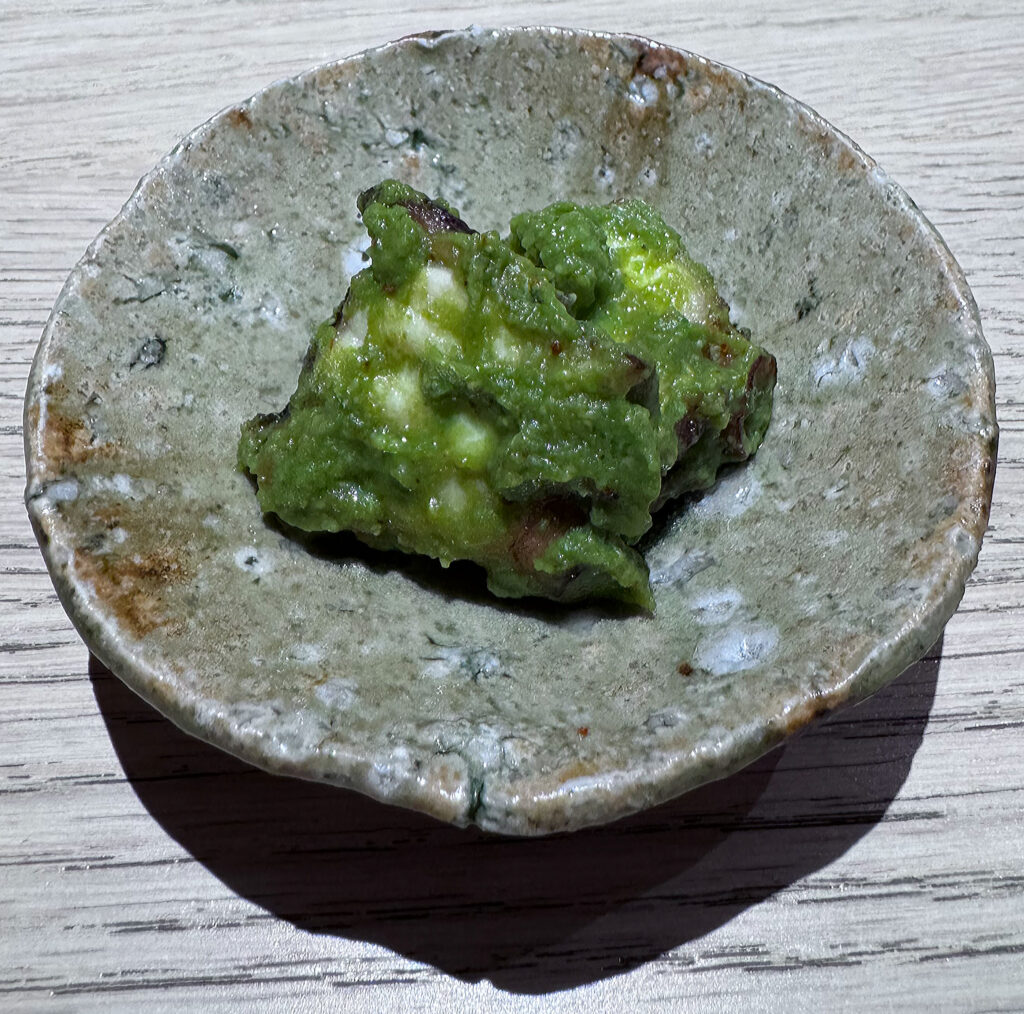
Thankfully, Phan’s signature “Octopus” gets things back on track immediately. The cephalopod, as always, is massaged and boiled and karaage-fried before being liberally tossed in the chef’s “ugly delicious” avocado ponzu.
The resulting pair of bites strikes me with an extra tinge of crispness (which is typically softened by the creamy coating) this time around. The sauce, in its own right, seems a little sharper on this occasion too. Given that the octopus offers all the same richly chewy consistency for which it is known, these small improvements shape an example that feels especially delicious—and somewhat redemptive on an evening when other starring items falter.
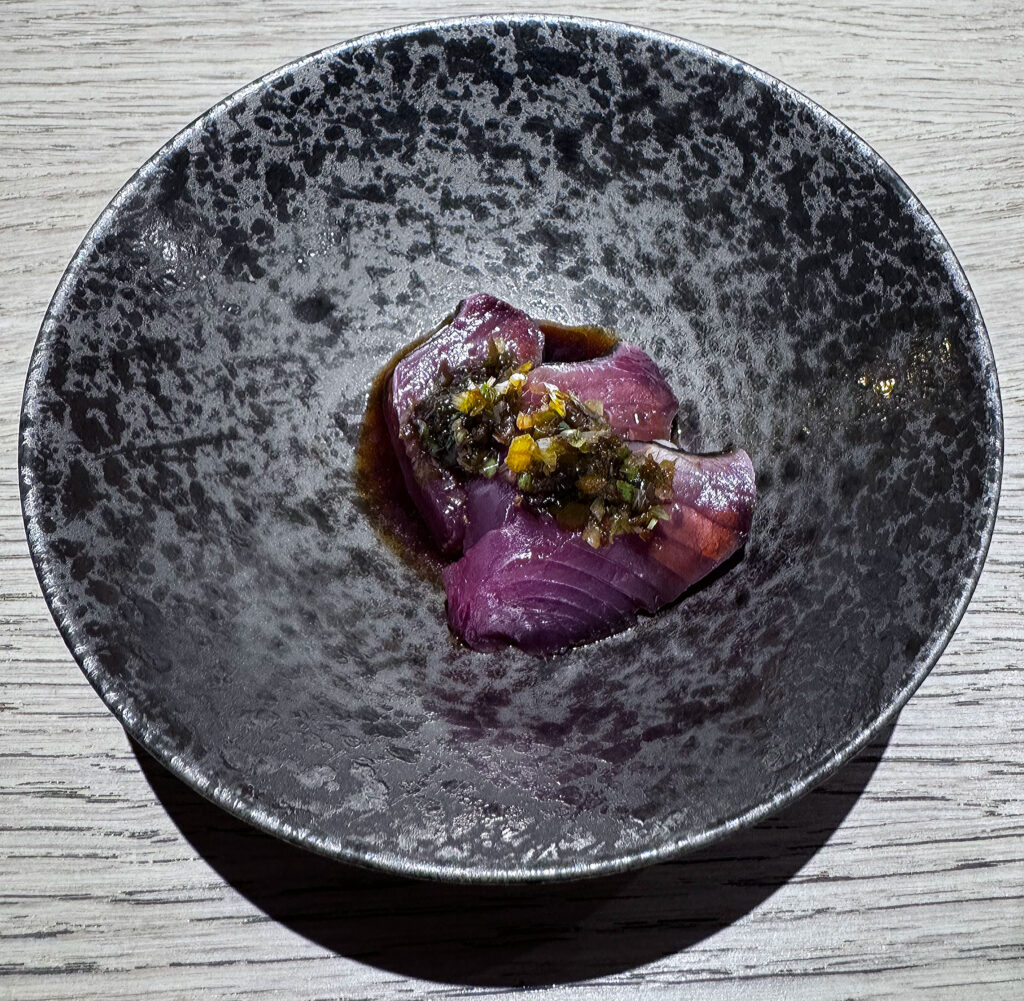
Closing out the opening sequence of small plates is a presentation of “Katsuo” (or skipjack tuna), which—in contrast to its appearance as nigiri in late May—now comprises three thick slices dressed in a green onion and pepper ponzu.
On the palate, the fish’s lightly smoked flesh displays a supreme degree of plumpness and weight that proves remarkably tender with the most moderate of chewing. Flavor is characterized both by an electric acidity and, strikingly, what feels like a numbing effect through the middle. However, on the finish, these supporting notes give way to a strong, lasting sense of umami whose deeper shade and sheer power stand apart from anything else on the menu. Given the performance of the other, forthcoming cuts of tuna tonight, the katsuo makes for a clear (and rare) highlight.
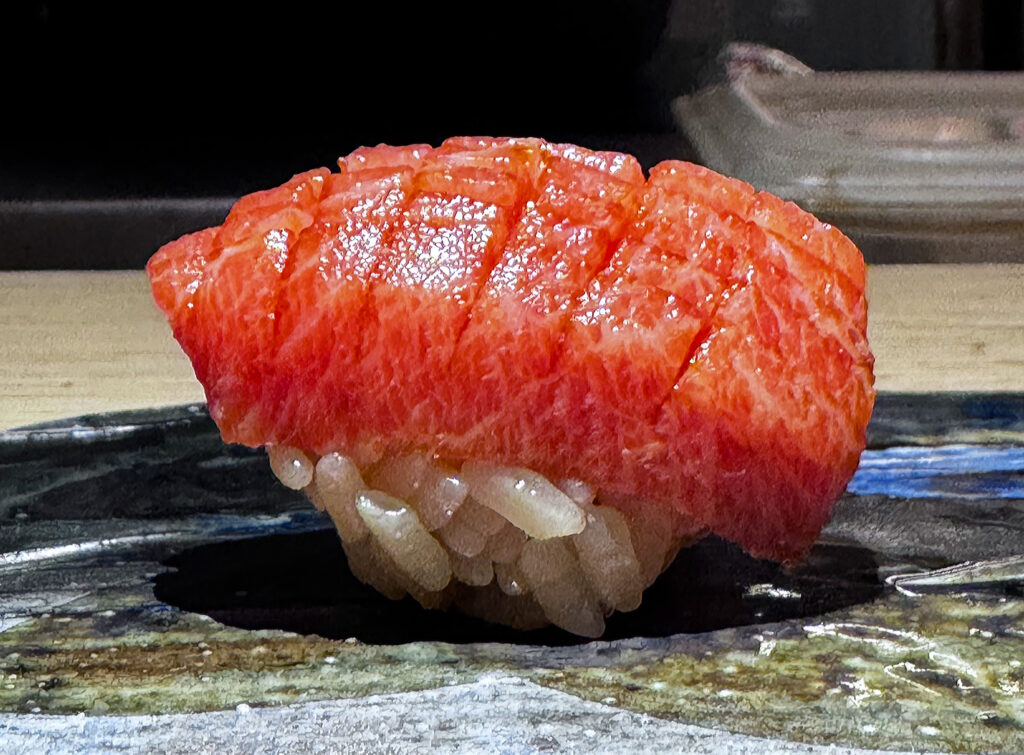
As always, Phan’s “Ōtoro” kicks off the progression of nigiri, and boy is the present example a specimen. This fattiest cut of the tuna’s belly boasts a fine web of marbling stretching throughout its pale red, deeply scored (in a crisscross pattern) surface.
The stage is set for this to be a superlative bite, yet, on the palate, all that fat feels firm and sinewy rather than melting away in the appropriate fashion. To be clear, the ōtoro is not hard to actually eat. However, it is missing all its usual cohesion and elegance and that signature juxtaposition of flesh and framing richness. Here, I only really sense a touch of wasabi on the finish, and I can only describe this piece as a clear—and confounding—disappointment that undermines the menu’s emotional core.
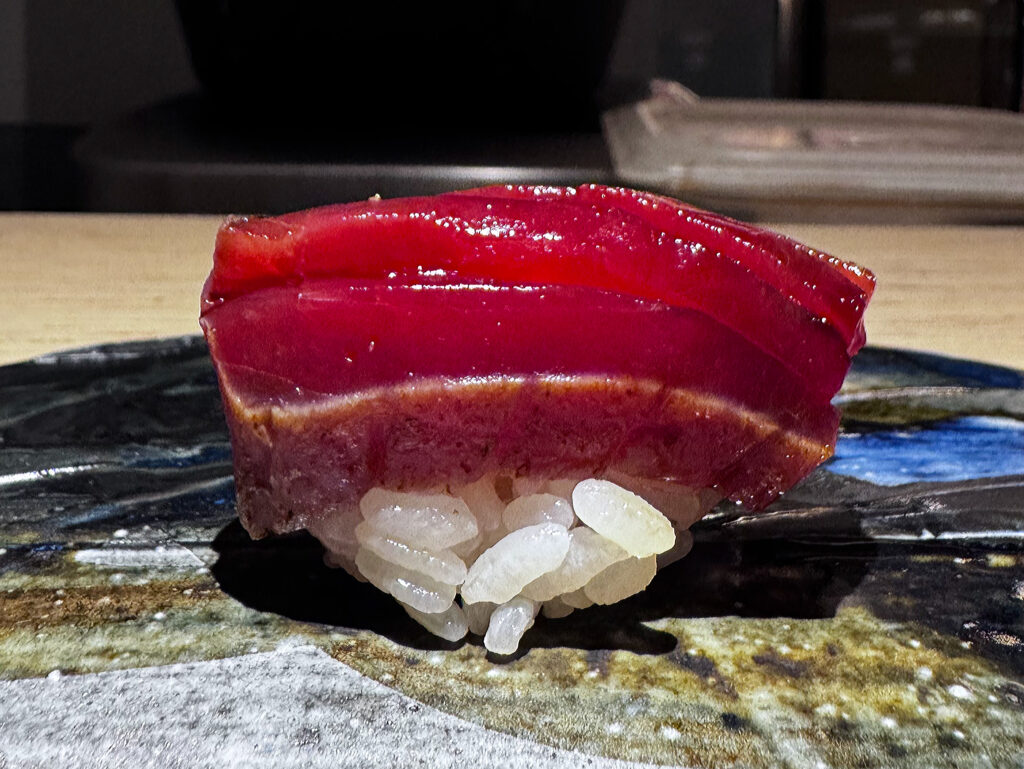
This evening’s “Akami” (a term referring to the tuna’s leaner meat) comes from the same katsuo that featured a couple courses ago. Its darker tone suggests a period of soaking in soy sauce while the cut’s modest, lengthwise scoring and relative paucity of fat promises a different (and I can only hope superior) textural expression than the prized item that came before it.
On the palate, the akami immediately sets me at ease with the smooth, yielding mouthfeel that accompanies its fleeting feeling of weight. Flavor, in turn, is defined by an appropriate jolt of umami drawn from the marinade. The overall effect—I’m thinking of how the vinegared rice and wasabi really come together in some instances—isn’t quite explosive, but it does enough to get things back on track at this early stage.
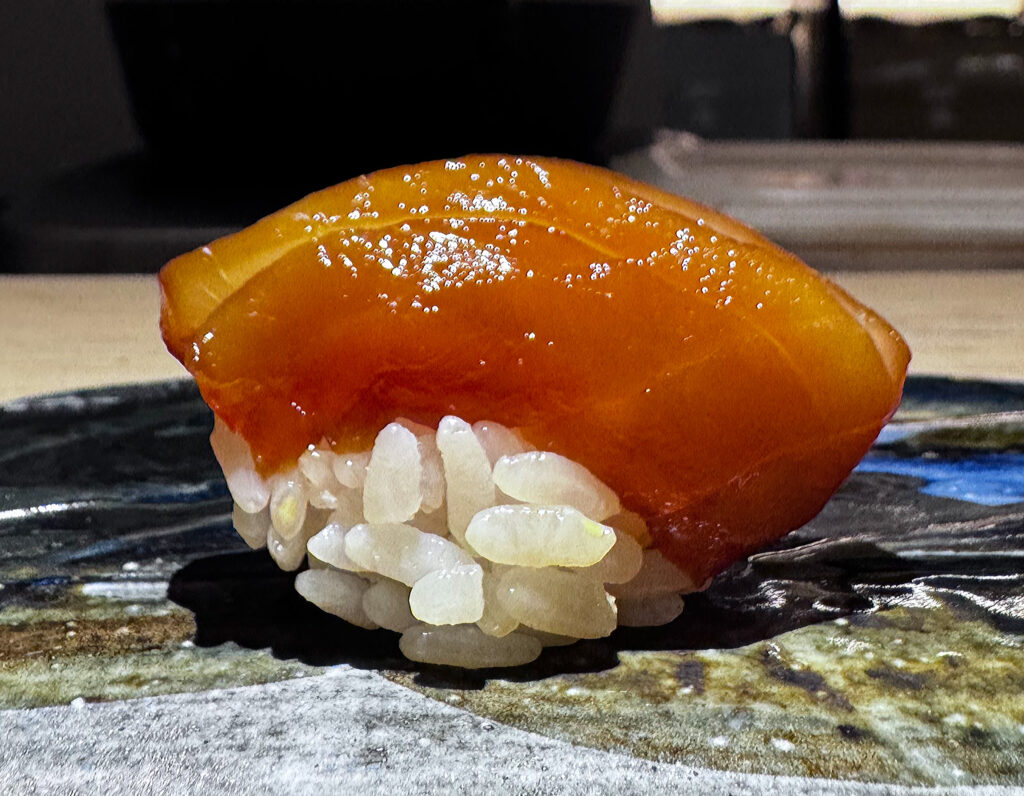
At this moment, it’s easy to feel like the omakase’s greatest pieces are already in the rearview mirror, and that they’ve come and gone without making much of a positive impression. Yet, for the very first time, Phan now presents a cut of “Makajiki” (or striped marlin) that he likens to swordfish.
Sourced from New Zealand, the fish possesses a striking, orange-brown tint (attributable to its own marination in soy sauce) that is unlike anything I’ve encountered before. This particular cut is taken from right up against the specimen’s spine, where the meat is said to be “velvety” and quite comparable to tuna. I can only agree, for the resulting piece combines smooth, rich, and seamless flesh with just the imprint of soy sauce and wasabi I’ve been looking for. Indeed, on this occasion, the makajiki surpasses both examples of the katsuo and the ōtoro itself to rank as the best in its category tonight.
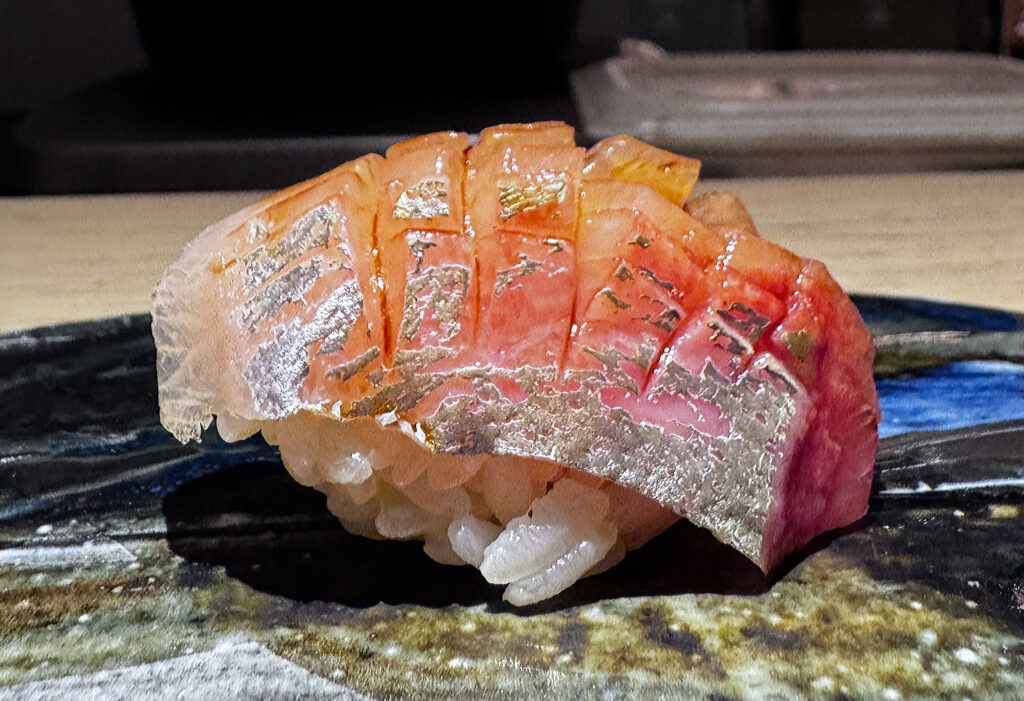
Moving into the heart of the progression, I am always happy to come across the “Shima Aji” (i.e., striped jack), which has finally formed a consistent part of the Kyōten roster this year. When the chef cannot get his hands on the restaurant’s signature wild mature yellowtail, this is one of fish that eases the transition away from those headlining cuts of tuna.
Served with traces of its silver skin and an ample amount of scoring, this rendition of shima aji is also distinguished by a touch of lemon zest. The citrus marks the piece’s firm, succulent flesh with a tangy attack and a nice, cleansing finish. However (and this is frequently the case when the chef makes use of such a seasoning), I find that the piece’s savory power becomes blunted in the process. Thus, while I do enjoy my bite, it falls a little short of other versions that have often ranked among the best items of their respective menus.
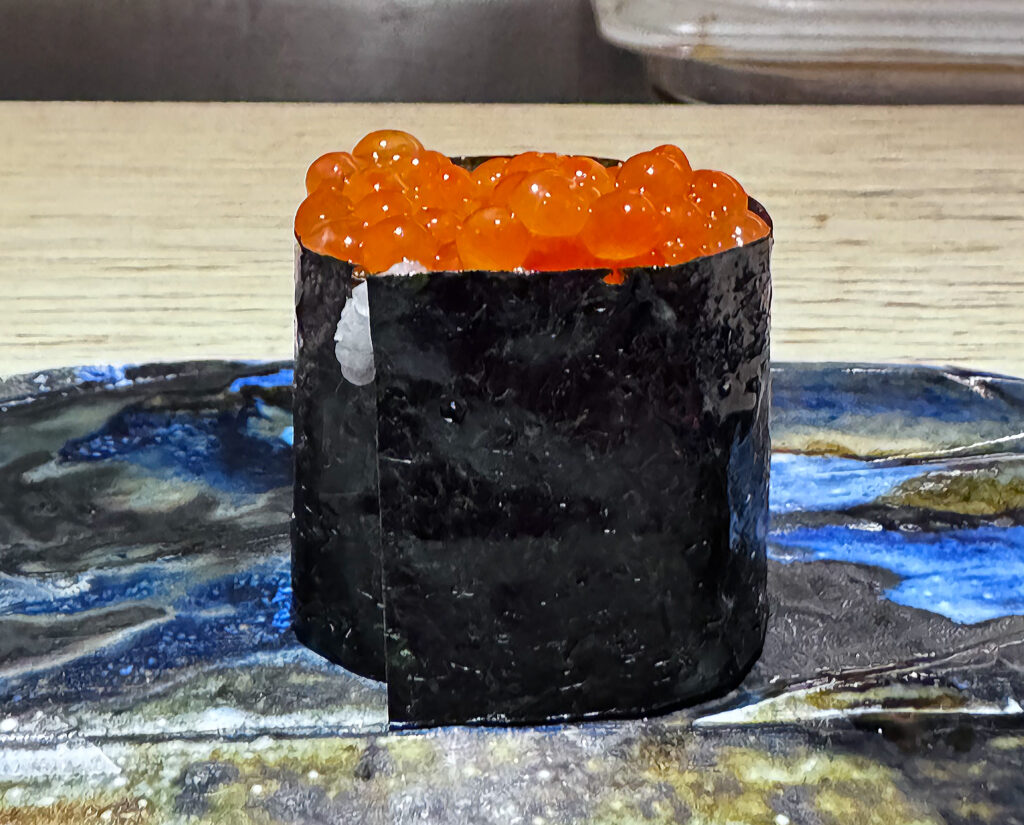
The arrival of the “Ikura” (or salmon roe) is another welcome sight, and this particular serving represents Kyōten’s very first example of the season—as well as the kind of reliable luxury ingredient that can help atone for all manner of other mistakes.
Tucked atop rice that has been wrapped in seaweed, these glistening orbs strike me with their tender, bursting mouthfeel (neither firm like marbles nor soft like mush) and pristine, almost citrusy (rather than jarringly briny) flavor. Now, after the shima aji, I don’t necessarily favor another piece that trades umami for brightness. Nonetheless, in isolation, there can be no question that this ikura is both incredibly refined and worthy of admiration.
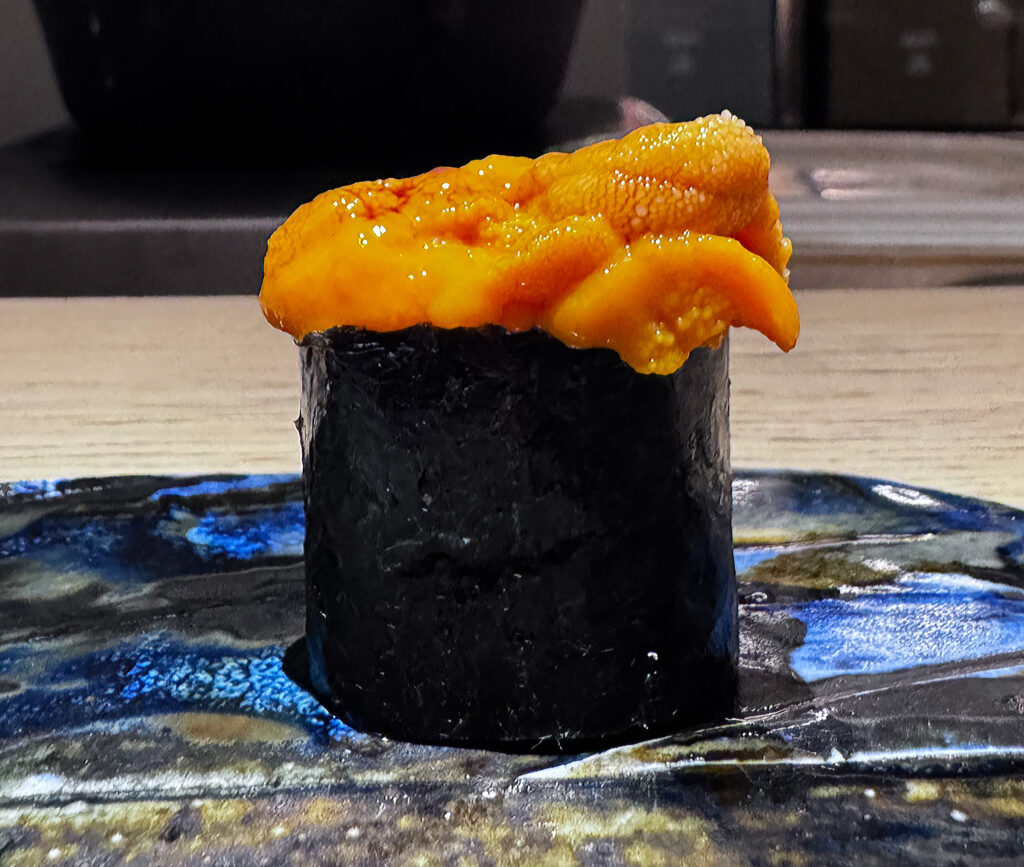
“Uni,” in the context of a meal like this, is maybe the one item I can look to with the hope of erasing any memory of the ōtoro. This evening’s sea urchin is sourced from Hokkaido and comes in the ensui (or preservative-free) form that has been preserved in saltwater brine for shipment. Phan, I know, slightly prefers the dry-packed variety, yet this one is certainly capable of achieving greatness. In fact, the chef even notes that the product is “really good today.”
Served, like the salmon roe, atop nori-wrapped rice, the uni possesses a smooth and seamless consistency whose melty structure coats the accompanying grains and spreads across the tongue. (The seaweed, as always, displays the kind of perfect brittleness that the restaurant has been able to rely on over the years.) When it comes to flavor, the sea urchin is charged with just a hint of oceanic depth (so maddening in moderation yet carefully avoiding any impression of those polarizing irony notes). Instead, it is the ingredient’s latent sweetness that takes the lead: unwinding and reverberating across a memorably decadent finish. Yes, just when the uni needed to deliver, it undoubtedly does.
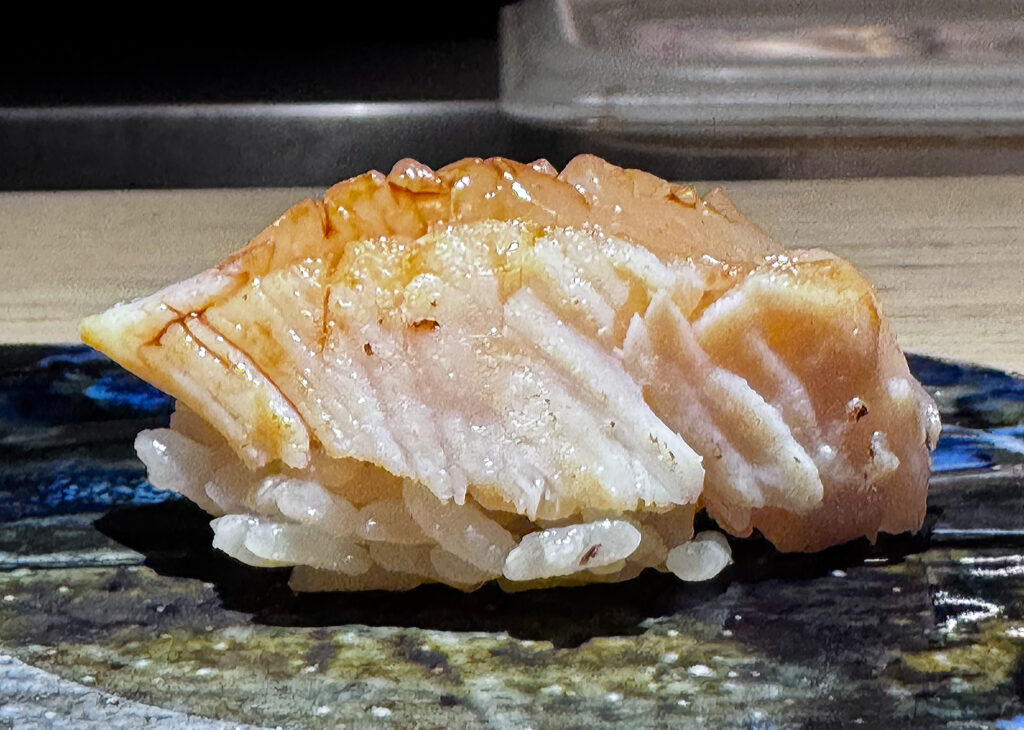
Arriving next, the “Sawara” (or Spanish mackerel) hasn’t been seen since February of this year: a point when it transformed from a somewhat forgettable piece into one—finally—that stood among my favorites.
Tonight, the fish largely maintains its momentum courtesy of a meaty, moderately fatty mouthfeel and a persistent note of acidity that helps to invigorate its otherwise mild flesh. Personally, a little more umami would really make this bite soar. However, I appreciate the balance the chef has struck and find the sawara to be entirely pleasant.
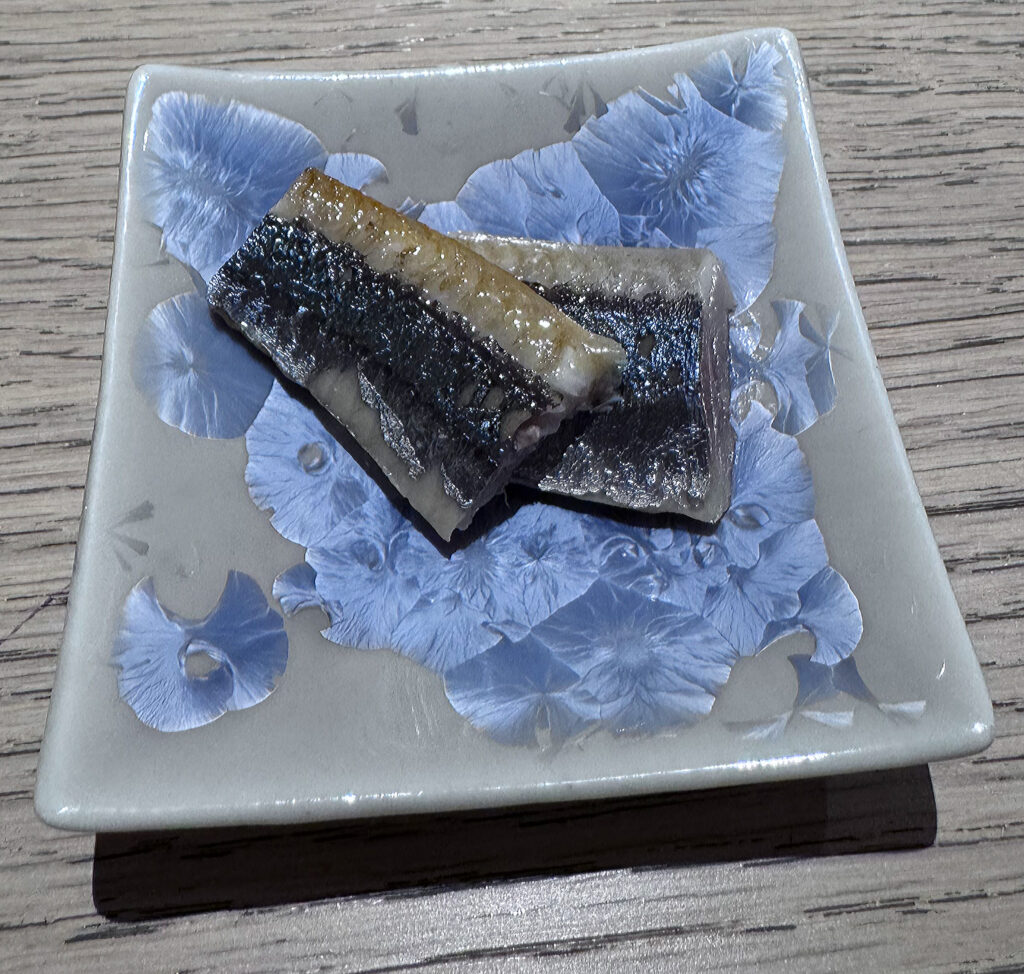
“Sanma” (referring to the Pacific saury or pike mackerel) hasn’t appeared, in its own right, since November of 2025. Phan refers to the ingredient as an “ultimate” expression of a “really seasonal” fish, and, on this occasion, he completely reimagines how the product is served.
Indeed, presented as nigiri last year, the sanma left me feeling disappointed. Yet, in the present grilled form, the pike mackerel now impresses me with its combination of firmness, juiciness, and a long, deeply savory flavor tinged with a complicating degree of fishiness that stops short of excess. Bites like these really make me appreciate the chef’s capacity to adapt, for what was once a clear miss now ranks among the evening’s best offerings.
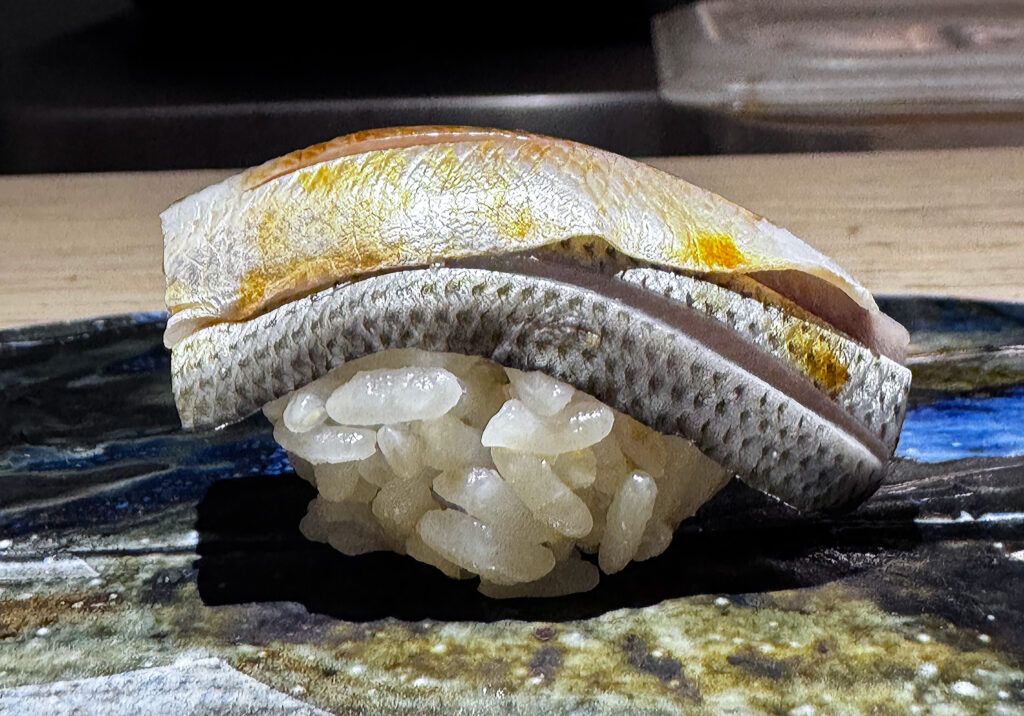
The “Shinko” represents an entirely new addition to the menu. However, in truth, it is really just a seasonal variant of the kohada (or gizzard shad) Phan prides himself on when it’s in season. This particular nomenclature refers to the baby version of the fish: a “most traditional,” “sushi nerd” item that becomes more and more prized the smaller it gets.
Working with shinko yields just one bite per specimen, which is deboned, cured, and marinated just like its mature counterpart. Texturally, the resulting piece possesses just a trace of the usual firmness but yields to a rather unique, high pleasing softness with further mastication. Flavor, in turn, is certainly marked by the use of vinegar. Nonetheless, I find the expression of tanginess (which need not fight the oiliness of the older fish) to be clean and lip-smacking. It’s pronounced, yes, while also revealing a shocking depth of umami I do not typically associate with the ingredient. In truth, the level of refinement here is almost shocking, and, consequently, this young gizzard shad takes the crown as very best serving of the meal.
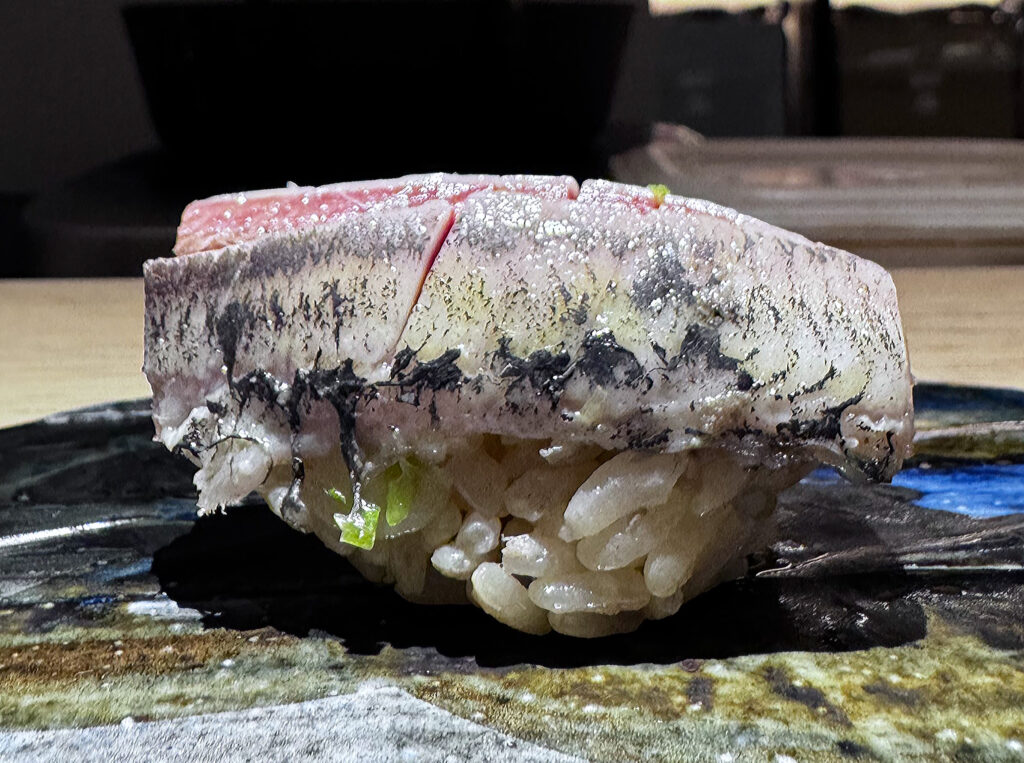
“Iwashi” (i.e., sardine) has carved out a semi-regular place on Kyōten’s omakase over the past year. This time around, I wonder how the diminutive fish will possibly rival items like the sanma and shinko that are both newer and more characterful. However, this “perfect-size” specimen is visually arresting, and Phan even goes so far as to say that the piece forms his own favorite on the menu tonight.
Paired with green onion, the shinko pushes the meatiness (and balancing juiciness) of the preceding bites to an even greater extreme. The ingredient’s fishiness, too, comes through a little more sharply. Yet—and this is key—the sardine skillfully straddles the line of offering ever-greater intensity without descending into a darker, dirtier, and ultimately abrasive expression of flavor. In fact, this allium-kissed fish feels remarkably seamless, and, while I may put a few other preparations ahead of it, I must largely echo the chef’s praise.
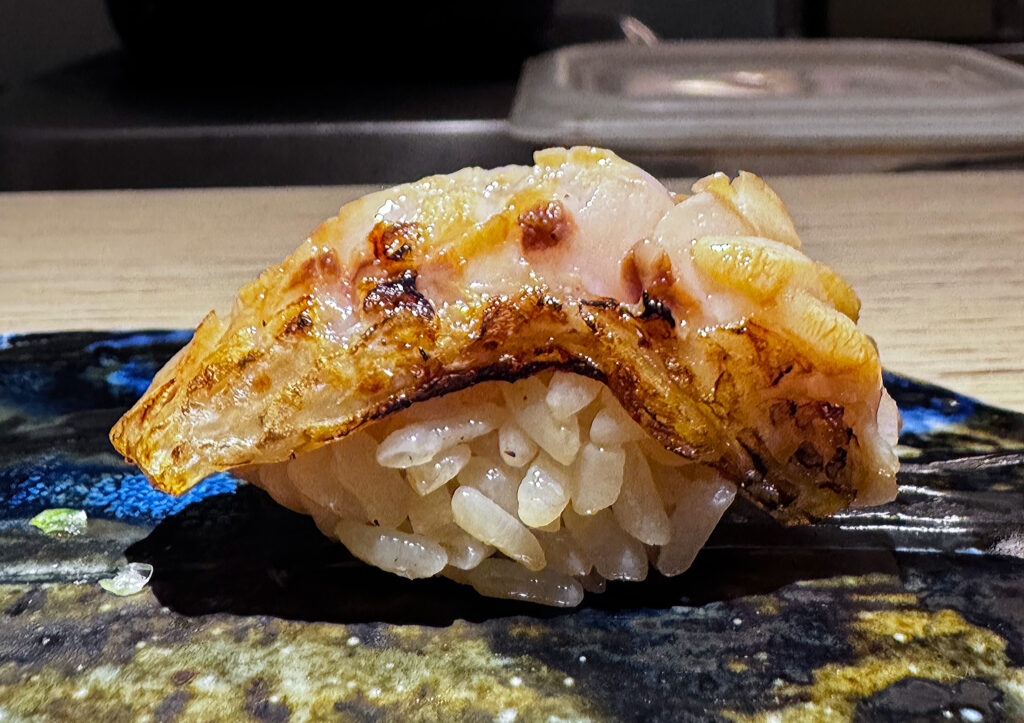
Closing out the savory section of the meal is the “Akamutsu” (or blackthroat sea perch). This most luxurious of fish has long been one of Phan’s staples, and it’s only recently that the chef—pairing the flesh with a touch of fermented jalapeño—has played to the ingredient’s richness in way that leaves me satisfied.
On this occasion, I find no trace of that clever condiment and worry that the preparation has maybe regressed. Nonetheless, a generous degree of charring and some sweet soy sauce ensure that the akamutsu’s soft, mouth-coating flesh is matched by enough delineating texture and flavor to really shine. Indeed (and this is always the goal), the piece’s finish is lightly tangy and convincingly savory rather than being masked by any of the chosen accompaniments.
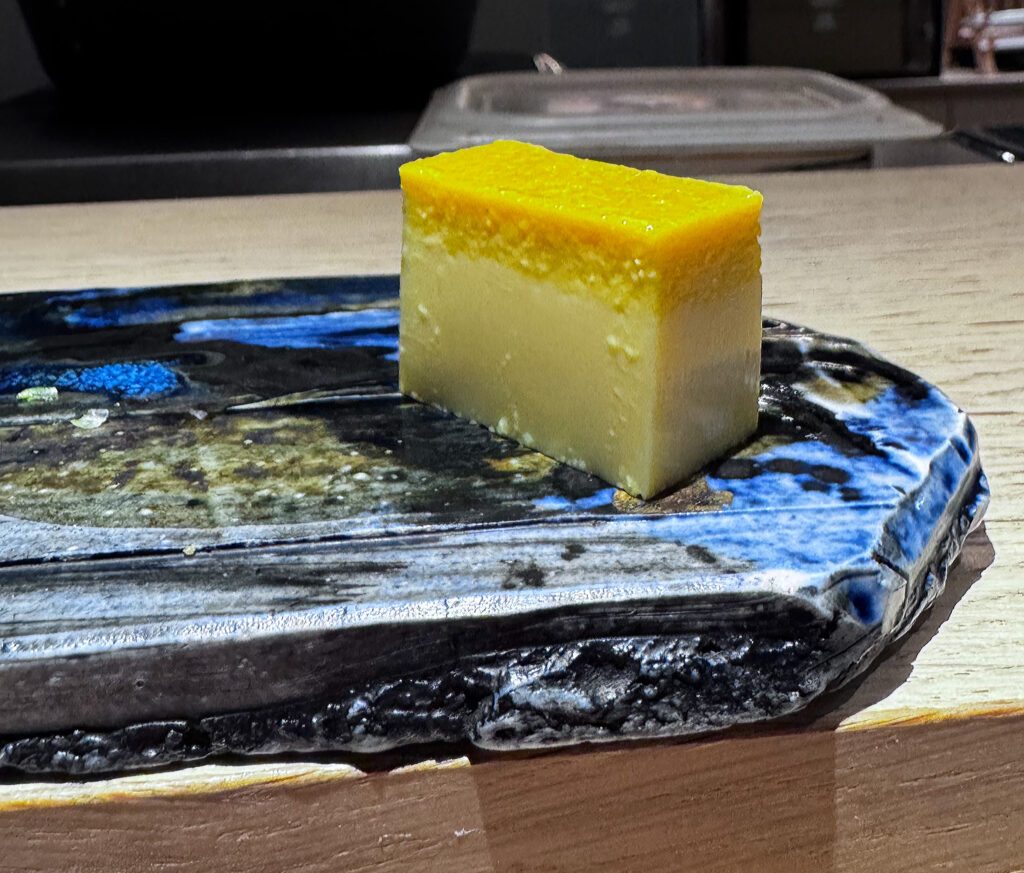
The turn toward dessert is heralded, as always, by Kyōten’s “Tamago.” This corn- and maple-infused custard (a reinterpretation of the traditional rolled omelet) rarely falters, and the present rendition is about as good as it gets. Yes, the bite is not only perfect rich and creamy but, additionally, displays an extra breadth of sweetness, caramelization, and subtle earthiness that is truly exceptional.
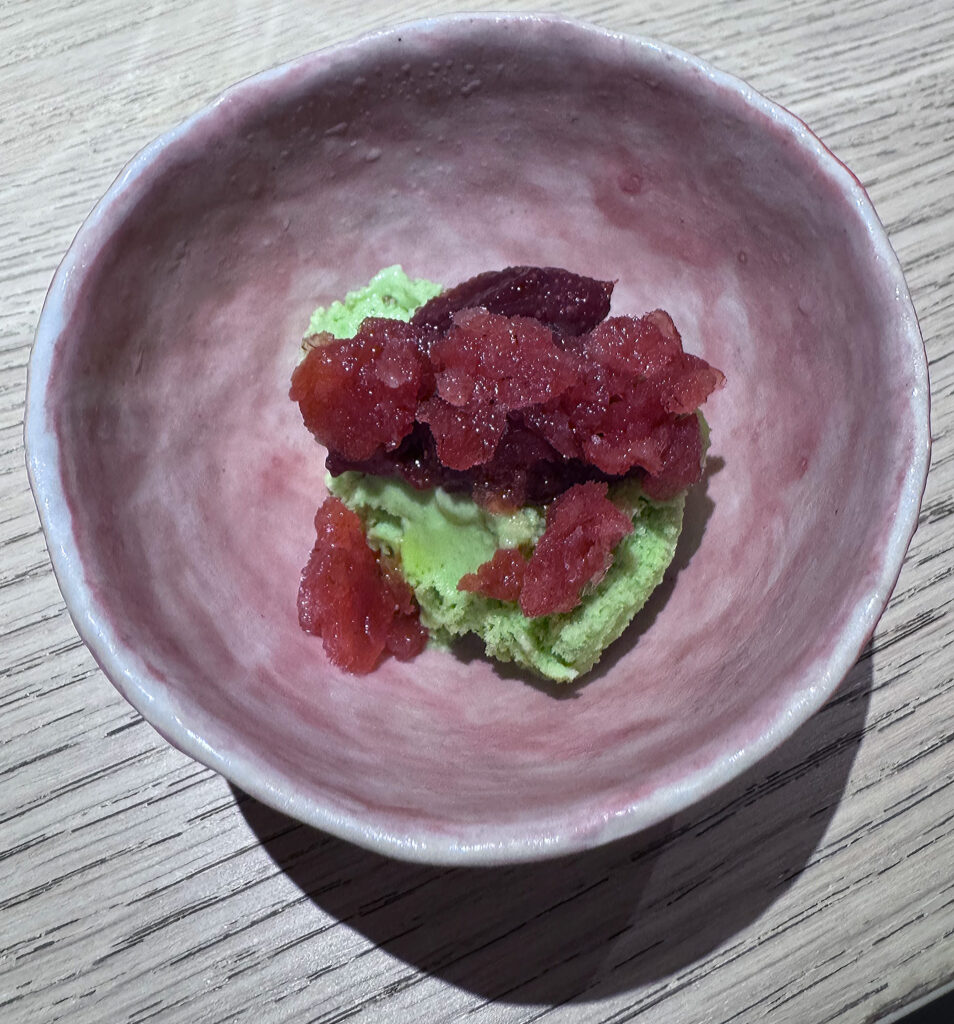
Arriving last, Phan’s “Strawberry-Basil Ice Cream” (which returned to the menu in early July) also displays all the quality it is capable of. As I noted during my past two visits, the combination of candied fruit with a granita made from the same makes for a beautifully layered expression of jammy, tangy sweetness that melds effortlessly with the fresher, uplifting quality of the herbaceous base. Also, as before, the chef’s textural mastery of the ice cream is worth special praise. It forms one of the techniques that adds an entirely different dimension to his omakase.
In ranking the evening’s dishes:
I would place the “Uni” and “Shinko” in the highest category: superlative pieces that stand among the best things I will be served in any restaurant this year.
The “Chawanmushi,” “Octopus,” “Katsuo,” “Akami,” “Makajiki,” “Ikura,” “Sanma,” “Iwashi,” “Akamutsu,” “Tamago,” and “Strawberry-Basil Ice Cream” all land in the next stratum: great items that achieved a truly memorable degree of pleasure. I would love to encounter any of these again.
Next come the “Aka Ebi,” “Kawahagi,” “Shima Aji,” and “Sawara”—good—even very good—preparations I would always be happy to sample again (but that just failed to elicit an extra degree of emotion).
Finally, we have the “Aji Tempura” and “Ōtoro”—clear underwhelming bites that fell short when it came to texture and/or flavor. Given the plaudits these servings typically earn (not to mention the latter’s headlining status in most omakases), these can only be termed disappointments.
Overall, this makes for a hit-rate of 89%, which ties February’s score as the lowest I have reported for Kyōten this year.
That said, there’s nothing disastrous about such a figure. Some 68% of offerings still reached that “would love to have again” level of quality, and 11% won that “best of the year” designation.
Of these winning recipes, a notable proportion (like the “Shinko,” “Chawanmushi,” “Makajiki,” and “Sanma”) were entirely new to the menu. The rest—some featuring perpetually, others returning seasonally—displayed a special degree of finesse this evening. I do not speak merely of what it means to source the right uni or ikura but that, years later, Phan is still capable of pushing his octopus or tamago or ice cream to an even higher stratum of deliciousness.
Ultimately, the failure of the ōtoro will always be a bitter pill to swallow. Even accounting for the peak–end rule (and my professed enjoyment of so many other dishes), it’s hard to really feel like this experience was complete.
If you come to rely on a signature bite—knowing that, on its day, there’s likely no better mouthful in Chicago—the glass can only be seen as half empty when execution falters. Yet, by putting this meal on paper, I find it easier to look past my jilted expectations and appreciate what was a substantial, successful creative effort.
As it happens, I’ve already made a return trip to Kyōten while writing this piece, and there’s no reason to view the errant piece of tuna as anything more than the rarest of blips. Rather, it merely presents a moment for reflection and renewed appreciation of what Phan can regularly conjure behind his counter.