

This was supposed to be a piece on Smyth: the longstanding object of my obsession and a place that, if World’s 50 Best is anything to go by, now stands at the peak of its power. I eagerly awaited my long overdue visit—aching to observe the restaurant in the flush of fame—only to face a scheduling problem a few days before and be sent scrambling.
For someone who has months’ worth of reservations precisely scheduled at any given time, this was a fateful moment. It was too late to secure seats for any of my other favorite tasting menus. Even nabbing a spot at Creepies, Elske, or Obélix during this time of summer tourism (and general merrymaking) would demand gambling on a cancellation or asking for a favor in a manner I’m not inclined to do.
Would circumstances push me toward any number of new and old concepts I have thus far (but especially given my narrow focus this year) neglected? Would I, almost by chance, enjoy a meal that would compel me to rewrite the hierarchy of Chicago dining I have so pigheadedly formed in my head?
Ultimately, I’m not sure a Saturday table at Cellar Door Provisions appeared immediately, yet it opened up quickly enough (I’m talking mere hours into my search) that any dream of discovering a diamond in the rough died right on the vine. A glance at the online menu, even knowing a sizable proportion of dishes were likely to change throughout the week, confirmed my decision.
I saw the kind of cooking—elegant, ingredient-driven, with a command of fire and clever saucework to match—I would’ve hoped to find at the fine dining spots (only freed of any fuss and portioned as generously as I desire). I knew I’d find a sense of warmth and comfort that would match any of the more casual options I considered, as well as a wine selection that (while concise and certainly iconoclastic) has never left me thirsty.
As it happens, CDP’s bar seating wouldn’t fill until well over an hour after my arrival. Eating here, even if it meant venturing out of the fashionable neighborhoods I frequent, was a sure thing. And, despite serving cuisine at the bleeding edge of our scene, the concept could be considered a standby.
Gastronomic snobbery aside, I think it is fair to say that the greatest restaurants—and this is not an indictment of any one place so much as it is, maybe, of fine dining formality altogether—are always there for you when you need them.
On this and many other unforeseen occasions, Cellar Door Provisions stands at the ready. And, this time around (almost as if the team was trying to prove my point), the kitchen puts forth a performance that ranks among their best-ever work and the best I have tasted anywhere in 2026.
Let us begin.
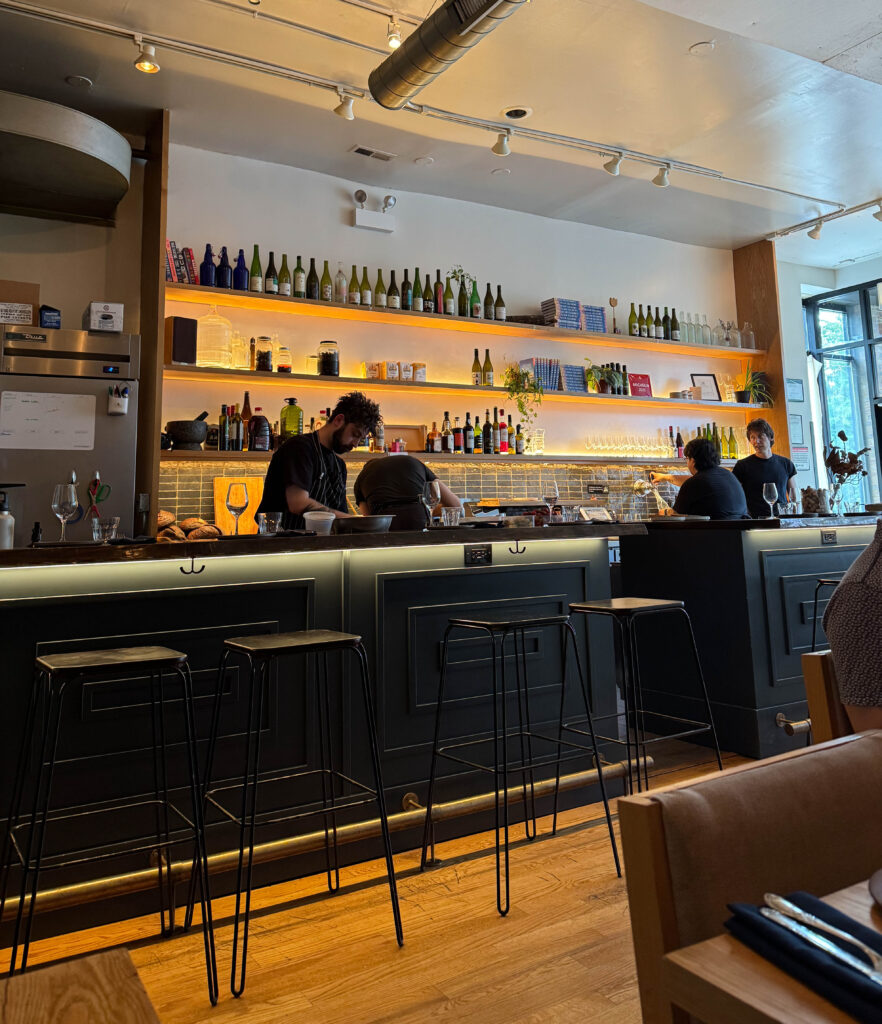
Though my party is only the second to arrive at the restaurant tonight, the greeting we receive (always a fraught moment when any small team springs into service) radiates calm: the kind of gracious, knowing “welcome back” that subtly rewards repeat patronage even for someone—like myself—who only came to CDP in the years following what I have come to understand was its most ambitious, iconoclastic, and challenging era.
Today, the concept remains just prickly enough to be a cult favorite—yet the cult, despite cultivating fanatics for more than a decade, seems eager to bring new members into the fold. By my count, this is visit number nine in a period of about 20 months. That’s not a crazy figure, but it’s enough to signal a serious appreciation of the cuisine. It’s also enough to secure the kind of favorable table (in a somewhat isolated corner) and unprompted advice (regarding portion sizing or new, particularly delicious offerings) that cement a happy, healthy, longstanding consumer relationship.
Admittedly, these are cornerstones of hospitality one would come to expect at places that are even more casual or comparably less ambitious. Yes, if your favorite Chicago steakhouse doesn’t lavish you with little courtesies, you should probably take your business to one of a dozen other options.
However, perhaps because CDP is so singularly chef-driven and misunderstood and even eagerly critiqued (all of which seem to form a running theme for many of my favorite concepts), joining the cognoscenti here carries particular weight. It means playing a small part in the kitchen’s process of perpetual (sharply philosophical) growth: standing in the culinary breach—receptive to all that’s weird and experimental—in support of a shared dream that has yielded few conventional rewards.
This posture does not preclude thoughtful criticism, for there are few other menus in this city that can take you from confusion to ecstasy (and back again) over the course of one dinner. In fact, I increasingly feel I could write about Pikas and Cochran’s food on a weekly or even semi-weekly basis without ever getting bored or—importantly—descending into mindless praise.
Becoming a regular also doesn’t grant permission to bring your own wine (a favor my server confirms has only been granted a few times in the restaurant’s lifetime) in order to sidestep the natural wine list. After all, loyalty cuts both ways, and it seems wrong to admire the cuisine without accepting the fundamental synergy it strikes (both in terms of flavor profile and aesthetic values) with the beverage program’s chosen producers.
Ultimately, coming here with any frequency simply provides the emotional foundation through which the team’s creativity, destined to occasionally provoke, can always be cushioned. Indeed, CDP cannot tout the same structural advantages as Feld or Smyth, yet it nurtures and deploys its human capital with the same effectiveness.
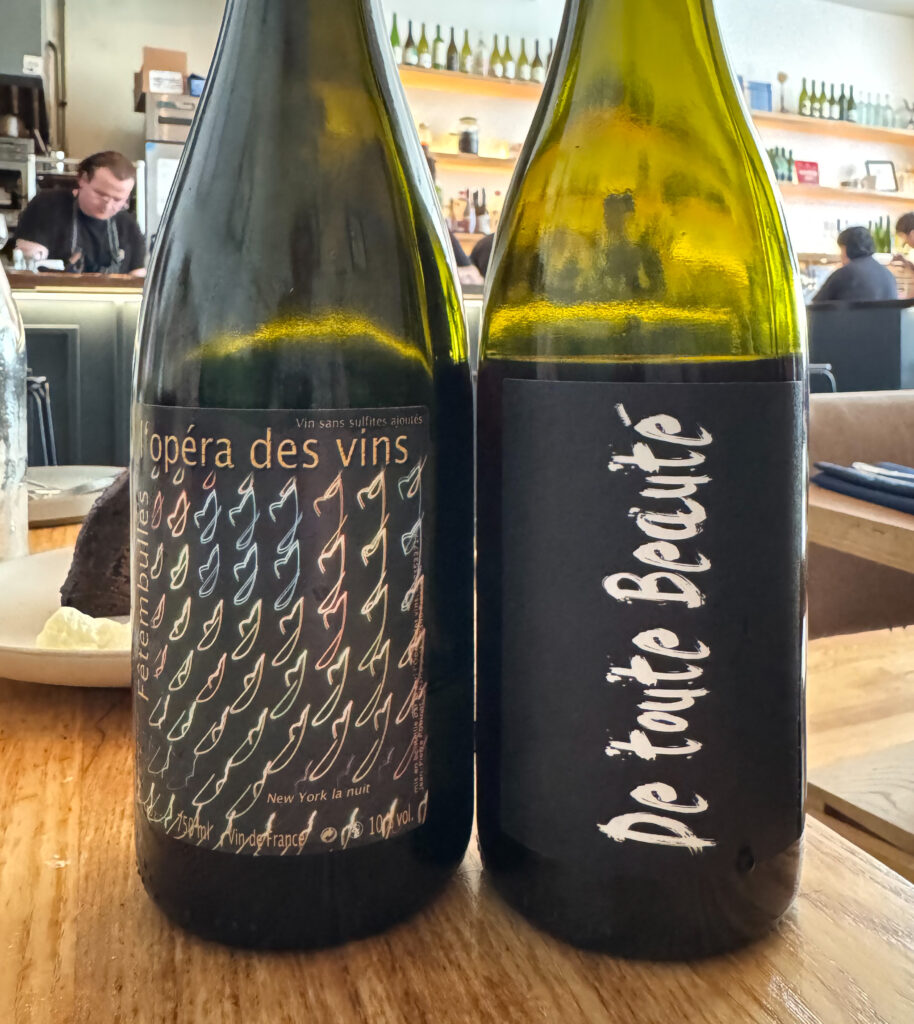
Turning back toward the wine, I think this moment offers a good opportunity to engage fully with the list, which felt a little depleted during my last visit but presently boasts a wide array of options.
These are some that catch my eye:
- 2025 Maurizio Ferraro “Secondome” Rosso (Barbera/Grignolino/Ruché) [$70 on the list, $30 at national retail]
- 2024 Corentin Houillon “Veronnet” Blanc (Jacquere/Altesse) [$86 on the list, $31 global average price]
- 2023 Domaine Derain Bourgogne Blanc “Landré” [$88 on the list, $39 for 2022 vintage at national retail]
- 2022 Domaine de la Pinte “Sav’Or” (Savagnin) [$90 on the list, $42 at national retail]
- 2023 Clos Bateau “JouJou” (Gamay) [$98 on the list, $45 at national retail]
- 2023 Jean-Pierre Robinot “Fêtembulles” (Chenin Blanc) [$98 on the list, $42 at national retail]
- 2022 Pācina Rosato (Sangiovese) [$107 on the list, $51.99 at local retail]
- 2022 La Vigne du Perron “Les Étapes” (Pinot Noir) [$107 on the list, $56 at national retail]
- 2023 Domaine de La Cotelette “Ch…” (Chardonnay) [$110 on the list, $59.99 at national retail]
- 2022 Jean-Pierre Robinot “Cuvée Bistrologie” (Chenin Blanc) [$112 on the list, $48 at national retail]
- 2023 Jean-Louis Dutraive Fleurie “Clos de la Grand’Cour” [$120 on the list, $60 at local retail]
- 2024 Marie et Vincent Tricot “Rasséréné” (Sauvignon Blanc/Chardonnay) [$120 on the list, $54 at national retail]
- 2021 Les Frères Soulier “Valmal” (Grenache) [$132 on the list, $58.99 for 2022 vintage at national retail]
- 2023 Anne et Jean-François Ganevat “De Toute Beauté” (Gamay/Pinot Noir) [$135 on the list, $59.99 at national retail]
- 2023 Domaine Derain Bourgogne Rouge “Les Riaux” [$140 on the list, $52 at national retail]
Now, I understand that an almost complete lack of recognizable appellations here might be cause for concern. Nonetheless, this has to rank as one of the most approachable selections I have seen in my time coming to CDP.
While these bottles undoubtedly abide by principles of minimal intervention, they also faithfully represent signature grape varieties from Beaujolais, Burgundy, the Langhe, the Loire, the Rhône, and Tuscany (along with a couple notable oddballs from the Jura and the Savoie). Further, while some of these whites undergo skin contact and some of the wines—more broadly—comprise uncommon blends, we’re mostly talking about sulfur-free products displaying elevated acidity, expressive fruit, and gentler structure (all of which match the food).
In my opinion, names like Dutraive, Ganevat, and Robinot are positively mainstream at this point. It’s a treat to drink the “Fêtembulles,” which more than fits the bill for a clean, mouthwatering sparkler (without quite reaching the level of Champagne). Likewise, the “De Toute Beauté” delivers notes of fresh berries and fleeting earthiness that match the menu’s heavier fare without—in this summer weather—dragging me down with alcohol or tannin.
For my money, the Pācina Rosato is exactly the kind of Italian wine I reach for in all but the most indulgent, carnivorous settings. (I would have chosen it over the Ganevat had I spotted it in the moment.) Further, I think it’s clear the list is in good shape when I’m not compelled to reach for any of the Burgundy or Burgundy-adjacent bottles.
With markups for this sample ranging from 83% to 177% on top of retail price (with both a mean and a median of 124%), the level of value here remains attractive. These are not producers one sees widely represented across Chicago or even on the market nationally. Critics may gripe that it’s for a good reason—they’re polarizing after all.
Yet CDP’s cuisine is so good that it can force diners to play along. And, when one considers the low premiums being charged and the number of recognizable varieties from popular regions being offered, I think it is fair to say that the team actually does care about catering to mainstream tastes even if they remain resolute in their stylistic preferences.
Really, I cannot recall the last time this program left me feeling so spoiled for choice. Rather than worrying about whatever compromise I may have to make to get something in my glass, I’m actually quite eager to see what I find when my next visit comes around.
Turning toward the menu, I sample 14 of 17 items on offer—only skipping the burger (however delicious) and snacks like the olives and pickles so that I can fully enjoy all that is new.
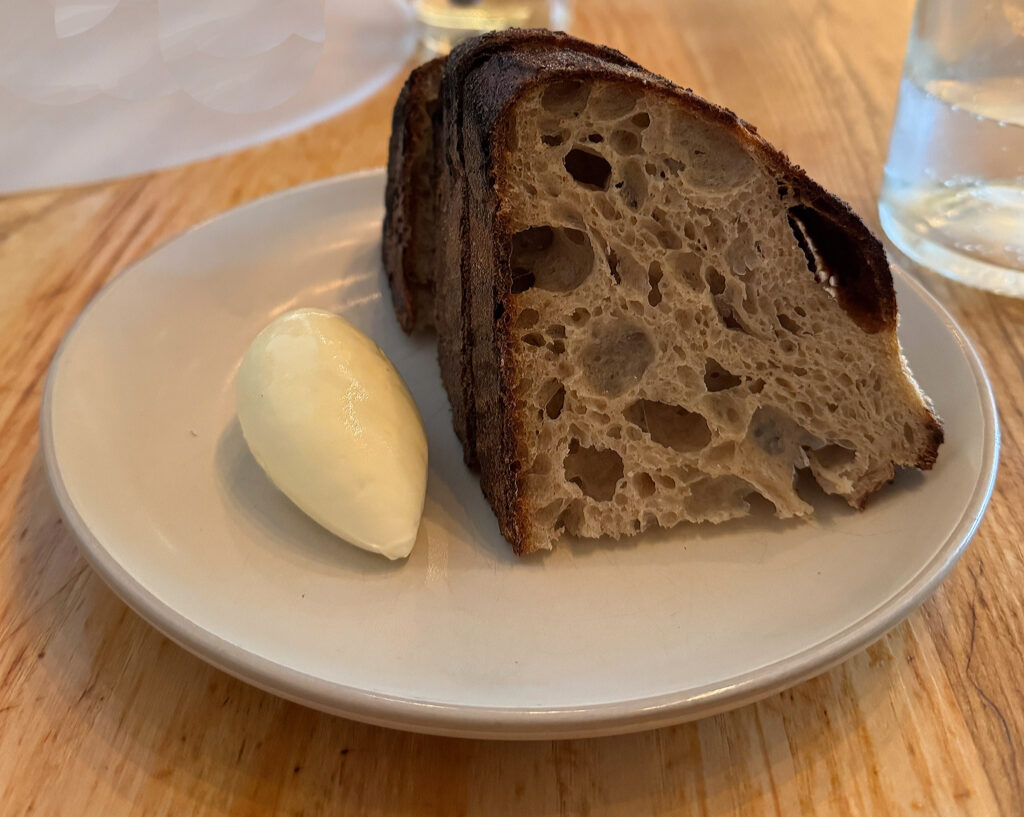
Of course, the “Rye Country Bread” ($10) isn’t exactly novel, for the loaf solely represents the latest expression of a baking obsession that has animated the restaurant for many years. As with the iteration I tasted back in April, this particular recipe possesses a robust flavor profile characterized by earthy depth and a hint of bitter char. And, while the accompanying kefir-cultured butter has never struck me as being particularly intense, I enjoy it as a rich, impeccably creamy foil for the stronger notes of the bread.
Otherwise, the crisp, crumbly texture of the crust and pleasing chew of the crumb are executed in a textbook manner. This loaf may not ultimately rank among my favorite examples of the form at CDP, yet I admire its distinctiveness and how well the chosen qualities rendered.
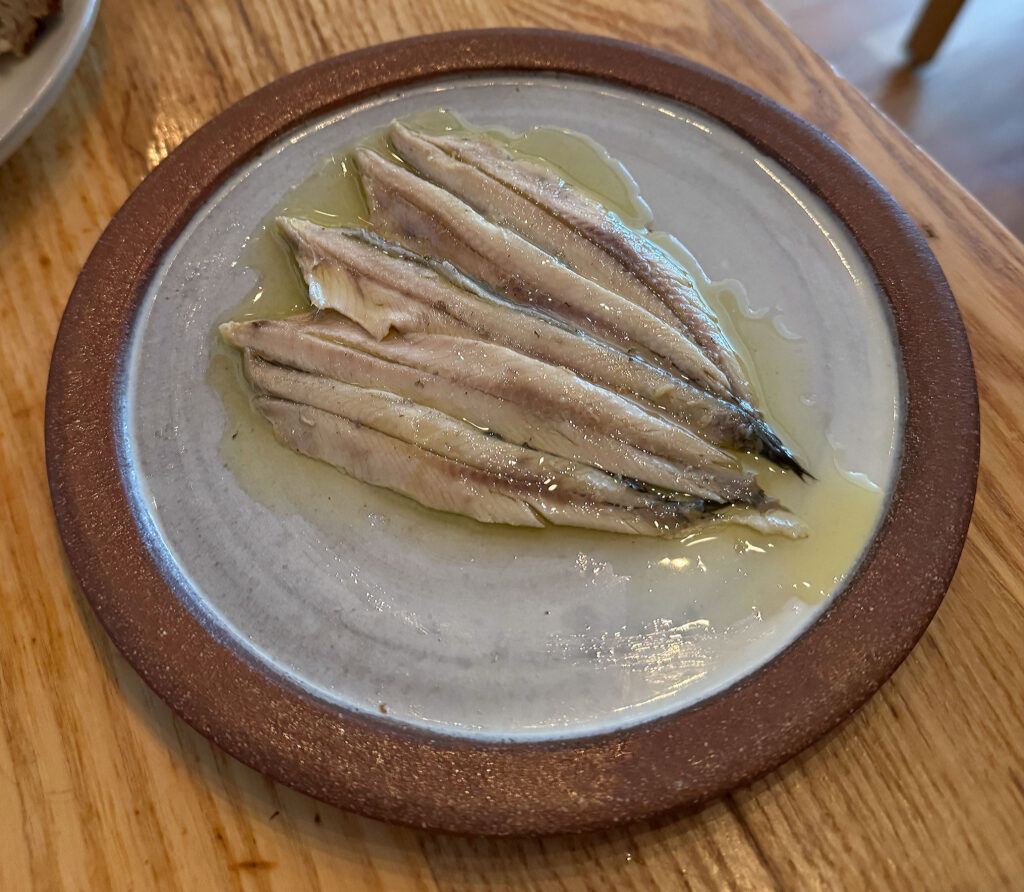
Accompanying the bread, a plate of “Boquerones” ($12) now costs four dollars more than the one I ordered last time. That said, the fish clearly look the part: being plumper and meatier and generously dressed in oil. On the palate, the anchovies display an entirely clean, moist, and tender mouthfeel that is matched by a jolt of briny tang. This sensation forms a nice counterpoint to charred rye, and sopping up the remaining liquid forms a pleasant substitute for the butter too. Yes, out of all the dishes one can pair with the bread, I think this one actually does the most to influence each slice’s flavor.
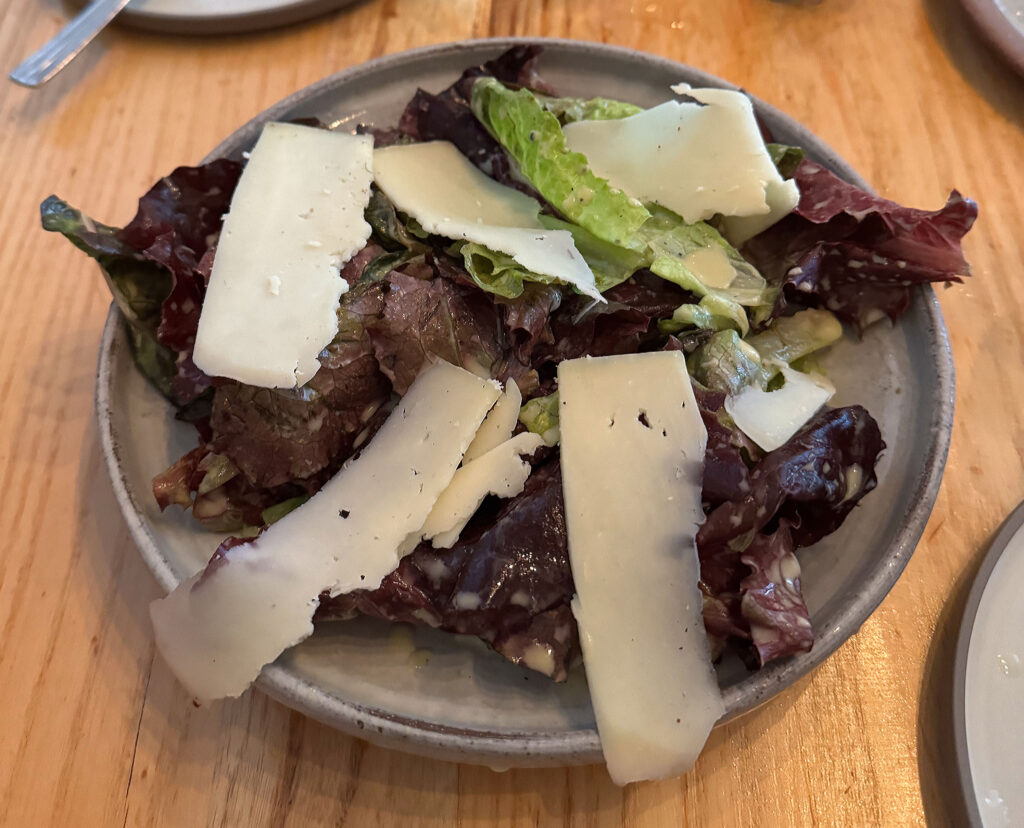
Arriving next, the “Salad of Crimson Romaine Lettuce” ($17) stands in a long line of salad—or just plain leafy—preparations that have ranked among the most challenging and the most pleasing creations that the chefs, across my visits, have served. Understandably, there’s not a whole lot you can do to make this kind of composition interesting unless you’re willing to get a little weird.
The key, on this occasion, is anchoïade: a Provençal dip (traditionally made from anchovies, garlic, and olive oil) that acts as the dressing here. The sizable pieces of romaine arrive quite liberally coated, with long shavings of Pecorino Toscano and ample black pepper providing the salad’s definition. By this kitchen’s standards, it’s a simple construction. Nonetheless (even having just eaten that plate of boquerones), I savor the sharpness and tang and persistent savory backing that characterizes each of the softly crunchy leaves. Arguably, the lettuce borders on being too bountifully dressed—enjoyable in terms of concentration yet possibly necessitating some finely crisp topping like breadcrumbs. Still, the weight and sweet-nutty depth of the cheese makes for an elegant, enjoyable recipe that lands among my favorite examples of the form at CDP.
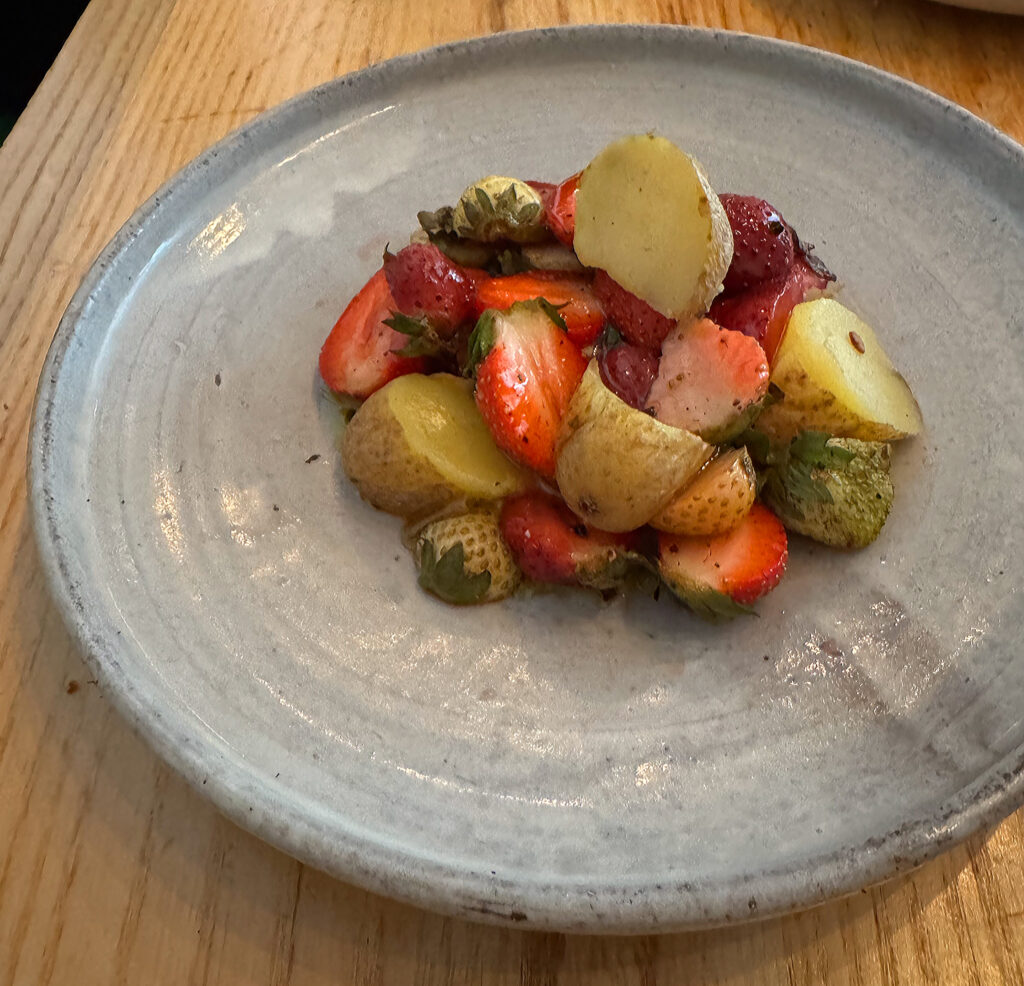
The “Klug Farm Green & Red Strawberries” ($17) celebrates a fruit that has taken a starring role during my latest meals at Oriole and Feld—with the latter restaurant, in particular, choosing to explore the ingredients myriad possibilities. The present construction is every bit worthy of its Michelin-starred peers: boldly pairing the produce (in both its ripe and underripe forms) with smoked Natascha potatoes and a candy onion soubise.
Texturally, the juxtaposition of the firmer green strawberries, the juicier reds, the creamy tubers, and the luscious sauce is beautifully managed. Each bite (generally limited to one or two of the larger pieces at a time) is endlessly engaging. However, it is worth a special effort to get each of the elements on your tongue in quick succession. For it is only then that the tangier and sweeter topnotes of the fruit achieve take on a caramelized, buttery, and surprisingly savory expression (enlivened once more by a strong application of black pepper) that feels totally singular. Indeed, this is a side of the strawberry I cherish seeing, and the dish ranks as a clear highlight tonight.
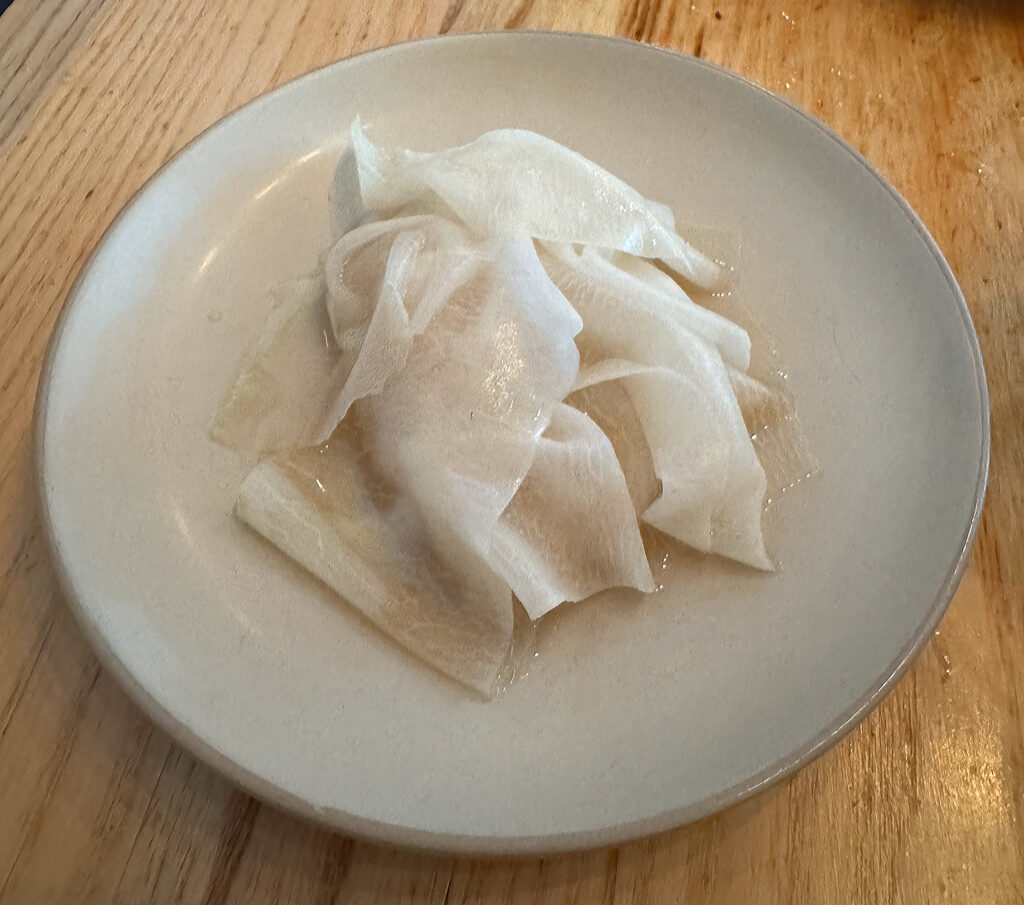
By my measure, the “Diver Scallop Crudo” ($26) proves much of the same point: that Pikas and Cochran, working in this nimble à la carte format, are putting out food that rivals dishes locked behind the paywall of a $200 or $300 tasting menu. In this case, I am reminded of a perfectly enjoyable Hokkaido scallop dish (with green asparagus and ham broth) that I sampled last weekend. Yet CDP, perhaps unbound by the need to please mainstream consumers shelling out for an entire “experience,” pursues an even more dramatic effect.
The mollusk—rendered as ten small chunks—is marinaded in shio kōji, dressed with a smoked tomatillo aguachile, and buried under ribbons of Bravo daikon. On the palate, each piece of the bivalve offers a soothing, subtly springy, and ultimately tender sensation that is amplified by the crispness of the radish. The resulting flavor leads with acidity and a sharp (though well-judged) dose of heat that displays notable persistence. Nonetheless, the daikon does a good job of softening the effect, which allows the sweetness of the shellfish to come to the fore and guide the recipe to a memorable, powerfully savory (almost reminiscent of Maggi) finish. In short, this preparation is delightful. I’m not sure scallop can get much better.
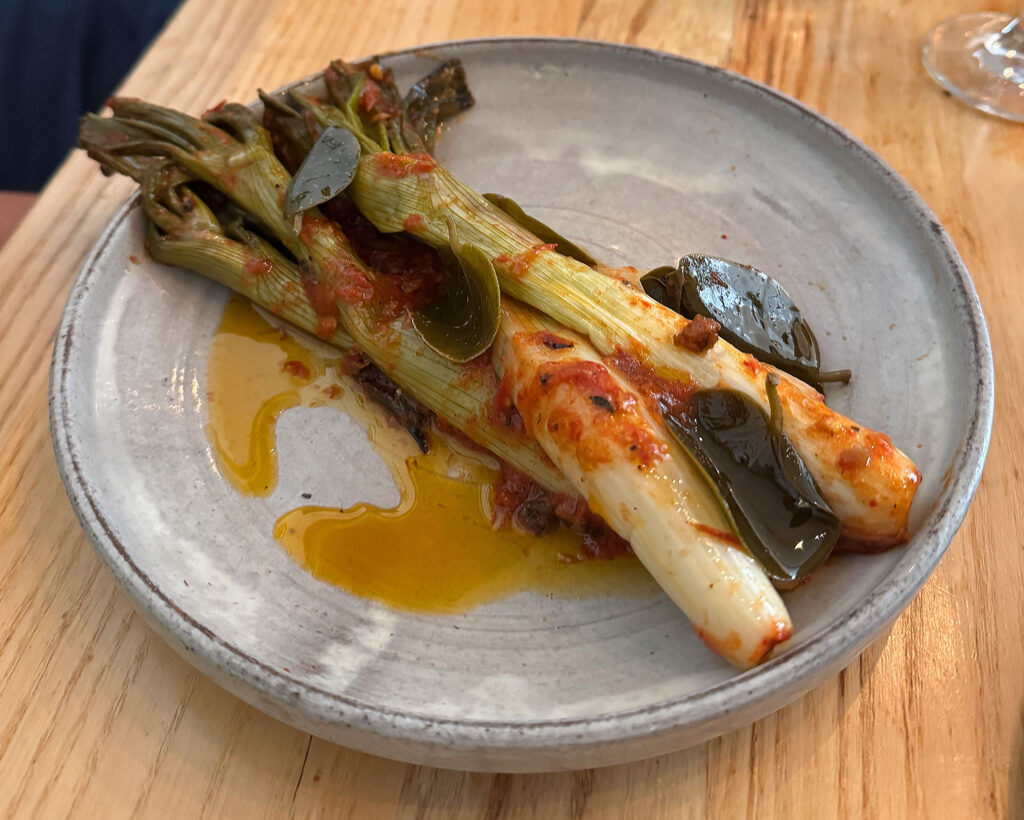
Arriving on the back of the crudo, a presentation of “Charred Frillman Farm Spring Onions” ($17) transforms my enjoyment of the evening’s menu into bonafide delight. Really, where else in Chicago are you going to find a plate of such clear focus, imagination, and finesse at a portion size that is totally convincing?
Here, the starring allium arrives smothered in a conserva of heirloom tomato and Jimmy Nardello pepper then garnished with nothing more than a few caper leaves. On entry, the spring onions are crisp—then juicy—with traces of structure that never descend into jarring stringiness. Instead, the fresh sweetness of the stalks (remarkable in their purity and power) joins effortlessly with the deeper, fruity-sweet notes of the conserva. On the finish, a hint of bitterness and the briny, herbaceous quality of the caper leaf takes hold: unlocking the tomatoes’ latent umami and driving this worshipful vegetable dish to a place of supreme satisfaction. Yes, for such a simple idea, the execution here is superlative.
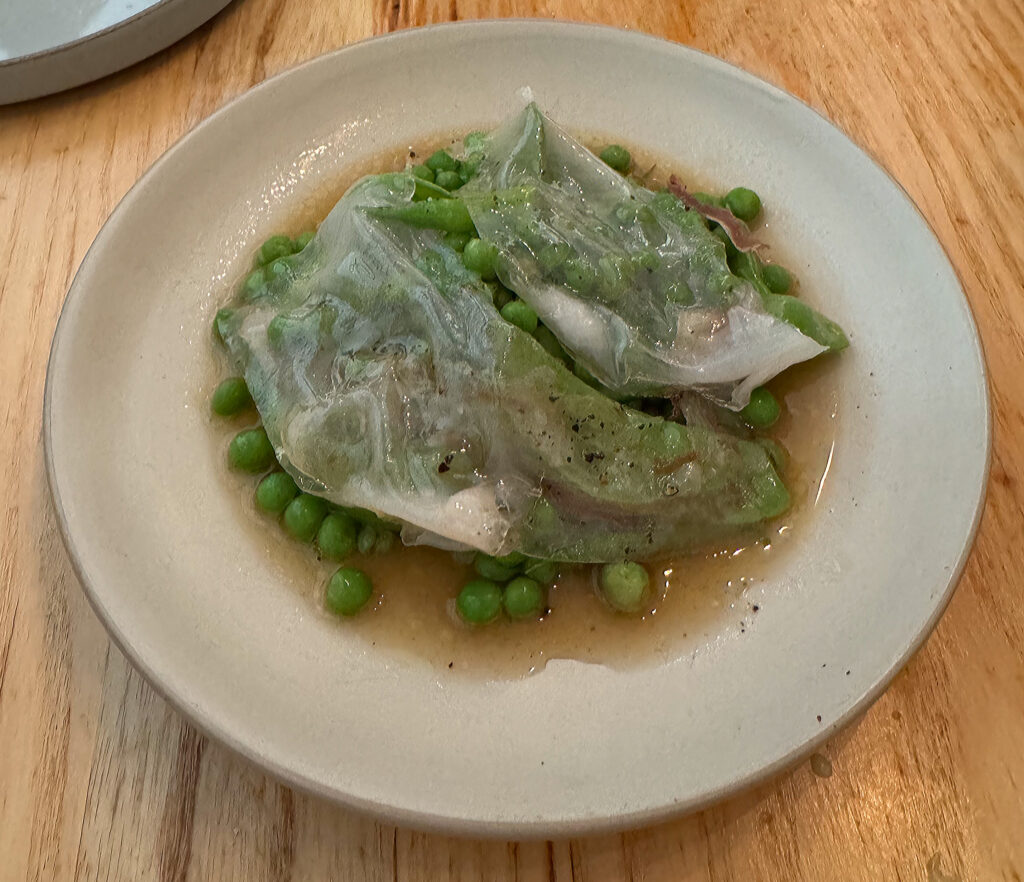
Closing out the menu’s greener offerings, the “Klug Farm English Peas” ($18) just about keeps pace with the spring onions—which is to say, the recipe stands among the finest vegetable preparations being served anywhere in the city. Arriving warm, the English peas are paired with a few snow peas (themselves sourced from Spence Farm), soaked in a lamb sugo, and draped with translucent sheets of lardo that have been infused with the flavor of fig leaf.
I particularly admire how cleanly the cured fatback breaks apart, allow diners to scoop up small bites without creating a gummy mess. Upon reaching the palate, the two varieties of pea exhibit a subtle crunch and snap that is pleasantly cushioned by the melting richness of the lardo. When it comes to flavor, fresh, grassy (and, thanks to the fig leaf, vaguely tropical) sweetness leads the way. However, the mouthcoating fat quickly joins with the earthy, meaty intensity of the sugo: shifting the overall balance (again enlivened by plenty of black pepper) toward a lip-smacking, savory finish that transcends what one might think a mere plate focused on mere peas is capable of. In sum, this stands as another triumph.
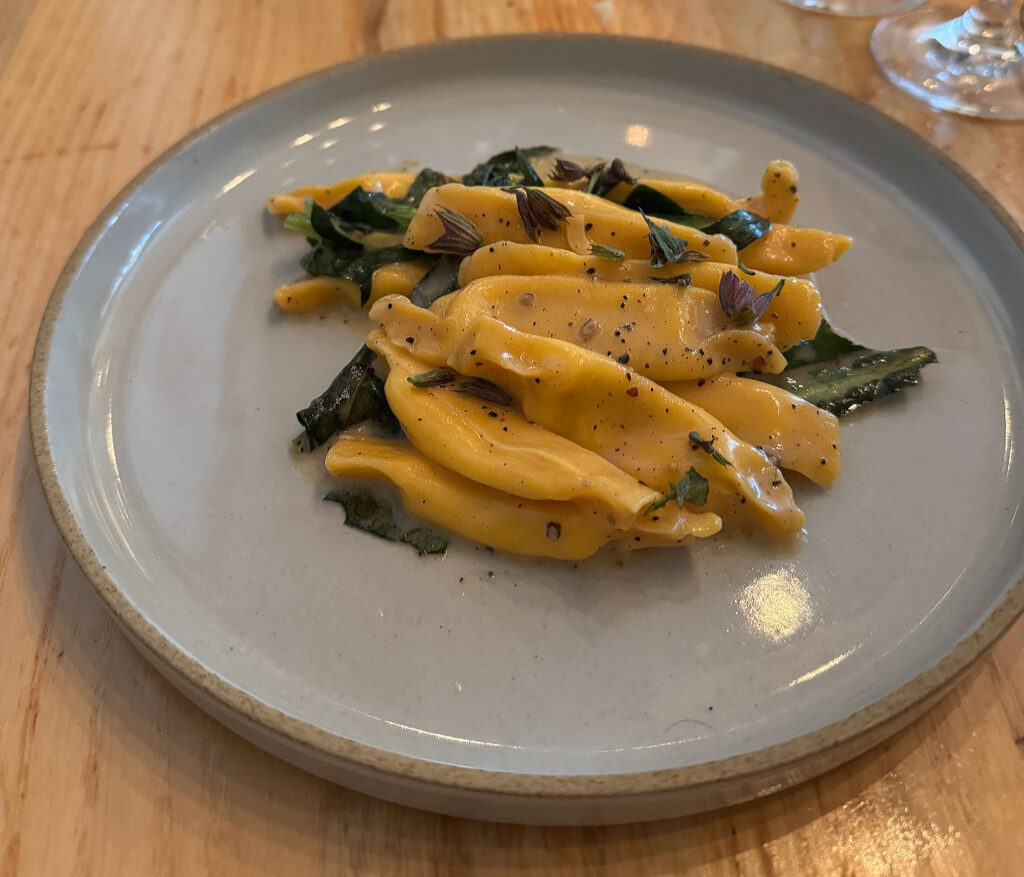
To be honest, CDP’s pasta courses (while texturally thrilling) are frequently too restrained for my taste. There’s something fundamentally Italian about this kind of two- or three-ingredient approach—and I must admire the restaurant for crafting the kinds of recipes you won’t find anywhere else in town—but these noodles haven’t ever really left me with the feeling of comfort I crave when choosing to indulge in the form.
Yet tonight, the “Caramelle” ($24)—candy-shaped pockets of pasta I spy Pikas shaping on the other side of the counter—absolutely blows me away. On the surface, a sauce of burro fuso (i.e., emulsified butter), a sprinkling of sage blossoms, and a few wilted dandelion greens all seem to echo the kitchen’s familiar style. However, the Gorgonzola Dolce tucked within each caramella, in concert with another generous application of black pepper, brings the dish to life. Framed by the soft, ephemeral structure of the wrapper itself, the pasta spans unabashedly powerful notes of tang, bitterness, sharpness, and earth before settling on a long, milky-sweet finish that is simply sublime. Yes, in a night filled with highlights, I think this offering takes the crown.
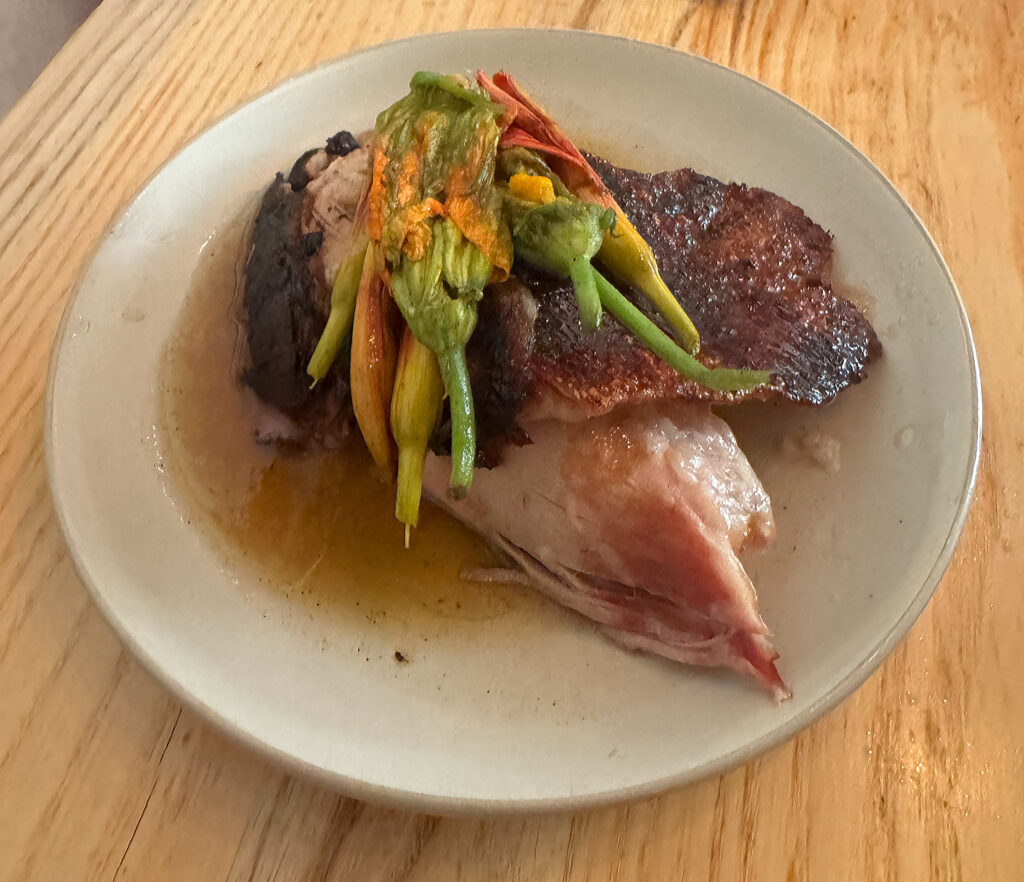
That said, this seemingly bulletproof meal does suffer from one small lapse: an entrée of “Baked Picnic Ham” ($33) that, so enticingly served with its braising liquid, is a bit texturally unrefined. Structurally, I like the way the pork’s skin—taken to an extreme of brittle crispness that almost feels puffed—has been separated from the rest of the flesh. Nonetheless, this meat (technically coming from the animal’s shoulder) ranges from juicy to dry as one works their way through the cut.
Further, while a topping of preserved day lilies, squash blossoms, and candy cap mushrooms cleverly brings some sweet and nutty flavor to the fore, I find that the braising liquid (faintly tangy-sweet in its own right) isn’t really viscous enough to cling to or enhance the ham. For the record, I do get some bites here that are wholly enjoyable. At core, the preparation just doesn’t display the same precision that characterizes the majority of the team’s work throughout this menu.
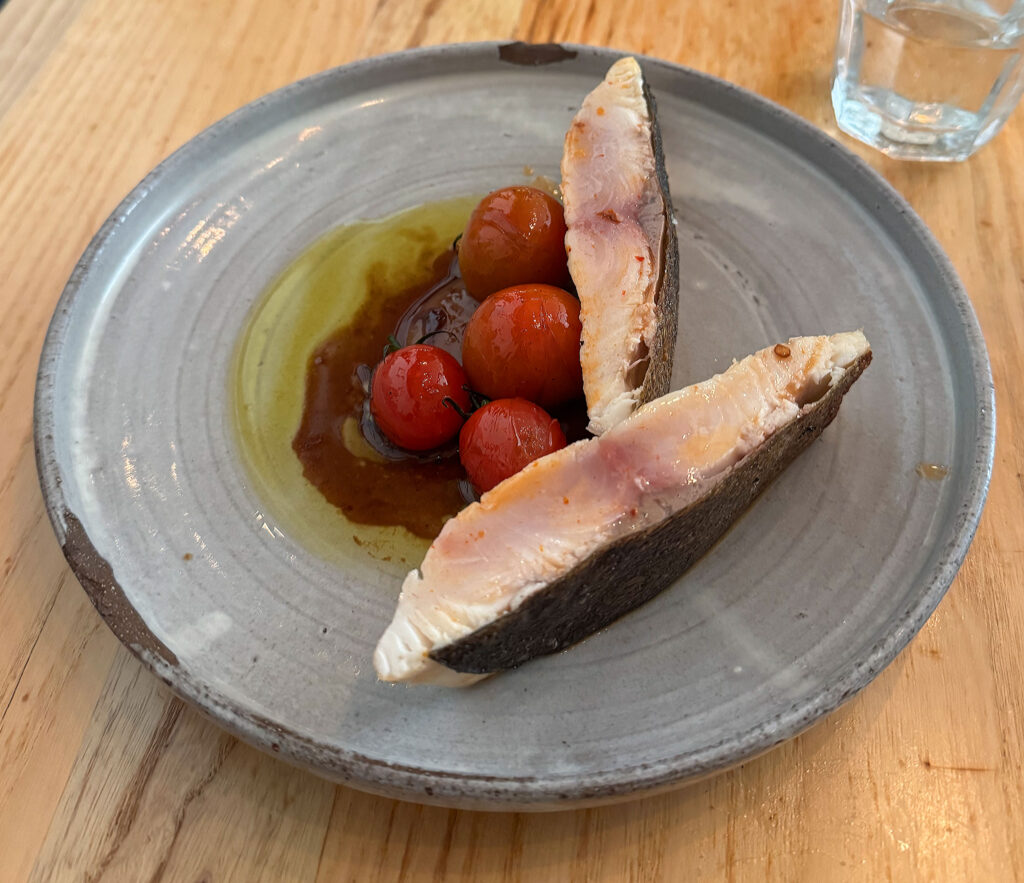
The cooked fish entrée strikes me as another likely sticking point (for such recipes always fight an uphill battle against the delicacy of the raw seafood I frequently eat). However, with their “Roasted King Kampachi” ($44), the chefs are again able to transcend the limitations of the format (like the pasta) and deliver something truly delicious.
On the palate, each of the fillets combines a trace of brittle skin with rich, moist flesh whose fleeting firmness imparts a pleasing feeling of sustenance. The plump pop of the accompanying cherry tomatoes (sourced from Nichols Farm & Orchard) adds to the sense of succulence. But it’s the way the produce harmonizes with the accompanying saucework—a fish bone demi-glace set within a red miso reduction—that proves key. Every bite of the kampachi smacks of tang and sweetness and layered umami in a manner (avoiding any excess saltiness) that leaves me wanting to lick the plate. Really, this fish dish almost forms the polar opposite of the ham: an utter textural thrill driven into the stratosphere by a few perfectly executed accompaniments.
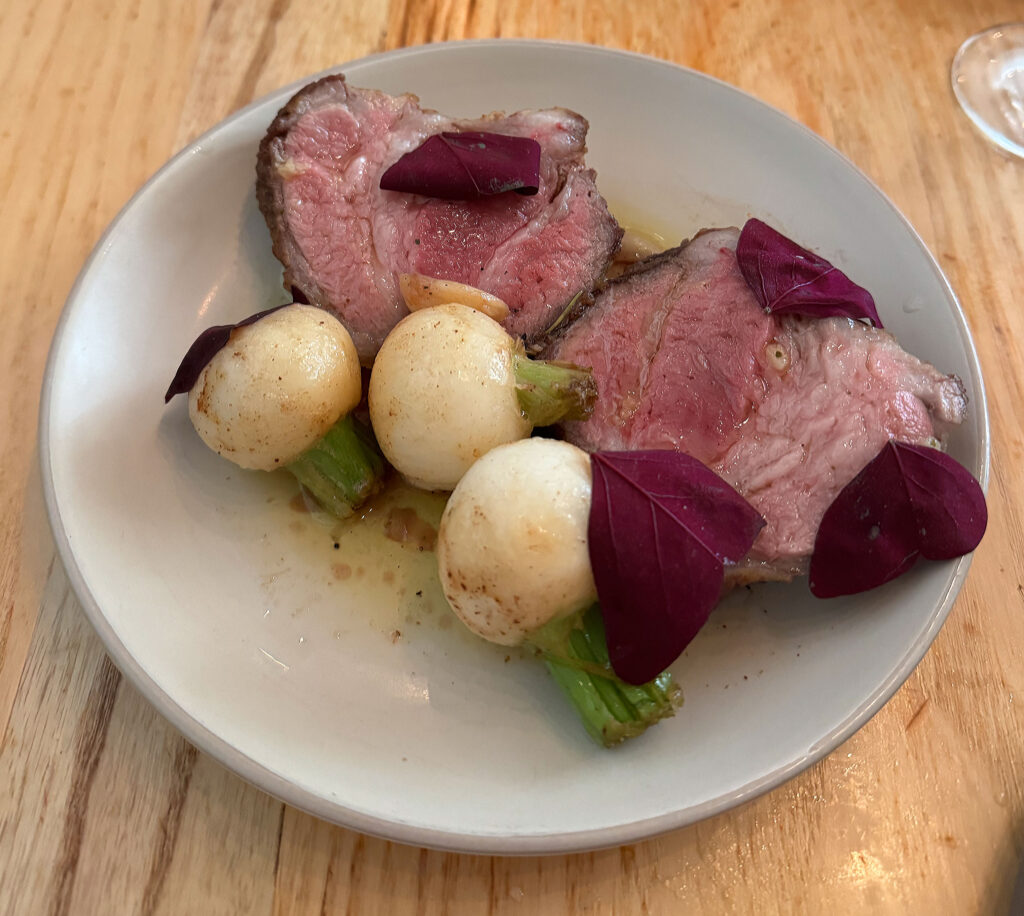
The “Iberico Coppa Finished Over the Coals” ($48) closes out the savory side of the menu—providing the chefs with another chance to impress me with a porcine delight. The caliber of the meat here (a better cut of a more coveted, fatty pig’s shoulder) is clearly superior. And the team, serving the resulting medallions with nothing more than a few Hakurei turnips, some leaves of purple oxalis, and a pork fat vinaigrette (made with La Guinelle vinegar), does not err.
Texturally, the coppa displays the kind of resounding tenderness and juiciness that I found missing in the ham. Thanks to its time on the coals, the Ibérico’s resulting—amply savory—flavor offers natural undertones of nuttiness and caramelization. From there, the citric notes of the oxalis, the tang of the vinegar, and the caramelized (in their own right) turnips, help to emphasize the pork’s latent sweetness while maintaining a counterbalancing sense of brightness. Overall, this makes for a satisfying, cohesive dish: one I might prefer with a touch more salt or umami but, regardless, stands among CDP’s finest work with any headlining cuts of meat.
Dessert, as it often does, comes in three parts (two old, one new):
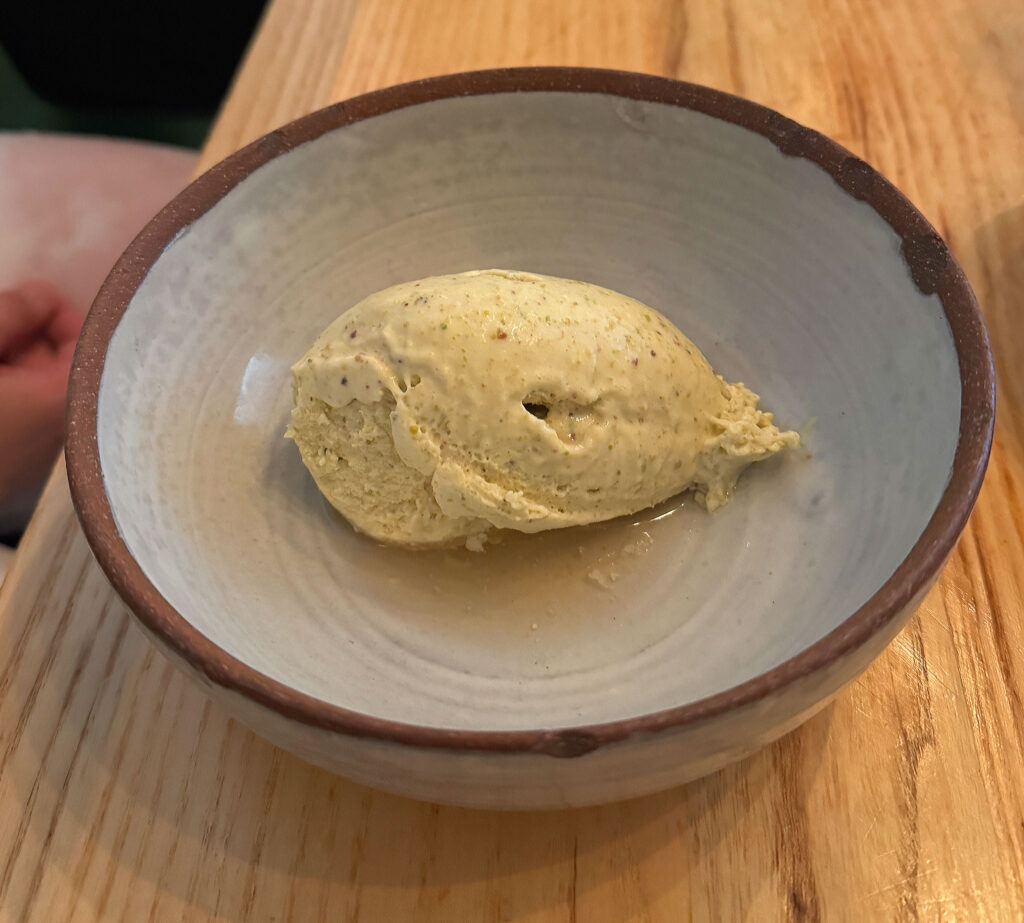
The “Pistachio Ice Cream” ($10) belongs to the latter category, combining a softly creamy base with the tiniest bits of that titular nut (which serve to pleasingly tickle one’s tongue). The resulting flavor profile is expectedly, maddeningly earthy-sweet. However, a drizzle of Vermouth di Torino—hot on entry, cooled by the ice cream, revealing a profound citric, spiced, and botanical depth—makes the dish unforgettable. This might be the best dessert Pikas and Cochran have ever served.
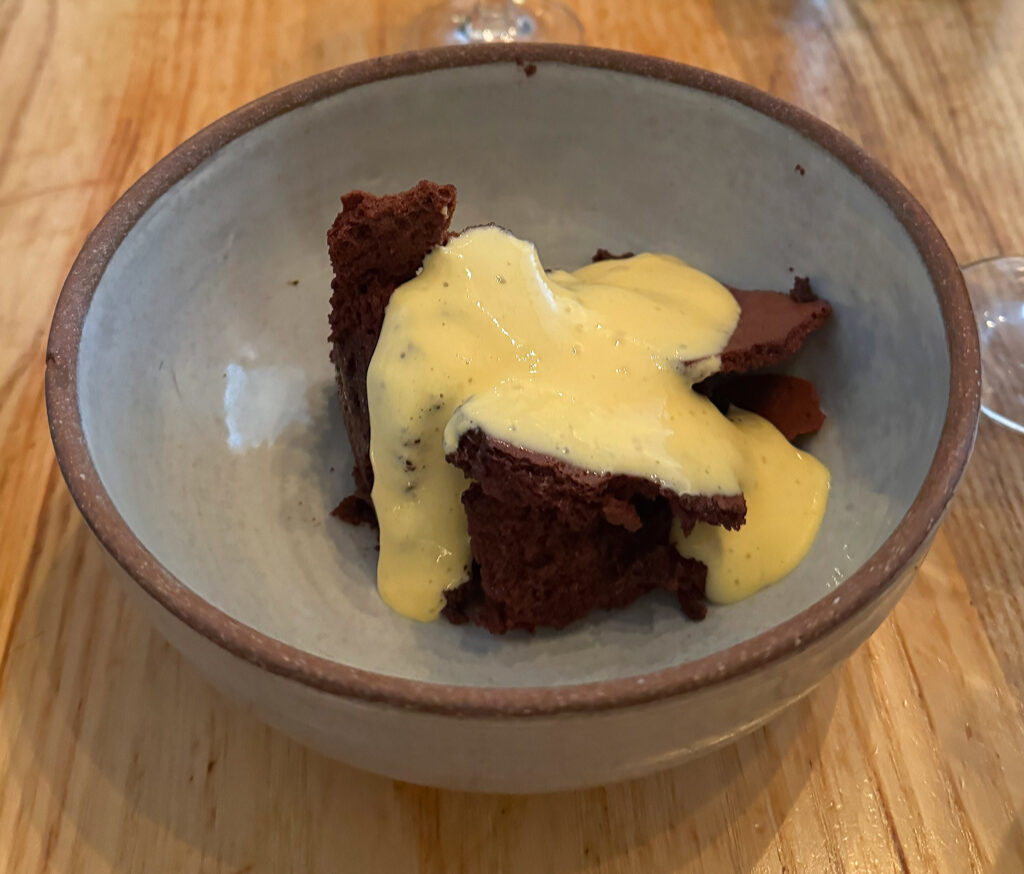
The “Chocolate Cake” ($14), by comparison, is relatively familiar. The present iteration combines alternating pieces of crisp crust and soft, fluffy crumb with a decidedly slick, oozing sake foam. The flavor feels more darkly chocolatey at first, but, with time (and the fruitier tones of the accompanying sauce), its expression takes on a more moderate, approachably sweet character. By my measure, this is about as good as the recipe has ever been. I’m always happy to encounter it.
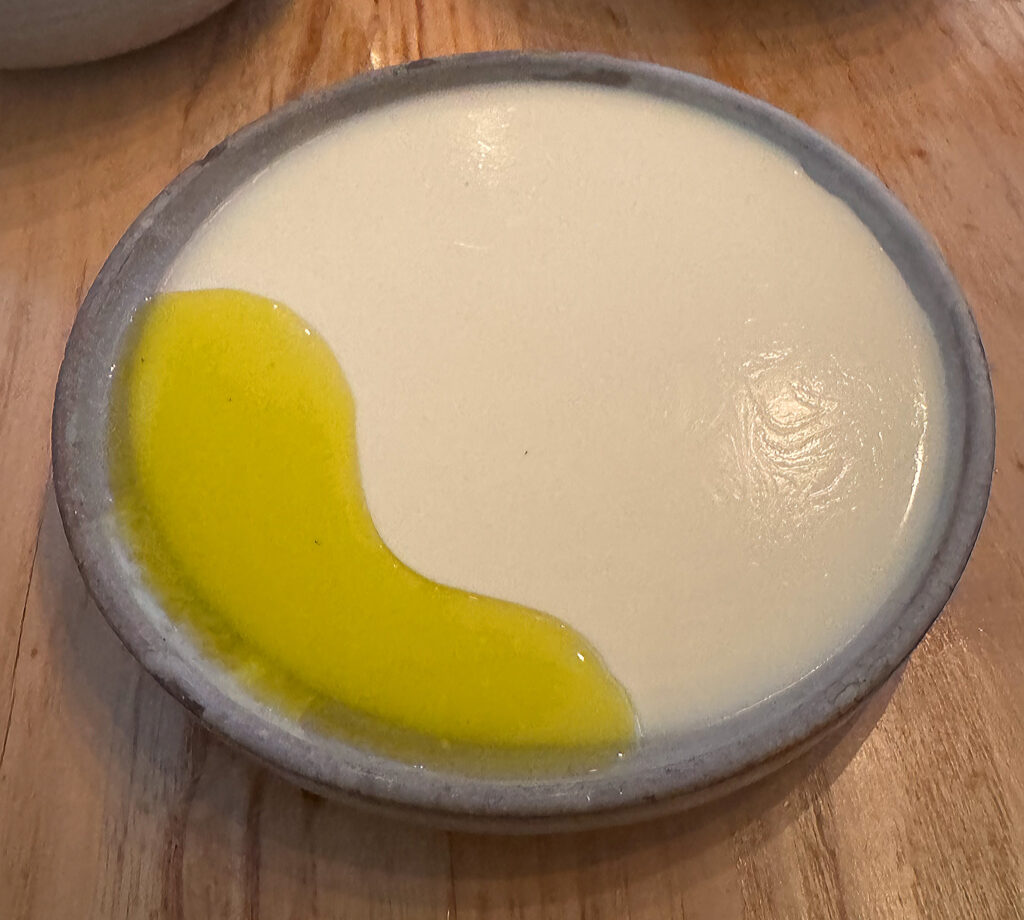
Finally, the “Panna Cotta” ($10) remains a classic: seamlessly creamy with a staggering intensity of sweet vanilla flavor leavened by sharp, fruity notes of olive oil. Tonight, this dish—excellent in its own right—has the rare honor of ranking as the weakest of the three desserts, which I think demonstrates just how high the average level of quality is.
Roughly 90 minutes later, the meal reaches its conclusion: some 14 dishes split into 11 distinct courses that allowed each of the principle savory plates to strike with the same force they might display on a tasting menu—only at a faster speed and amplified portion size that, for anyone burnt out by hours spent nibbling on timeworn tropes, feel like godsends.
As always, there’s another party coming down the pike. (Ordering nearly the entirety of the menu pushes me close to the unstated limit, yet the server manages our time adeptly without ever feeling overbearing.) And it’s kind of nice to finish one’s last bites, swipe a card at the awaiting terminal, and be out the door before the energy of the evening has any chance to subside.
At the point of egress, the team—chefs and all—offer a parting wave from behind their counter before stepping back into the breach. It’s a small gesture (and not an uncommon one), but it feels more significant here. The goodbye is more than a token of graciousness; it’s a momentary pause in a much greater, grander process of discovery that, years later, is bearing the most beautiful of fruit.
In ranking the evening’s dishes:
I would place the “Diver Scallop Crudo,” “Charred Frillman Farm Spring Onions,” “Klug Farm English Peas,” “Caramelle,” “Roasted King Kampachi,” and “Pistachio Ice Cream” in the highest category: superlative items that stand among the best things I will be served in any restaurant this year.
The “Klug Farm Green & Red Strawberries,” “Iberico Coppa Finished Over the Coals,” “Chocolate Cake,” and “Panna Cotta” land in the following stratum: great recipes that achieved a truly memorable degree of pleasure. I would love to encounter any of these again.
Next come the “Rye Country Bread,” “Boquerones,” and “Salad of Crimson Romaine Lettuce”—good—even very good—preparations I would always be happy to sample again (but that just failed to elicit an extra degree of emotion).
Finally, there’s the “Baked Picnic Ham”—a merely good (or maybe just intriguing) item that fell short when it came to texture and flavor. That said, the underlying ideas shaping this dish were sound, and it could easily be improved with a little more fine-tuning.
Overall, this makes for a hit-rate of 93% (tying my meal from April) with some 71% of dishes reaching that “would love to have again” standard and a full 43% ranking among the best things I will eat this year.
These latter figures (which, had I ordered the burger, would likely be even higher) are simply immense. They not only equal but actually surpass the numbers I reported for my recent experiences at Elske, Kyōten, Feld, and Oriole (each of which I thought was excellent).
It will always be hard to untangle the degree to which a superlative meal at Cellar Door Provisions reflects the growing mastery of the kitchen, a conscious choice to smooth out the more abrasive stylistic edges, or the mere happenstance of certain ingredients coming together in a certain way on a certain day.
However, whether I’ve simply acclimated to the way the team does things or evolved in my own aesthetic values (from the celebration of familiar, eternal pleasures to a pursuit of the unknown, extreme variety), CDP only seems to get better with each visit.
Walking through the door actually makes me giddy, for I know I will find that magical, mercurial quality that defines so many of my favorite restaurants (including Smyth)—only brought to a place of comfort, flexibility, and total control that is altogether unique.
Really, when you can eat at CDP every week, why bother chasing new openings that seem intent on doing everything but cooking boldly and curiously and seasonally in the same way? Why get lost in the noise of glamour and luxury or even branding when all that is most rewarding about gastronomy sits here—nakedly—for the taking?