
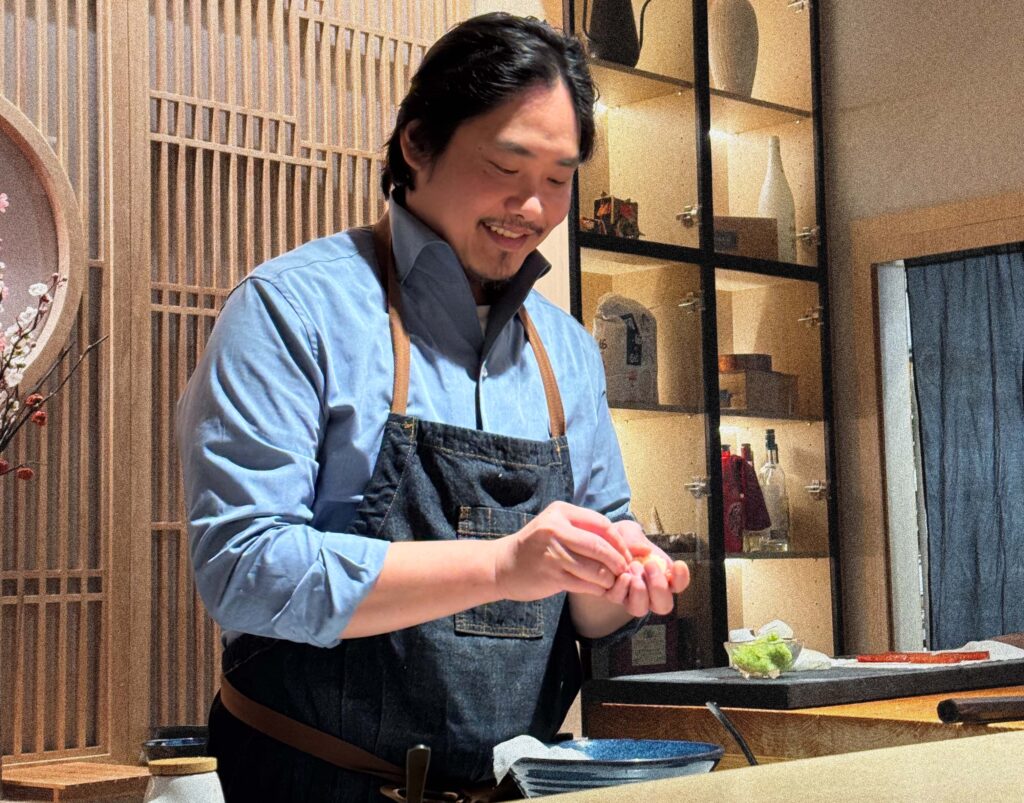
Writing about Kyōten once a month is usually enough of an indulgence, so I don’t really bother capturing the other visits I make.
After all, it’s a bit of a crime to be taking notes and pictures of nigiri (their structure decaying by the second) when one should be attuned to the rhythm of the counter and to the connections—whether with the chef, one’s dining companions, or total strangers—that can only form in this most intimate of settings.
At core, I return here because the meal consistently forms a peak gustatory and emotional experience. It’s certainly possible to feel some of this power while juggling the duties of analysis, but there’s always a trade-off involved. Stepping outside of your visceral enjoyment—for the sake of transcribing and intellectualizing it—necessarily saps you of the deeper, lingering pleasures that frequently accompany it.
For this reason, those evening I relinquish to the imperfections of memory (including any and all I enjoy while traveling) carry particular significance. They enable full submission to the beauty of the moment, which—consequently—rejuvenates my desire to pick apart all the details at some other time or place. Sitting at this counter, without any worry about creating content, is a constant reminder of how sweet this world of hospitality can be.
That said, a monthly Kyōten “double feature” also starts to feel ostentatious: repeatedly celebrating a restaurant that charges so much yet touts no formal honors (like Michelin stars). While, I firmly believe that anyone with even a passing interest in sushi can eat here and be blown away, full appreciation of the craft demands a kind of esoteric knowledge that isn’t really endemic to Chicago.
Omakase devotees, in turn, are experienced and opinionated enough that they don’t need to be walked through each menu bite for bite. Rather, some basic details regarding the chef’s training, ingredient sourcing, and stylistic preferences are usually enough to ascertain the right fit.

Nonetheless, with Otto Phan keeping an irregular schedule this year, any attempt to track Kyōten’s menus on a consistent basis has grown complicated. The best I can do, instead, is to engage with the chef’s work as frequently as I find it.
This might mean a certain degree of redundancy. However, showcasing meals that stand merely two (rather than three or four) weeks apart could also offer a chance to demonstrate just how dynamic the restaurant’s arsenal of seafood really is.
Likewise, while Phan’s consistency will certainly come under sharper scrutiny now that my closest reference point is comparably recent, his capacity for fine-tuning and bonafide growth (quickly mastering the more challenging ingredients before they disappear for the season) may also be emphasized.
Admittedly, there are bound to be bad nights too (though, and this may be based more on feeling than objective analysis, the menus I historically omit have tended to be stronger than the ones I write about).
In any case, putting Kyōten in closer conversation with itself can only reveal an even greater truth: one that interrogates the superlative quality perceived during an occasional splurge and really asks at what point—if any—returns begin to diminish.
I like to think I know the answer to such a question (my behavior betrays it), but might the picture grow more complicated once I’m forced to pick each visit apart?
Let us begin.
Tonight, if there is any indication as to how frequently Phan’s menu changes, it is affirmed through the opening small plates. Each of the five are distinct from the four served earlier in May, and, while some of these chosen recipes rank among the chef’s signatures, others are entirely new.
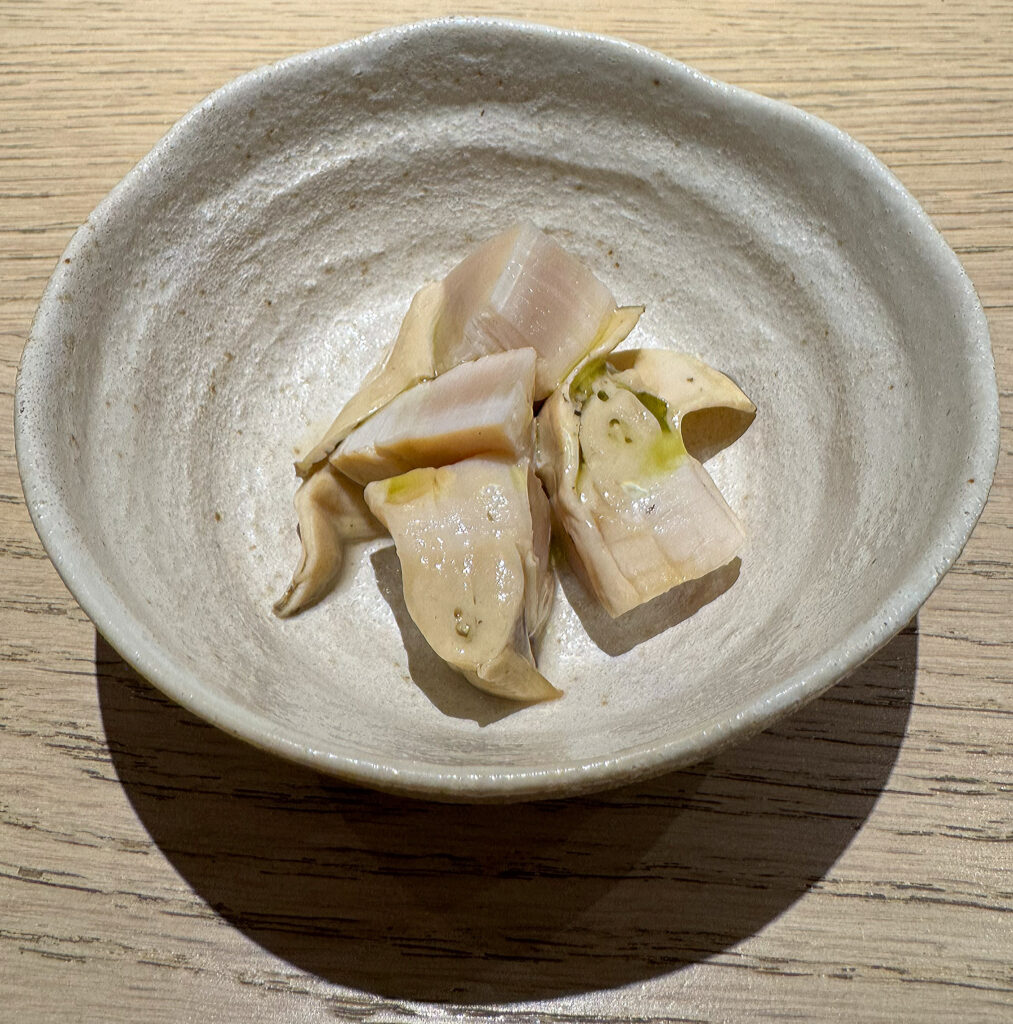
The “Behemoth Oyster,” which serves to kick off the menu, belongs to the latter category. I’ve seen this bivalve feature at Smyth recently (a consequence of the standardization that comes when large purveyors sling every new ingredient to the same pool of chefs), but its size—true to the name—demands that chefs approach the meat with some clear vision. Here, the adductor muscle is featured: a particularly thick part of the anatomy (looking almost like a scallop in this instance) used to lock the mollusk’s shell.
Phan serves four of these heaping pieces with nothing more than a dressing of lemon juice and olive oil. On the palate, they offer a pronounced degree of chew with some intermittent softness drawn from the frills of flesh that trail off the end. Some might consider this sensation to be the antithesis of those plump, luscious oysters you knock back by the dozen. Yet the adductor, once it hits one’s teeth a couple times, actually becomes more yielding and creamy. It also reveals an elegant, persistent brininess that, opposite supporting notes of citrus and subtly bitter fruit, feels both singular and satisfying. Undoubtedly, this dish ranks toward the extremity of edible shellfish textures. However, it manages the mouthfeel with total finesse and whets guests’ appetites with a sense of weight that other, later offerings will further amplify.
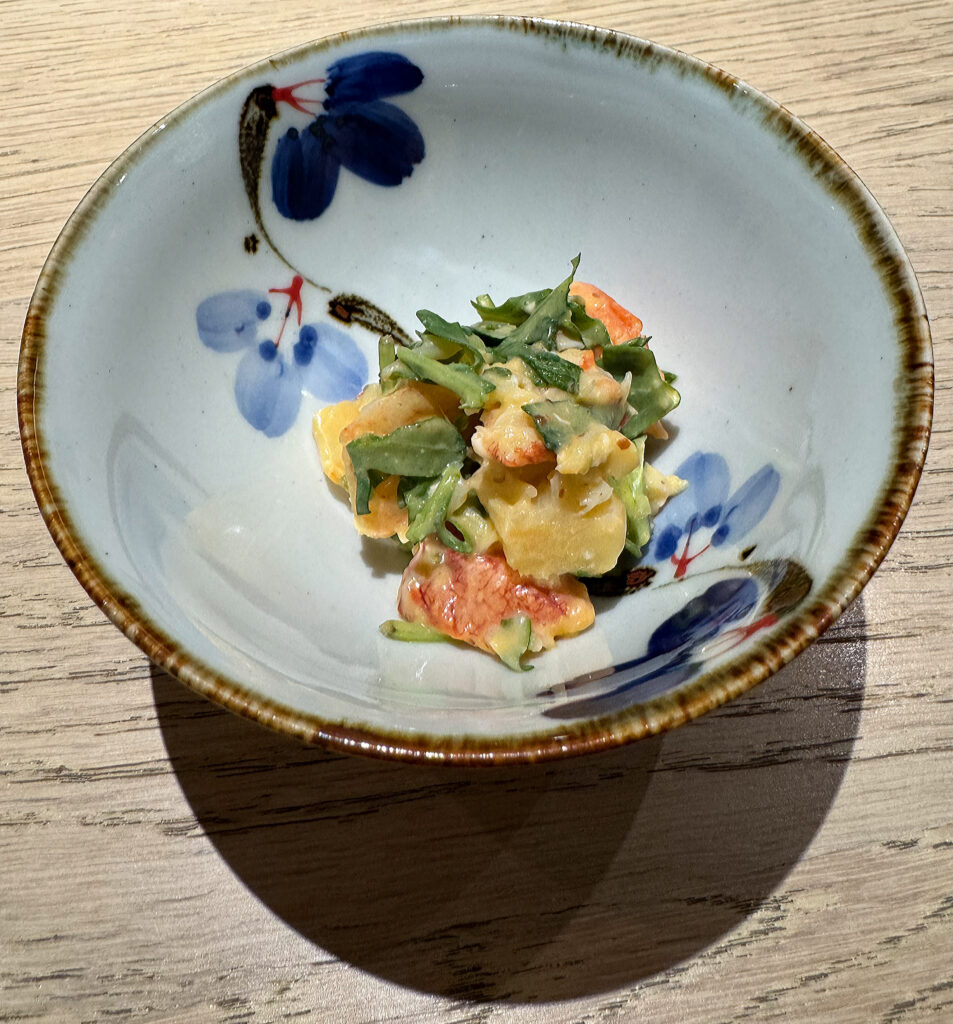
Arriving next, the “Blue Lobster” takes a comparably conventional, approachable form: being fashioned into what the chef calls a “spring lobster salad” made from the crustacean’s claws, a hollandaise made from its body, and a few leaves of arugula. Structurally, it’s hard to fault the composition, which delivers bite after bite of soft (though admittedly slightly thready) meat slicked with cream.
When it comes to flavor, tang and pepperiness lead the charge—securing a resounding sense of refreshment. Nonetheless, I find this recipe to be missing the depth of lobster sweetness and tomalley-tinged umami I am looking for. Indeed, the hollandaise must grow in character and intensity if this preparation is ever going to compete with the servings of crab that have, on other occasions, so impressed me at this early stage.
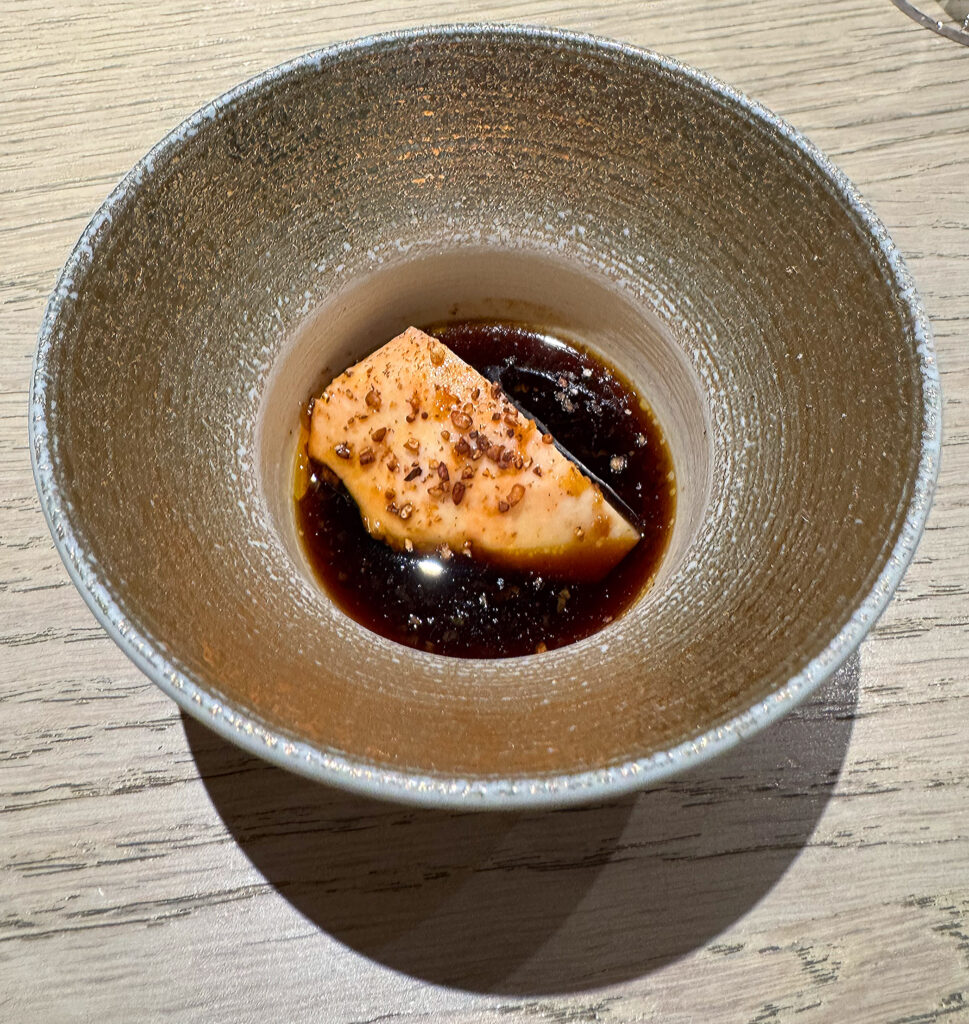
Thankfully, “Ankimo” (or monkfish liver) is a sure-thing in Phan’s hands. Addressing the counter, he admits that “if I had a signature course, it would be this one” while also reflecting that the season for this coveted ingredient (which he loves to label the “foie gras of the sea”) should already be over. It doesn’t sound like I will be enjoying this dish again for many, many months, so I make a special point of savoring each spoonful.
Dressed with the chef’s trusty ginger sauce and topped with crumbled buckwheat, the offal displays a moderate amount of creaminess that falls short of the best examples (and perhaps this relates to the time of the year) but remains entirely enjoyable. Plus, the liver—perfectly framed by its crisp and sticky accompaniments—provides ample mouthcoating umami that, when it meets the dressing, delivers the spellbinding tangy sweetness for which the recipe is known. Never overwrought, this dish remains an incredible treat.
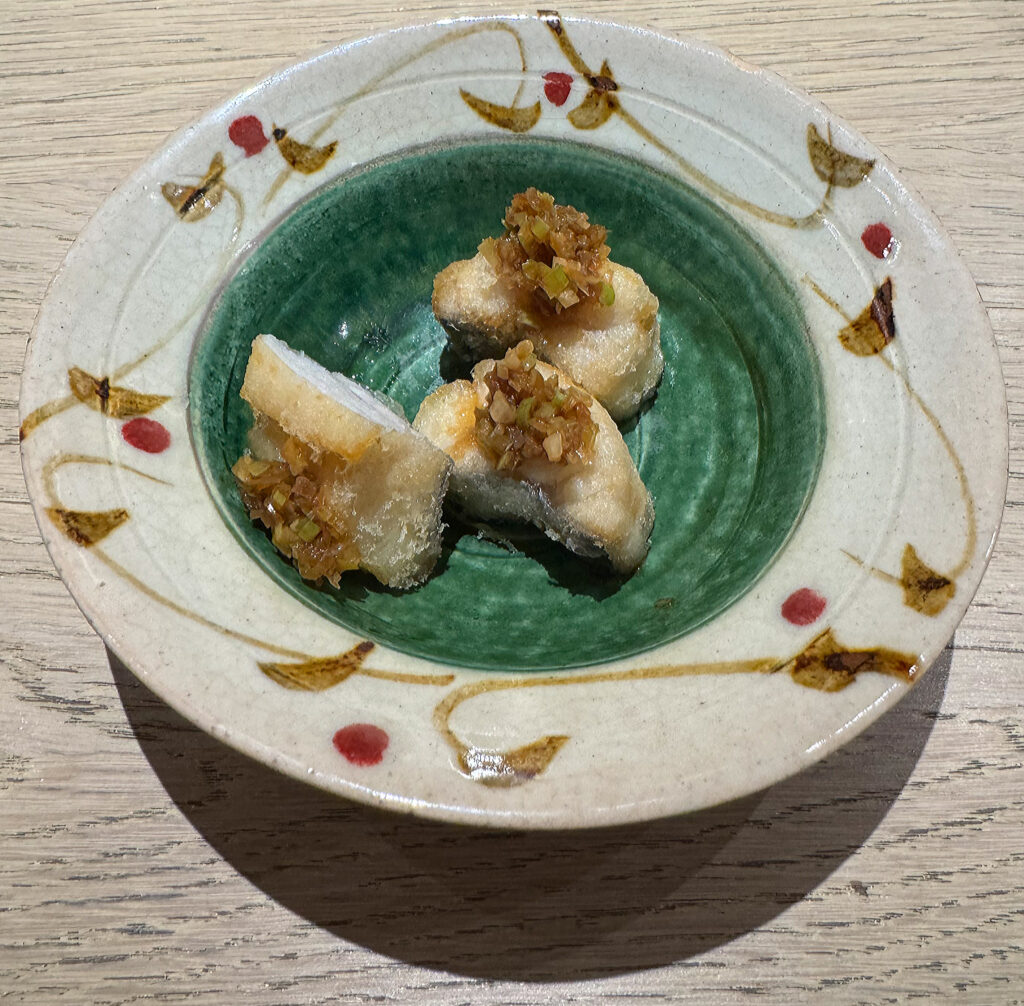
“Tachiuo” (i.e., beltfish) has not made an appearance since February, when it formed the centerpiece of Kyōten’s tempura course. Phan favors this particular item—his preference for the format whenever he can source it—for being “chewy when raw” yet “fluffy when cooked.” And, tonight, the fish stars in the same preparation with help from a little green onion ponzu.
On the palate, the tachiuo offers only a slight degree of exterior crispness (which, to be fair, is quite cleanly rendered). However, the interior is enjoyably dense, rich, and juicy with a latent sweetness that sees its intensity augmented by the tangy, allium-charged condiment. Overall, while I do firmly believe that tempura should demonstrate a more memorable degree of crunch, it’s hard to argue with the feeling of satisfaction that the beltfish, prepared in this manner, provides.
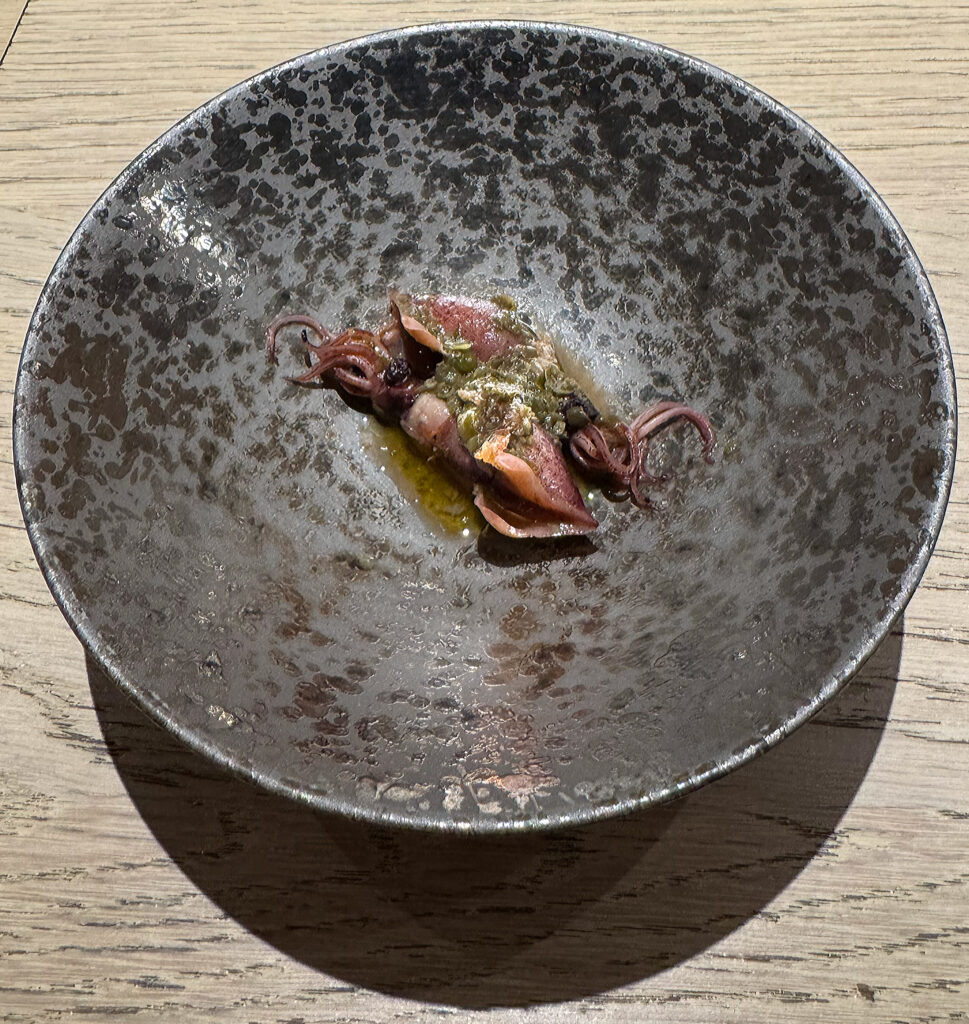
“Hotaru Ika” (also known as firefly squid) appeared toward the very end of the nigiri sequence during my last visit. Here and now, it precedes it: pursuing the same “Caesar salad” effect with the help of an accompanying caper relish.
Texturally, the two pint-sized cephalopods display an attractive plumpness that soothes any lingering fear about consuming them whole. Flavor leads with a briny, almost irony quality that is inherent to the meat, but the tang and concentrated umami of the condiment help steer this sensation toward a darkly savory finish that is easy enough to like. By my measure, this makes for a small improvement on the rendition I tasted earlier in May (helped along by the fact this polarizing squid is now served long before guests get full). Nonetheless, I am coming to learn that this ingredient isn’t really one I favor.
Now reaching the start of the nigiri sequence, I find a number of Kyōten’s headlining pieces interspersed with a couple interesting variants that speak to this transitional point in the season.
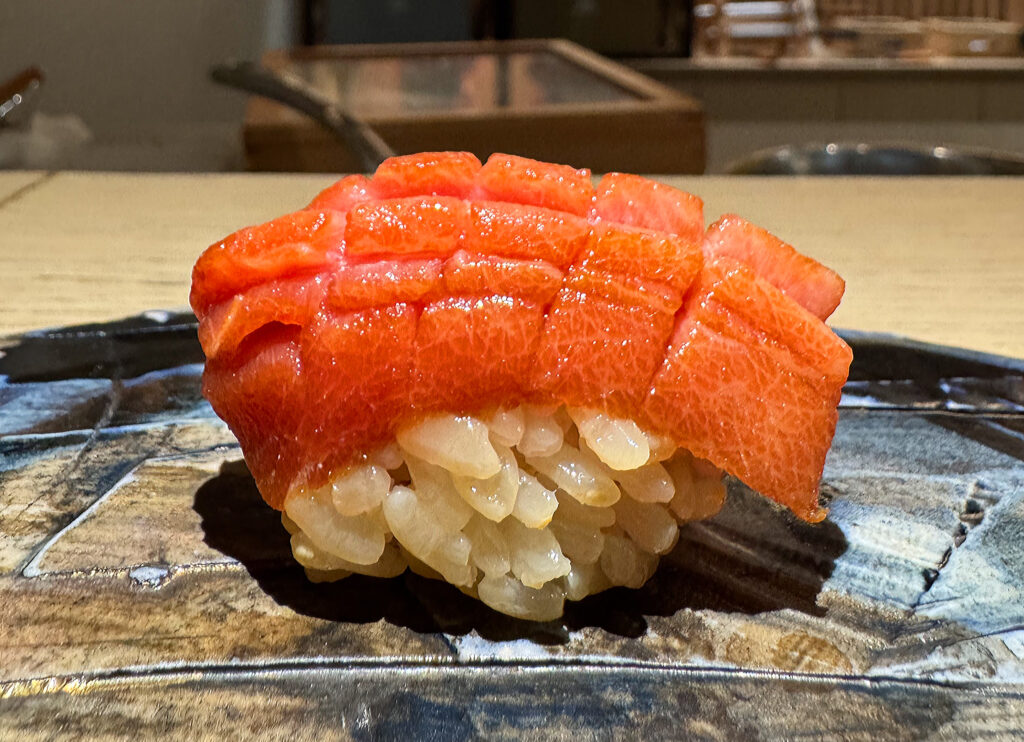
To begin, there’s the “Ōtoro” (that fattiest cut of the tuna’s belly), which, on this occasion, leads things off rather than succeeding its medium-fatty counterpart. Visually, the fish features a fine web of pale pink marbling—offset by latticed scoring—running throughout its shining flesh. On the palate, the ōtoro feels supremely and cleanly melty in a manner (rice included) that belies any sense of structure.
The resulting flavor is marked by a harmonizing, umami-laden note of soy sauce, yet it lacks the pungent counterpunch of fresh wasabi (so enthralling opposite the gushing fat) I am used to finding here. Phan stresses that the spicy rhizome’s character can, indeed, change at this time of year. However, I find that this softer expression saps some enjoyment from what is otherwise a texturally superlative bite.
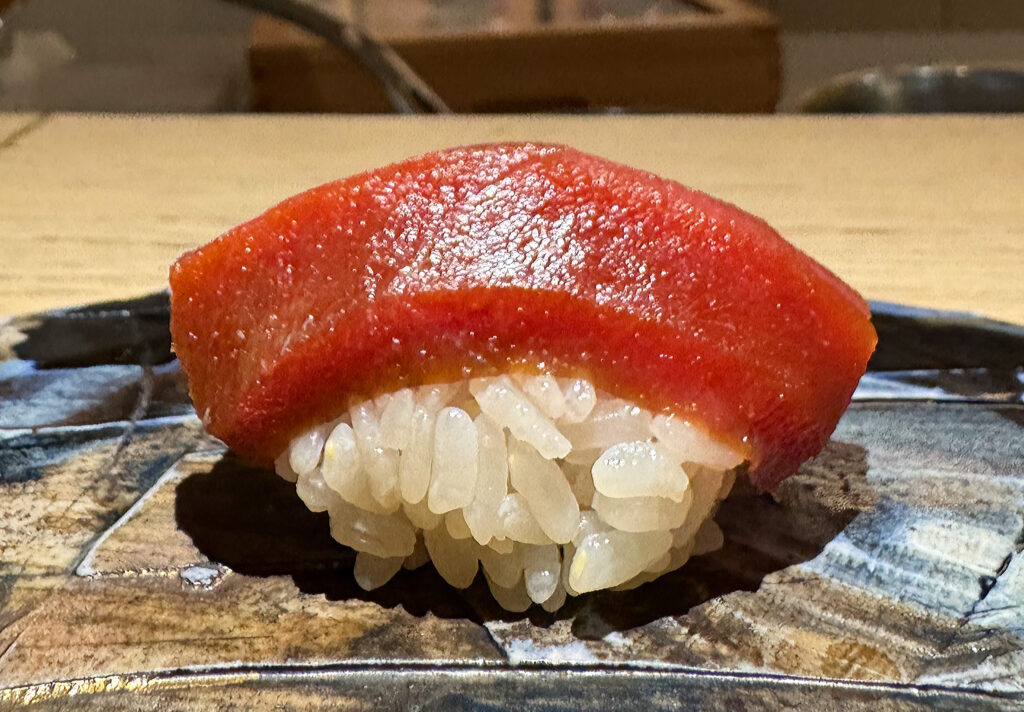
The ”Akami” (or leaner tuna meat) can, in Phan’s hands, often rival the fish’s more coveted cuts. Tonight, with no chū-toro in the running, the ingredient makes one of its strongest showings. The chef, following his normal procedure, cures this particular segment in soy sauce a few hours before service, yielding a homogenous slab of deep-red flesh marked only by the simplest lengthwise scoring.
Texturally, the lean meat strikes with a distinguishing (wholly expected) firmness; however, I savor its weight on the tongue—only to marvel as the mouthfeel turns tender and buttery with a couple more chews. Flavor, again, is somewhat hampered by the milder nature of the wasabi. Nonetheless, this piece was never as reliant on that kind of sharpness. Instead, the darker depth and overall persistence of the soy sauce carries the day, imbuing the akami with a delicious degree of intensity that does, truly, rival the ōtoro in terms of pure enjoyment.
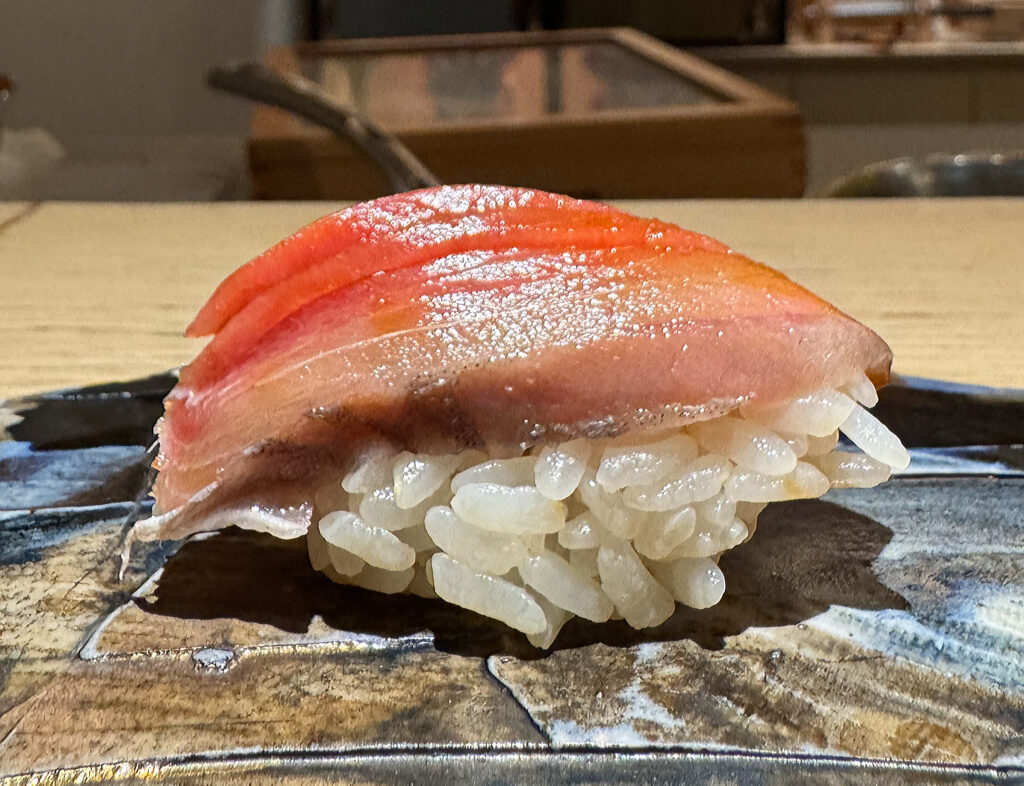
Never one to rob his customers of a three-part indulgence, Phan closes the flight with “Katsuo” (i.e., skipjack tuna): an entirely different species from the wild Atlantic bluefin he typically favors. At core, it’s a leaner, oilier, and less luxurious fish (almost more akin to mackerel), yet one, contextually, that can provide ample pleasure.
The chef smokes the skipjack and seasons it with touches of ginger and green onion that are tucked beneath the flesh. Whether this is directly related or not, the mound of rice actually falls apart as I try to bring the tuna toward my mouth (a rare lapse of technique). Thankfully, the fish finds its way safely, displaying an even greater, meatier firmness than the akami but, once more, turning luscious with further mastication. Flavor, too, achieves even greater concentration via well-integrated notes of sweetness and sharpness that were entirely missing from the preceding bites. Ultimately, while I have witnessed Kyōten serve katsuo every now and then over the years, this example has to rank as the finest—a real testament to the menu’s ever-increasing refinement even (or especially) among less prized pieces.
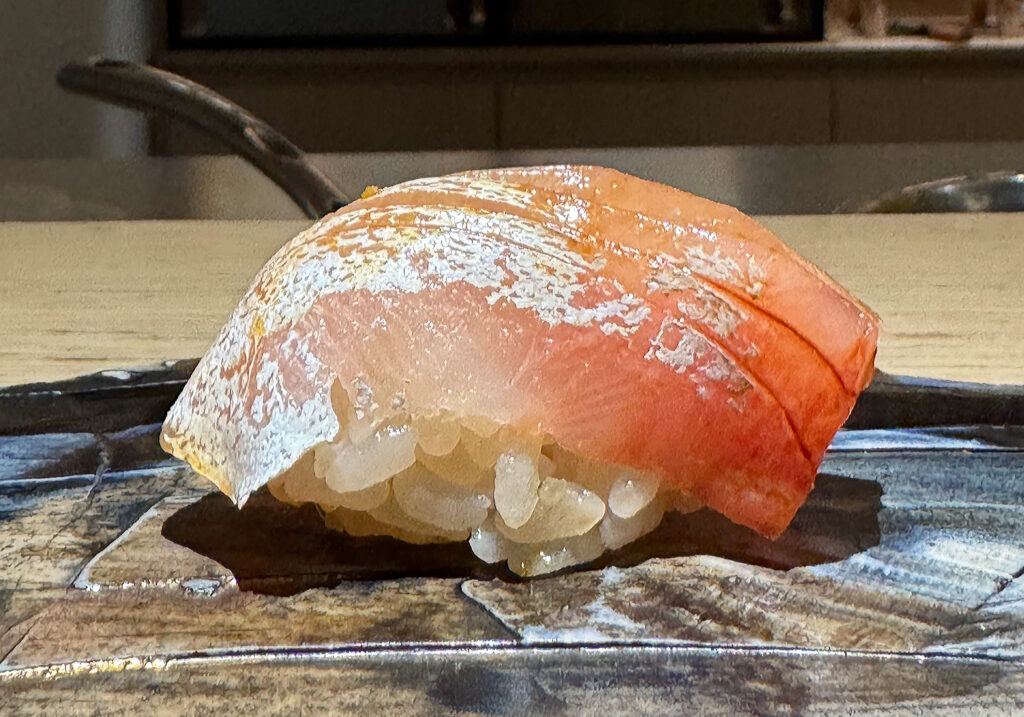
“Shiokko” (or young amberjack) serves as a replacement for the buri—a mature yellowtail—that Phan favors as a follow-up to his tuna. It’s easy to tell the difference at a glance, for the present fish is noticeably lighter in tone and distinguished by far less marbling (as well as any corresponding, elaborate scoring).
On the palate, this young amberjack leads with a firmness that is reminiscent of the preceding two pieces yet more persistent. Rather than melting entirely, it breaks apart cleanly: leaving behind an impression that is largely mild and almost borders on being bland. Nonetheless, I do perceive just enough umami on the finish for this piece to be pleasing. It’s just that expectations are sky-high for anything in the amberjack/yellowtail family, and this bite does not quite reach the level of being memorable.
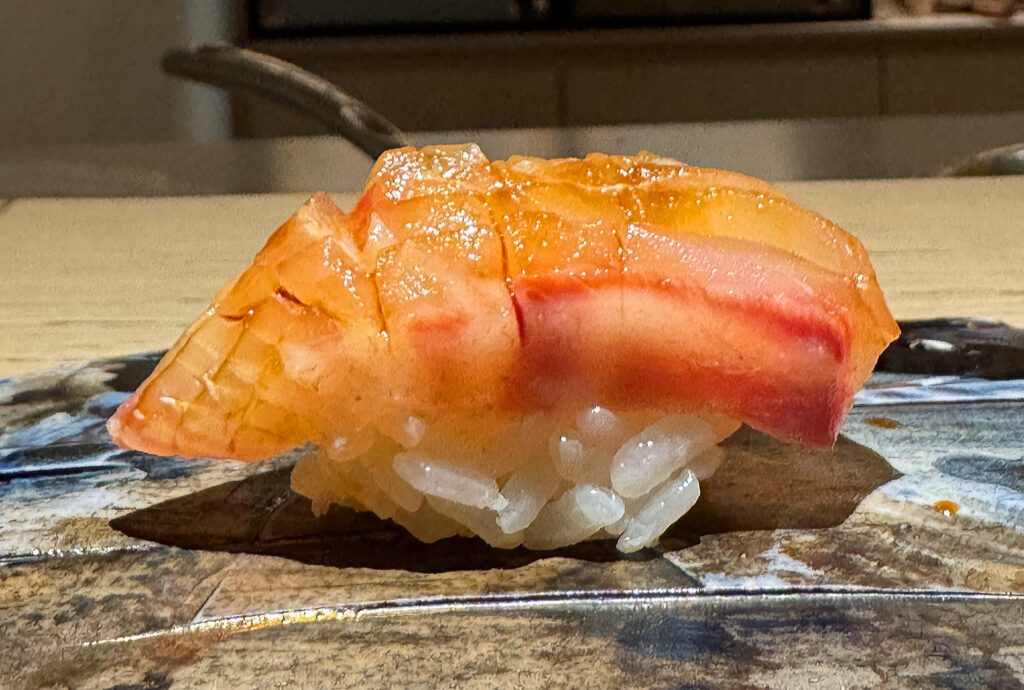
“Isaki” (also called grunt fish) has only appeared irregularly over the years, but Phan praises the present example as being “exceptional”—something like a “richer snapper.” After enduring a few leaner cuts, I think it’s nice to encounter an item (however obscure) that boasts notable fat deposits and the kind of deep scoring that helps them sing.
Texturally, the isaki’s fleeting firmness frames a soft, almost creamy quality to the flesh. The grunt’s flavor, too, is more robust than the amberjack: offering a hint of sweetness alongside a perceivable richness that acts as a cushion for a clear, supporting imprint of soy sauce. Though not a showstopper, this piece surprises me with its quality and ranks competitively against fish I would expect to clearly outclass it.
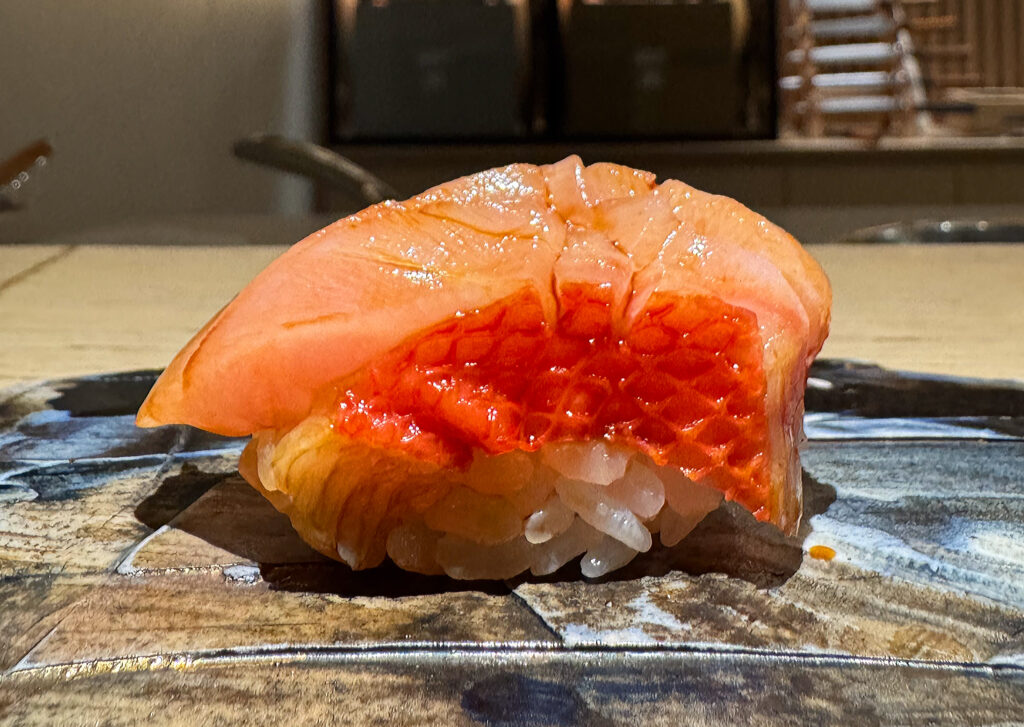
“Kinmedai” (or golden-eye snapper) has formed something closer to a staple whenever the chef can source it. That said, it’s a fish that usually leaves me feeling just barely satisfied (rather than totally enthused). Tonight, Phan pairs the ingredient with its usual dab of lemon zest, which serves to enliven the kinmedai’s milder character by amplifying its latent sweetness.
Texturally, the snapper is beautifully soft and unctuous too. I am only left feeling—as I always do—that the bite lands more on the side of bright refreshment than convincing, savory pleasure. Considering the broader scope of the meal, this might be the point, and, admittedly, the present example is about as good as I can remember having.
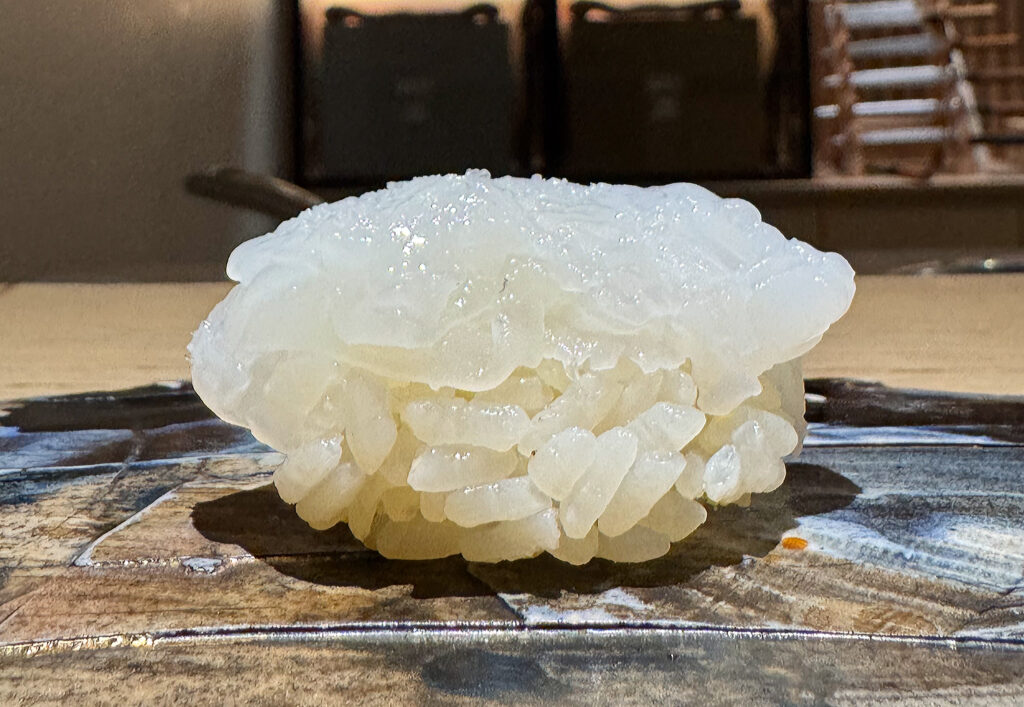
“Aori Ika” (i.e., bigfin reef squid) ranks as one of Kyōten’s highlights throughout 2026: a convergence of one of my favorite ingredients—which the omakase long chose not to feature—with Phan’s familiar, hedonistic style. The chef scores the cephalopod extensively and methodically to achieve the desire mouthfeel, one whose signature chewiness yields to an exquisite gooiness that spreads across the tongue.
When it comes to flavor, dashes of flaky salt and lemon zest help to provide definition. These notes reveal the deepest, most last sweetness of the evening while simultaneously building ample savory backing the lasts through the finish. On a night when the menu’s tuna and yellowtail do not quite reach their usual heights, this squid is superlative.
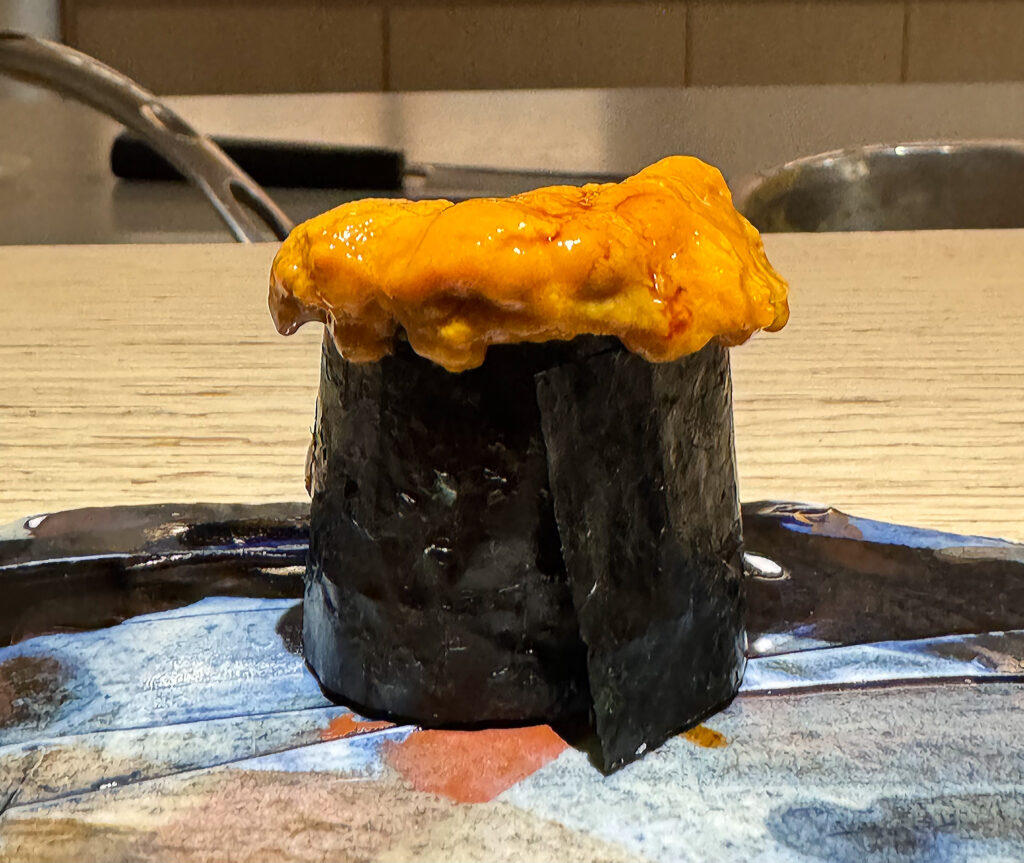
“Uni,” both due to core issues of quality and occasional lapses in preparation (e.g., serving temperature), can be hit or miss. However, for this menu, Phan has gotten his hands on the dry-packed ensui (or preservative-free) variety of Hokkaido sea urchin he considers to be the best. It’s hard to argue with the result: a cap of misshapen, soy sauce-drizzled orange lobes (seemingly dripping into their crisp seaweed wrapper) that, appearance aside, delivers a profoundly creamy, sweet, and oceanic expression of the prized ingredient.
Yes, being free of any jarring metallic notes and enhanced by supporting umami, this impeccably balanced bite of uni stands among the best examples I will encounter in a given year. It, like the aori ika, helps to rescue a meal that might have otherwise been a tad underwhelming.
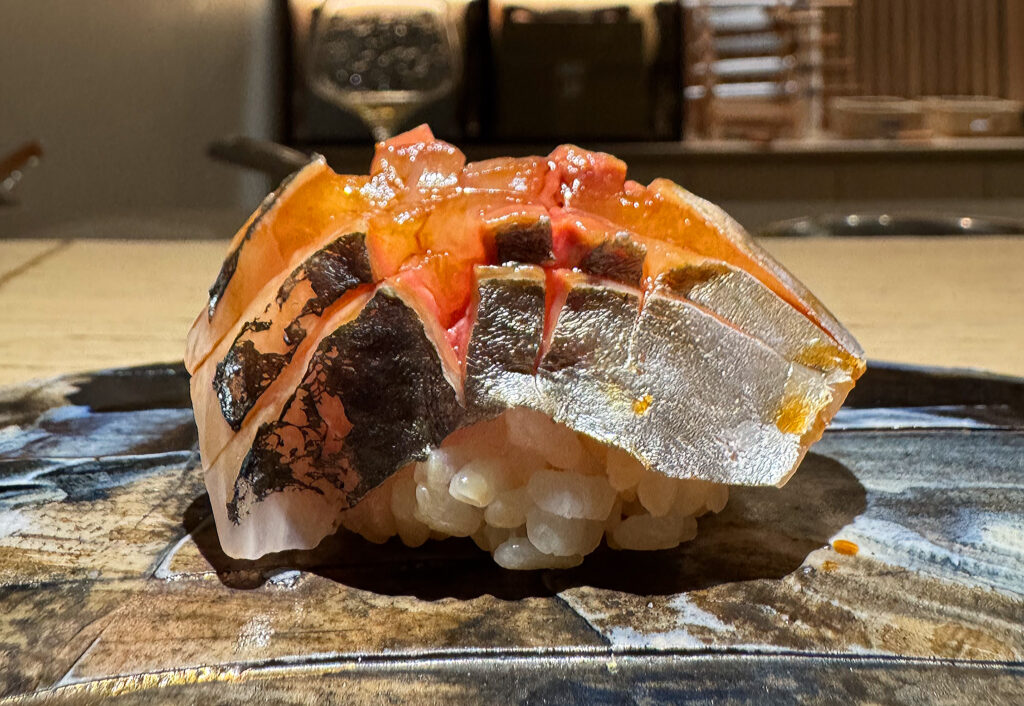
“Aji” (or horse mackerel) very rarely features here, yet this donchichi variety—a certification that signals a remarkable degree of fattiness—earns its place among the evening’s finest bites. Visually, the piece’s deep scoring and glistening pockets of marbling can only be compared to the ōtoro. However, while I felt the flavor of that fatty tuna let me down just a bit, the chef’s application of ginger and green onion (what he terms “authentic, old-school sushi”) marries texture with intensity.
On the palate, the aji offers a smooth, oily consistency that coats the tongue and threatens to obscure any accompanying flavor. Nonetheless, the sharp tang of the garnishes shoots straight through the richness, revealing a persistent savory quality (not quite fishy or briny but more vaguely oceanic) that ensures this weighty fish proves entirely delicious. In sum, the horse mackerel ranks as another surprise highlight that shores up this later stage of the menu.
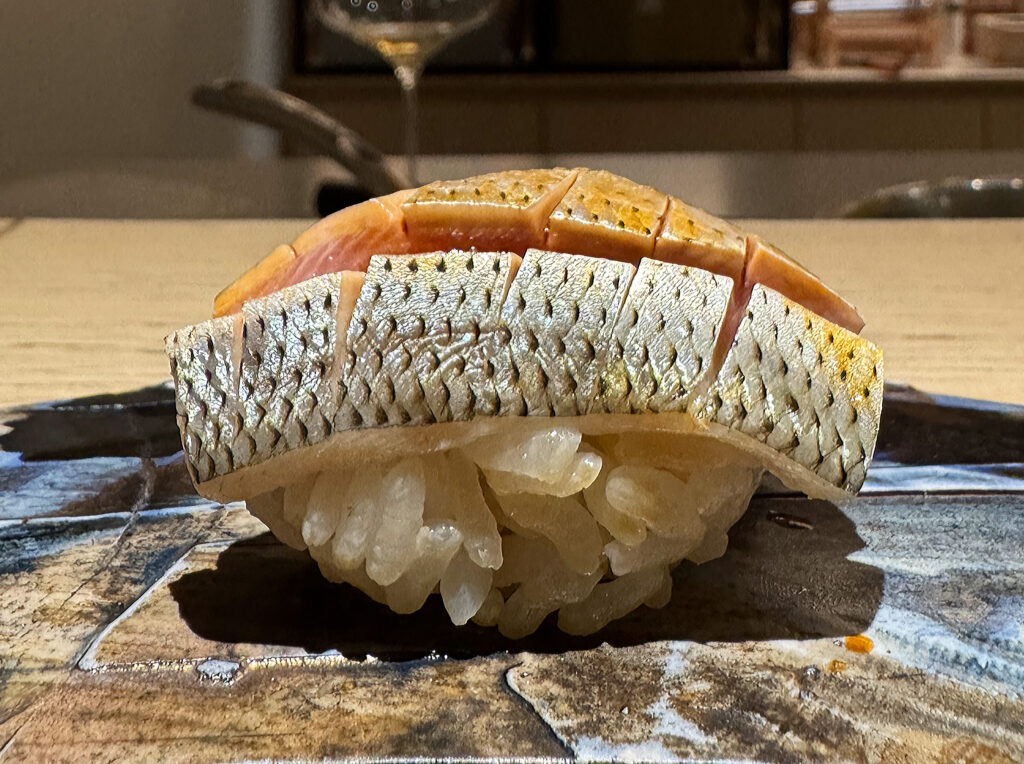
“Kohada” (i.e., gizzard shad) is a totemic piece that allows the chef to showcase his mastery of the myriad techniques (e.g., deboning, washing, salting, and marinating) required to successfully serve the fish. The resulting bite usually lands a step or two below the evening’s finest items, and the present example largely maintains that standard.
Texturally, the kohada leads with a trace of firmness before turning rather tender—and not particularly oily (at least when compared to the aji)—with further mastication. The resulting flavor is almost overwhelming due to the degree of tang and brininess. However, it stops just sort of excess: presenting an unabashedly powerful, though not at all clunky, expression of the fish that builds on the character of the preceding mackerel.
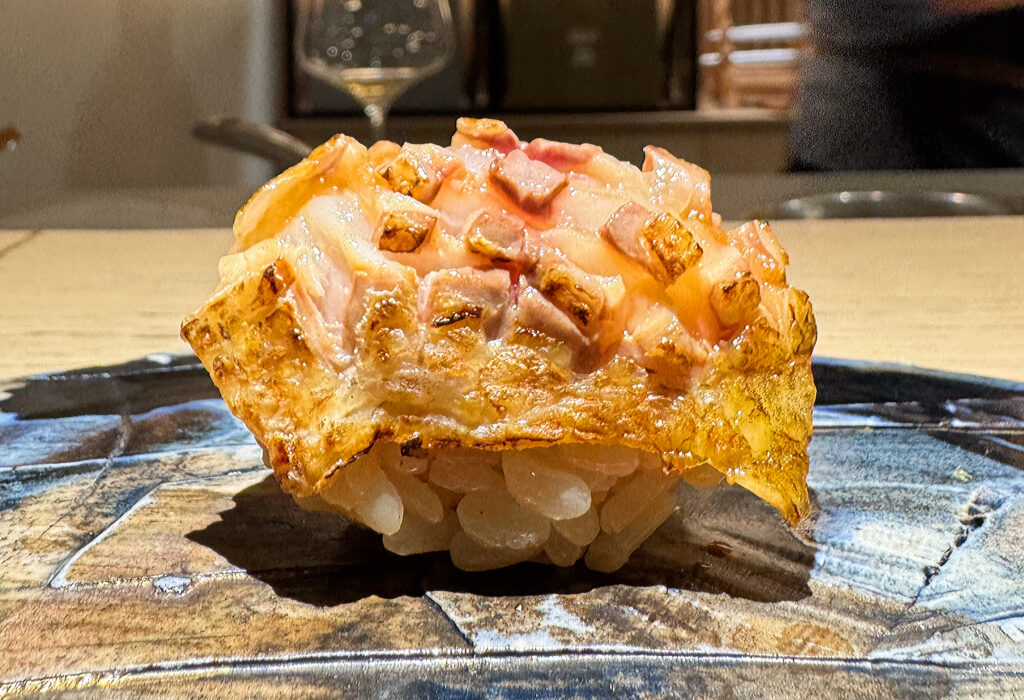
“Akamutsu” (or blackthroat sea perch) closes out the progression of nigiri, and I wonder how this ingredient—so rich yet frequently rather bland—can possibly match the intensity of what came before. Truth be told, Phan has (as of last meal) already found a way to ensure this piece shows greater character by changing where he sources the cut. Now adding fermented jalapeño to the equation, the chef puts forth his best ever rendition of the prized fish.
On the palate, the akamutsu (its skin lightly torched) delivers the warm, oozing richness for which it is known. This time around, that tongue-coating quality is matched by a strikingly smoky, subtly spicy note from the pepper whose underlying tang and pepper fruitiness unravel on the finish. As with the aji, I absolutely love this marriage of ample fat and convincing flavor. Seeing it pursued so creatively—with a touch of heat I’ve never associated with Kyōten’s work—makes for a special thrill.
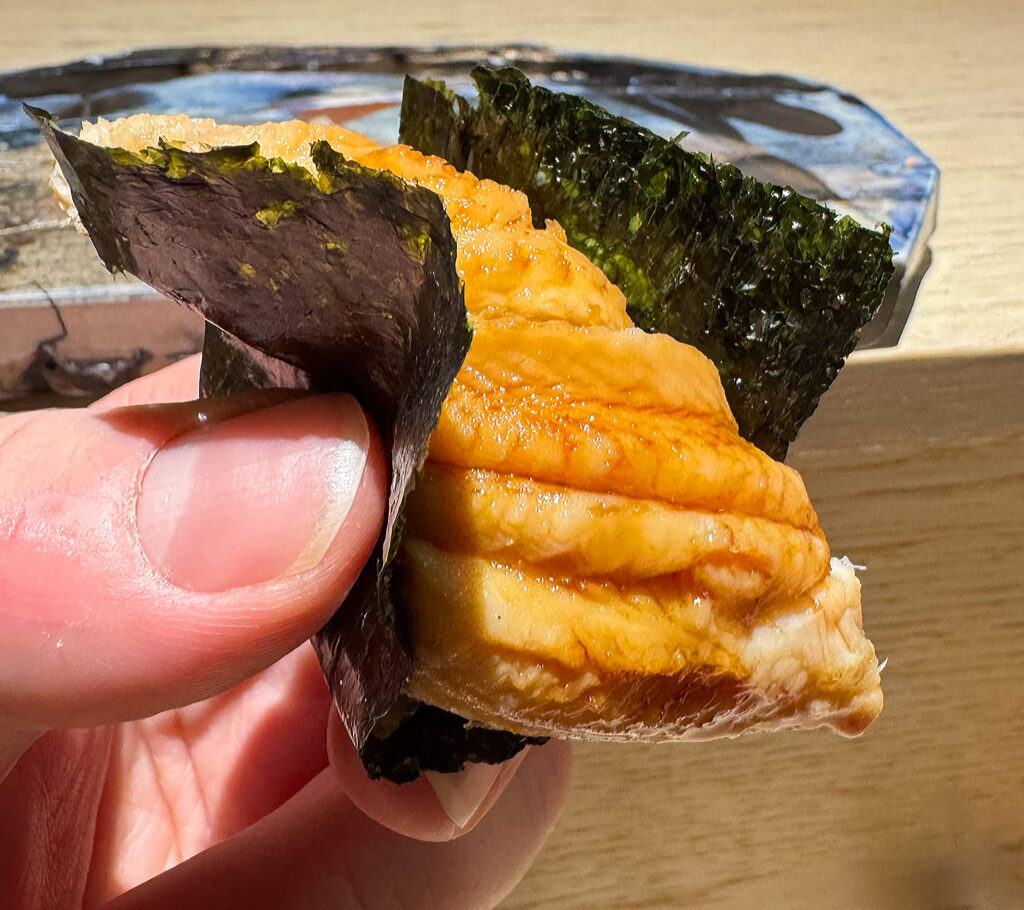
“Unagi” (i.e., freshwater eel) stands among Phan’s best pieces whenever it makes an appearance. Here, the chef opts for a “taco style” construction in which the fish’s soft, flaky flesh contrasts the perfect brittleness of its seaweed wrapper.
The accompanying sauce—made in house—provides an elegant, understated sweetness that stands worlds apart from sappy, stereotypical examples of the form. It all makes for a beautifully refined expression of eel that balances precision and restraint with just enough the decadence for which this ingredient is known.
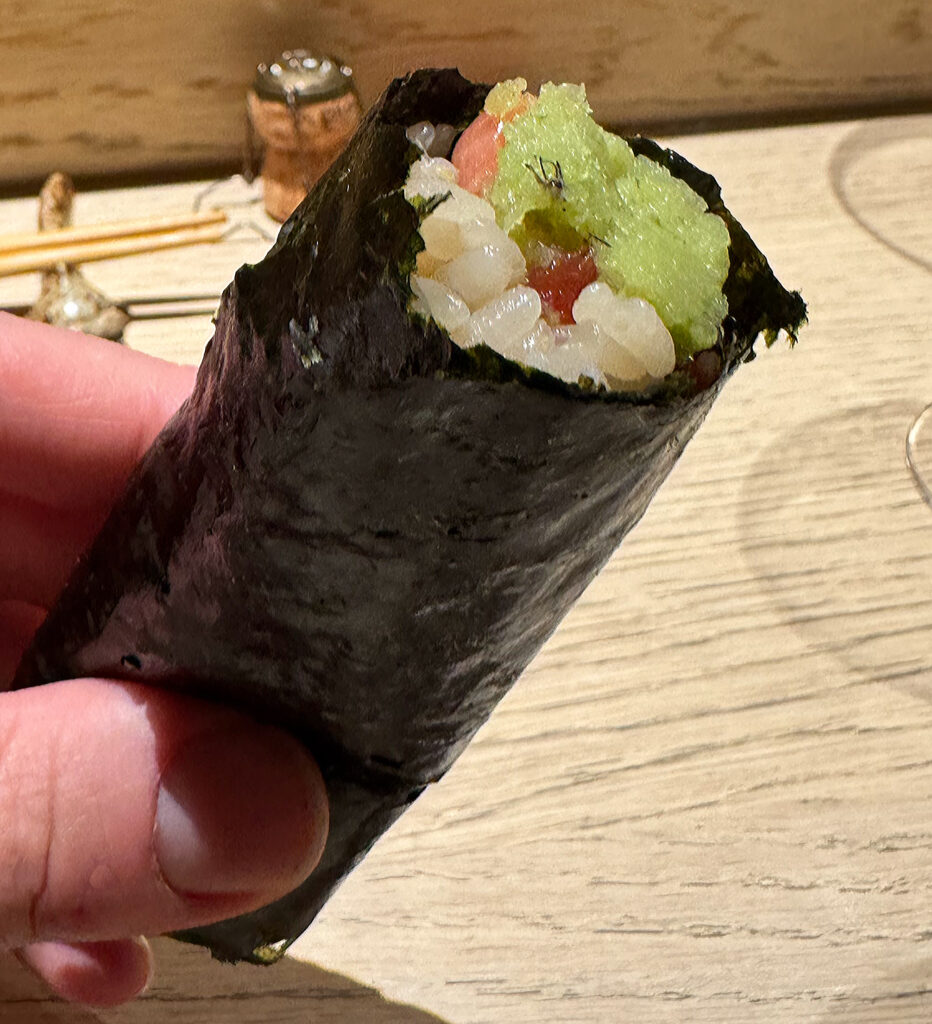
This evening’s “Tuna Handroll”—stuffed with leftover chunks of the ōtoro and akami—provides me with a perfect chance to test the quality of the wasabi (given that a dab of the green paste sits right at the lip of the wrapper). It forms the largest proportion of my first bite, displaying only a mild pungency that otherwise feels almost watery. This accords with how I perceived some of the early nigiri, which lacked their usual juxtaposition of sharpness and fat.
Nonetheless, the roll itself attractively combines crisp and melty textures with an adequate degree of flavor drawn from seasoned rice and the defanged, though still present, wasabi. It forms a substantial, moderately enjoyable way to end the savory portion of the meal.
When dessert arrives, it does so in two familiar forms:
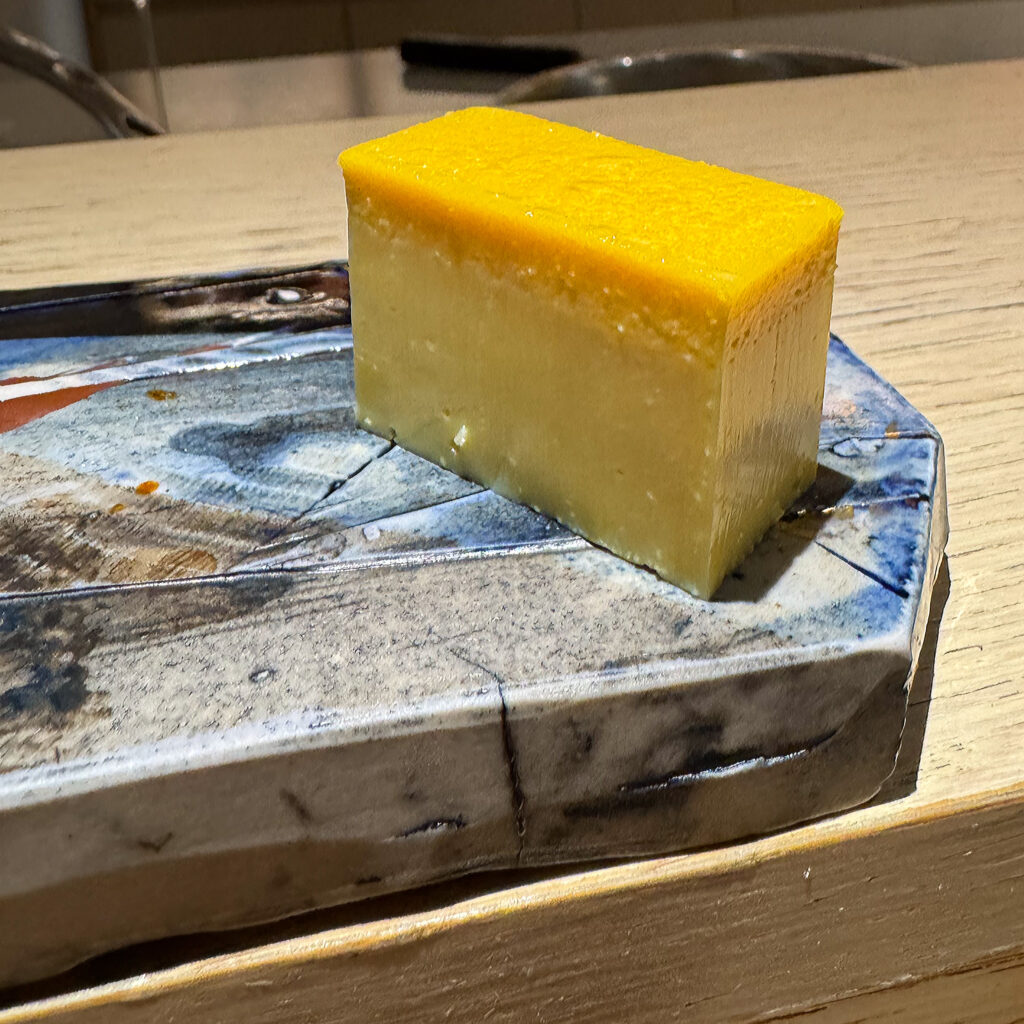
The “Tamago,” served at a pleasing temperature, delivers a rich, custardy mouthfeel with a flavor that smacks more straightforwardly of corn than the caramelized, maple notes that regularly accompany it. Personally, I quite like this freshly sweet character, and it plays well against what else is to come.
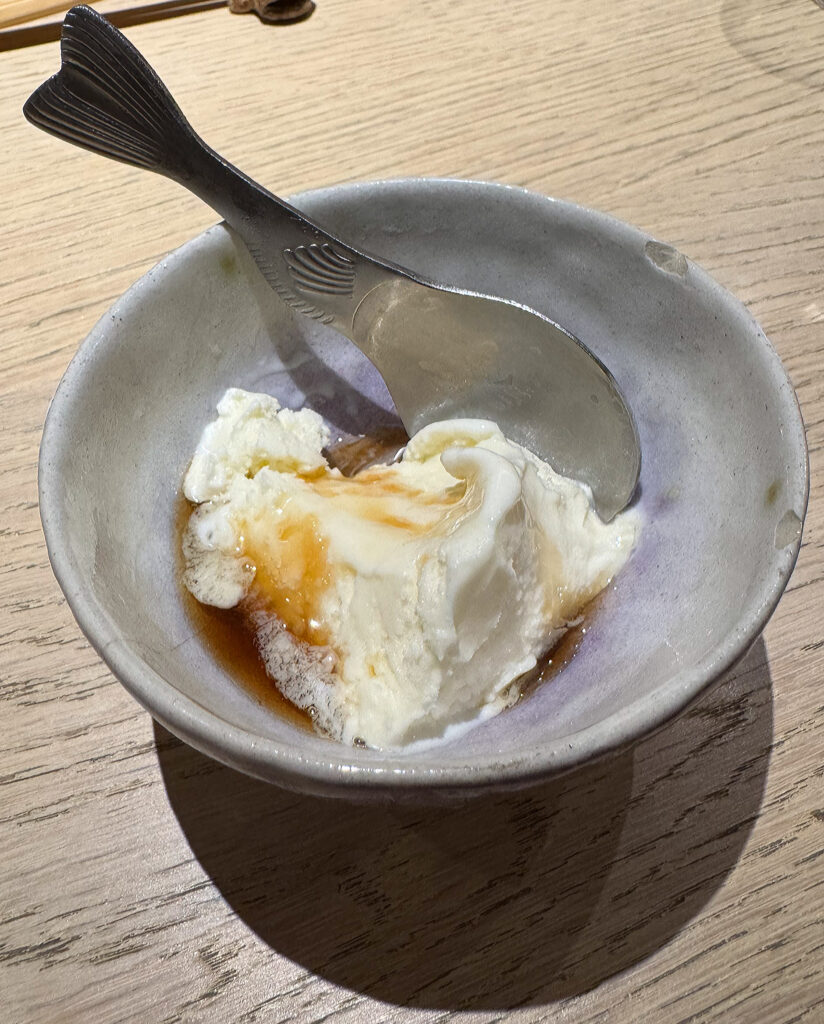
The “White Cheddar Ice Cream” (made from Milton Creamery’s Prairie Breeze) receives its own generous dressing of maple syrup, so it’s actually refreshing not to see the same quality so strongly echoed by the preceding egg omelet. Instead, the frozen treat leads with a rich, homogenous consistency and tangy, nutty tones drawn from the cheese base. The syrup then drives the flavor toward sticky, caramelized depth, ensuring that this final offering anchors the luxurious menu with a fitting degree of indulgence. At this restaurant in this city, a mere serving of fruit just wouldn’t make sense.
Two-and-a-half hours later, the omakase reaches its conclusion: again (as with earlier this month), a slightly faster standard than the nearly three-hour experiences I have become accustomed to, yet one whose increasing efficiency never approaches the feeling of being rushed.
Indeed, Phan is actually serving one or two more items than he did during the longer meals I endured at the beginning of the year. Plus, any time savings are directed right back toward the guests, as the chef always endeavors to share a glass of wine and some conversation with all who have come to support his work.
It’s a far cry from the lack of accessibility (assuming they are even present) one finds from the toques charging comparable amounts at their two- and three-Michelin-star spots. And it’s the kind of attitude that, even if Kyōten lacks the same national honors, paints each occasion as something singular and irreplaceable even as the counter fills with a new audience each night.
In ranking the evening’s dishes:
I would place the “Aori Ika” and “Uni” in the highest category: superlative pieces that stand among the best things I will be served in any restaurant this year.
The “Behemoth Oyster,” “Ankimo,” “Ōtoro,” “Akami,” “Katsuo,” “Aji,” “Akamutsu,” “Unagi,” “Tamago,” and “White Cheddar Ice Cream” all land in the next stratum: great items that achieved a truly memorable degree of pleasure. I would love to encounter any of these again.
Next come the “Blue Lobster,” “Tachiuo,” “Shiokko,” “Isaki,” “Kinmedai,” “Kohada,” and “Tuna Handroll”—good—even very good—preparations I would always be happy to sample again (but that just failed to elicit an extra degree of emotion).
Finally, we have the “Hotaru Ika”—a merely good (maybe just average) bite that fell short when it came to flavor. While tonight’s rendition stands among the better examples I have encountered at the restaurant, I’m starting to think that the squid demands a forceful degree of seasoning (at least for my taste) to really be enjoyable.
Overall, this makes for a hit-rate of 95% with some 60% of offerings reaching that “would love to have again” level of quality and only 10% being of that “best of the year” caliber. Thus, compared to my meal in early May, the present menu is exactly as successful (95%) yet trails in reaching those highest categories (65% and 20% respectively).
Yes, while first-timers might still marvel at the level of tuna and yellowtail on offer, a repeat customer would sense a drop-off compared to what the “Ōtoro” and “Akami” frequently achieve. They would notice that the “Katsuo” and “Shiokko” cannot possibly replace the “Chū-Toro” and “Buri” Phan has built his reputation on serving.
The chef, undoubtedly, is forced to grapple with the realities of the season and the wider marketplace. While diners can be assured that he will always serve some tuna, the exact nature of those cuts and the appearance of other coveted ingredients will always depend on the fulfilment of his high standards. Rather than scrounging up sea urchin to simply satisfy expectations (instead of truly exceeding them), Phan will always privilege the overall performance of the menu.
This is why Kyōten’s hit-rate remains high even in the conventional down periods of spring and summer. The chef even admits that he enjoys the creative demands of serving exceptional sushi at this time (whereas superlative fall and winter products only demand that he not tarnish their inherent character).
I do place some of the blame for the underperformance of the tuna pieces on the wasabi. However, it is true that rhizome takes on a less pungent, more herbaceous character at this point in the year. I feel like Phan has better coped with this change during years past, but I also understand that it’s difficult to slather on the paste in search of a sensation the ingredient doesn’t really want to provide.
Ultimately, the nature of omakase—no less one dedicated entirely to wild-caught fish—demands making the most of what you are able to source at any given moment. Phan’s ever-growing mastery is best judged by how well he transcends his headlining pieces (though life-changing at their peak) and imbues bites like the aori ika, aji, akamutsu, and unagi with the kind of quality that rivals—or even surpasses—their totemic counterparts.
Tonight, they rescue a meal that might have faltered, making for one of the most unique and memorable Kyōten experiences of the year.