
One month later, July’s menu—centered on “Smits Farm corn and stone fruit”—has given way to a more sweeping celebration of “peaches, peppers, a lot of tomato, some lamb, and [interestingly enough] abalone.”
Of course, there’s still plenty of corn to go around: one simply notes how it transforms from a starring ingredient, headlining its own sequence of four dishes, into something more like a bit player, who only pops up here and there but remains capable of making a big impression.
In that role, the crop actually features as part of five whole recipes—roughly a fifth of what is served tonight—that largely retread what I encountered during my last visit. For a restaurant so defined by dynamism, this seems like a rather large proportion of repeats. However, the persistence of these chosen constructions presents an opportunity: the kind in which Feld’s perpetual reinvention pauses, just a moment, to cherish certain ideas and push them to a further extreme of refinement.
Doing so (tweaking and testing and maybe even swapping where these particular plates land during the evening), the kitchen breaks free from the realm of pure novelty and offers something like nostalgia—a feeling that is usually reserved for the post-meal s’more. Indeed, while newcomers are granted a chance to try food that has (over many successive services) been all but perfected, repeat guests are granted the chance to access their memory of pleasure gone by, fuel themselves with the same sense of expectation, and see just how timeless the team’s compositions really are.
It’s the kind of test that any fine dining concept preserving signature dishes (or reviving seasonal constructions each year) has to undergo, and it’s one that challenges Feld’s essential structural advantage: that every bite feels singular and experimental and is treated charitably as part of an ever-flowing process rather than a calculated, cynical expression of luxury that must always deliver.
Other than this question of repeats (admittedly, a small section of a menu that remains substantively new), there’s not much else I have to report.
Rather, it’s the actual nuts and bolts of chef Jake Potashnick’s cuisine that remain most engaging and rewarding some fifteen visits on.
Let us begin.
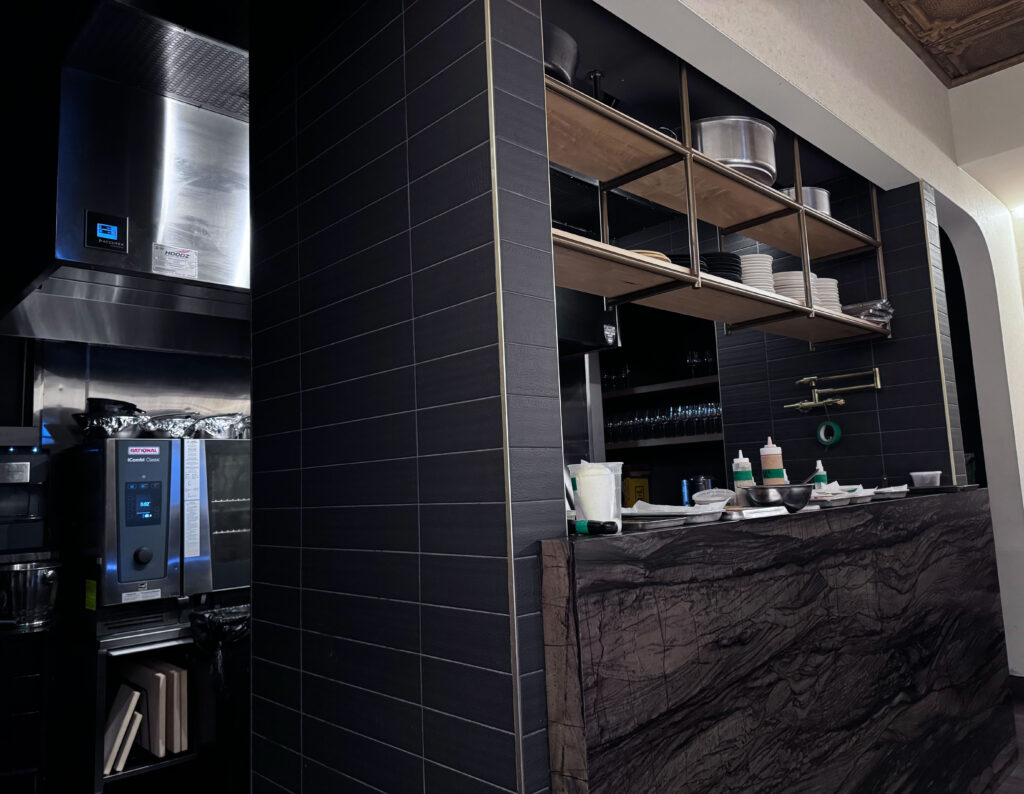
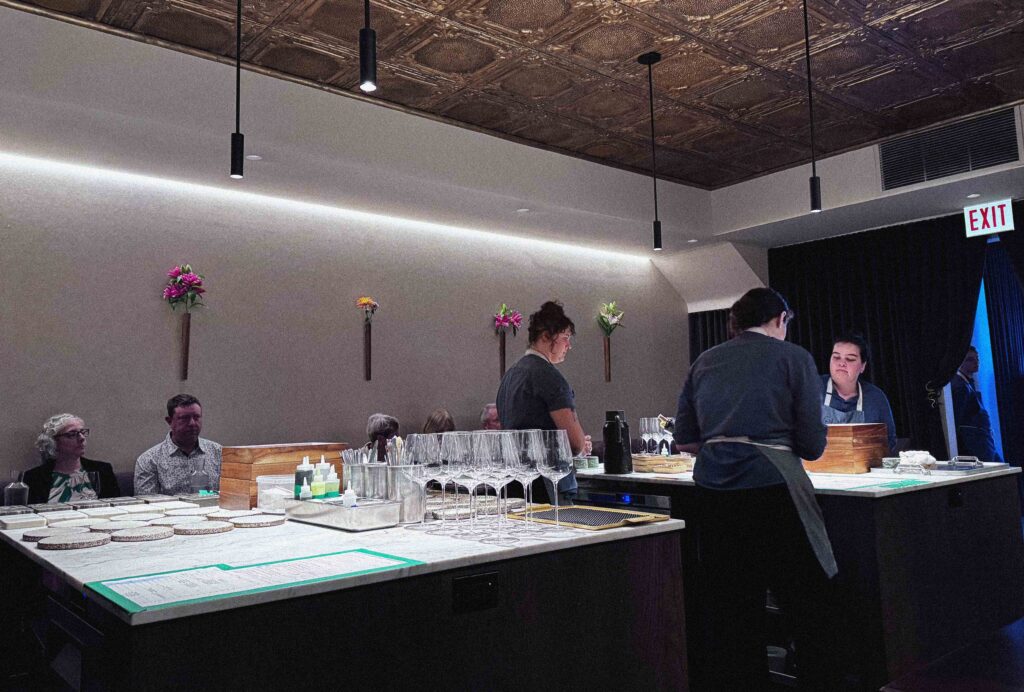
When I trace my usual path to the dining room tonight, I find myself at one of the corner tables closest to the kitchen: a perch that is not as illuminating as it might sound (given how much of the action really does occur on those two front counters) but, nonetheless, offers a fresh perspective.
Namely, I get a sense of just how calmly the hearth operates despite the essential role it plays in so many of Feld’s headlining courses. I also, from this position of relative isolation, get a better chance to observe the other parties sharing the space on this occasion (given that the general intimacy of the restaurant, along with its accompanying sightlines, makes gazing too long at other diners a risky endeavor).
Getting a sense of the audience, I am particularly taken by the amount of gray hair I see. Yes, though I would be the first to categorize Potashnick’s work—nay, his whole vision for gastronomy—as cutting edge, heterodox, and a bit provocative, he’s never really attracted a young, clueless crowd that (critics might contend) does not know enough about the craft to realize all this wanton experimentation really isn’t worth the money.
Instead, I’ve noticed that Feld attracts a demographic that typically spans 30-somethings, continues through middle age, and frequently veers even older. Certainly, one must consider who has the disposable income to spend on this kind of pursuit. One must also concede that age does not necessarily correlate to fine dining experience.
Still, given how consciously Feld challenges a more traditional conception of luxury, it’s inspiring to see this elder contingent of customers come along for the ride and even enjoy themselves here. I would wager that at least some of these parties have pretty much tasted all that Chicago gastronomy has to offer, and I think their presence demonstrates how the restaurant’s distinct philosophy resonates with a much wider swath of consumers than may be readily apparent.
In fact, the beauty of Potashnick’s approach—spurning totemic ingredients like caviar, wagyu, and truffle—is that it unites total newcomers (unspoiled by any desire for those timeworn conceits) and established connoisseurs (who have eaten enough of that fare to know it forms little more than a crutch) in a shared journey of discovery.
(To wit, I really savor seeing one of these older parties connect with the group of four younger, jocular men seated beside them: sharing wine and joking around in a manner one rarely sees at those esteemed, multi-Michelin-star spots.)
As is often the case, it is those trapped in the middle—looking to distinguish themselves from the uncouth masses below, aspiring to joined the cultured elite above—who chafe at art that seems to undermine the status signifiers they have mindlessly and conspicuously been chasing.
When it comes time to decide what to drink, I am heartened by a text I receive from general manager/sommelier Nathan Ducker.
You see, it is standard practice for Feld to reach out to each guest day of and, even if they have already selected a pairing, check to make sure they still want to proceed and/or possibly select something from the bottle list.
Recently, I’ve been exploring the restaurant’s premium “Cellar Flight” ($325) option. However, Ducker kindly reveals that I’ll be seeing the same exact wines as last time, and this presents a good opportunity to put the prepayment toward my own selection instead.
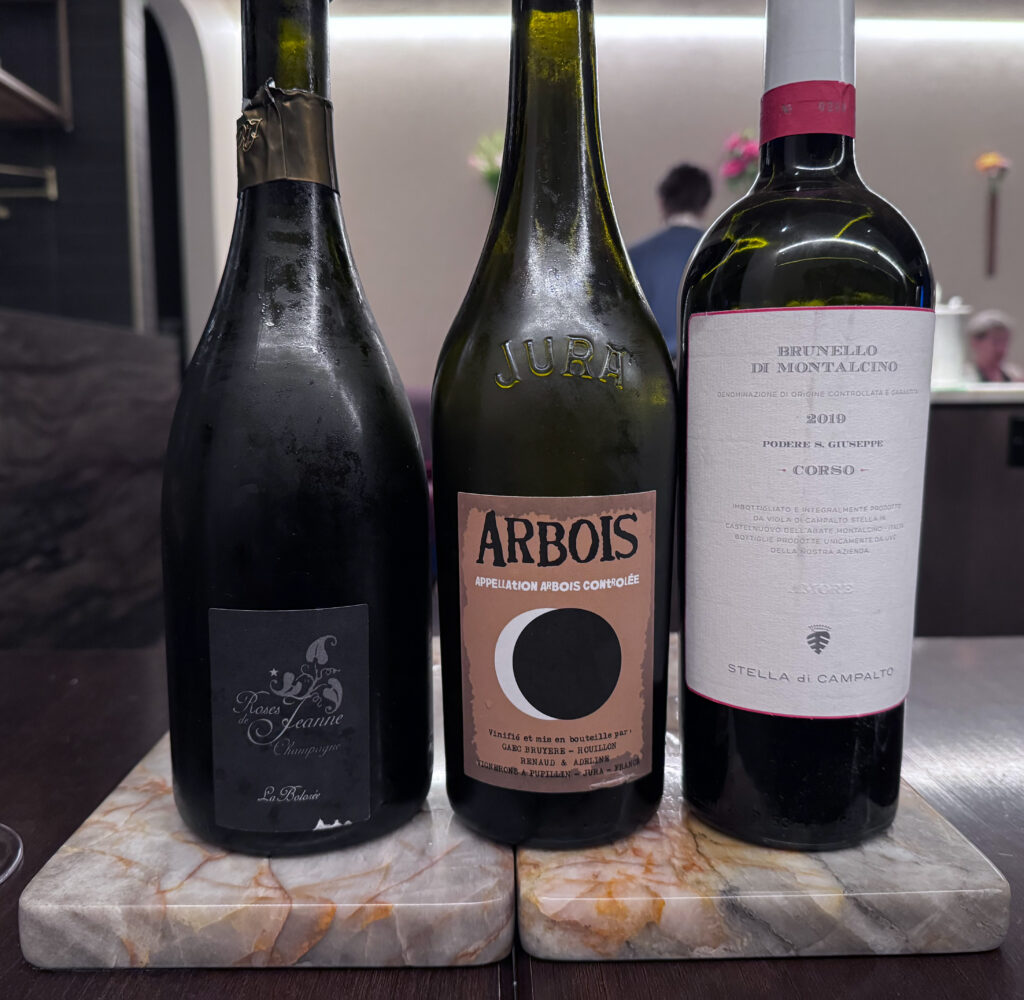
I opt for the 2019 Stella di Campalto Brunello di Montalcino “Corso” ($460), which is offered at a modest markup of 33% (relative to national retail). The sommelier advises that “decanting necessity has varied bottle to bottle” and assures me that he’ll “see where this one is”—putting me entirely at ease if I had any worry about this young red showing its best.
As always, I plan to supplement this choice with my own corkage, yet, on my way to viewing the list, I am met by some surprising new text: “We do not allow corkage at Feld. If you have questions about this policy please reach out.”
With the lines of communication already open, it’s not hard to ask for more information without explicitly try to have an exception made. Ducker explains that Feld has “seen a massive uptick in groups of 4 bringing two bottles and drinking water,” so they changed the policy “as a measure of deterrence.”
The restaurant will continue to make exceptions for those who “engage with the program,” an exceedingly fair decision that ensures corkage serves its intended purpose: offering guests an opportunity to bring special selections from their own cellar that diverge from what is stocked by the concept (and not merely spend the least amount of money possible while still being able to imbibe).
Between the cocktails, the wines by the glass, the espresso, and the after-dinner drinks on offer (to say nothing of ordering an actual pairing or bottle), there are myriad ways to show even the most minimal support for the beverage program. We don’t even have to consider what it means to share pours of a coveted producer with the sommelier and the rest of the team as a means of expressing gratitude and encouraging education.
Given that corkage was originally priced at $75 (with the aforementioned two bottle limit), I can see why any patron who brought their own bottles without ordering anything else might resent being retroactively branded cheap. We can talk of unwritten rules and decorum, but they paid a premium fee (in accordance with the restaurant’s own policy) to do what they want without judgment.
The reality is that Feld expects a certain level of spending from its larger parties (recall that a 20% service charge is also applied to everything ordered), and that even raising the corkage to $100 or $150 doesn’t really compare to a group of four in which each diner orders even the most modest ($110) pairing.
Well, to be fair, the fee represents a pure profit for the restaurant. But—and I guess this gets back to the main point about “engaging with the program”—it doesn’t really help to reward the team’s efforts in crafting those cocktails, presenting the wines, and managing bottles in a way that (for glass pours) minimizes waste. In other words, should the concept not channel spending toward an area that better fuels its overall growth and bolsters offerings (like the pairings) that are far more consequential for the average consumer?
Ultimately, it’s nice to see Feld reassert that corkage is a privilege and try to protect itself. In turn, it’s a shame that those who would bring wine in the right spirit might possibly be dissuaded due to the conduct of others.
Hopefully, with the right show of intent, these customers will reach out and strike the kind of compromise the team seems all too happy to extend: preserving this restaurant’s status as one of Chicago’s most exciting places to drink.
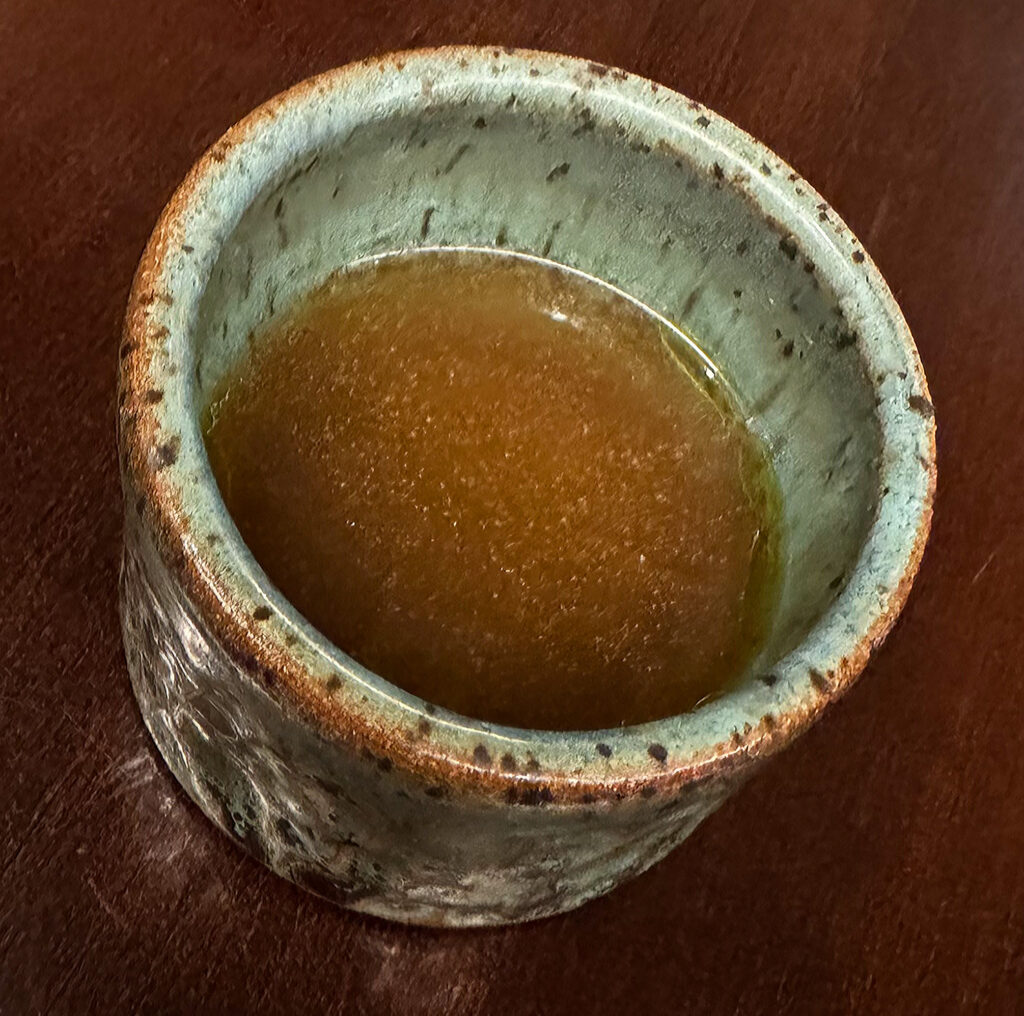
By the time the tasting menu actually begins, guests have already been treated to an opening pour of “Lamb Broth” (the latest in a line of juices, teas, and other liquids served just moments after reaching the table).
Given how successful July’s carbonated watermelon juice was, I almost regret going back to something so warm and meaty. Yet, brightened by notes of corn husk and Thai basil, the broth combines a supremely savory character with a more enlivening grassy, spicy quality through the finish. In short, this ranks among the most successful of these offerings that the team has ever served.
The meal really starts with the arrival of “The Drop”—Feld’s signature opening flourish featuring as many as 11 small plates (a sum I encountered back in January) served in unison. The present iteration only comprises seven bites, a number that ties July’s version for the lowest I’ve ever encountered here.
Still, it’s the quality that really matters, and I think these snapshots of the season (frequently rather frivolous during the restaurant’s earlier days) have started to reflect greater refinement. Moreover, exploring the cornucopia remains fun—and wholly unlike any other flight of amuse-bouches served in Chicago.
Though diners are invited to approach the spread in whatever manner they choose, I will present the components in the order in which they are listed on the written menu.
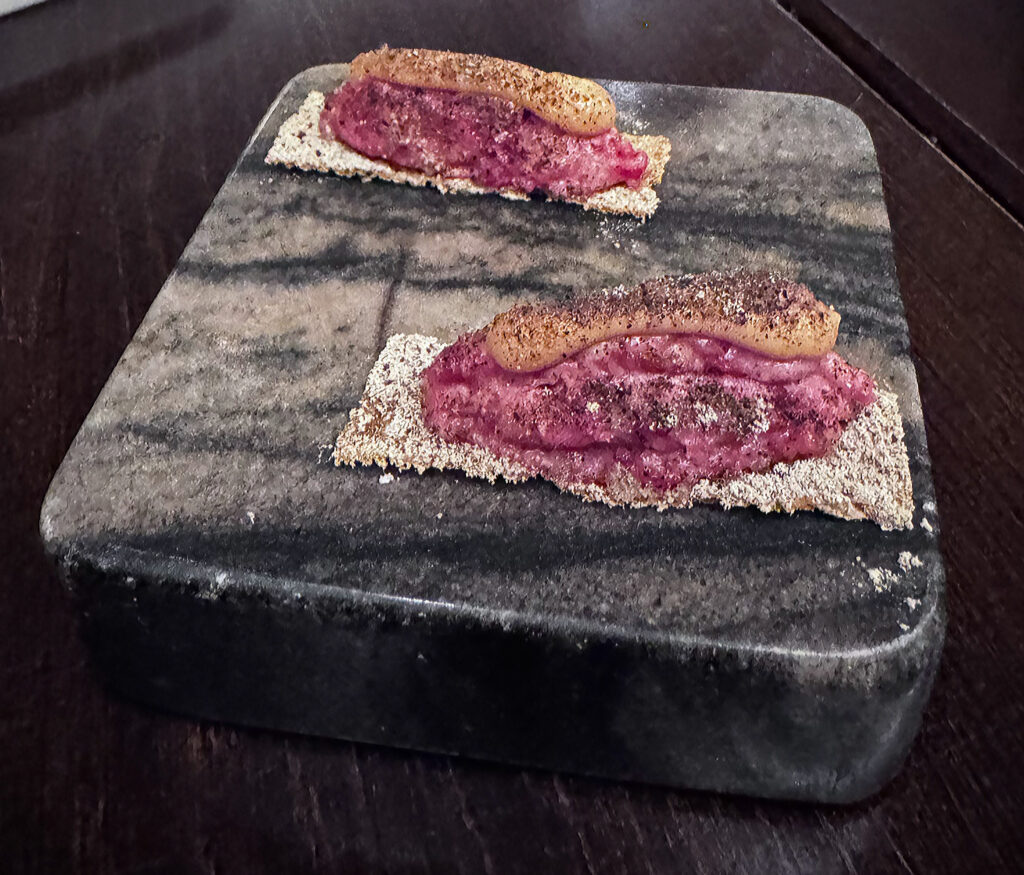
To start, there’s the “Lamb Tartare,” which builds on the flavors of the earlier broth by pairing a mound of the animal’s actual meat with a ribbon of brown butter, ample seasoning, and a housemade rye cracker. The textural effect is crumbly on entry but remarkably smooth and rich once the ingredients meld. Flavor, correspondingly, is rather clean: offering hints of earth and a surprising tanginess yet maybe just missing a little more umami to really leave me feeling impressed.
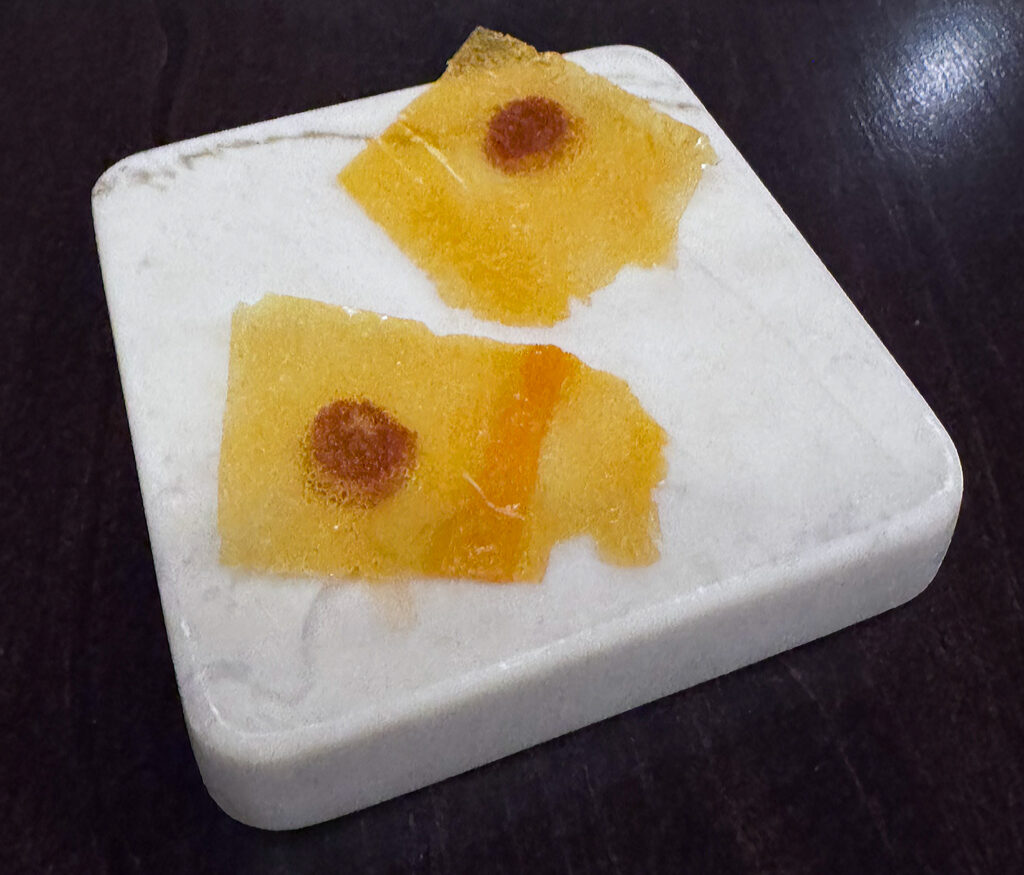
The “Passionfruit Glass” centers on a remarkably brittle (and just a touch sticky) shard made from the titular ingredient. However, a dab of fermented red pepper purée proves to be the defining touch: seamlessly matching the fruit’s sweetness and tang with a moderate, lasting heat that awakens the palate.
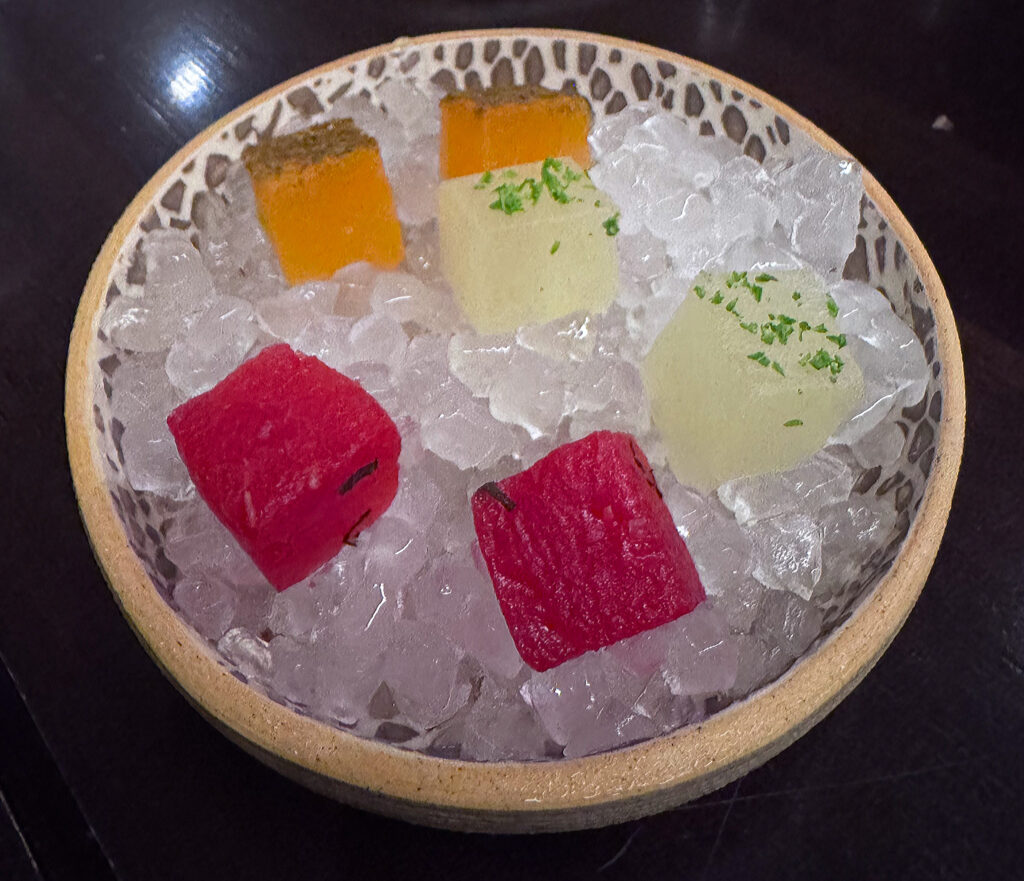
The next three items—drawing on herbs and melons being newly sourced from Chicago Patchwork Farms—arrive as a sequence. Each piece of fruit has been compressed and spritzed with a different spirit in reference to a distinct cocktail.
There’s the “Honeydew Mule,” which balances a clean sweetness with caramelized notes of whiskey and an uplifting tinge of basil. The “Cantaloupe Margarita,” topped with baby epazote and Tajín, skillfully cushions sharp flavors of citrus, heat, and spice with an enveloping muskiness. Lastly, the “Watermelon & Mint” (meant to mimic a mojito) cools everything down: offering ample refreshment with a rounded, rum-inflected undertone.
Overall, this makes for a playful series of bites that showcases ingredients from the restaurant’s newest purveyor in a fairly unadulterated form. I’m excited to see what else the kitchen will do with these kinds of products.
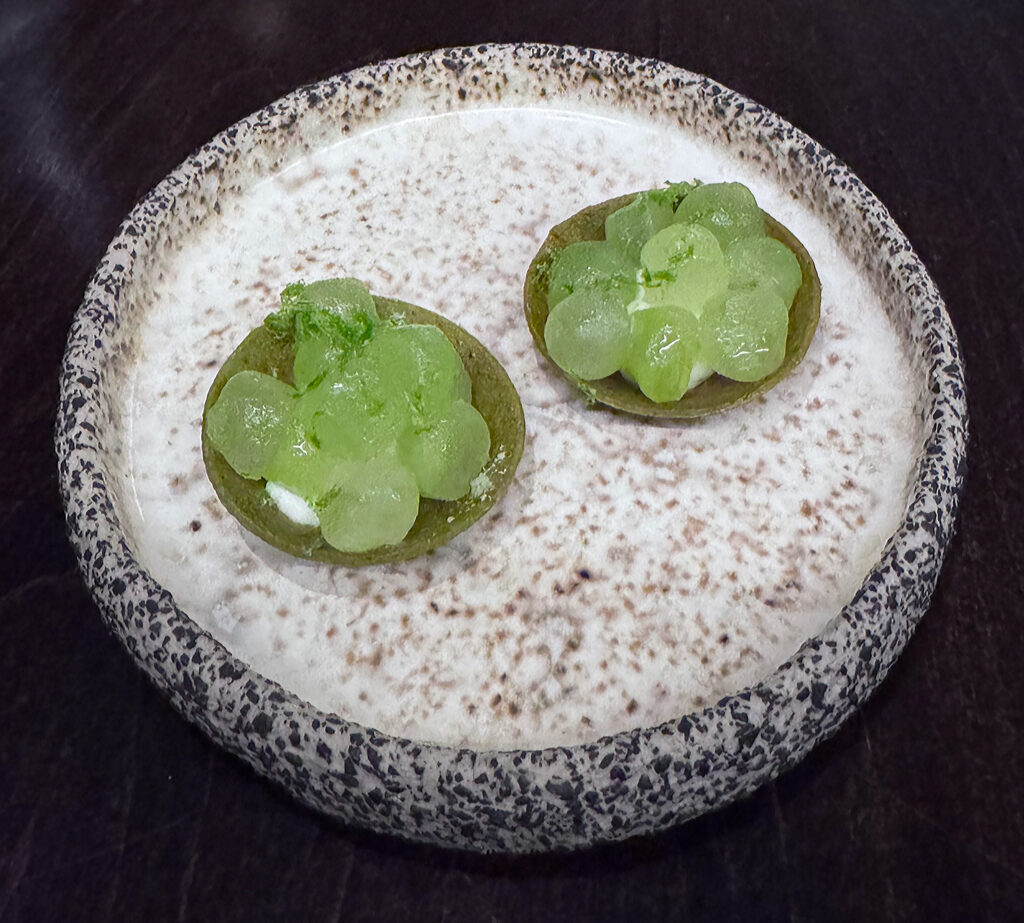
Moving on, a “Basil Tart”—lined with yogurt, topped with balls of cucumber, then strewn with the titular herb (which also flavors the shell)—feels crisp and cleansing with a tangy finish. It’s not quite memorable, but it does reflect the chefs’ increasing mastery of this popular form.
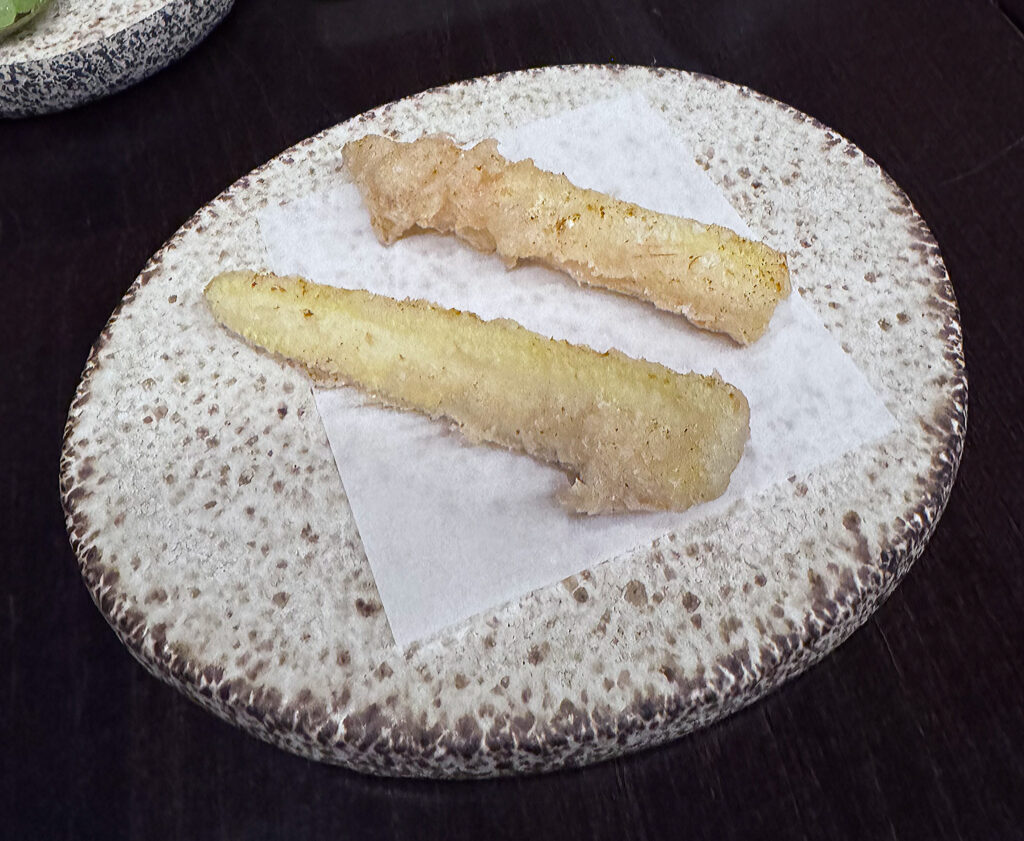
Finally, there’s the “Baby Corn,” which appeared on July’s menu with a tad more panache (being deeply golden brown and tucked into its husk). On this occasion, the tempura possesses a far lighter tone. However, it still delivers a pleasing, layered crunch with plenty of backing salt and a hint of cayenne pepper to play off the corn’s subtle sweetness. This bite not only ranks as the best of the bunch but, additionally, continues to represent a high point for the restaurant’s battered and fried recipes.
Arriving right on the back of “The Drop,” a new three-part sequence looks to celebrate Sungold tomatoes: extending the sense of variety that fuels Feld’s signature opener while simultaneously honoring one of their most cherished collaborators—Froggy Meadow Farm.
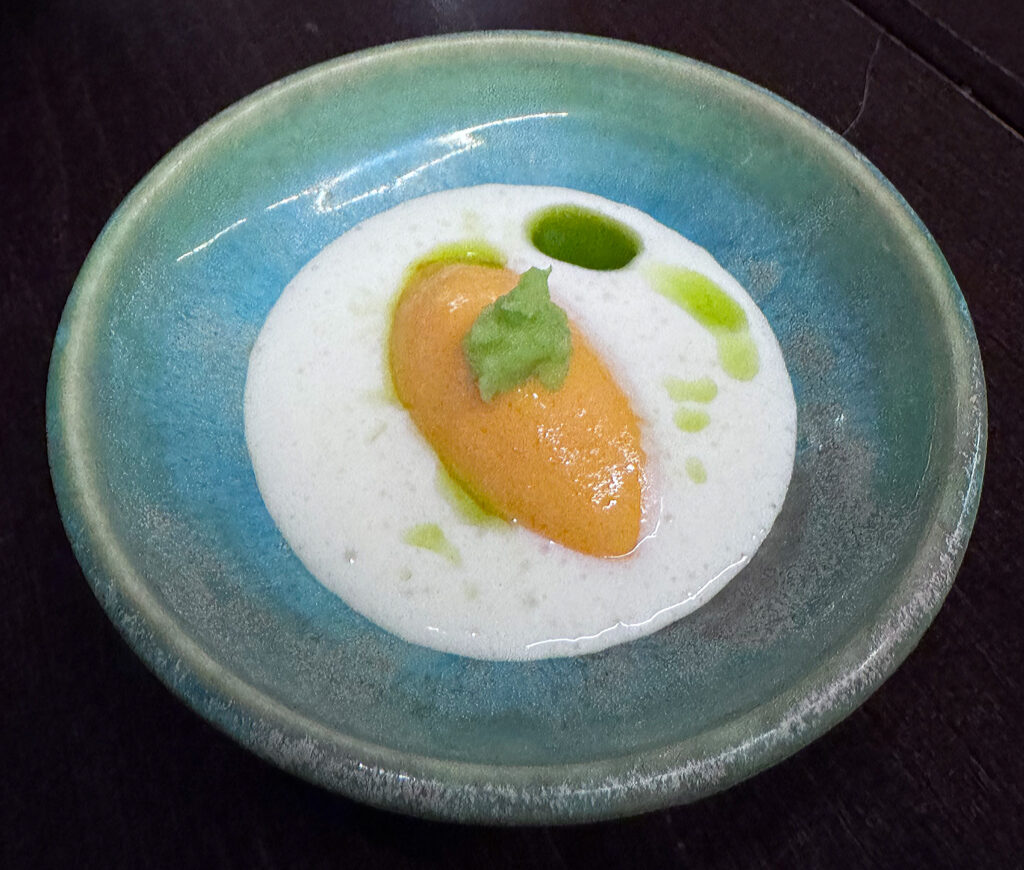
First, the “Sungold Sorbet—Burrata” dresses a scoop of the frozen tomato treat with a dab of Oregon wasabi, some shiso oil, and a sauce made from the titular cheese (sourced from Chicago’s Famiglia Andreotti and simply blitzed). The resulting recipe is soothingly milky, faintly tangy, and ends on a note of moderate sweetness that is hugely satisfying.
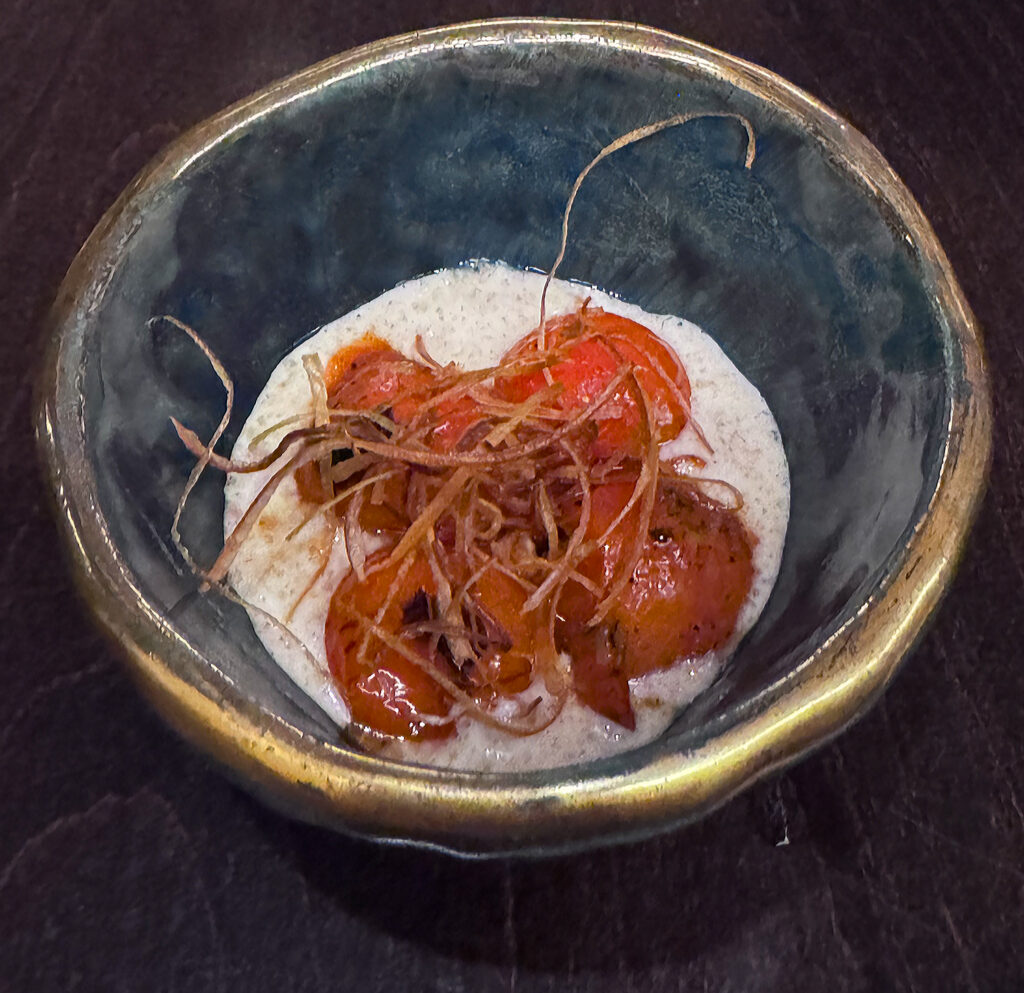
Second, the “Grilled Sungolds—Ajo Blanco” places the tomatoes (five pieces to an order) in a white gazpacho made from local rye bread, almonds, olive oil, and the namesake garlic. Topped with crispy leeks, the recipe traverse notes of bitter char, earth, and mild acidity before settling on a jammy, umami-laden expression of the starring ingredient (whose latent sweetness achieves a nut- and allium-inflected depth). The sense of weight provided by the ajo blanco is also quite nice, making for one of the evening’s finest preparations.
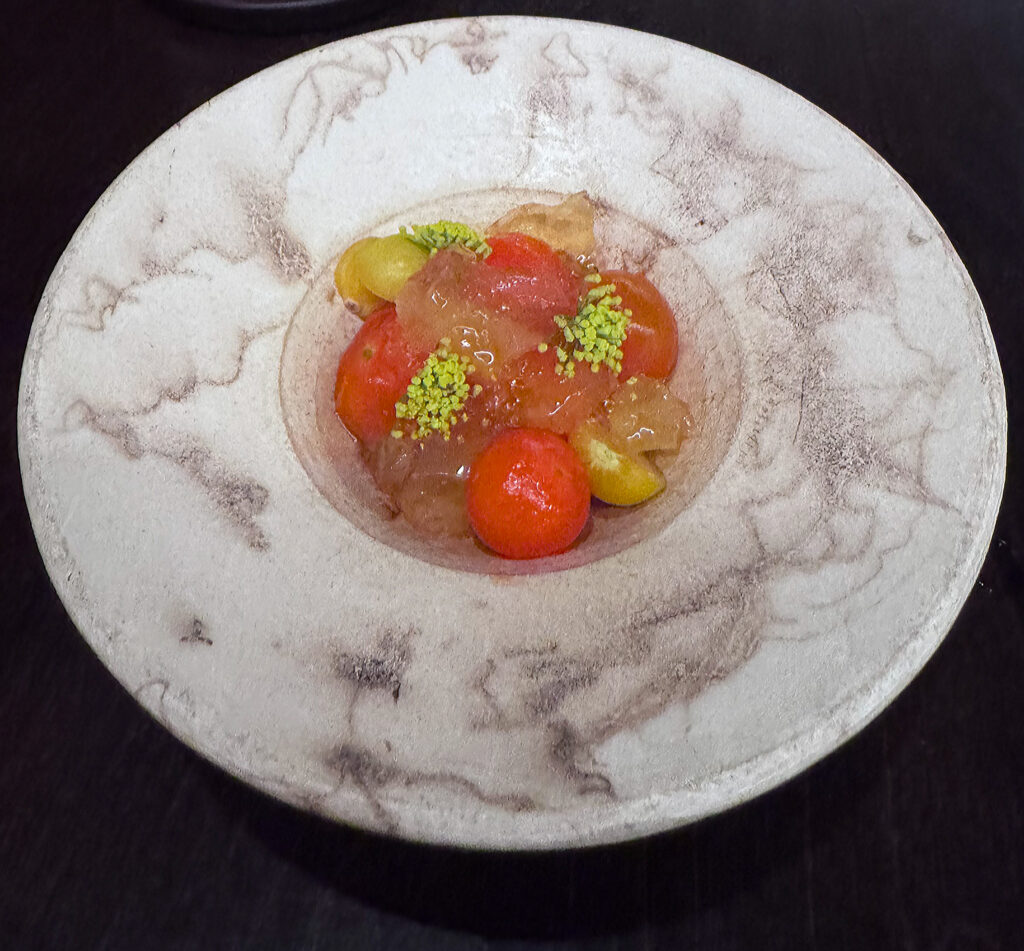
Third, we have the “Peeled Sungolds—Fennel,” which I am thankful to have eaten first despite its placement on the written menu. Yes, while this medley of tomatoes, gooseberries, and fennel (rendered as a gelée, an emulsion, and a garnish of flowers) is rather smartly composed, the recipe—clean, mildly sweet, and uplifting—cannot measure up to the intensity of its predecessors. That said, the textures here are certainly distinctive, and the dish’s cleansing character may form an appropriate transition for some palates.
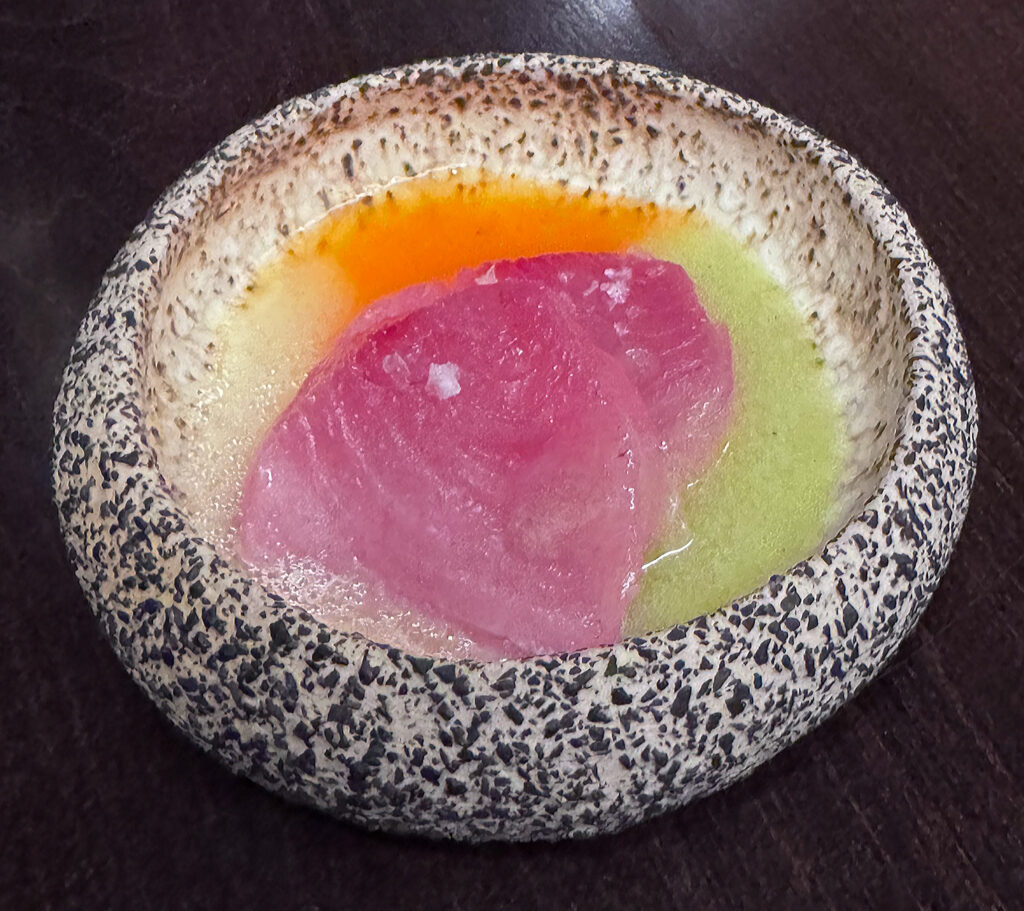
Turning away from flights and sequences, we come to the first lone serving of the night: a preparation titled “Albacore Sashimi—Melon” that dresses the thickly cut, salt-flecked fish with a range of sauces made from Calabrian chile, cantaloupe, cucumber-coriander, and cured lemon from Potashnick’s girlfriend’s mother’s tree out on Irvine, California.
It all sounds like a bit of a hodgepodge, yet the tuna itself feels remarkably mouth-filling and luscious when it reaches one’s tongue. Flavor, too, is woven seamlessly from notes of honeyed sweetness, subdued acidity, fruited spice, and mild heat that are all supported by the deliciously salty, richly savory character of the sashimi. Following so many smaller bites, this dish aims straight at satisfaction and a sense of sustenance and hits the bullseye. It ranks as one of the meal’s highlights.
The next two items originally featured as part of a four-part corn sequence last month. However, they are now presented as individual courses: forming recipes that, being largely unchanged, uniquely test the enduring appeal of the kitchen’s work.
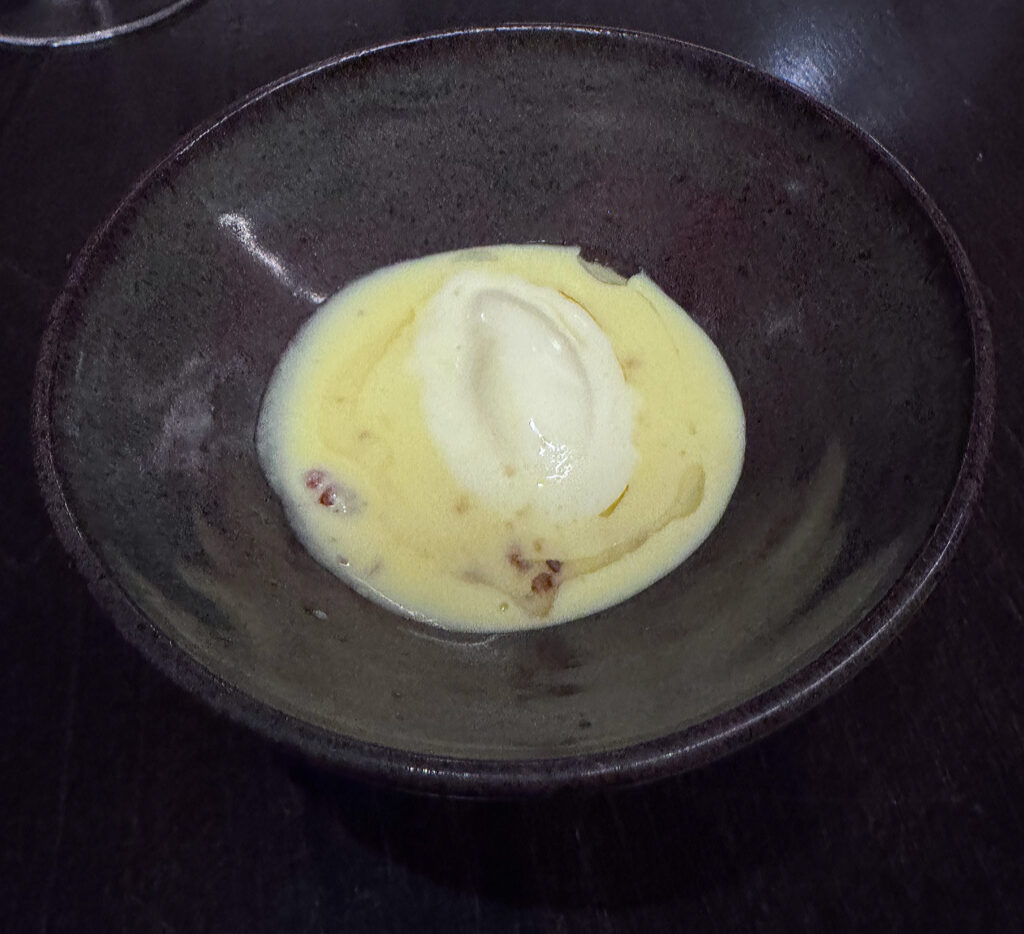
First, there’s the “Corn Soup—Bay Leaf,” which sees the latter ingredient transformed into an ice cream that is set in the center of that soothing, creamy base. Crispy bits of Benton’s ham and some accompanying ham oil are also folded in, helping to develop a flavor that is deeply smoky, hauntingly woodsy, and only the faintest bit sweet.
Yet, somehow, these notes build toward a savory character that is evocative, nostalgic, and nearly unforgettable. Yes, while I loved this preparation back in July, it strikes me with even more force tonight.
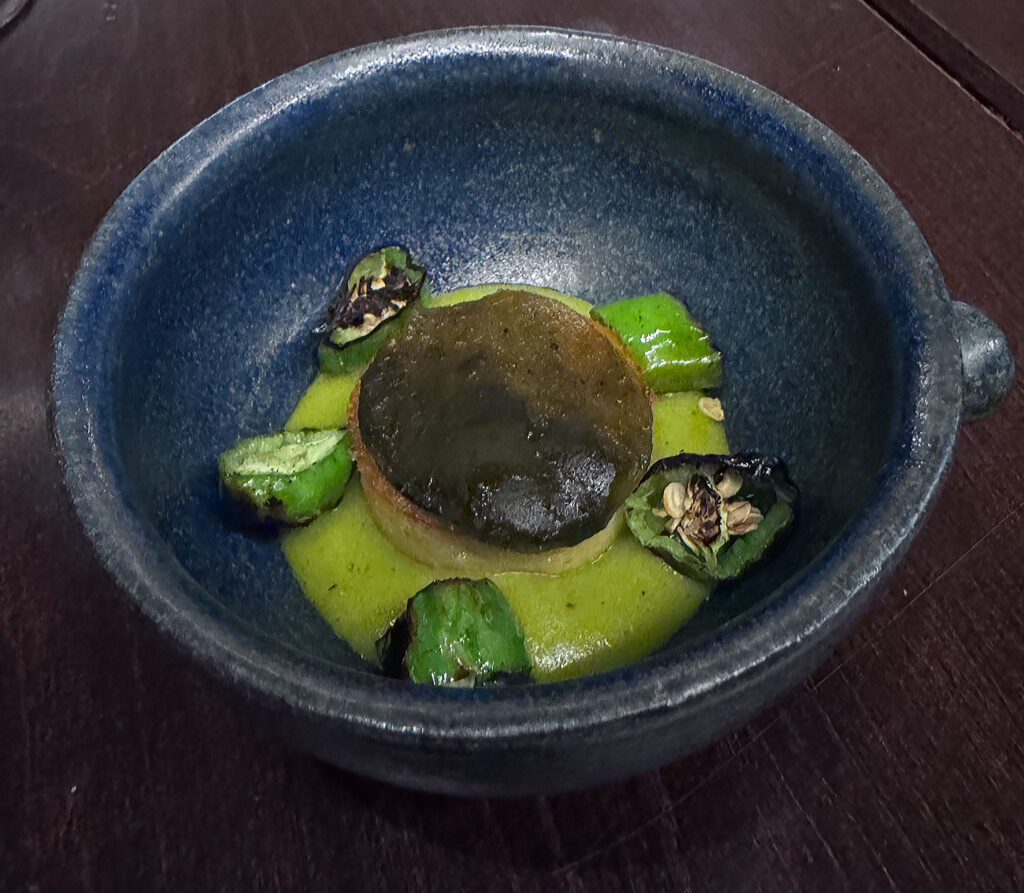
Second, there’s the “Masa Tamal—Poblano,” which continues to revolve around a puck of steamed corn dough sourced from Madison’s La Cosecha Tortilla Company. The titular pepper remains draped atop the tamal, yet it is now joined by charred pieces of shishito as well. Likewise, the chicken fat emulsion and fermented poblano sauce that coat the plate now also come layered with a banana pepper and peach purée.
This makes for a composition that retains its creamy, crumbly appeal as it simultaneously takes on an extra degree of weight. Indeed, the richness (though not obvious sweetness) of the fruit blends with the peppers’ moderate heat and the masa’s earthiness to make for an especially satisfying version of this familiar dish. Again, I must say that it ranks just a notch above what I tasted in July—a real testament to the chefs’ fine tuning.
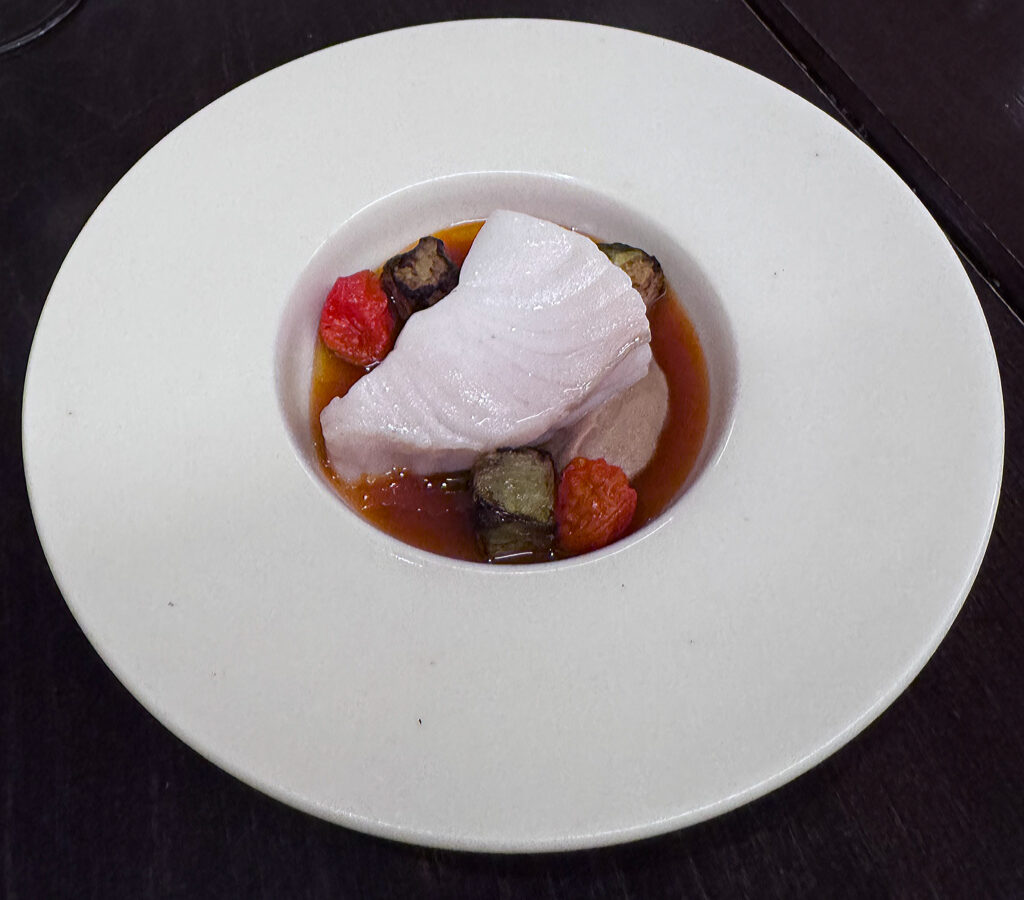
The arrival of the “Black Cod—Eggplant” brings us back into the realm of heartier, wholly self-contained fare with an entirely new presentation of fish: one that sees it swimming among pieces of dehydrated Sungold and fried eggplant in a tomato jus laced with eggplant-pecan purée.
Having been steamed, the black cod displays a supremely silky consistency yielding large flakes that ably sop up all the sauce. The cubes of eggplant, which display a trace of structure before turning perfectly soft, also deserve praise. Nonetheless, given the mild nature of the starring fish, flavor here is decisive. And I find that the concentrated umami found in both the Sungolds and the nightshade—lightly sweetened by the tomato jus and further enhanced by the toasty note of pecan—is absolutely superlative. In fact, my only real critique is that I wish the team provided us with a spoon to scoop up every last drop of the bowl. This ranks as another, considerable highlight.
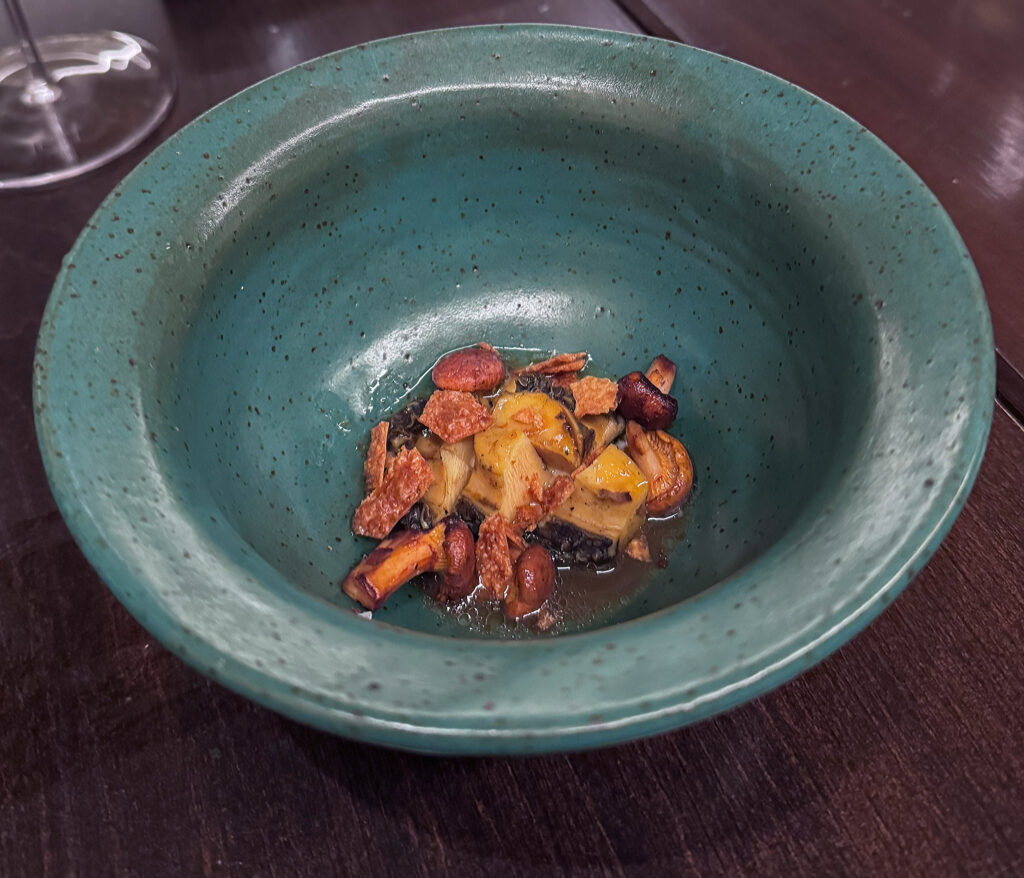
A preparation titled “Abalone—Seaweed” takes us into a realm of luxury that Feld typically spurns (though, admittedly, this coveted mollusk doesn’t nearly form as much of a trope as wagyu, truffle, or caviar). By embracing this shellfish, sourced from Monterey Bay, the restaurant comes closer to competing directly with recipes that Smyth and Oriole have put out this year. Yet, by braising the ingredient in sake and kombu then pairing it with chanterelle mushrooms, chicken fat emulsion, and chicken skin, Potashnick preserves a sense of style that is distinctly his own.
On the palate, the abalone retains a slight degree of chew that is rather typical of its flesh. However, I think the kitchen has done an admirable job of moderating the effect so that it feels meaty and substantial rather than jarring. Punctuated by the crispness of the chicken skin and matched by the tender fungi, the mollusk’s texture takes on a beautifully buttery finish thanks to the emulsion. Moreover, the fat helps to soften the ingredient’s oceanic undertones, revealing a brilliant depth of umami that—kissed with salt and nuttiness—unravels during the dish’s minute-long finish. All in all, this makes for a confident, impressively decadent effort I would be thrilled to encounter again.
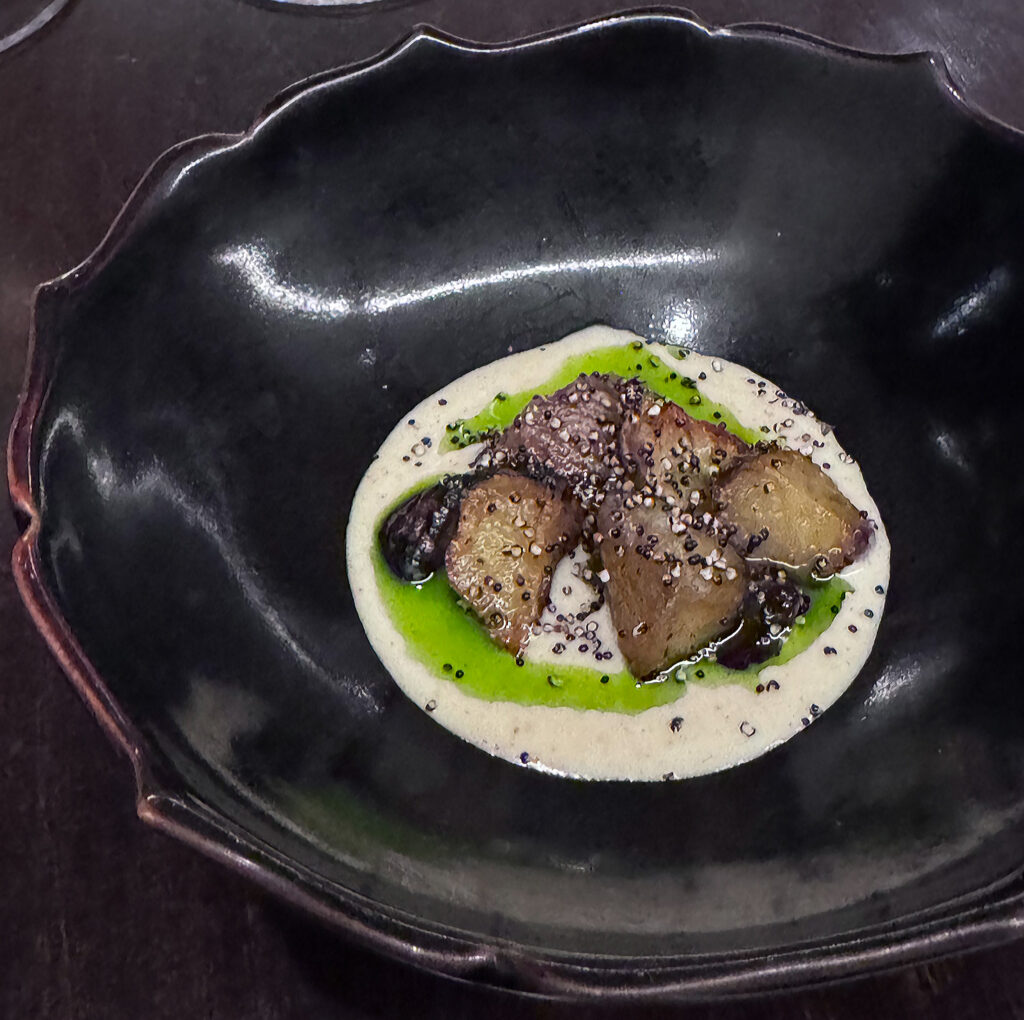
As we approach the last of the evening’s savory fare, the “Roasted New Potato—Malt Cream” offers a final expression of fresh produce in a lightly adorned style. Technically, the tubers are grilled after being roasted. The accompanying cream (made from which grain I do not know) is salted and further dressed with chive oil and a sprinkle of puffed amaranth.
This yields a bowl of soft, creamy (though not at all crisped) potatoes with an added layer of brittle crunch. Further, while the malt contributes to a sweet, allium-tinged finish, I don’t find the recipe’s overarching flavor to be all that memorable—especially when one considers just how craveable and comforting the starring ingredient can be. For me, this ranks as the weakest of the savory items, but, in turn, it’s by no means unpleasant.
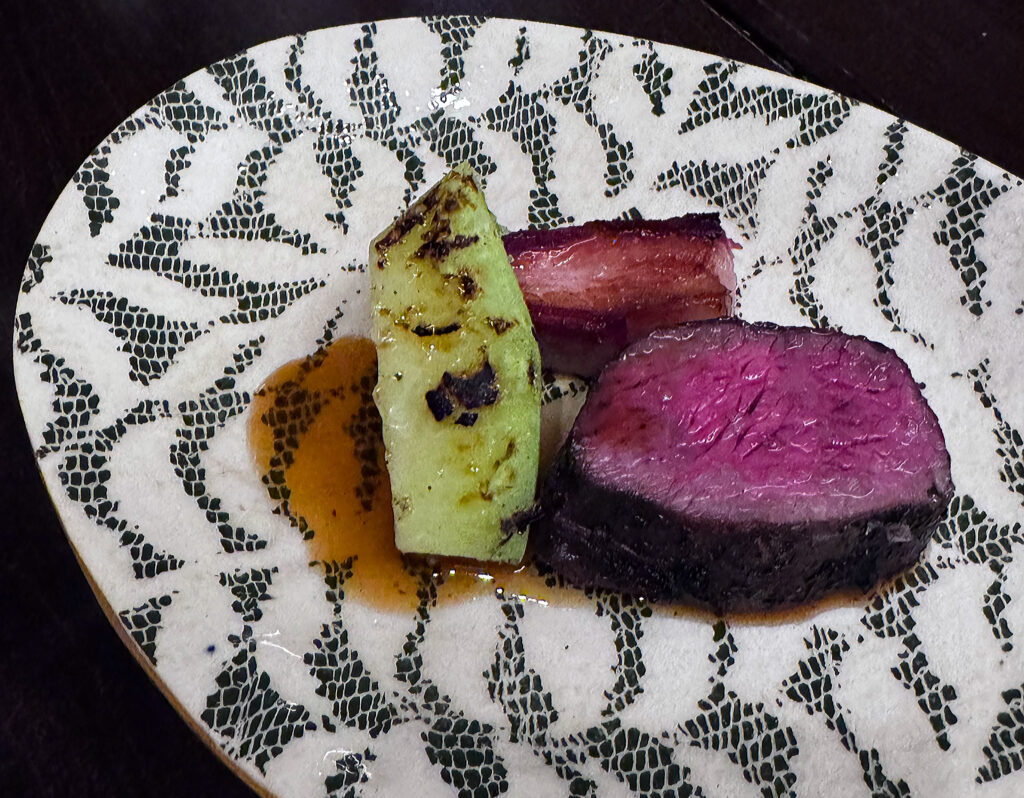
Tonight’s entrée is titled “Lamb Belly—Melon,” and it actually comprises a generous cut of the animal’s loin as well. On this occasion, both are being sourced from the milder Katahdin breed of sheep before being crusted with za’atar (as I encountered last time), dressed with lamb jus, and paired with a piece of grilled honeydew.
Texturally, the juxtaposition of the loin’s juicy, elegantly chew with the crisper, fat-laced belly is pleasing (though I’ll note that my dining companion’s loin is a bit tougher). Likewise, the caramelized sweetness of the melon—supported by hints of tang and nuttiness from the herbs—amplifies the lamb’s cleanly savory character without veering toward any kind of green or sappy excess. Ultimately, this makes for one of Feld’s simpler headlining constructions, yet I think it is rendered with pinpoint precision.
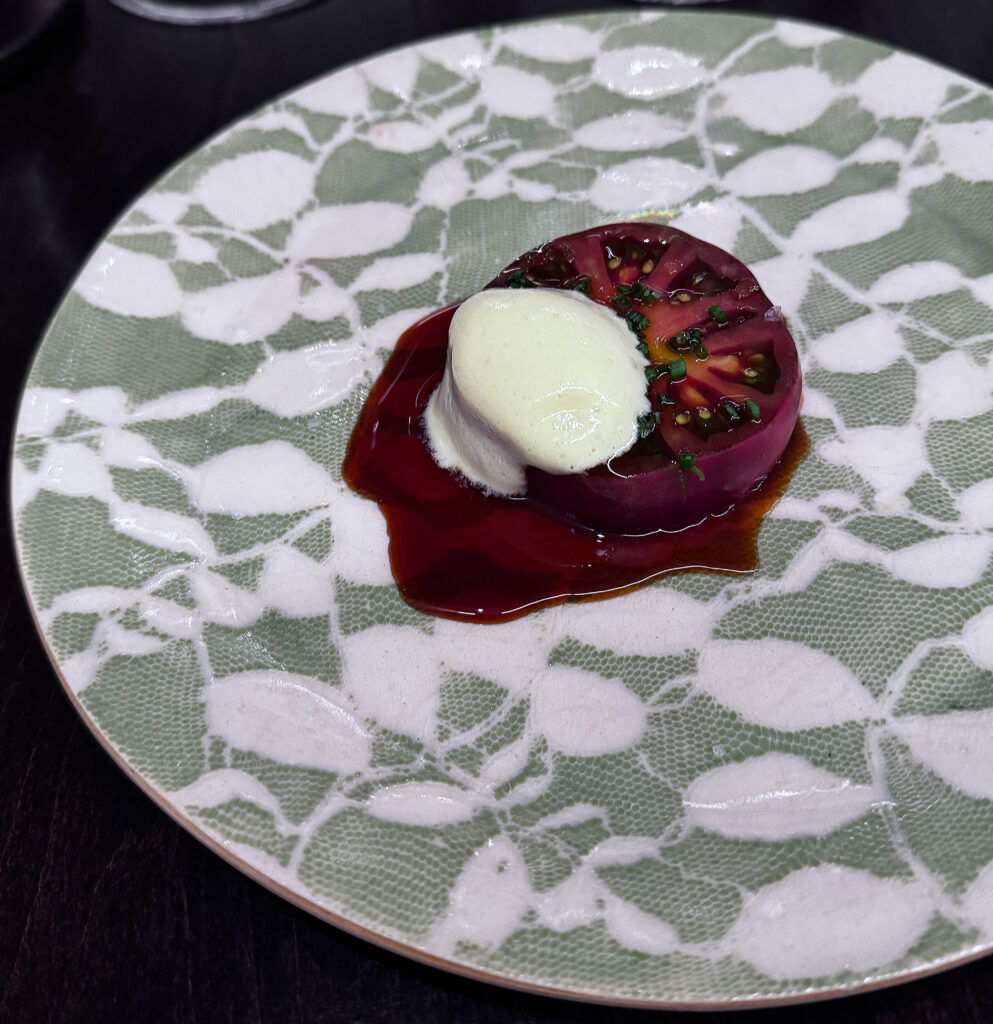
This time around, the transition toward dessert is cleverly managed through the introduction of the “Heirloom Tomato—Honey,” which pairs raw, first-of-the-season produce with honey jus, a dollop of toasted cream, and some flecks of chive and sesame.
On the palate, the thickness, juiciness, and utter tenderness of the sizable tomato segment make for a strong foundation. From there, a caramelized and almost bready flavor takes hold before tapering off toward a mildly sweet, mildly tangy finish with wonderful allium depth. In a word, this dish is worshipful, and I think it ranks among the most striking recipes the kitchen has ever served—let alone at this key inflection point.
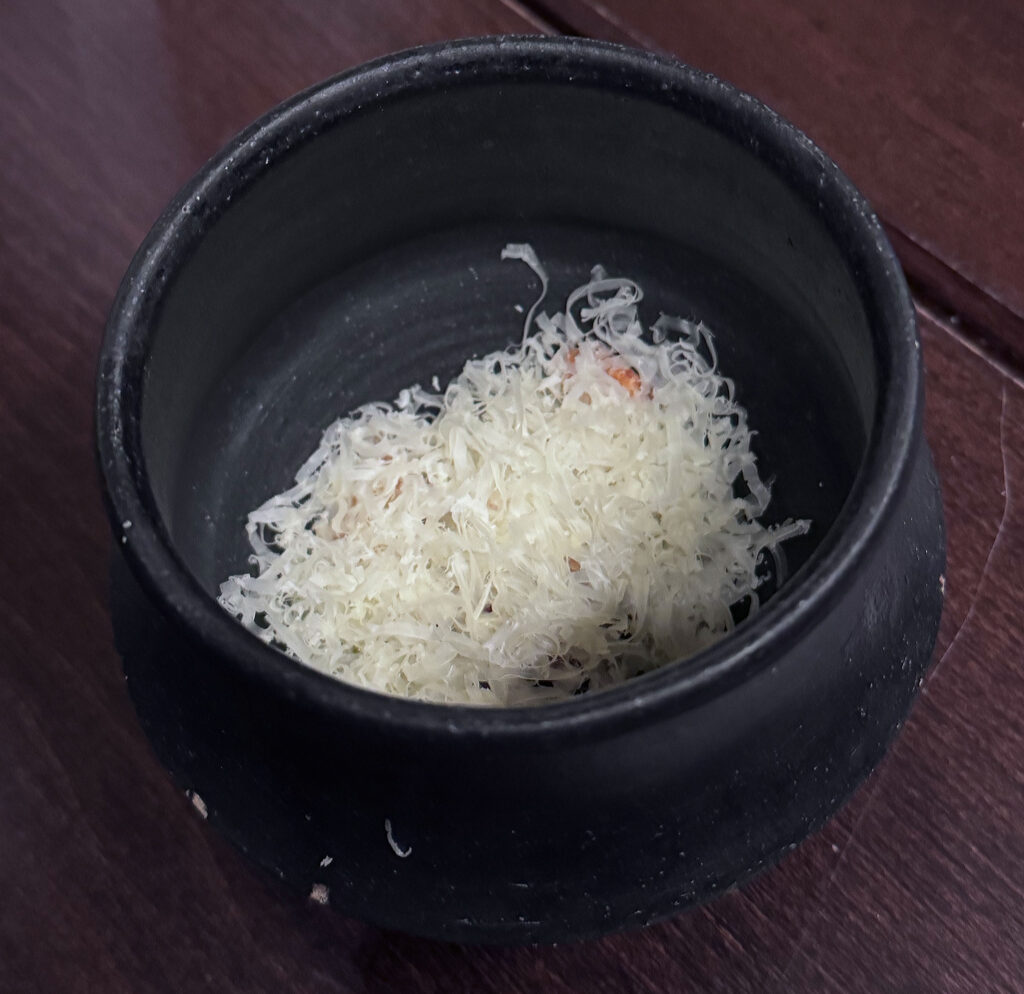
Arriving next, the “Corn Pudding—Pleasant Ridge” stands as another one of those repeats from my meal in July. The composition—which sees the cheese shaved and rendered as a shortbread crumble alongside a honey custard and a couple grilled blackberries—remains the same. However, this time around, the fruit element proves too charred and bitter, which serves to obscure the crisp, gooey, caramelized, and moderately sweet notes that otherwise shape the dish’s pleasure.
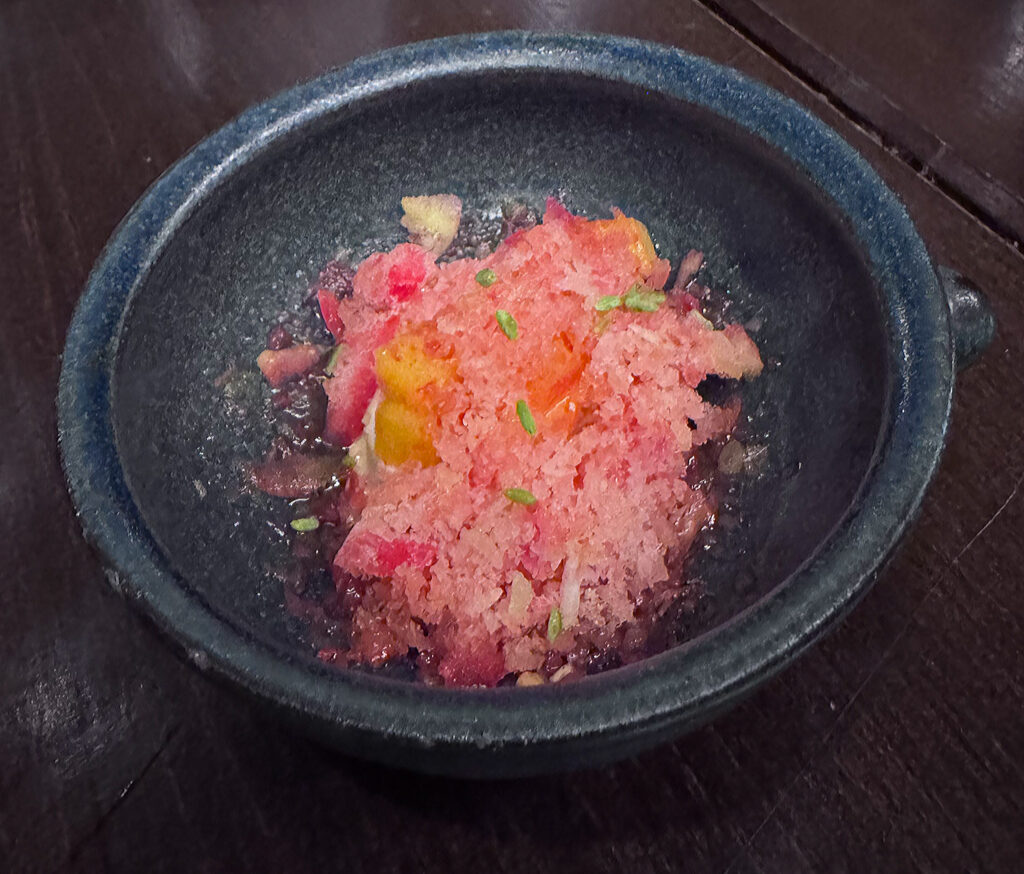
A preparation titled “Fig Leaf Pudding—Tomato” looks to right the wrongs of its predecessor by pairing the starring element (promising all sorts of likable nutty tones) with a honey cream, some pieces of nectarine, a tomato snow, and some fennel seed sourced from Chicago Patchwork Farms. Texturally, the combination is rather creamy and refined. Nonetheless, the accompanying flavor lands right on the line of not being sweet enough, which paints ingredients like the tomato and fennel in a more savory light than is really desirable at this stage in the evening.
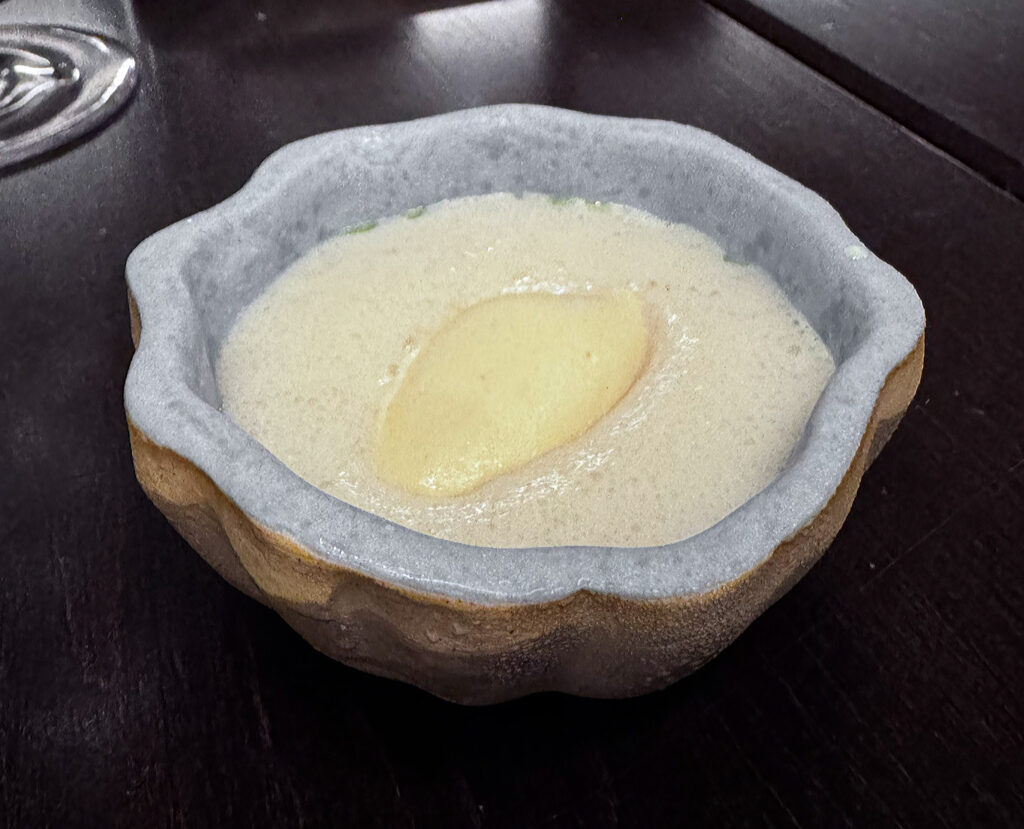
The “Peach—Papalo,” centering on a buttermilk sherbet made from the titular fruit, looks to get things back on track. A beeswax crème anglaise contributes to another smooth, attractive set of textures while notes of lemongrass and the papalo itself (a pungent, citric herb likened to cilantro) ensure the recipe feels remarkably fresh. Ultimately, there’s enough sweetness here to ensure the balance of flavor works, but I am left wanting to taste the kind of intensity I typically associate with peach. As it stands, this is merely pleasant.
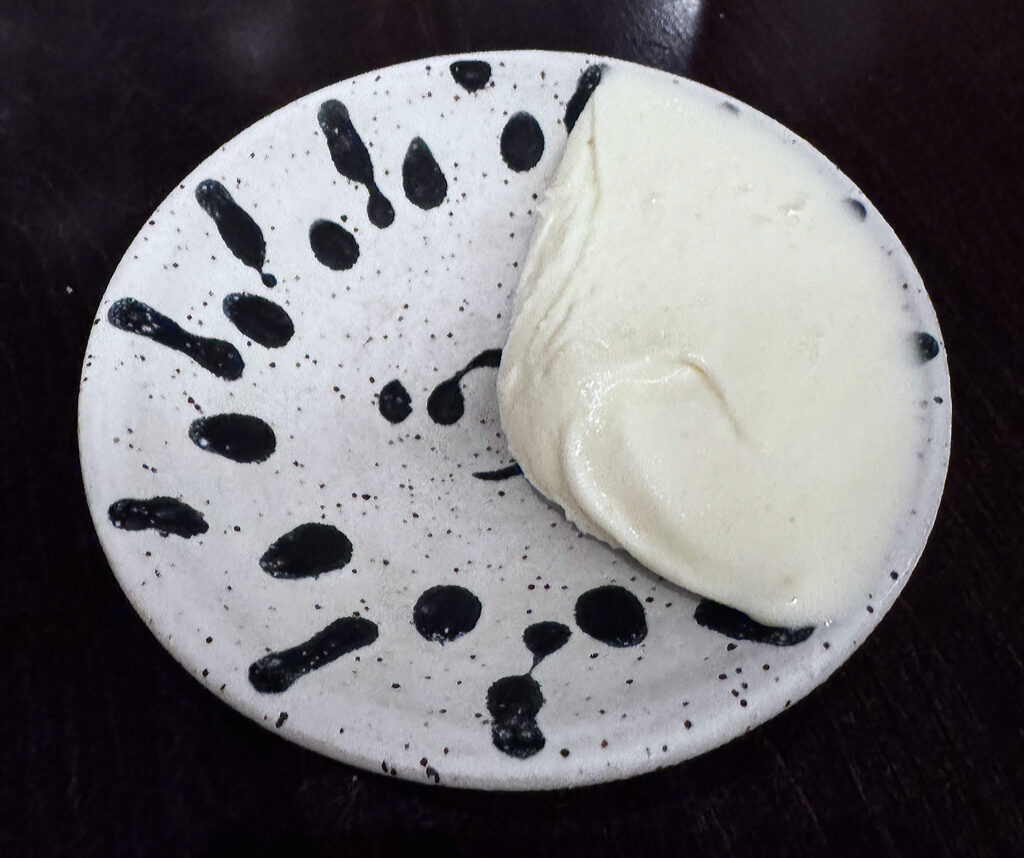
Thankfully, the “Gelato—Corn Cob” (which ranked among my all-time favorite Feld creations when I encountered it last month) gets things back on track. Here, the fresh-churned frozen treat—flavored with the roasted byproduct of all the corn used throughout the menu—retains all its immaculate creaminess. The gelato, too, is charged with tremendous sweetness, yet its concentration almost reaches the point of feeling too refined and almost artificial. To be clear, this dessert remains a triumph, but I wonder if the recipe has changed in any way that might overemphasize the sugar and obscure some of the cobs’ maddening depth.
In short order, we reach the tasting menu’s dependable conclusion:
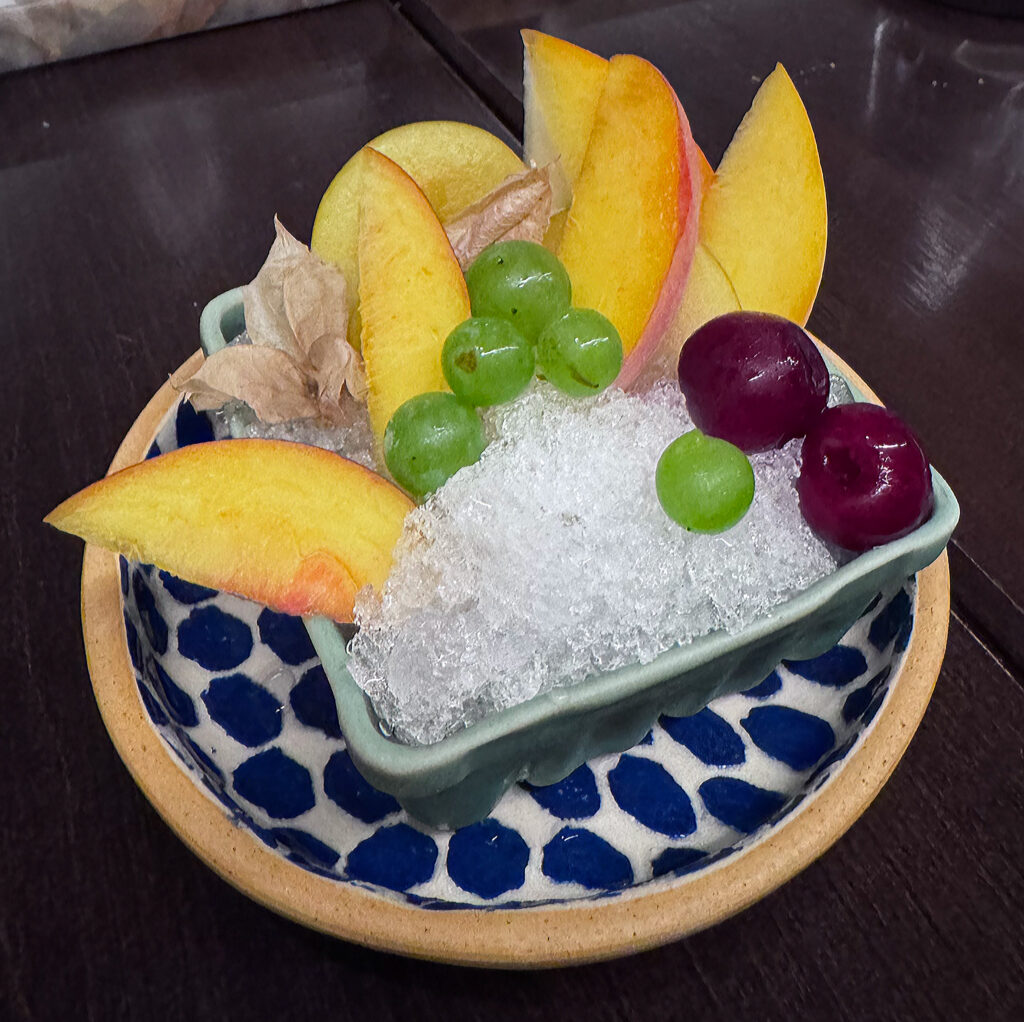
The “Fresh Fruit on Ice” (filled with peach, plum, nectarine, sour cherry, husk cherry, grapes from the restaurant’s garden, and a “mystery melon” from Patchwork Farms), of which the peach, the nectarine, and that melon prove most enjoyable.
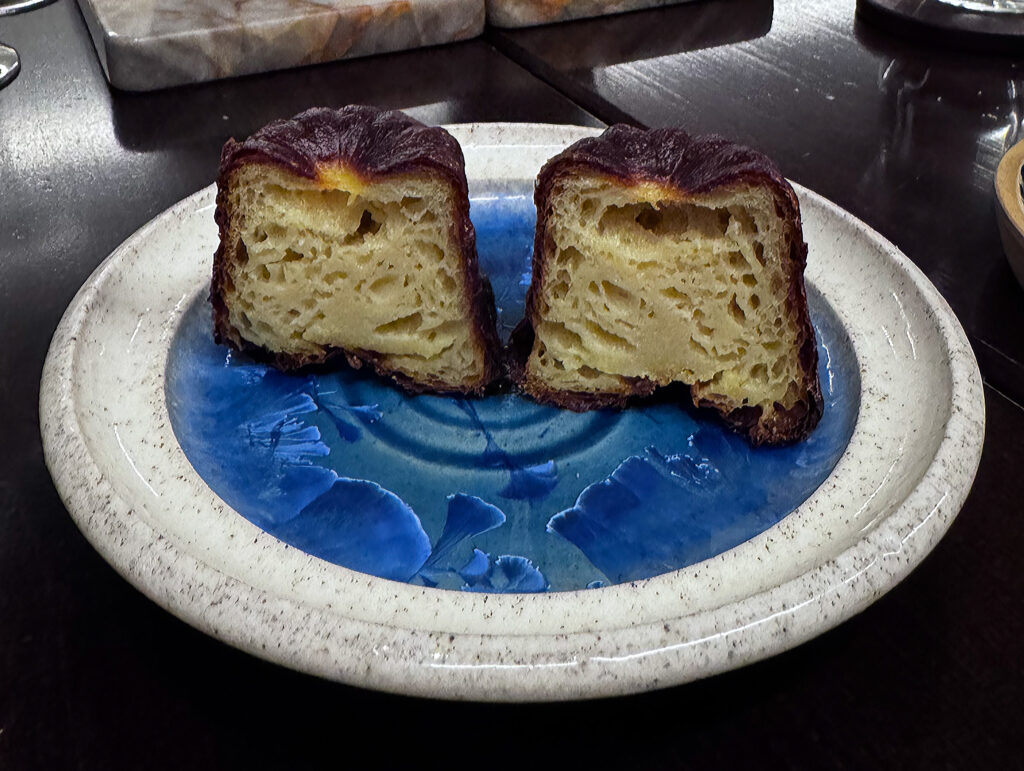
And the “Spiceberry Canelé,” which continues to achieve a crisp-then-custardy kind of textural perfection and backs it with a warm, caramelized flavor profile and enough comforting sweetness to erase any memory of those faltering puddings.
At this stage, there are guestbooks to be signed, after-dinner drinks to be ordered, checks to be paid, and s’mores to be sloppily, joyously eaten around the fire. After sampling a new stone fruit spirit, I sadly have to run.
But, marshmallow and chocolate aside, I still get a word in with Potashnick. Tabling any possible critique about dessert (always better expressed in this extended format), I instead put forth a positive note: that tonight’s savory fare—bite for bite—stands among the strongest I’ve ever tasted here.
Given how reliably the sweeter side of the meal impresses me, I think this is a worthwhile (though hopefully not permanent) trade-off and an achievement worth celebrating.
In ranking the evening’s dishes:
I would place the “Corn Soup—Bay Leaf,” “Masa Tamal—Poblano,” “Black Cod—Eggplant,” and “Abalone—Seaweed” in the highest category: superlative items that stand among the best things I will be served in any restaurant this year.
The “Lamb Broth,” “Cantaloupe Margarita,” “Baby Corn,” “Sungold Sorbet—Burrata,” “Grilled Sungolds—Ajo Blanco,” “Albacore Sashimi—Melon,” “Lamb Belly—Melon,” “Heirloom Tomato—Honey,” “Gelato—Corn Cob,” and “Spiceberry Canelé” land in the following stratum: great recipes that achieved a truly memorable degree of pleasure. I would love to encounter any of these again.
Next come the “Lamb Tartare,” “Passionfruit Glass,” “Honeydew Mule,” “Watermelon & Mint,” “Basil Tart,” “Peeled Sungolds—Fennel,” “Roasted New Potato—Malt Cream,” “Corn Pudding—Pleasant Ridge,” “Peach—Papalo,” and “Fresh Fruit on Ice”—good—even very good—preparations I would always be happy to sample again (but that just failed to elicit an extra degree of emotion).
Finally, there’s the “Fig Leaf Pudding—Tomato”—a merely good (or maybe just intriguing) item that fell short when it came to flavor. Given that this composition only really lacked sweetness, I think it could easily be redeemed with a little tweaking.
Overall, this makes for a hit-rate of 96% with some 56% of offerings reaching that “would love to have again” level of quality: figures that largely match the numbers I reported in July (i.e., 96% and 63%), June (i.e., 100% and 52%), May (i.e., 100% and 54%), and April (i.e., 96% and 54%). If we consider the number of “best of the year” dishes (four, compared to three in July, six in June, five in May, and four in April), the results also remain more or less consistent.
Structurally, this month’s tasting menu was clearly one of peaks and valleys (with those lower points almost entirely remaining respectable—even enjoyable—efforts). Indeed, following the early high of the “Lamb Broth,” I found a charming yet largely forgettable iteration of “The Drop” headlined by the “Cantaloupe Margarita” and “Baby Corn.”
Nonetheless, the run of dishes starting with the “Sungold Sorbet—Burrata” and proceeding through the “Heirloom Tomato—Honey” (that is, the transition toward dessert) was near-perfect: with all four “best of the year” courses landing in quick succession with items like the “Grilled Sungolds,” “Albacore Sashimi,” and “Lamb Belly” shoring up either side of this showstopping series. Yes, few restaurants in Chicago can execute plate after plate at this level—achieving a kind of rhythm and corresponding emotional effect through which the kitchen seems to be firing, almost effortlessly, on all cylinders.
Dessert, comprised of two puddings, a sherbet, and a gelato, almost sounds redundant on paper—and that’s not to even get into questions of execution. Still, the team’s work with hand-churned ice cream continues to be superlative, so I think the “Gelato—Corn Cob” (even in a slightly inferior form), “Spiceberry Canelé,” and final s’more do enough to satisfy sweet tooths (thus ensuring that the “end” portion of the peak–end rule is not violated).
Again, in a perfect world, I’d like to see one or two more of those desserts—especially the “Corn Pudding,” which was so successful in July—really pop. “The Drop,” too, always has room to grow from being simply engaging into becoming truly excellent.
Yet, in the final analysis, this remains a rather memorable Feld meal: the kind, enjoyed alongside my chosen wines, I would be eager to experience again.