
With this visit to Smyth (roughly one month after my previous meal), I feel like I am finally regaining some sort of rhythm.
To be clear, visiting a restaurant of this caliber—and ticket price—once in a year or even a lifetime is a huge privilege. And the team must be prepared, across every facet of the dining experience, to impress a majority of patrons who will never walk through that door again. Their wholehearted embrace of a singular philosophy and corresponding commitment to process, however admirable, can never excuse a cuisine that falls short of the audience’s expectations.
I speak of the polarization that informs every piece I write about this concept: an acknowledgment that, while I’ve been convinced by what I taste here, others (rather vocally) have not. The nature of personal preference dooms any business charging this amount of money to a certain number of detractors. But Smyth, relative to its peers in Chicago and beyond, has long rejected the trappings of “fine dining.” Structurally, it lacks the kind of world building and flourishes that resonate more widely and memorably than any intricacy of texture or flavor. To reference one critique I read recently, the environment feels like a one-Michelin-star restaurant because, truly, it has changed little from the time it held that more modest rating.
Discounting the quality of the service and beverage program (which, being considerable, helps to enliven a space that may otherwise seem plain), Smyth really seems like a test case for Bibendum’s increasing affirmation that the Guide is “focused only on the quality of the food.” This does not accord with how the organization (as claimed by at least one famous chef) was said to operate in the past.
However, it matches a brand realignment away from the “very good…in its category,” “worth a detour,” and “worth a special trip” levels of acclaim toward ones that more explicitly prize “top-quality ingredients…with distinct flavors,” “food that is both refined and inspired,” and “chefs at the peak of their profession, where the cooking elevates the craft to an art form, with some dishes destined to become classics.”
Now, American gastronomy will never really come of age until it ceases ceding any claim of authority or expertise to Michelin. However, Bibendum has created a language that consumers understand, and his verdicts (however flawed) offer a foundation on which we can begin to think about defining the objective quality of food.
Smyth does not need anyone to defend their third star. The chefs and cooks have done so themselves. Yet repeat visits—as the inspectors are said to make—reveal a depth of character that the first-time, one-time customer (however important their satisfaction) is destined to miss.
Thus, the reestablishment of my own rhythm offers a chance to move beyond the realm of nostalgia and (relative) novelty, reengaging fully with the currents of the kitchen’s work. It means knowing the team’s current obsessions and tracking the lifespan of a given idea. Indeed, while it’s right for diners to expect perfection, witnessing a recipe’s growth—from germ to bonafide classic—forms a special kind of thrill. Enduring a certain degree of experimentation (as well as the occasional misstep) is the sacrifice one makes for the chance of tasting a new, profound kind of deliciousness straight from the crucible.
It’s the kind of aesthetic trade-off I’ve discussed frequently this year (at Cellar Door Provisions, Feld, or even sometimes Kyōten)—only taken to an extreme that almost sounds like a strange fusion of gambling with gastronomy. Put another way, do you choose to spend your money on a decadent tasting menu that is reliably good or very good (but nothing more) or take the 25% chance that the weirder, more intellectual choice proves absolutely transcendent this time around?
Once one appreciates how significantly Smyth’s menu continues to evolve, one also realizes how many of the cherished recipes at competing concepts are living on borrowed time. These creations grow weaker—not stronger—with repeat exposure. Their survival fundamentally favors a revolving door of newcomers rather than rewarding the rare proportion who, by returning, affirm some connection to the chef’s artistic vision. The Shieldses, for their part, are steadfastly focused on crafting the kind of deliciousness that, even if you’ve toured the world’s greatest restaurants, you do not yet know you want.
Yes, we are speaking of a rarefied class of diners. That said, joining them is not beyond the pale. I contend that the person who splurges on four or five fine dining meals a year might be better served by spending two or three of those evenings at Smyth—sensing how the resulting menus resonate and enrich each other—rather than cycling through one- or two-star spots (however distinctive on the surface, however seasonally inflected) whose cooking obeys the same strict rules.
Ultimately, I am not really arguing to go to this place instead of that place. Instead, as always, the aim is to catalogue and chew over what makes Smyth so special despite a relatively high barrier to entry and some contentious stylistic choices.
Keeping these latter issues in mind ensures that, rather than merely cheerleading a concept I clearly love, I must go about reconstructing my arguments for an audience that remains skeptical or even hostile toward what is served. With March’s experience fresh in my mind, there is plenty to unravel.
Let us begin.
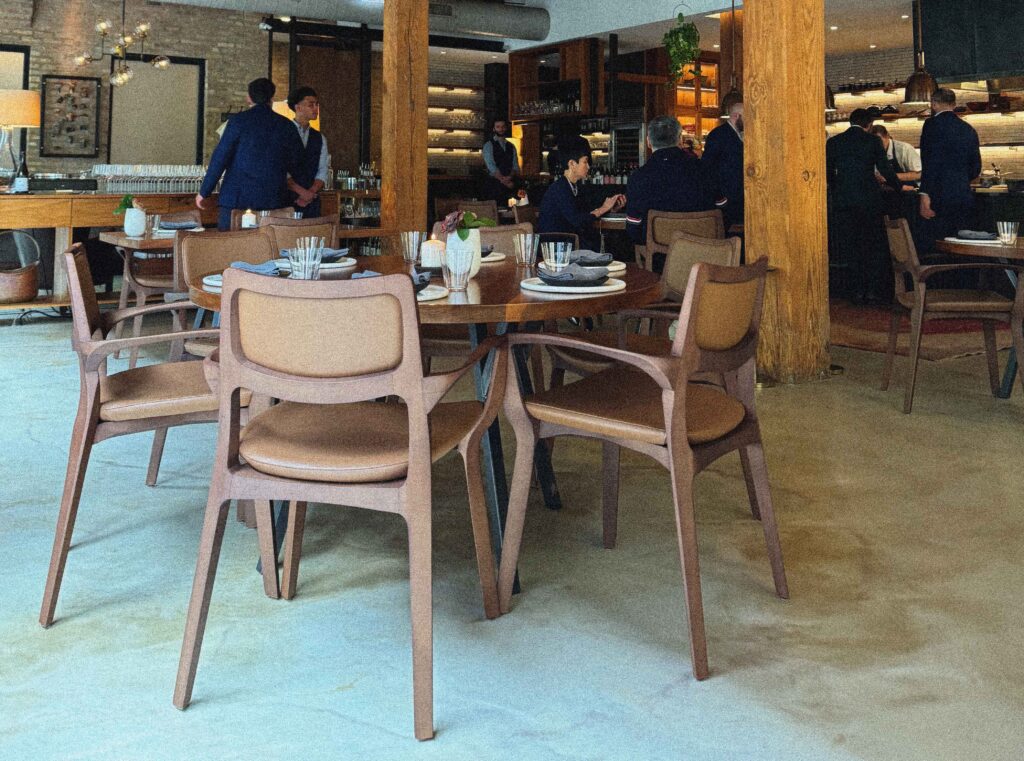
While the search for Smyth’s new head chef continues, the restaurant has not been shy about pursuing other forms of structural change. Namely, the chairs in the dining room are all brand new: boasting raised backs with additional cushioning and a lighter-toned frame made from the concept’s emblematic black walnut.
Sadly, being seated in a corner booth (the banquettes having also been refreshed last year), I cannot report any drastic increase in my posture or overall comfort tonight. However, as the ambiance here continues to be the subject of some pointed criticism (i.e., “one-Michelin-star” [derogatory]), it is reassuring to know that the team has been updating and upgrading the surroundings within the scope of what’s possible.
Yes, you’re never going to be able to expand the space or get rid of those wooden beams. I don’t think the open kitchen, with its hearth, will ever be meaningfully reconfigured. The lounge has been singled out for its seeming disuse, but, truly, it does come in handy on occasion (and would anyone really prefer to have their opening bites there rather than simply settle in at the actual table?)
Any total reimagination of Smyth’s interior (which, it is worth saying, does not feel musty or dated) would demand a self-destructive period of extended closure. Doing so would mean pausing the persistent development of the actual cuisine in a misguided attempt to contort the concept into something it’s not and has never been. This place—a cozy, windowed den with a record player and the odd cornucopia—used to look out at a parking lot. Now, flanked by Creepies and Elske, it forms a last bastion of idiosyncratic and quietly excellent craft in a neighborhood approaching the peak of excess and ostentation.
Yet I am not making excuses. The team always looks for ways to be better, and they’ve struck upon one solution that, while it doesn’t actually augment the environment, transforms how the collected guests experience it.
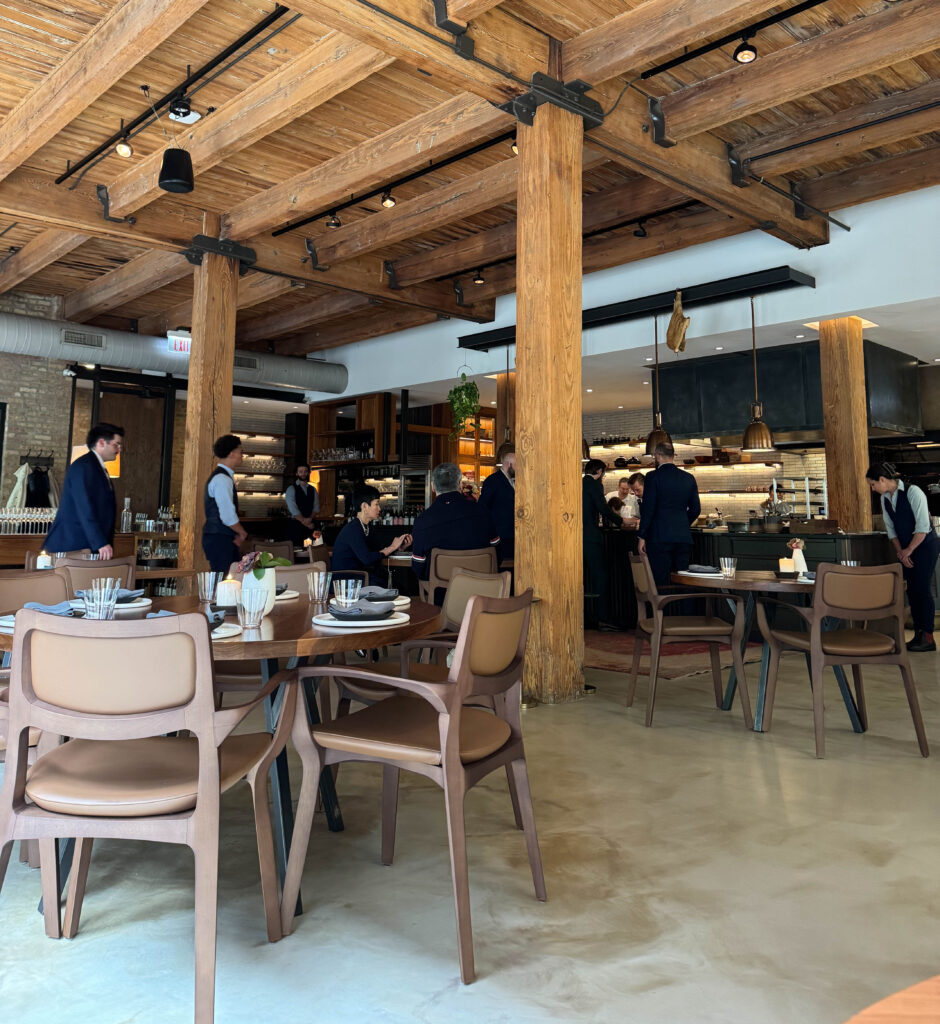
Rather simply (and concurrent with the new furniture), the restaurant has decided to remove a few tables: bringing the count from 14 (and roughly 40 seats in total) to 11 (and roughly 32 seats in total). This reduction is joined by a shift away from rolling reservations toward two proper turns, meaning that there’s no corresponding decrease in the number of customers served (and, in fact, that more could potentially be accommodated).
Practically speaking, the change creates more favorable sightlines for those situated almost anywhere on the floor, ensuring that the action of the open kitchen (whether or not one splurges on the “Chef’s Menu”) has every opportunity to impress the full range of diners. Fewer tables also, understandably, lend the meal a greater sense of intimacy: maybe not to the degree one enjoys at Feld or a favorite omakase but, nonetheless, establishing the sense that you are a member of the lucky few (rather than being lost amongst a slightly larger crowd).
Staffing has not (as best as I can tell) dropped in accordance with the change in tables, and, while it is possible that pacing will need to be more rigorous to accommodate two staggered three-and-a-half-hour seatings, I think the team is actually more empowered than ever to linger with patrons and forge the kind of emotional connections that have long distinguished the hospitality here. Service, correspondingly, should be a bit sharper given that practitioners are granted a bit more time to catch their breath. On this occasion, I certainly savor the chance to have several extended conversations with a sommelier team that, while they never disengage, are always being pulled from one end of the room to another on an average night.
Ultimately, I don’t think this change in capacity is determinative. It’s not the kind of paradigm shift that will change the mind of anyone who is naturally averse to the interior design. However, it will act as a force multiplier: allowing everything Smyth already does well to strike with renewed, enhanced strength.
This is the dimension—centered on genuine interaction and a sense of collective gustatory journey—the restaurant has always relied upon to overcome a lack of obvious frills. For any guest who has, already, found themselves feeling at home here, this minor tweak may very well yield exponential returns.
Turning toward the beverage program, I am happy to share the constituents of yet another “Reserve Pairing” ($475) crafted by wine director Louis Fabbrini.
In March, the chosen selection ranked among the best offerings of its kind I’ve ever encountered. Barring restaurants serving bottles that evoke shared terroir, it might be the best for the price.
Nonetheless, I’ve been a big fan of Fabbrini’s work since he joined the team, and it always helps to affirm that the producers and vintages he chooses are not just occasionally brilliant but routinely excellent. His model, which blends singular, limited offerings with a foundation of weirder, more adventurous stuff, only works when a sommelier remains wholly dedicated to their work. Collaboration with the kitchen—as a true peer and not simply profit center—is also key, transforming pours that are pleasant bedfellows into ones that strike a meaningful synergy with the full intricacy of the cuisine.

No wine professional in Chicago goes about their work more thoughtfully, and, given that Fabbrini is also a relative outsider in this city, his sense of the preferences and possibilities in this market is (even for a relative layman) remarkably insightful.
The present pairing comprises:
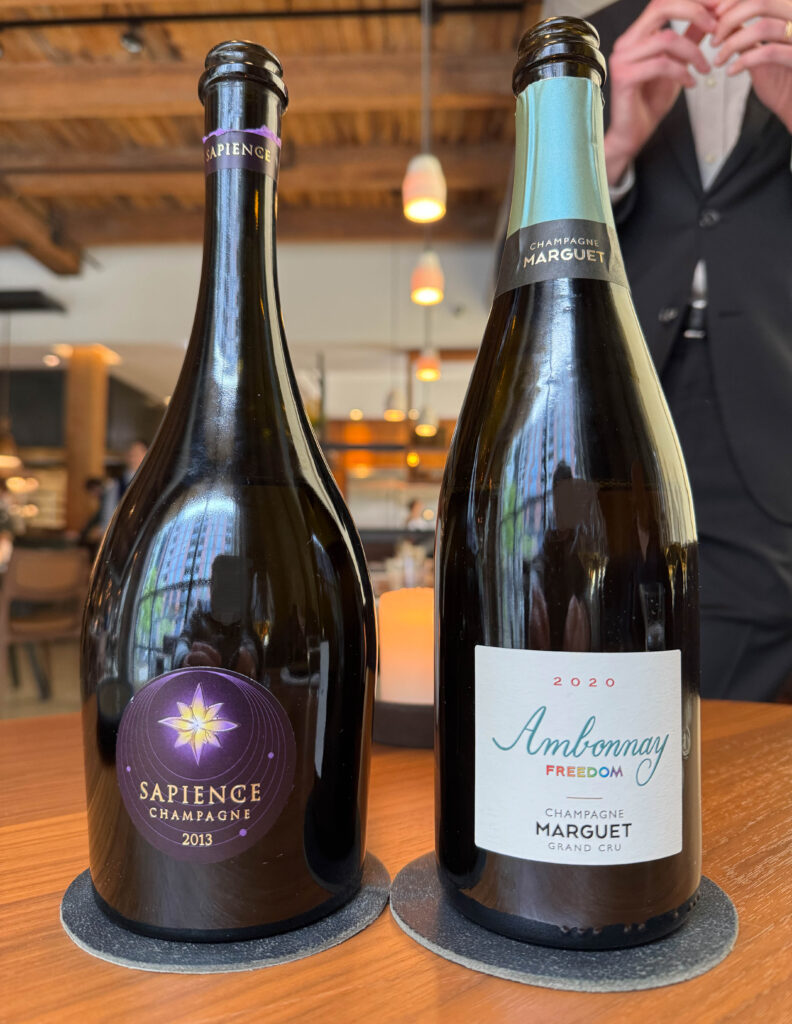
- 2020 Marguet Champagne Ambonnay Grand Cru “Freedom” [$119.99 at national retail]
- 2013 Marguet Champagne “Sapience” [$385 at local retail]
- NV Schätzel “Reh” Riesling [$330 at national retail]
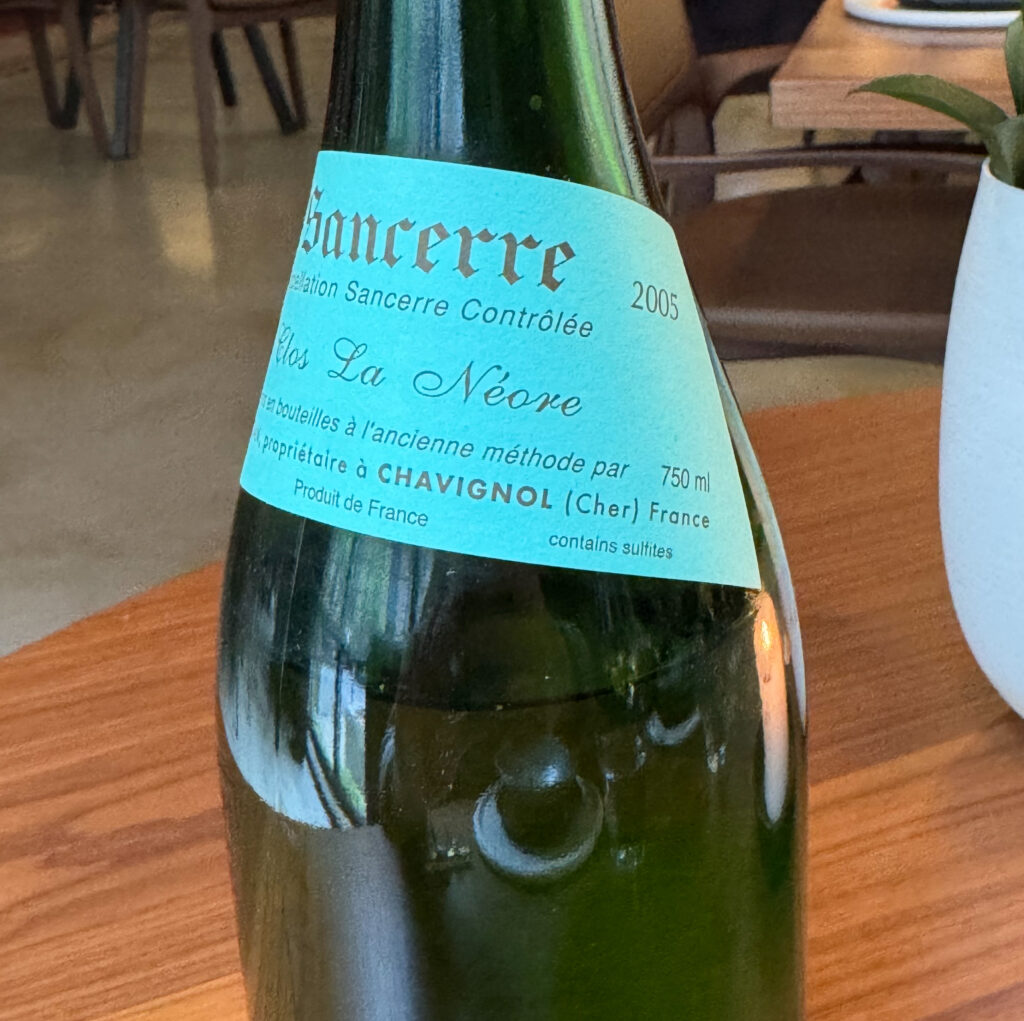
- 2005 Edmond Vatan Sancerre “Clos la Néore” [$450 at local retail]
- 2021 Jintaro Yura “L’Abeille et Le Papillon” Pinot Blanc [$53 at national retail]
- 2025 Emme Wines “the sun egg” Muscat Vert [$30 direct to consumer]
- NV Frank Cornelissen “Magma 7VA” [$399 for current vintage at national retail]
- 2023 Domaine Takahiko Soga “Yoichi-Nobori-N” Passetoutgrain [$210 at national retail]
- 2008 Comte Liger-Belair Vosne-Romanée Premier Cru “Aux Reignots” [$2,000 at local retail]
- 1999 Giacomo Conterno Barolo Riserva “Monfortino” [$1,299 at national retail]
- 2015 Valentin Zusslin Pfingstberg Grand Cru Vendages Tardives [$109.98 at national retail]
- NV Raphaël Bartucci Bugey-Cerdon Méthode Ancestrale [$30 at national retail]
Despite the fact that this pairing features two additional bottles (compared to the one from March), I sense no dilution in the quality of wines being offered. Indeed, while that lineup—which included Cédric Bouchard’s “RDJ n°04,” Domaine des Miroirs, Clos Rougeard “Brézé,” Giacosa Riserva, and 1989 Bonneau “Célestins”—was formidable, selections like the Marguet “Sapience,” 2005 Vatan, Takahiko, Liger-Belair “Reignots,” and 1999 “Monfortino” more than keep pace. This even fails to mention the Schätzel “Reh” (a multi-vintage blend of Pettenthal) or aged Cornelissen: nerdier pours that were contextually delicious.
The prospect of trying three cuvées valued at over $300, two around $400, one over $1,000, and one at $2,000 (not to mention a rare Hokkaido red) strikes me as a superlative value for $475. If you were to spend $1,000 on Smyth’s bottle list, as good as it is, I’m not sure the result would be nearly as satisfying.
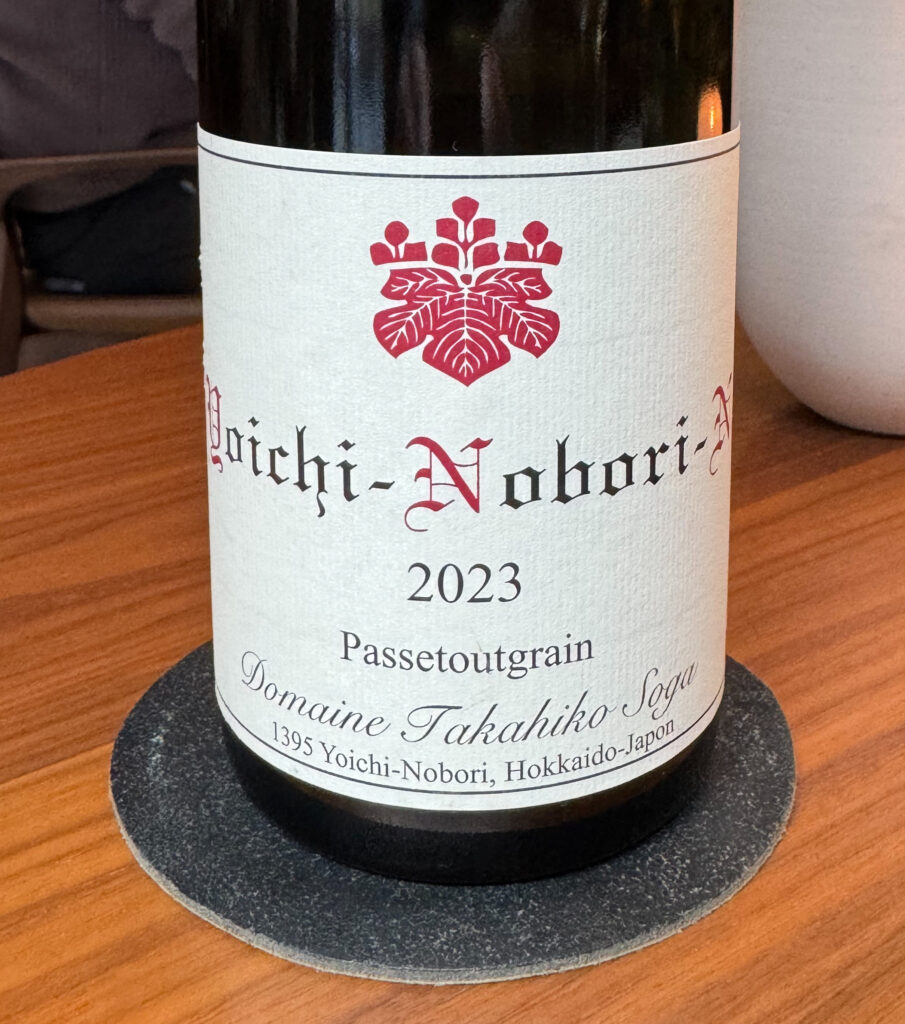
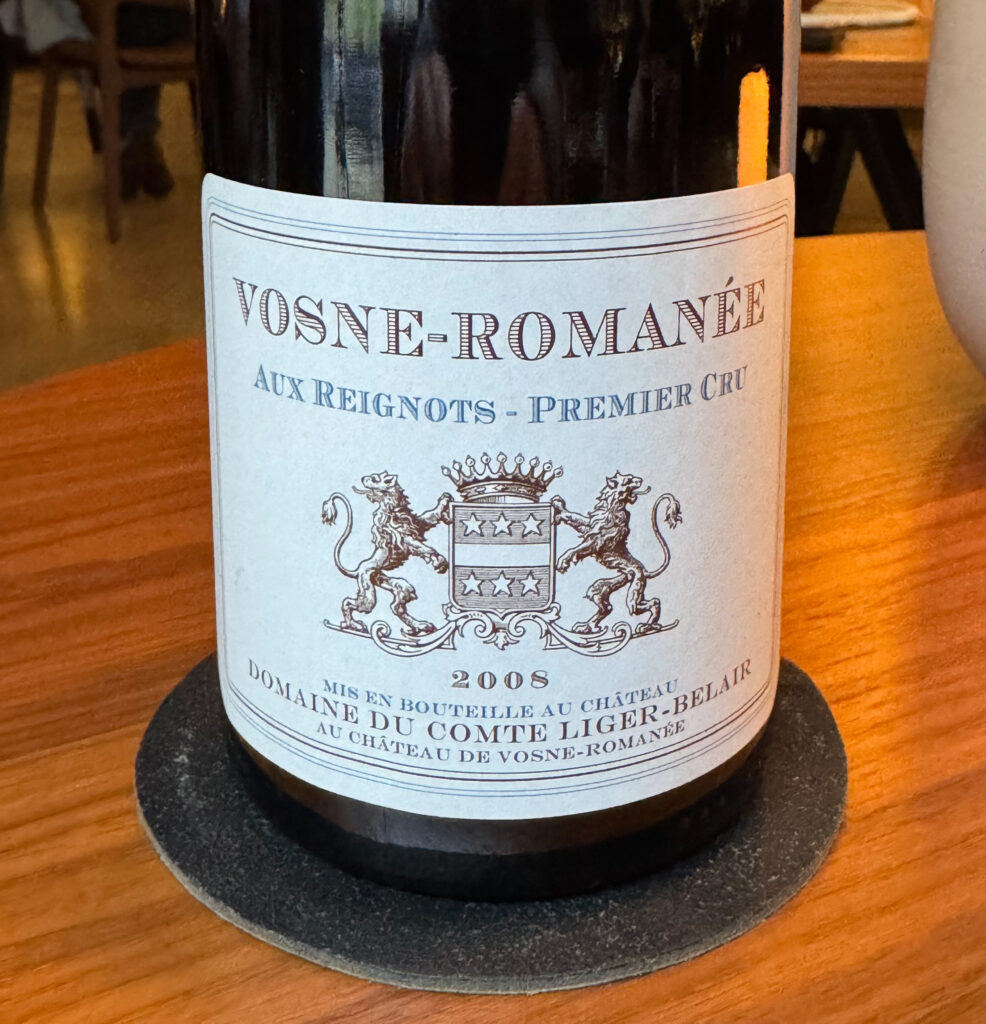
Plus, we’re not just talking about items that happen to be expensive. These are expressions of Sancerre, Burgundy, and Barolo that unquestionably rank among the best being made. They also tout considerable age—and the sommeliers, rather than just pouring them out of the Coravin, utilize small decanters to ensure these renowned producers can show the full breadth and depth of their quality.
On the comparably humble end of the spectrum, a bottle like the Marguet “Freedom” (a particularly yeasty Champagne produced without disgorgement) is enriched by being served alongside (and thus contrasting) the house’s top-tier “Sapience.” Others, like the Yura Pinot Blanc and Emme Wines Muscat Vert offer elegant and characterful renditions of aromatic varieties that, set against bold preparations of seafood, suffer no comparison to grapes like Chardonnay (where the exact appellation generally denotes the degree of prestige). Dessert, this time around, is rather simply paired with sweet Alsatian Riesling and a chuggable sparkling red: distinctive choices, yes, yet not ones that veer needlessly weird in a bid to impress.
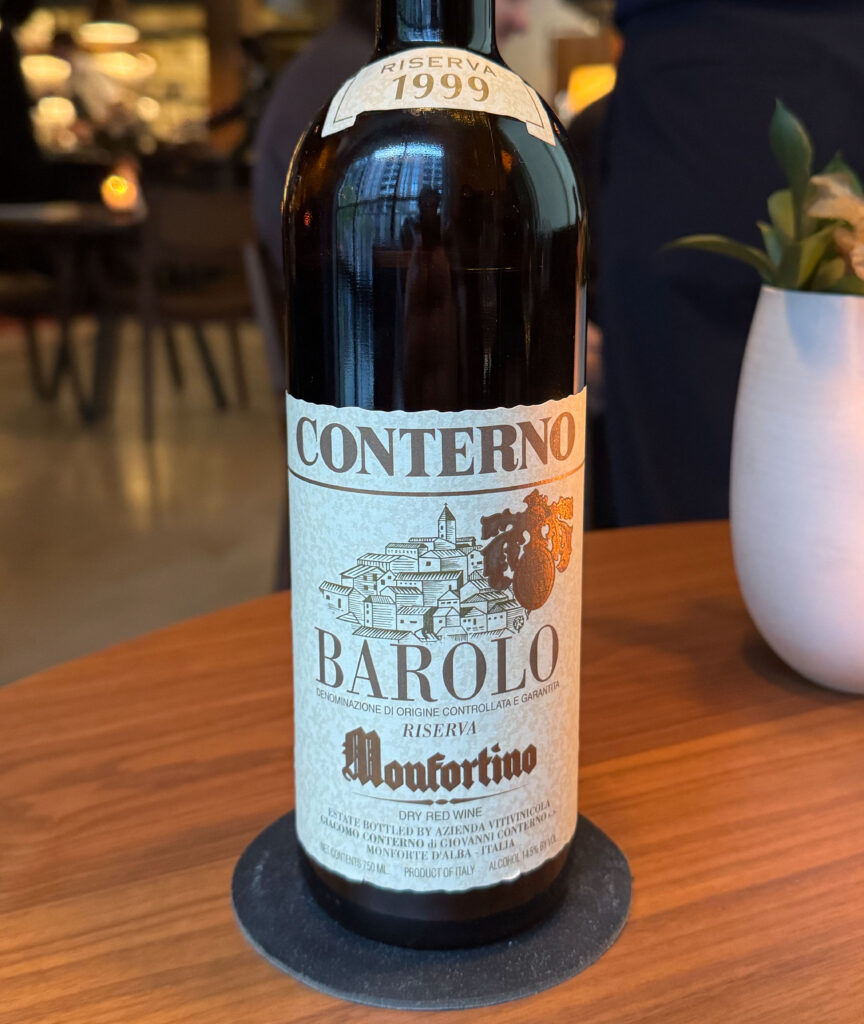
Overall, tonight’s lineup stands among the most exciting—yet also approachable and crowd-pleasing—Fabbrini has served. Lovers of Cabernet (whether Bordeaux or Napa) might be left searching. However, this is where the bottle list (and that $100 corkage fee) can be used to fill in the gaps.
For anyone who dreams of tasting benchmarks, wants to test the hype surrounding wine’s cultiest names, and still remains open to trying a glass or two of something entirely different, Smyth’s “Reserve Pairing” ranks among the best I have encountered nationally.
Alongside the food, it forms a destination in itself: so dynamic and surprising and consistently rewarding that my heart flutters whenever I step inside and peek at what is now being poured.
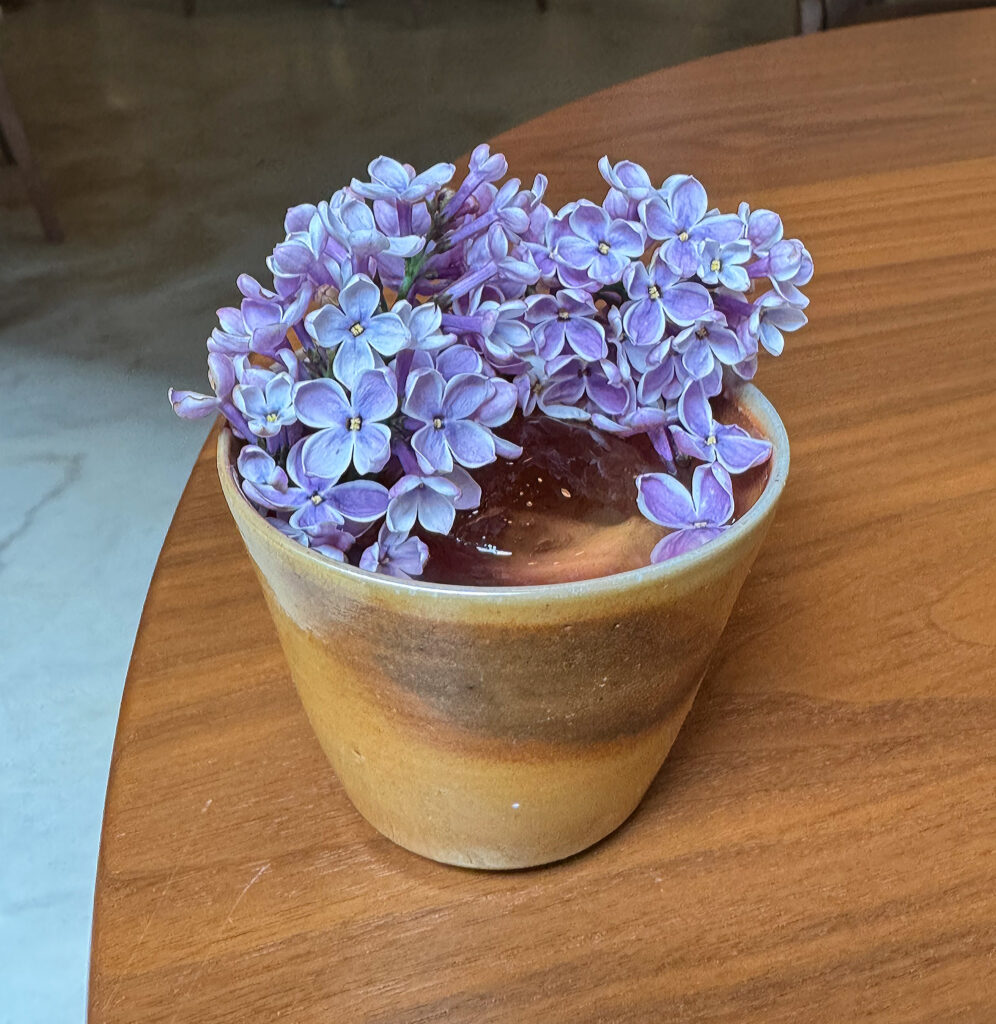
The present menu kicks off with the traditional pour of “Amazake”—rendered, on this occasion, as less of a milky, boozy libation and more of a juice. Rhubarb forms a fresh and sour base while notes of lilac and oolong add floral, citric, and subtly bitter depth. The flavors, though not quite hedonistic, meld nicely. If anything, they prove a little dilute on the finish, and that’s where this particular iteration falls short.
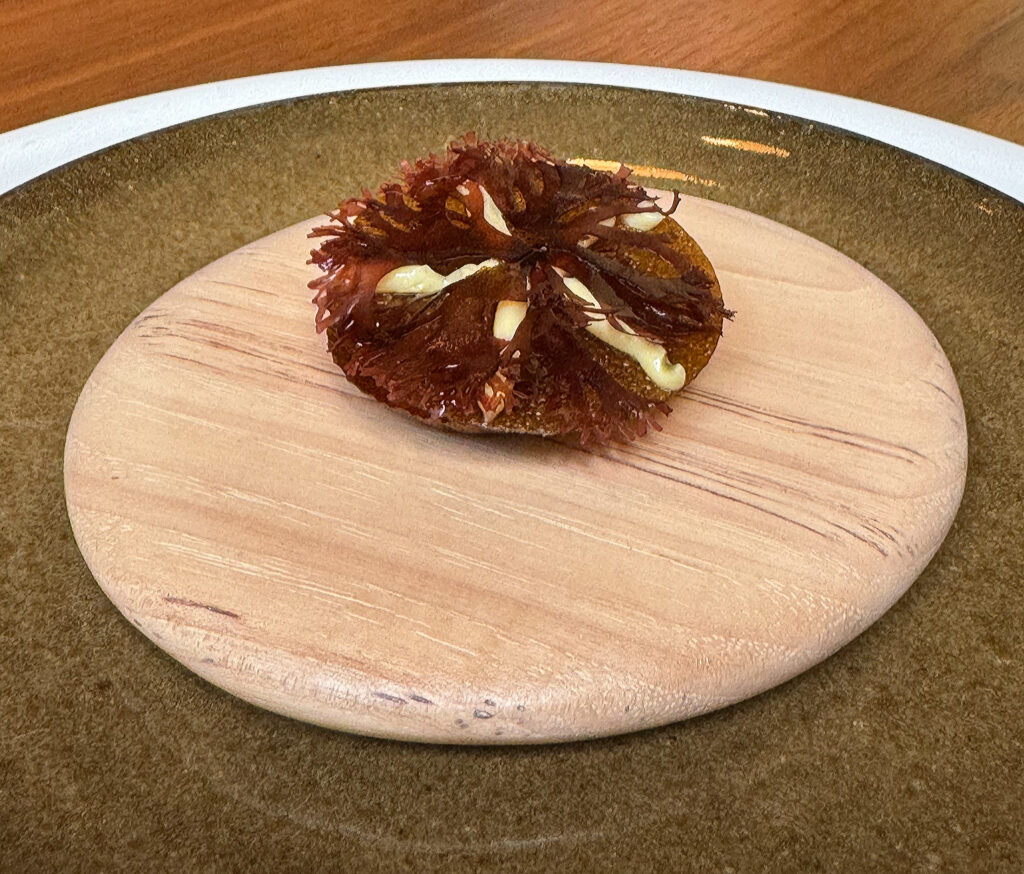
An “Uni & Tomato Tart” forms the first bite of the meal, maintaining the same structure (and overall quality) I encountered back in March. Here, a gossamer shell anchors layers of Hokkaido sea urchin, ogo seaweed, the titular produce, a seaweed chip, some dulse fudge, and a spiral of additional dulse leaves. The resulting mouthful (so firmly anchored in the foliage of the sea) spans crisp, chewy, and creamy textures but settles on a decidedly fruity expression of tomato whose purity and intensity are profound. Framed by mild acidity and building toward a sweet, oceanic finish, this wee tart forms a microcosm of what Smyth’s cooking, at its most successful, can conjure.
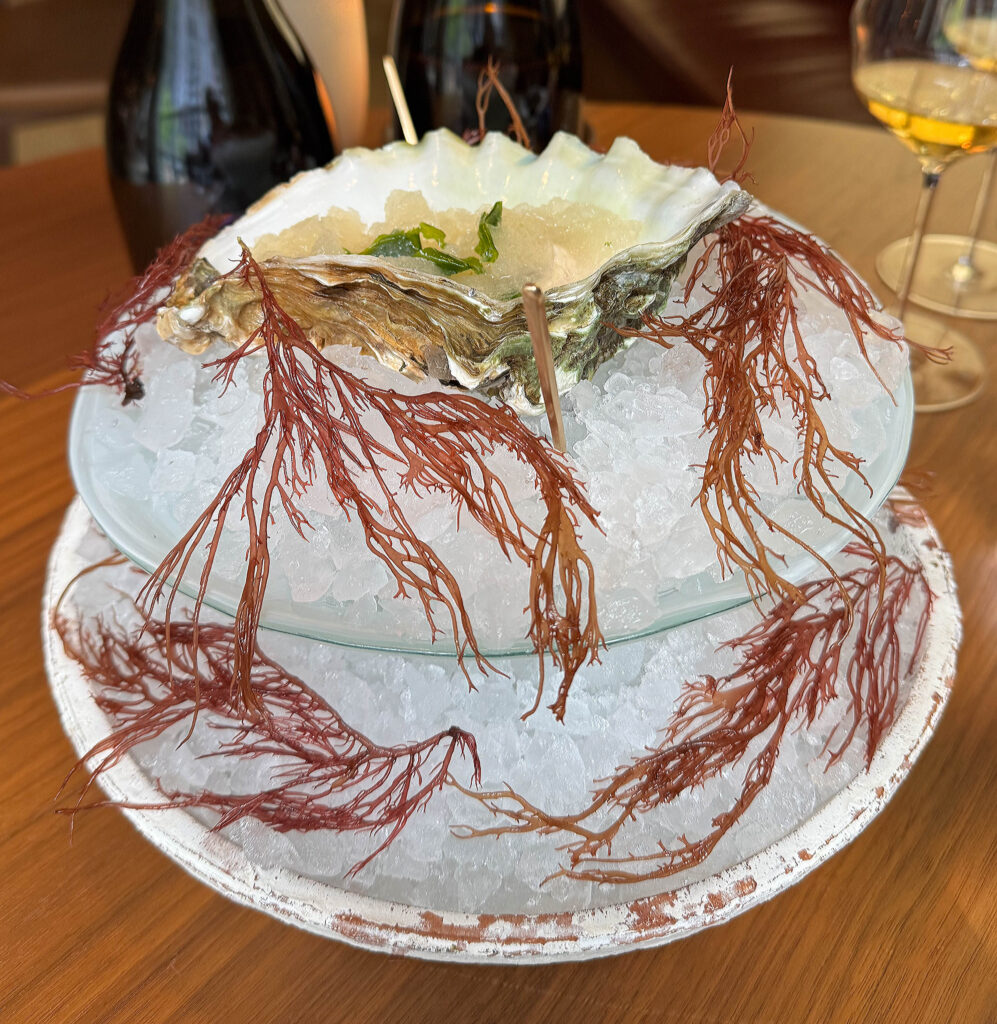
The “Willapa Bay Behemoth Oyster” is entirely new tonight. The bivalve comes presented on a pedestal of ice, whereupon its blue-hued top shell is removed to reveal a sizable portion of meat (split into more manageable chunks) swimming in a tomato and horseradish slush. Guests are instructed to scoop out the pieces of flesh and drag them through a seaweed- and citrus-laden sauce that comes on the side.
Doing so, the oyster’s remarkably clean, homogenous texture and crisp, mildly briny flavor takes on more of the weight, tang, and umami it needs. Indeed, I had higher hopes for the slush (which I expected to be sweet and pungent), yet, beyond chilling the shellfish, its effect is rather anonymous. As a result, the bivalve acts more like a blank canvas here. I appreciate the mouthfeel (especially given the size); however, it is only through a generous use of sauce and accompanying swigs of oxidative Champagne that the ingredient shows any character. Could the ice, given its blandness, be muting some of the intended depth?
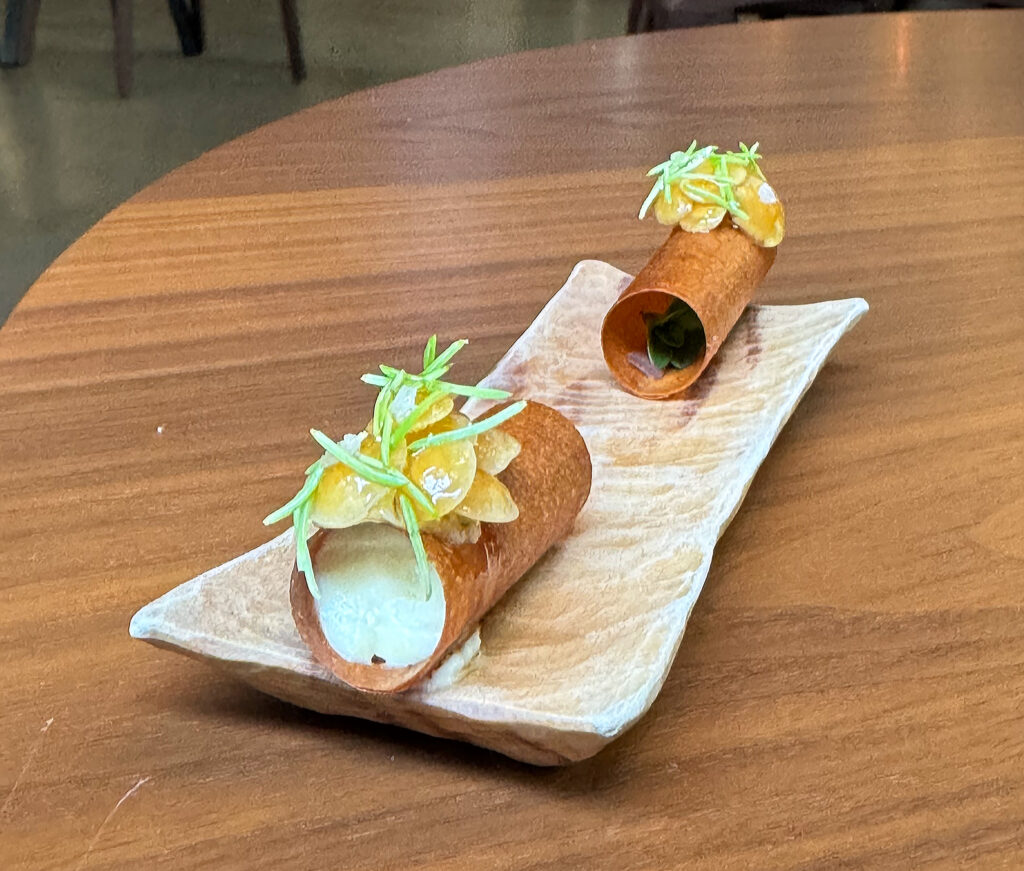
Following the oyster, I find an “Enoki Cannoli” that represents the kitchen’s latest rendition of this playful savory pastry form. The present version fills its gossamer shell with bits of pickled ramp and a cream made from Pleasant Ridge Reserve. The headlining mushroom—sprinkled with spruce tips—sits on top: making for a dainty, detailed bite whose marriage of fruity sweetness, uplifting tang, the richness of the cheese, and nutty, garlicky undertones is masterful. The packaging, too, is utterly seamless. Honestly, this item doesn’t always impress me as much as it should, yet, tonight, it possesses a real savory undercurrent that leaves me totally convinced.
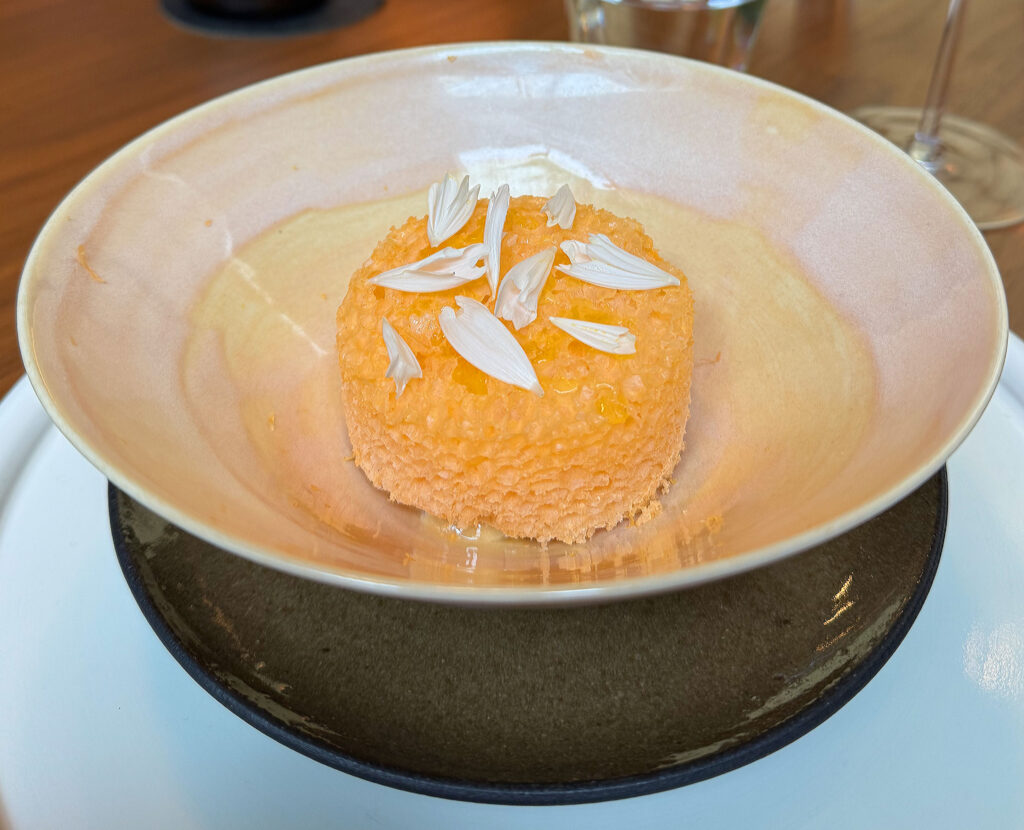
The “Maine Uni Parfait” makes a repeat appearance after showing well in March. Nonetheless, on this occasion, it offers an entirely different expression—one, I think, that represents the very apotheosis of the form. The central element, that sea urchin “cloud,” remains a touchstone. But it now comes drizzled with hazelnut oil and serves to obscure a core of lobster custard, lobster marzipan, and smoked lobster meat. Yes, what was once a relatively zesty recipe now embraces total decadence (fusing with, and in a way replacing, the restaurant’s familiar ramekins of shellfish custard).
The result takes the ephemeral, creamy consistency of the uni cloud as a starting point. A dash of sweetness, tinged with notes of toasted nuts, whets the appetite. Yet, rather than aiming for relief, the preparation doubles down. The rich, luscious confections made from the crustacean meld effortlessly with the melty sea urchin. Strands of the lobster’s flesh (tender in its own right) add the occasional meaty counterpoint. But the resulting flavor, kissed by another dose of sweetness from the smoke, achieves a concentration of umami that is absolutely maddening. Somehow, by combining two of their distinct (not to mention longstanding) ideas, the chefs have softened all the rough edges and arrived at a composition—so straightforwardly pleasing—that ranks among Smyth’s very finest.
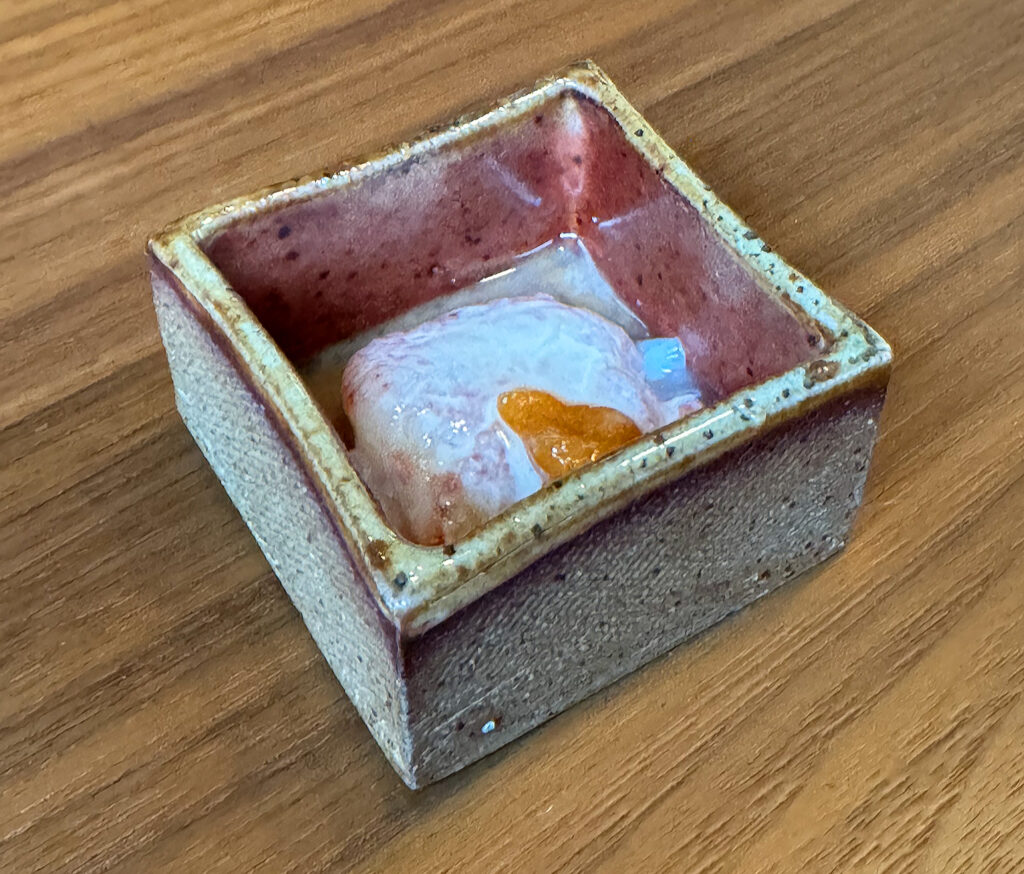
An accompanying “Lobster Claw”—dressed with lobster vinegar, more lobster marzipan, and peanut milk—forms a nice bonus. On the palate, I find much of the same sweet, nutty, and savory intensity displayed by the parfait. Yet there’s an electric degree of tanginess now joining the party that, while it adds definition, also serves to bring one’s tongue back to baseline. Correspondingly, the comparably substantial serving of meat helps to transition away from all those melty consistencies toward something more robust and satisfying. All in all, this makes for a fabulous one-two punch.
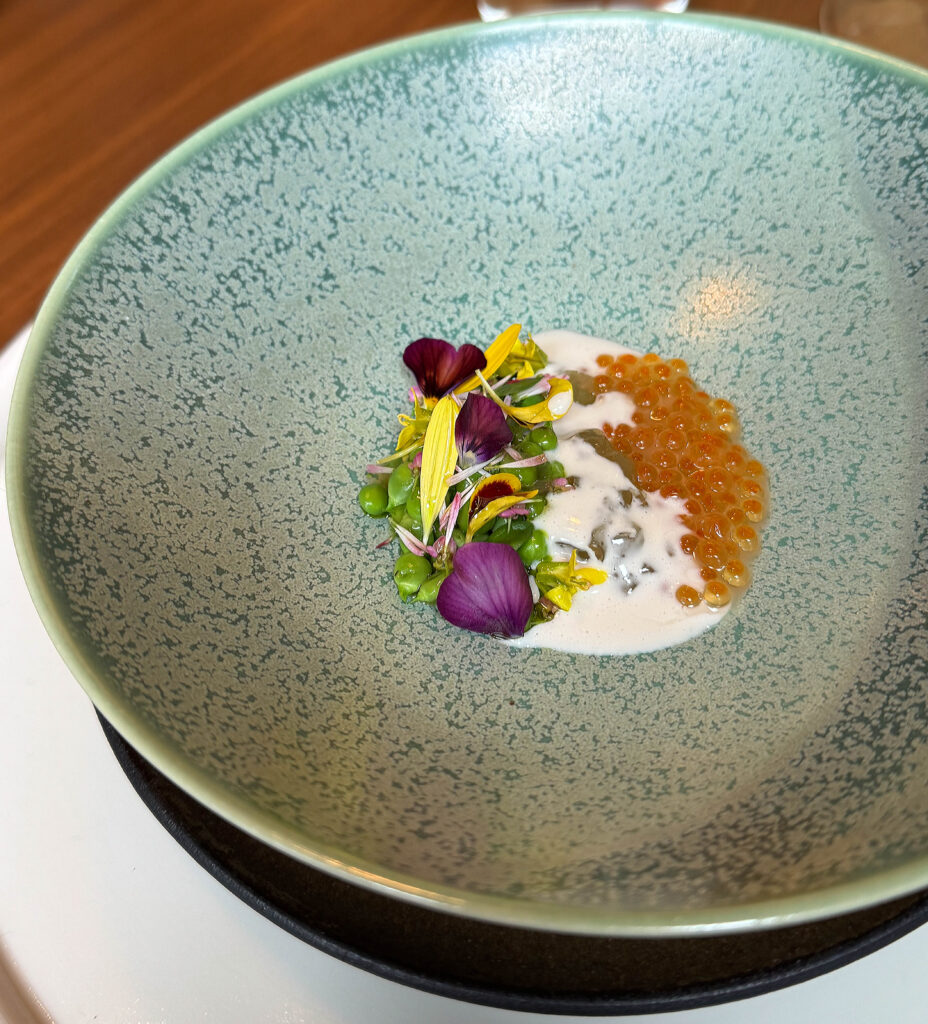
A plate of “Grilled Peas & Roe” is also entirely new tonight (though it certainly calls the excellent early spring pea recipe that featured during my last visit to mind). Here, the vegetables are heated over wheatgrass before being poached, chilled, and paired with a gelée made from their own shells. A scoop of the titular trout roe and a tableside pour of peanut milk complete the presentation, which centers on a contrast of finely crisp and creamy textures.
The resulting flavor strikes the same supremely fresh, sweet, and green notes I encountered back in March. However, while the roe is meant to anchor this combination with its bursting brine, I am left feeling the recipe demands a more considerable application of salt in order to really shine. That said, we’re talking about small, subjective degrees of seasoning, and I can appreciate how the overall profile of this dish (being less decidedly savory) offers a sense of refreshment following the uni and lobster.
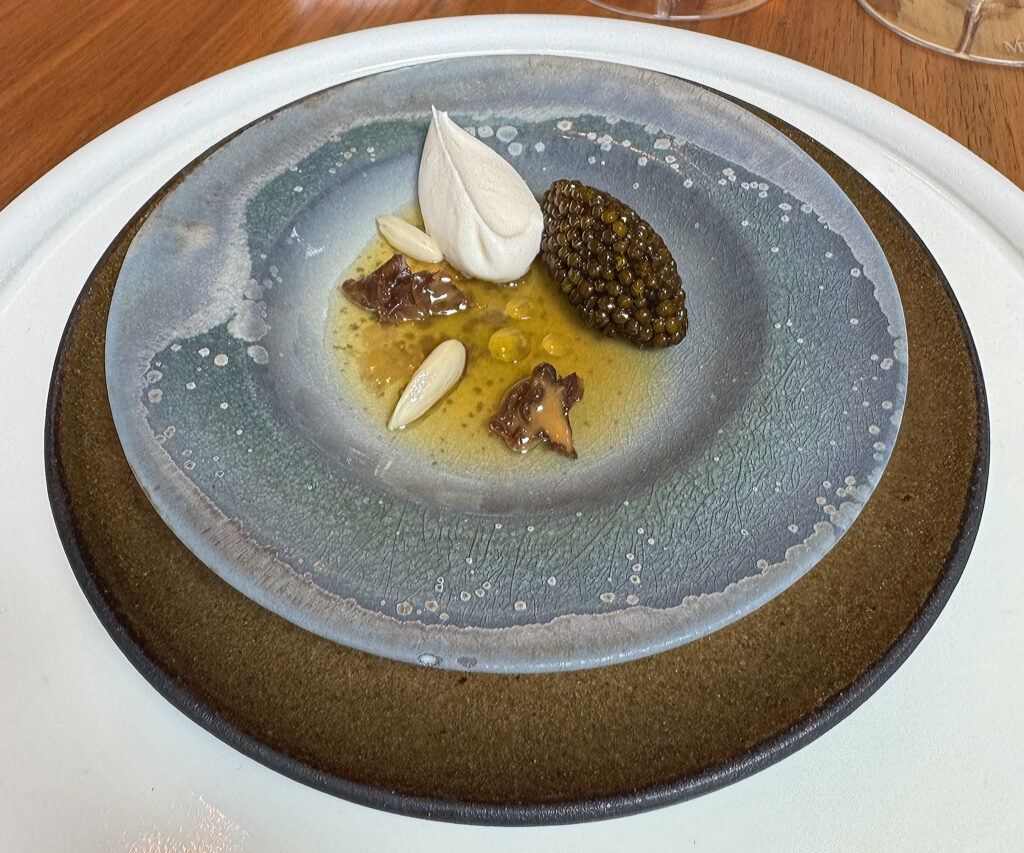
The “Caviar & Green Walnut” reappears tonight in only a slightly altered form. The quenelle of N25 Kaluga, dollop of horseradish cream, and bits of green almond remain the same. Yet the bowl’s base layer is noticeably lighter in tone: being made of a black walnut gelée and a broken birch oil vinaigrette on this occasion.
Texturally, the interplay of roe and cream and jelly remains sound, with each element caressing the other. Nonetheless, the resulting flavor—which spans tangy, nutty, and woody notes before settling on a resounding sweetness—is again too driven by acidity. Ultimately, I can feel the caviar but really don’t find any of the umami or deeper satisfaction I am looking for. Certainly, the intention here is to treat the roe in a more intellectual manner (alongside a pour of the Antica Terra collaboration wine I enjoyed last time). A minor rebalancing could really make this recipe shine.
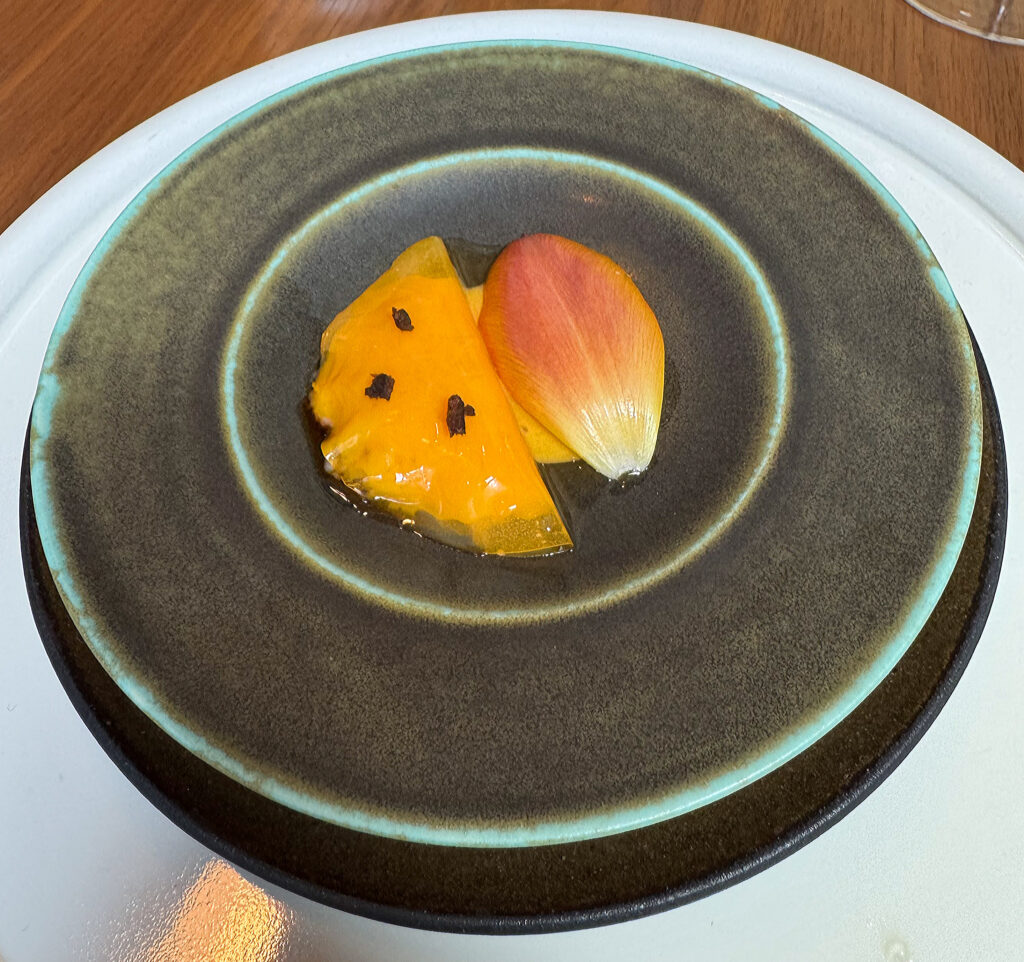
Debuting this very evening, Shields’s “Crab Tamago” resists any comparison to the kind of Japanese omelet from which it takes its name. (Really, it’s not until I ask Fabbrini to repeat the description that I am totally convinced as to what I just heard.) The preparation centers on a technique—the creation of a so-called “omelet skin”—that the chef has been obsessed with for years. This translucent, folded layer covers a portion of finely shredded Dungeness crab meat and comes paired with an amazake sauce and a tulip petal.
The ”freeform” tamago seems to reference to use of seafood (like ground shrimp and/or fish paste) in traditional Edomae representations of the form. On the palate, the transition from the impossibly delicate “skin” to the crustacean filling is true to type. The crab (and it’s hard to know how much the melting of the egg amplifies this effect) possesses a richly creamy, soothing consistency that immediately calls custardy renditions of the titular omelet to mind. The flavor of the shellfish, in turn, is spectacular: achieving a startling intensity of umami (woven with persistent, mild sweetness) without ever becoming unrecognizable as Dungeness. Indeed, even the tulip petal—so easy to write off as a needless flourish—does its part by offering doses of crispness and freshness that help to frame the tamago’s seamless decadence.
While I wish I got a better sense of what exactly went into the amazake, this dish’s creativity and deliciousness left me spellbound. It ranks among the highlights of the night and of Smyth’s work more broadly this year.
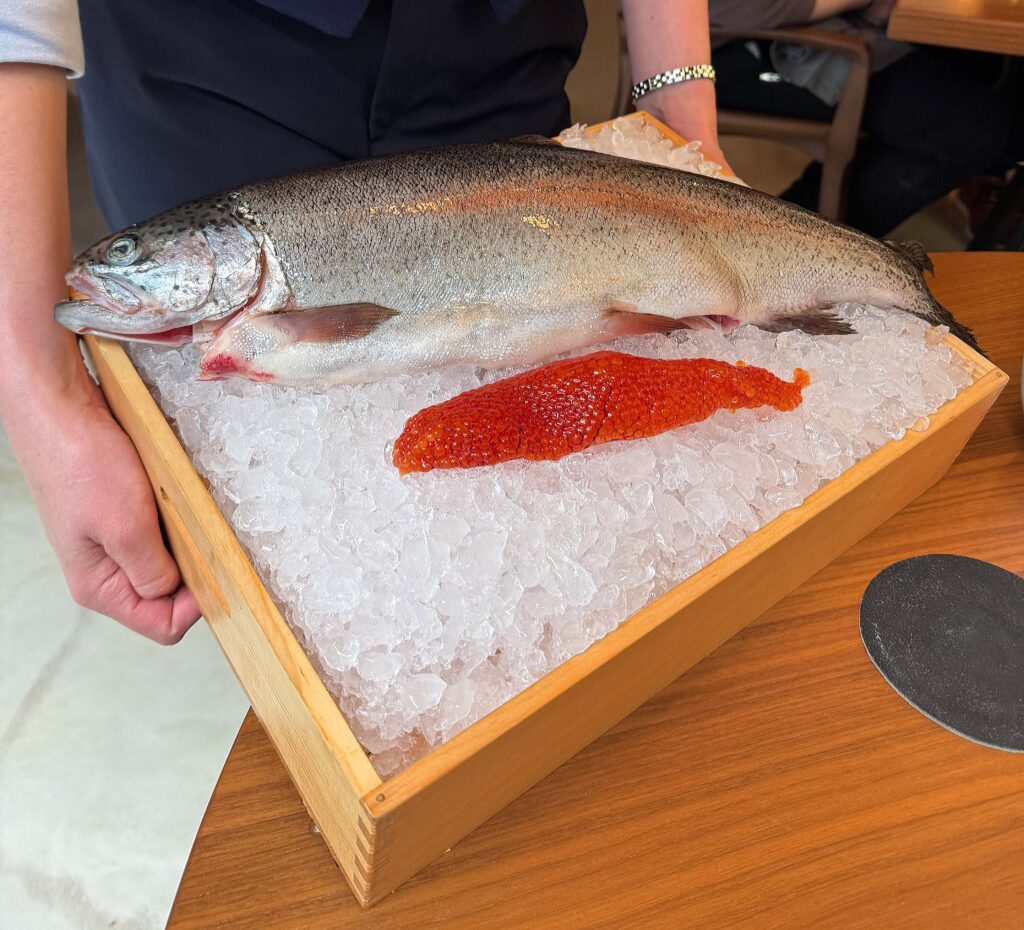
Arriving next, a presentation of Smoke in Chimneys rainbow trout (along with its roe) over ice prefaces a three-part sequence devoted to the fish: one that I encountered during my last meal and only undergoes some minor changes tonight.
It comprises:
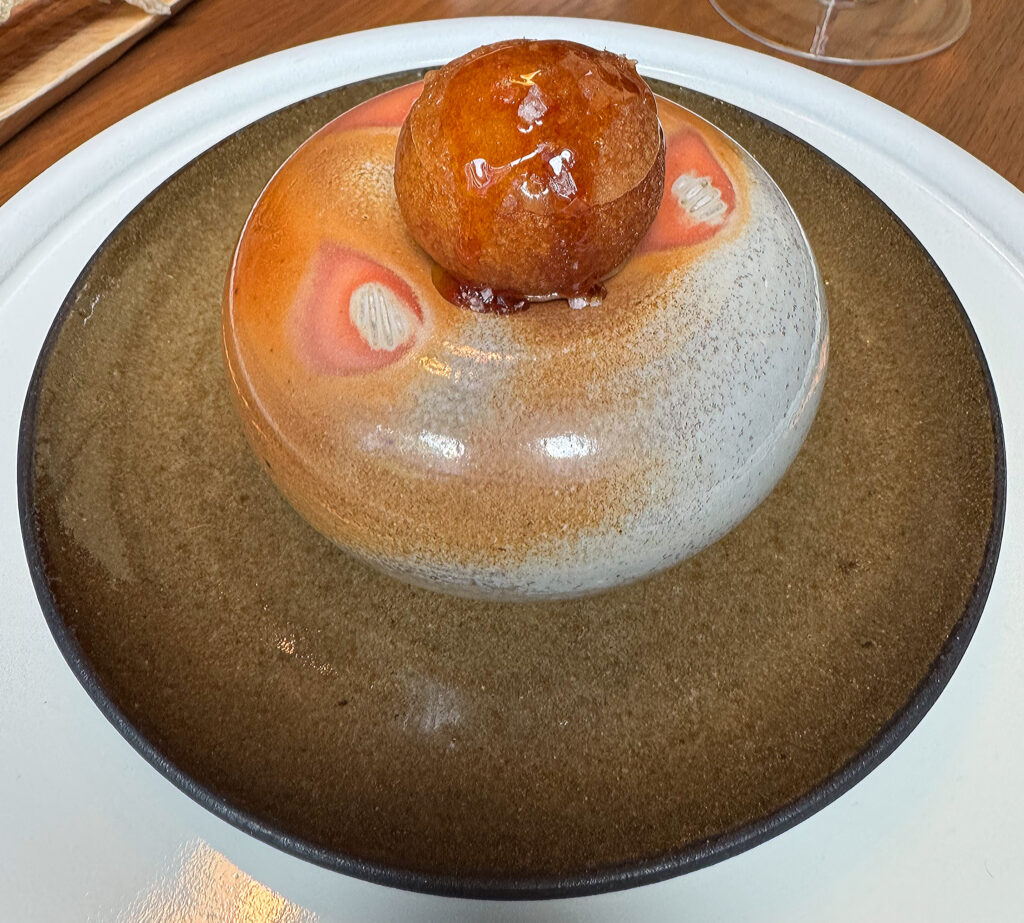
The “Smoked Trout Donut”—stuffed with meat from the belly, Pleasant Ridge Reserve, and apple toffee then topped with a yeast tuile. The pastry leads with a subtle “shatter” effect yet quickly transitions into a fluffy, then gooey, and pleasingly rich mouthfeel brimming with salty-sweet depth. Admittedly, it would be hard to guess that there’s trout in the recipe. However, does that not prove just how cohesive the chosen filling is? Overall, this tastes even better than the previous example and ranks among the best examples of the emblematic donut form the restaurant has ever served.
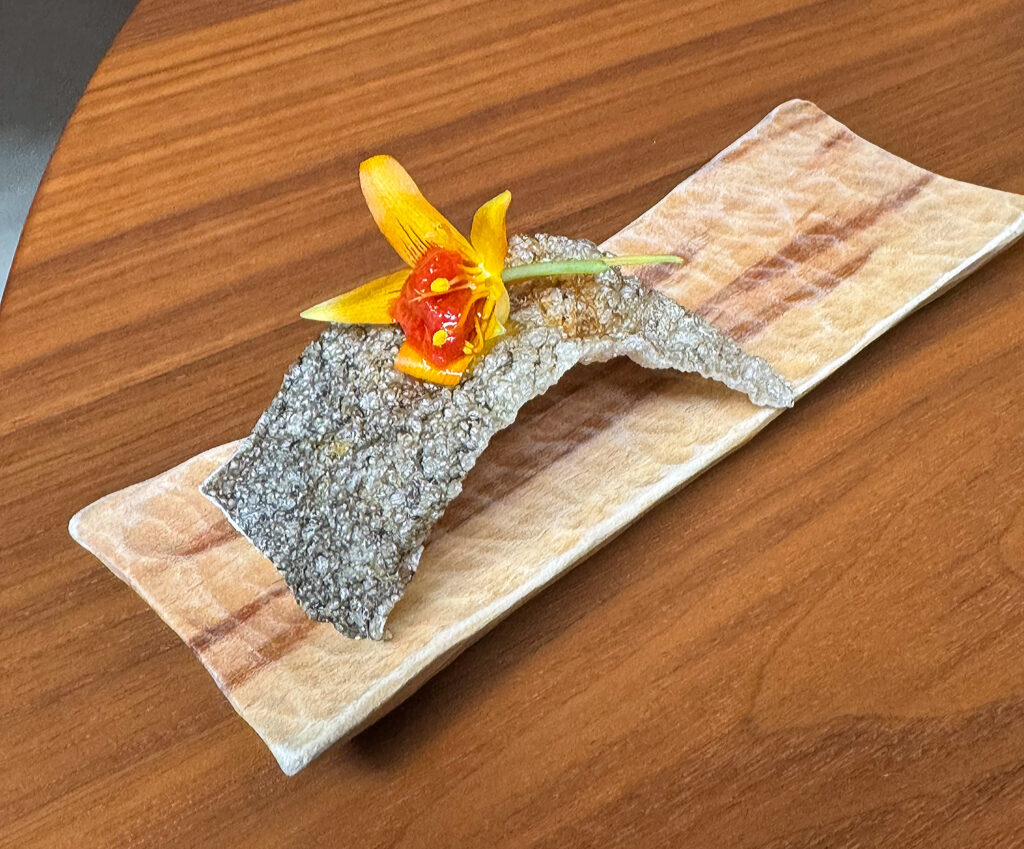
A bite of “Miso Cured Trout Belly” has evolved: transforming from a strip of crispy skin with a neat cube of belly on one end into a curl of crispy skin beneath which a longer piece of belly is, skillfully, suspended. Joined by a nasturtium that has been stuffed with tomato, this expression of the fish centers on the juxtaposition of brittle and impressively creamy, melty textures. Yes, the consistency of the belly (which has been cured using lees from the production of Hana Makgeolli) might be the most impressive element of the dish. The resulting flavor—characterized by floral freshness and a hint of sweetness from the tomato—is nice, but I am left feeling it was a mistake not to eat this more delicate piece before the donut.
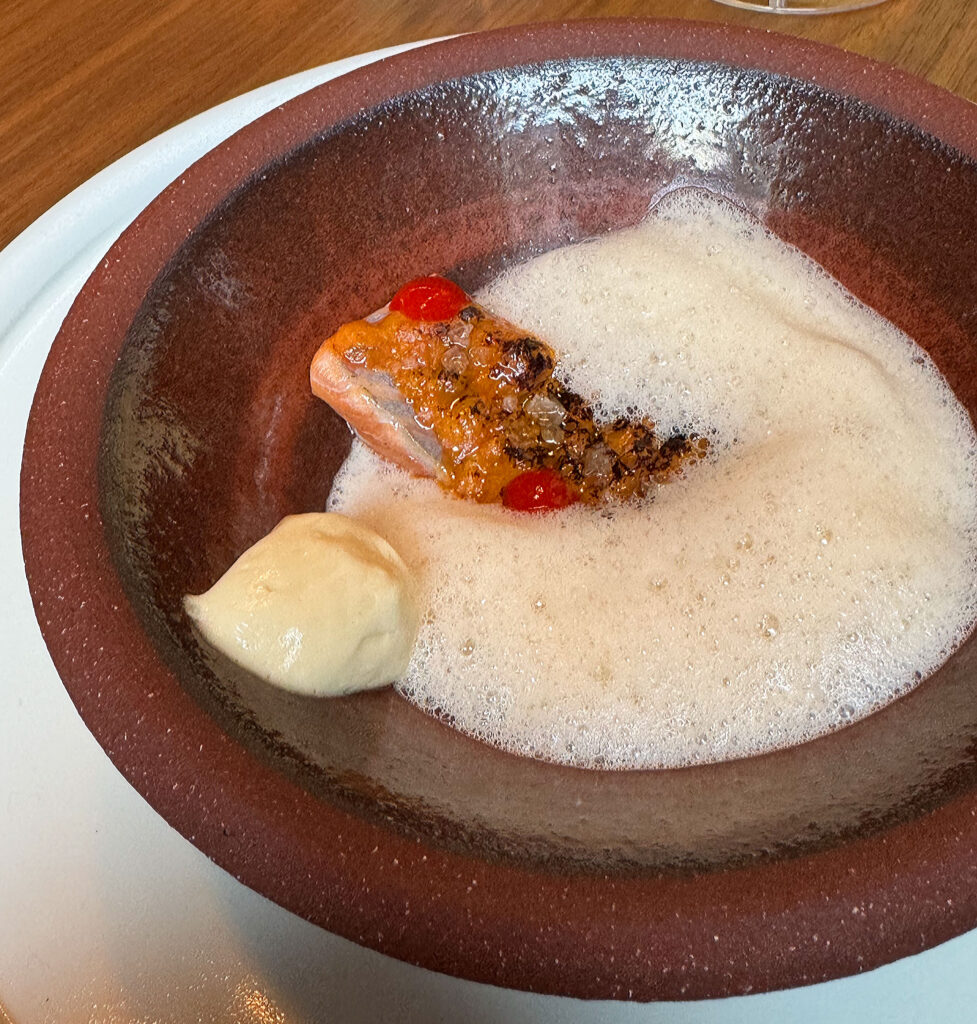
And, finally, a preparation of “Trout & Green Guava”—the fish being cooked in brown butter, coated with globs of charred uni and fermented pepper, bathed in a green guava ceviche, and joined by notes of sesame, habanada, and kumquat. Even compared to the preceding belly, the fillet of the trout achieves a degree of softness (practically being spreadable) that is truly impressive. Coated in froth and cream, the flesh seems to lack much savory weight. Yet the flavor, characterized by fruit and tang and sweetness on entry, tends toward a persistent sharpness and spice on the finish. All in all, the effect is surprisingly intense and strangely compelling even as this recipe turns any sense of a traditional “main course” on its head.
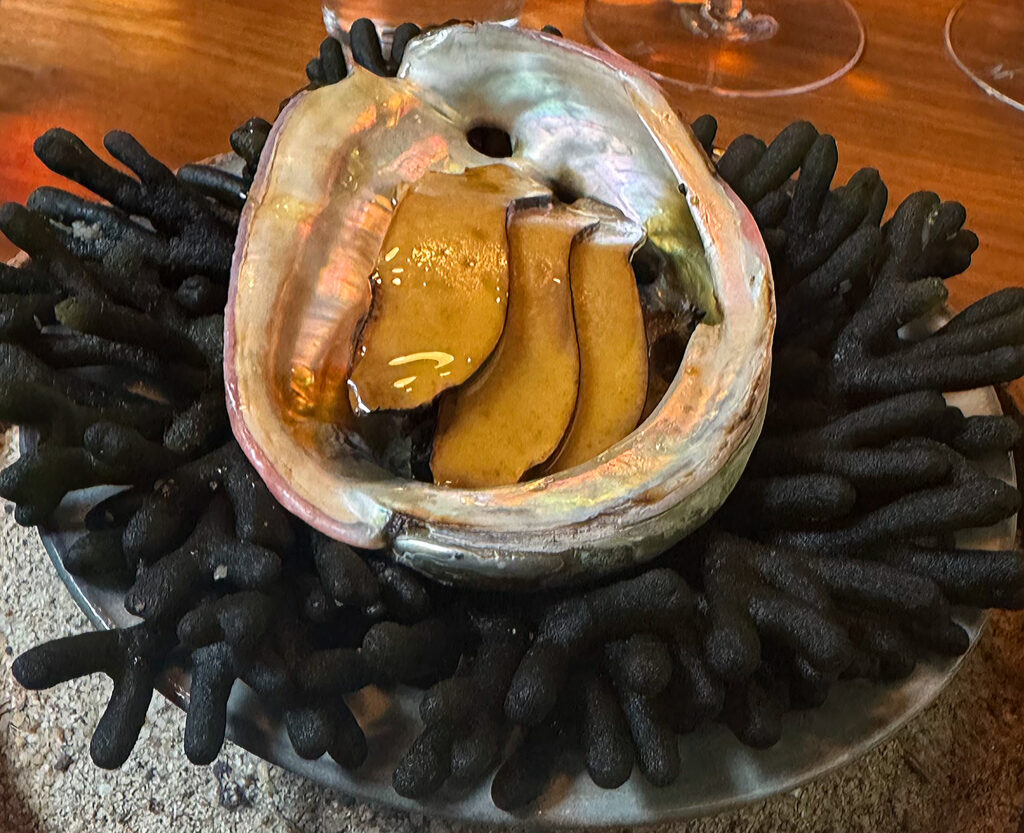
“Monterey Bay Abalone” stars in another dish that is entirely new to the menu. Set upon a base of velvet horn, the mollusk’s shell contains both chunks and slices of the shellfish, some finely chopped mushroom (a variety likened to porcini), and a gastrique made from the same, surrounding seaweed. By Smyth’s standards, this is a rather simple composition—yet one that affirms the kitchen’s unerring technique.
Indeed, while abalone can so easily veer into jarring, crunchy territory, the interplay of the thinner, crisper slivers and denser, chewier pieces is extremely satisfying. They bring a much-needed meatiness to the table (especially on the back of such luscious trout) while, simultaneously, bursting with natural umami. Add in supporting notes of tang, earth, and—said to be velvet horn’s signature—black truffle, and one is left with the most unabashedly decadent, deeply enjoyable item of the night.
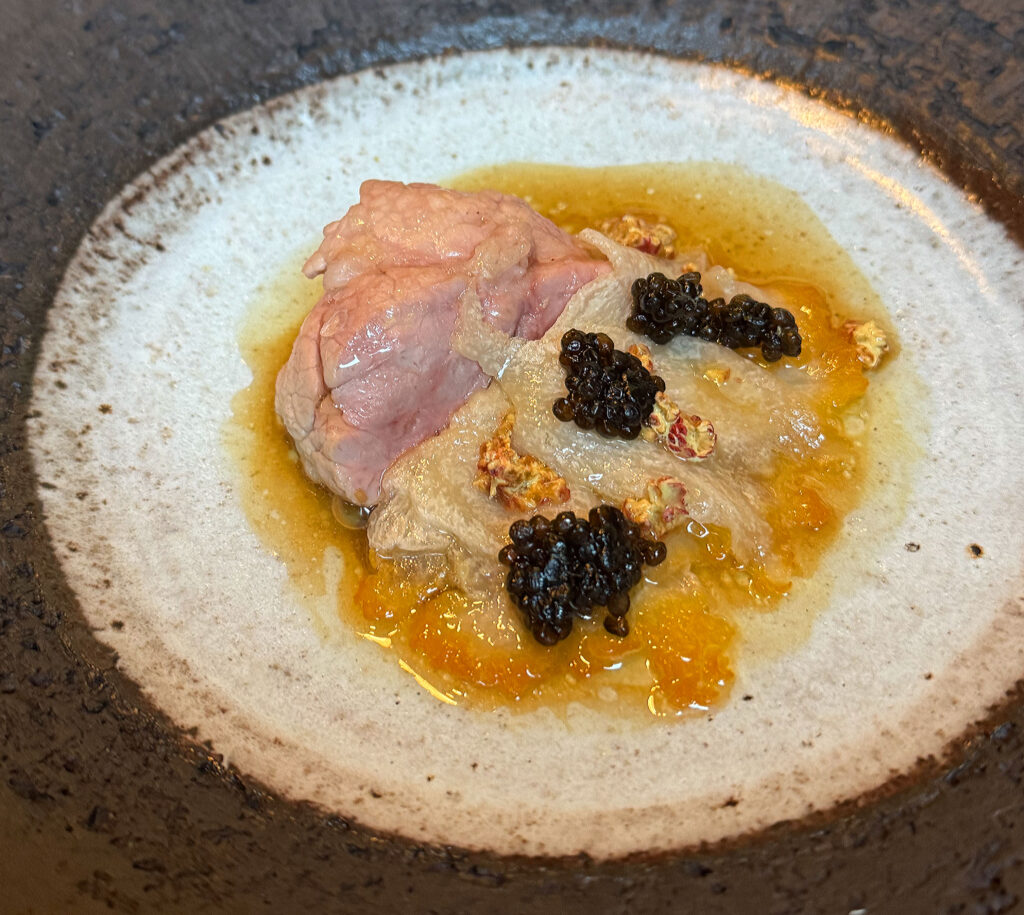
The “Lamb Sweetbreads & Cloud Mushroom” indulges in one of my very favorite ingredients (that is, the headlining offal). I haven’t seen it utilized since last October, and the recipe, tonight, is entirely different. The thymus, rendered as a sizable, whole piece, is flanked by segments of the titular fungus—which, also called “cloud ear,” takes the form of thin shavings. These starring elements are dressed in a sweetbread jus and joined by witches’ butter (a so-called “jelly fungus”), pinecone, and dried Kaluga caviar on the plate.
On the back of such a winning abalone course, this composition almost sounds like a caricature of how weird the cooking here can get. Yet, on the palate, the combination of offal, mushroom, and roe melds effortlessly together: striking a smooth, melty consistency with plenty of backing umami. Other than a hint of uplifting acidity and some nutty brine from the caviar, I sense nothing polarizing about the dish. Yes, both the cloud ear and the witches’ butter are actually quite neutral. They extend and enhance the latent savory character of the sweetbread, which, for someone of my enthusiasm, makes for a clear success.
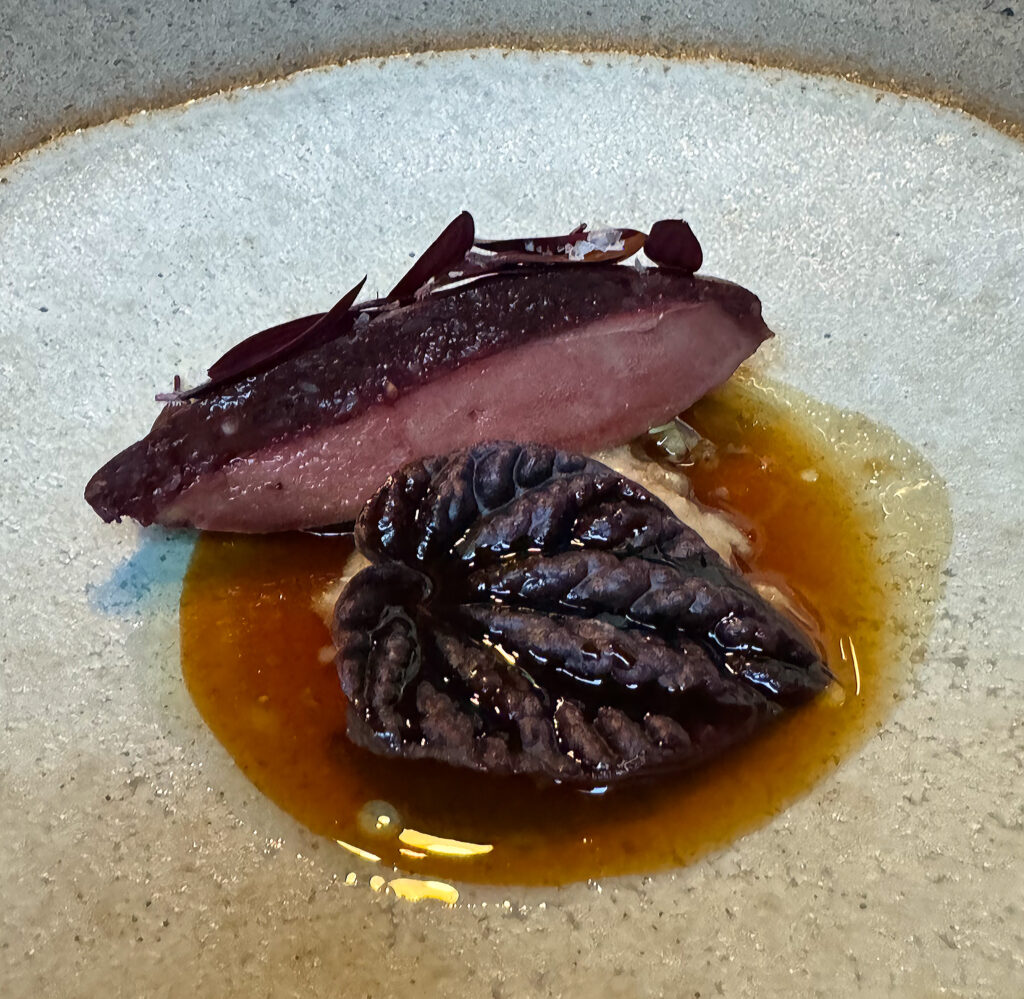
Closing out the savory side of the meal is the “Devil’s Gulch Ranch Squab”—a game bird (serving to replace the usual Vermont quail) being sourced from just outside San Francisco. Some kindred elements, like the stuffing of the breast (this time with boudin noir), the supporting jus, the accompanying piece of pepperleaf (also known as hoja santa), and the base of sprouted grain porridge, remain. But it’s the way that latter element has now been infused with that really proves distinctive.
The squab itself displays a beautifully plump, juicy texture matched by a powerful degree of umami derived, in part, from the layer of blood sausage. With such a foundation (further enhanced by the subtle sassafras sweetness of the pepperleaf), it’s hard to go wrong. However, I’ve seen how the porridge component has sometimes gone in an overly tangy, somewhat sickly direction. Tonight, backed by pronounced note of earthy, nutty corn, the sprouted grains take on a more straightforwardly savory character: one that harmonizes perfectly with the darkly meaty qualities of the bird and build a real sense of satisfaction. For my palate, this is one of the most successful entrées I’ve encountered here over the past couple years.
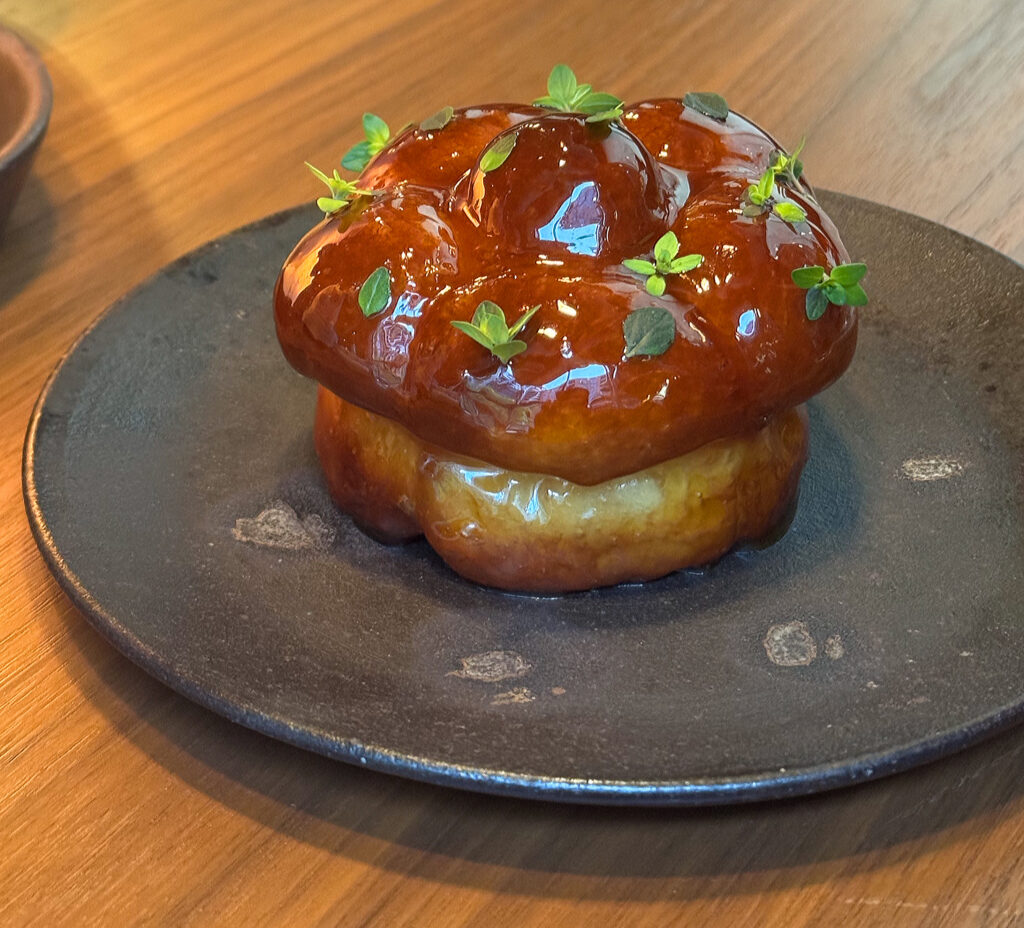
The “Malted Milk Bread” that arrives on the side takes its usual, sticky form. Nonetheless, as much as I enjoyed trying an unadorned version last time, I think the pecan-toffee coating is elegantly rendered with this example. It actually feels particularly thick, yet the sweetness remains moderate. Thus, the fluffy crumb feels more like a pleasing glazed donut than the sickly, saturated bun whose excess sometimes overwhelms me.
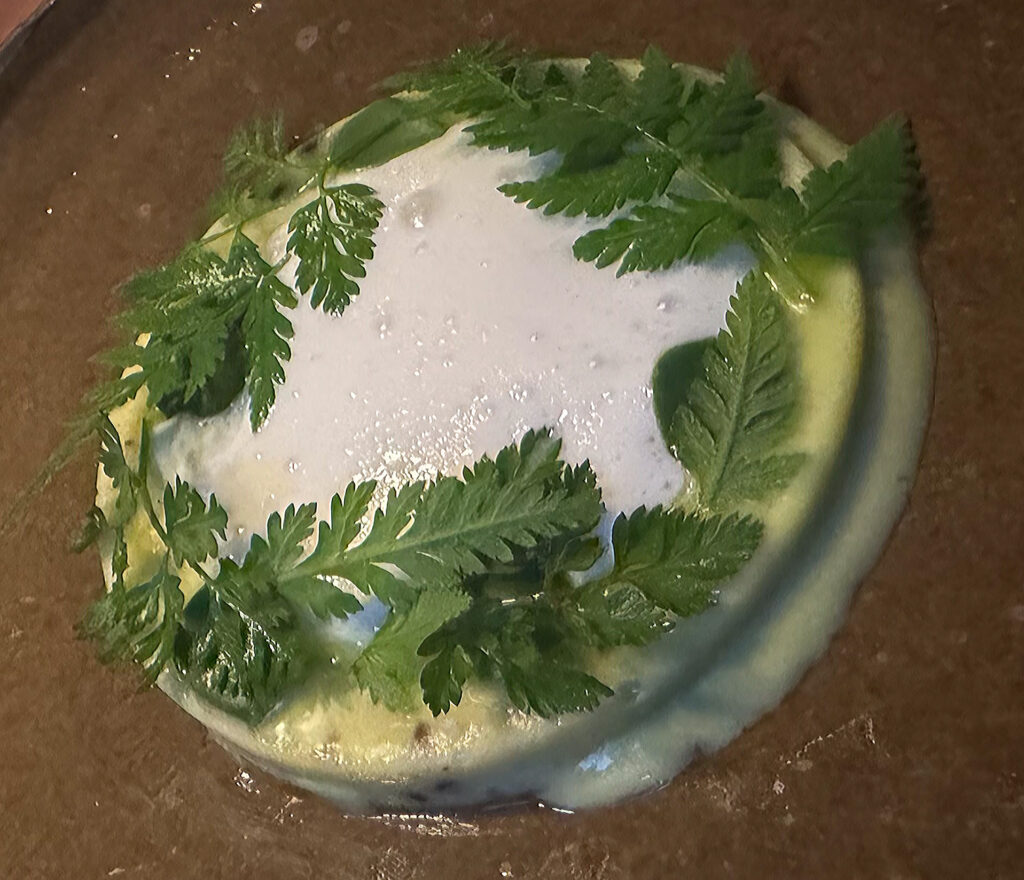
Turning toward dessert and the work of pastry chef Jenna Pegg, I am met by a preparation of “Green Almond & Kiwi.” The recipe centers on a plum blossom meringue that acts as a cushion for the nuts (which are candied and wrapped in the skin of the titular fruit) and an assortment of garden herbs. Texturally, the interplay of the subtly crisp almonds and surrounding foliage with the denser, creamier base is sound.
However, it’s the resulting flavor—powerfully green and grassy, a touch bitter, but boasting plenty of sweet, nutty backing—that really impresses. Yes, despite embracing such a strong, cleansing herbaceousness, the dish offers a notable degree of pleasure too. It forms a skillful segue away from the relative intensity of the squab and milk bread.
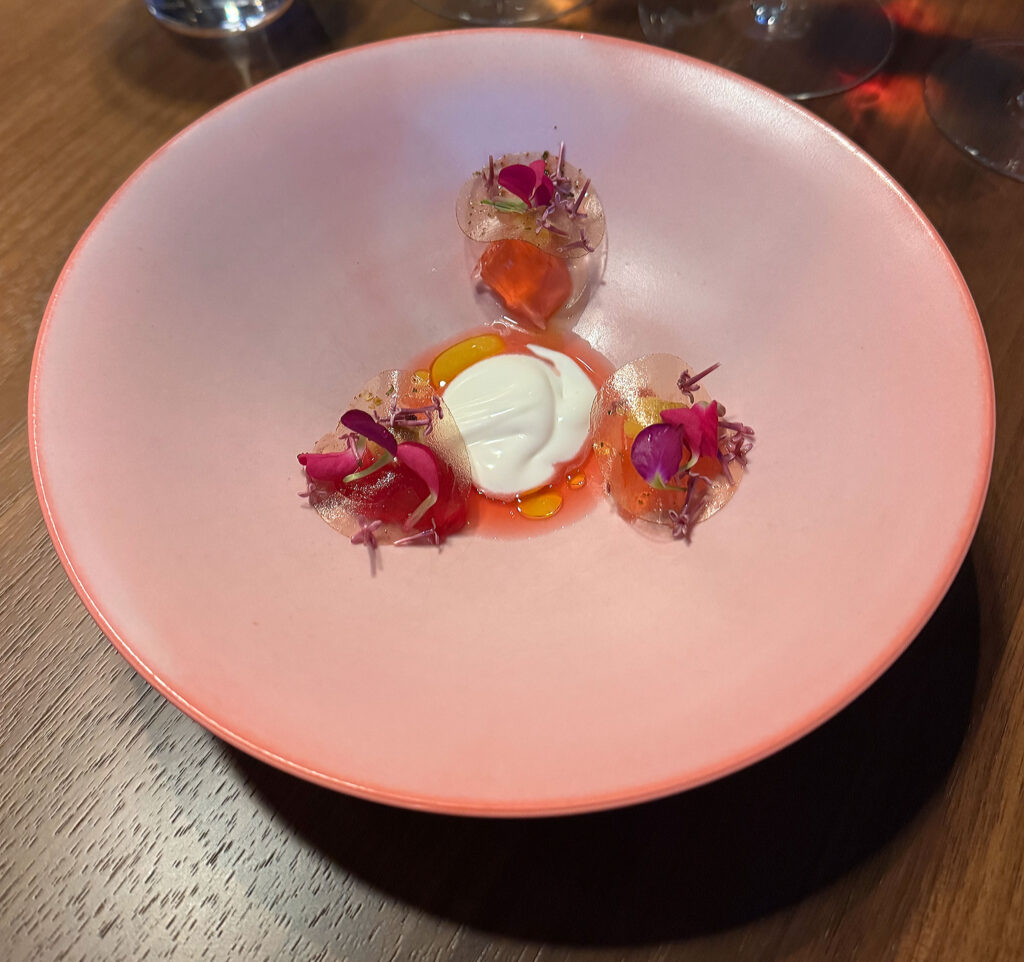
Calling back to the fresh, sour flavor of the amazake, the evening’s principal desserts both celebrate rhubarb. The first, titled “Rhubarb & Clotted Cream,” reminds me a bit of the restaurant’s old caviar presentations (where ingredients descended down the side of the bowl toward a luscious center). Here, bits of the stalk are cured in honey before being tucked beneath veils of gooseberry fruit leather. The rhubarb is then paired with a Swiss chard gelée and sauces made from trio of berries (pine, goose, and straw).
On the palate, the chewy and juicy textures yield an expectedly sour, bitter flavor with some fruity (though still rather tangy) undertones. The clotted cream, both in its comforting consistency and overall richness, helps to soften the blow. Yet I am left feeling that the bitterness is a bit too sharp to really be enjoyable. A slight rebalancing might be in order.
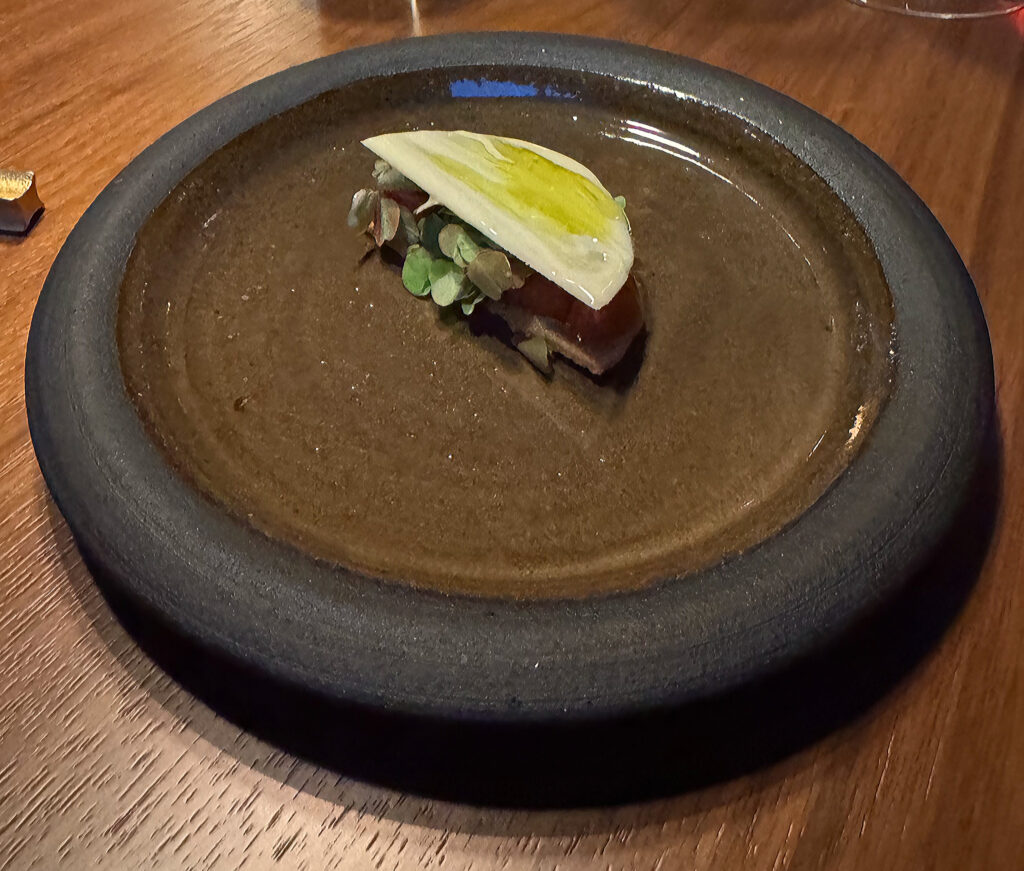
The second expression, titled “Rhubarb & Chamomile,” proves more successful: comprising a tableside presentation of sugar-roasted stalks on buckwheat pâte sucrée with a sprouted grain praline topper, some Szechuan oil, and a finishing drizzle of rhubarb root oil. Arcane as some of these ingredients sound, the resulting dish eats rather simply.
The crumbly crust frames the heartier crunch of the rhubarb, whose sugary coating sticks to one’s lips and moderates the supporting notes of spice, earthy, and—again—tang. I also perceive a persistent greenness. However, rather than sapping my pleasure, it is cut by more than enough sweetness to ensure this recipe, unlike its precursor, delivers the kind of decadence I am after.
Reaching the end of the menu, I find a familiar trio of final bites:
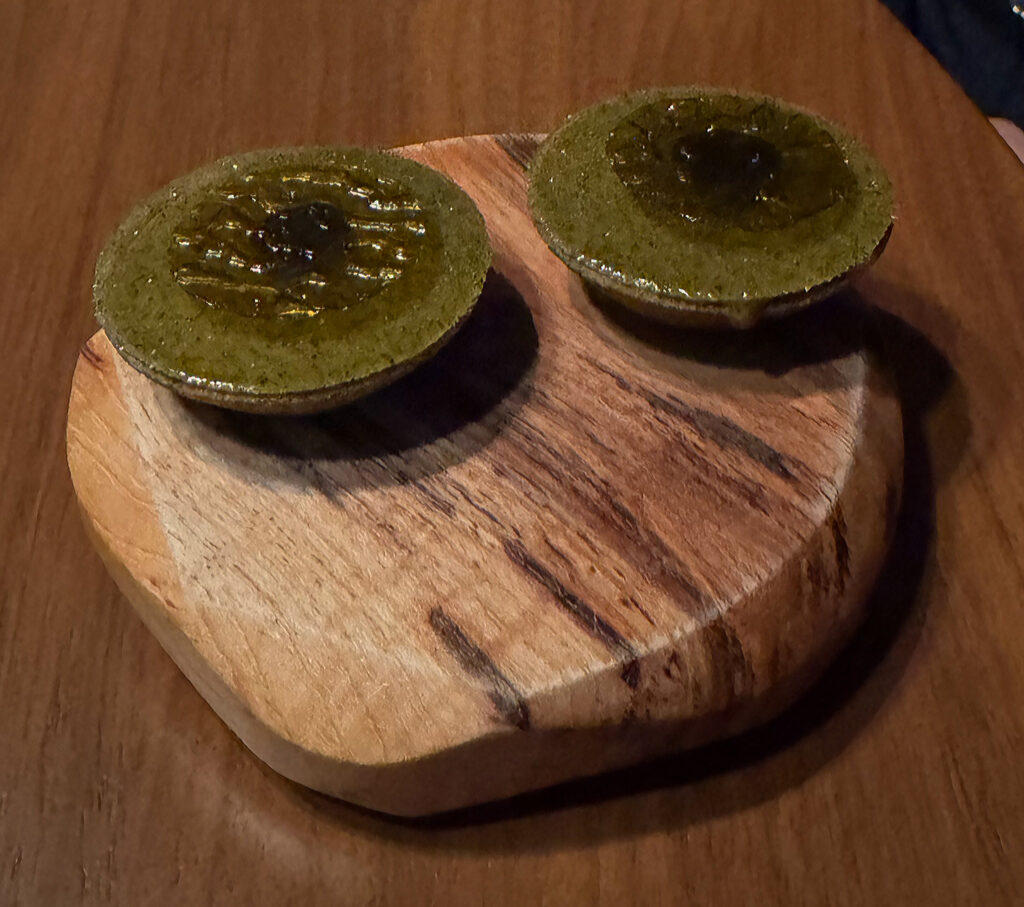
There’s the “Preserved Kombu Tart,” packed with notes of pistachio and caviar, that pushes nutty pleasure to an absolute peak. This time around, I sense a little more tang than usual—which, while it cuts some of the naked pleasure, also lends the flavor more length and definition.
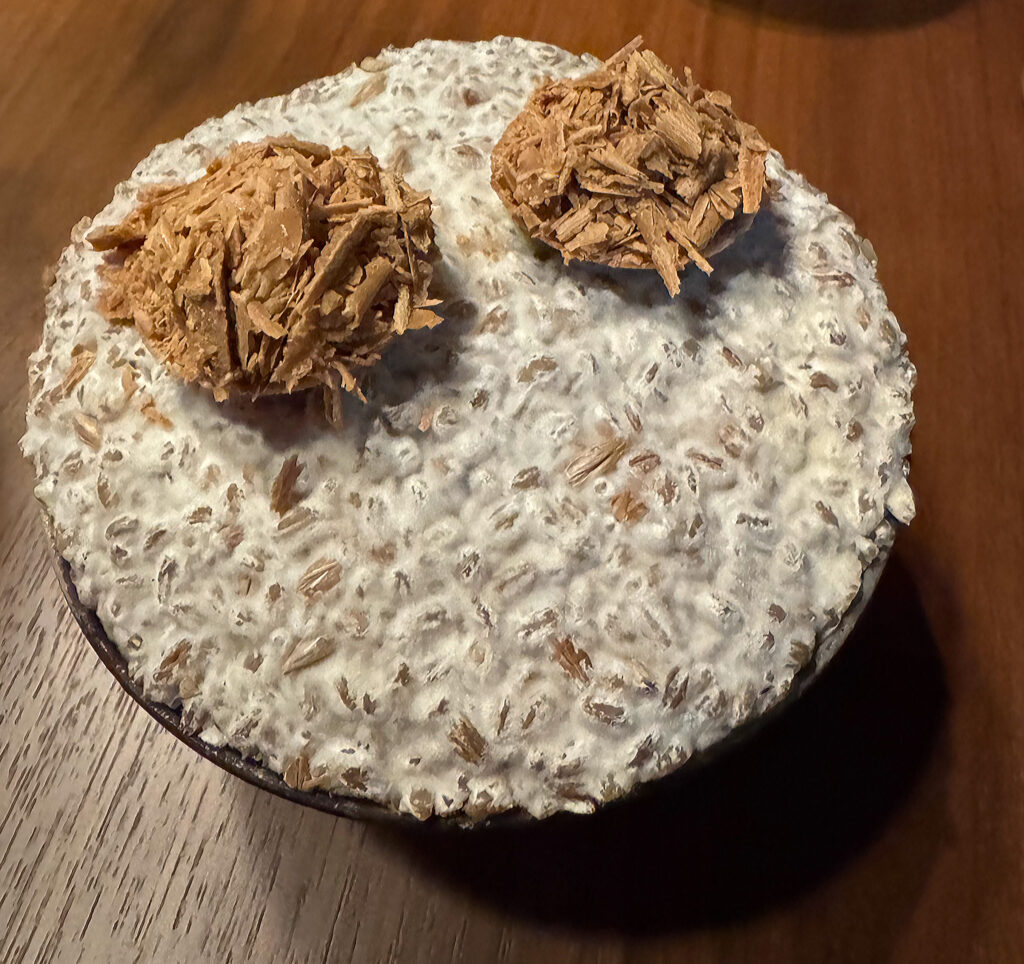
The “Sprouted Grains & Koji Chocolate” was actually served alongside the venison entrée in March. Transported to this late stage of the meal, the tart displays notes of barley and green tea that do well to accent the cocoa. It’s rather salty—perhaps a touch too salty—as well.
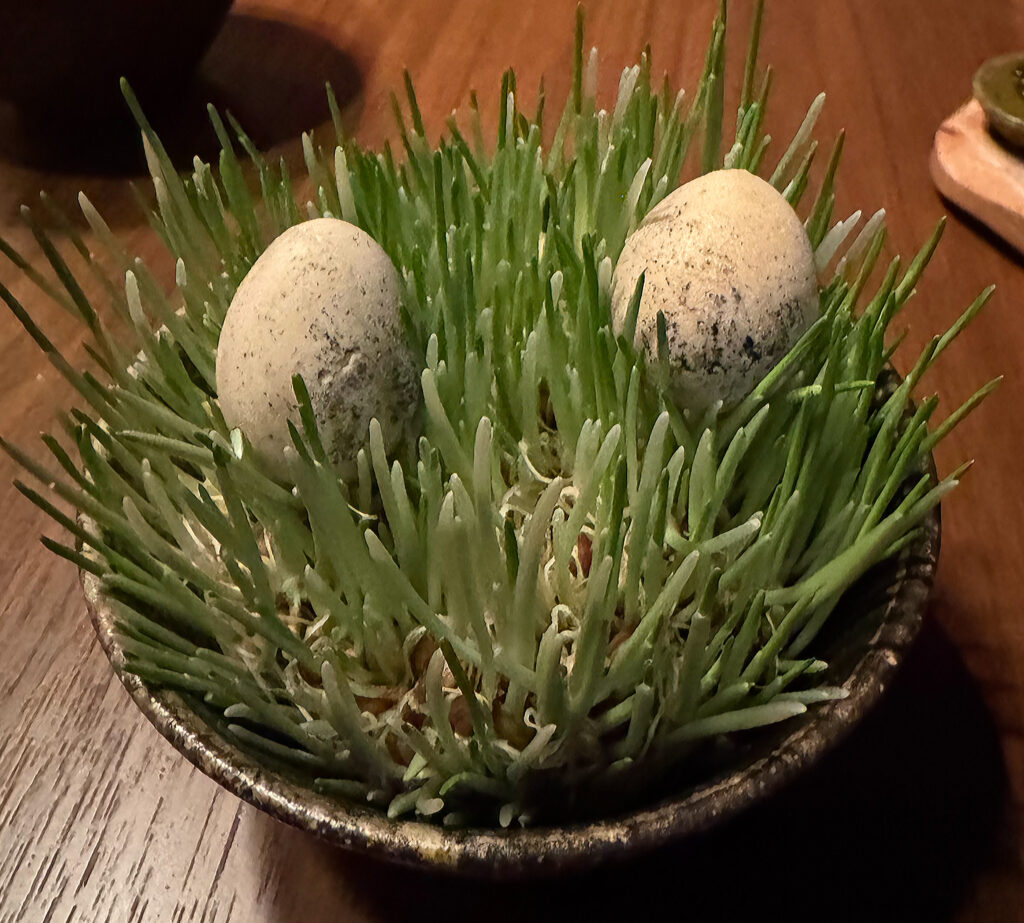
Lastly, we have the “Cadbury™ Quail Egg”—a visual and textural (being almost eerily brittle) thrill whose combination of white chocolate and tangy curd remains abrasive for my taste. Certainly, it’s cleansing in a way; however, after all that rhubarb, I would rather stay in the realm of chocolate, nuts, and caramel.
Three hours later, the meal has reached its conclusion: a slightly longer timetable (by about 30 minutes) than I have encountered here as of late, but one, in turn, that yielded more than a few superlative new dishes.
If the new system of seating guests (in accordance with fewer tables and two clear turns) is to blame for the minor delay, I cannot complain. Some 17 courses (comprising 22 individual items) were served at an average pace of 11 minutes each.
What are a few extra minutes when the wine is so good and the company so convivial?
In ranking the evening’s dishes:
I would place the “Maine Uni Parfait,” “Crab Tamago,” “Smoked Trout Donut,” and “Monterey Bay Abalone” in the highest category: superlative recipes that stand among the best things I will be served in any restaurant this year.
The ”Uni & Tomato Tart,” “Enoki Cannoli,” “Lobster Claw,” “Trout & Green Guava,” “Lamb Sweetbreads & Cloud Mushroom,” “Devil’s Gulch Ranch Squab,” “Green Almond & Kiwi,” and “Preserved Kombu Tart” all land in the next stratum: great items that achieved a truly memorable degree of pleasure. I would love to encounter any of these again.
Next come the “Amazake,” “Willapa Bay Behemoth Oyster,” “Grilled Peas & Roe,” “Caviar & Green Walnut,” “Miso Cured Trout Belly,” “Malted Milk Bread,” “Rhubarb & Chamomile,” and “Sprouted Grains & Koji Chocolate”— good—even very good—preparations I would always be happy to sample again (but that just failed to elicit an extra degree of emotion).
Finally, there’s the “Rhubarb & Clotted Cream” and “Cadbury™ Quail Egg”—merely good (maybe just average) items that fell a bit short when it came to texture and/or flavor.
Overall, this makes for a hit-rate of 91% (or 95% if one considers how minor the “Cadbury™ Quail Egg” is), with some 55% of dishes meeting the “would love to have again” standard and 18% reaching that “best of the year” level of quality.
These numbers represent a slight decrease from the ones I reported in March (i.e., 95%-100%, 70%, and 20% respectively). Nonetheless, given how substantially the menu has changed—with old recipes being meaningfully altered and new recipes skyrocketing to the very top of the heap—I can only label this visit to Smyth a rousing success.
Indeed, I would usually expect the desserts here to rank quite a bit better—driving these percentages higher. On this occasion, the double dose of rhubarb (which certainly speaks to seasonality) might have put me off. However, Pegg’s work has carried plenty of menus in the past, and the pastry chef has earned the right to pursue a degree of experimentation that might not always deliver conventional pleasure.
Otherwise, I have to applaud the way in which the evening’s brighter recipes (e.g., the “Grilled Peas & Roe,” “Caviar & Green Walnut,” and “Trout & Green Guava”) were so effectively balanced by preparations that were brimming with umami: like the “Maine Uni Parfait,” “Lobster Claw,” “Crab Tamago,” “Monterey Bay Abalone,” “Lamb Sweetbreads,” and “Squab” (just to name the most notable examples).
Far from being simplistic or straightforward, these items embraced all of the kitchen’s usual creativity—a frozen “cloud,” an omelet “skin,” tulip petals, velvet horn, strange mushrooms, sprouted grain porridge—and, bolstered by impeccable textures, achieved the kind of deep satisfaction one craves from headlining meats and seafood. While the supporting notes spoke to the Smyth of today (i.e., always pushing boundaries) the tiny bit of restraint (allowing savory concentration to sing without too much sweet or tangy or herbaceous contrast) reflected the deeply pleasure of pre-pandemic Smyth that I know many diners pine for.
Structurally, the removal of a few tables and the refurbishment of their armchairs might not do enough to soothe guests who crave an experience that goes beyond the team’s easy charm, eye-popping pairings, and incomparable plates. But these subtle changes testify to the fact that Smyth—no matter how firm its identity has seemed in the years following that third star—remains capable of interrogating the way it operates.
In the same manner, the best dishes tonight seemed to subvert what I have come to expect from the kitchen stylistically. Add in wines that legitimately approach once-in-a-lifetime status, and I have not—for a long while—felt more excited by what I might discover when dining here.