

It’s been more than a year since I’ve taken a look at Kumiko’s premium offering: a $185 tasting menu ($222 after included 20% service charge) that elevates the “dining” side of this Japanese dining bar—the most celebrated place to drink in Chicago—to its gastronomic peak.
The tasting menu has also enabled Julia Momosé, creative director of the concept and maven of all the cocktails, sakes, and spirit-free selections that have done so much to define it, to now step into the role of chef. Doing so has allowed her to explore and express her personality—the subtle aesthetic preferences that imbue Kumiko with its indelible sense of spirit—in a new medium. Perhaps it offers a pathway toward pursuing one of the few honors she cannot presently tout: the Michelin star that Kikkō (the bar’s subterranean omakase) held before the pandemic.
Food has long formed a core part of the experience here—maybe even to the point (with the needed for reservations and relative refinement of some offerings) of subverting expectations. This is a place to sip, bite, and ponder rather than raucously indulge. To be clear, the mood, shaped by the intimacy of the space and its pinpoint curation, is anything but hushed. The energy, given how special it feels to make it past the lobby, is actually vibrant (if considerate).
Yet a certain sense of formality distinguishes Kumiko from the city’s and the country’s other top bars, and it follows that Momosé would direct increasing attention toward shaping the menu. It’s not merely a collection of drinking snacks meant to accessorize the headlining cocktails. Rather, the fare (and the tasting more particularly) looks to translate Japanese cuisine through the creative director’s “mixed-heritage” lens. It looks to form a full partner in each guest’s evening: offering all the same intricacy and depth of meaning along with some of the unique opportunities that cooking with seasonal ingredients enables.
Of course, there’s a tradeoff (and a big one at that). If Momosé’s in the kitchen, she’s inevitably spending less time on the floor as the living, breathing exemplar of omotenashi (the “selfless, intentional act of care for others) that lies at the heart of the concept’s approach to service. Kumiko earned the Michter’s Art of Hospitality Award (as part of the 2026 North America’s 50 Best Bars ranking) in recognition of its excellence in this domain. And, while there is no question that the honor recognizes a team effort, what customer wouldn’t want even a passing interaction with the woman whose singular practice of craft lies at the very heart of the bar’s identity?
Momosé forms Kumiko’s most effective weapon in ensuring that every guest—whether (in accordance with personal taste or diverging expectations) they gravitate toward the actual offerings—leaves happy. So, I actually find it incredibly brave that, more than a year later, she remains in a comparably faceless position, subject to increased scrutiny, and demanding both strong leadership and ironclad faith in those trusted to execute her vision.
With the support of chef de cuisine Andrew Mainor (new to the role in the time since my last visit), the creative director seems confident in the kitchen’s performance. Indeed, I recall one evening a few weeks ago that Momosé, due to a staff shortage, found herself back behind the bar alongside Sammy Faze. Finding myself there—serendipitously—on that night resulted in one of the peak experiences I can ever remember having at Kumiko.
Nonetheless, it is the tasting menu that offers the newest, fullest representation of what this team is capable of. I am eager to see how their work stacks up against the other, superlative restaurants that have formed my obsession this year.
Let us begin.

As the corner of Lake and Desplaines slowly transforms (I speak of the eight-story apartment building serving to replace the old Fast Track hot dog stand), Kumiko continues to thrive.
The bar is not alone on this block: Oriole, down the alley, attracts special occasion diners searching for Chicago’s greatest tasting menu while MONEYGUN and SUNNYGUN, down the street, draws lines of revelers looking for a more conventional, cocktail-soaked night out. But Momosé and her team seem to occupy a sweet spot within an increasingly residential neighborhood with an appetite for luxury (if not always the wherewithal to reserve a seat). The concept, when it opened nearly eight years ago, effectively anticipated what the West Loop’s young urban professionals would crave.
It’s almost uncanny how any fashionable group I spy on the surrounding pavement—be they coming from north, south, east, or west—seems to converge on Kumiko’s stoop. Indeed, as important as reservations are here, there’s always a chance of snagging something last-minute or otherwise walking in. There’s always the promise (and I think this gets at the heart of the bar’s enduring appeal) of hoping and waiting and elevating your night out with an experience whose exclusivity and prestige (not to mention price) rival the city’s heavy hitters.
Drinks and bites and a thoroughly personal vision of craft—recognized as “the best” within its own genre—can be enjoyed with the unique flexibility that a dining bar (not just a bar, not demanding the full commitment of a restaurant) offers. So, even as Kumiko contends with the decreased discoverability that the move from OpenTable to SevenRooms entails, the concept’s overall value proposition and popularity remain strong. Assuming you get to interact with Momosé in some capacity, one does not really find the same degree of intimacy or refinement elsewhere in town outside of a few reservation-only chef’s counters.
With this in mind, I think it’s appropriate for the team to stage their tasting menu in a way that is not unlike the usual à la carte booking: at one of only a handful of tables in a moody dining room, surrounded by a fleet of suited servers, set to a soundtrack of expert shaking and stirring and the low murmur of shared meditation.
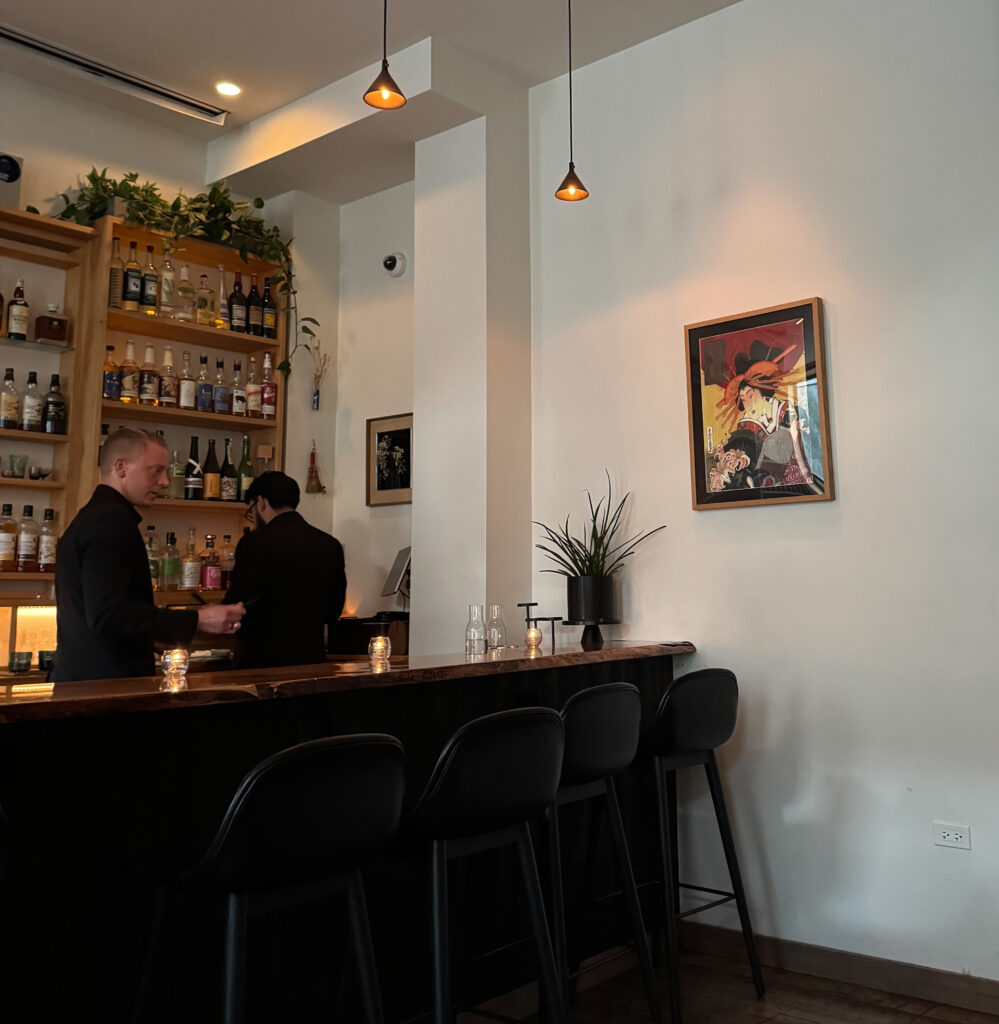
Certainly, it’s always thrill to walk into the bar’s lobby (stuffed with the usual flow of comings and goings) and be immediately escorted—behind the wooden partition and away from the crowd—to a set of those coveted seats.
Priced at $185 (exclusive of 20% service charge), Kumiko’s tasting menu is positioned just above omakases like SHŌ ($165) and Kyōten Next Door ($169-$179) and just below places like Valhalla ($198), Cariño ($200-$220), Feld ($225) that stand among the strongest Michelin-starred (or Michelin-aspirant) concepts in Chicago. In other words, this is rarefied air—made rarer by the fact that the team here is unable to omit raw seafood from their work.
All of the reference points above are also just as—if not moreso—chef-driven: barring occasional absences (which, admittedly, did detract from my last visit to Valhalla) the guest experience is going to be directly shaped by figures like Mari Katsumura, Stephen Gillanders, Norman Fenton, and Jake Potashnick. Structurally, these restaurants further benefit from the fact that diners are given direct access to the headlining talent via a counter (or, in Feld’s case, counter-like) format.
At Kumiko, the kitchen is not isolated to the same degree one finds at the majority of Chicago’s fine dining spots. The dining room is small, and it’s possible (even from one of the tables) to spot Momosé on the other side of the bar’s central, titular woodwork. Thus, one still gets the sense of being hosted individually and holistically despite a degree of spatial separation. (I recall a period when the bartop was utilized for the tasting menu, but I think this practice ceased in order to allow for more elaborate, choreographed service at the two-tops and four-tops.)
That said, Kumiko clearly needs some kind of edge to compete at this level, and it takes an obvious form: pairings like the “Spiritfree” ($90), “Nihonshu” ($135), “Shaken” ($135), and “Stirred” ($135) that reflect the bar’s principal craft and largely transcend what anybody else can offer.
Indeed, while I think the city’s omakases may be able to compete when it comes to sake selection (though, to be fair, I haven’t seen these particular bottles poured anywhere else), the non-alcoholic and cocktail flights are singular—all the more now that Momosé is uninvolved in Oriole’s own program and that Faze has rejoined Kumiko from Valhalla.
The prospect of enjoying eight distinct beverages across nine different courses carries significant appeal for anyone who can’t or would prefer not to indulge in a pairing centered on wine. Even for an oenophile like me, the prospect of complementing food with an entirely different palette of textures and flavors than grapes can offer is exciting. Plus, with each drink mixed to order (and some recipes being only offered as part of this experience), one really gets the feeling that they’re getting double the amount of care, attention, and creative output for their money throughout the evening.
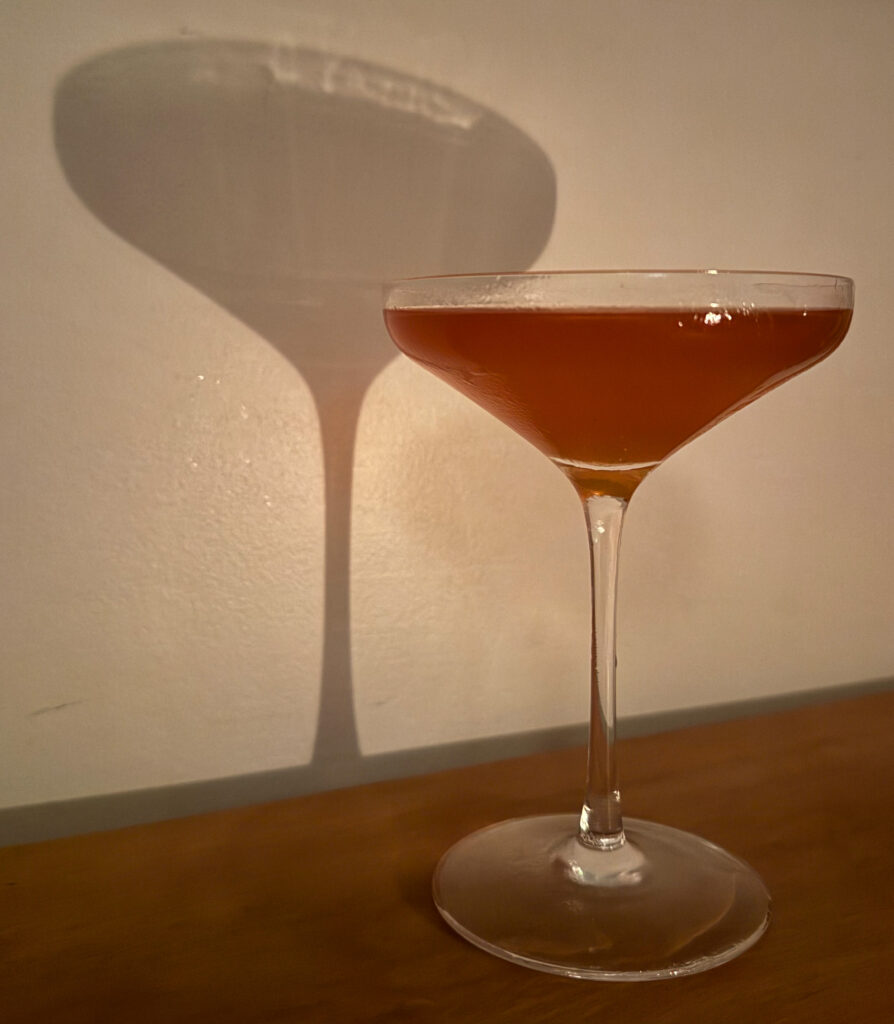
I’ll save the exact constituents of the “Shaken” and “Stirred” pairings for my discussion of the food. However, it’s worth mentioning that all four of the flights are joined by the overarching sense of elegance, purity, and surprising depth that has characterized Momosé’s work in the beverage realm. It is for this reason that guests can enjoy so many different pours (which are by no means stingy) without dulling their palate due to the potency of the alcohol or sugary excess that many spiritfree creations can tend toward. It also goes without saying that the recipes, importantly, avoid retreading the same ground
With Momosé generally off the floor, I must also praise her work as an educator and, by extension, cultural ambassador. On this occasion, the knowledge and fluency displayed by my server—starting with the most elemental ingredients, branching off into production techniques, describing the intended balance of flavor, then broaching how food and drink are meant to harmonize—is masterful.
Given that I also sample some of the spiritfree and sake selections tonight, there are occasions when she encyclopedically (though in no way robotically) recites the constituents of four different drinks alongside a course made up of two distinct dishes all in one breath.
Ultimately, this is a seemingly boundless amount of information to not only retain but actually convey with a sense of warmth and true understanding. Maybe some of it goes above customers’ heads (and isn’t that always the case in fine dining?). Yet, when combined with the mechanical finesse and overarching sense of care the team display here, this capacity to guide patrons through the intricacies of Japanese craft forms a real distinguishing factor.
For, at the end of the day, this is not a tasting menu/pairing experience that relies at all on flash. Instead, with quiet confidence, it only wishes to translate Momosé’s own place and particular thought process (i.e., the aforementioned “lens of mixed-heritage”) within Japan’s wider culture. This makes for quite a subtle aesthetic expression to untangle; however, the team knows how to lay the kind of groundwork that allows all the creative director’s chosen details and digressions to really shine.
Before the food starts flowing, two key moments shape the meal to come.
First, the server asks each guest if they’d prefer the recipes to be prepared in accordance with either “Japanese” or “Western” seasoning styles: a conceit that makes the former culture’s preference for delicacy (and the latter’s for power) more explicit.
I discussed this gesture at length last time (so I will try to keep my comments brief), but I think this remains a genius touch. Momosé could easily force diners to subscribe to her own particular vision for how each dish taste. Yet, by asking the question, she as a chef actually bridges a noteworthy divide and privileges individual enjoyment over any prescriptive (or otherwise myopic) inclination.
Tonight, I opt for the “Japanese” style out of sheer curiosity. Given my love of salt and umami, it feels like a risky choice. However, in practice, I find the fare to be flavorful and texturally satisfying while retaining a degree of lightness that is totally agreeable.
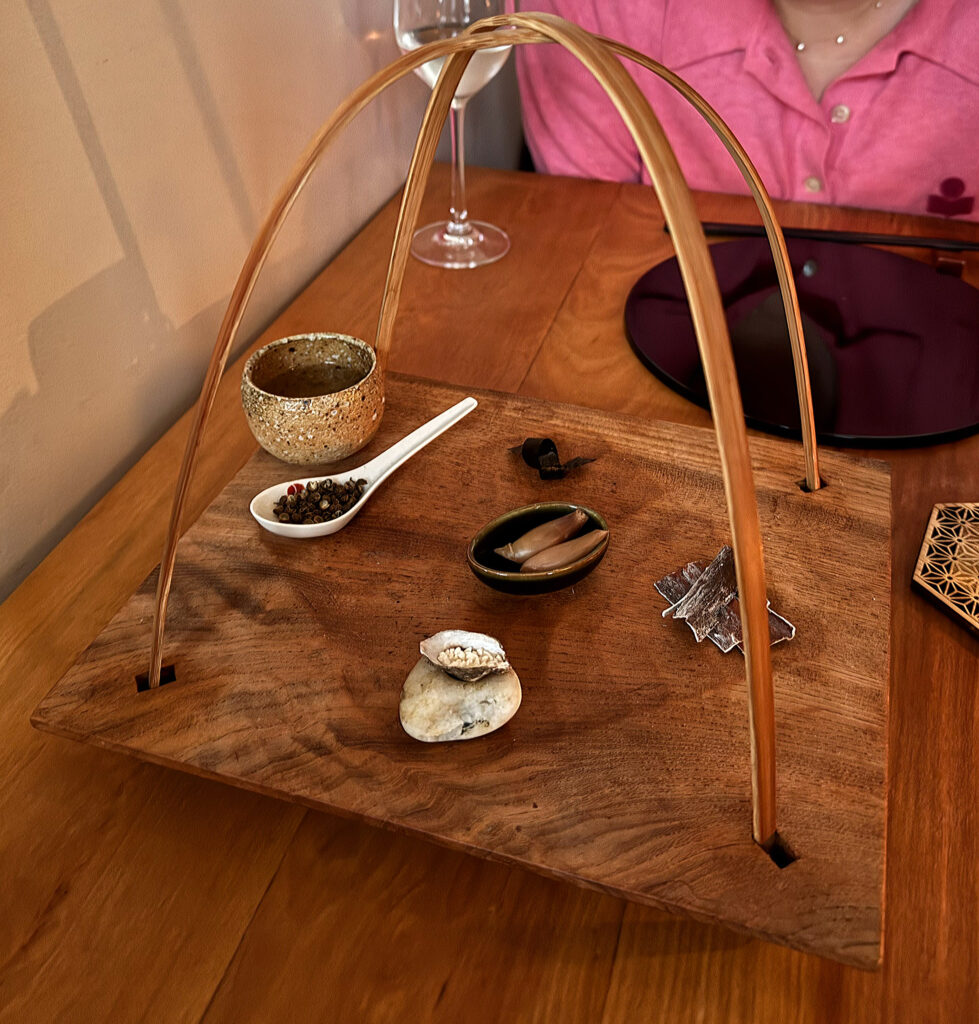
Second (and accompanying the arrival of the inaugural course), the server presents a small tray featuring foundational ingredients like Hokkaido kombu, sansho pepper, nori, myōga (i.e., Japanese ginger), and koji all daintily arranged.
Even as someone who enjoys the fruits of these foodstuffs fairly often, it is gratifying to see them honored in their raw form. Plus, this early opportunity for education and storytelling sets the tone for the rest of the interactions (the same I just praised above) that will enrich one’s enjoyment of the tasting menu.
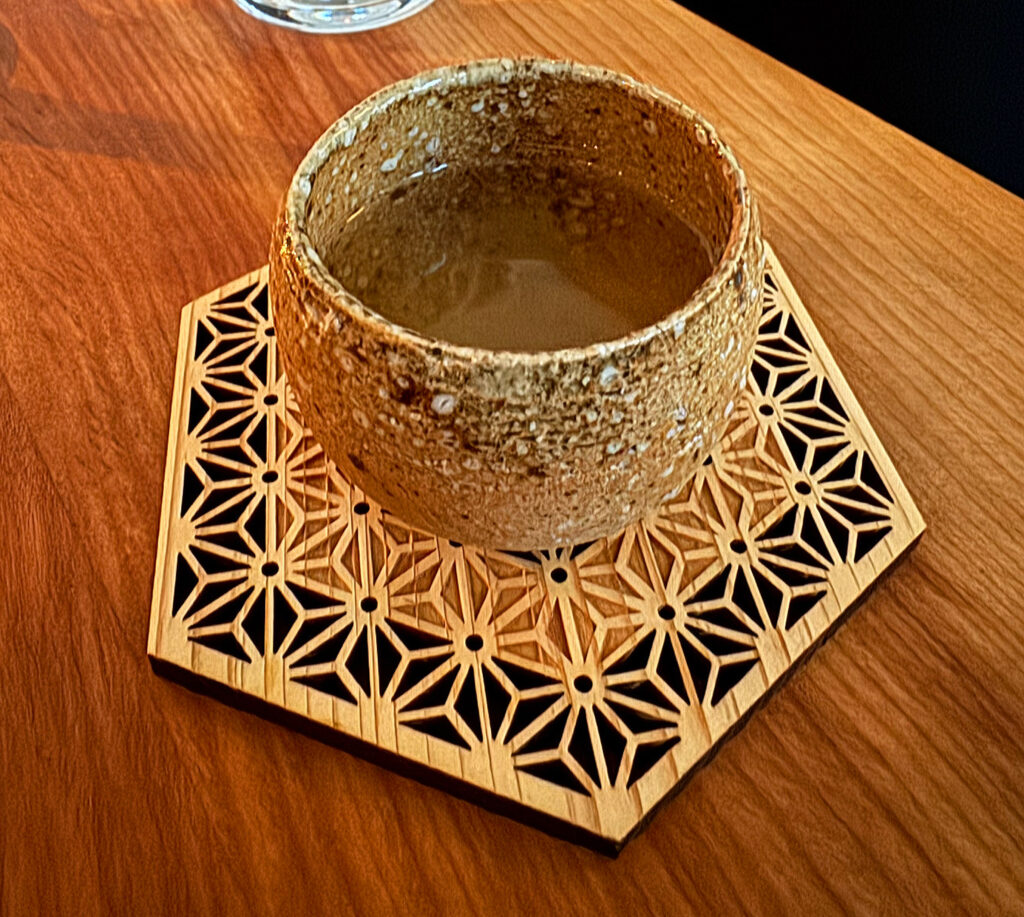
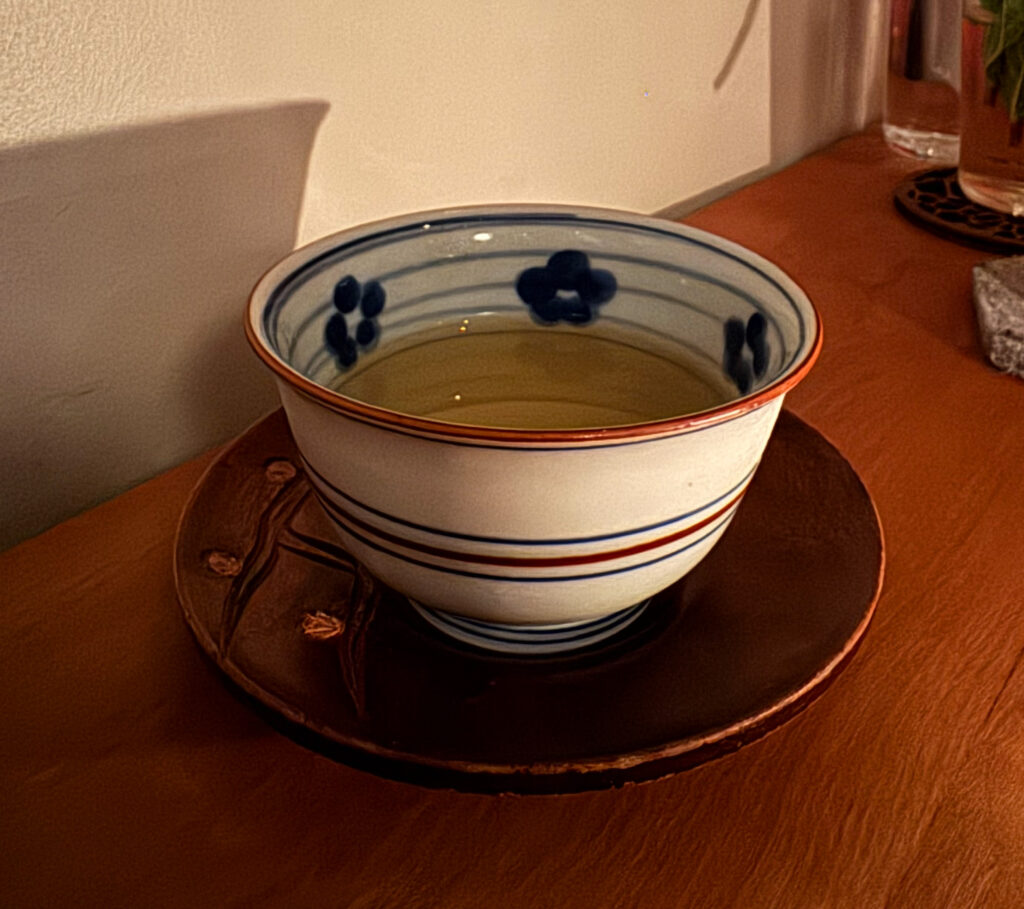
The evening’s opener is a cup of “Dashi” pulled from the very same tray and placed atop a kumiko-patterned coaster. The vessel, being rough and faintly pebbled, immediately calls handcraft to mind. And its contents—a broth made from the kombu, some dried bonito, and the sansho—impart a deep, soothing sensation with hints of citrus and smoke but no perceptible salt. If this recipe reflects the “Japanese” seasoning style, I think I am in good hands.
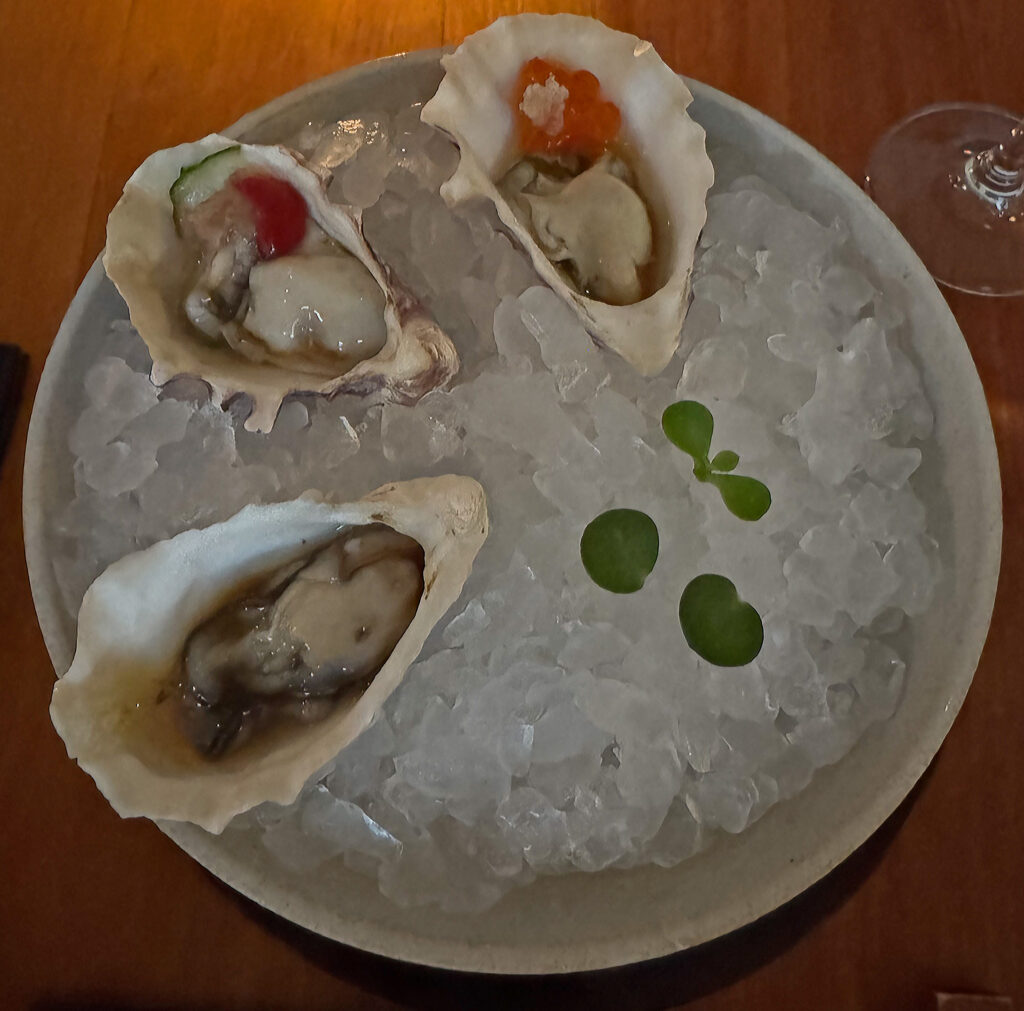
Arriving mere minutes later, the “Oyster” forms the first substantial offering of the night. In fact, the course actually comprises three whole bivalves (of the Coromandel variety), each of which is distinguished by a different dressing. In lieu of lemon, a trio of succulents can also be applied to add a tinge of crunch and citrus to any cup.
On the palate, the shellfish—bite for bite—impresses me with its plump, meaty, and immaculate mouthfeel. Flavor, too, is only subtly briny with a fresh, mild finish. These qualities form a perfect canvas for the various toppings: namely, the fruity-earthy intrigue of a shishito ponzu; the bright, cleansing character of a rhubarb, cucumber, and myoga medley; and the sharp, umami-laden finish provided by a combination of ikura and horseradish. Importantly, none of the oysters veer into the kind of bracing tang, heat, or sweetness you might come to expect from such a presentation. Rather, while intensity does build from bivalve to bivalve, it’s the pure expression (and surprising length) of the Coromandel that forms the common thread.
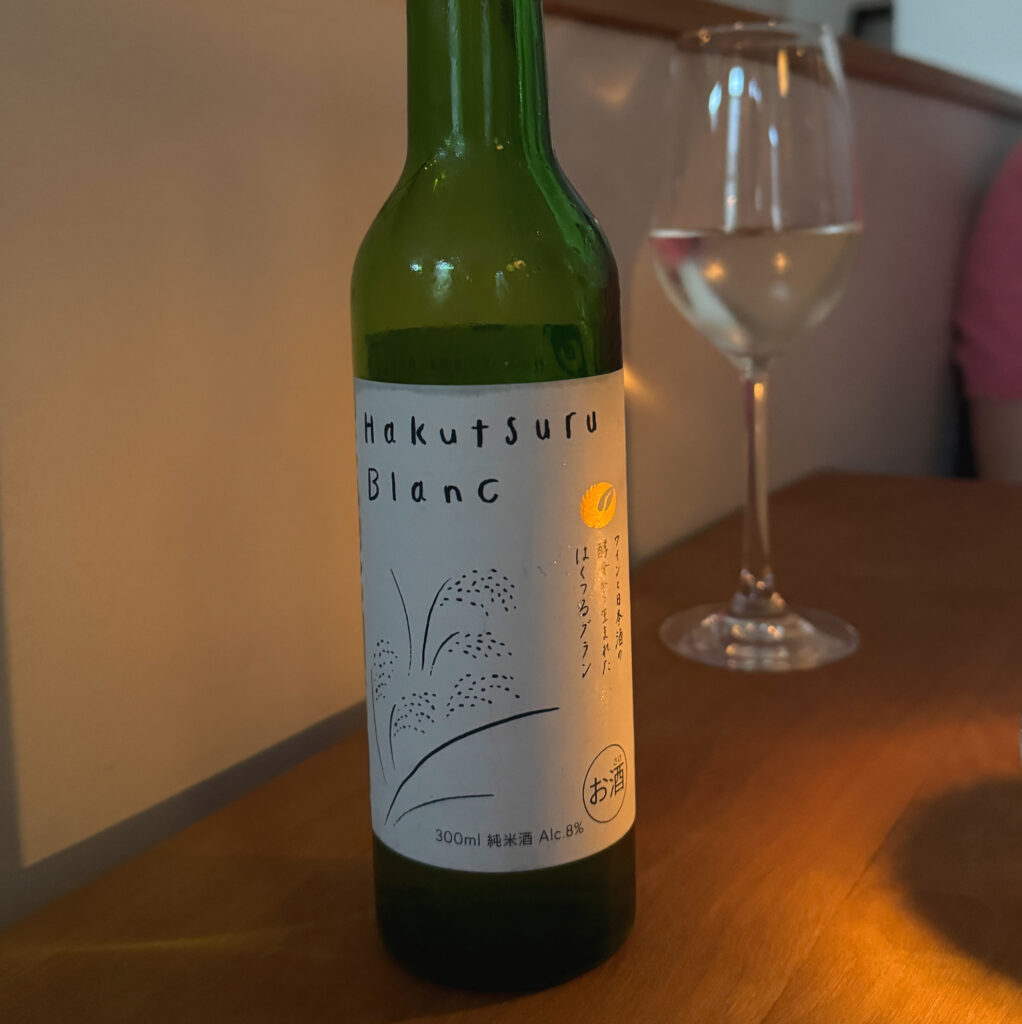
To pair, a pour of Hakutsuru Blanc ensures that even those who opted for one of the cocktail flights are treated to a bit of sake. This particular junmai (made using a proportion of wine yeast) matches the clean notes of the shellfish while offering even more fruitiness, tang, and sweetness than one finds from its accompaniments. Given the low ABV—as well as the wink at a more traditional, “oyster and white wine” pairing—this sake forms a clever and crowd-pleasing first tipple.
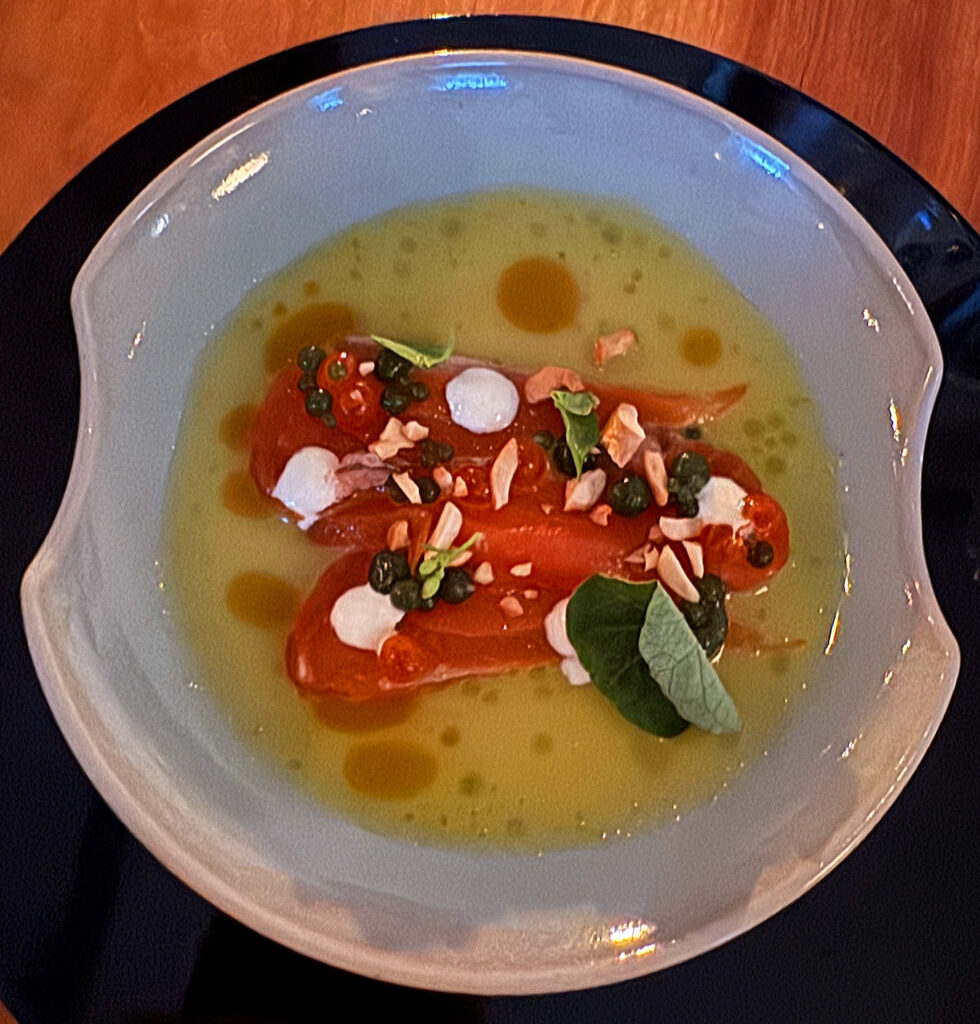
“Masu” (the Japanese word for trout) lies at the heart of the next course, which sees the fish cured in orange and lemon juice before being dressed with coconut milk, caper, cashew, ikura, nasturtium, shiso, and a hint of wasabi. At a glance, this looks and sounds like an imposing assemblage of ingredients—yet it’s one that’s managed with admirable refinement in order to conjure a singular effect.
Texturally, the fjord trout is sliced to a moderate thickness that ensures each piece (both due to the curing and the range of toppings) retains some trace of structure. Still, that firmness yields to a rich, silky sensation once the flesh meets your teeth. The fish’s relative softness is countered by a gradient of creamy, leafy, bursting, crunchy, and finely crisp sensations that feels endlessly engaging. Yet the resulting flavor—nutty and tropical with some fleeting sharpness (but none of the aggressive acidity one might expect from a stereotypical crudo)—proves entirely cohesive. Ultimately, it’s hard to get at the bottom layer of juice with the provided spoon. However, when I knock back the bowl, the rounded fruitiness adds quite a nice finish. Overall, this makes for another surprisingly understated (and still rather complex) expression of seafood whose gentleness is a virtue.
To pair, the shaken “Walk Softly” (made with vodka, yuzu liqueur, dry vermouth, lemon, and Champagne) complements the recipe by amplifying the citric acidity that otherwise stays in the background. The stirred “Fukubukuro” (made with rice shōchū, namazaké, honey, black truffle, and celery bitters), in turn, plays to those darker, nuttier notes while simultaneously providing a pleasing sweetness that works well with the dish’s tropical character. Both cocktails, though pursuing opposite effects, meld beautifully with the trout.
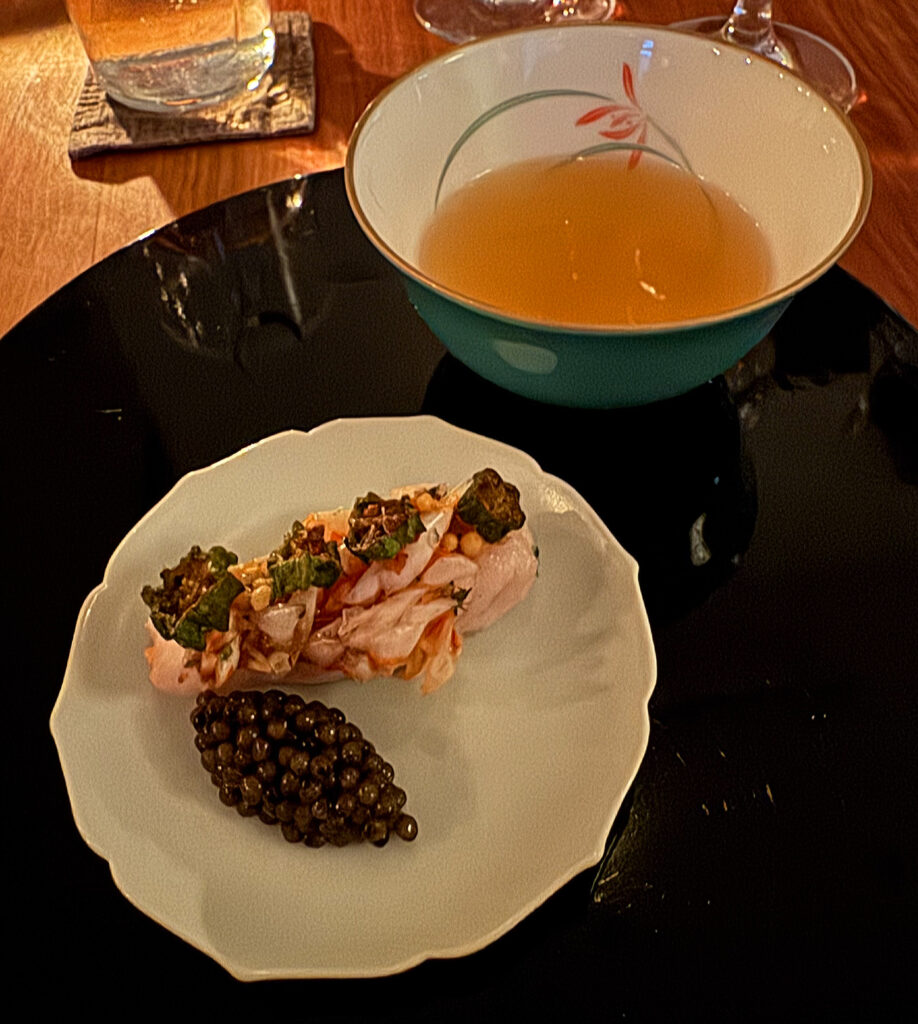
Arriving next, this two-part course—“Madai” and “Ara Jiru”—forms the best point of comparison to what I encountered on the tasting menu in March of 2025. Back then, a piece of red seabream was prepared in the matsukasa-yaki style (in which hot oil is used to crisp the fish’s scales) and served alongside a broth made from the bones. Tonight, those core components remain the same, yet the fruit of Momosé’s collaboration with Mainor is made apparent by the starring bite’s increasing refinement.
Rather than settling for the basic interplay between the madai’s rich, moist interior and fine, brittle topping, the chefs now build a triple-layered crunch using fried okra, chicken skin, and bubu arare (or tiny rice cracker pearls). These added elements do not only drive the seabream’s textural contrast to an even greater extreme. They also imbue the fish with subtle notes of sweetness and umami that make its latent, mild flavor that much more satisfying. Ironically, the madai is now so crisp that it’s impossible to incorporate the caviar supplement ($15) without the roe sliding off the surface. Nonetheless, we call this issue to the server’s attention, and it’s not hard to see how this nutty, briny extra (perhaps when tucked into a spoon) would further complement the dish.
Those who do not opt for the supplement still get to bask in the glory of the ara jiru, whose perfect serving temperature and long, savory character (drawn from kombu, spiked with yuzu) elegantly enhance one’s enjoyment of the main event.
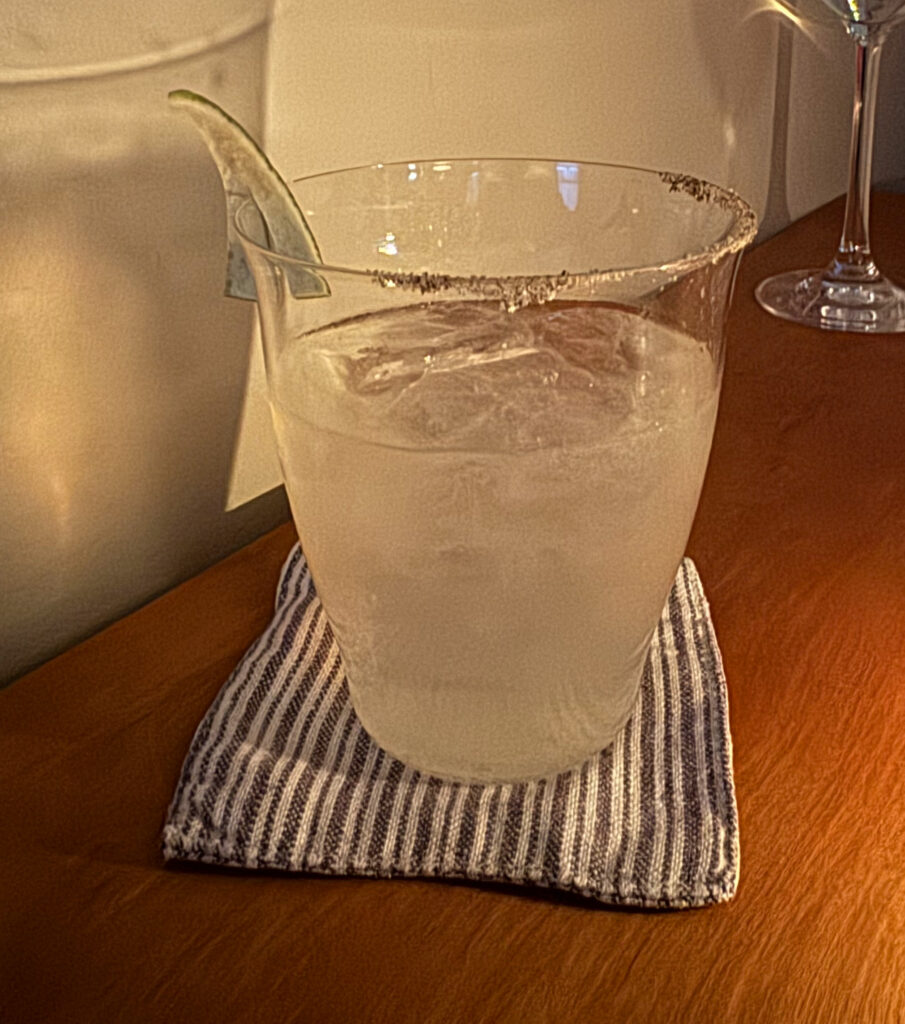
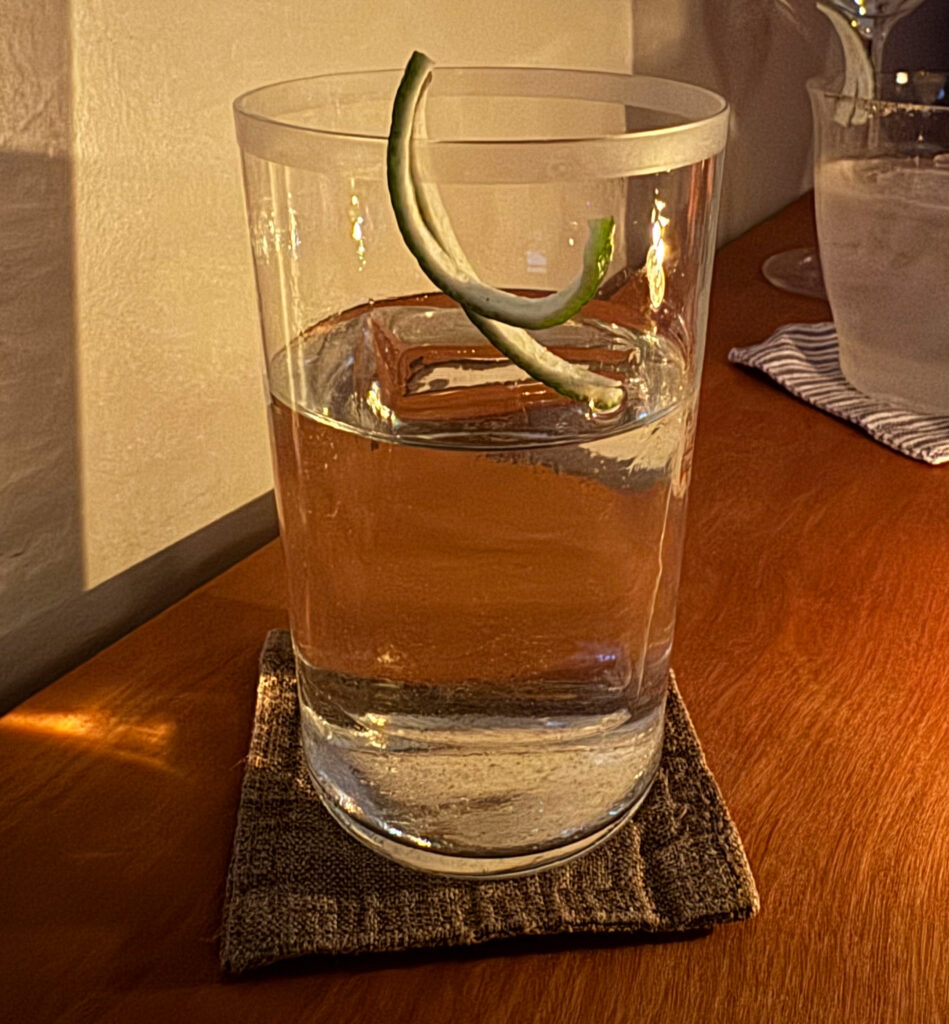
To pair, the shaken “Seaflower & Soda” (made with gin, white vermouth, yuzu koshō, kabosu, lime, club soda, and “ocean dust”) strikes with refined flavors of citrus, sweetness, mild pepperiness, and salt that effortlessly echo the fish (as well as toppings like the okra). The stirred “Sake and Sonic” (made with two kinds of rice shōchū, junmai sake, club soda, and tonic water) delivers more of a buttery, umami-laden character—playing to the seabream’s richness—while remaining bright, sweet, and bitter enough to go down easily. Once more, these cocktails skillfully pursue distinct harmonies with the food, and it’s a treat to sample the two approaches side by side.
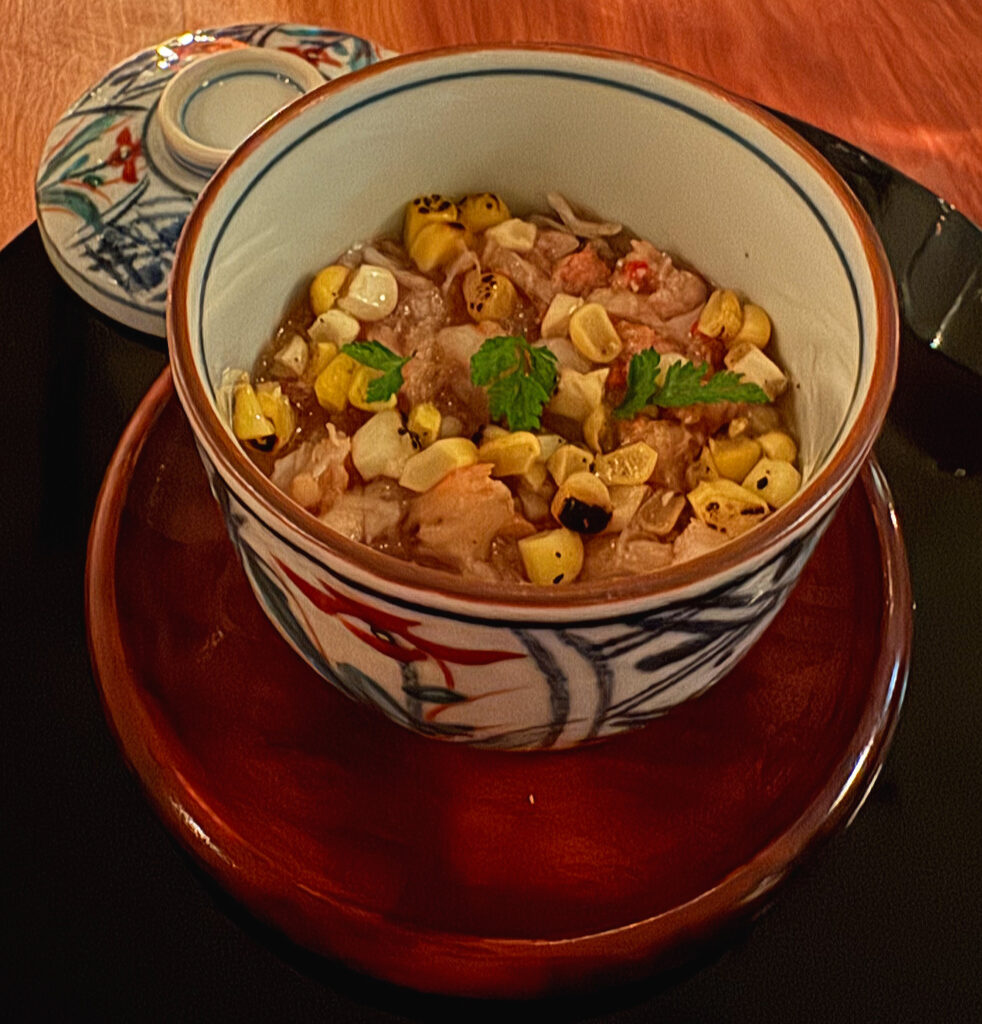
“Chawanmushi,” which arrives next, is the kind of recipe that has been adapted so widely—across so many hybrid and contemporary genres of fine dining—that it almost starts to seem hackneyed. In many cases, these egg custards amount to a chef’s choice of produce or protein served in a warm, rich, yet flavorless goop. Whether Momosé is consciously reacting against these examples or, simply, cooking the dish as she knows it, I do not know. In either case, Kumiko’s version ranks as the best I’ve tasted in Chicago.
Having been steamed in the very cup it is presented in, the chawanmushi is actually served at a cool temperature. This not only fits the present season but actually serves to unlock a deeper range of flavors than would be perceived otherwise. Guests are instructed to take their first spoonful from the top layer, which is blanketed with bits of scarlet deepwater crab (brushed with strawberry), charred corn, and okra all dressed in clarified butter. The resulting sensation—finely crisp, punctuated by moist segments of the meat, with a pleasing baseline of shellfish sweetness—soon meets the second spoonful: incorporating a corn husk gelée and the egg custard itself. These silkier strata provide a rich, soothing textural effect. However, it’s their concentration of honeyed, nutty, and savory tones that makes this course sublime.
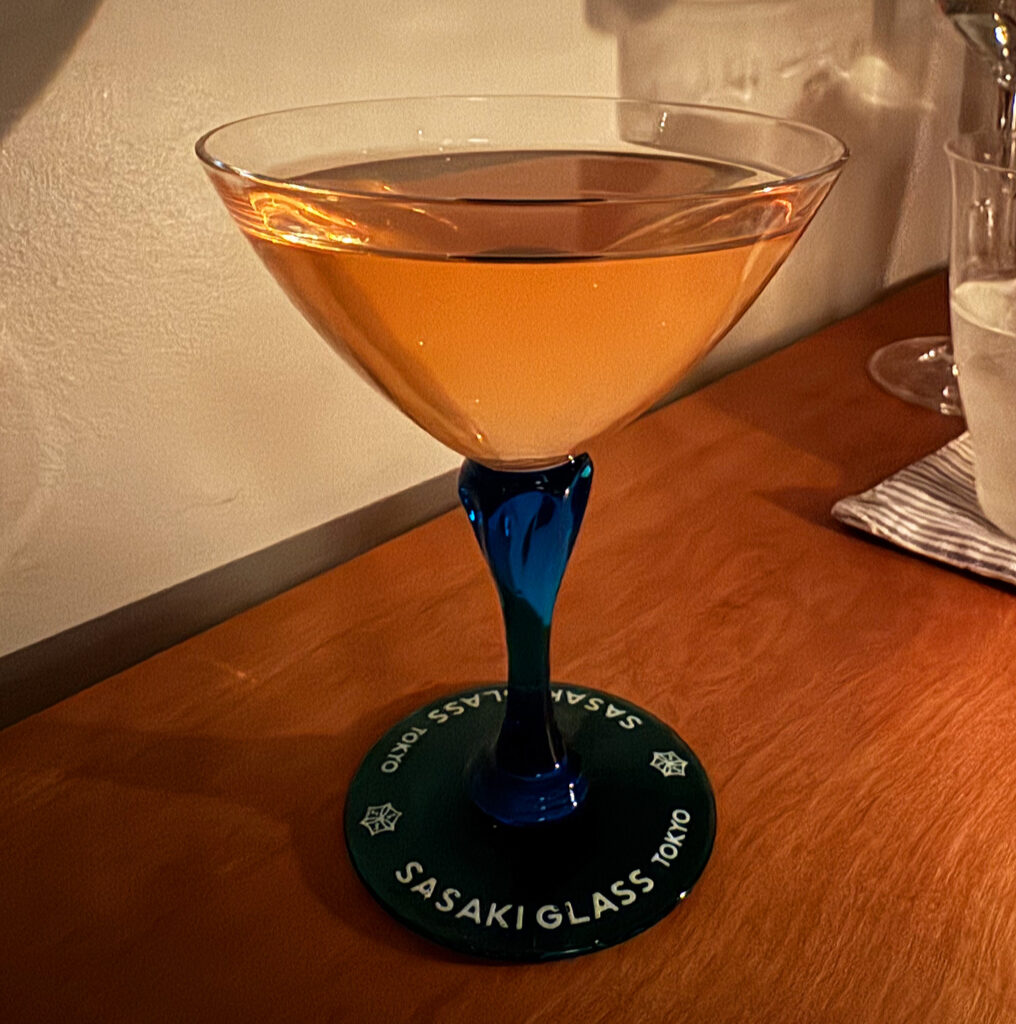
To pair, both the shaken “Nabeshima Chu-Hi” (made with shōchū, daiginjo sake, Armagnac, pickled ginger, and sparkling plum juice) and stirred “A Pretty Color” (made with the same daiginjo sake, a different shōchū, strawberry, Champagne, and green cardamom) do well to match the sweetness of the chawanmushi without feeling overwrought. Quite the opposite: the cocktails provide enough acidity and weight to revitalize one’s palate and allow the combination of crab and corn to strike with renewed force. Given how much I adore the dish, this is a godsend.
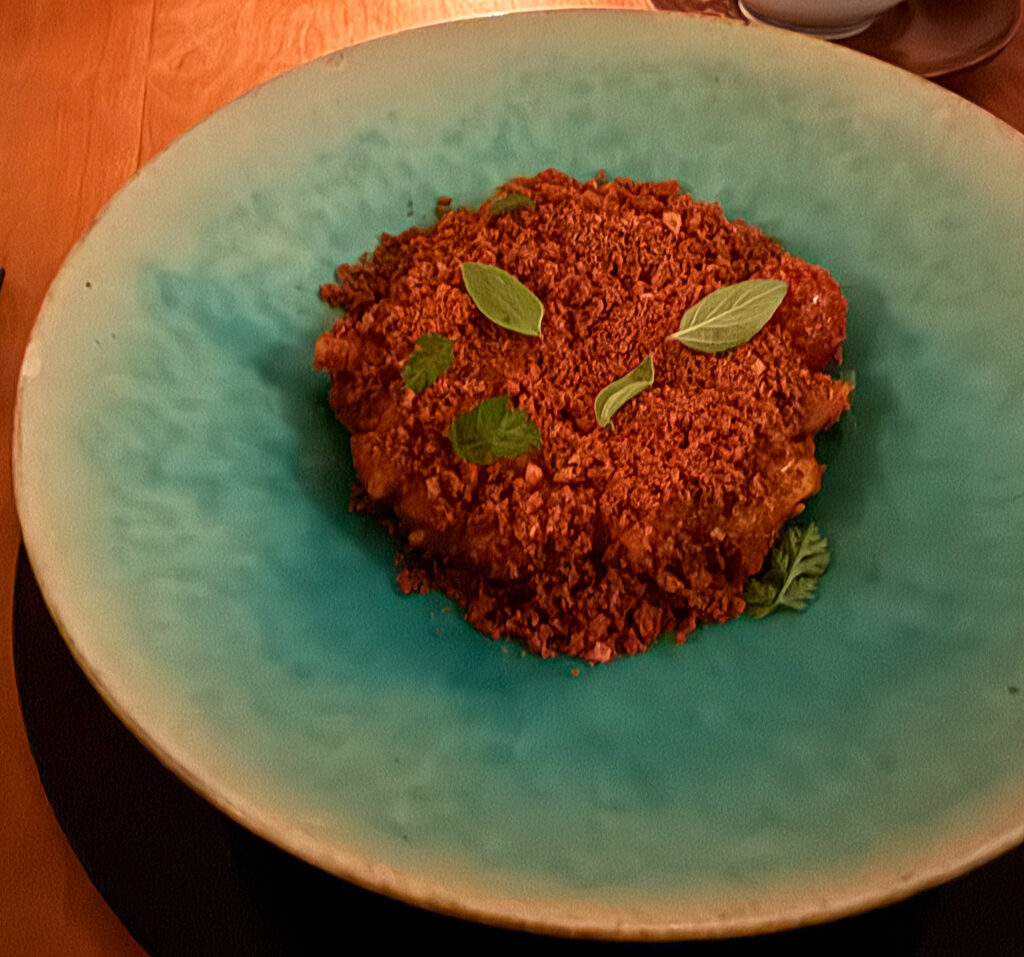
“Udon,” like that crispy bite of madai, actually appeared on my menu back in 2025 (when it ranked among the very best dishes of the night). Nonetheless, while the seabream offered a useful indication of the kitchen’s growing technique, these wheat noodles are subject to an entirely different preparation. It’s a bold one too: dressing the spool with braised rabbit, fermented corn, fermented heirloom tomato, some garlic scapes, and a bread crumb coating. Indeed, while I enjoyed the restaurant’s previous recipe (with its thinner, almost spaghetti-like mouthfeel, a garlic cream sauce, and black truffle supplement), I feel like the present version does even more justice to the itameshi (or Italian-Japanese fusion) tradition.
The noodles now have a certain heft and chew to them (while remaining on the side of smoothness, richness, and homogeneity), with the brittle crispness of the bread crumbs serving to emphasize every curl. However, it’s the melting tenderness of the rabbit—suffusing each bite of udon—that proves most memorable. The ingredient’s clean (yet intense and persistent) meatiness offers a degree of satisfaction the menu has not yet touched on. Meanwhile, the fermented corn and heirloom tomato drive that sensation (via supreme, concentrated umami and just a touch of sweetness) toward outright decadence. Ultimately, though it seems sacrilegious to say so, I enjoy this course more than any conventional “pasta with red sauce” being served around town.
To pair, both the shaken “Sherry and Tonic” (made with fino, sparkling pear cider, celery bitters, and elderflower tonic) and stirred “Bermutto Sazerac” (made with Japanese whisky, Japanese vermouth, Riesling, Demerara syrup, and an absinthe rinse) play to the darker, carnal qualities of the udon. Nonetheless, each cocktail (though the latter displays far more body) retains an uplifting botanical quality that ensures the savory power of the rabbit and tomato never becomes overwhelming.
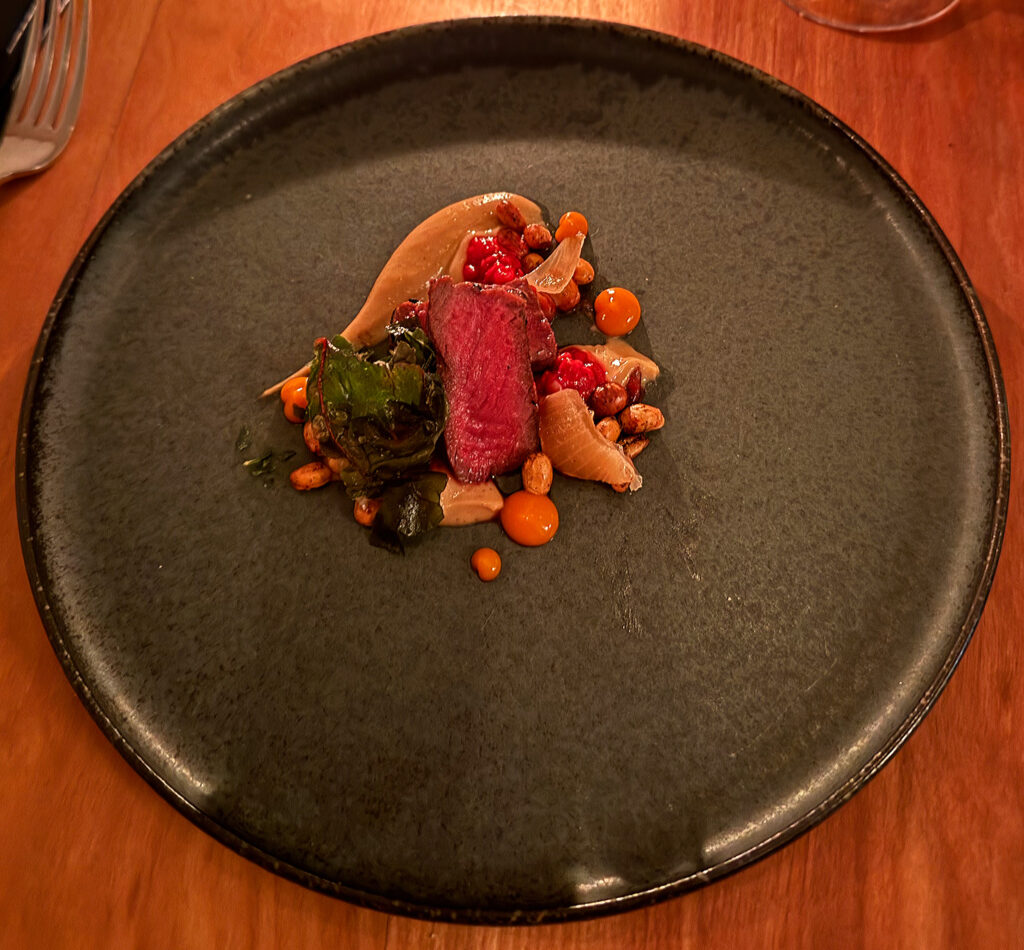
Kumiko’s embrace of game (which, it is worth mentioning, remains indicative of Japanese cuisine to this day) reaches an even higher expression with the arrival of the “Venison.” At first glance, I can only appreciate the kitchen’s inclination to replace its previous, crowd-pleasing wagyu entrée with one centered on a leaner (and at times controversial) meat. The resulting composition—built upon black garlic miso, a brown butter-cauliflower purée, raspberry purée, sea buckthorn gel, and peanuts—promises ample complexity too.
The venison has been cured in shio koji and arrives boasting an attractive, medium-rare hue. On the palate, it displays a bit too much structure but, with the influence of the surrounding sauces, feels moist enough to be moderately enjoyable. It’s actually the crunch of the nuts that throws me off more, for the effect is so shattering and so pronounced that it seems totally disjointed from the rest of the plate. Otherwise, I do find the juxtaposition of the tangy, only faintly sweetened fruit with the meat and the doubly nutty cauliflower to be sound. The dish’s finish—once one gets past a couple of the jarring textures—might actually be the best part. But, overall, I can’t really say I perceive the black garlic miso or get the level of pleasure I’d expect from a headlining protein here.
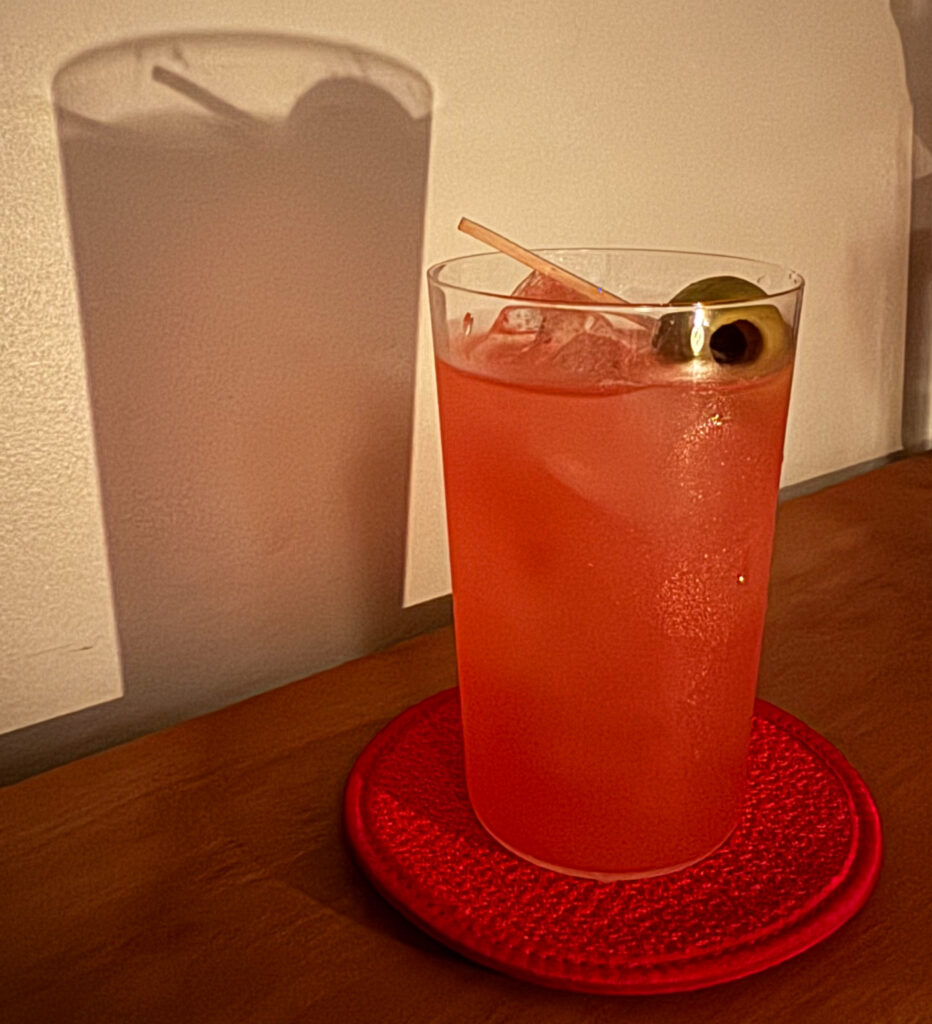
To pair, the shaken “Olive Blossom” (made with shōchū, raspberry-olive cordial, a sake produced using olive yeast, and lemon) and stirred “Manhattan” (made with Japanese “rye style” whisky, the same cordial, the same sake, some sweet vermouth, and Angostura bitters) both play to the venison’s latent earthiness and its adjoining fruit while matching the meat with a certain robustness. Given the course left me a little wanting, I appreciate how the cocktails smoothly extend the sense of enjoyment I only really found on the finish.
The final savory course of the evening is titled “Teishoku,” referring to a traditional Japanese set meal served on a single tray (and centering on classic components like protein, rice, soup, and side). Guests, charmingly, are given the chance to pick one of a half-dozen chopstick holders to help personalize their particular platter.
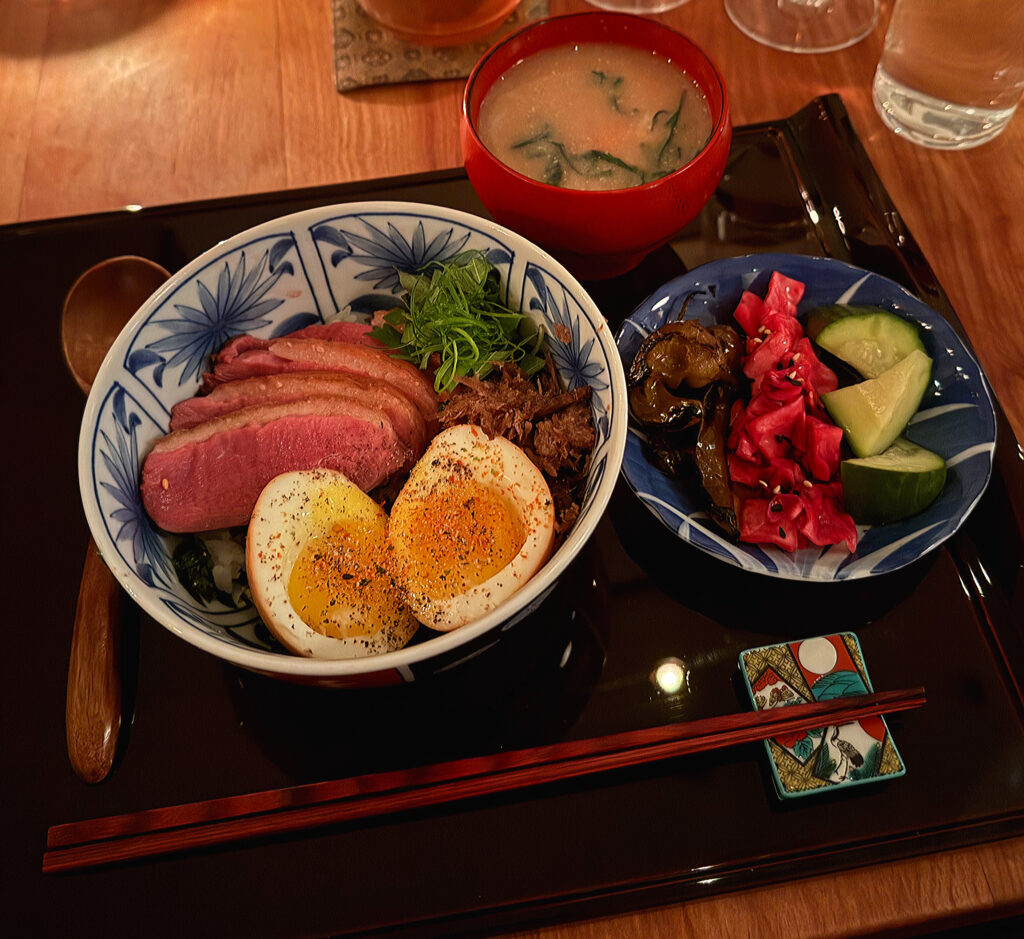
The starring bowl features a healthy portion of duck breast—texturally more refined than the venison (though one or two slices remain a touch too chewy)—some crisp shreds of duck confit, a beautifully jammy egg (halved then dusted with tōgarashi), and curls of green onion all on a base of anise-tinged rice. For my palate, this breadth of ingredients feels generous, engaging, and moderately satisfying. It delivers the “stick-to-your-ribs” quality that only the udon, otherwise, touched on.
Still, I do contend that some kind of duck jus (or related sauce) would help to activate the aromatics here and drive the combination toward a more rounded sense of decadence. However, I also find that incorporating the accompanying tsukemono (i.e., perfectly pickled pieces of cucumber, purple cabbage, and shishito pepper) provides some of the same effect. The final element—a soup made from house white miso, heirloom tomato, spinach, carrot, and radish—does not match the opening dashi, yet its cold, crunchy, and fruity nature feels uniquely invigorating at this late stage. In sum, this makes for an attractive set that’s just missing an extra dash of intensity to really shine.
To pair, the shaken “Winning Element” (made with mezcal, tequila blanco, oloroso, ginger beer, and flavors of cassis, lemon, and sanshō) pursues a brighter, more quenching character than the stirred “Cane and Pepper” (made with Japanese single-malt whisky, shōchū, aged junmai ginjo genshu sake, dry vermouth, muscovado sugar syrup, and sanshō), whose effect is lush, nutty, and meditative. This divergence, while more significant than those I’ve noted with the past few courses, does a good job of matching the competing styles (i.e., refreshment vs. richness) one finds in many after-dinner drinks.
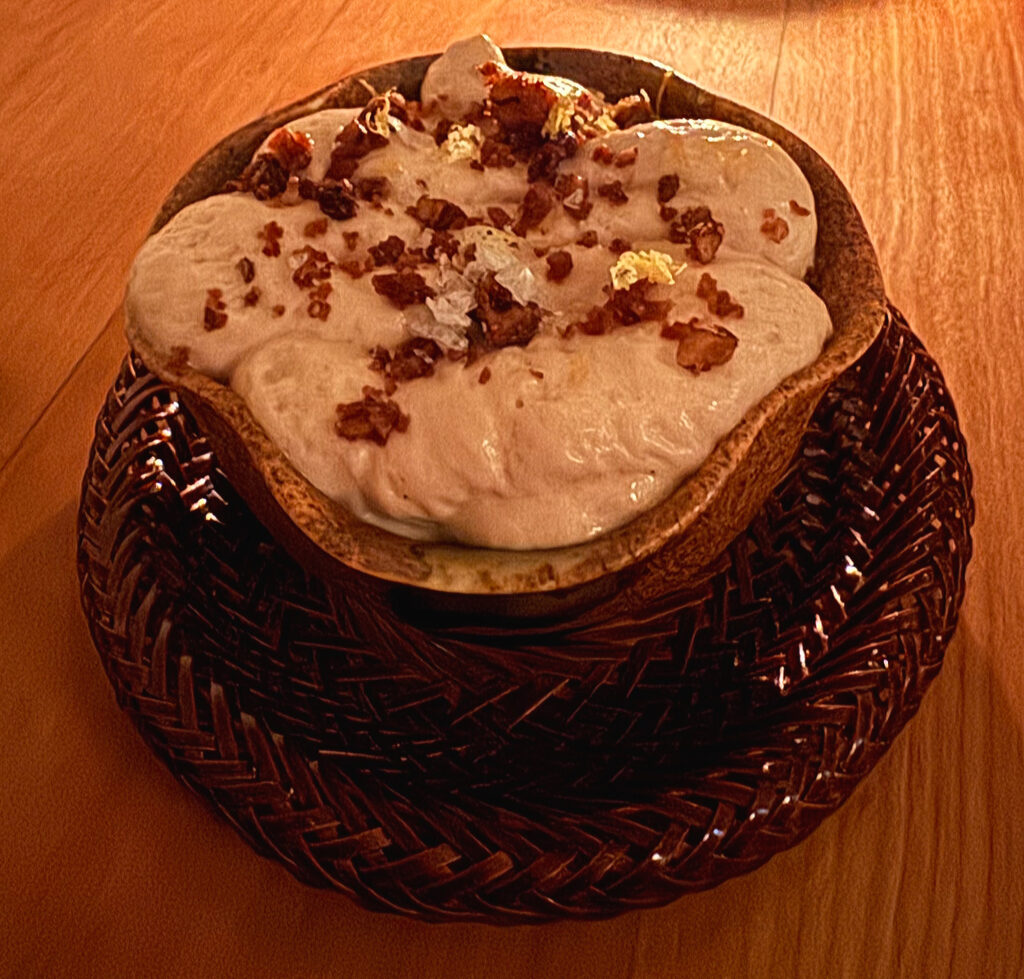
The tasting menu’s principal dessert takes the form of the “Koshian”—referring to the to “strained,” sweet red bean paste that lies at the heart of an aerated cheesecake. For all the dish’s lightness (further amplified by lemon), an accompanying pecan brittle crust and touch of flaky salt ensure the recipe ends on a note that is earthy, nutty, and maddeningly semi-sweet. As someone with a weakness for cheesecake in all its forms, this example clears the bar of being exceptional.
To pair, the shaken “Blossom Rouge” (made with lemongrass shōchū, namazaké, white vermouth, orange liqueur, red bean, and red verjus) and stirred “Soft Grain” (made using 10-year Japanese whisky blended with the same namazaké, vermouth, and orange liqueur) again converge in their expressions: matching the citrus, sweetness, and milkiness of the starring dessert while veering toward distinctive fruity and caramelized notes on their respective finishes.
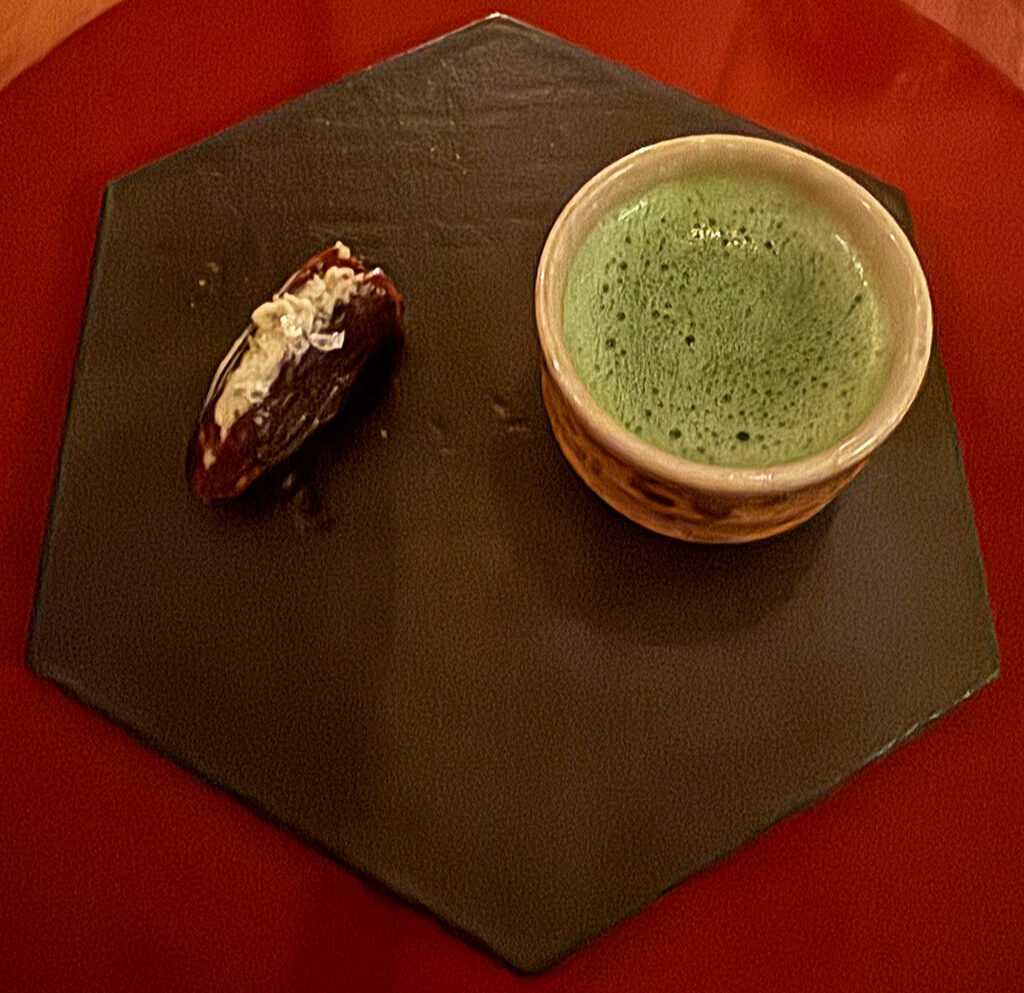
The evening’s final course takes the form of the “Wagashi”—a broad term for Japanese confectionary that, here, crowns a presentation of matcha (sourced from Fukuoka) and a deglet noor date (stuffed with seaweed-honey butter, raw cane sugar, and salt). I find the presentation, however sparse, to actually be arresting: a kind of bookend to how the opening dashi was served. Further, while the combination of tea and date is only the slightest bit sweet, I think the fruit’s dense, nutty character shines against the bitterness and forces you to really savor the meal’s conclusion (rather than merely surrender to one last sugar rush).
With that, the check arrives, and printed menus follow soon after. The latter feature a meditation on the meaning of kumiko itself: wood “carved by hand,” fitted together with “no hardware or shortcuts,” a “beautiful example of dedication and craft,” a testament to how “something extraordinary comes together from many small pieces,” and an invitation to “consider yourself as one of the pieces of the Kumiko we build tonight.”
It’s a poignant extended metaphor and a reminder not only of how masterfully the bar has been branded (across just about every aesthetic dimension) but, truly, the genuine emotion that flows from Momosé, through every member of the team, and infuses each visit with the sense that one is seen and heard and treated as something more than an interchangeable consumer. In fact, it’s all too easy to spend another one or two hundred dollars in this city and—no matter how good the food is—still leave feeling anonymous.
Tonight, the 10 courses, 11 dishes, seven cocktails, and one sake that comprise my experience speak to a sense of care. Three hours (we’re talking the length of a meal at Smyth or Kyōten) pass with the effortlessness that only our server’s engagement and curiosity can bring. At the same time, it’s those quieter moments of conversation—drink in hand—as closing time approaches that prove most memorable. They paint the tasting menu as something less about consumption and more about absorption: a perch from which to observe and appreciate this special place while becoming one with its inimitable spirit.
In ranking the evening’s dishes:
I would place the “Chawanmushi” and “Udon” in the highest category: superlative items that stand among the best things I will be served in any restaurant this year.
The “Madai,” “Ara Jiru,” and “Koshian” land in the following stratum: great recipes that achieved a truly memorable degree of pleasure. I would love to encounter any of these again.
Next come the “Dashi,” “Oyster,” “Masu,” “Teishoku,” and “Wagashi”—good—even very good—preparations I would be happy to sample again (but that just failed to elicit an extra degree of emotion).
Finally, there’s the “Venison”—a merely good (or maybe just intriguing) item that fell short when it came to texture and flavor. That said, the underlying ideas shaping this dish were sound, and it could easily be improved with a little more fine-tuning.
Overall, this makes for a hit-rate of 91% with some 45% of dishes reaching that “would love to have again” standard—a notable improvement on the figures (79% and 37% respectively) that I reported in March of 2025.
Admittedly, I did not include the individual cocktails in my ranking this time around. But perhaps what matters most about these drinks is that they balance distinctiveness (essential when serving seven of them in a row) with a fundamental elegance and approachability (even from what reads boozy) that always make for a pleasant companion to the cuisine.
For that reason, I think the cocktail pairings (including the “Spiritfree”) weigh favorably on the side of both the overall hit-rate and the “would love to have again” metric. By comparison, the “Nihonshu” (i.e., sake) selection is probably best reserved for devotees of the form—mainly because I think so much of Kumiko’s appeal comes from having drinks mixed to order—but I cannot argue with the fact that the bottles are thoughtfully chosen and presented with the utmost detail.
However, given that ordering a pairing is not mandatory with the tasting menu, I have to try and disentangle the latter’s value proposition from the core appeal of imbibing at one of North America’s best bars. In other words, would the cuisine really hold its own at this $185 (largely Michelin-starred) level without Kumiko’s established excellence and exclusivity in the beverage realm to lean on?
Last year, the question could have been asked, but I think the collaboration between Momosé and Mainor has been rather successful. The kitchen seems nimbler in its offerings, sharper in its pacing, and—somewhat shockingly—willing to increasingly cater to mainstream tastes (via a burger) while preserving the larger sense of restraint and refinement it has been aiming for over the past few years.
Personally, I’ll always rue the demise of the “Tonkatsu Sando” here. Still, I do appreciate how the cuisine has grown: as an exemplar of seasonal and comforting Japanese cookery that is totally untethered from the sushi-driven concepts that have become so popular in Chicago.
For me, the “Madai” and “Ara Jiru” are beautiful showcases of technique—traditional enough without being bound by it—while the “Chawanmushi,” “Udon,” and “Koshian” (even without the help of the “Western” seasoning style) push familiar forms to a singular level of decadence. It really wouldn’t take much for courses like the “Oyster,” “Masu,” or “Teishoku” to climb higher in my ranking either, which suggests the team—other than some awkwardness with the “Venison”—is clearly on the right path.
That said, winning Bibendum’s favor is a whole other question—and one I don’t think it’s worth any outsider (let alone one dedicated to minute, descriptive evaluations) really dwelling on. But I do find Michelin increasingly cares about forging strong brand partnerships (i.e., making themselves look good by association), and it’s hard to think of a more fully realized concept with a more beloved, hands-on leader than Kumiko.
After all, the higher two- and three-star ratings are now increasingly about how “the team’s personalities and talents shine through.” And this criterion really seems to align with what Momosé—having already expressed herself so fully through every facet of the bar—now pursues as a chef and creative director in a slightly more behind-the-scenes role.
Yet, ultimately, it would be an error to mistake those awards lining the bar’s shelves as any sort of conscious goal. They merely symbolize how Kumiko, forever fueled by heart, has managed to resonate with its audience. Maintaining that connection—by rejecting cynicism in a fraught industry and fervently safeguarding self-expression—will always form its own reward (and, as time has shown, the only pathway toward the greatest kind of success).