
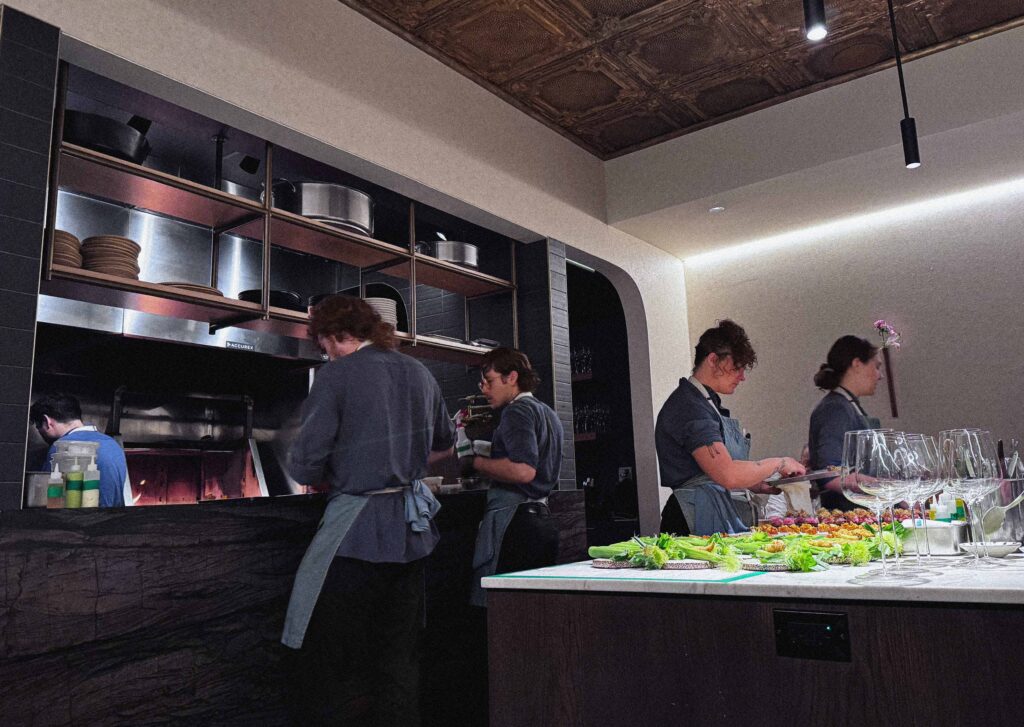
As with my recent piece on Kyōten, we are beginning to reach a point when my visits to Feld have grown so frequent that there’s just not much exposition I can add.
In fact, as I sit here writing this, I am faced with the realization that I’m actually dining at the restaurant again tonight and will have to try and keep two menus’ worth of taste sensations straight for at least the next week.
It is a great credit to chef Jake Potashnick and his team that their creative process—fueled by weekly (sometimes daily) ingredient sourcing, a spirit of collaboration, and a willingness to abandon what’s proven to work in pursuit of something more—really does yield totally distinctive meals on such a consistent, brisk timetable.
More than two years later, the concept has firmly hit its stride and has the honors to prove it. Yet, on a more personal level, Feld is simply the kind of place one feels good about visiting: its work being so firmly rooted in some sense of a shared dream, its hospitality being so sharply defined by each singular personality, and its myriad details (be they cosmetic or comestible) being shaped firsthand by the very people serving you.
For all the subtext and all that happened in the restaurant’s past, it’s hard to think of a fine dining experience that feels more earnest. To sit here is to feel seen and heard and thoroughly comfortable—only to then be taken on a gastronomic journey (occasionally challenging, frequently delicious, always educational) that subverts nearly every tasting menu norm.
Rather than timeworn “luxury,” one is forced to reckon with the essential beauty that nature’s bounty—at this very moment or, perhaps, lovingly preserved from seasons past—has to offer. Rather than chasing the expectations that products like caviar, uni, and wagyu carry with them, each guest must relearn to appreciate what the textures and flavors of altogether humbler produce can offer.
Feld, ultimately, strips conspicuous consumption of its most powerful, pernicious weapons and revives a sense of childlike wonder in the hearts of even the most cynical serial diners. There’s nothing else in Chicago like it, and there are few concepts around the country who take this philosophy (and a lot of it has to do with staging) to such an extreme.
It’s hard to think of any other restaurant that, when we’re talking purely about the nuts and bolts of the wine and food, makes me quite as excited to dive in: assessing nascent ideas and uncovering the surprising heights that cooking focused on dynamism (rather than a static sort of “perfection”) can reach.
To conclude, I will only note that this fourteenth visit centers on corn (sourced locally from Smits Farms) and a range of stone fruits.
Let us begin.
Through the door, past the parade of staff, and into the dining room, I find each successive visit to Feld grows more and more natural—more and more effortless.
The team makes an effort to put me at a different table each time, which helps to shift my perspective. I may be situated across from the paintings of Froggy Meadow Farm (marveling at their distinct seasonal tableaux) or have them lying, imperceivable, to my rear. I may be seated closer to one counter (where the wine and ice cream machine are staged) or another (where notes on each of the parties are taped and the bulk of the plating is done). I may even be put in the corner closest to the kitchen and given a clear sight of the hearth.
However, when faced with the chefs’ actual performance, the tone is always something more like “we know you’ve seen and heard this all before.” I like the self-awareness, for it immediately transports me beyond the novelty and charm that characterize this experience for first-timers. I certainly still savor the intimacy of the space and the drama of “The Drop,” yet it’s refreshing to hear spiels that break from the usual uncanny script and center on the finer details that a repeat customer can comprehend. This is not to mention the opportunities for individual storytelling (given how frequently the employees actually visit their purveyors) and frivolous chit chat (the rudiments of a deeper connection) that this shared foundational knowledge makes room for.
Potashnick, as always, is a shining exemplar of the kind of hospitality he wants Feld to offer: confident, perceptive, and sharply analytical when necessary but patient, deferential, and exceedingly playful too. His deputies do not only mirror the same energy. Rather, while balancing the demands of executing the tasting menu, they manage to inject bursts of their own personalities too.
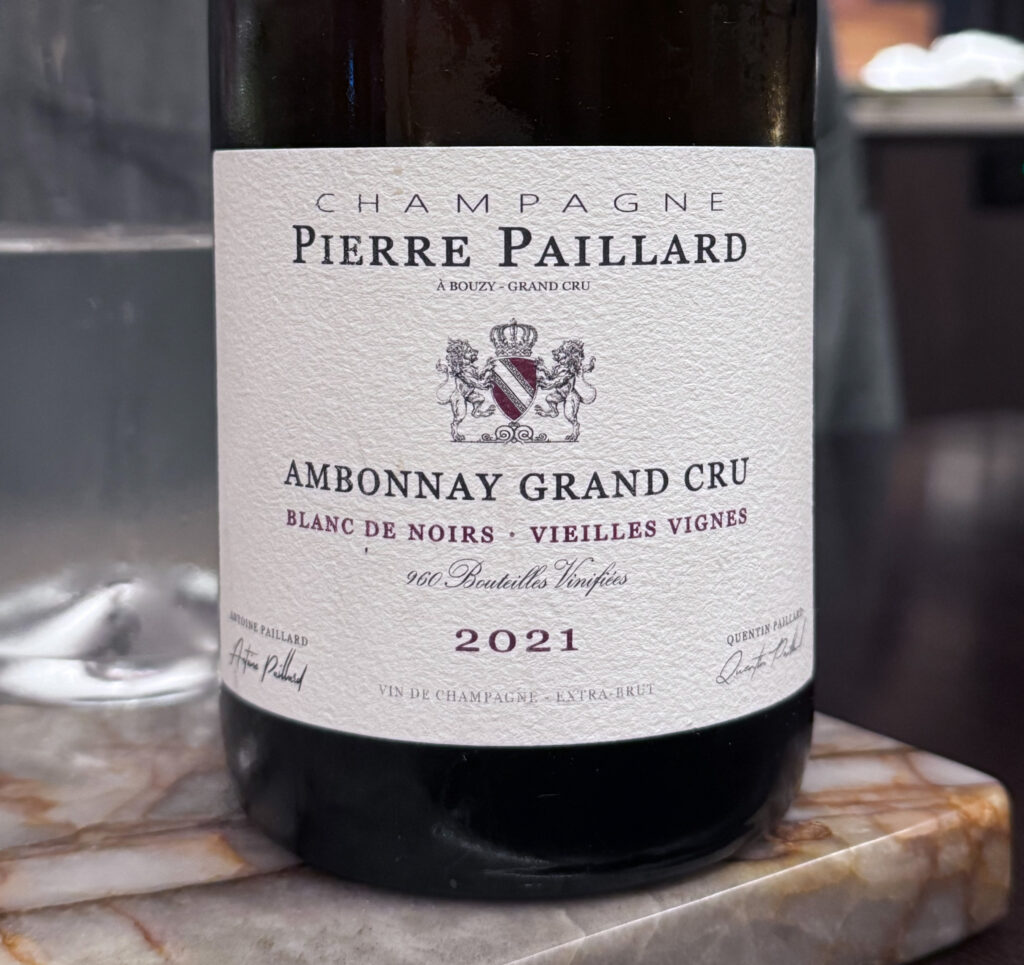
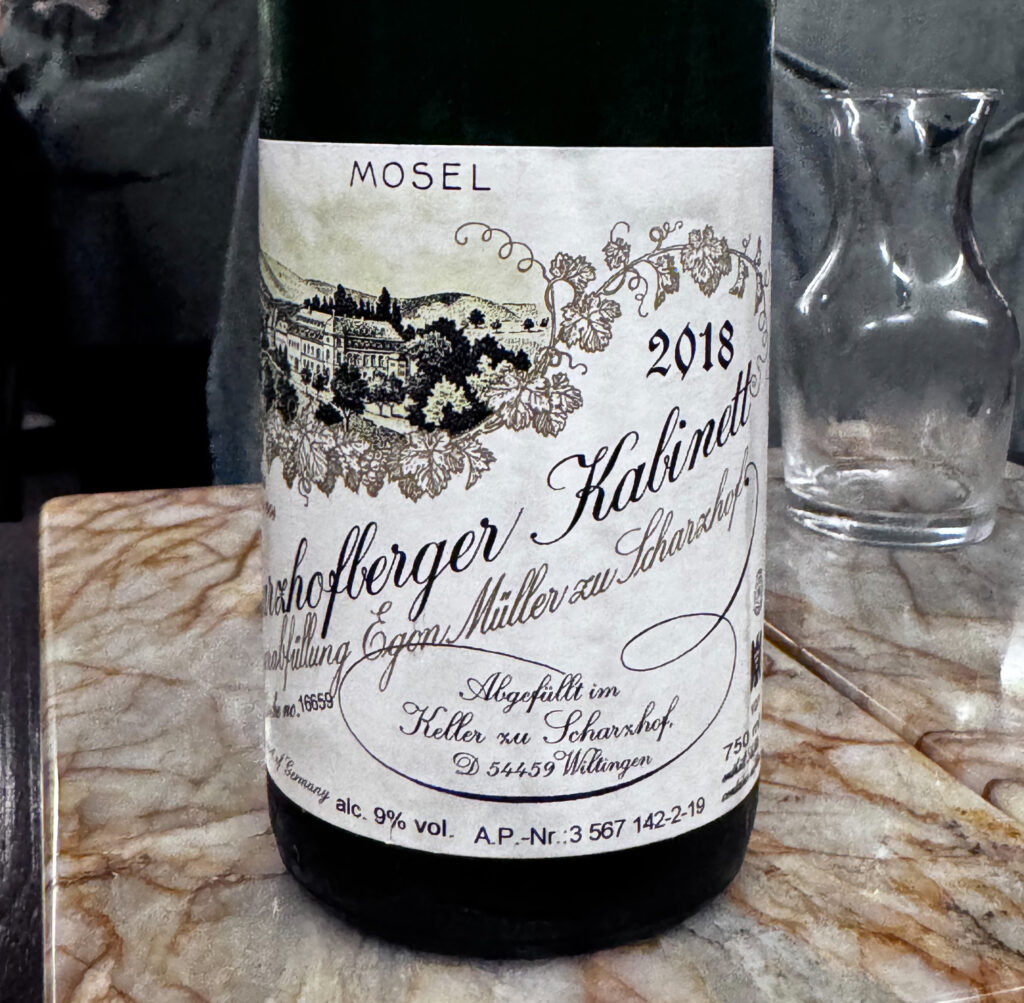
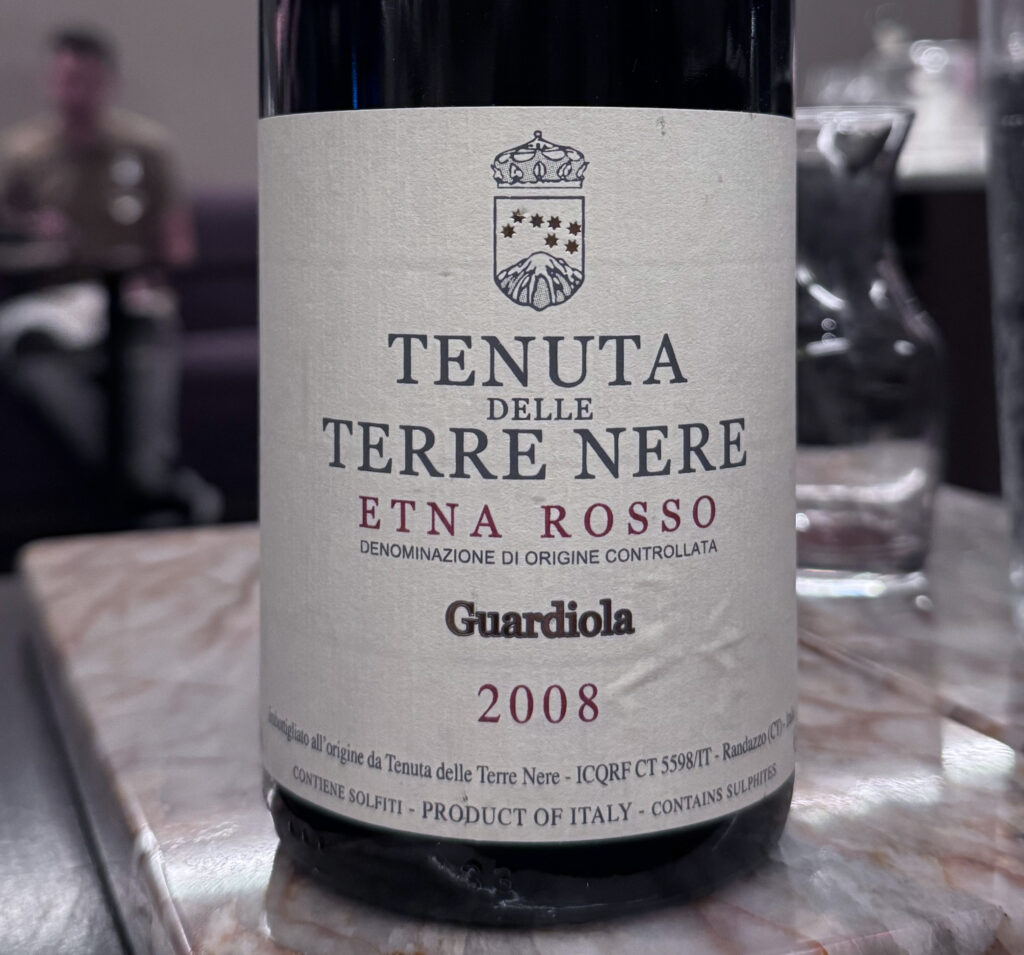
When it comes time to decide what to drink, it’s hard for anyone to outdo the enthusiasm of general manager (and newly minted advanced sommelier) Nathan Ducker.
Tonight, as has been the case during my last few meals, I opt for the premium “Cellar Flight” ($325) and supplement it with a couple of my own bottles brought as corkage ($75).
The flight’s current constituents are as follows:
2021 Pierre Paillard Champagne Ambonnay Grand Cru [$160.99 at national retail]
2018 Egon Müller Scharzhofberger Riesling Kabinett [$163 at national retail]
2008 Tenuta delle Terre Nere Etna Rosso “Guardiola” [$145.28 at national retail]
2014 Château Lynch-Bages [$129 at national retail]
1997 Domaine Huet Vouvray “Le Mont” Moelleux Première Trie [$199.99 at national retail]
While I thought that the pairing I encountered in June (featuring cuvées from Egly-Ouriet, Dagueneau, Bindi, Franck Balthazar, and Dönnhoff) set a new standard for this offering, the current selection might be even better.
Indeed, while sidestepping the questionable value that Burgundy would provide (as well as the more polarizing expressions one might find in the Jura), Ducker presents five esteemed producers while ticking two major boxes: Champagne and Cabernet Sauvignon (the latter by way of left bank Bordeaux).
For my own palate, the Egon Müller—boasting a moderate degree of age and an elegant sweetness—and the Huet—touting significant age and a richer, honeyed expression—are both quite enjoyable. Even the aged Etna Rosso (not something I’ve ever really sought out) offers notable finesse and volcanic intrigue while showcasing a comparably obscure region.
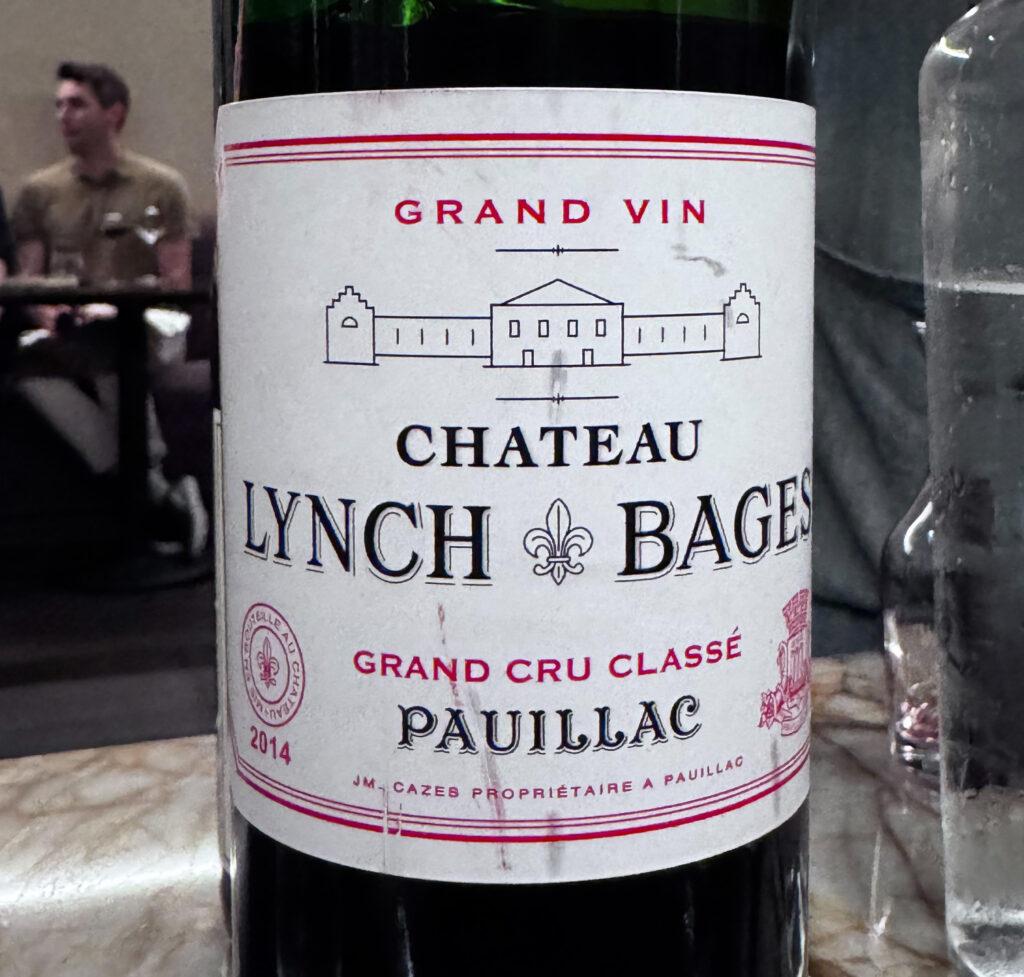
As always, the “Cellar Flight” succeeds by presenting wines that—both in the context of what is offered elsewhere on the program and, more broadly, throughout the city—feel singular. Likewise, I find the chance at sampling five different pours (each coming from a bottle that would cost ~$150 at retail) to offer respectable value when compared to spending $325 on a solitary offering from the list.
Corkage, again, provides me with that chance to further enhance my experience of the cuisine (via selections from my own cellar) while filling in the gaps that the pairing (primarily due to the nature of allocations and more pervasive issues of sourcing in Chicago) is faced with.
On that point, I am particularly heartened when, early in the evening, one of the chefs spots wax floating in my glass and takes the initiative to quickly go and filter it out. Given that I brought this bottle myself (and am thus responsible for any leftover debris), it would have been easy to be a little more hands-off in handling a guest privilege that is sometimes only begrudgingly offered.
However, I felt there was a real sense of responsibility for my enjoyment of the wine (corkage or not). And this is the spirit—one of overflowing options, thoughtful curation, and genuine excitement—that has distinguished the beverage program at Feld from the start.
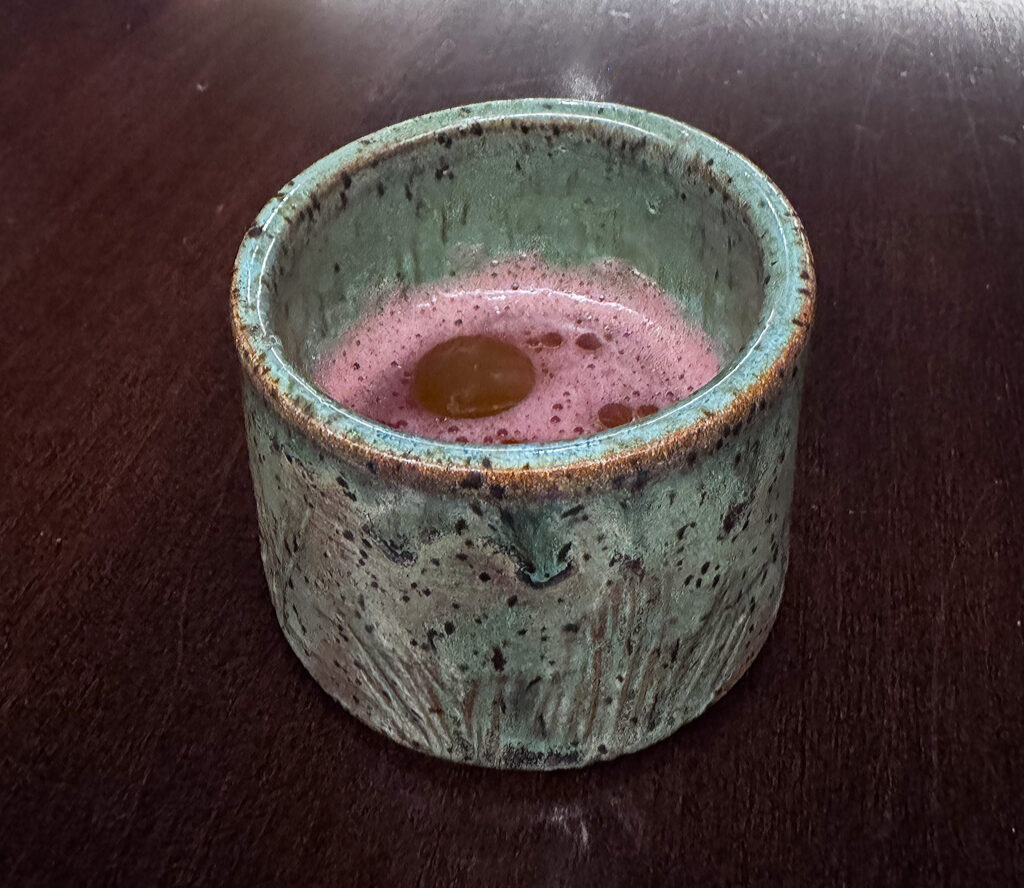
Tonight, rather than opting for the usual offering of broth or tea, the kitchen presents a cup of “Carbonated Watermelon Juice” just moments after each guest takes their seat. Laced with basil oil, the drink offers sweet, sour, and surprisingly salty notes with an engaging, prickly finish. For the current season, I think it’s a great fit: playing the part of refreshing welcome beverage without getting too weird or serious.
A little while later, once all the parties have settled in, the meal begins in earnest. The team—acting in unison—carries a stream of plates to each of the tables in a signature opening flourish that Feld nicknames “The Drop.” The present version comprises only seven items (compared to eight in April, nine in June, 10 in May, and up to 11 in January), a number that saps some of the course’s grandeur but, perhaps, promises greater intricacy and quality in each bite.
Since diners are invited to attack the spread in whatever manner they choose, I will follow the order in which the dishes are listed on the written menu.
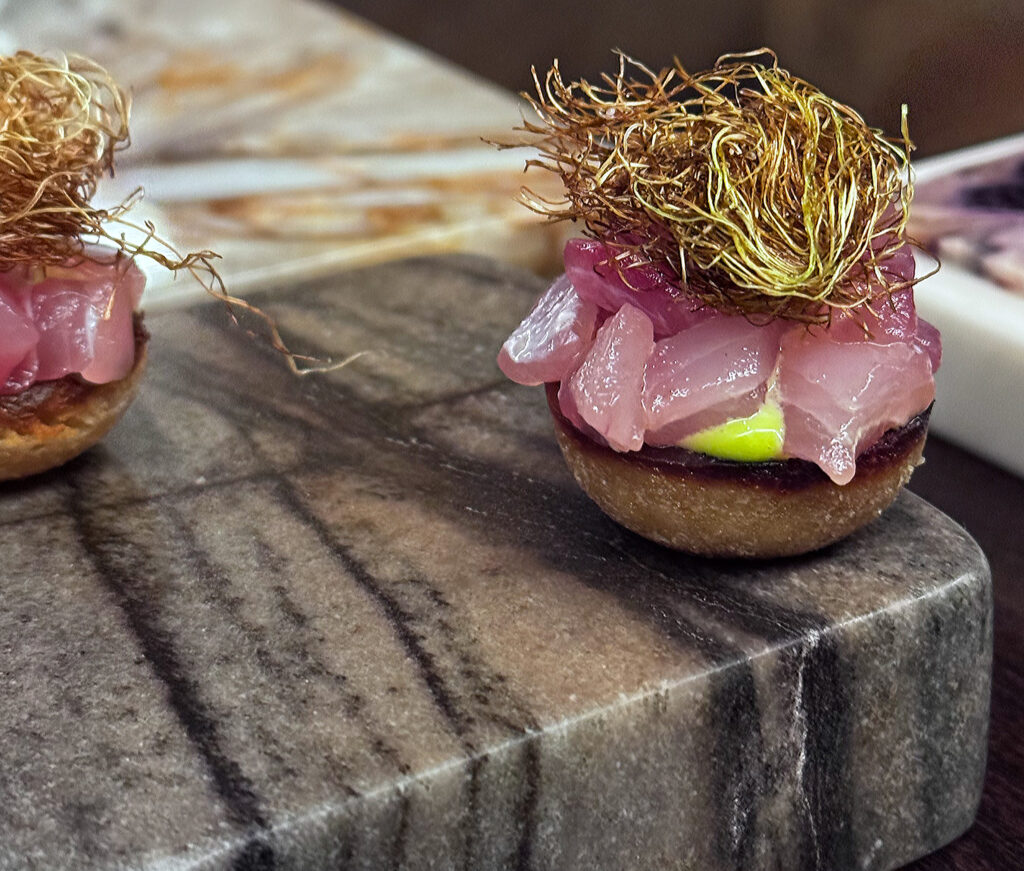
To start, there’s the “Yellowtail Pancake”—a yeasted, somewhat dense base (one of the restaurant’s longstanding forms) topped with tender chunks of the titular fish and a crispy spool of fried corn silk. Texturally, the recipe is actually rather appealing. However, its resulting flavor is rather bland, and the yellowtail would especially benefit from some citrus.
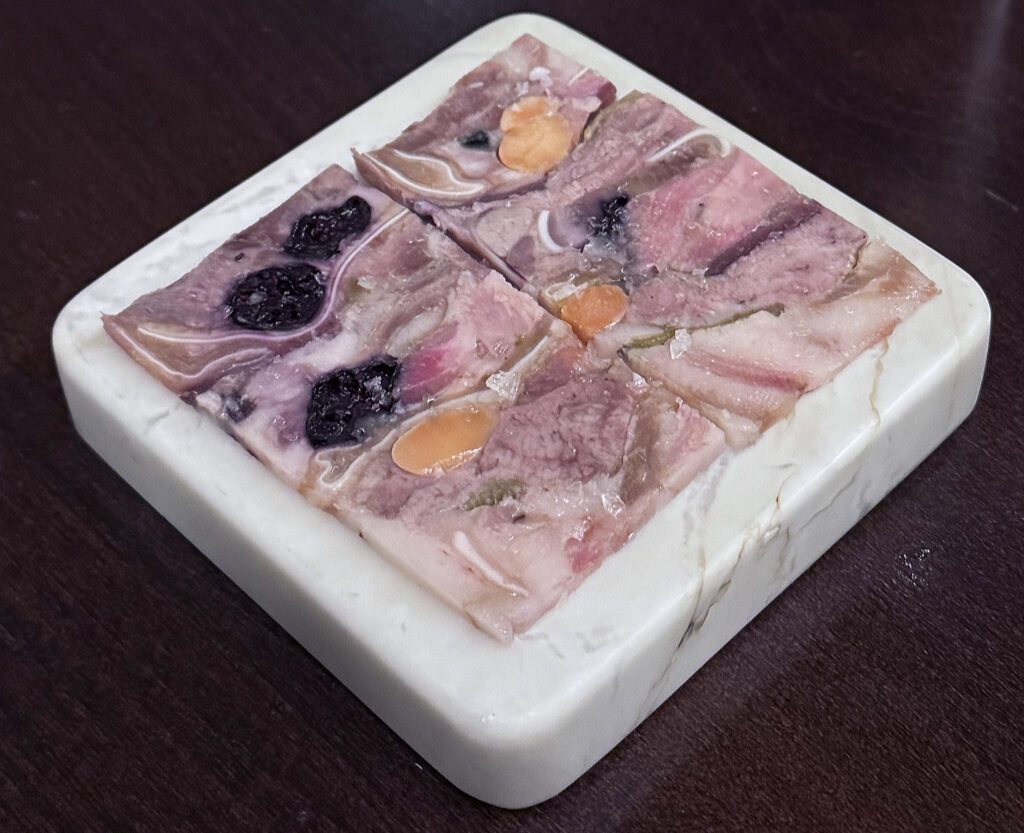
The “Pig Head Terrine”—studded with dried fruit and nuts—is introduced as one of the individual chef’s special projects. It also represents a rare embrace of more traditional French technique here. When it comes to composition, I do find that the meat detaches from the other fillings and effectively falls apart. Nonetheless, the pork is beautifully soft and salty with a hint of sweetness on the finish. Overall, I think this is a technique worth pursuing further.
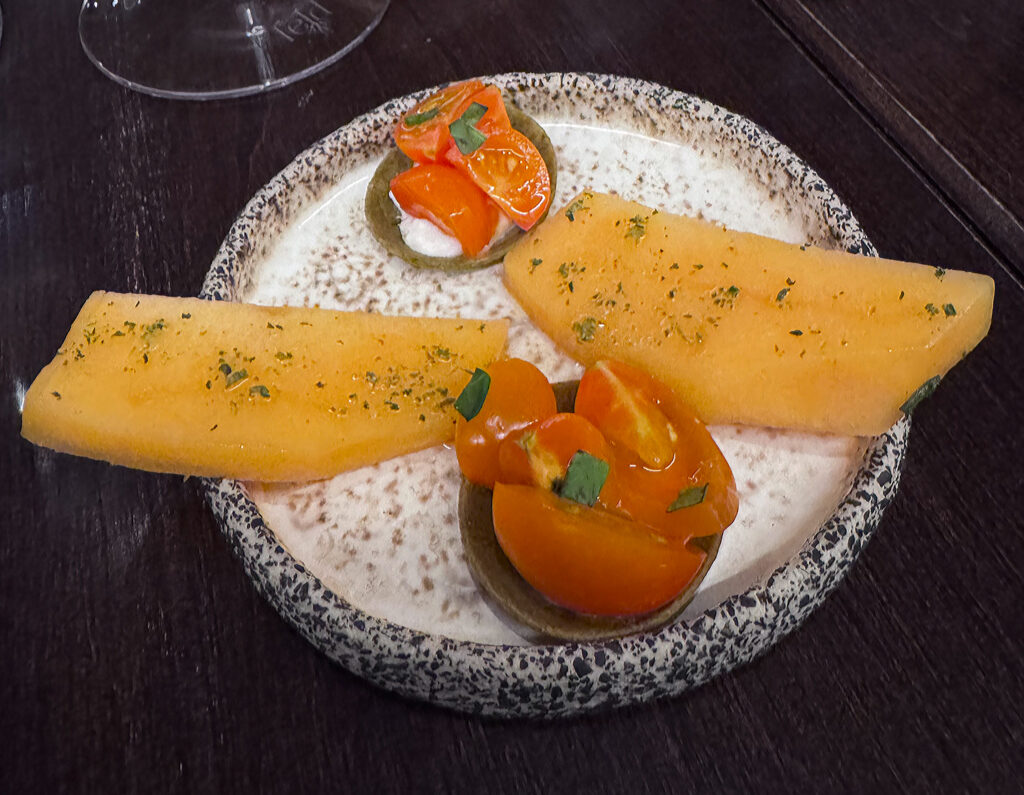
Next, a serving of “Melon & Ham Fat” might form the simplest bite of the bunch. Still, this piece of cantaloupe combines a striking juiciness and muskiness with a transfixing savory depth drawn not only from the Benton’s-derived topping but a sprinkle of rosemary salt too. The sum effect—playing on the subtle sweetness of pork (while simultaneously turning it on its head)—is both nostalgic and delicious. This ranks as a favorite.
Accompanying the melon, a preparation of “Basil & Sungolds” takes the form of a tartlet: one built upon a gossamer, herb-infused shell and stacked with yogurt, slices of the headlining tomatoes, and a Thai basil emulsion. Texturally, the juxtaposition of crispness, creaminess, and plumpness is well managed, and the resulting flavor—resoundingly fresh, faintly tangy, with rounded sweetness—is quite attractive too. Yes, the word “textbook” comes to mind. This lands among the stronger servings.
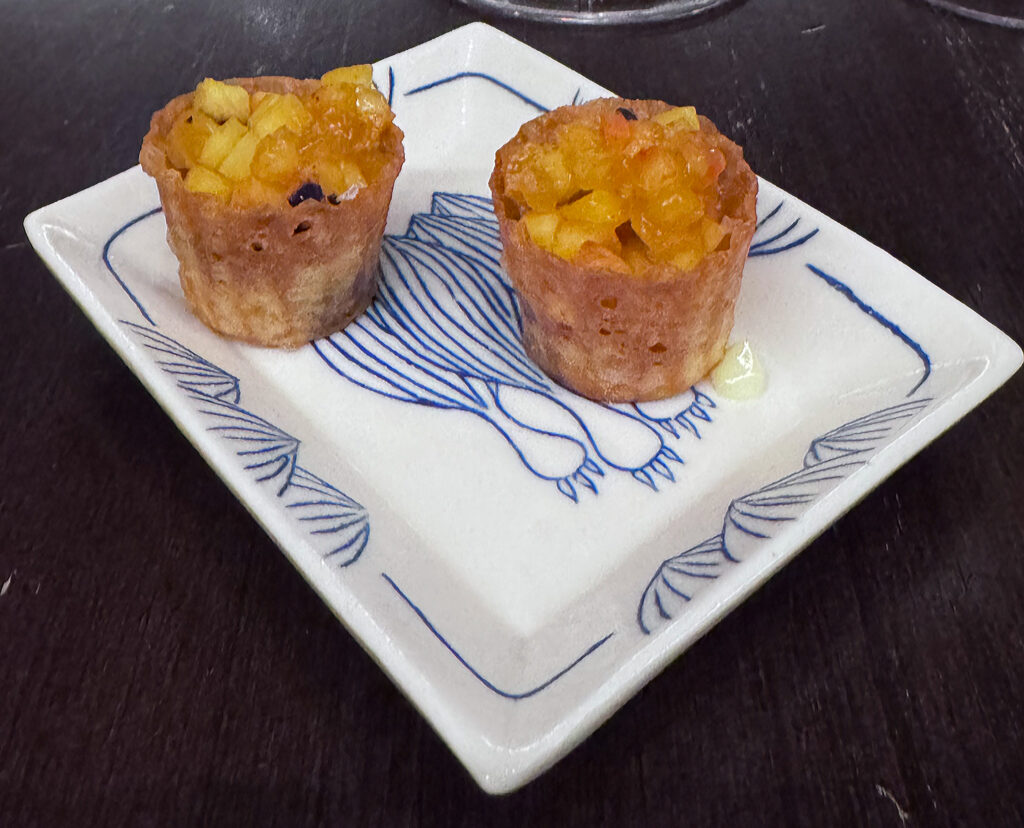
The “Peach & Shallot” takes the form of another kind of tartlet—one distinguished by an even deeper, pie tee-style mold. As it happens, this shell proves more soft and limp than it does crisp, yet the fillings of fruit and caramelized allium still provide enough pleasing sweetness to ensure that—textural lapse aside—the bite remains enjoyable.
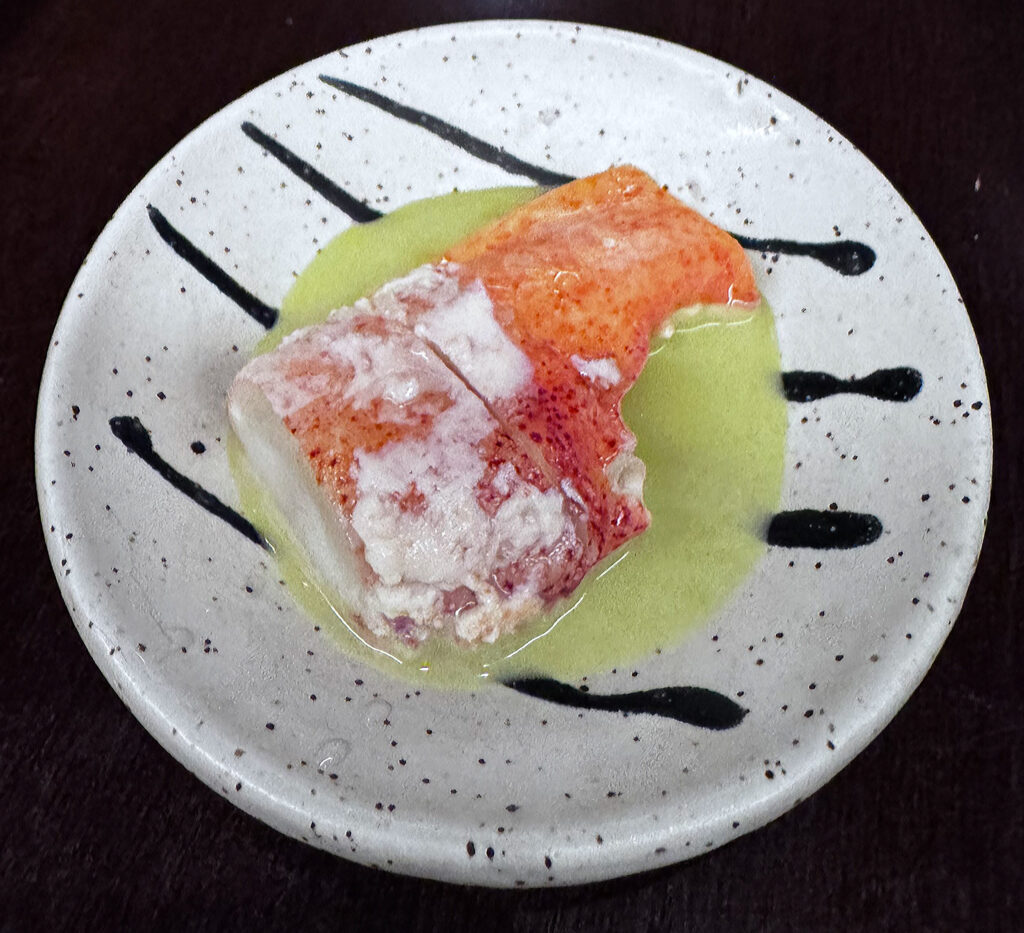
The “Lobster & Green Garlic”—comprising a hulking section of claw sitting in an escabeche made with the allium—looks to deliver a degree of substance and satisfaction that the nature of “The Drop” doesn’t always allow for. On the palate, the crustacean feels appropriately dense and meaty with a finish that is clean and tangy. For my taste, the lobster is a touch underseasoned and fails to deliver any of the essential decadence I expect from such a portion. That said, it’s not hard to find at least some pleasure here.
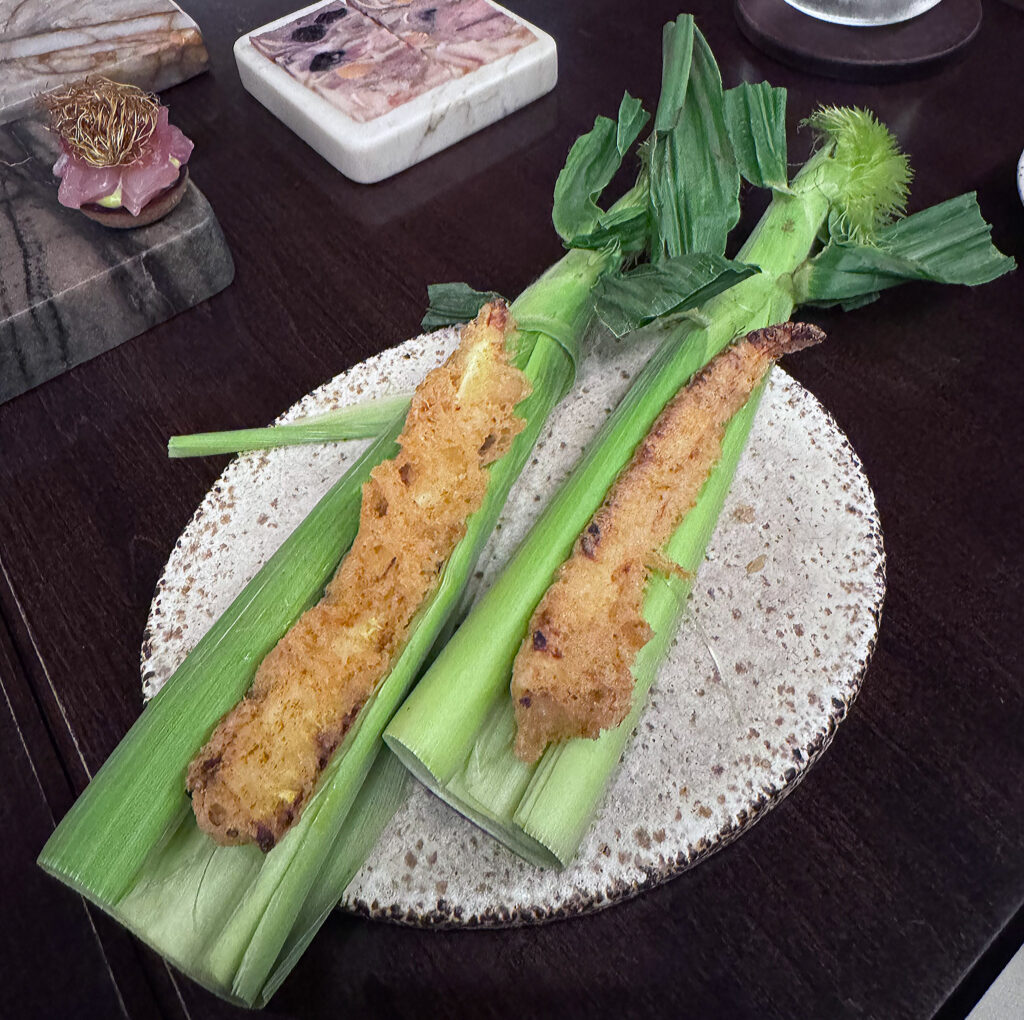
Finally, the “Tempura Baby Corn” represents Feld’s latest work with this battered-and-fried technique (the use of which dates back to my very first meal). The present rendition might just rank as the very best: combining a cohesive, lacy crust with a hearty crunch and attractive notes of sweetness (from corn husk powder) and salt. I also get a surprising hint of spice on the finish, which drives the tempura’s textural finesse to a place of deep satisfaction. Ultimately, this makes for the best item of the bunch.
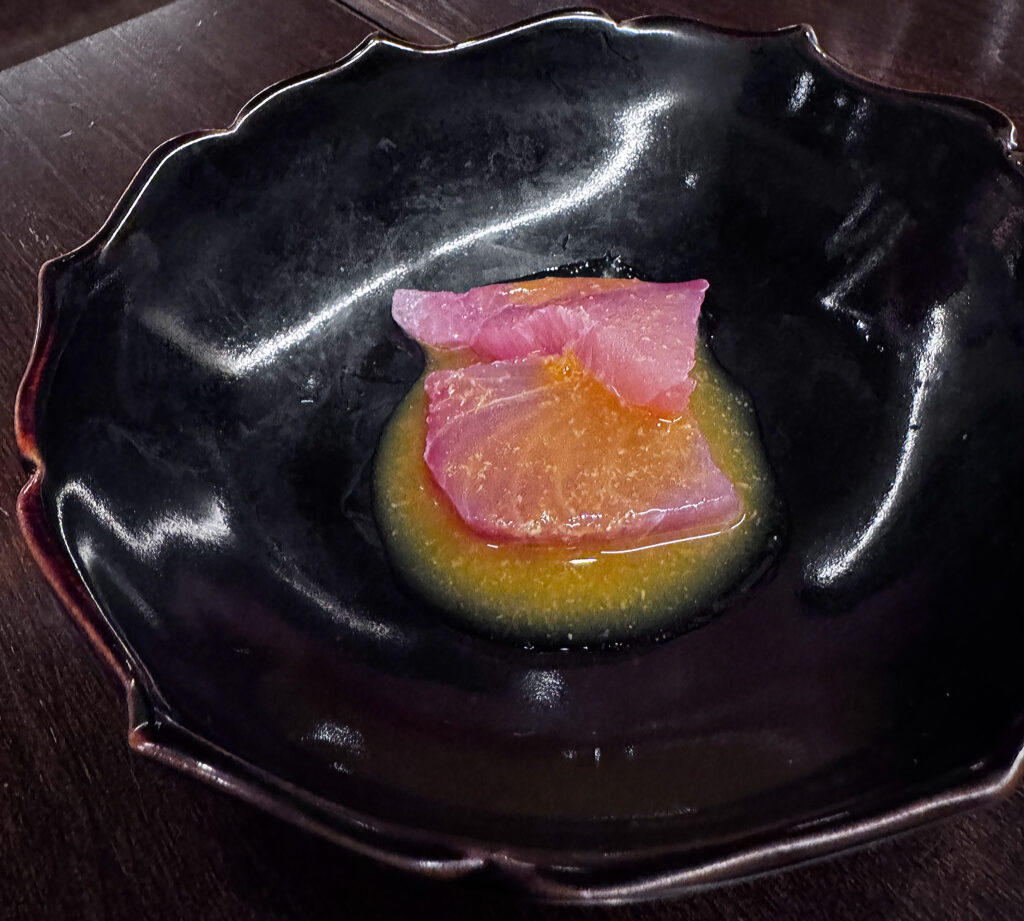
The first proper, composed plate of the evening builds upon the flavors and textures of the opening pancake (looking, perhaps, to redeem what was admittedly one of the weaker items). Indeed, the “Yellowtail Sashimi—Tomato” looks to take guests’ appreciation of the fish to a higher extreme: pairing thick, raw slices (sourced from both the loin and the belly) with a Sungold vinaigrette and some Oregon wasabi.
Texturally, the sashimi feels wonderfully soft and smooth on the tongue despite its weight. The supporting notes—freshly tangy and fruity-sweet—deliver the kind of intensity I sought from the fish’s first appearance. Nonetheless, I find the Oregon wasabi to be so mild that I can hardly sense it, and, more generally, I think the yellowtail demands more underlying umami to really sing. Admittedly, these critiques are shaped by my experiences at Kyōten, so other diners (those seeking less outright concentration) may like the balance struck. I certainly find Potashnick’s work in this area to be exciting even if I seek small tweaks.
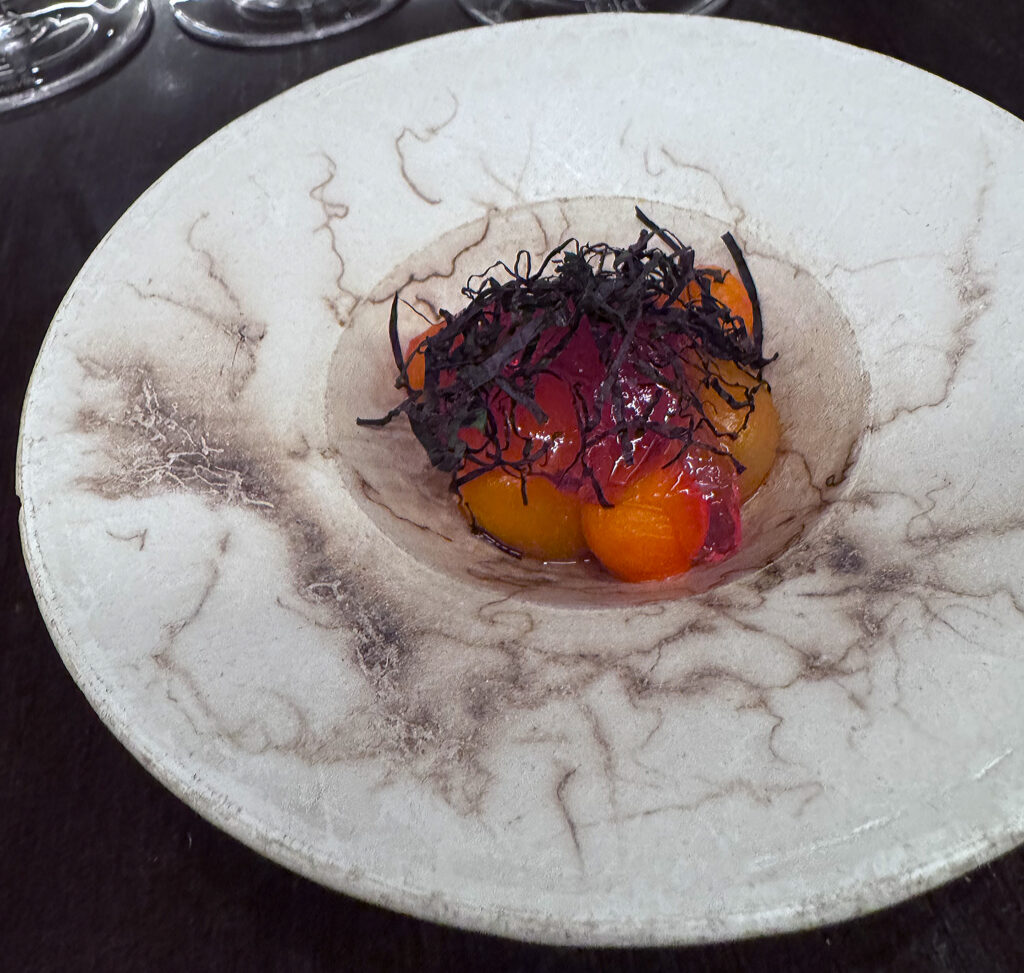
Arriving next, a preparation titled “Sungolds—Shiso” expands upon the Japanese character of the sashimi dish through its use of the titular, mint-like herb. Now, I’m tempted to think that there’s no way this recipe—utilizing the same tomatoes while excising the yellowtail—is going to offer any more satisfaction than its predecessor.
Yet, by transforming the shiso into both a jelly and a chiffonade, the kitchen enlivens the plump, juicy, and umami-laden (thanks to a medley of fresh and dehydrated pieces) Sungolds with cooling, anisey lift. While some peach slices add a firmer imprint of sweetness into the mix, I appreciate the course’s overall restraint. Contrary to some of the evening’s tangier expressions, the produce here feels fully, cohesively imagined with layers of depth. In sum, this ranks as a highlight.
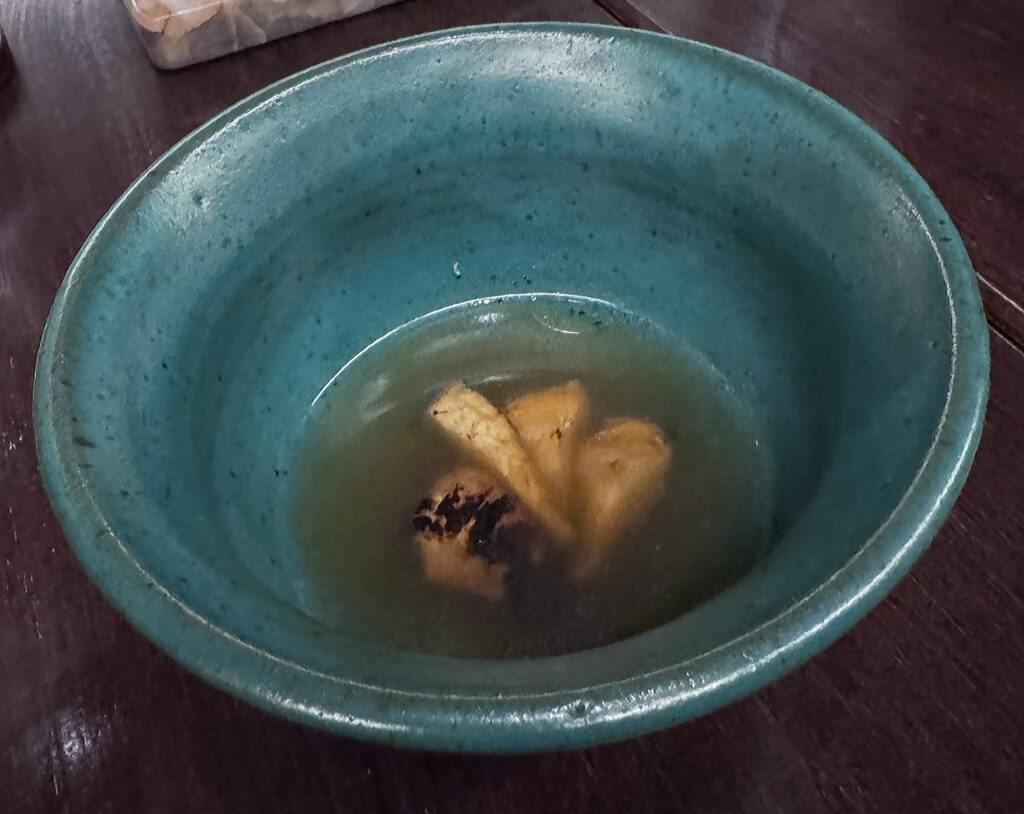
Turning away from tomatoes, the “Baby Artichoke—Aged Beef Broth” follows in the tradition of dishes like the “Hakurei Turnip—Benton’s Ham” that I sampled back in May. Yes, serving chunks of vegetable as part of a barebones soup gets right at the heart of Feld’s ethos, and this piece of produce is particularly special. Potashnick explains that, upon encountering these artichokes (sourced from Nichols Farm) four years ago, he finally started to believe that his concept could really work.
Here, the artichokes are first steamed and then finished over the coals. On the palate, they possess a subtle crunch and accompanying tinge of char. However, their latent earth and nuttiness and even bitterness joins effortlessly with the broth, whose persistent savory quality (leavened by a little lemon) proves considerably soothing. As always, a little more salt might make this recipe really soar (at least for my taste). But, ultimately, I respect the balance currently being struck.
With a few individual courses now under its belt, the menu veers back toward the kind of multifaceted presentation that, while not quite as extensive as “The Drop,” distinguishes Feld as an ingredient-forward, “relationship to table” spot.
The next four dishes (all served in unison) center on the same Smits Farms corn I mentioned earlier.
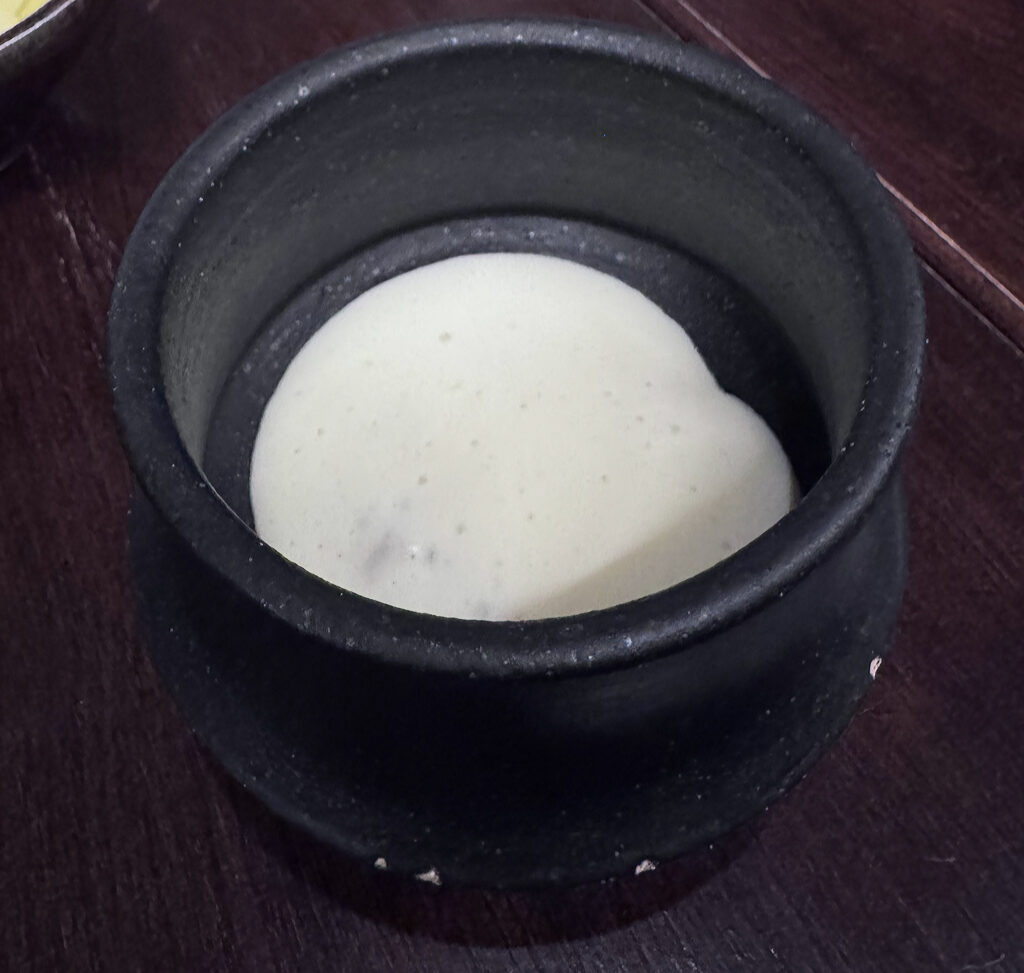
First, there’s the “Grilled Corn—Pleasant Ridge,” which comprises a “pseudo-porridge” of rice coated in a frothy cheese mousse. The corn itself provides an all-important crunch that contrasts these more soothing elements, contributing to a flavor that is beautifully long, caramelized, and nutty with only a hint of complicating char.
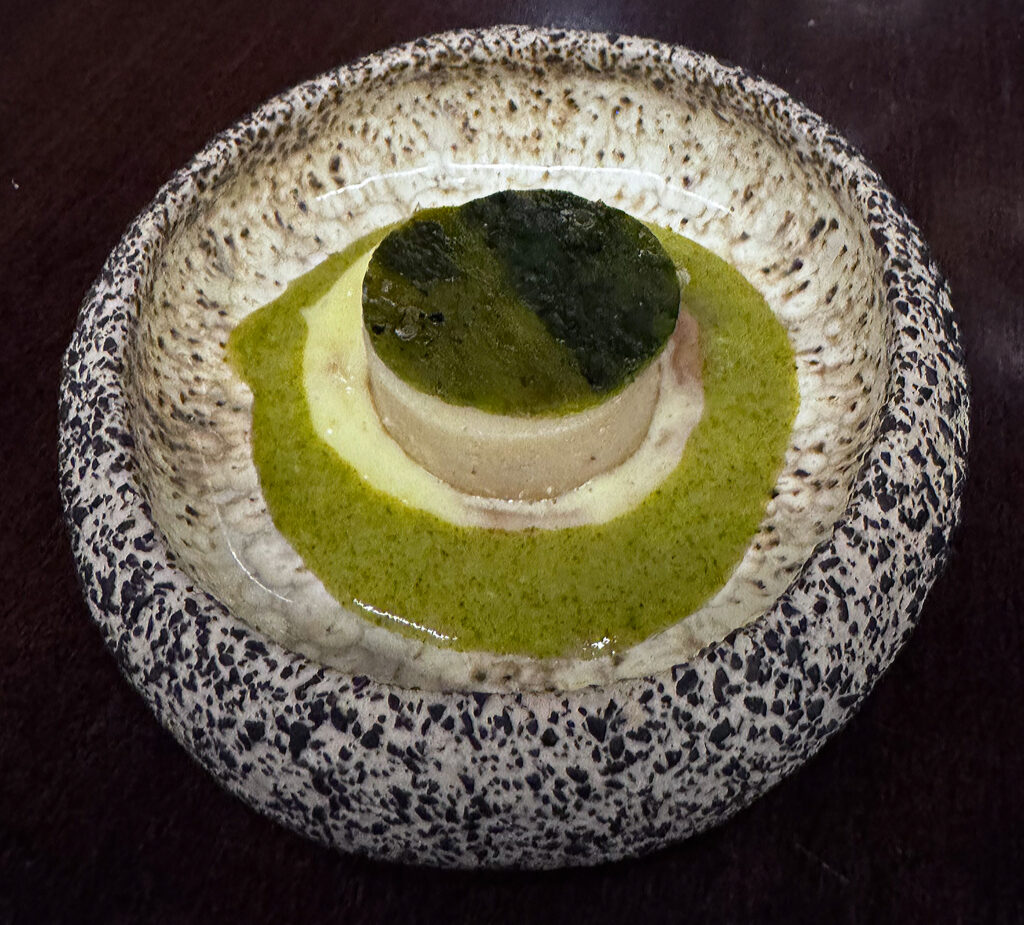
Second, we have the “Masa Tamal—Poblano.” The recipe centers on a puck of the titular steamed corn dough (sourced from Madison’s La Cosecha Tortilla Company) that has been dressed with chicken fat emulsion, a sauce of fermented poblano (also containing corn), and a crowning disc made from the grilled pepper.
On entry, the tamal feels firmer and more substantial than anything found in the preceding porridge, yet it moistens and smoothens upon incorporating the surrounding liquid. Flavor is characterized by a resounding earthiness and toastiness accented by just a touch of heat. However, the recipe carries the richness of the chicken fat through the finish and feels immensely satisfying.
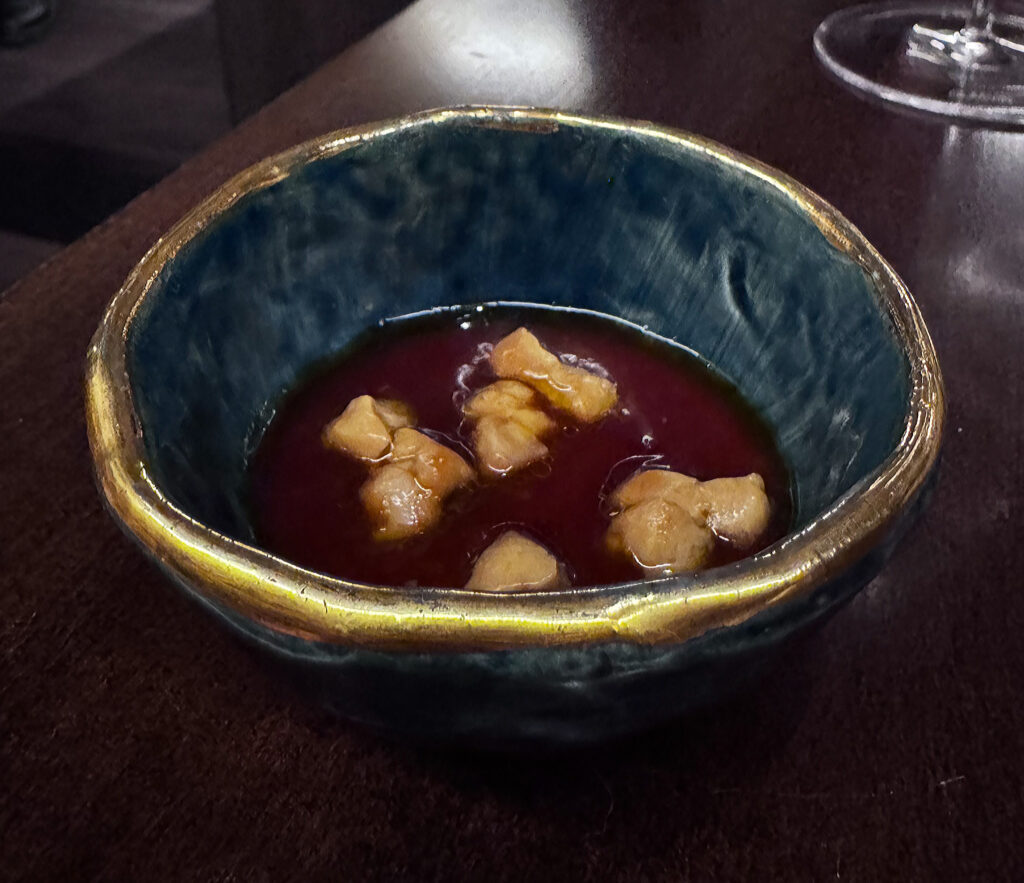
Next comes bowl titled “Corn Custard—Foie” that, with its combination of an eggy base and a deeply sweet caramelized onion jus, almost exactly matches the profile of Smyth’s black walnut-cured quail egg. Unfortunately, for my palate, that’s not really a compliment: it’s all just too gooey and sickly and quease-inducing. But, seeing two chefs independently strike upon the same sort of effect, I have no trouble admitting this might just be a matter of personal taste.
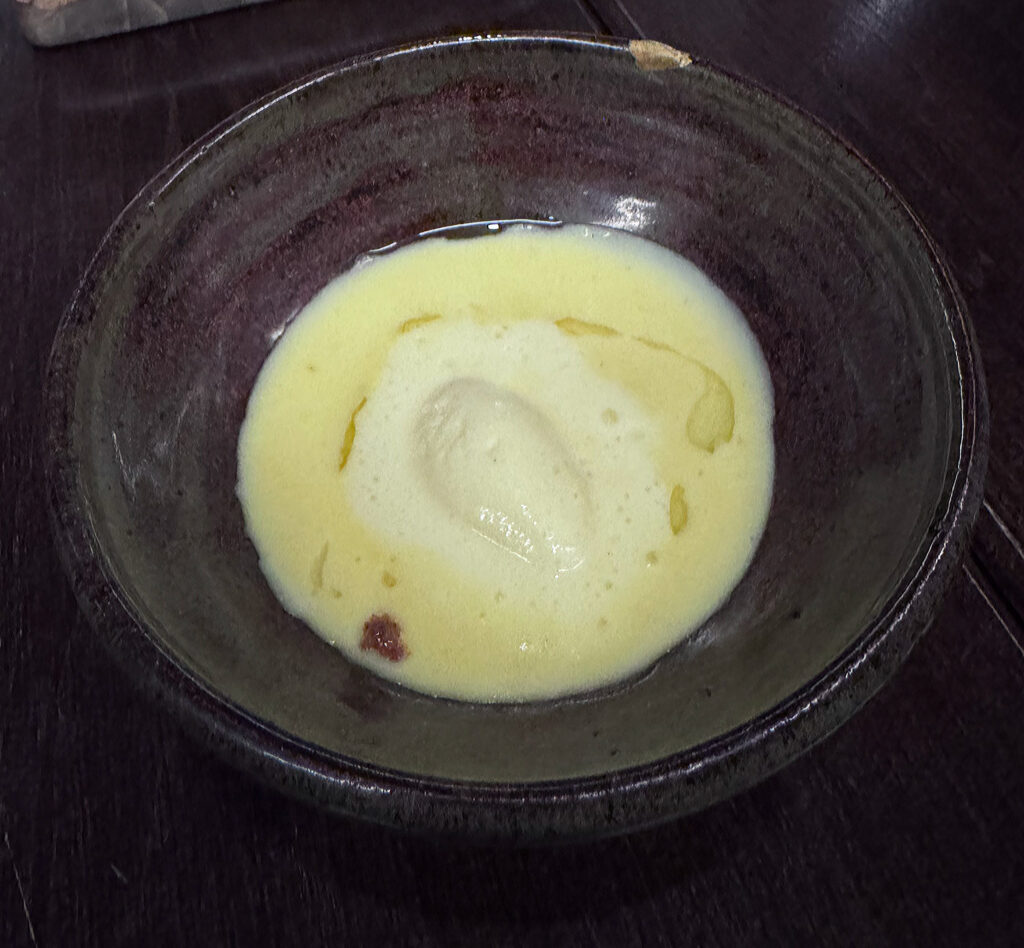
Finally, there’s the “Corn Soup—Bay Leaf” (which, though the last to be listed on the menu, is actually the item we are advised to start with). Other than the “many flavors of bacon” that lurk below the broth, there’s not much to expand upon. Rather, the juxtaposition of warm-and-creamy soup, cool bay leaf ice cream, and crispy pork is wonderfully executed. The resulting sensation—smoky, milky, and so deeply sweet—can only be called sublime. Yes, this recipe ranks as the best of the bunch, but the “Grilled Corn” and “Masa Tamal” are not at all far off.
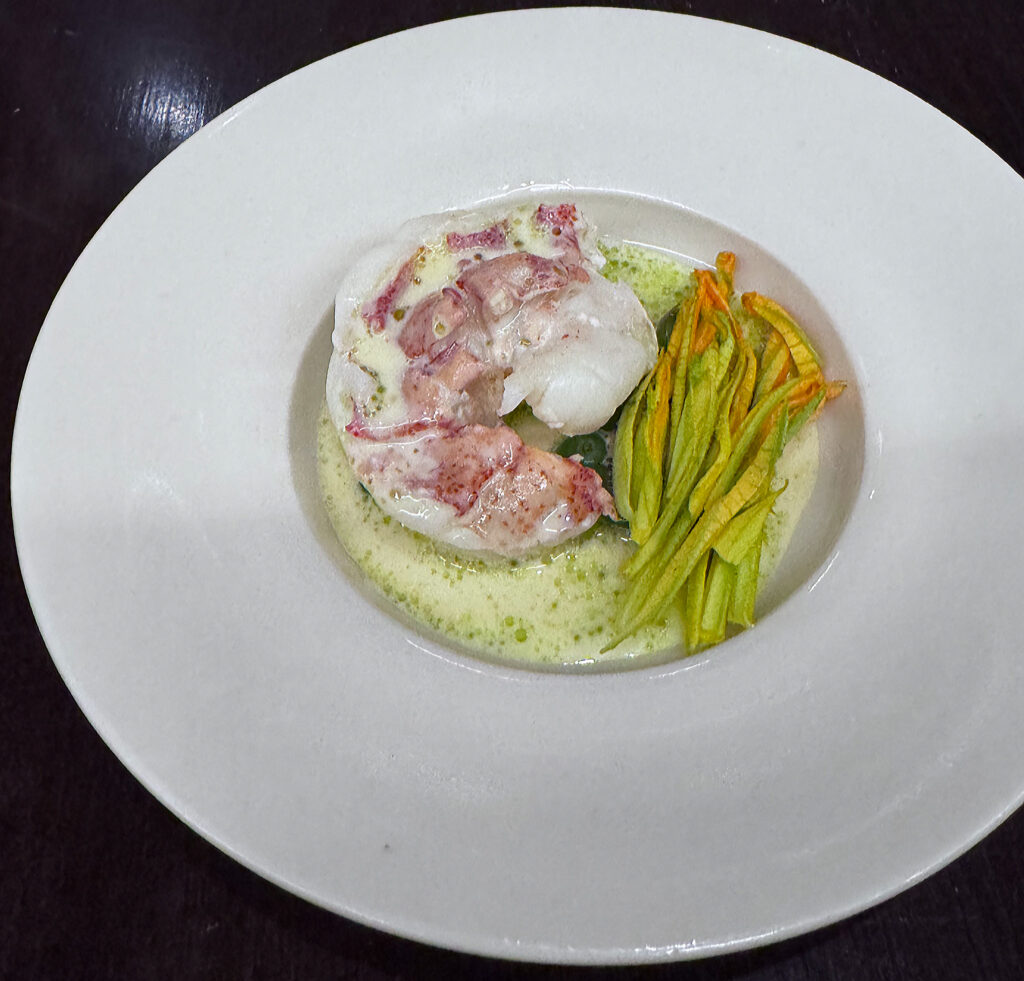
Moving toward the meal’s savory climax, I am met by a preparation titled “Sue’s Lobster—Anise,” whose substantial portion size calls the crustacean’s claw (served earlier) to mind. Here, the tail meat (taken from a specimen sourced out of Stonington, Maine) comes dressed with fennel oil, a pastis cream, some sliced segments of squash blossom, and a few grapes sourced from the restaurant’s very own garden (where the team struggles to keep birds from stealing their fruit).
The generosity of the resulting plate (always a refreshing sight) is entirely matched by the pleasure it delivers. The lobster’s tail—relative to the claw—feels perfectly plump and buttery. It possesses some of the same density (and, thus, sense of satisfaction) yet packages it in a manner that feels more luxurious. Flavor, in turn, is marked by the bursting acidity of those tiny grapes. Nonetheless, the shellfish ably withstands the tang, and a grassy, licorice-tinted note reveals itself soon after: joining with the crustacean’s own latent sweetness on the finish. Overall, this makes for a dish that is strikingly cohesive and quite decadent too.
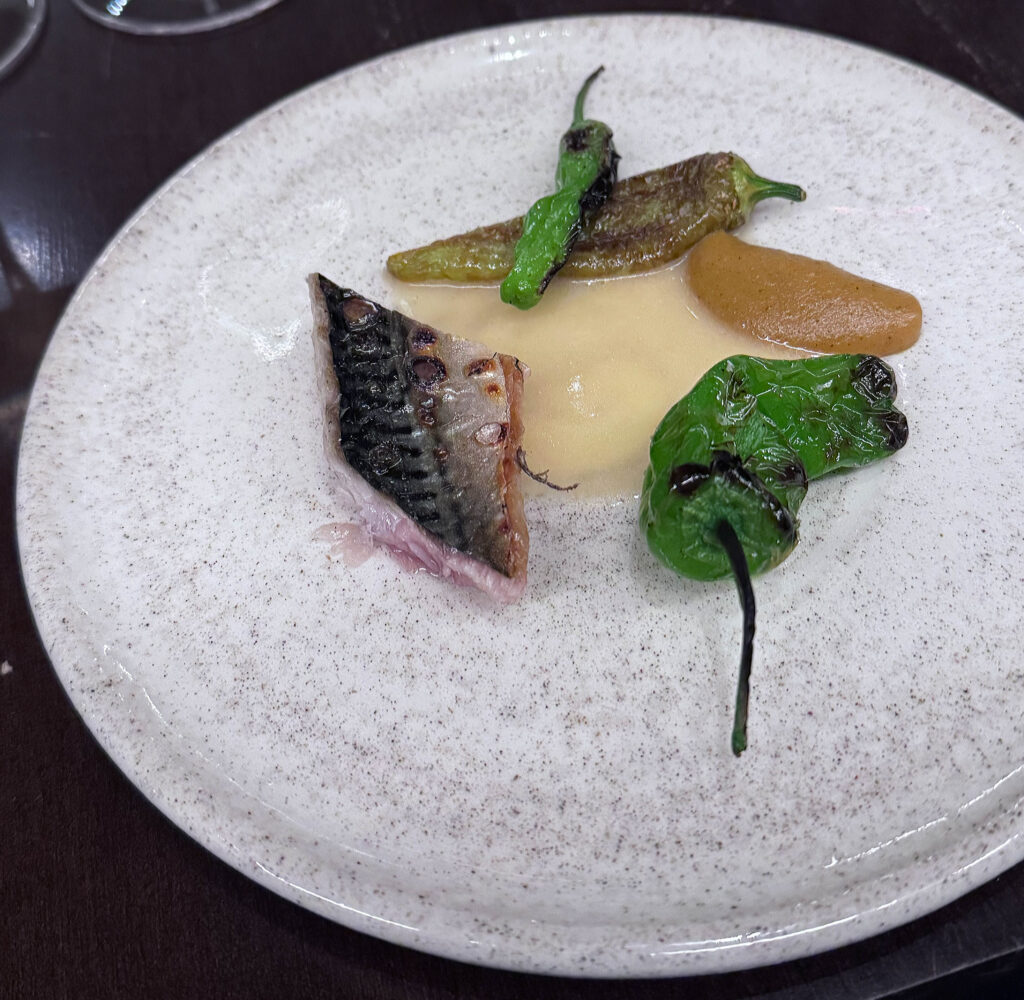
The penultimate savory course is called “Mackerel—Fermented Peach—Shishito,” and, though I rarely jump at the sight of cooked fish such as this, it manages to meet the quality of the preceding lobster. Much of this has to do with cooking method (i.e., the grilling of the mackerel and shishito, the frying of an accompanying banana pepper) and saucework (the transformation of the fermented peach into a beurre monté, the setting of a peach and banana pepper purée within it).
Indeed, on the palate, the fish combines a supremely brittle layer of skin (further enhanced by the crunch of the peppers) with delicate, flaky flesh and a tinge of bitter char that feels oh-so-Japanese. However, rather than matching the mackerel with some appropriately restrained seasoning, the chef counterbalances the grilled character with mild tang, rounded sweetness, and a clean, grassy depth that keeps things from getting too sickly.
In sum, this makes for a rather well-composed dish as it stands. Yet diners are also invited to take a bite of an optional padrón pepper (grilled and set off to the side) if they want to chance a little more heat. The odds are said to be about one in ten, yet both members of my party and an adjacent guest get hit with a lasting, eye-watering fieriness that nearly risks spoiling the subsequent serving. The staff, to their credit, brings over a glass of pear cider (whose sweetness is meant to help counteract the heat) upon noticing. But it’s hard to see what the padrón—at this sort of hit-rate and intensity—can possibly add to the recipe when accounting for the corresponding risk. That said, I don’t fault the mackerel or the kitchen for my own decision to eat it.
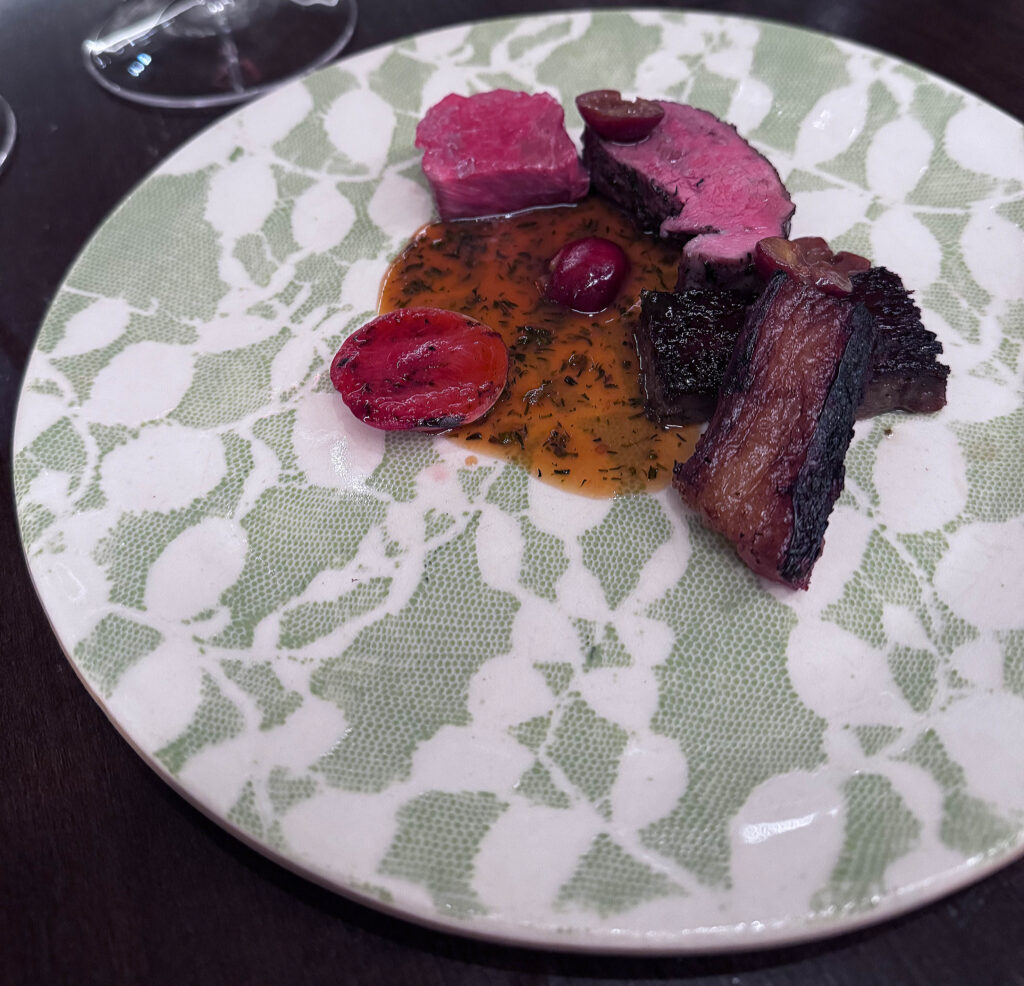
This evening’s main course ventures beyond the pork coppa that featured in June and May while securing its starring ingredient from the same source: Danville’s Krazy Kluckers Farms. “Lamb^4—Za’atar,” as the dish is titled, pairs the loin, the leg, and the belly of the beast (the whole animal being offered to Feld on short notice) with a fresh version of the titular herb blend. Cherries (marinated in lamb fat), a cherry-za’atar jus, and a piece of grilled plum complete the presentation.
Texturally, the gradient displayed by the different cuts of meat is hugely impressive. The loin delivers a juicy chew, the leg (transformed into shawarma) offers finely crisp shreds, and the belly (transformed into bacon) is defined by a rendered core of fat. Flavor, too, reflects the same distinctiveness: namely, the fresh earthiness of the loin, the darker roasted notes of the leg, and the sweet, mapley character of the belly all joined by an overarching savory quality. Accentuating each of these, one finds the fresher sweetness and acidity of the fruit. Nonetheless, undertones of char and fat and that same za’atar ensure the cherries and plum are woven seamlessly into the recipe. Ultimately, this makes for an entrée that is both engaging and refined, ranking among the finest the team has ever served.
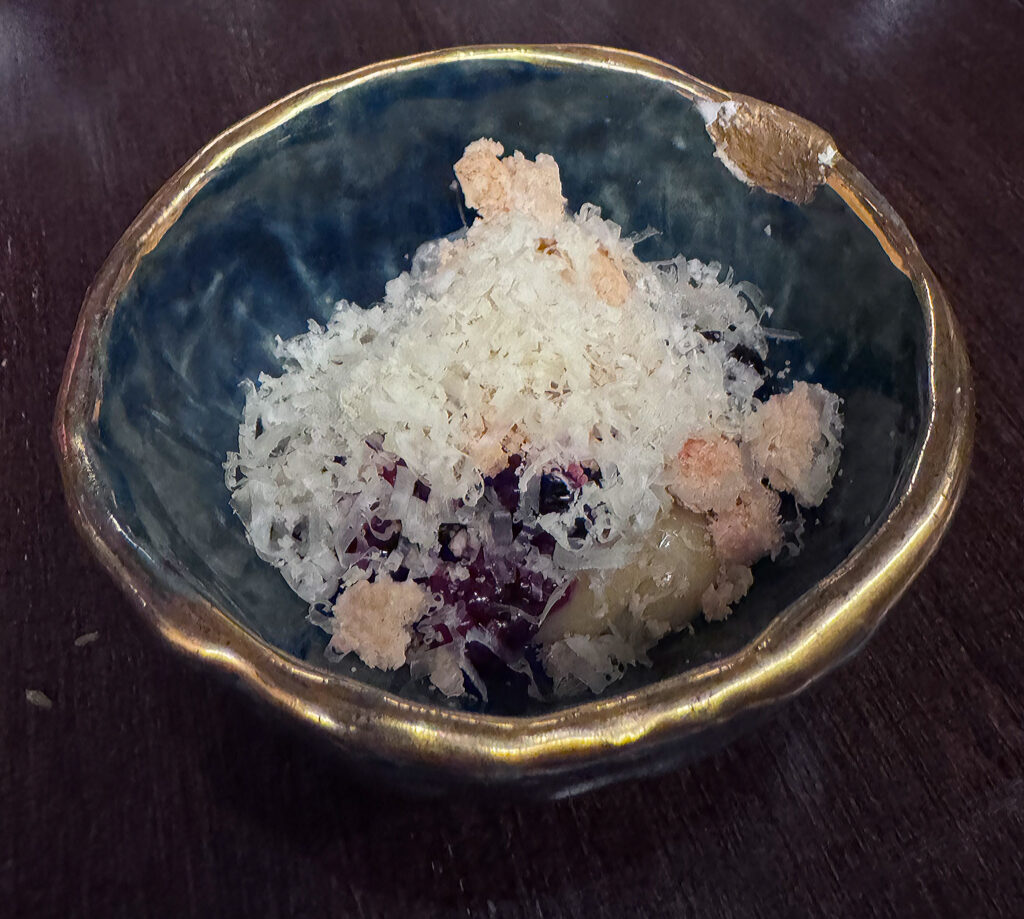
The turn toward dessert is heralded by the arrival of the “Corn Pudding—Pleasant Ridge,” which (building on the recipes I encountered during the four-part corn sequence) looks to further amplify the star ingredient’s latent sweetness.
While the earlier rice porridge also drew upon the titular cheese (rendered as a mousse), the present dish transforms it into shortbread crumble and comes topped with a generous pile of shavings. Below, one finds the corn custard, a honey custard, and some grilled blackberries: creating an effect that is crisp, jammy, and mouth-coatingly creamy on entry then charged with powerful nuttiness and a haunting, musky sweetness through the finish. A jolt of tartness helps to provide definition in what is, on this menu filled with corn, another triumph.
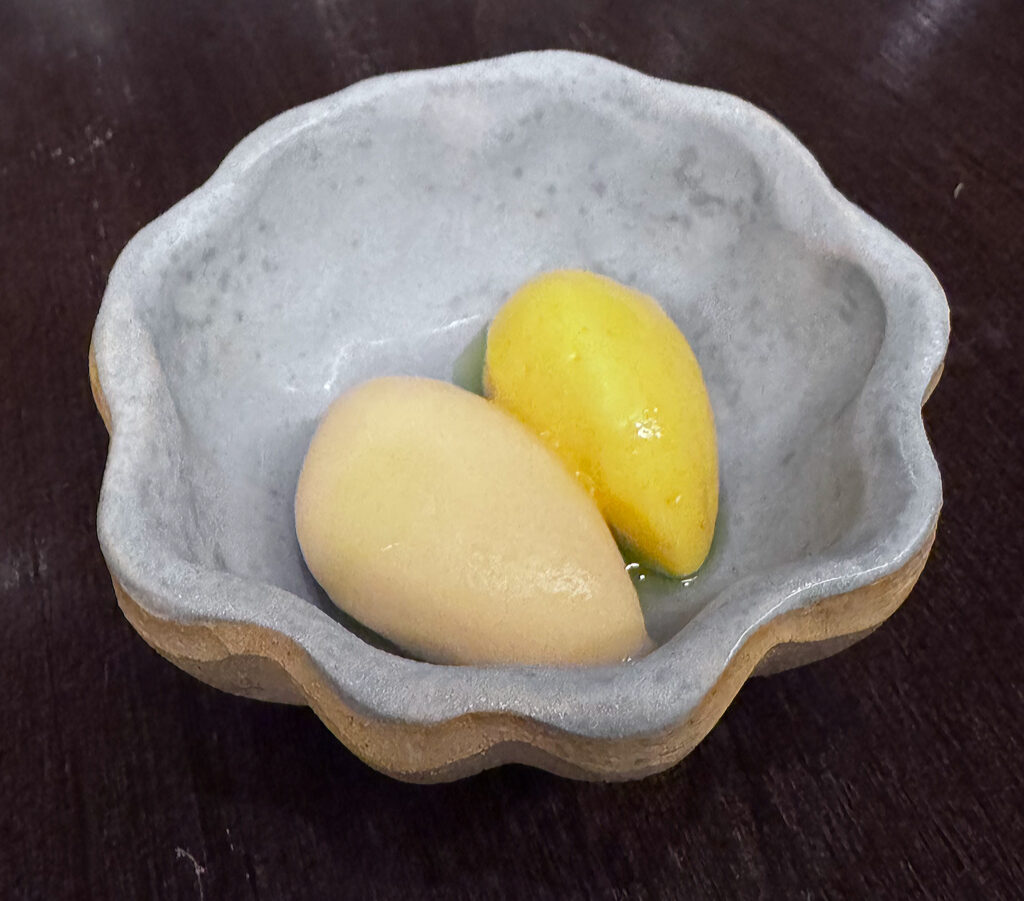
Arriving next, the “Sungold Sorbet—Peach” takes the form of a so-called “double-barreled” presentation of the titular tomato alongside a buttermilk sherbet made from the fruit and a drizzle of fig leaf oil. Simple as can be, the juxtaposition impresses me thanks to the perfect smoothness of each scoop and their subtle difference in density.
Otherwise, when it comes to flavor, the interplay between the sweeter peach and tangier Sungold (with each ingredient possessing a good deal of the other quality too) is masterfully imagined. The dish not only balances refreshment and satisfaction. Rather, it reveals a profound fruity depth that the tomato (for all its other appearances during the meal) has not yet expressed. What a bookend.
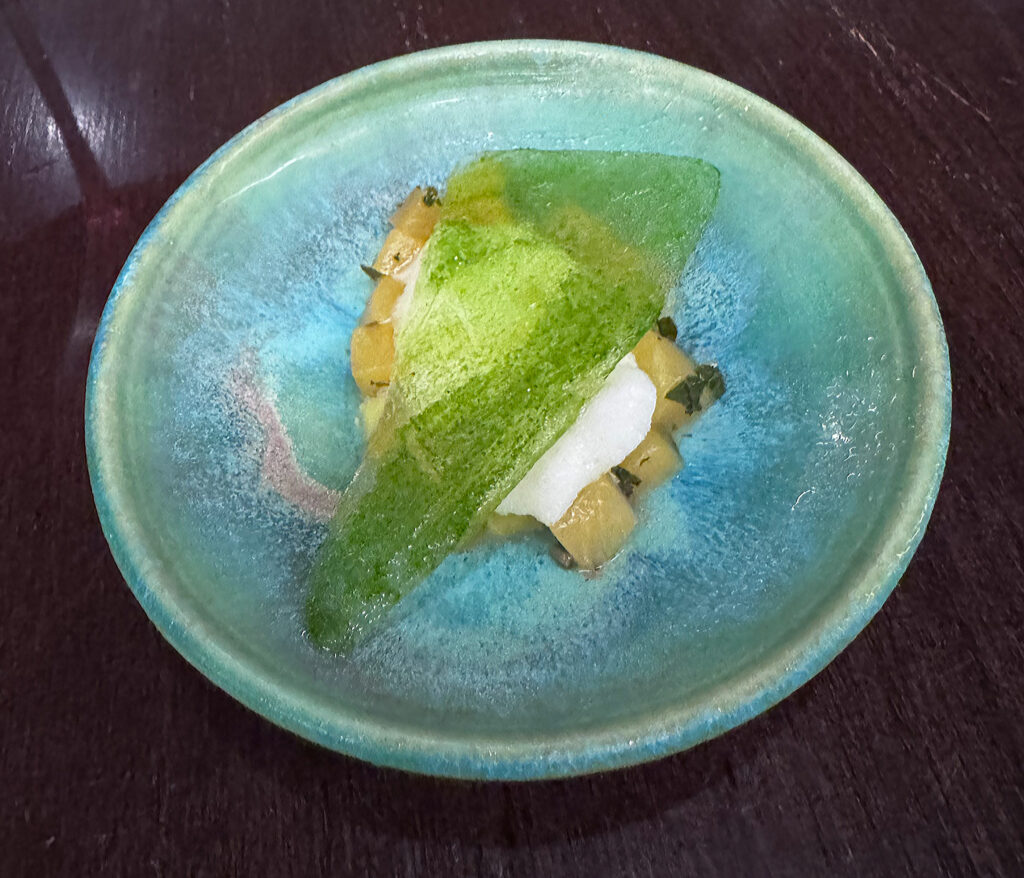
A preparation titled “Melon—Passionfruit” keeps us in the realm of fruit, and I start to wonder if I’m actually going to get the kind of caramelized or chocolatey indulgence I regularly demand.
Nonetheless, this combination of diced Nichols Farm melon (an unnamed variety, soaked in honey vinegar), lime sorbet, Samaroli rum-infused passion fruit curd, and mint ice quiets any fear. Meant to mimic a mojito, the recipe spans plump, juicy, tangy, musky, caramelized, and cooling sensations in a manner that is both seamless and invigorating. It’s hard to know where the kitchen suddenly found this inspiration, but the effect is so playful and so good.
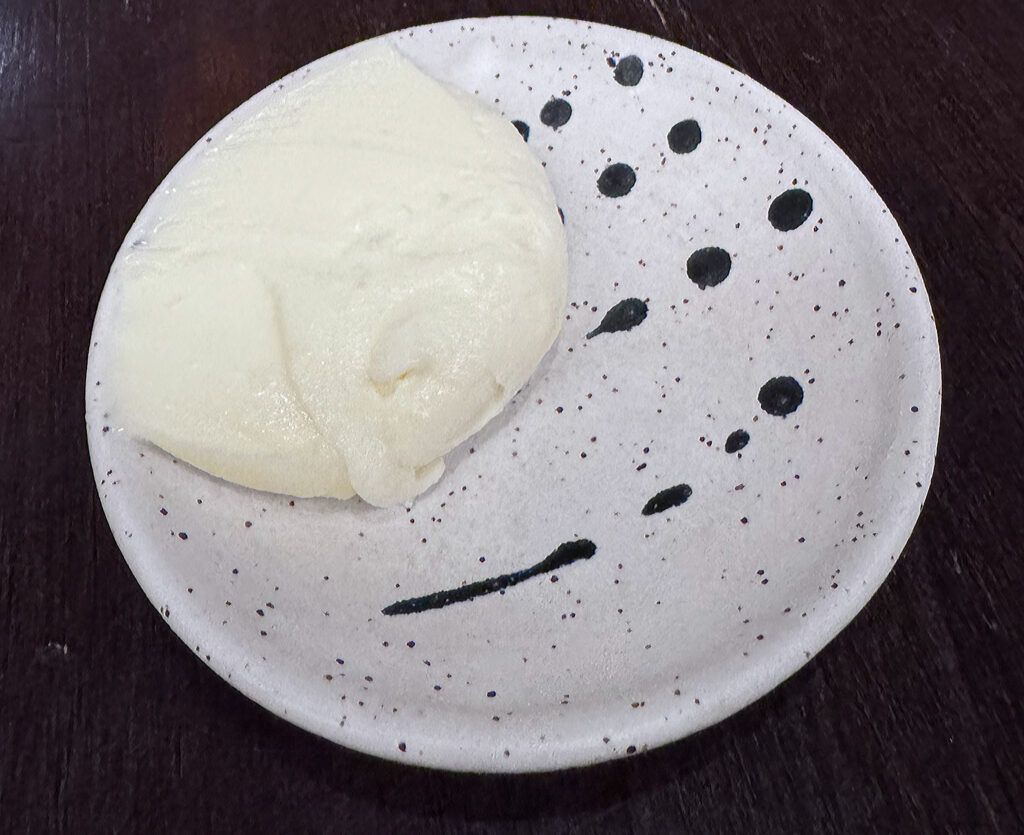
At this point, I have to acknowledge that this is the best run of desserts Feld has ever served. Yet, somehow, the chefs have saved the best for a last: a “Gelato—Corn Cob” that represents Potashnick’s latest work within the fresh-churned ice cream format.
Taking its flavor from all the leftover cobs (and benefitting from nothing more than a pinch of salt), the flawlessly smooth gelato strikes with persistent notes of butter, subtle toastiness, and a fresh sweetness I can only compare to Kyōten’s tamago. This is to say: we’re talking about the very height of decadence and an expression of a quintessential Midwestern crop I will not soon forget.
Closing out the menu are two familiar items:
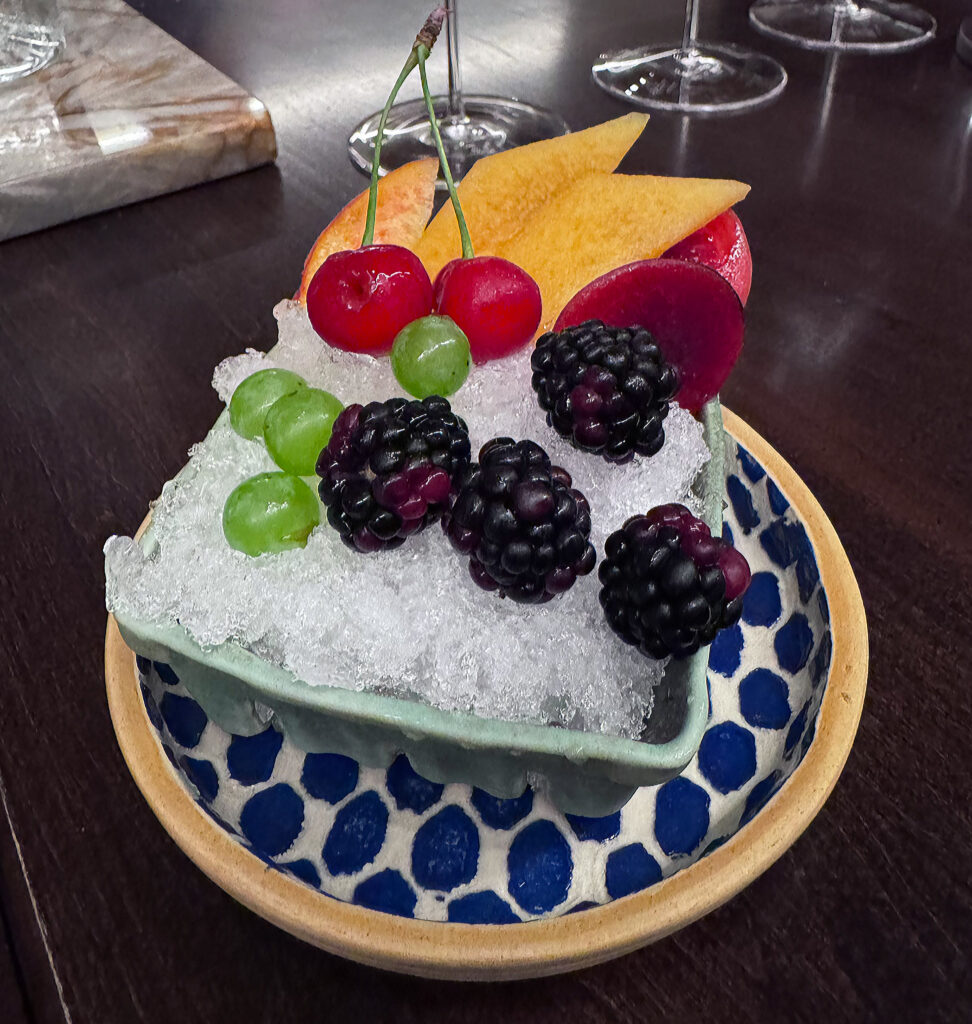
There’s the “Fresh Fruit on Ice,” which tastes especially good on this occasion thanks to the juiciness of the peach, melon, and plum. The garden grapes, cherries, and blackberries aren’t especially notable, yet they still provide an echo of ingredients that featured in some of the earlier courses.
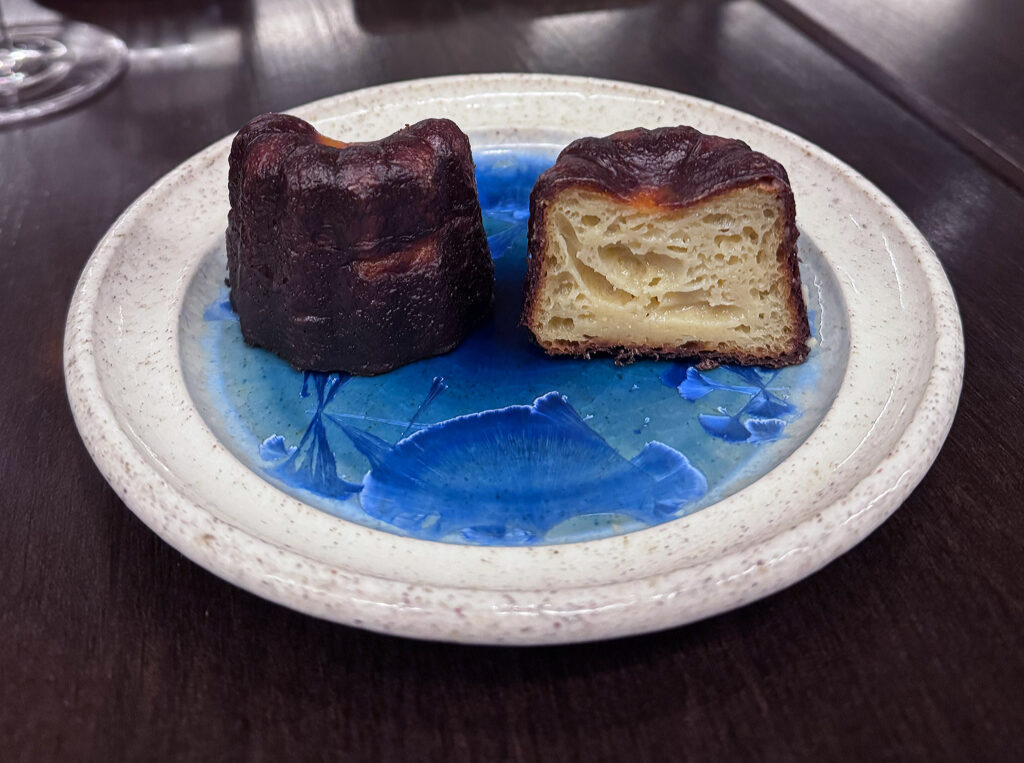
And there’s the “Spiceberry Canelé,” which continues to surpass the Malört version of the recipe thanks its notes of warmer, earthier character (the latter drawn from the inclusion of masa) set upon a crisp, custardy frame. Given how many of Feld’s recipes can be a bit more adventurous, it’s always super pleasing to end on a relatively classic expression of pastry.
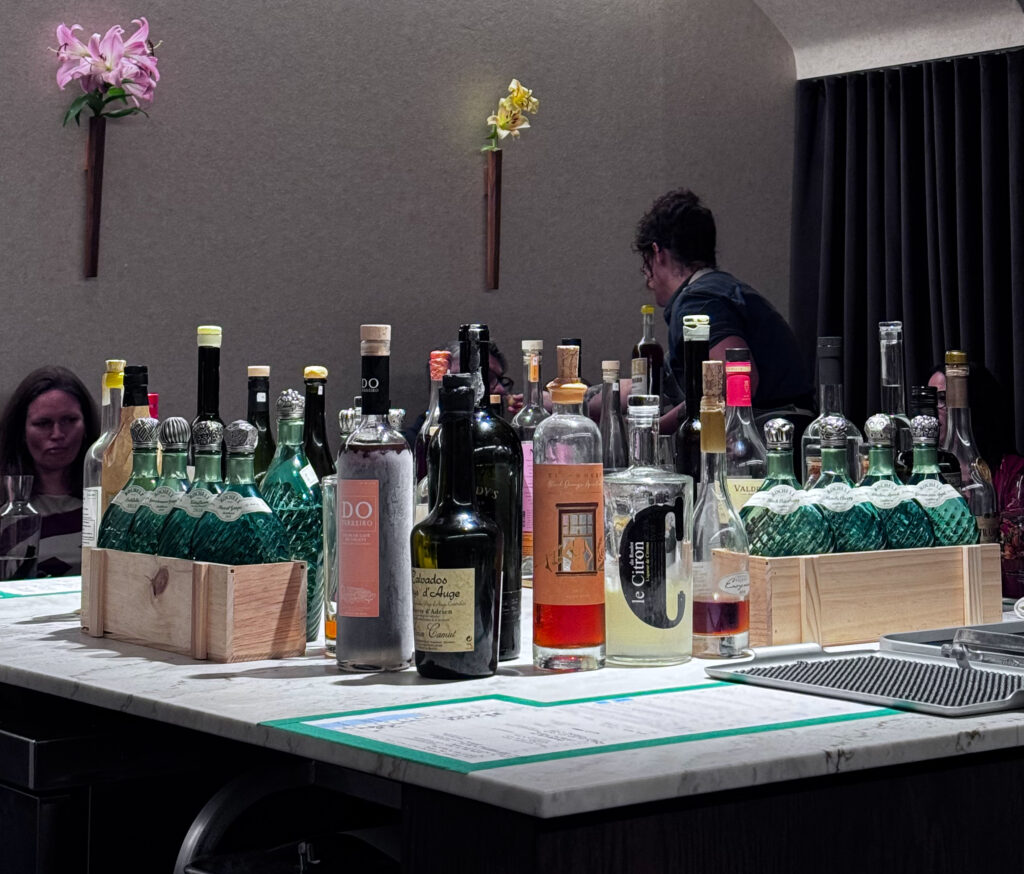
With that, the after-dinner drinks are assembled (I’m told that three of the selections are entirely new), menus are presented, and the guestbooks are offered up too.
On account of rain, there are no s’mores to be had tonight. But diners are still invited to wander and mingle and chat with the team at their leisure.
After all, mere weather cannot dampen the sense of shared journey and connection that has characterized these past two hours.
In ranking the evening’s dishes:
I would place the “Corn Soup—Bay Leaf,” “Melon—Passionfruit,” and “Gelato—Corn Cob” in the highest category: superlative items that stand among the best things I will be served in any restaurant this year.
The “Carbonated Watermelon Juice,” “Melon & Ham Fat,” “Tempura Baby Corn,” “Sungolds—Shiso,” “Grilled Corn—Pleasant Ridge,” “Masa Tamal—Poblano,” “Sue’s Lobster—Anise,” “Mackerel—Fermented Peach—Shishito,” “Lamb^4—Za’atar,” “Corn Pudding—Pleasant Ridge,” “Sungold Sorbet—Peach,” and “Spiceberry Canelé” land in the following stratum: great recipes that achieved a truly memorable degree of pleasure. I would love to encounter any of these again.
Next come the “Yellowtail Pancake,” “Pig Head Terrine,” “Basil & Sungolds,” “Peach & Shallot,” “Lobster & Green Garlic,” “Yellowtail Sashimi—Tomato,” “Baby Artichoke—Aged Beef Broth,” and “Fresh Fruit on Ice”—good—even very good—preparations I would always be happy to sample again (but that just failed to elicit an extra degree of emotion).
Finally, there’s the “Corn Custard—Foie”—a merely good (or maybe just intriguing) item that fell short when it came to texture and flavor. Given that this composition reminded me of a bite at Smyth that I also do not like, it may be fair to say that this is just a matter of personal preference.
Overall, this makes for a hit-rate of 96% with some 63% of offerings reaching that “would love to have again” level of quality: figures that largely match the numbers I reported in June (i.e., 100% and 52%), May (i.e., 100% and 54%), and April (i.e., 96% and 54%).
I say “largely match” because an increase of roughly 10% in that “would love to have again” stratum is significant. Such an uptick is exemplary, and it pushes the concept into a realm of excellence that the best Chicago restaurants (of which Feld is already a peer) only achieve on those rarest of nights: peak performance of the kind I recently encountered at Kyōten.
If we consider the number of “best of the year” dishes (three, compared to six in June, five in May, and four in April), the picture starts to seem a little less rosy. However, I would contend that many of the meal’s weaker servings appeared as part of “The Drop” or (in the case of the very weakest) as part of a broader corn flight—sequences that were, overall, quite successful.
This means that much of the present menu’s resounding quality could be found through the middle (i.e., the fully composed plates), extending through the main course and a legendary run of desserts. In fact, the only real weak point I can pick out—the trio of courses served after “The Drop” but before the corn sequence—was still rescued by the “Sungolds—Shiso.”
Ultimately, I’m always one to chase after the most extreme expressions of flavor: those “best of the year” recipes that I’d be willing to endure all kinds of experimentation (and occasional flat-out misses) for.
Yet there’s something to be said for a meal that puts its foot on the pedal and doesn’t let up—that reliably impresses the audience using a wide range of ingredients and techniques even if it doesn’t quite hit that highest of gears quite so often.
Yes, the evening’s experience was—more than anything—a triumph of consistency, and it’s this foundation of consistency (really, increasing mastery) that assures me Feld is still growing stronger and becoming ever more capable of scaling those mountaintops of pleasure in new, ever-changing ways.