
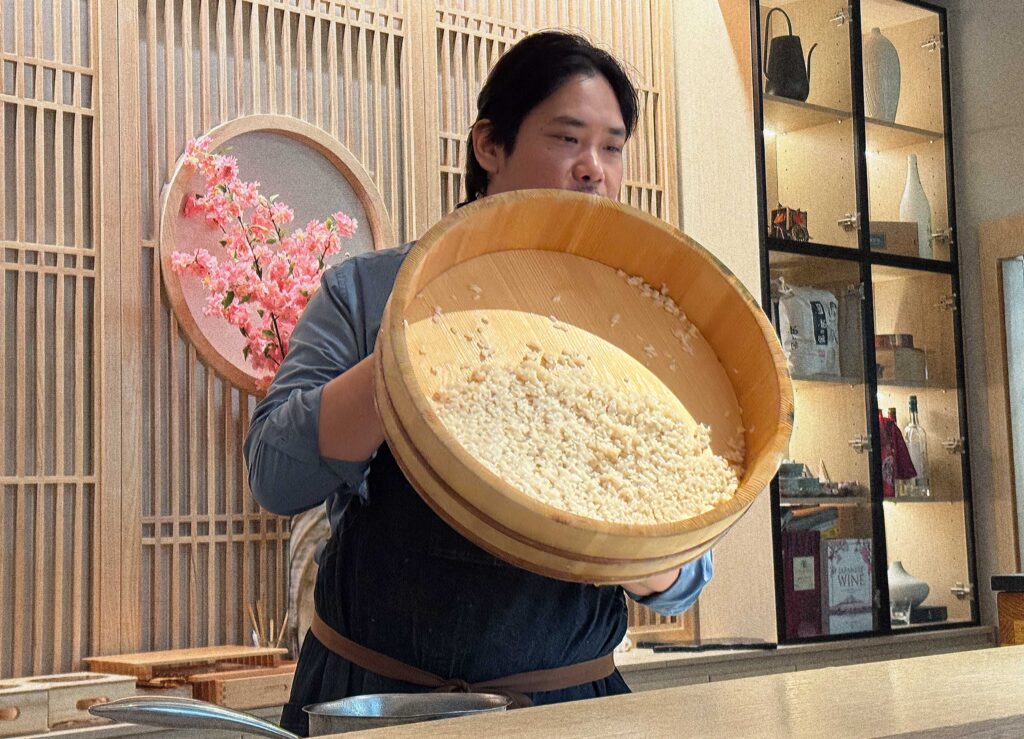
The omakase I sampled at the start of July was characterized by adaptation: the unexpected absence of a couple guests, a feeling of uncertainty as the audience shrank from eight to six, the chef’s gracious manner of rolling with the punches, his ability to make the most of the resulting intimacy, and even the creation of a special handroll that quite literally represented the fruits of the no-shows’ neglected ingredients.
This is all in a day’s work for Otto Phan, who has been running Kyōten for close to eight years now. But it also makes for a useful device—a way of framing a restaurant whose streamlined format and unshakeable foundation (i.e., food shape by the hands of a single craftsperson) rarely gives me all that much to report on.
Yes, there have been staff changes and hybridized menus. I’ve witnessed the debut of a new ceramic geta (the serving board on which nigiri are placed) and noted the growing collection of books and bottles and other ornaments lining the shelves behind the bar. Sometimes the chef has something from the cellar—a true one of one he’s been dreaming about pairing with this or that fish—to share. Other customers—typically some blend of roving gastronomes, local snobs, industry figures, and the most earnest special occasion diners you’ll ever find at a $500 per person sushi counter—always put their imprint on the meal too.

However, the real essence of these experiences (once one grows accustomed to Phan’s showmanship) is utterly granular: the small movements of the season, the distinctive qualities of each individual fish, the myriad tools in the toolbox being wielded so that Kyōten hits an ever-moving target of pleasure with the same force—justifying its status as Chicago’s most idiosyncratic, perhaps unforgettable splurge.
Any sweeping narrative (about this or that detail) really just offers a means of distracting the reader from the nuts and bolts of texture and flavor. By setting the mood, I can provide some relief from was is otherwise a maddeningly technical, frequently redundant set of evaluations that, at best, will only reaffirm that the restaurant’s process of incremental growth has not yet waned.
Tonight, I find a full house of engaged, curious middle-aged whites who (free of any impulse to gush about some other omakase they’ve eaten in New York or Tokyo) just seem happy to go along for the ride.
This is the chef’s bread and butter: the unmolded, untainted palates that are frequently best equipped to appreciate a cuisine that joins Japanese technique with a singularly Midwestern (though by no means sacrilegious) flair in what Phan increasingly labels an “ingredient restaurant” (as opposed to the “sushi fix” spot he runs next door).
As it happens, this is also one of those special evenings when nearly everything seems to go right, which means that diners new and old—those only now discovering Kyōten’s charms and those, like myself, who know the high standard this menu must reach—are united in the kind of amazement that transcends expertise.
With nothing else left to say, we will jump right in.
Let us begin.
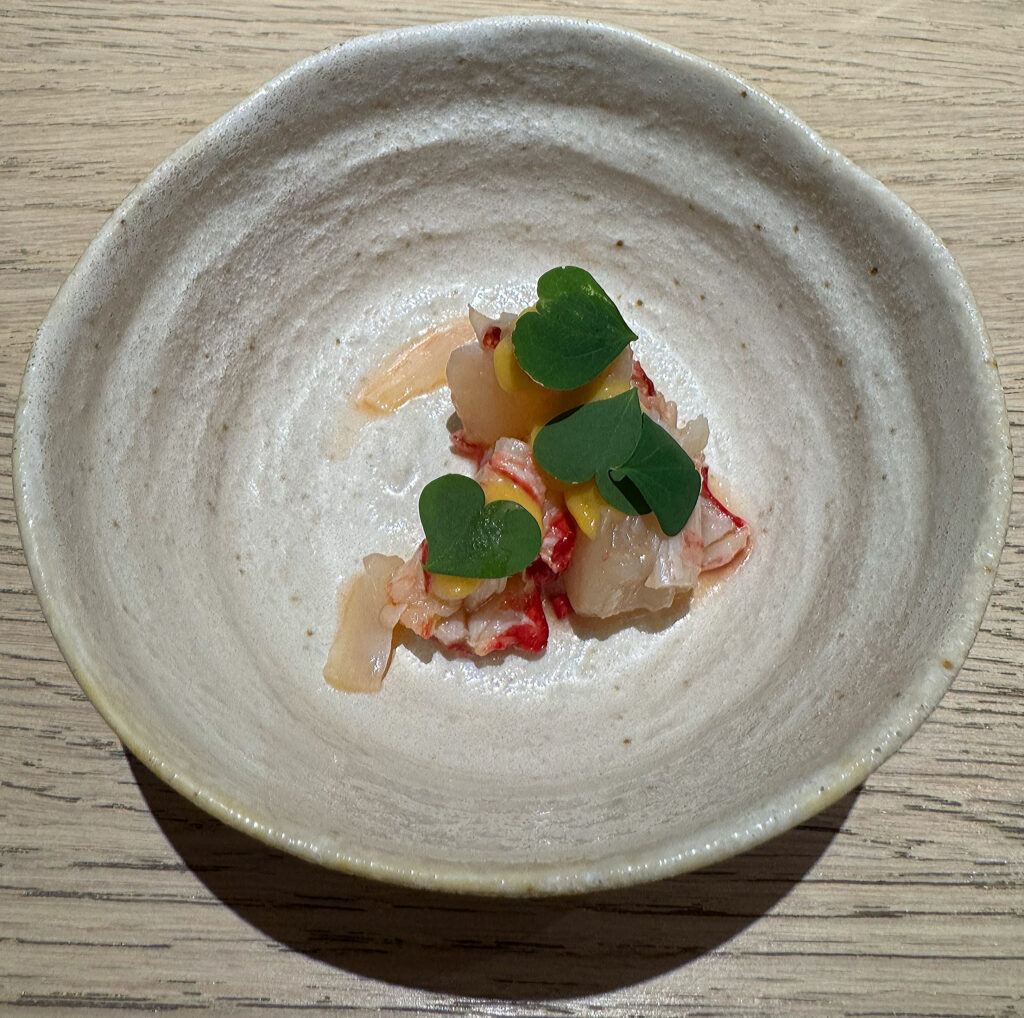
Starting things off, a preparation of “Blue Lobster” sees the titular ingredient return to the menu after being excised earlier this month. Back in May, the crustacean’s claws featured as part of a “spring salad” that was missing some of the savory intensity I expect from Phan’s cuisine. However, on this occasion, I find the meat from the tail to be beautifully rendered.
Texturally, the shellfish combines a firm, plump exterior with a finely crunchy (and then creamy) interior indicative of its raw state. This effect plays well with the richness of an accompanying “lobster sauce,” one whose concentration of umami (in concert with the robust flavor this species is known for) delivers all the deep satisfaction I am looking for. Sorrel, sourced from Froggy Meadow Farm this morning, provides a sharp, citric finishing touch: establishing a sense of balance and cohesion that marks this dish as one of the chef’s most elegant openers in recent memory.
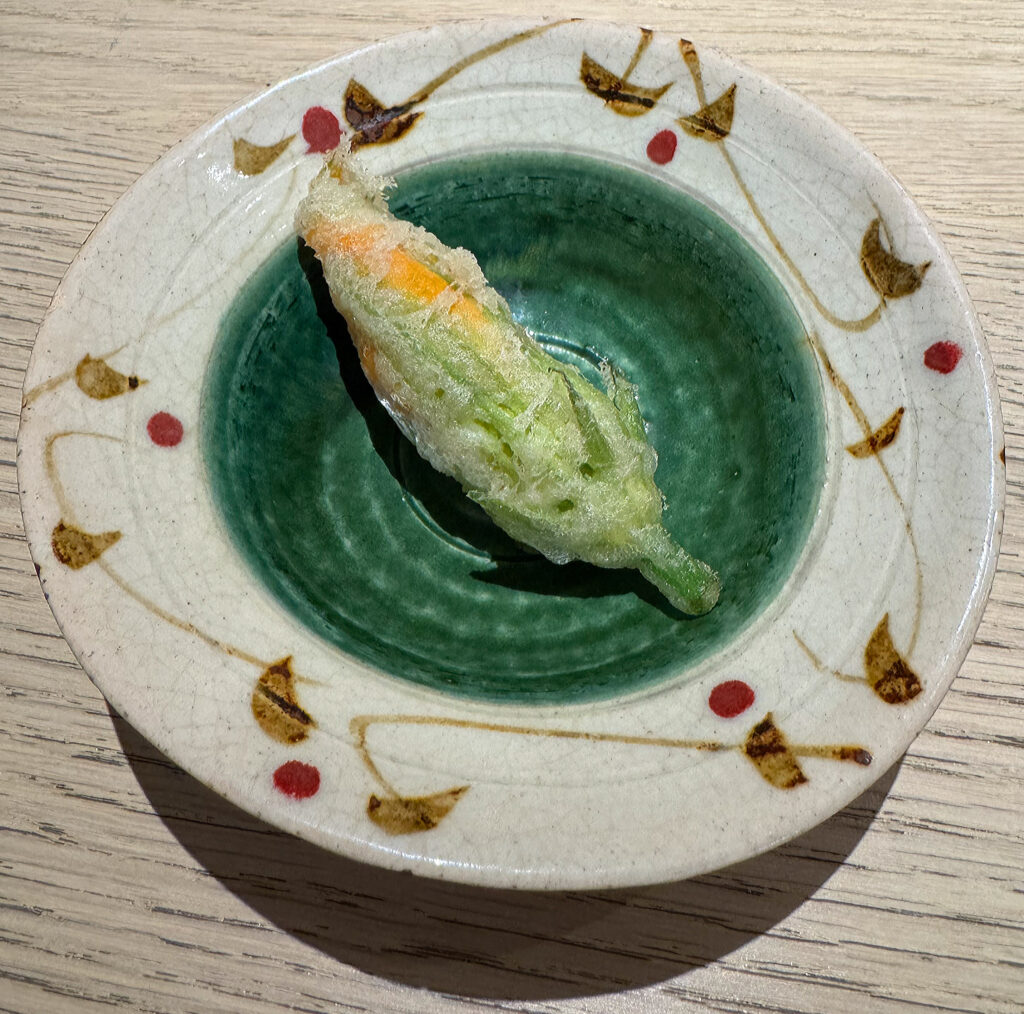
Arriving next, the “Courgette Flower” looks to affirm Kyōten’s claim of being a more broadly “ingredient-focused” concept while, simultaneously, transforming its use of the blue lobster into something more of a sequence. Here, the crustacean’s claw meat is seasoned with “secret spices,” stuffed into the zucchini blossom, and then tempura fried (a favorite technique that, by my measure, reaches its highest expression with this recipe).
Phan advises guests to eat the resulting portion “like a corn dog”—that is, using the flower’s stem as a base from which to take bites of the shellfish-filled petals. Doing so, one is met by a sensation that is cleanly crisp and juicy and buttery through the finish. The resulting flavor, in turn, combines the same savory depth I enjoyed from the lobster’s tail with a unique, freshly sweet note that is just sublime. Ultimately, while I think some kind of accompanying sauce could take this recipe to an even higher peak, there’s no denying that the present construction is excellent in its own right.
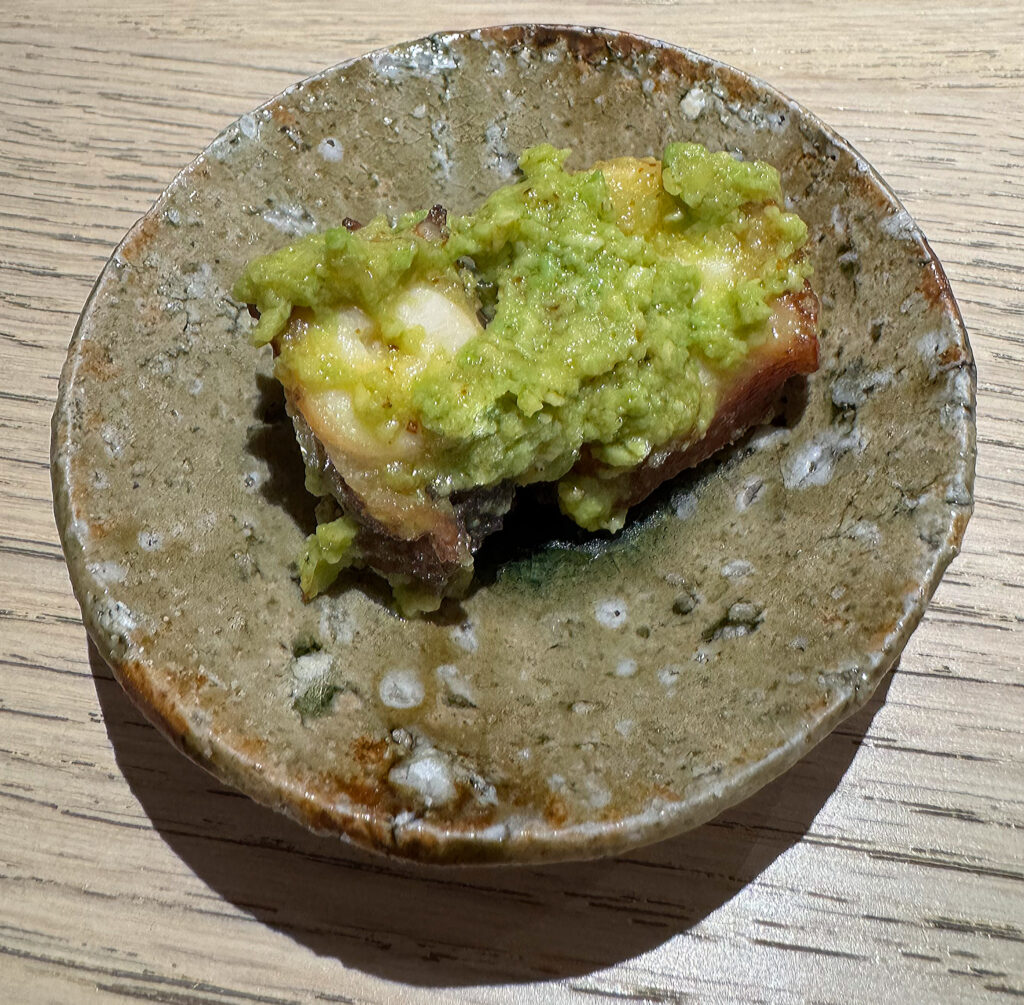
“Octopus” is the only one of Phan’s signatures (“the longest signature I’ve ever had,” according to the chef) that appears as part of the appetizer selection tonight. He massages and boils and karaage-fries the cephalopod in the usual manner before generously coating pieces with his familiar avocado ponzu.
The resulting “ugly delicious” bites balance mouth-coating creaminess, a fleeting sensation of crispness, a moderate degree of chew, and—at last—a tender, meaty quality through the finish. Flavor, too, feels full and savory while benefitting from supporting hints of tang and sweetness that provide definition. Overall, the octopus is strikingly cohesive and convincing in its effect. How could the dish ever leave the menu when it remains such a consistent source of pleasure?
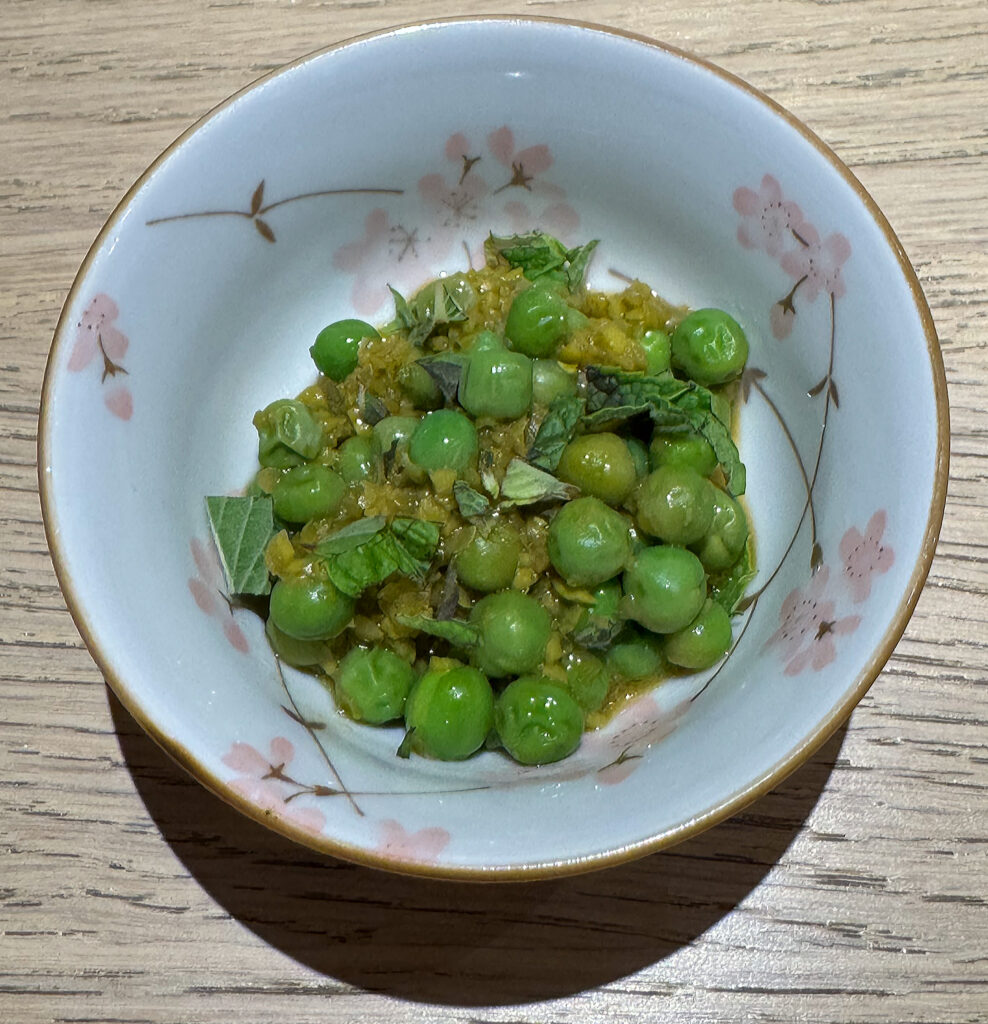
The “Mick Klug Peas” made their first appearance of the season earlier this month, and, with no seafood to speak of here, the recipe pushes Kyōten’s “ingredient-focused” label to the extreme. The bowl continues to center on the juxtaposition of the fresh vegetable alongside a “sludge” made from a portion that has been fermented. However, on this occasion, a sprinkle local mint adds some extra intrigue.
On the palate, the peas lead with a caressing firmness yet prove plump and juicy once one bites down. At that point, they join with the fermented bits: whose deeply nutty and savory character effectively substitutes for any necessary salt. Indeed, the coated peas feel hot and rich and satisfying only for the mint to offer an alleviating freshness. For my taste, the herb causes the starring vegetable to display less outright decadence than last time. Nonetheless, I can appreciate the added complexity and balance in what is meant to be more of a transitional course.
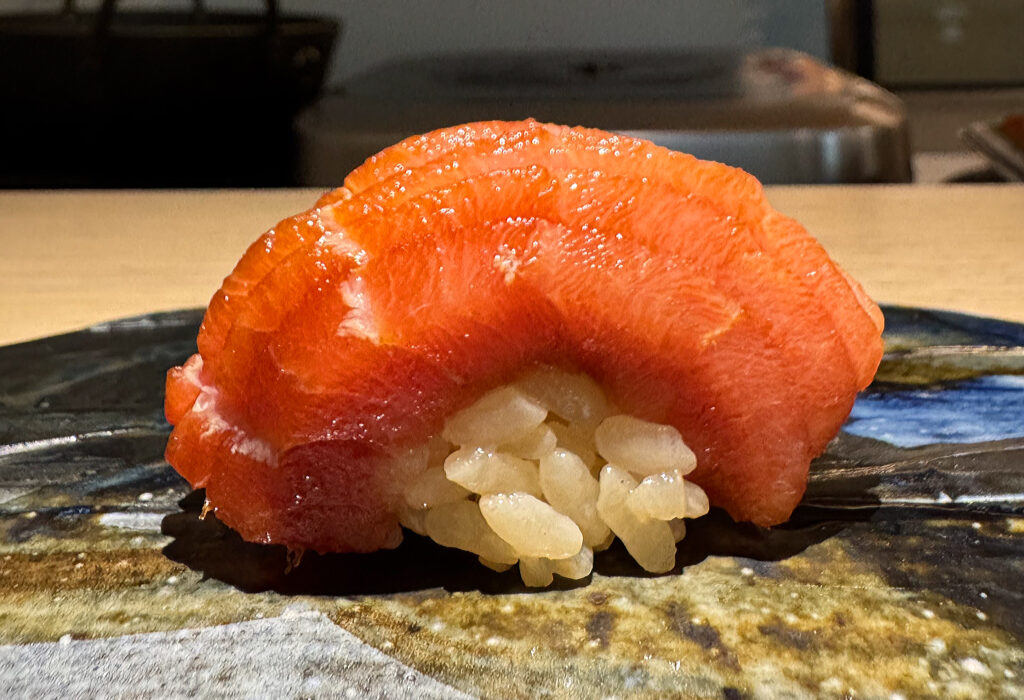
After Phan’s presentation of the rice and his simple advisement to “eat them with your hands,” the evening’s lineup of nigiri arrives rather suddenly. “Ōtoro” (i.e., the fattiest cut of the tuna’s belly) promises to form the meal’s early peak, and on looks alone—the flesh being so finely woven with marbling—it’s hard to disagree.
Kyōten’s whole philosophy turns on the fact that it’s better for guests to enjoy this kind of piece early, with appetites still raging, then open their minds to all the other fish on offer. Though the menu boasts other highlights (right down to dessert), I must admit that the ōtoro frequently comes out on top—or at the very least ties for first.
On rare occasions, the bite can falter. On even rarer occasions, it breaks the scale: not only surpassing expectations but challenging what you even think this ingredient is capable of. It’s hard even for the chef to explain why (after all, this is mere “summer tuna,” sourced from Boston, and not the kind of auction-grade product that one would expect to take the prize).
Paired with the restaurant’s darker rice, the ōtoro melts in a manner that does not betray even a trace of structure. The fish simply transforms into mouth-coating fat, whereupon jolts of wasabi, soy sauce, and red vinegar steer the tuna belly’s supreme concentration of richness into an expression of sharpness, sweetness, and profound umami that lasts minutes on the palate. In sum, this life-affirming piece not only ranks as the finest thing I have eaten this year; rather, it forms a standard against which all other nigiri from any other counter must now be judged.
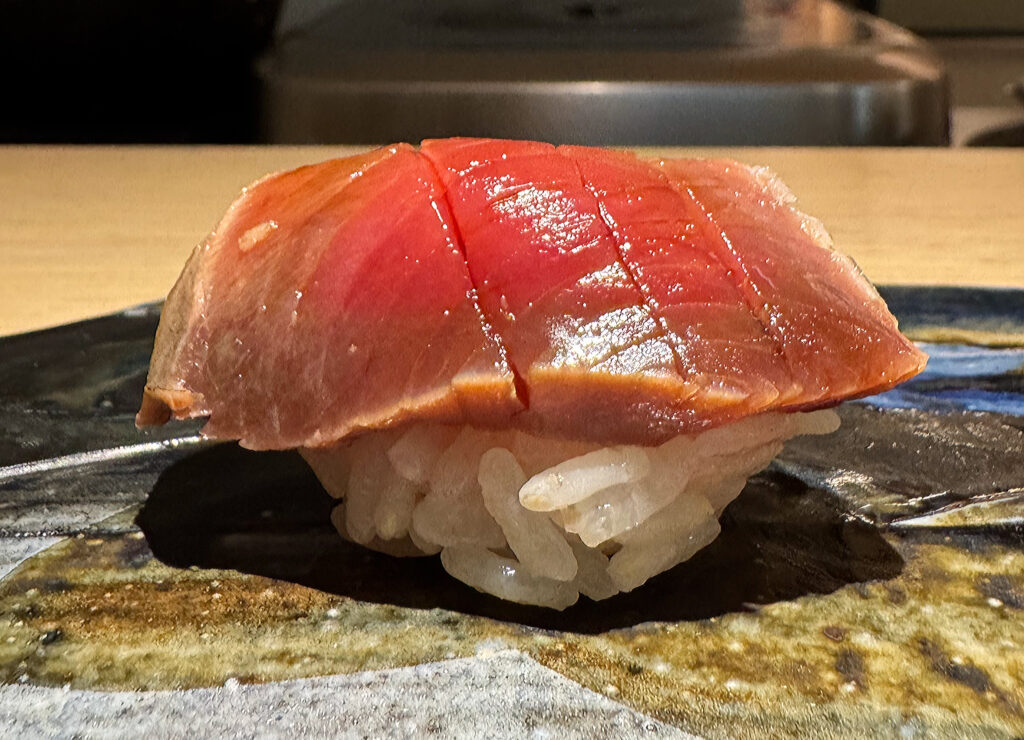
The comedown from such a superlative item seems inevitable, yet Phan is known for squeezing memorable performances out of less traditionally coveted fish. His “Katsuo” (or skipjack tuna) represents an entirely different species from the wild bluefin served before it.
By smoking and searing the katsuo before pairing it with his lighter batch of rice, the chef looks to conjure an effect that is distinct and enjoyable (if not exactly as transcendent). Indeed, texturally, I appreciate the skipjack’s firmer and meatier—though still altogether yielding—consistency. Its resulting flavor is less intense (this has more to do with the degree of seasoning the ōtoro’s fat could withstand), yet I appreciate the fish’s moderately savory character and the hints of tang and sweetness that accompany it on the finish. Overall, this makes for a wholly pleasant bite that I would love to encounter again.
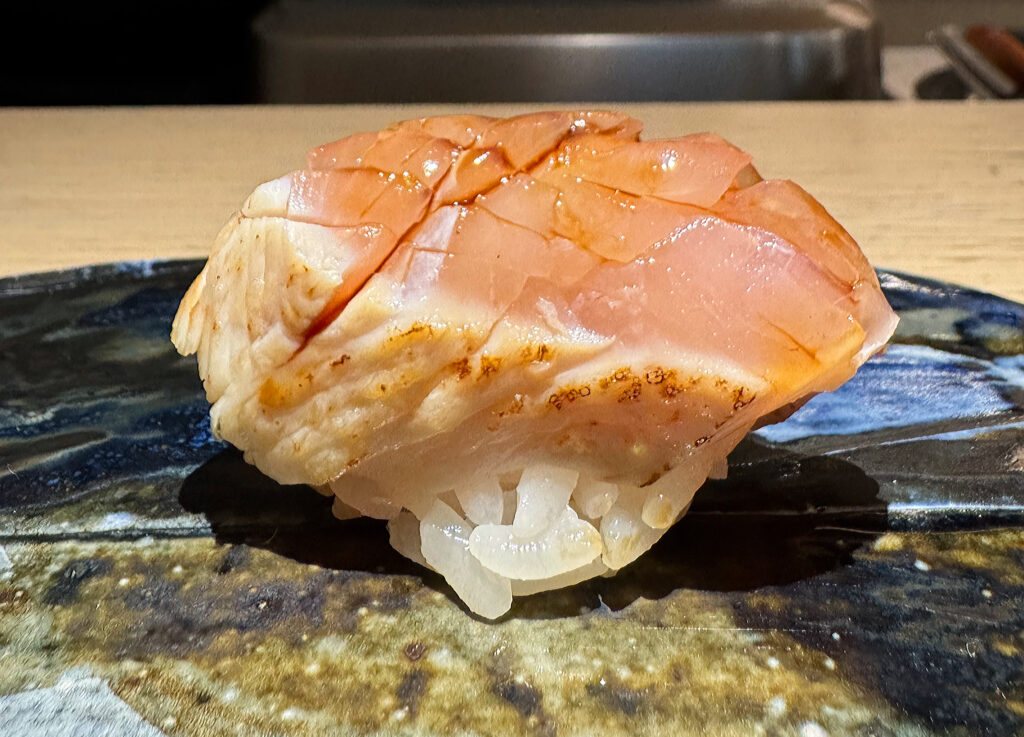
The “Kanpachi” (or greater amberjack) also faces a tough task: replacing the buri (i.e., wild mature yellowtail) that frequently ranks as one of the restaurant’s finest pieces. Phan actually describes the present fish as having “a certain texture I can’t put my finger on.”
For me, the bite’s marriage of firmness (on entry) and ample fattiness (through the finish) is highly appealing—and perhaps moreso than the preceding katsuo. However, the seared portion of flesh proves a little too pronounced and drying, which serves to detract from some of the enjoyment. Still, the imprint of wasabi and soy sauce here is wonderfully pronounced, ensuring that all the kanpachi’s marbling is matched by more than enough sharp, savory depth to achieve satisfaction.
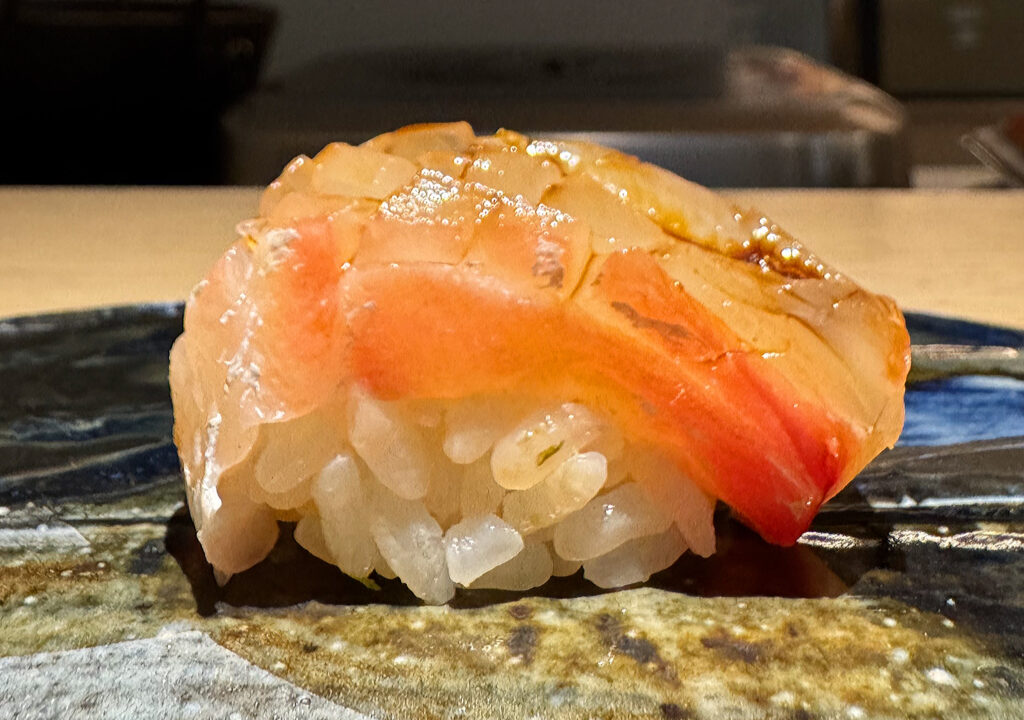
The “Madai” (or red snapper) that arrives next is not something I see Kyōten work with often. Yet, when I hear that the present cut has been taken from the fish’s belly, it’s easy to see why this specimen is exceptional.
On the palate, the madai is actually firmer than the skipjack or amberjack, meaning that the gushing quality of its fat strikes an even greater natural contrast once one reaches it. Flavor, here, is marked by citrus, and, while I find that such a note frequently detracts from the kind of umami I am after, notes of both wasabi and soy sauce join seamlessly on the finish. Yes, this bite—boasting chew and tang with surprising persistence—feels rather complete, and I think it has an edge over the preceding kanpachi.
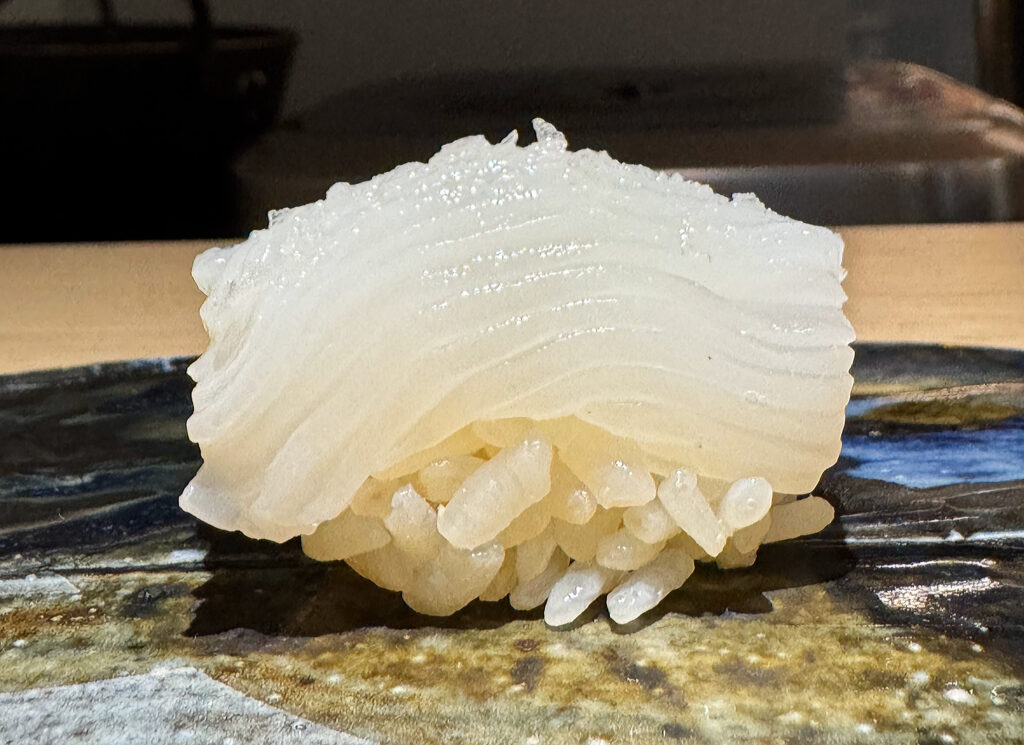
The “Aori Ika” (referring to the bigfin reef squid) has formed one of the newest, brightest stars of Kyōten’s 2026 menu. Being the product of such extensive scoring (note the elegant, ribboned effect accompanying this iteration), the cephalopod offers a singular combination of chewiness and gooiness that I cannot get enough of.
Sea salt and lemon are used as seasonings here, and the former actually proves a bit problematic tonight. Indeed, the crystals are so flaky and crunchy that the obscure some of the squid’s textural thrill. Still, the mouthfeel remains pleasant (if not superlative), and the resulting flavor—helped by that citric tang—displays those shades of umami and subtle sweetness the aori ika is known. Ultimately, this remains quite good, but I miss the bite’s usual refinement.
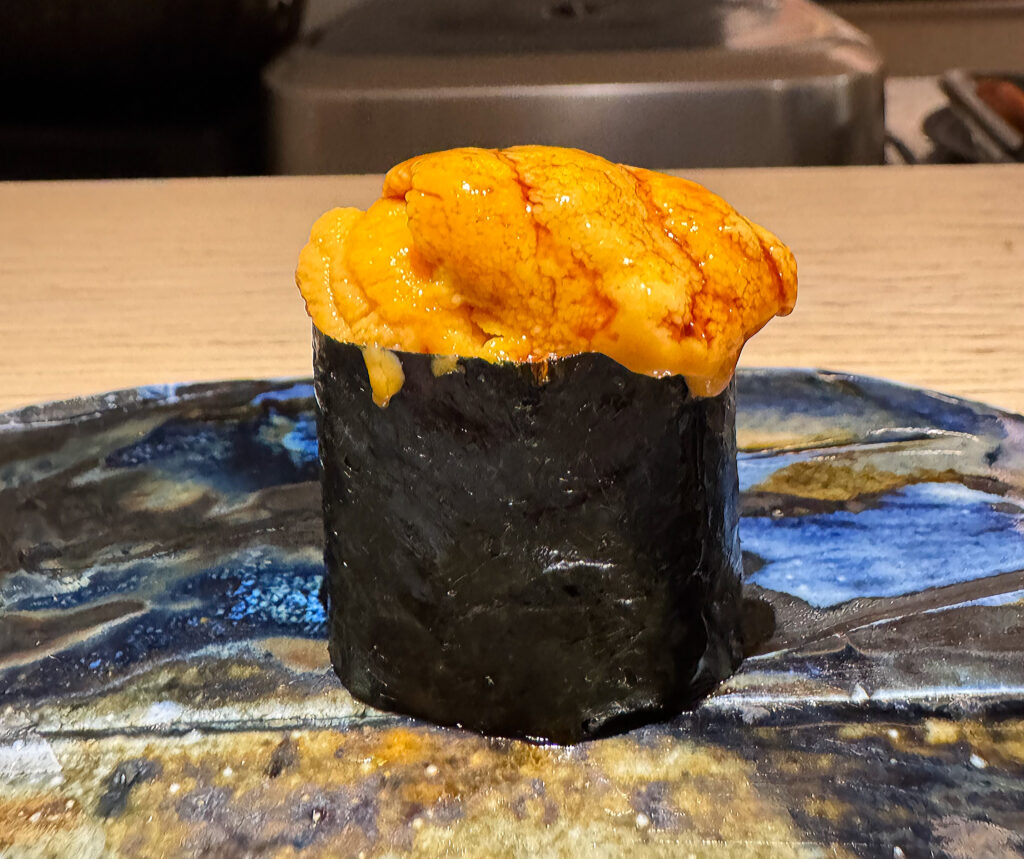
“Uni,” at any omakase charging these kinds of prices, carries the only kind of expectations that can possibly rival the headlining bites of tuna. Yet sea urchin, in particular, leaves chefs in a bind: they can age and score and season fish to enhance its character, but these orange lobes are subject to the vagaries of each individual tray. Phan looks to tilt the odds in his favor by sourcing the ensui (or preservative-free) variety of the product from Amakusa. The chef considers the present form, dry-packed (rather than shipped in saltwater brine), as being of the best quality.
Relative to other, recent examples, this uni does a good job of holding its shape—peeking out from the top of its seaweed wrapper—rather than melting over the edge. Indeed, framed by that perfectly brittle outer layer (and a base of rice), the sea urchin displays a pleasing trace of structure before yielding to outright creaminess. Flavor, in turn, feels sweet on entry before taking on a transfixing oceanic depth that, nonetheless, remains entirely clean. A drizzle of soy sauce helps shape a long, cohesive, and tongue-tingling finish in what must rank (not dissimilar to the ōtoro) as a peak expression of this coveted ingredient.
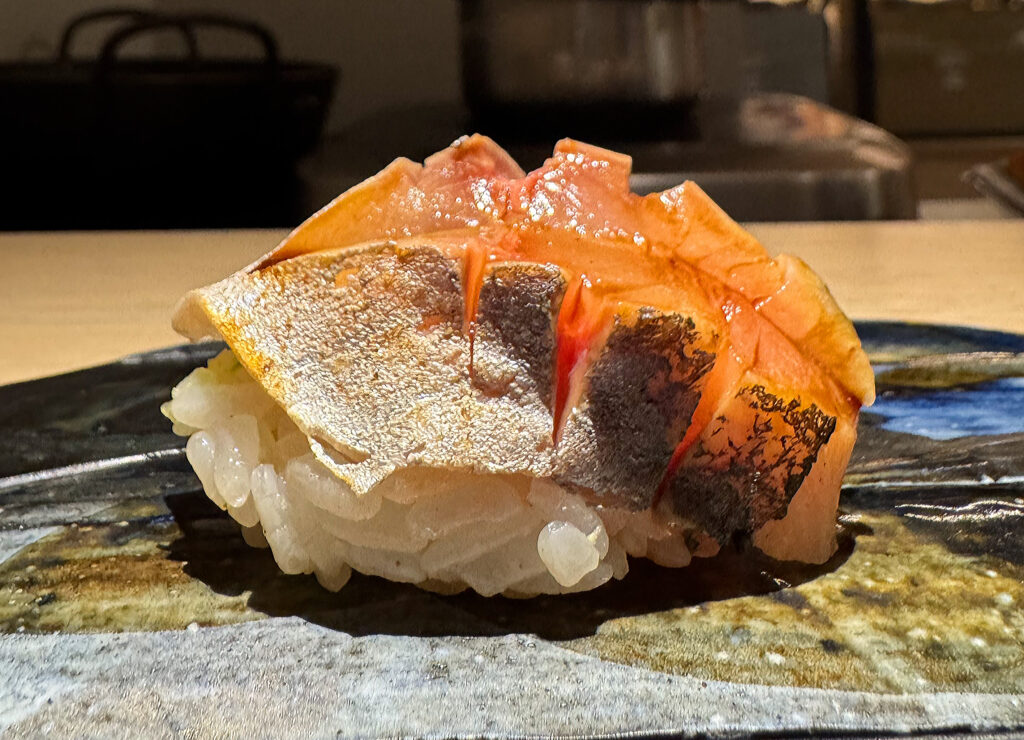
With the “Aji” (or horse mackerel), we approach a sequence of characterful fish that often proves a little more challenging. It’s not always a case of them being too rich or robust in flavor either—the present piece, when I sampled it last time, just felt forgettable.
This time around, the aji boasts a considerable layer of fat that has been revealed via deep, chunky scoring down the sides of each slice. Phan seasons the horse mackerel (on the side touching the rice) with his usual application of green onion and ginger. This makes for a fish that is soft and unctuous on entry, supported by a mild note of allium, yet seemingly clean. As in early July, the ginger’s influence is hard to pick out. Nonetheless, I do now find a sharp, savory quality that lasts through the finish: a sensation that slightly improves this item’s performance.
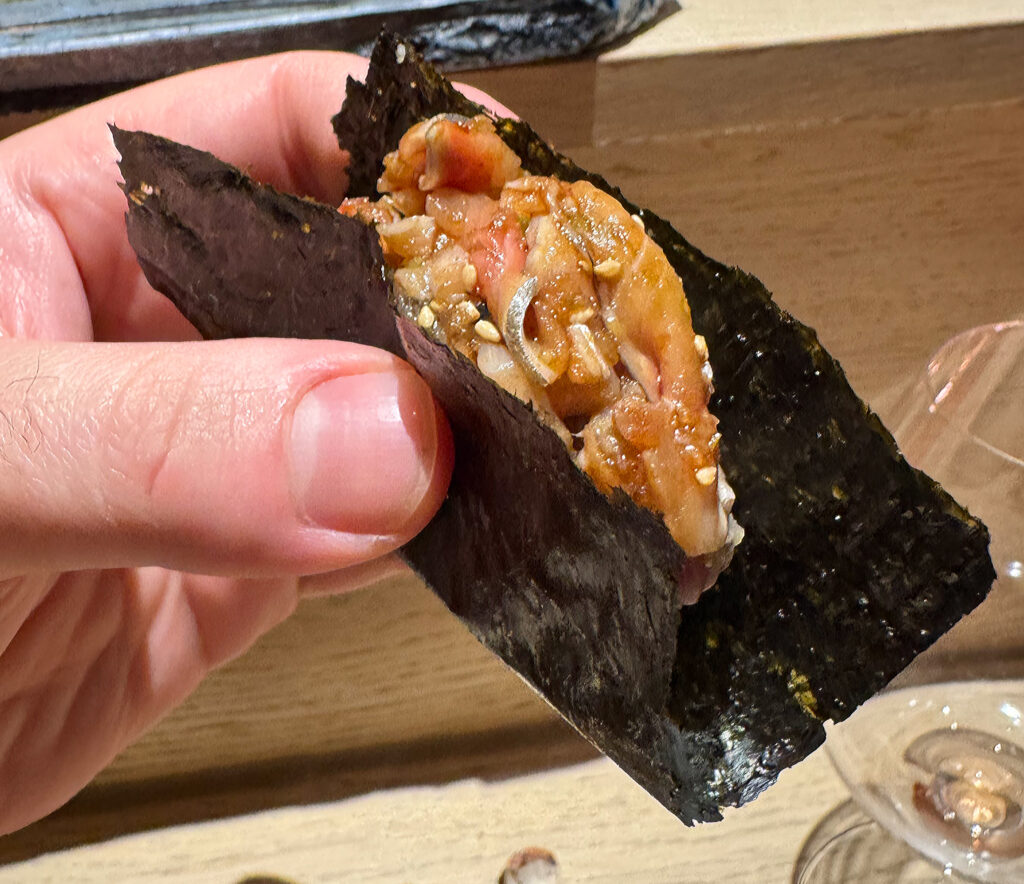
Debuting as part of the previous menu, the “Nishin Namerō”—a “fisherman’s tartare” made using herring—stands as one of the more intriguing ideas I’ve seen Phan embrace. Perhaps that’s just my nice way of saying that the bite needed work. Yet, to the chef’s credit, the present version is served in an entirely different form.
Yes, rather than merely being situated atop rice, the tartare now comes wrapped (“taco-style”) in a manner more akin to how Kyōten serves its eel. The nori, always so beautifully rendered, strikes a natural textural contrast with the oily chunks of fish. Further, its latent umami blends nicely with the herring’s robust flavor and allium-, sesame-tinged dressing. This all makes for a series of bites that balance unabashed richness with ample support, achieving a degree of refinement that much improves upon what I tasted earlier this month.
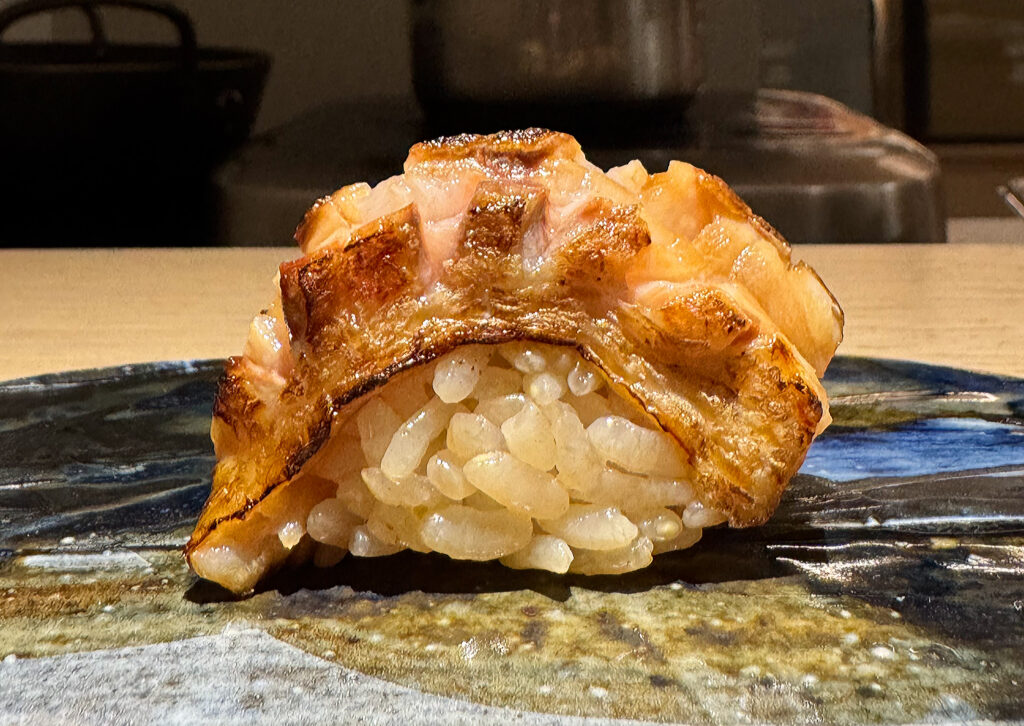
The “Akamutsu” (i.e., blackthroat sea perch)—long touted as the most luxurious of Phan’s fish, frequently disappointing despite such acclaim—has been on a great run of form lately. Tonight is no different.
By introducing fermented jalapeño into the mix, the chef has invigorated the fish’s mass of gooey fat (also offset via searing) with a mild, lasting heat. This—along with some accompanying tang—prevents the akamutsu’s considerable richness from feeling altogether plain. I’d still like to taste more savory intensity as well, yet this is now a bite that reliably clears the bar of being both interesting and enjoyable at this later stage of the meal.
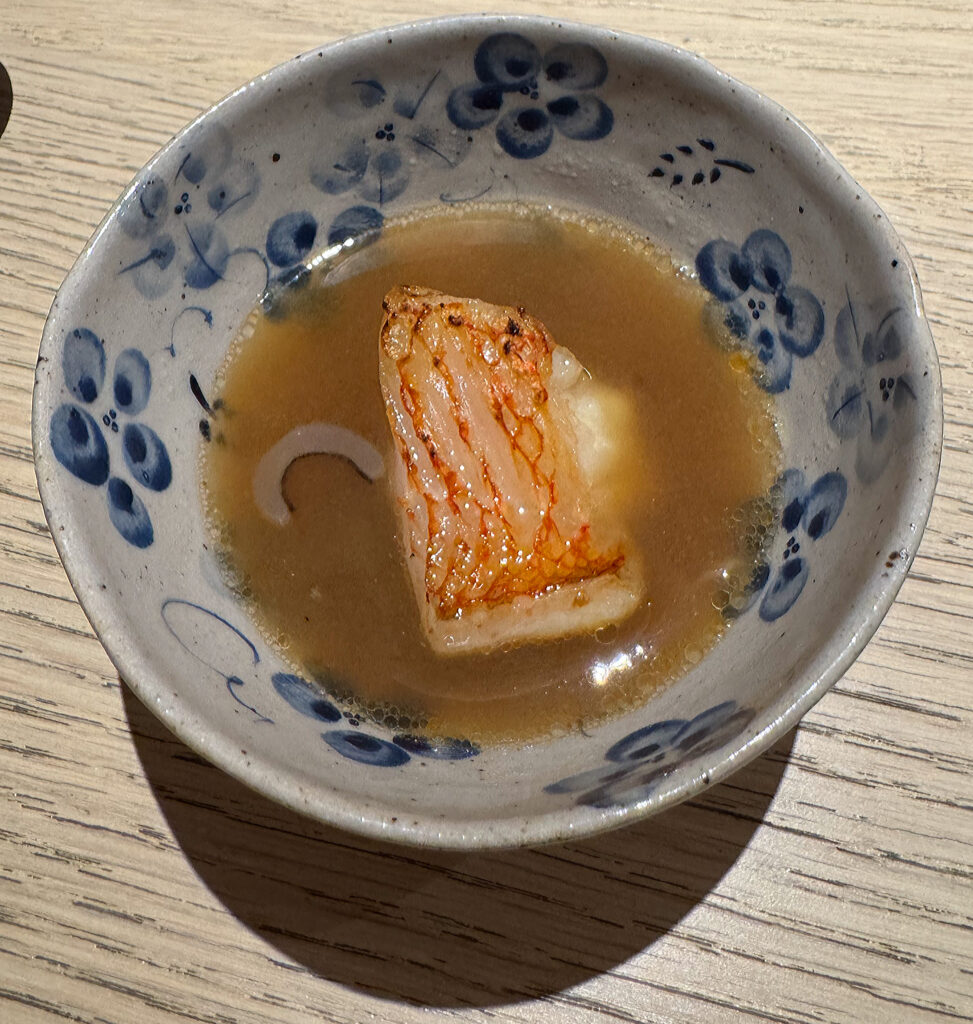
The evening’s final savory course centers on “Kinki” (also called thornyhead or rockfish), which—after being smoked and grilled—lies at the center of a dashi. Fermented ramps and crunchy segments of jellyfish form fanciful accompaniments: shaping a soup that is rich, soothing, and intensely savory while also being punctuated by crisper, subtly tangy sensations that add pleasing definition. Phan’s on-again, off-again work with broths is frequently spectacular. This preparation is no different.
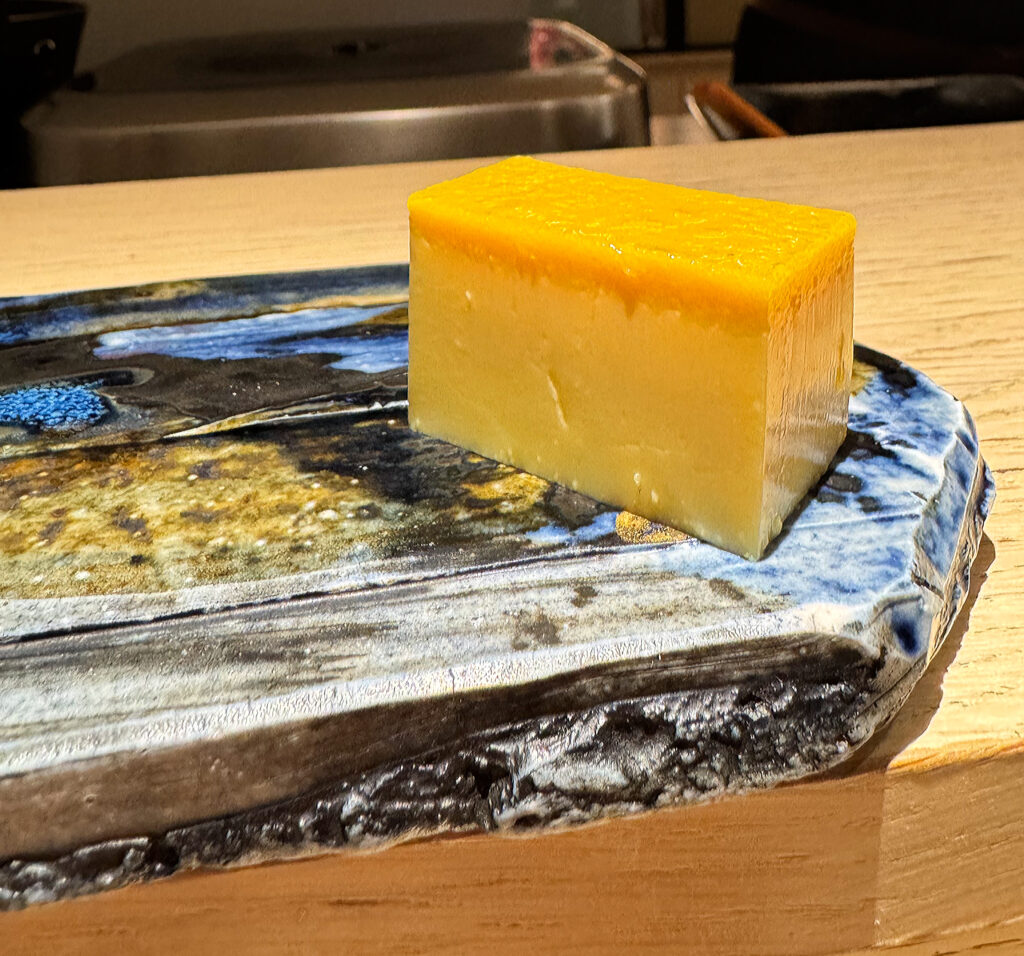
For dessert, the corn- and maple-infused “Tamago” tastes especially good tonight: with its weighty, eggy structure yielding to a custardy, caramelized sensation that remains—so many years later—singularly decadent.
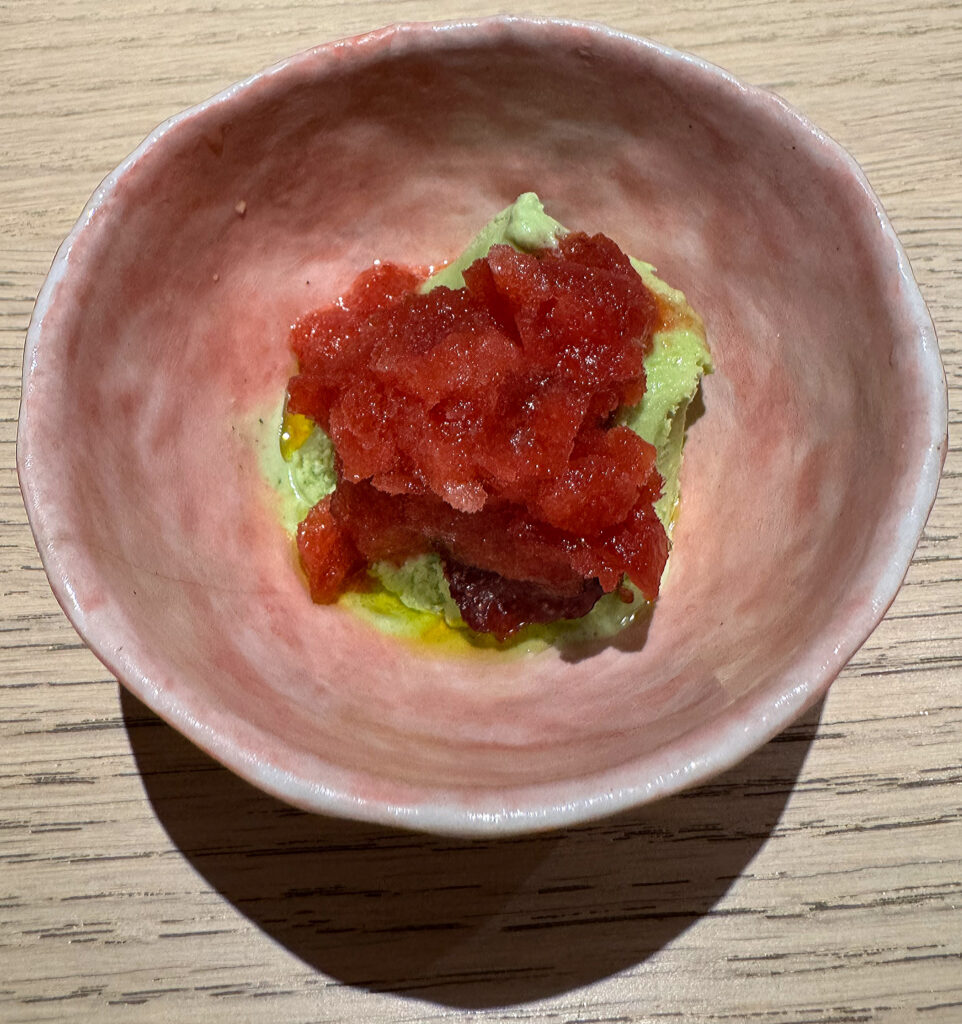
Closing out the meal, Kyōten’s signature “Strawberry-Basil Ice Cream” (which returned to the menu earlier this month) is actually introduced as more of a gelato on this occasion. Terminology aside, the recipe crowns the freshly sweet central scoop with a sharp, fleetingly bitter drizzle of olive oil and layers of tangy-jammy fruit (derived from a one-two punch of strawberries that have been both candied and turned into a granita). Texturally, Phan has succeeded in making this frozen treat more and more engaging with time, and the overall effect—walking the line between refreshment and indulgence—remains a timeless pleasure.
In ranking the evening’s dishes:
I would place the “Ōtoro” in that “legendary, lifetime status” stratum of tuna I haven’t encountered here since 2025. The piece represents something close to the pinnacle of what the sushi form is capable of achieving, and I dream of encountering examples like this again.
The “Courgette Flower” and “Uni” land in the next category: superlative items that stand among the best things I will be served in any restaurant this year.
Next come the “Blue Lobster,” “Octopus,” “Katsuo,” “Madai,” “Aori Ika,” “Kinki,” “Tamago,” and “Strawberry-Basil Ice Cream”—great preparations that achieved a truly memorable degree of pleasure. I would love to encounter any of these again.
Finally, there are the “Mick Klug Peas,” “Kanpachi,” “Aji,” “Nishin Namerō,” and “Akamutsu”—good—even very good—preparations I would always be happy to sample again (but that just failed to elicit an extra degree of emotion).
Overall, this makes for a hit-rate of 100% with some 69% of offerings reaching that “would love to have again” level of quality and 19% being of that “best of the year” caliber (or higher).
On the surface, these figures fall a little short of what I reported earlier in July (i.e., 100%, 72%, and 39% respectively). They accord more with the numbers I calculated in early May (95%, 65%, 25%) and late May (95%, 60%, 10%).
However, it’s worth mentioning that only 16 bites were served tonight in comparison to the 18 presented in early July and the 19 offered during both my menus from May. Percentage-wise, this left far less room for error, and Phan rose to the task: tallying the same number of items in his lowest category—actually two or three fewer than what I found in May—while putting forth a large proportion of hits without the help of his usual handrolls or wagyu.
Instead, there were new favorites (like the “Blue Lobster,” “Courgette Flower,” and “Kinki”) that shone alongside old ones (the “Octopus,” “Tamago,” and “Ice Cream”). The squid and skipjack were rather nice. The sea urchin was superlative.
Yet, most importantly, the ōtoro reached a near-impossible standard—weightless power, intensity married to elegance—that, those rare times you encounter it, seems to justify this entire pursuit: not just spending hundreds of dollars on raw fish but doing so regularly and obsessively because you know it’s the only way of possibly savoring this peak experience again.
Phan, even in the heart of summer, affirmed that he knows how to deliver such a moment: meeting exceptional product with a steady hand and a distinct point of view that, together, can conjure something unforgettable.
Bites such as these, by working at an emotional level, transcend any metric.