
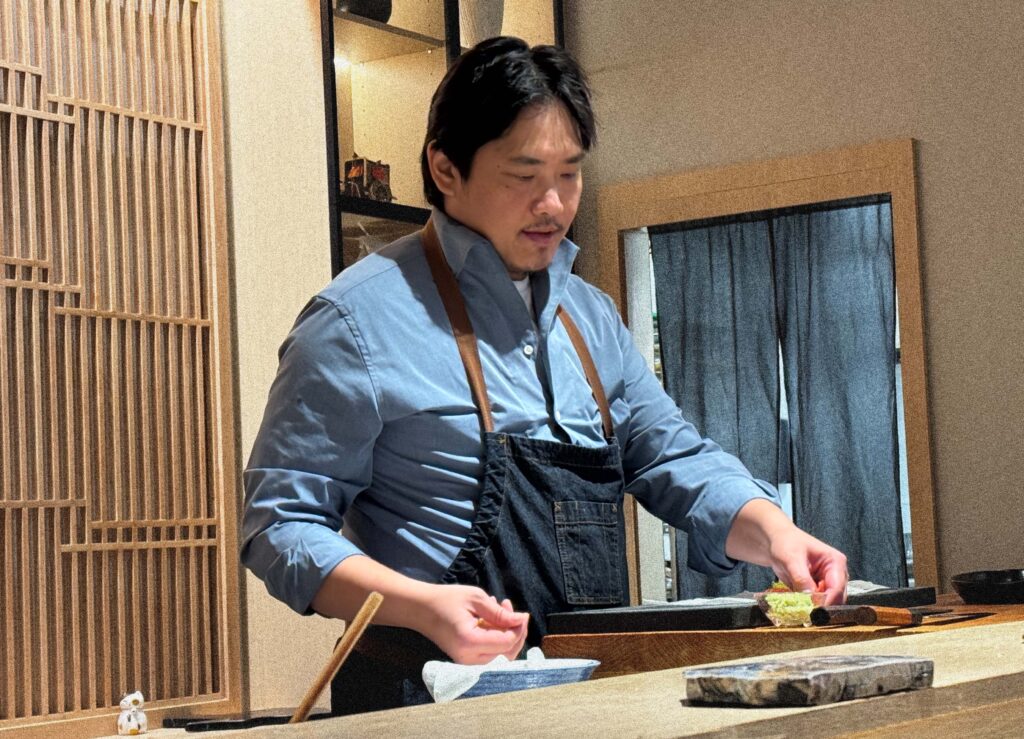
It’s been more than a month since I’ve gotten to check in on this most rarefied of Chicago omakases—a consequence of the on-and-off schedule that chef Otto Phan (now balancing the demands of fatherhood) has elected to keep throughout 2026.
Ticket price aside (and recall that the menu cost less than half the present figure when the concept first opened), it’s hard to be deprived of such an important baseline: the myriad textures of wild-caught fish, each paired with a filigreed imprint of vinegared rice, that (being so streamlined) frequently put the convoluted constructions of other fine dining establishments to shame.
At the very least, great nigiri teaches diners to distinguish the pomp and circumstance and “experience” of certain venues from the extreme pursuit of ingredient sourcing and umami that characterizes Phan’s work. Indeed, the chef has always sacrificed a certain degree of glamour (as well as the conventional kinds of success and awards it may bring) for the sake of fueling his obsession. Doing so, he has shaped a counter that honors Chicago and the Chicago audience while, for those who share the same palate, reaching heights that can rival the finest sushi served in the very best cities.
Correspondingly, Kyōten’s menus strike such a careful balance—between house signatures (like octopus, monkfish liver, fugu shirako, and tamago), eternal pleasures (like tuna, yellowtail, uni, and eel), and ever-rotating seasonal delights (beef, fish, and produce fashioned via far-flung techniques)—that it’s hard to miss a single chapter.
On a given night, you can safely bet you’ll be treated to a handful of bites that surpass anything being served anywhere else in town. However, your palate will also be challenged just a bit. It will be pushed by an ingredient it has never encountered before or by the unique character that each individual catch brings to the table. It will meet—and play a part in—a process of careful experimentation that may someday (or instantaneously!) birth the restaurant’s latest hit.
This sense of perpetual discovery imbues Kyōten with some of the same emotional dimension that makes Cellar Door Provisions, Feld, and Smyth so engaging. At these venues, the more a diner gives—by acclimating to the kitchen’s philosophy (even to its rougher edges) and choosing to embark on a shared journey anyway—the more they seem to get.
By rejecting the solipsistic quest for personal pleasure above all else, a guest becomes something more like a patron of art: a pathway through which a craftsperson and a team may fulfill an entirely singular vision rather than play to the lowest-common-denominator taste (and downright prejudice) of the crowd.
All told, it’s only really been 42 days since I’ve eaten here, but it’s easy to tell just how excited I am to make my return and tangle with all—both new and old—that awaits me.
Let us begin.
Tonight, I arrive at Kyōten a few minutes before the omakase’s start time (which really leaves diners with an additional 15 or 20 minutes to observe the last of Phan’s prep work, order their chosen beverages, and chat).
Once I’ve settled in, only two of the eight seats at the counter are empty, and they remain so well through the allotted grace period, the first appetizers, the nigiri sequence, dessert, and our goodbyes. The chef, for his part, doesn’t skip a beat: sharing that guests somewhat frequently book tickets to celebrate special occasions only to never show up. While the deposit ($150 per person for a Saturday like this one) acts as a minor punishment, these truants are not made to pay the remainder of the $490 per person that the menu would’ve cost.
The logic goes that first-timers such as these had already expressed interest in eating at the restaurant, and a little graciousness might cultivate a relationship that is more longstanding and rewarding than the levying (however deserving) of the full fee. Doing so only demands that Phan find a use for the product he has already prepared for the absentees (extra portions, you will see later, that serve to reward those of us who are in attendance).
The chef also ensures that the six remaining patrons—paying (and actually showing up) for such a premium offering—are not kept waiting. The meal proceeds at its usual pace, and any misgivings about the empty seats yield to the vibrant curiosity that one party (plying Phan with all the usual questions, inviting all the familiar, playful retorts) brings to the space.
For my part, the relative isolation of the evening (those two unoccupied chairs separating me from the four customers at the opposite end) means I can peacefully eat sushi, guzzle wine, and watch a World Cup game (muted) on a screen placed against the lower portion of the bar. In other words, I’m treated to my own personal peak gastronomic experience while everyone else enjoys Kyōten in its conventional (and, on this occasion, particularly intimate) format.
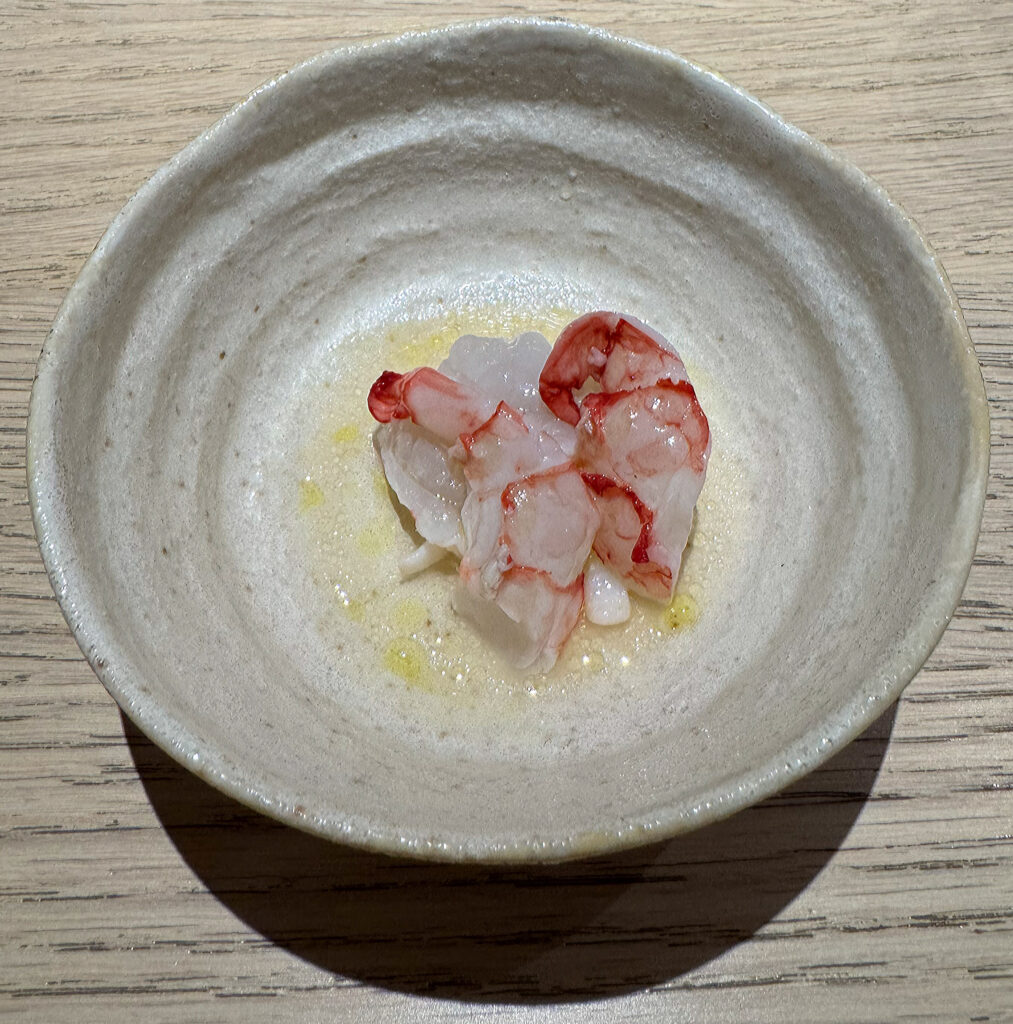
While “Aka Ebi” (a kind of red, deep-water prawn) formed a mainstay of the chef’s menus during the latter half of 2025, it made its exit around February or March of this year. At the time, Phan preferred examples that were sourced from Hawaii (ones I regularly saw showcased at other fine dining restaurants in town); however, he now touts the crustaceans as coming from Japan.
Certainly, the shade of red that trims the aka ebi’s trail is now noticeably deeper. Texturally, the prawn proves pleasantly plump on the outside (due to a dressing of lemon juice) and fleetingly crunchy (due to its remaining rawness) through the interior. When it comes to flavor, dashi and olive oil help to provide some rich, savory backing. Nonetheless, the bowl really centers on the bracing tang of citrus and the latent sweetness of the shellfish: an engaging juxtaposition that readies one’s palate for everything else to come.
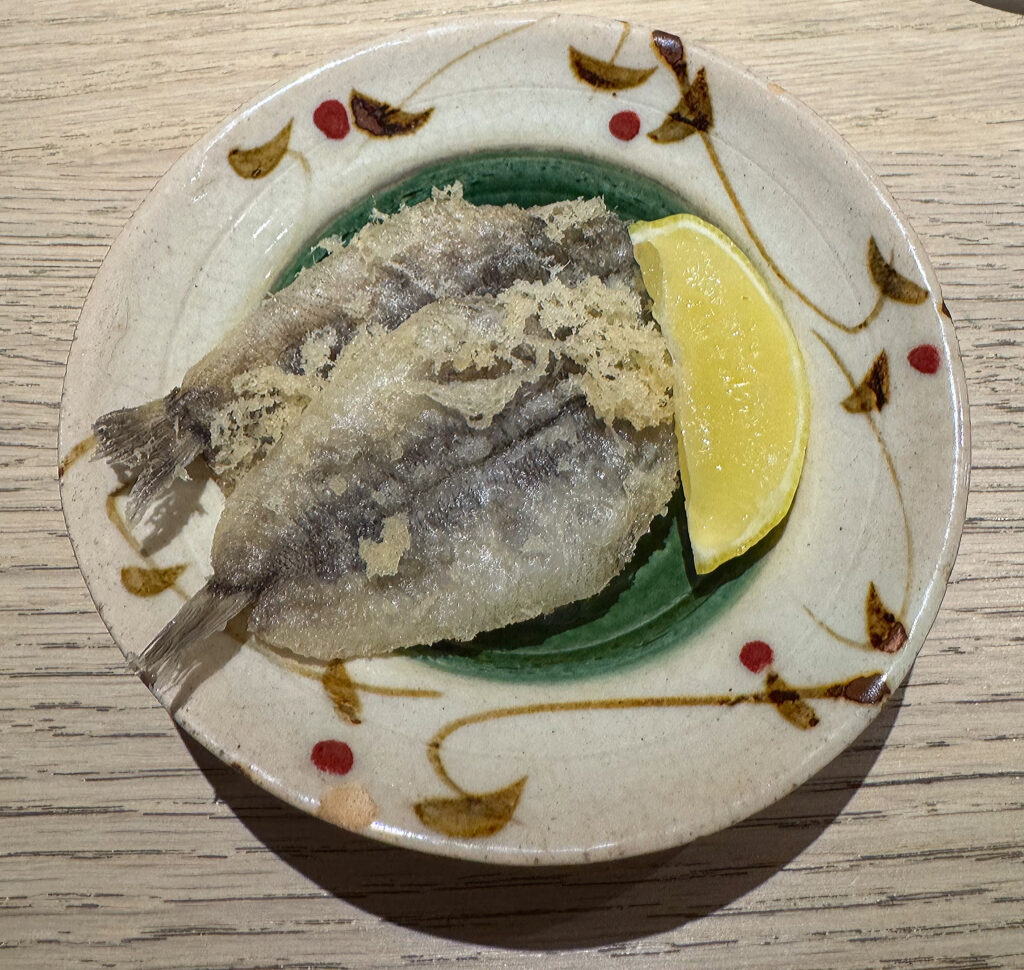
Tempura, too, has become a Kyōten staple over the past couple years—forming one of the shining techniques Phan has used to distinguish his omakase from others in Chicago. Typically, the chef favors ingredients like blackthroat sea perch, beltfish, and pufferfish milt for this fried course. However, this time around, he debuts a serving of “Mehikari” (also known as a “greeneye” or “shining eyes”) that might just represent his pinnacle of achievement in this realm.
Using a combination of water and vodka to ensure an airy batter, Phan deposits two of the small fish—tail on, splayed open, displaying only traces of tempura lace—on each plate. A squeeze of lemon is then all the mehikari needs to soar: offering a series of bites (as one works their way along the body) that feel delicate and crisp on entry but become surprisingly luscious and fatty as the thicker, interior sections take hold. Thanks to that citrus (and a pinpoint application of salt), any corresponding richness is subsumed into a long, cleanly savory expression with just a tinge of sweetness. I love the portion size as well, for it counterbalances the opening (more titillating) prawn with something a bit more indulgent. Overall, this makes for one of the meal’s greatest, newest highlights.
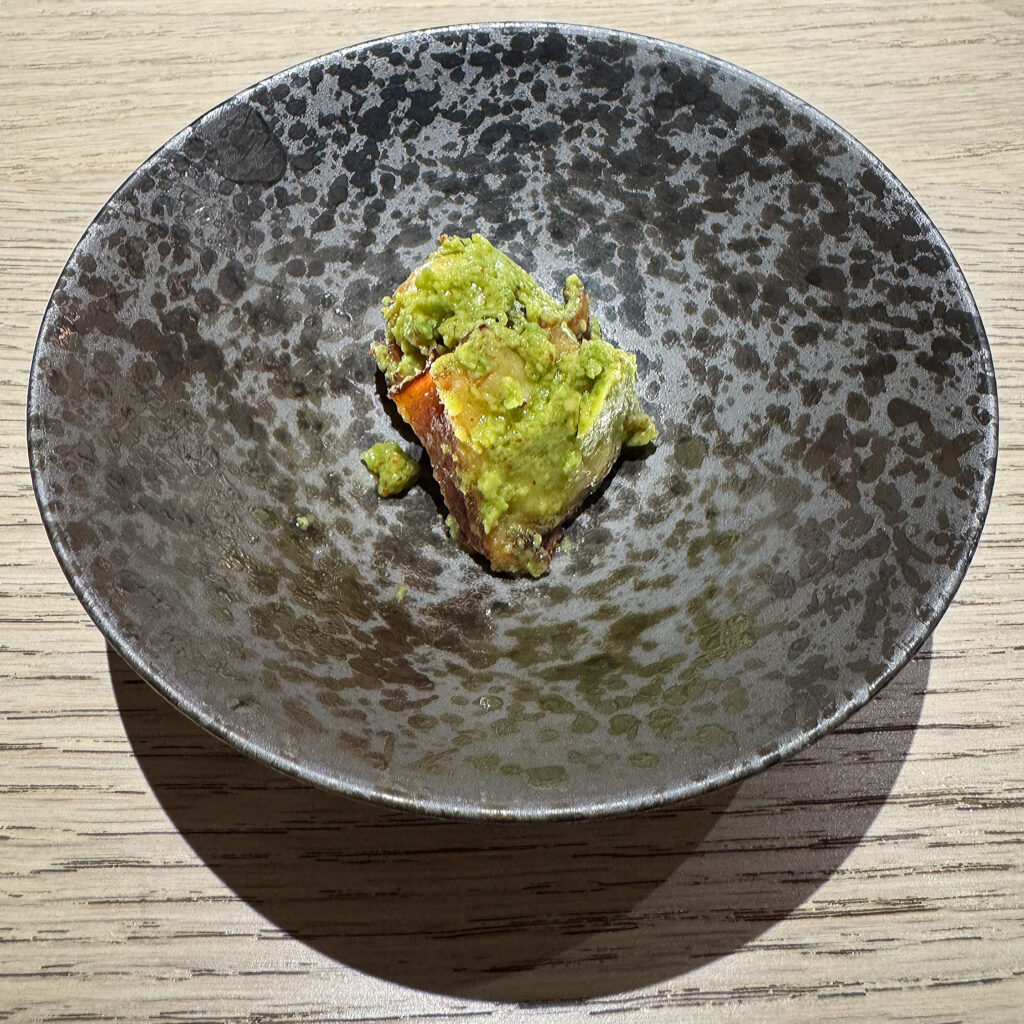
The restaurant’s signature “Octopus”—massaged, boiled, fried in a karaage style, then coated in avocado ponzu—almost seems redundant when the preceding tempura preparation is so good. Yet, while the mehikari was all about elegance, this “ugly delicious” (as Phan admits) cephalopod pursues an entirely different effect.
Indeed, the octopus marries only the slightest impression of crispness (and an equally ephemeral creaminess) with a hearty, superbly refined chew. It’s clearly not “meat,” but it touches on the same deep sense of satisfaction (as the forthcoming pieces of tuna also do). The flavor here, marked by a more pronounced sweetness and balancing burst of umami, also surpasses the greeneye: ensuring both these dishes have ample room to shine without retreading the same ground.
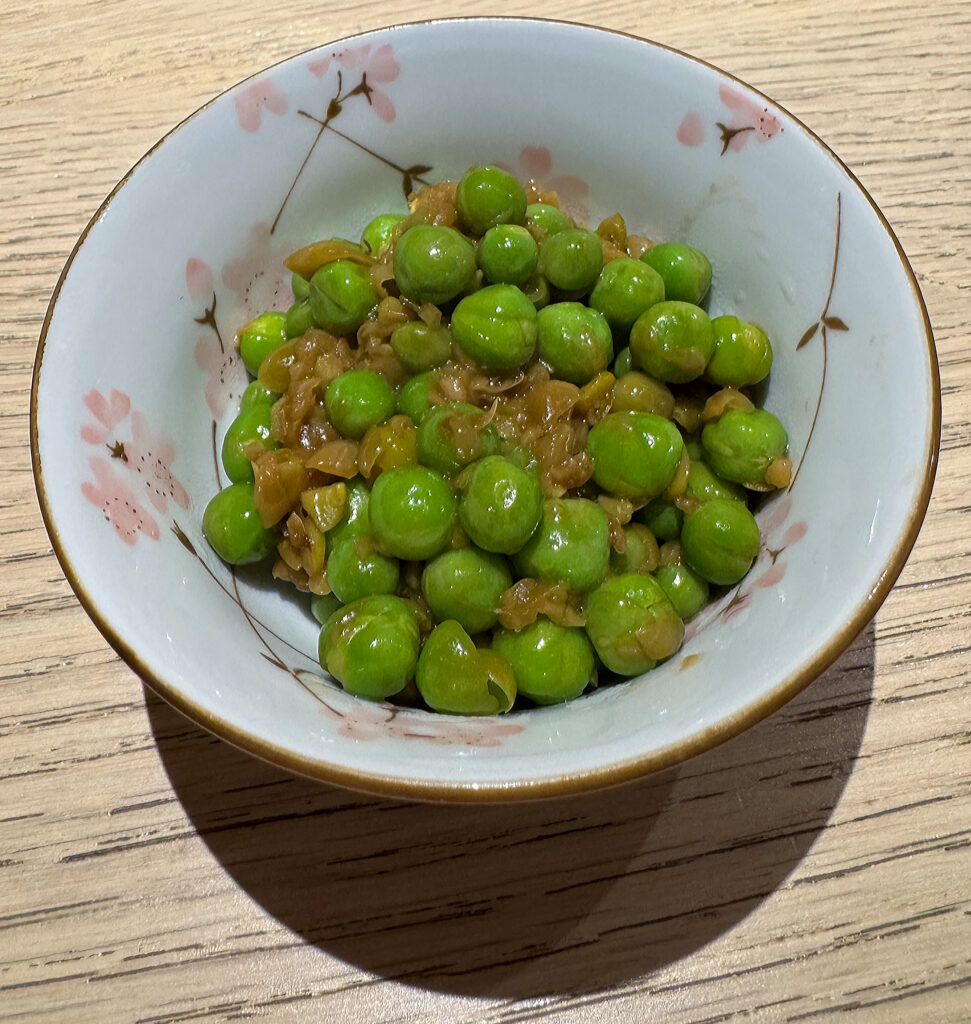
Closing out the opening plates, the “Mick Klug Peas” affirms the chef’s commitment toward Kyōten being more of a broadly “ingredient-driven” concept than a mere sushi-focused spot. To that end, he has worked with local produce (and this particular vegetable) whenever he can get it—fashioning them into the kind of layered recipes that, in the intricacy they tease out from a couple core elements, have more in common with a place like Feld than any other omakase.
Structurally, the preparation combines fresh, pan-seared peas with those that have been fermented (and thus possess a wetter, creamier consistency). I recall Phan experimenting with this idea in past years, yet the result seems much more assured tonight: with the fleetingly firm mouthfeel of the fresher iteration being imbued with all the nutty, salty, and sweet intensity of the preserved example. Enjoyed together, the peas achieve a level of pleasure and completeness that would typically demand the help of other ingredients (like allium) or intricate saucework. Instead, the chef beautifully—and so elegantly—uses one expression of the vegetable to supercharge the other.
As we approach the nigiri (the chef having already given guests a glimpse of the restaurant’s signature Inochi no Ichi rice), Phan says something reassuring: the wasabi is “really good today,” which means that my main critique from the meal in late May should be remedied.
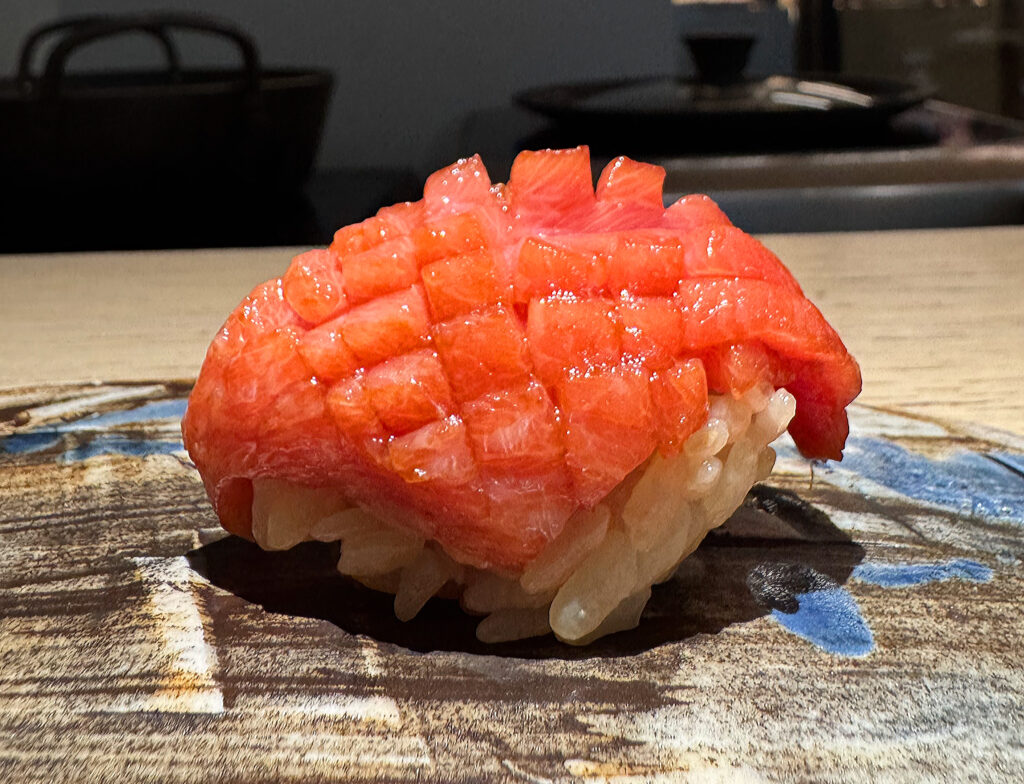
The quality of the “Ōtoro” tonight confirms that to be the case. This fattiest cut of the tuna’s belly is laced with a fine web of marbling and benefits from attractive, crosshatched scoring across its flesh.
Texturally, the prized piece displays only the faintest hint of structure before collapsing in a luscious, fatty pool upon the accompanying mound of rice. There, dark vinegar joins with touches of soy sauce and the fresh wasabi to build a flavor profile that starts sweet, develops more umami on the midpalate, and ends on a note of wonderful, counterbalancing sharpness. Yes, the cohesion and utter indulgence of this ōtoro is hard to fault. It confirms—immediately—why Chicagoans shell out the money to eat here.
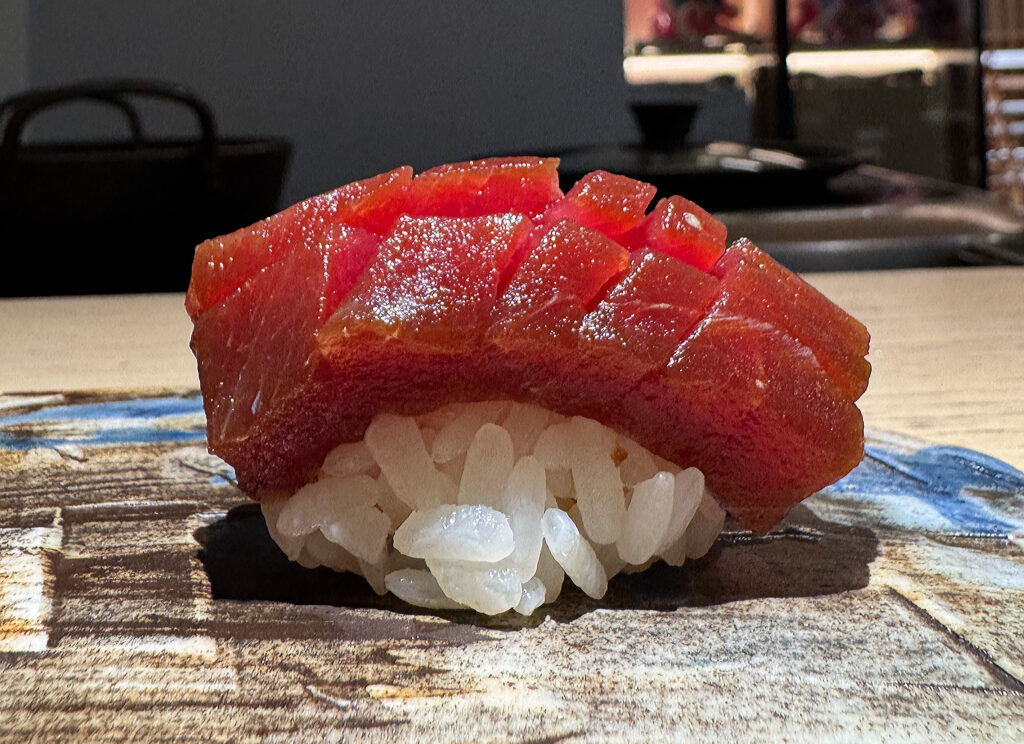
The “Akami” (a leaner cut of tuna taken, in this case, from the back of the fish) nearly equals the quality of its more coveted compatriot. The flesh, possessing far less of that marbling, is scored in a rather wide, chunky manner. However, its deeper, darker tone of red suggests a period of curing in soy sauce that will arm the bite with a unique intensity.
Appropriately, the akami possesses a mild degree of structure with less of that exuberant, melty effect. Still, the slight (still wholly soft) sense of chew amplifies a sense of meatiness, and the accompanying flavor—tangy on entry, with moderate umami through the middle, and a long, pleasing saltiness through the finish—drives that feeling home. Ultimately, this piece only really lacks the interplay of gushing fat and tingling wasabi that so distinguished its predecessor. At the same time, the leaner tuna provides a weightier, more straightlaced expression of the fish that forms a dream pairing (in the manner Phan promotes) with red wine.
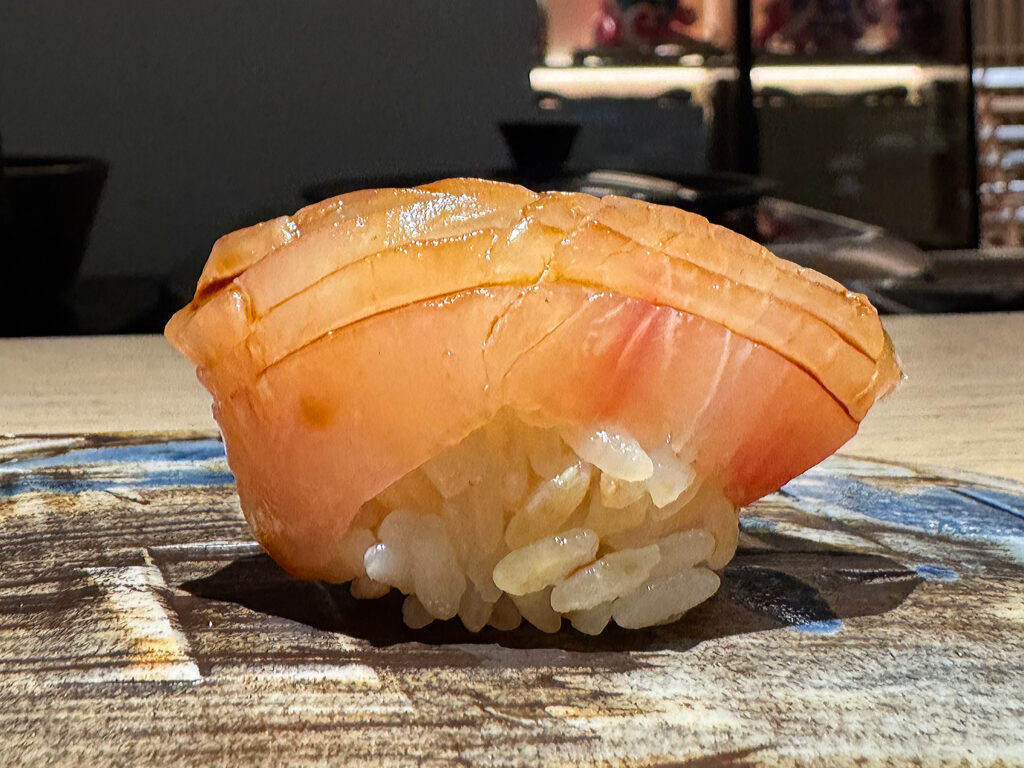
“Shima Aji” (also known as striped jack) has only appeared sparingly at Kyōten over the years. I count just one example in 2023 and one in January of 2026. This is not to mention the Next Door crossover menu this past March, which may suggest the reason for the ingredient’s general exclusion: farmed examples (like those served at the sister restaurant) prevail while wild-caught specimens (worthy of the flagship) are actually quite rare.
This is a shame, for Phan’s work with the shima aji—a piece that serves to replace the chef’s signature yellowtail tonight—is superlative. Distinguished by a pale pink hue and some light, horizontal scoring, the fish displays even more firmness and structure than the lean tuna on entry before quickly yielding to a soft, buttery mouthfeel with further mastication. Flavor, in turn, is marked by the same intensity of soy sauce and wasabi I enjoyed so much with the ōtoro, yet I find the striped jack ends on a unique sweet note that is simply transfixing. For my palate, this ranks right alongside the evening’s finest bites.
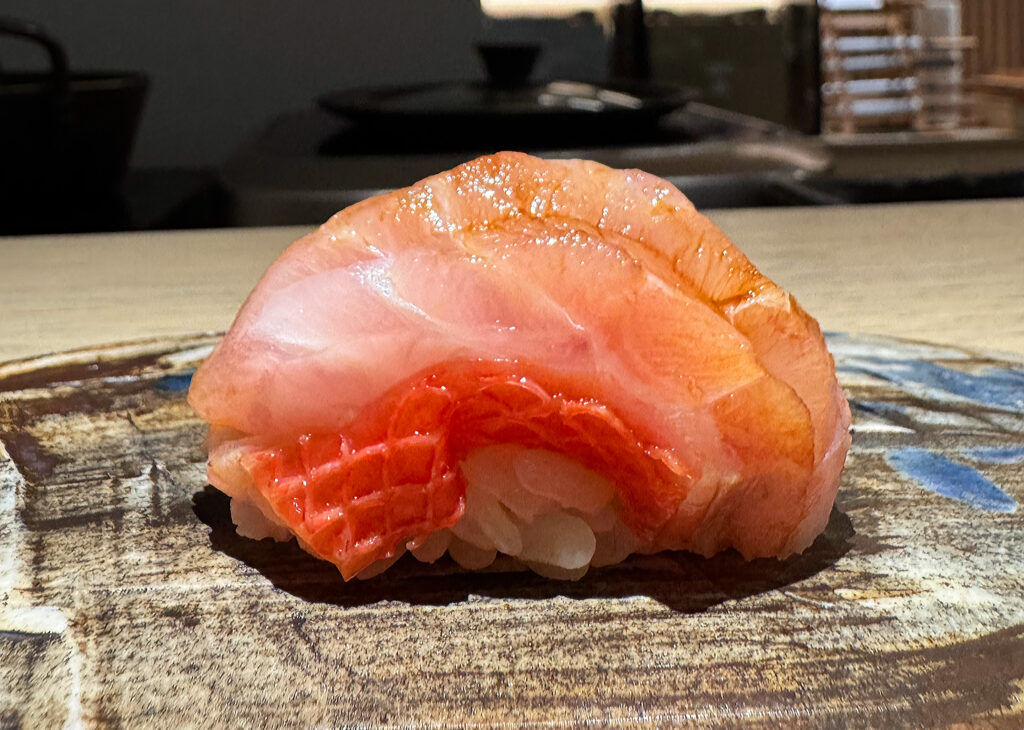
Arriving next, the “Kinmedai” (or golden-eye snapper) forms one of those early, more mild fish that struggles to assert itself on the back of the omakase’s headliners. However, back in May, the ingredient actually made a memorable impression, and, on this occasion, Phan builds on that work. Indeed, one’s feelings toward any particular piece are anything but static here.
Visually, the kinmedai is marked by its familiar strip of skin, yet the present example also seems slightly larger and fattier than what I am used to. Further, the chef’s use of soy sauce is quite apparent: ensuring the fish’s chewier consistency and accompanying tang (drawn from a touch of lemon zest) is steered toward a rich, amply savory finish. Yes, by my measure, this uptick in umami (cohesively executed) makes for a more elegant transition from those strong openers. This iteration of the golden-eye snapper stands among the best I have ever tasted at the restaurant.
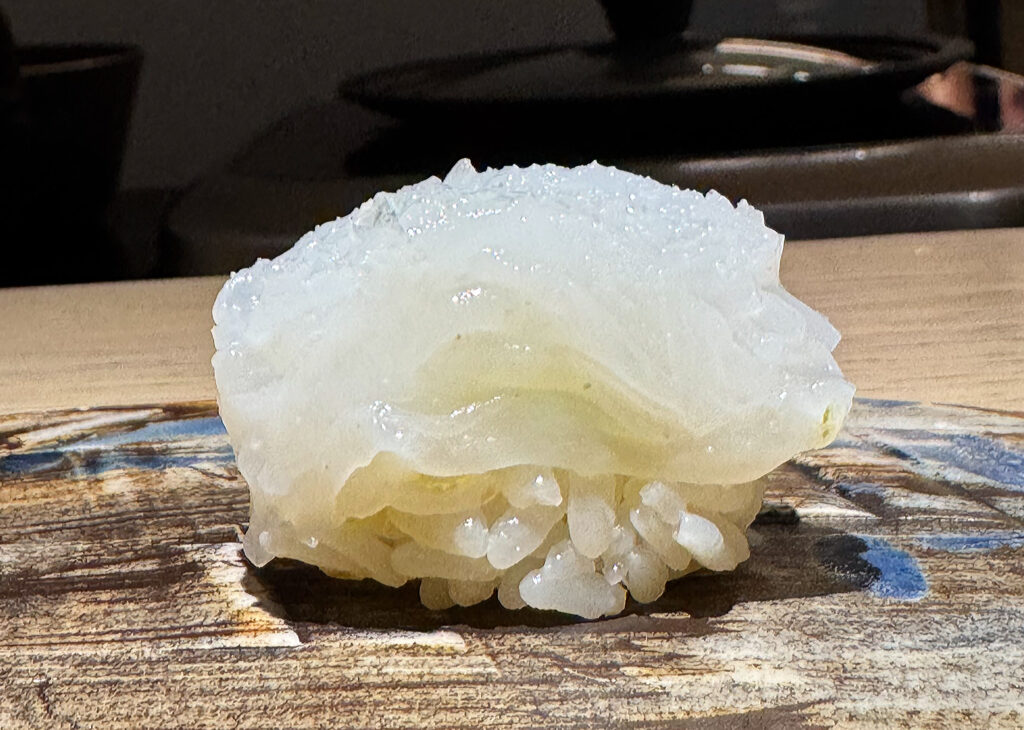
The “Aori Ika” (i.e., bigfin reef squid) continues to form Kyōten’s latest and greatest hit—a testament to the fact that, so many years later, sourcing and technique can still align to conjure an immediate expression of excellence.
The glossy, milky-white slab of cephalopod that arrives has actually been scored countless times to create a refined, lightly ruffled surface. On the palate, this process yields a supreme buttery consistency that is framed by the slightest remaining trace of the squid’s natural structure. From there, salt and lemon take hold: the former (not being finely crumbled enough) bordering on being too crunchy but, notwithstanding that, still contributing to the most exquisite, lasting sweetness through the finish. All in all, the aori ika remains a thrill. It’s part of Phan’s 2026 canon that I really hope has earned a permanent place (to the extent the season allows) on his menus.
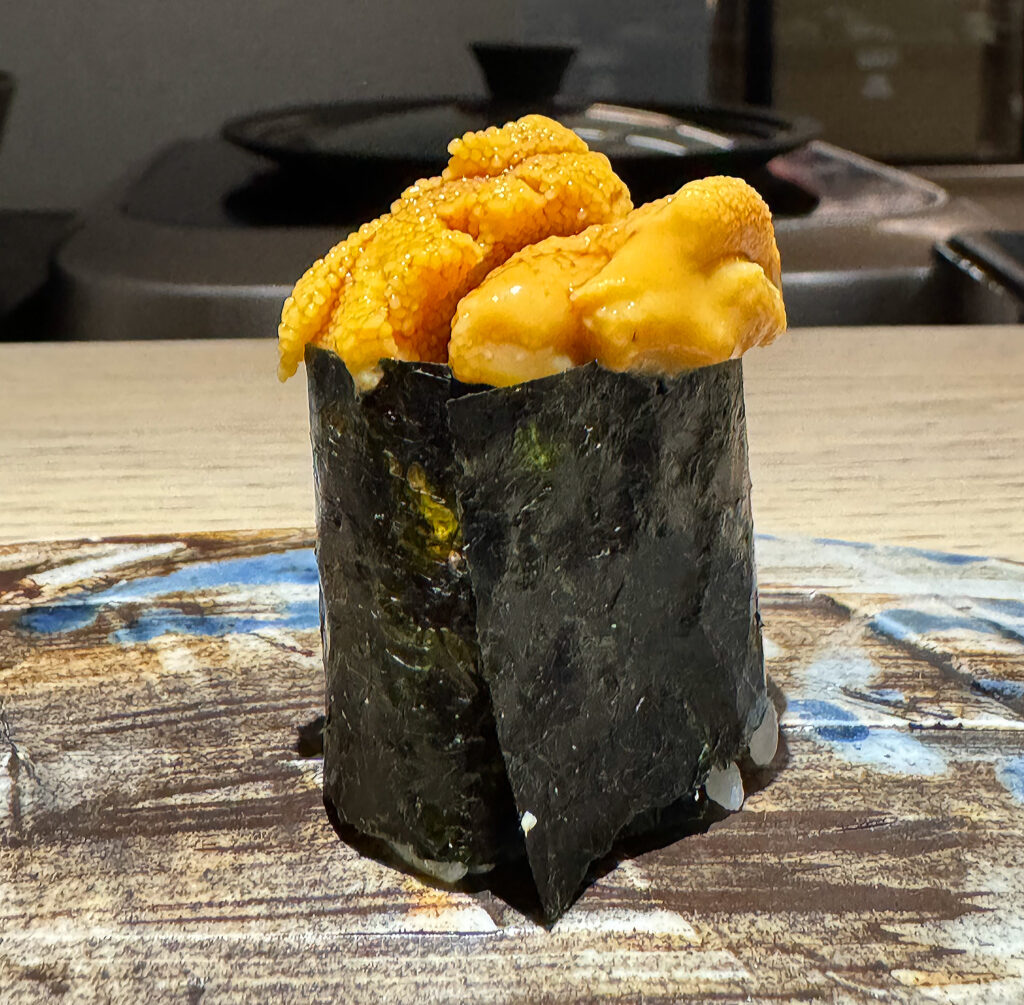
“Uni” always rivals the tuna when it comes to Kyōten’s (or really any omakase’s) most coveted, showstopping bites. And yet, the quality of sea urchin is so subject to the vagaries of each individual tray: meaning that this expected highlight can occasionally fall completely flat. This is to say nothing of the unforced errors (e.g., the quality of the seaweed, the character of the rice, the serving temperature) that may undermine the ingredient.
In sourcing an ensui (or preservative-free) variety of Hokkaido sea urchin, Phan looks to tilt the odds in his favor. The present example arrives swimming in brine (that is washed off before servings), which the chef considers slightly inferior to the dry-packed version. Nonetheless, it’s hard to argue with the results tonight: creamy lobes, a brittle wrapper, a hint of complicating iron, and an overriding oceanic sweetness that represents uni at its best. Yes, while I do think the ”roe” can rise to even higher, transcendent heights, I’d take this kind every single time if it meant avoiding the not infrequent duds.
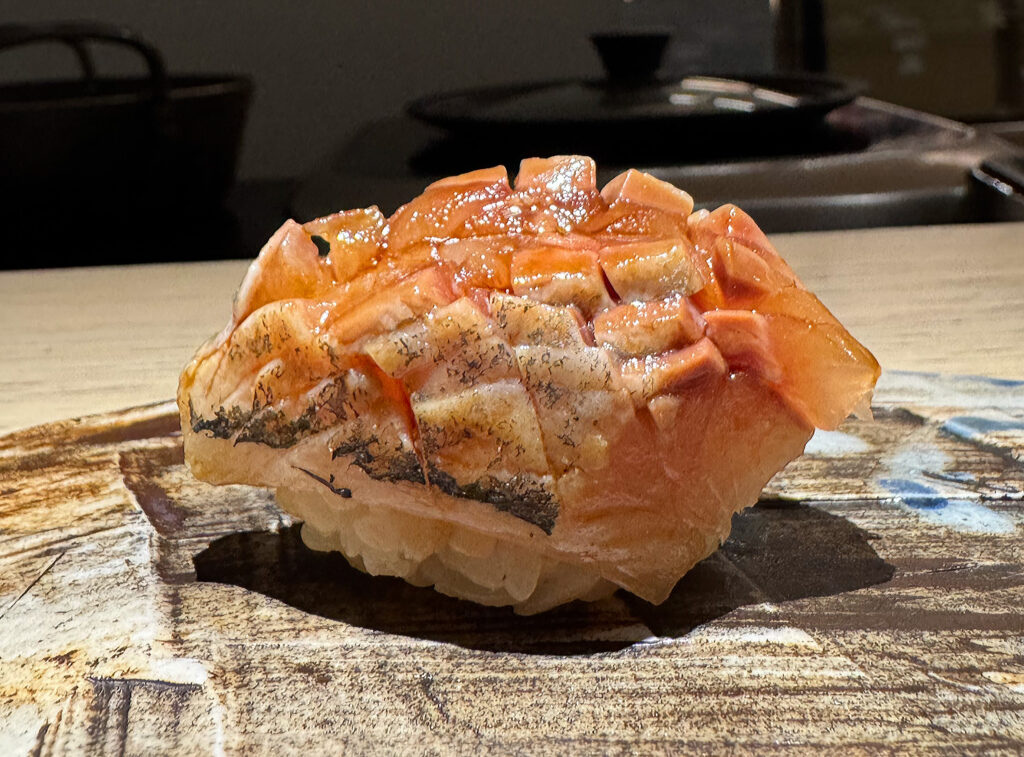
“Aji” (or horse mackerel) ushers in a sequence of characterful fish—many of which still prove a tad challenging even for me—that will guide diners to the last of the menu’s savory fare. Visually, the kind of crosshatched scoring seen here (not unlike the ōtoro) promises plenty of fat. Likewise, the inclusion of green onion and ginger (deposited between the slice and the rice) signals there will be adequate flavor to counter it.
Nonetheless, while the aji’s texture is pleasantly soft and moist, I find the fish’s mildly savory nature (distinguished only by moderate notes of allium) to be forgettable. By no means is the piece unpleasant; I’d just like to see more influence from the ginger (as it might help to invigorate the horse mackerel’s richer, oilier feel).
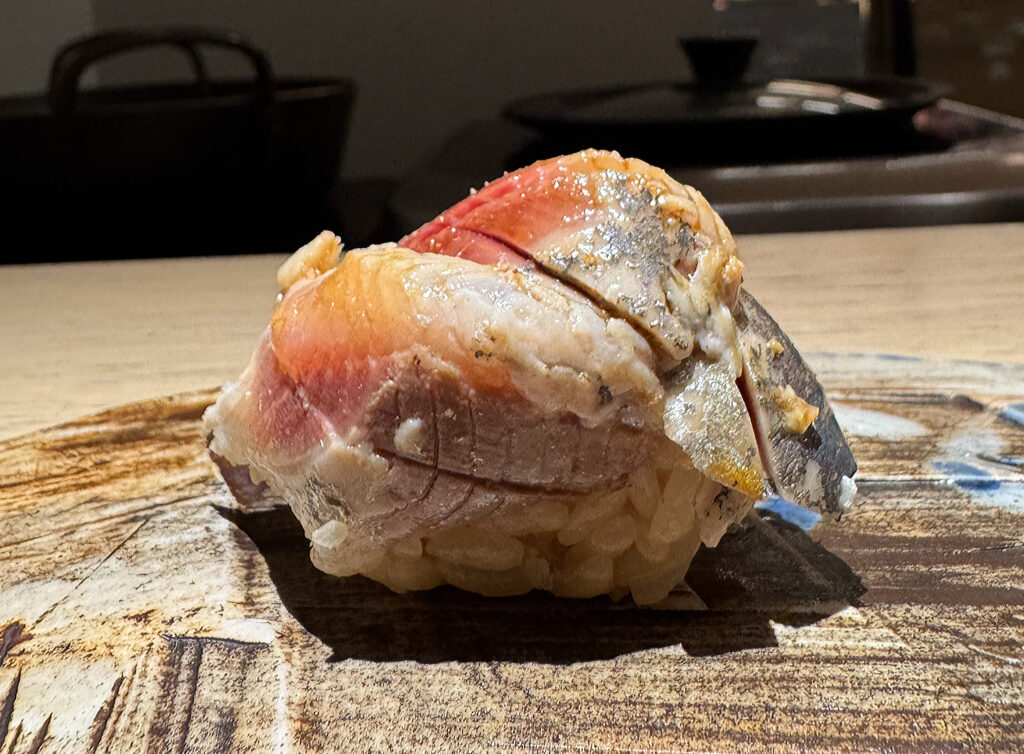
“Iwashi” (i.e., sardine) pursues something of the same effect—that is, a juxtaposition of strong textures and flavors—with a little more success. At a glance, it’s almost hard to make sense of how the interlocking slices of fish have been mounted on the rice.
Yet, upon reaching the palate, the iwashi delivers a sensation that is firm and juicy on entry then totally mouthcoating (in its oiliness) through the finish. Helped by the tang of the accompanying vinegar, the sardine leaves behind a salty, cleanly fishy flavor of notable persistence. This particular profile may be challenging for some; however, I find the concentration to be absolutely key in counterbalancing the starring ingredient’s mouthfeel. In short, this is a good performance given the category.
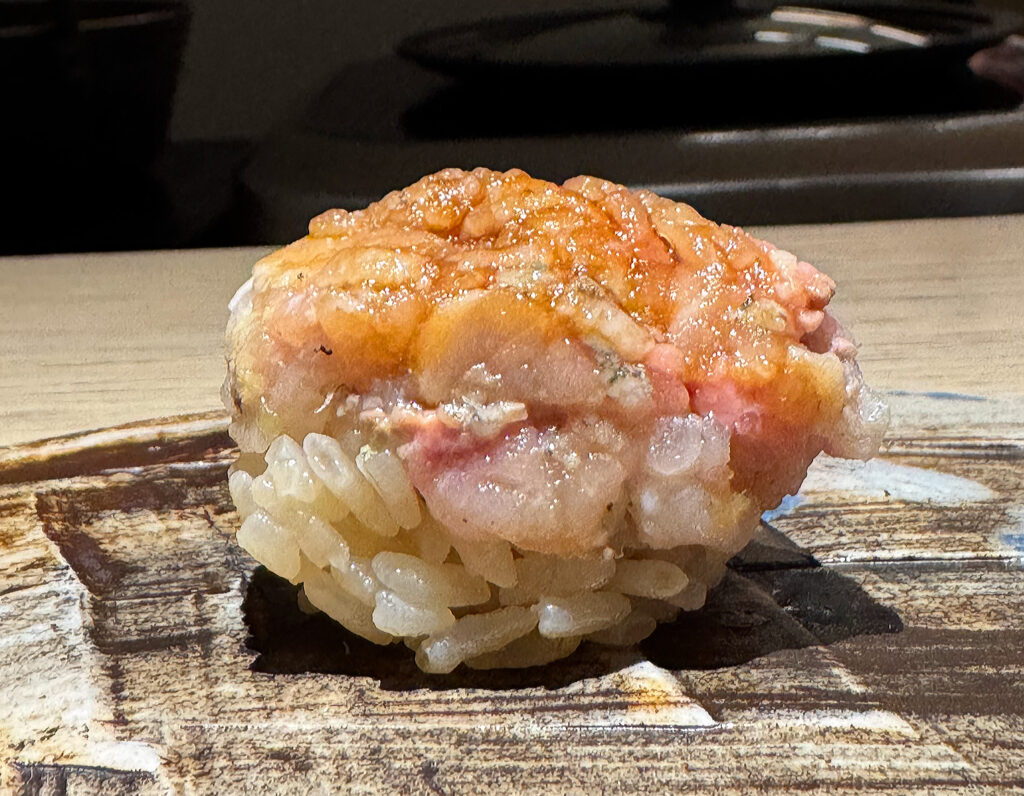
Tonight, the “Nishin Namerō”—a “fisherman’s tartare” made using herring—is entirely new to me. Contextually, it forms quite a clever way to build on (while also gently diverging from) the other oily pieces.
Texturally, the tartare feels expectedly soft and slick while still retaining some traces of structure (and thus a sense of meatiness) thanks to the larger chunks of fish being used. Nonetheless, though pleasing notes of smoke and allium-derived sweetness can be found on the bite’s finish, the midpalate lacks the kind of savory power (or general intrigue) I crave. Ultimately, I like the idea here but think that, when it comes to flavor, more can be done with this novel form.
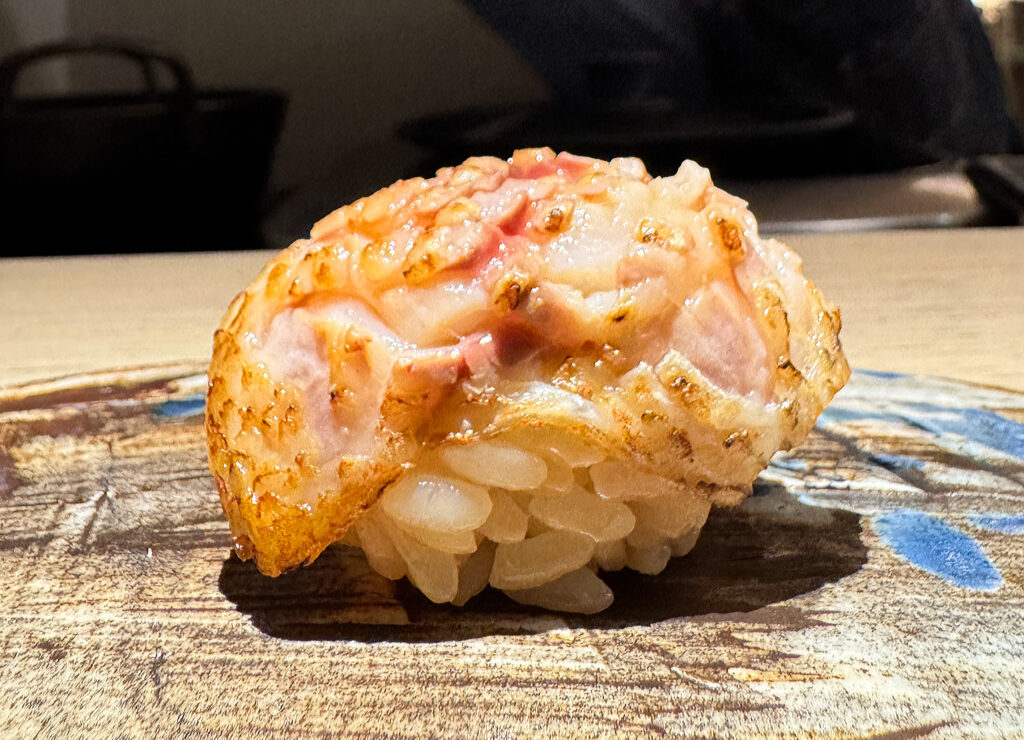
“Akamutsu” (or blackthroat sea perch) has to represent the most redemptive of the restaurant’s pieces. For Phan has long spoken of the ingredient’s luxuriousness—and I have long found its flavor to be lacking—only for the chef to strike upon the perfect solution.
By pairing the fish’s torched, gooey mouthfeel with a touch of fermented jalapeño, he enlivens all that fat. Indeed, the pepper’s mild, persistent heat (a wonderful curveball on a menu typically spurns such a sensation) tends toward a delectably fruity sweetness on the finish. This serves to transform the akamutsu from a mere textural thrill into something more like the full package. As I acknowledged during both my meals in May, this piece now—so many years later—ranks among my favorites.
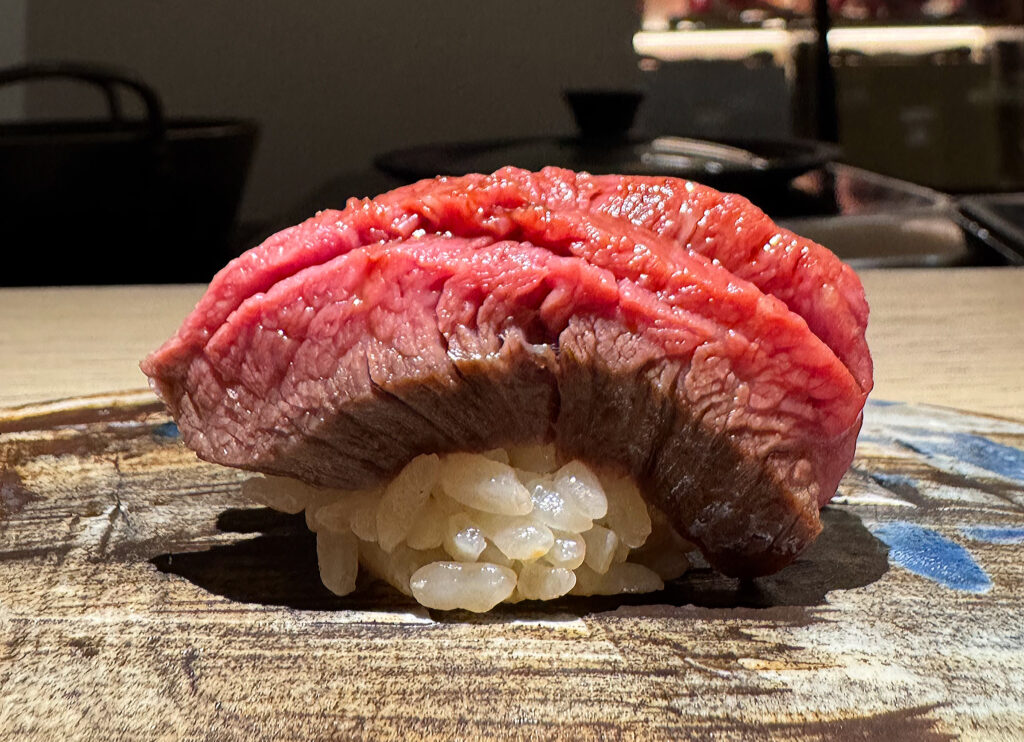
I think Phan would agree that shoehorning a bite of steak into an omakase is such a tried trope. That said, Kyōten—true to that wider “ingredient-focused” approach—only indulges guests with such an offering when the meat is truly exceptional.
The chef’s “Wagyu Beef Tenderloin,” which he alternatively describes as “mother beef” and the “vaca vieja of Japanese beef,” comes from auction. It also represents the “most expensive beef” the restaurant “has ever served.” I admire Phan’s candor in admitting that products like this are priced in accordance with visual judgments rather than taste.
Still, I cannot deny that the character of this mature cow—pleasantly chewy, then juicy, with a tongue-coating trace of fat, and (thanks to a dab of wasabi) remarkable sweetness through the finish—is superlative. When the beef is this good, how can you resist catering to one of Chicagoans’ deepest pleasures?
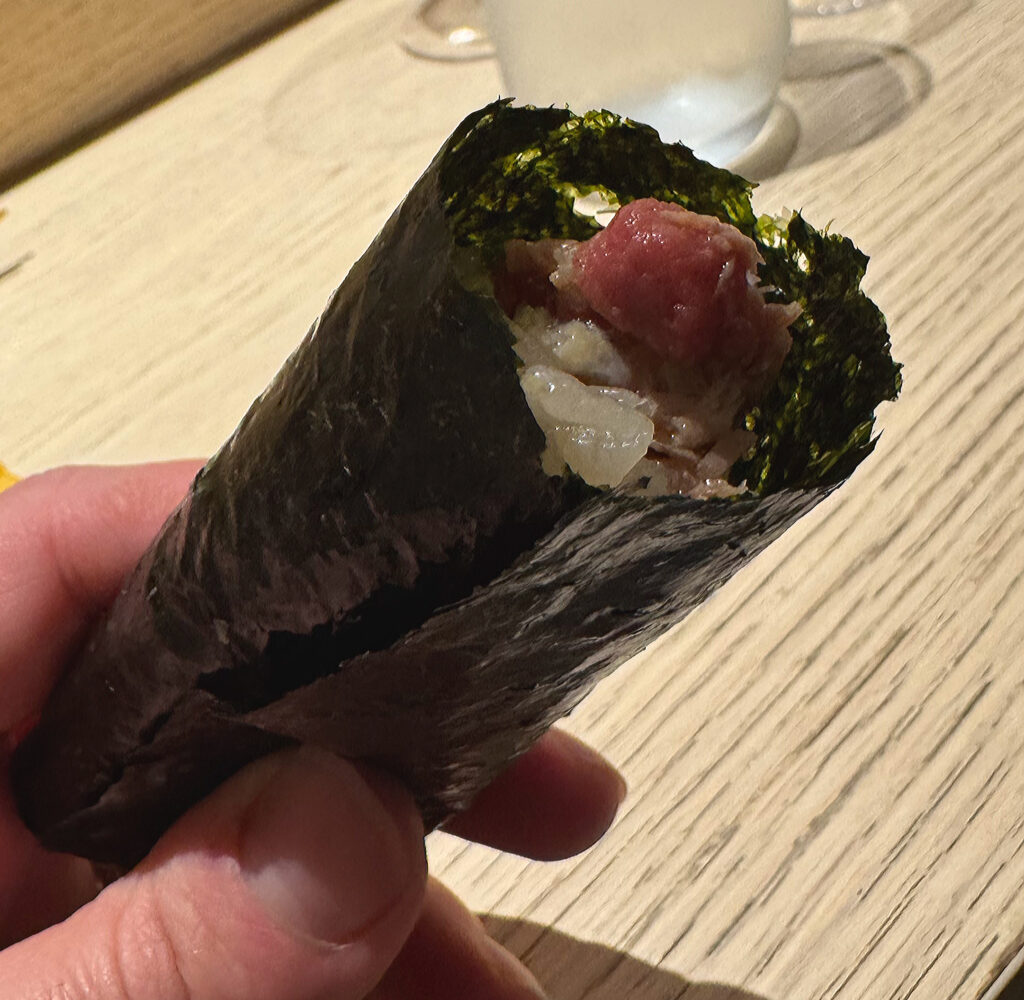
Thanks to the aforementioned absence of two diners, Phan closes out the savory side of the meal with what he terms an “encore.” This “Kitchen Sink Handroll” comes loaded with the evening’s unused tuna and wagyu.
Capped off with plenty of wasabi, this offering blends brittlely crisp, fleetingly chewy, and attractively juicy textures. Sweetness—revealed as all that richness meets the powerful pungency—defines the first few bites, but a cohesive savory quality rounds out the finish. Overall, while I rarely find that the handrolls here amount to anything more than the sum of their parts, this particular example balances decadence and finesse in uniquely memorable manner.
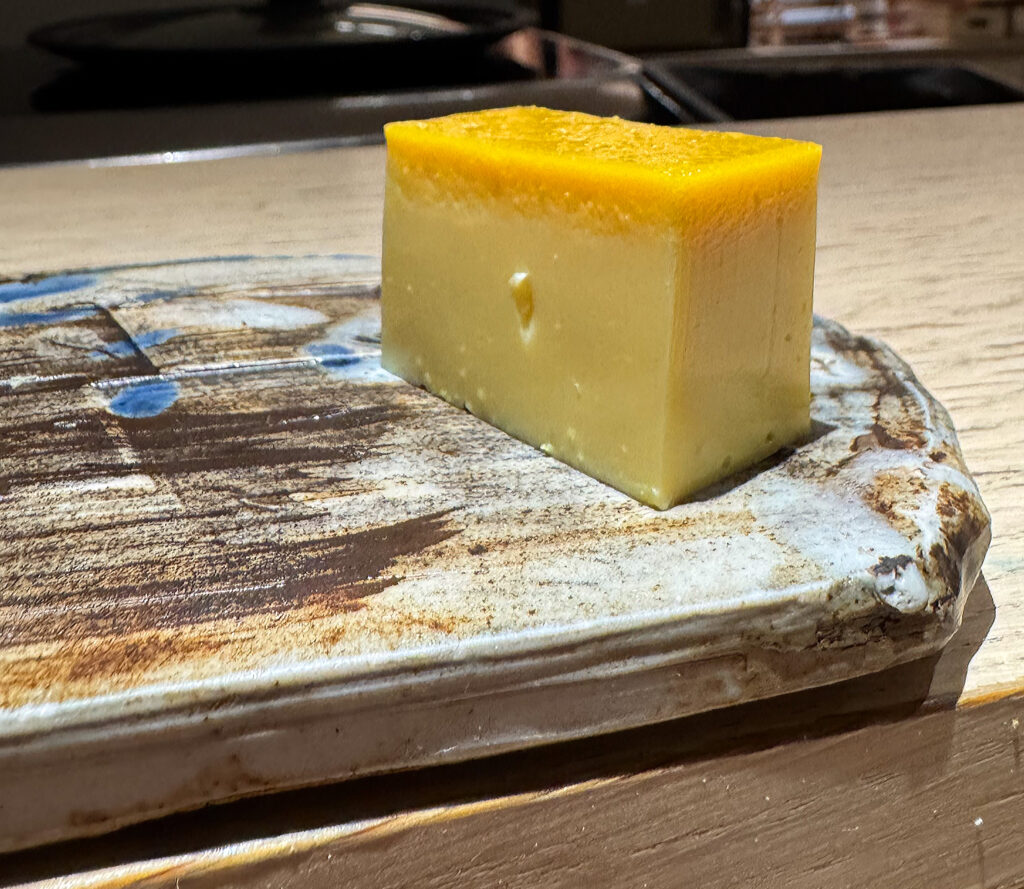
For dessert, “Tamago” remains Phan’s standby: offering a particularly custardy take on the familiar egg omelet with a soothing, melty mouthfeel and pronounced flavors of caramel, maple, and corn. This is beautifully executed tonight.
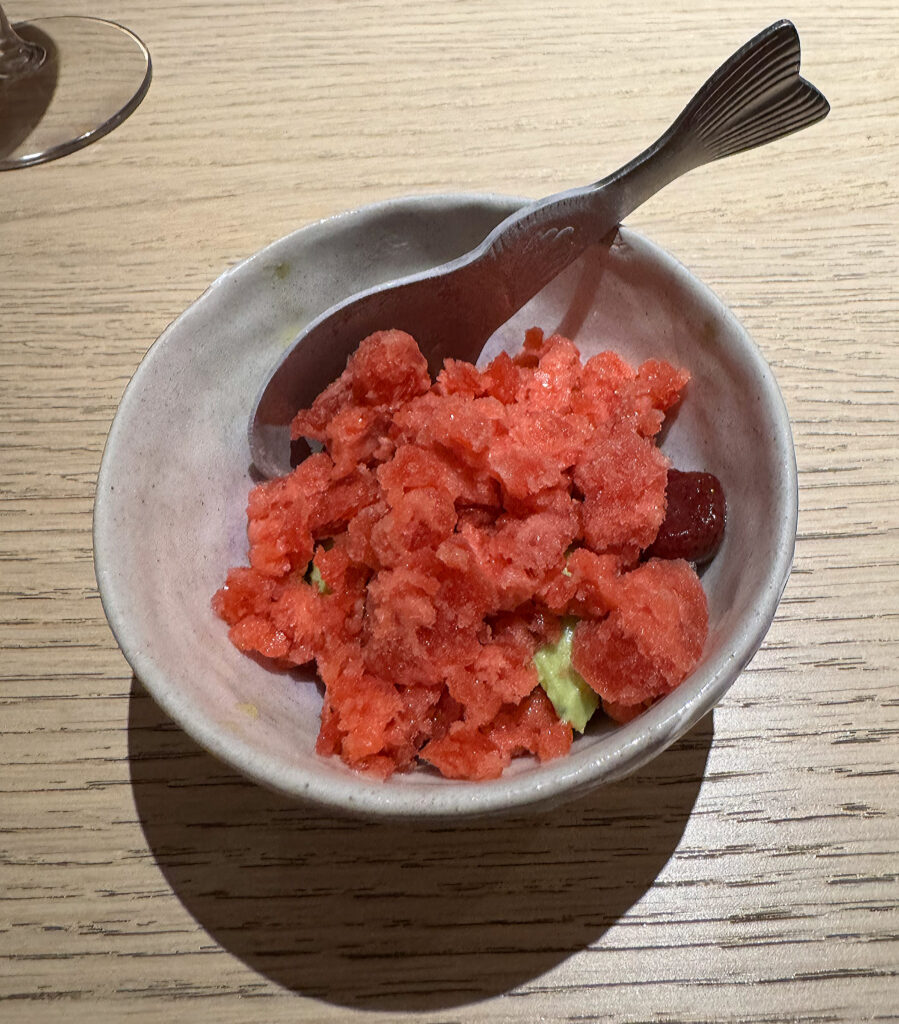
The “Strawberry-Basil Ice Cream,” by comparison, is a little new and a little old—old because it references the earliest of Kyōten’s work in this frozen format, new because (after many months of serving that white cheddar recipe) it rewrites the recipe.
In the base of the bowl, one finds the ice cream itself: a bright green scoop the chef describes as “really expensive” to produce given the quantity of basil (sourced from Mick Klug Farms) it demands. Some olive oil and a few macerated strawberries form the immediate topping. However, it’s the transformation of the fruit into a chunkier granita (boosted with the same aged vinegar that features in the sushi rice) that now brings this dish to another level.
Texturally, the interplay of creamy, chewy, and jammy sensations is far more engaging than the usual, streamlined sundaes here. Further, the juxtaposition of minty-anisey freshness, tangy-sweet strawberry, the confected intensity of the macerated fruit, and that maddening touch of umami achieves a new peak of depth. Ultimately, while it would be so easy for Phan to keep serving the same rotation of desserts, his continued effort to reimagine and refine his work (even in this least important of areas) is inspiring.
Roughly, two and a half hours later the meal reaches its conclusion having traversed—successfully—each one of the restaurant’s signatures and maybe even added a couple new ones to the pile.
At the same time, the conversation carried by the other four guests erases any sense that the counter laid partially empty. My own relative isolation aside (and, in fact, I think it helps for regulars not to always insert themselves into another party’s experience), diners and chef end the evening speaking as if they were old friends.
This level of extra-special attention (comparable only to a buyout) forms the cherry on top of an otherwise exemplary omakase. It cements the capacity for human connection—so attuned to Chicago and so subverting the genre’s solemn, stoic stereotypes—that allows Kyōten to transcend the limits of gastronomy and become something more like art (or at least performance art).
Retreating to the foyer as he usually does, Phan makes himself available—even more intimately—for a final chat and goodbye. Unrushed, we each successively take our audience and go off into the night.
In ranking the evening’s dishes:
I would place the “Mehikari,” “Ōtoro,” “Akami,” “Shima Aji,” “Aori Ika,” “Uni,” and “Wagyu Beef Tenderloin” in the highest category: superlative pieces that stand among the best things I will be served in any restaurant this year.
The “Octopus,” “Mick Klug Peas,” “Akamutsu,” “Kitchen Sink Handroll,” “Tamago,” and “Strawberry-Basil Ice Cream” all land in the next stratum: great items that achieved a truly memorable degree of pleasure. I would love to encounter any of these again.
Finally, we have the “Aka Ebi,” “Kinmedai,” “Aji,” “Iwashi,” and “Nishin Namerō”—good—even very good—preparations I would always be happy to sample again (but that just failed to elicit an extra degree of emotion).
Overall, this makes for a hit-rate of 100% with some 72% of offerings reaching that “would love to have again” level of quality and an estimable 39% being of that “best of the year” caliber.
In other words, the present menu ranks as the very best that Kyōten has served thus far in 2026. Given that we’re in the middle of summer (and that so many of the omakase’s most totemic ingredients are somewhat disadvantaged by the season), this kind of performance runs contrary to expectations. Nonetheless, if we consider my meals from May, such a result is actually sensible.
For one, the “Hotaru Ika” (or firefly squid) has left the menu, and, since I struggled to really find pleasure in the ingredient this year, its absence immediately boosts the restaurant’s hit-rate. Likewise, my meal from the later part of May was notably blemished by the strange (i.e., soft, floral) character of the wasabi being used—going so far as to diminish my usual enjoyment of the tuna. Phan’s assurance that the quality of the rhizome today was “really good” proved true. By delivering its emblematic sharpness (and all the depth of flavor, via contrast, that comes as a result) the wasabi ensured the number of “best of the year” bites swelled.
That said, Phan did more than just correct a couple flaws. Indeed, the chef has always risen to the creative challenge that summer presents, and I found that his work with fresh peas, strawberries, basil, and the wild shima aji to rank among the strongest offerings of the night. Further, while serving wagyu as part of an omakase hardly merits any praise, the quality of the beef and its seasoning (acting as an alternative for a late serving like eel) was exceptional.
Finally, I must also praise the way Phan’s technical prowess—as it relates to the “Mehikari” tempura, “Aori Ika,” “Kinmedai,” and “Kitchen Sink Handroll,”—continues to grow. While the first couple items are newer (and more or less represent instant hits), the latter reflect the chef’s ability to rethink, refine, and transform longstanding preparations in a way that finally catapults them toward the top.
Factor in the quality of the uni (always prone to variation) on this occasion, as well as the effective handling of the tuna and octopus, and you are left with a totally convincing menu—the kind that actually makes Kyōten feel like a sharp value (remember that service is included in the stated ticket price) relative to the city’s two- and three-Michelin-star options.
At the same time, there’s always room for further improvement, finer sharpening, and the scaling of even greater heights.
That’s the reason I already look forward to my next visit even as I savor what was, by all accounts, a grand slam tonight.