

This meal was originally set for early March, but I ultimately had to reschedule it for the end of the month—just days after head chef Brian Barker’s departure. Thus, a piece that was meant to offer a rousing send-off to one of Smyth’s greatest leaders and craftsmen now centers on a period of transition and uncertainty.
Of course, the kitchen’s chosen ingredients and techniques have not yet had a chance to change. There’s a whole structure of talented chefs and cooks—led by nobody less than John and Karen Shields themselves—preserving a continuity of practices and philosophy at this three-Michelin-star sanctum. On the front-of-house side, the restaurant can still depend on a general manager and a wine director that stand among the city’s (and I would contend the country’s) best.
Yet changes at the top are bound to have an effect no matter how strong Smyth’s foundations are and how faithfully its processes are followed. Sensory work is subject to the vagaries of each individual’s biological equipment, and, even if this meal is staged with the intention that nothing should change, those finest details almost seem damned to.
For I speak of a cuisine (so ruggedly naturalistic in its presentation) where ingredients have no place to hide. Each composition is shaped not only by basic seasoning but by minute applications of all those milks, oils, custards, emulsions, jellies, and seaweeds on which the kitchen’s cookery—love it or hate it—is now based. Too much of this or too little of that and these filigreed dishes can collapse altogether.
This piece will look to capture how the team and its work have responded to a consequential changing of the guard: paying special attention to dishes that are new (and, in effect, the final creative expressions of Barker’s tenure) while, perhaps even more importantly, tracking how familiar recipes and forms are now being prepared.
The result of Smyth’s head chef search (the announcement of which, you might remember, was widely broadcast back in January) has yet to be revealed. An even more dramatic change could be on the horizon (depending on the unique qualities of any outside hire), or maybe a new leader will be named from the existing ranks (a decision that would demand an even closer inspection of how chefs who shared the same philosophy might diverge in its practice).
Whatever ends up happening, this is a key moment in the restaurant’s history—a fresh slate, a reorientation, a whisper of what may be to come?—that is worth perceiving and preserving. And, whatever I find, it’s always a treat to grapple with recipes that, year after year, still manage to feel singular while frequently achieving excellence too.
Let us begin.
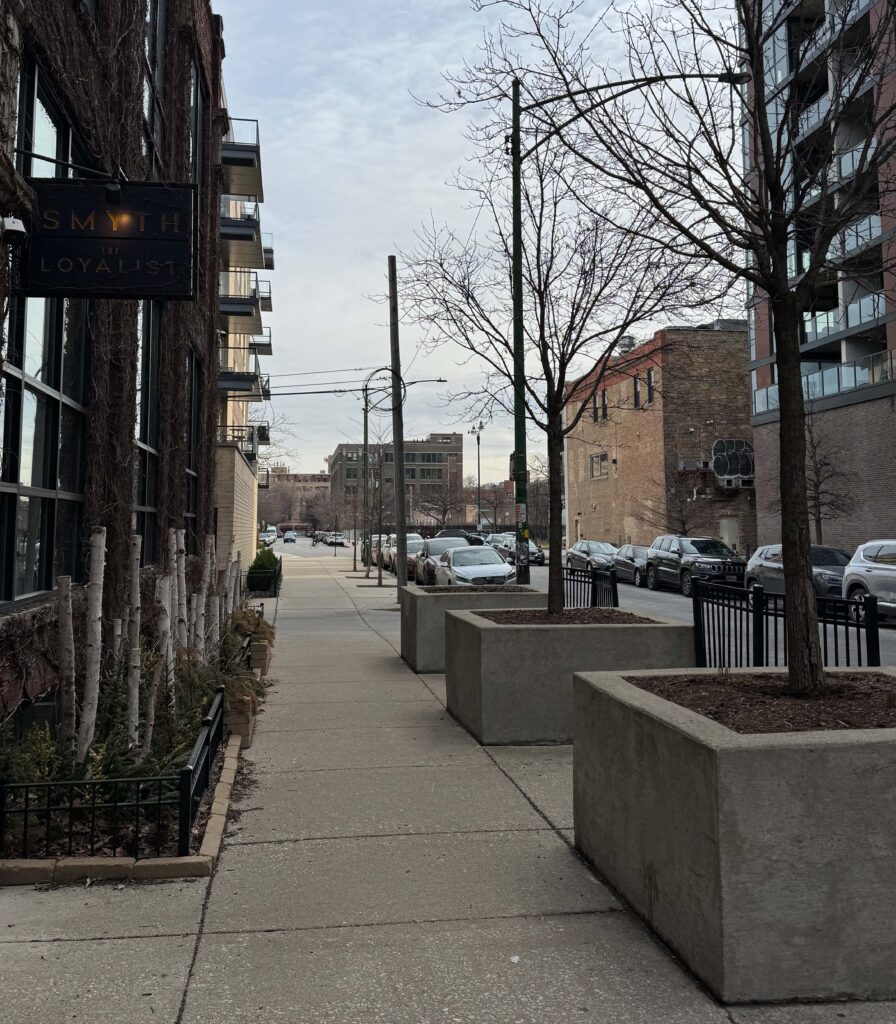
It’s a Tuesday night, and, while this is certainly not the first time I’ve dined here at the very start of the restaurant’s week (Smyth being closed on Sunday and Monday), it’s been about five years since I’ve had the pleasure.
Tuesdays are for the diehard fine diners, the gastrotourists, the guests celebrating their birthday or anniversary on the day, the larger parties that cannot fit at any other timeslot, and the occasional industry peers. The team, armed with a couple days’ rest after the crescendo of the weekend (with its date nights and conventional luxury-seeking crowd), goes about their work with a sense of rejuvenation. They linger and chat and laugh with less of the self-consciousness that the peak of service on a Friday or Saturday demands. Tonight, I’m reminded of a Smyth from before the third star and before the pandemic: a hidden gem (even at two stars) offering technical precision at half the price with an infectious, playful mood that totally subverted the solemn dining rooms of yesteryear.
The spirit of hospitality remains the same, yet the expectations—aligning with what Michelin has branded the best meal in Chicago and begging comparison to some 150 other places (legends all) that have earned the same designation—have changed precipitously. Offense (i.e., the aspirational pursuit of a thoroughly personal cuisine) cannot help but transition into a kind of defense (i.e., the guarding of Bibendum’s highest honor by putting one’s best foot—and food—forward at all times). That said, Shields and Feltz and Barker have, since 2023, sacrificed little of their culinary vision for the sake of placating the masses. As a consequence, the entire team must work harder than ever to bridge the gap between a sense discovery or provocation and the kind of excellence that (by no fault of the restaurant) a third star implicitly promises.
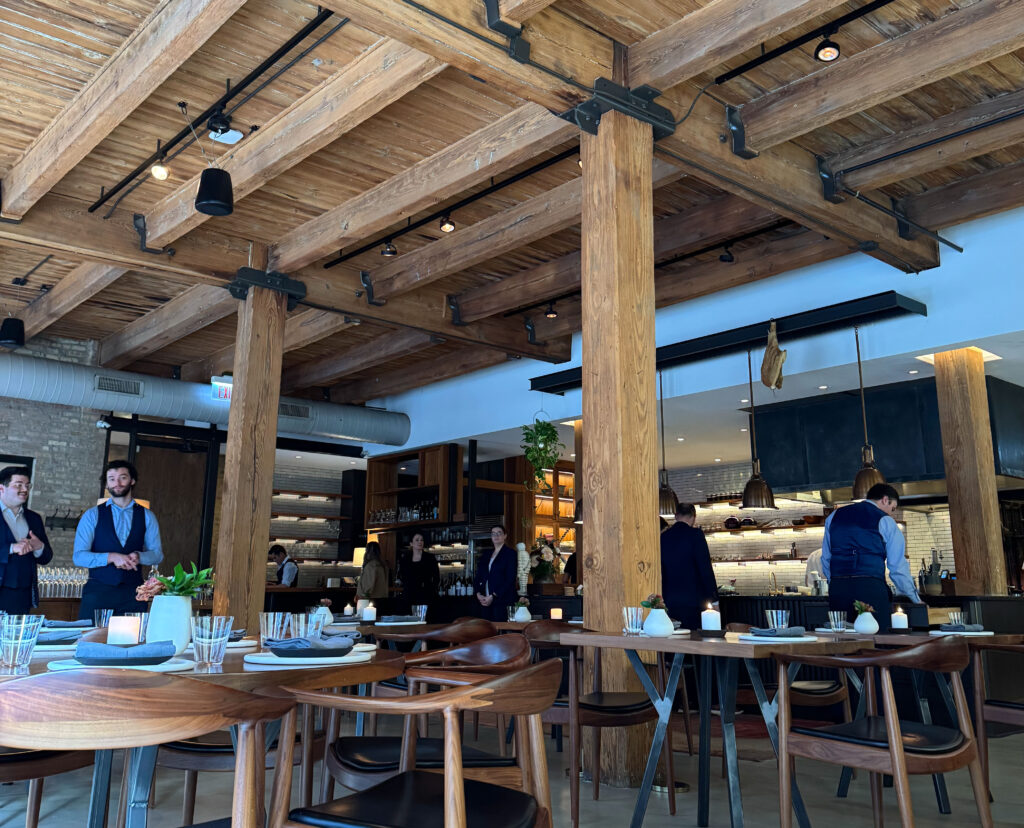
This Tuesday, the space only fills to 60% (maybe 70%) of its capacity. The tables also don’t turn to accommodate the next round of diners like they do later in the week. Chalk it up to the time of the year (with its persistent cold weather) or to broader economic headwinds, but the books at Chicago’s other multi-Michelin-starred spots (e.g., Alinea, Ever, Oriole) look equally open on these dates.
This is an off day during a lull period and at a key moment of transition: an opportunity for loyal customers and newcomers alike to enjoy the best of Smyth’s efforts with the added calmness and coolness that even a slight dip in patronage enables.
Consistency, night to night, should never falter at this level, yet, if the quality of the forthcoming meal is anything to go by, I may now make a point of planning my future visits on these quieter, more intimate evenings.
Shields, Sandoval, and Fabbrini are all on hand—as well a cadre of old and new faces in support (the latter of which always impress me in their ability to make an introduction, strike the right tone, and perpetuate the kind of genuine connection that generations of staff have stewarded here).
It’s Fabbrini’s presence that I appreciate the most on this occasion, for the wine director can often get pulled into expediting (or simply harried with the demands of preparing so many pairings) on busier evenings. Hearing him describe the underlying logic of matching a particular pour to a particular dish—an analysis that might include more than a dozen flavor/textural notes as well as an explanation of how the food changes during its time in the mouth—feels like a masterclass. Surely, this degree of detail would strike some guests as arcane, but it speaks to how direct and profound the collaboration with Shields is.
When one also considers the kind of producers Fabbrini has cultivated for his list—spanning legendary estates (like Allemand, d’Angerville, Clos Rougeard, Conterno, Dagueneau, Dugat, Dujac, Keller, Krug, Lafleur, Lafon, Hubert Lignier, Mascarello, Mugneret-Gibourg, Müller-Catoir, Quintarelli, Romanée‑Conti, Roulot, Rouget, Selosse, Soldera, and d’Yquem) and cult names (like Pierre Andrey, L’Anglore, Barbacàn, Bernard-Bonin, Xavier Caillard, Chanterêves, Ulysse Collin, Comando G, Julien Labet, Maison Maenad, Jean-Yves Péron, Prévost, Roagna, Robinot, Saalwächter, Schätzel, Maison Skyaasen, Anders Frederik Steen, Stein, Stella di Campalto, Takahiko, Valette, and Wasenhaus) alike—I struggle to think of a sommelier who is doing more to transform Chicago’s wine culture.
Smyth’s eminence allows Fabbrini to scoop up allocations that would be rationed out (and then be bought up almost instantly) in markets like California or New York. Here in Chicago, the bottles actually have a chance to sit and reward palates—whether they skew classic or toward the very pinnacle of “natty” adventurousness—with markups as little as 10% (or more frequently a rather fair 100%) on top of retail price. Though few people get a glimpse of its treasures, this list has to rank as the city’s finest: covering the breadth of trendy offerings one finds at Easy Does It, Elske, or Obélix and the kind of blue chips one finds at Alinea or Oriole while wrapping them all in a pervading sense of value.
The real heart of Fabbrini’s work is perceived through his pairings, which now take the form of two options: the “Smyth” ($245) and the “Reserve” ($475). (I lament the retirement of the “Super Mega” title but appreciate the fact that the entry-level option is labelled in a way that avoids denigrating the selection as being “standard” or unworthy of what is already an expensive meal.)
Tonight’s “Reserve” lineup comprises:
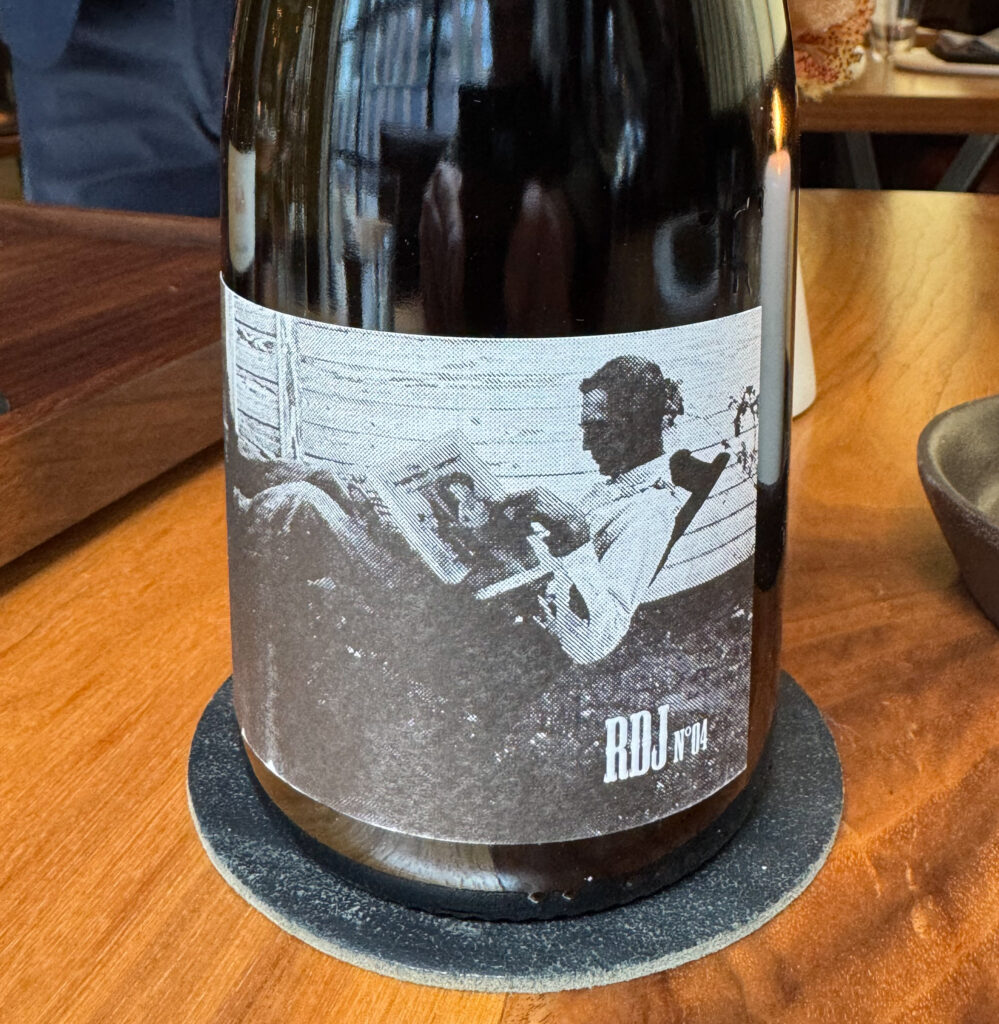
- NV Cédric Bouchard Champagne “RDJ n°04”
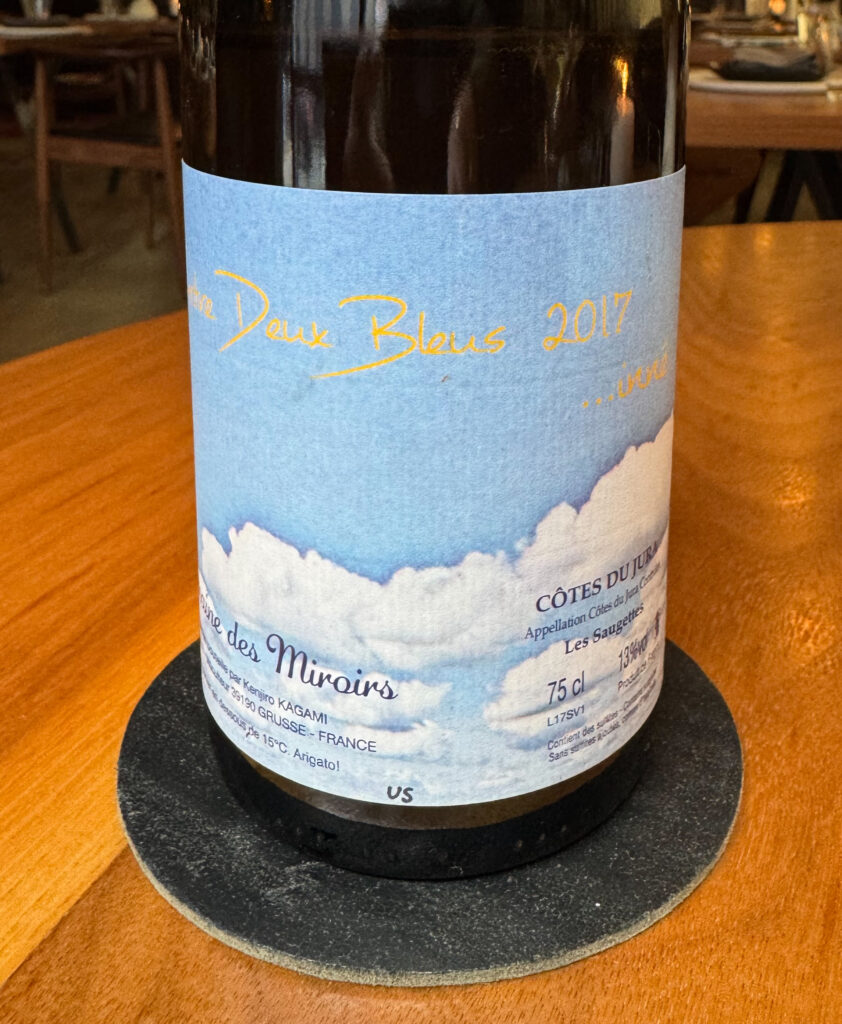
- 2017 Domaine des Miroirs “Entre Deux Bleus …inné”
- 2020 Jakob Tennstedt “Musari” Riesling
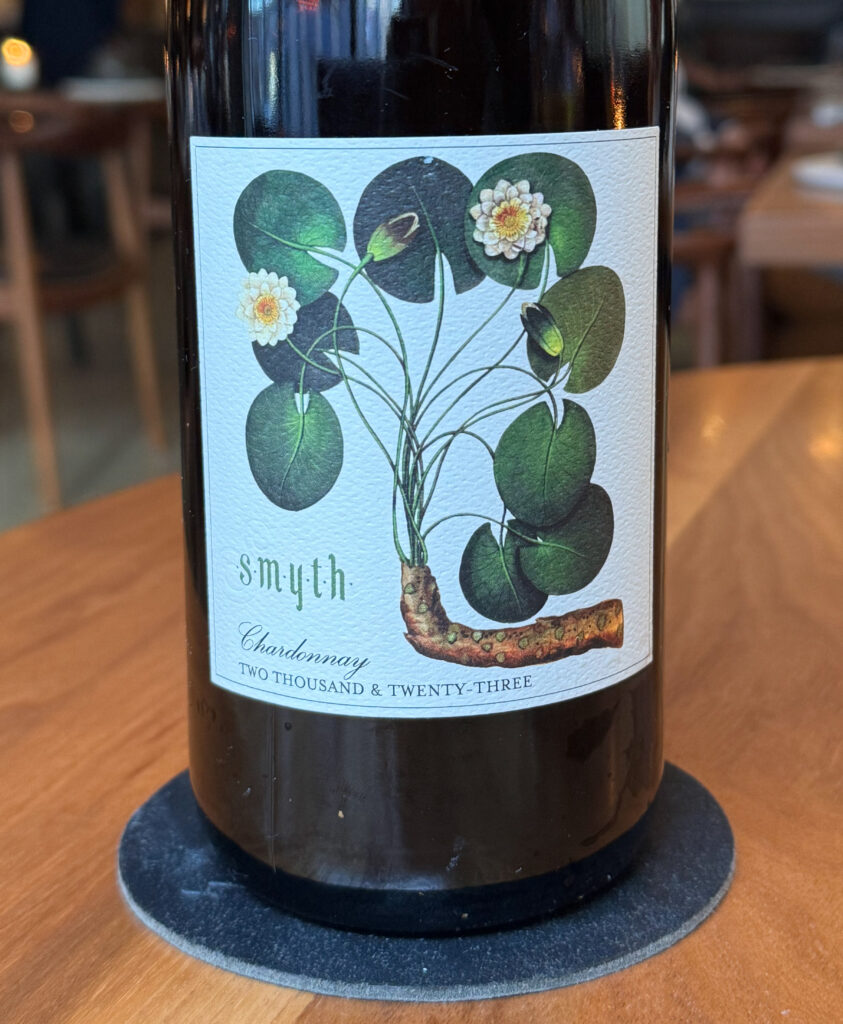
- 2023 Antica Terra “Smyth” Chardonnay
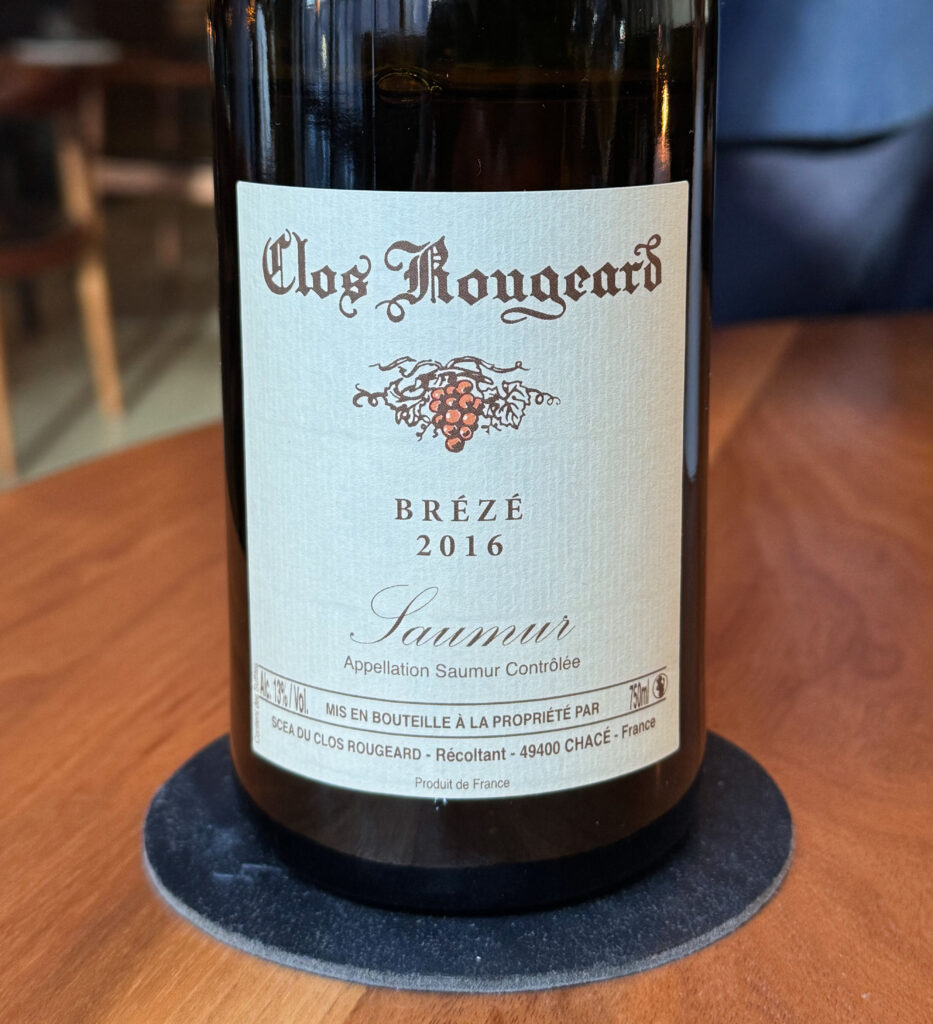
- 2016 Clos Rougeard Saumur “Brézé”
- 2022 Makatzak “Narrasti” Getariako Txakolina
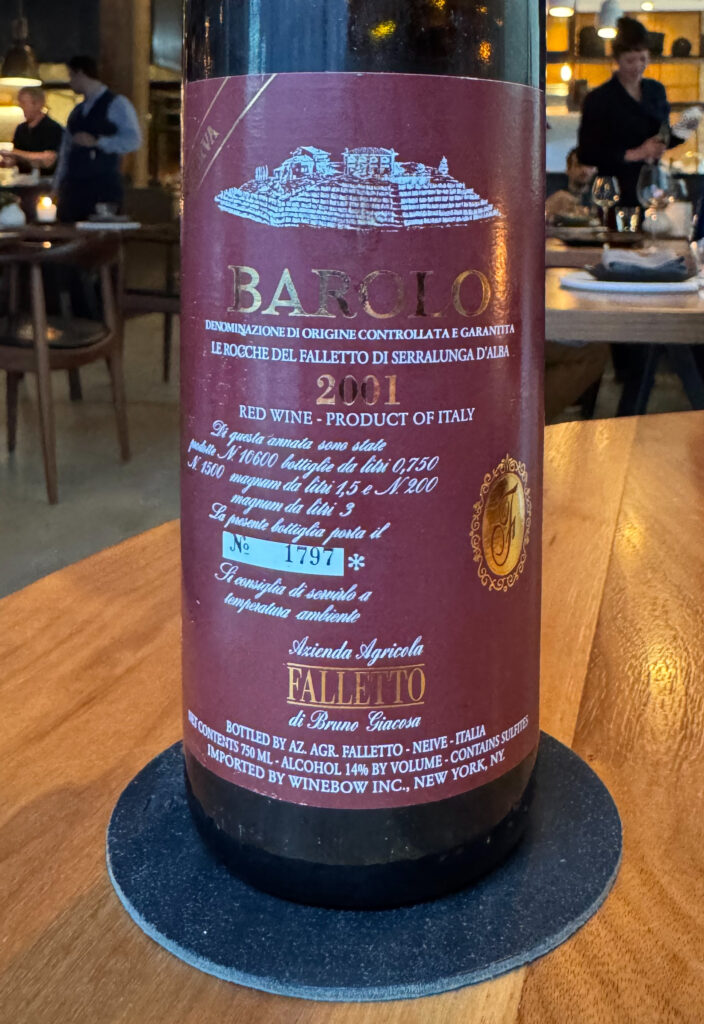
- 2001 Bruno Giacosa Barolo Riserva “Le Rocche del Falletto di Serralunga d’Alba”
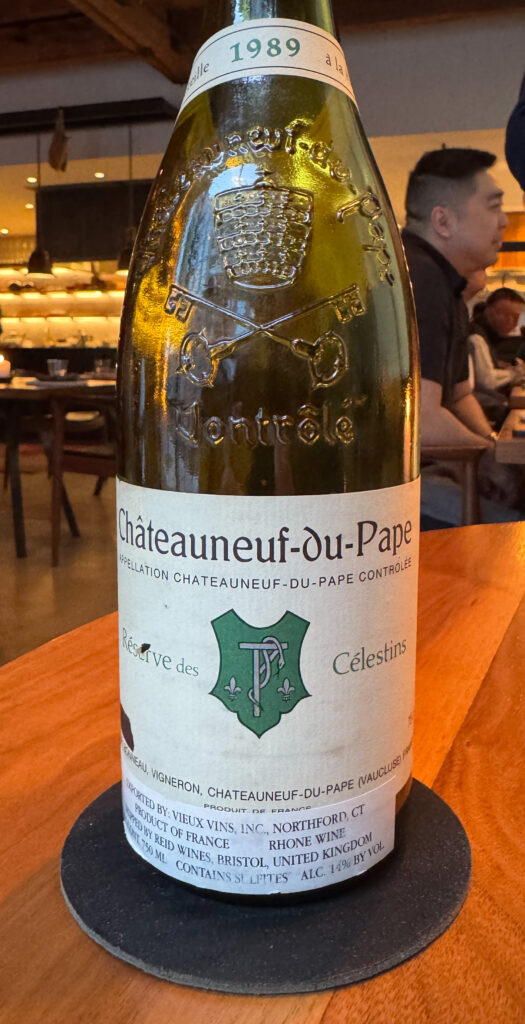
- 1989 Henri Bonneau Châteauneuf-du-Pape “Réserve des Célestins”
- 2009 Domaine de la Tournelle “À l’Aube”
- NV Beck-Hartweg “Rittersberg 45” Eau de Vie (flavored with birch and soba)
Typically, I like to judge these premium pairings by asking, “what do I get to try here that possibly outperforms one or two exceptional bottles off of the list?” Considering that a party of two could spend as much as $950 on a single selection (like, say, a Prévost “Fac-Simile” for $865), this is a tough test. Why leave yourself at the wine director’s mercy once you deduce that he privileges low-intervention winemaking?
However, selections like the “RDJ n°04” (up to $1,499.96 at national retail), “Entre Deux Bleus” ($1,200 at national retail), Clos Rougeard “Brézé” ($349.98 at national retail), Giacosa Riserva ($699.99 at national retail), and Bonneau “Célestins” ($1,695 at national retail) more than pass the test: savvily balancing culty names (Miroirs being among the cultiest) with the kind of revered, aged examples that can convince even the most headstrong aficionados.
In between, one finds a deliciously ripe Mosel Riesling and a beautiful collaboration with Antica Terra (attuned to the nutty, even piney notes that the kitchen favors)—nothing too weird. The Txakolina is probably the most adventurous of the bunch, but it’s heady, acid-driven, and saline expression of the Basque Coast plays well with a sequence of trout dishes utilizing tropical fruit and cheese. The dessert pours (a late-harvest Savagnin and a cocktail made from dry, nutty Alsatian brandy) are equally bold but harmless and approachable enough when paired with sweets.
Indeed, while this “Reserve” pairing remains entirely faithful to the kind of winemaking philosophy Fabbrini prizes, the wine director—true to the style he has pursued since joining Smyth—draws upon cheaper, characterful, more obviously “natural” bottles in order to make room for four or five absolutely superlative offerings.
Ultimately, the wine director undoubtedly fulfills a value proposition that promises—for your $475—”a limited-availability progression of rare bottlings, iconic producers, and exceptional vintages from our cellar.”
In fact, tonight’s pairing positively ranks among the finest of its kind I’ve encountered anywhere in the world. Fabbrini does real justice to the form (in many restaurants a dying form), and he has built a program, whichever direction one goes in, that forms a destination in its own right.
Yes, Smyth has found a chef sommelier who fully matches the cuisine with the kind of depth of knowledge and discerning judgment (knowing when to embrace or contrast strangeness) that it deserves. Fabbrini, in my opinion, remains the best wine professional in Chicago that so regrettably few diners have gotten to meet. Any forthcoming change in the restaurant’s kitchen hierarchy will, I expect, fuel newer and richer levels of collaboration moving forward.
At last, we come to the food and this evening’s “Chef’s Menu” ($550 exclusive of beverage, tax, and gratuity): an upgraded experience that comfortably ranks as the most expensive tasting in Chicago—save, perhaps, for an Alinea “The Gallery” or “Kitchen Table” seating with the addition of a truffle supplement (which is never offered here).
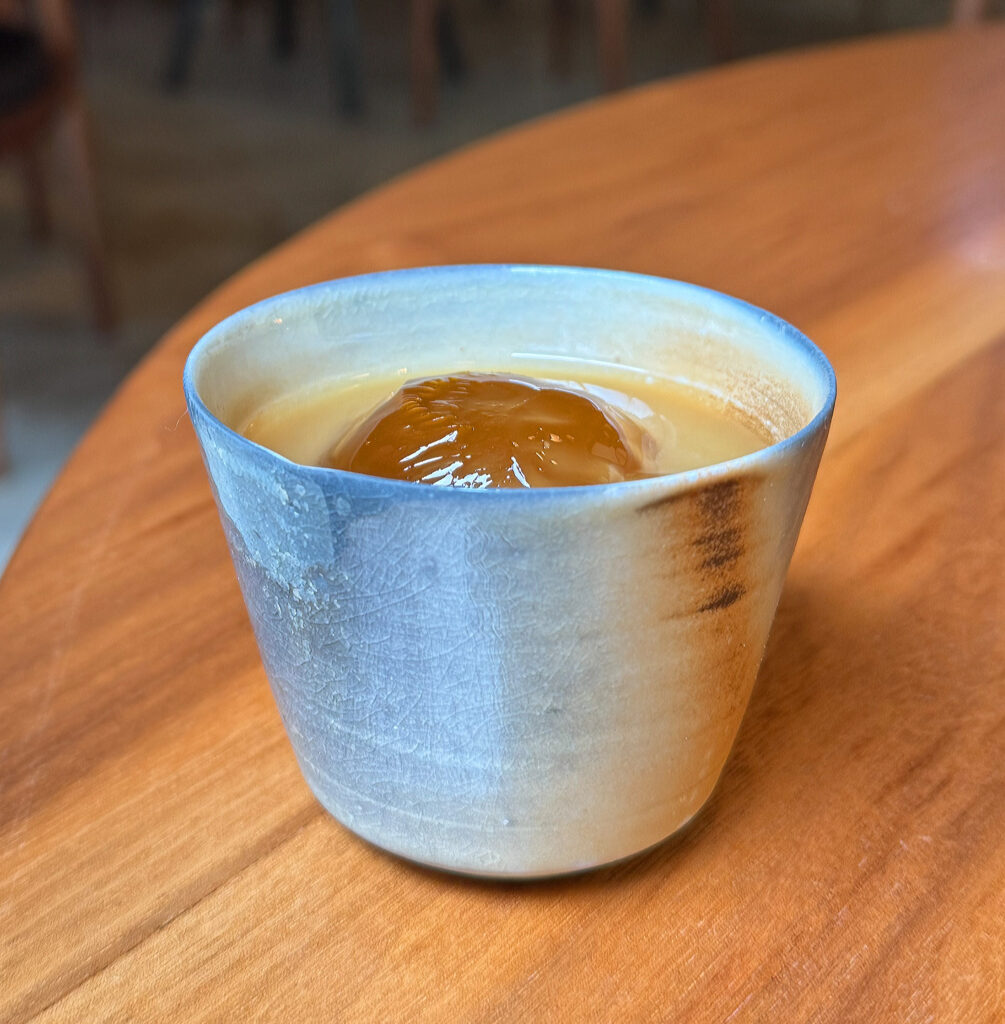
The night begins with a pour of “Amazake” that has been the brainchild of executive sous chef Matt Orlowski over the past couple years: representing the kind of tipple that can whet one’s whistle while speaking to the practice of craft and flavor profiles that will shape what’s to come. While two types of rice koji (the kind used in sake, miso, and soy sauce production) always help to define this fermented drink, the present version incorporates notes of apple, birchwood, Szechuan peppercorn, and fermented pinecone honey (all of which, indeed, appear throughout the menu).
This iteration also comes spiked with a housemade rhubarb root amaro, which lends the brew more booziness than I am used to. However, I still like this recipe’s lower degree of acidity, for it emphasizes a soothing, milky, textural quality in the amazake. There’s also a lasting sweetness and a touch of bitterness (even sharpness) on the finish that serves to invigorate one’s palate. Overall, this is a nice, unabashedly idiosyncratic expression of what has become a signature offering: one that makes the opening drinks served at other restaurants (be they soup, tea, or Champagne) seem thoughtless by comparison.
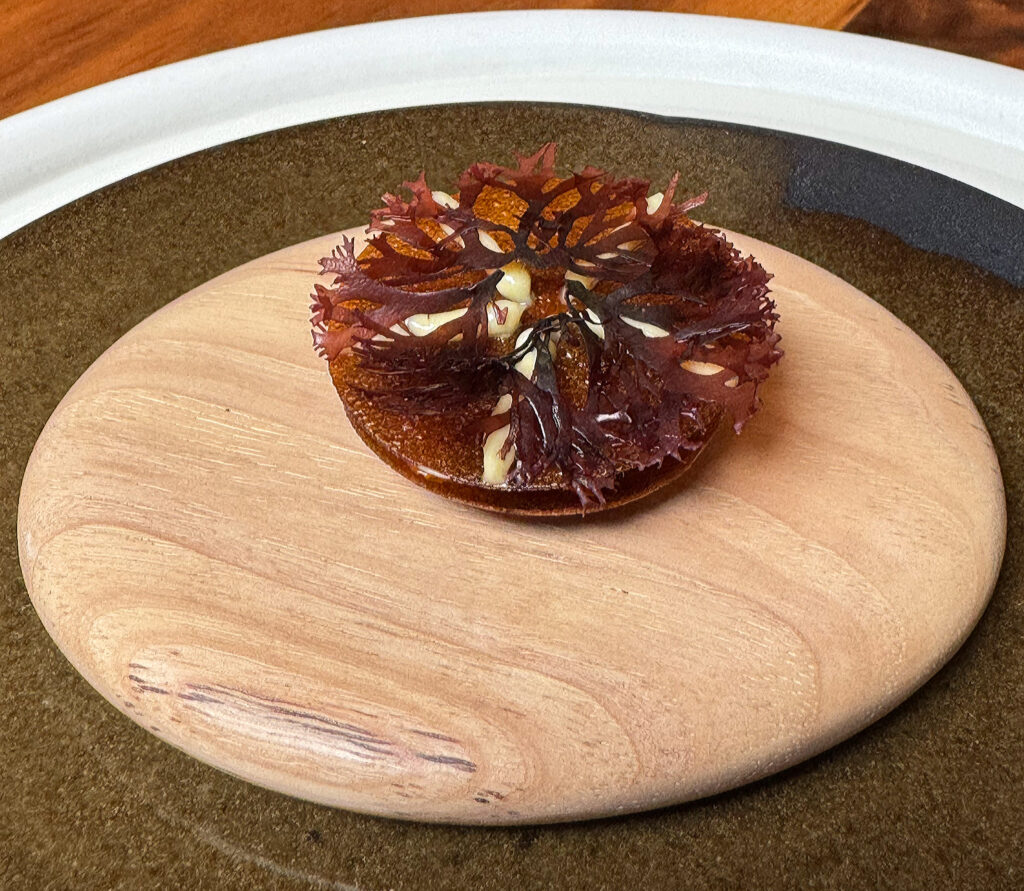
The first bite of the meal takes the form of an “Uni & Tomato Tart” that continues the chefs’ longstanding work with the form (one that Shields concedes has become pervasive throughout fine dining but that he, unquestionably, finds ways to renew). The present example tucks the starring ingredients into the center of a delicate shell then caps the vessel with a seaweed chip. Its surface is laced with lines of butter and leaves of dulse, yielding a preparation that spans an array of crisp, creamy textures before striking one’s tongue with a beautiful balance of sweet, umami flavor. Really, it’s shocking how seamlessly the sea urchin (sourced from Hokkaido) and fresh produce combine. This immediately ranks as one the most streamlined, pleasing tarts Smyth has served.
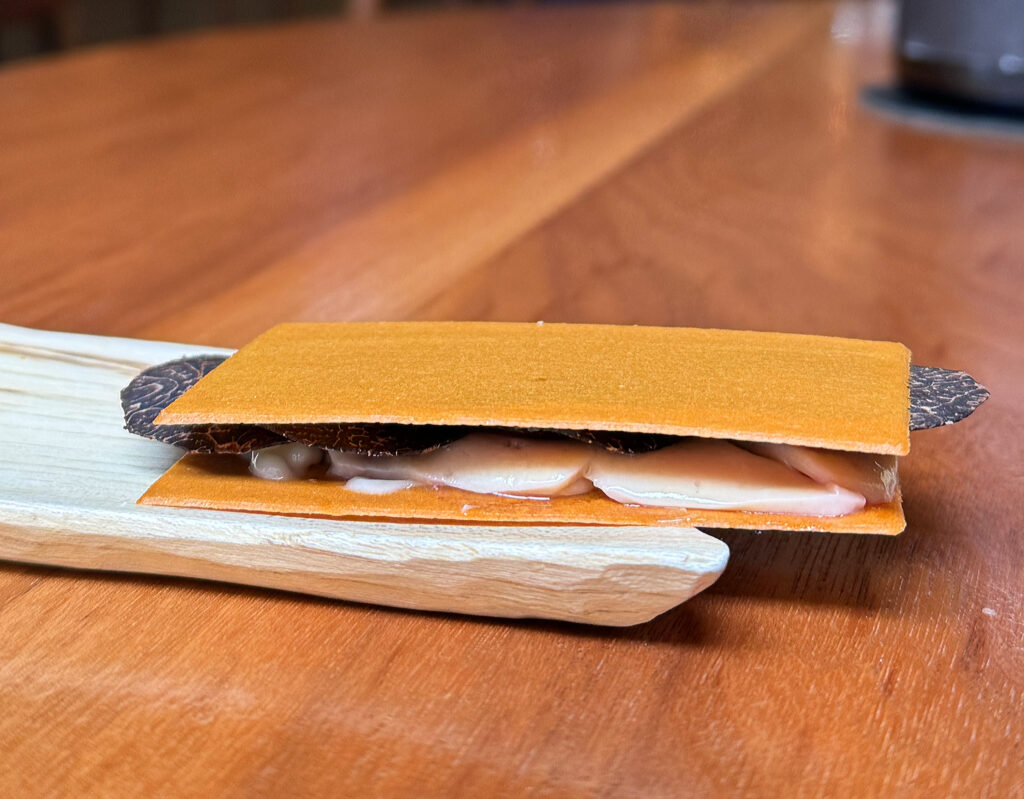
The “Toasted Corn & Black Truffle,” which I sampled back in January, follows along the same line of delicacy while pushing it to an even greater extreme. Here, thin slices of brined foie gras and shavings of the titular Tuber (whose edges peek out at the ends) are stuffed between two gossamer wafers made from the headlining maize. The resulting bite is almost hard to grasp without shattering it in one’s hand. But, upon reaching the mouth, the brittle crackers collapse into their creamy filling, impart a sensation that is roasted and earthy on entry yet rich, nutty, and subtly sweet on the finish. Ultimately, this makes for another dish that combines striking intricacy with a likable, approachable flavor profile. Indeed, I appreciate how these luxury ingredients—artfully rendered—form a friendly onramp toward the more challenging sections of the menu.
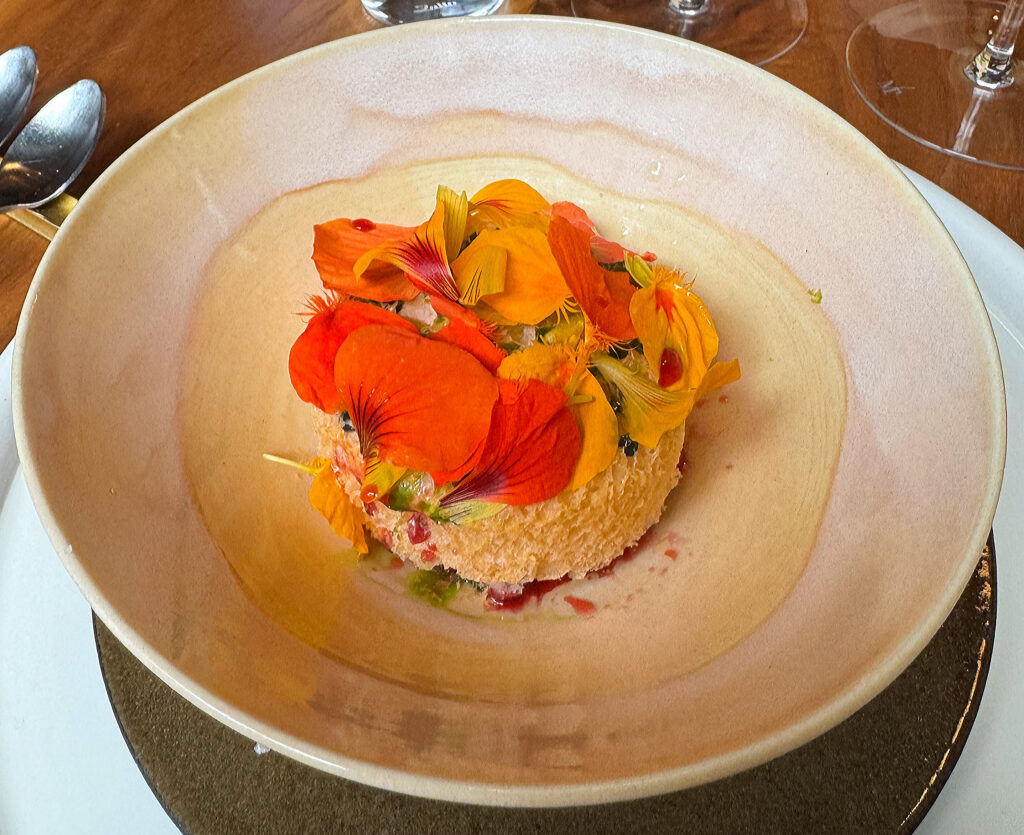
A ”Maine Uni Parfait” (which also featured during my last visit) retains a measure of broad appeal. However, it represents the first proper, plated item tonight, and the recipe’s corresponding complexity does more to showcase the Smyth house style. As with past iterations, the preparation centers on a frozen “cloud” made from the sea urchin then dressed with bergamot and an oyster emulsion. Yet, on this occasion, the composition is further enlivened by an application of tomato water, the juice of last year’s strawberries, and a colorful thicket of nasturtium flowers.
On the palate, the parfait is an image of smoothness: one in which the ephemeral mouthfeel of the frozen meringue meets fleeting traces of liquid and cream. Only the nasturtium—so faintly crisp—offers any perceptible contrast, which ensures that the various layers harmonize as intended. In order, I find the savory power of the oyster, the trace bitterness of the flowers, some zest and aromatic intensity from the bergamot, and, finally, the oceanic quality of the uni. This is to say, there’s actually not (despite the tomato and strawberry elements) any real sweetness to note. But the combination (underscoring briny, citrus-tinged notes of shellfish) actually works, achieving a supreme sense of elegance and understatement. Paired with that pour of Miroirs, the resulting harmony (driven by a shared softness and serenity) is moving.
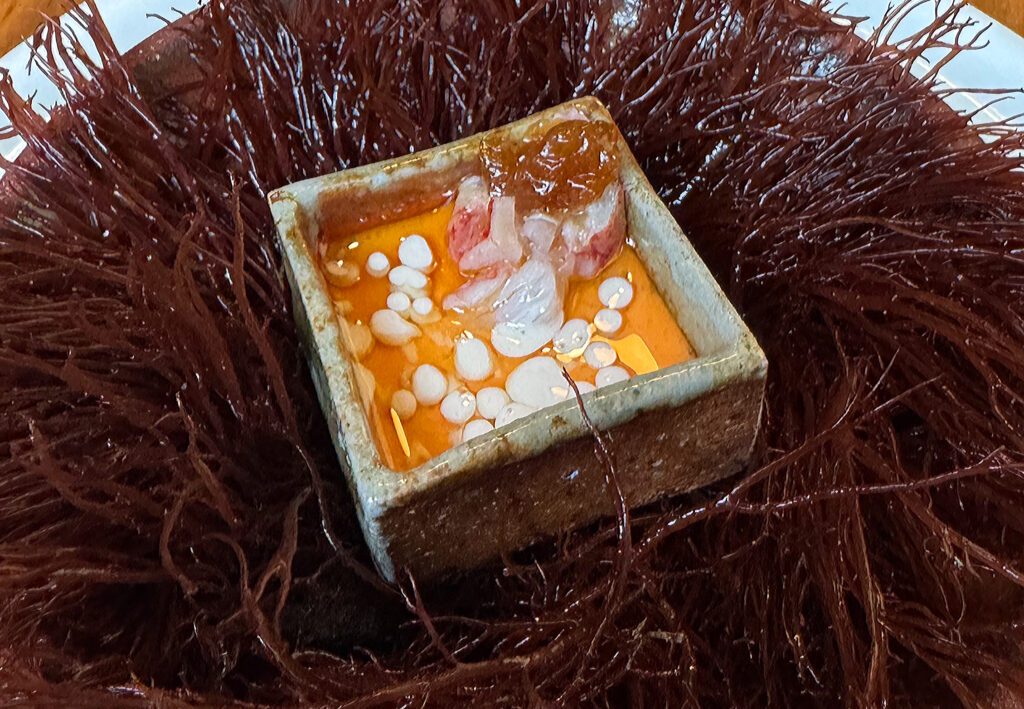
The “Maine Lobster Claw & Peanut Milk” (immediately recognizable by its ramekin) represents the return of a shellfish custard preparation that was emblematic of the kitchen’s work throughout 2023. Some of the chosen elements have recently been adapted to a recipe titled “Maine Lobster & Uni” while this particular presentation, in turn, has been used to showcase “Trout Tartare & Roe” (both sampled during my last two visits). However, the composition’s return to its soothing, crustaceous origins is much appreciated, and it goes without saying the chefs aren’t just going to play back one of their old hits.
The present iteration comprises a base of lobster custard that is dressed with walnut oil and the titular peanut milk (which all featured in that preceding sea urchin dish). Even the meat of the claw, tucked to one side, played a part in the older plate. Nonetheless, a dab of lobster marzipan is entirely new, and its mouth-aching concentration of umami drives these ingredients to heights they have—until now—achieved. Indeed, while the combination of nutty and shellfish notes here has always been sound (accentuating the latent sweet of the starring item), the marzipan pushes the perceived richness and decadence to a level that is unforgettable. In short, this ranks as one of the finest courses I can remember tasting at the restaurant in the past year.
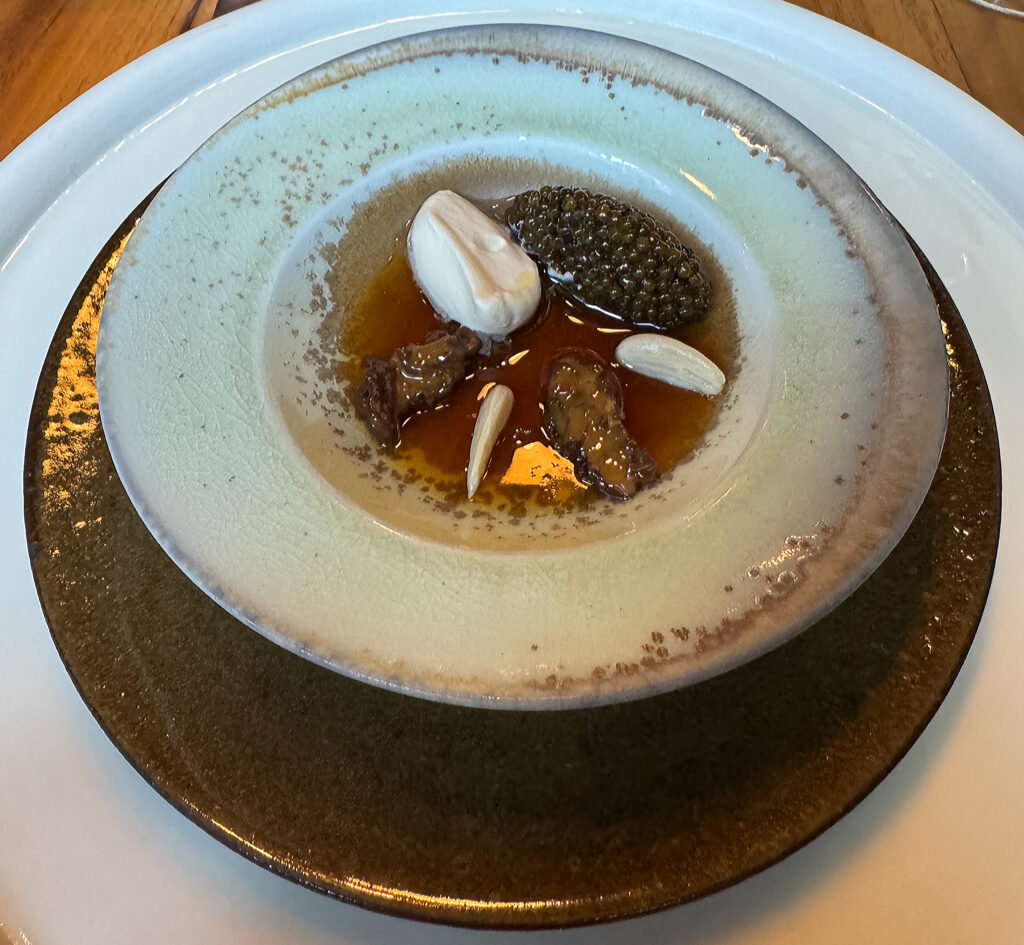
Arriving next, the “Caviar & Green Walnut” is entirely new to me tonight—being created by Shields with the express purpose of pairing alongside the Antica Terra “Smyth” cuvée. The dish centers on a quenelle of Kaluga (which continues to be sourced from N25) that is juxtaposed by a dollop of horseradish crème fraîche and slivers of pickled green almond and pickled green walnut. Everything sits atop a quail-mushroom jelly that comes dressed with walnut praline and birchwood oil, yielding a supreme degree of savory backing supported by earthy, nutty notes.
Texturally, I quite like the interplay of delicately gooey, creamy, and crisp sensations opposite the subtle pop of the roe. Nonetheless, the brightness of the horseradish and pickled elements proves just a little overwhelming. Admittedly, these flavors match the tangy, piney undertones in the wine. But I’d rather the caviar—with its tones of nuts and butter—take the lead, building a convincing sense of luxury that the Chardonnay underlines (rather than entirely contrasts). Still, I very much appreciate the thought process here and think a minor rebalancing will make this recipe a near-immediate success.
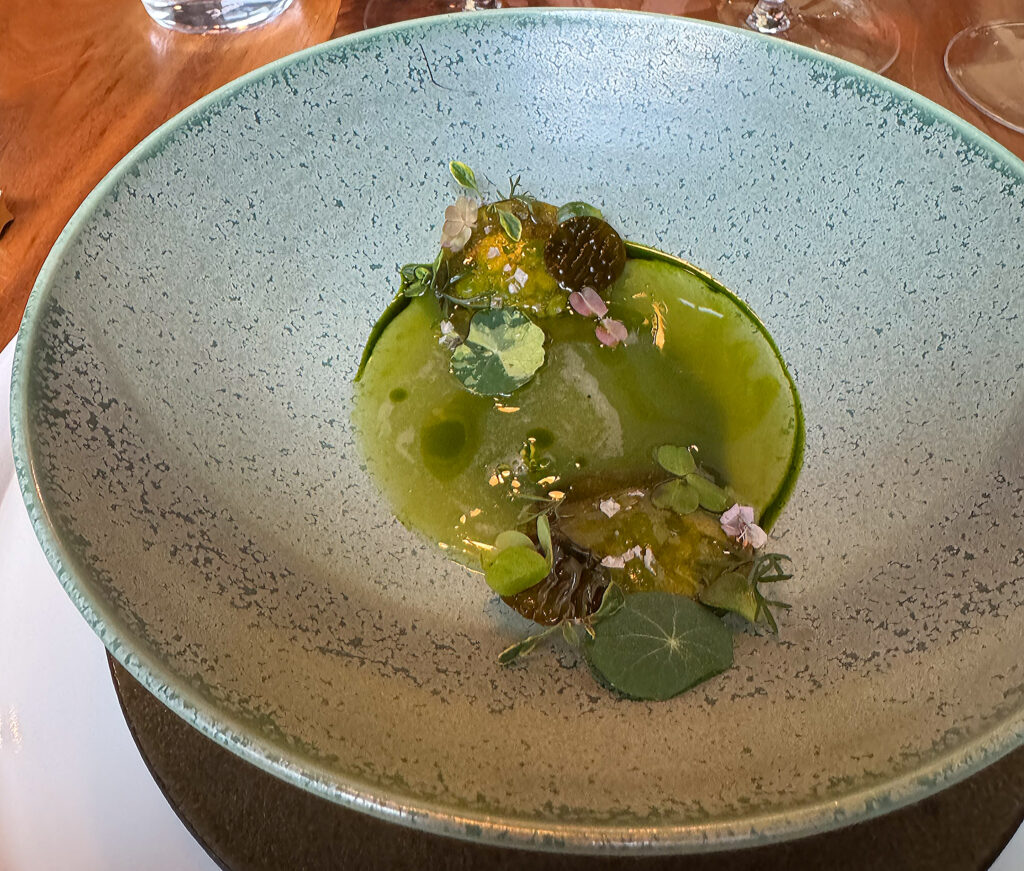
With the dawn of a new caviar preparation, it’s interesting see where some of the preceding dish’s ideas end up. At least one of them features in a new composition of “Early Spring Pea & Sea Lettuce”—namely, a kind of “fruit leather” ravioli made from the titular seaweed that have traded fillings of pumpkin seed butter and praline for bits of the headlining vegetable (sourced from California). An accompanying pour of wheatgrass juice and a sauce made from the pods and shells of the peas complete the presentation, which (on paper) seems destined to emphasize the same jarring “green” notes I just struggled with.
“Where’s the umami?” I ask myself. Yet, embracing the fleetingly crisp and chewy mouthfeel of the ravioli, I find something more than a superlative freshness and grassiness. Accentuating the savory depth of the sea lettuce is formidable imprint of salt: one that helps to structure the purest flavor of pea—wrapped in a moderate, lasting sweetness—I have perhaps ever encountered. It’s so easy to see how this plate could veer toward the challenging, herbaceous end of the spectrum on any other night. However, on this occasion, it delivers a worshipful rendition of first-of-the-season produce that ranks among that restaurant’s greatest creations as of late.
Rainbow trout, spring-raised and sustainably sourced from Virginia’s Smoke in Chimneys hatchery, has formed a fixture during my past couple visits. The fish has featured in two or three recipes at a time without ever (as I encounter tonight) forming its own sequence.
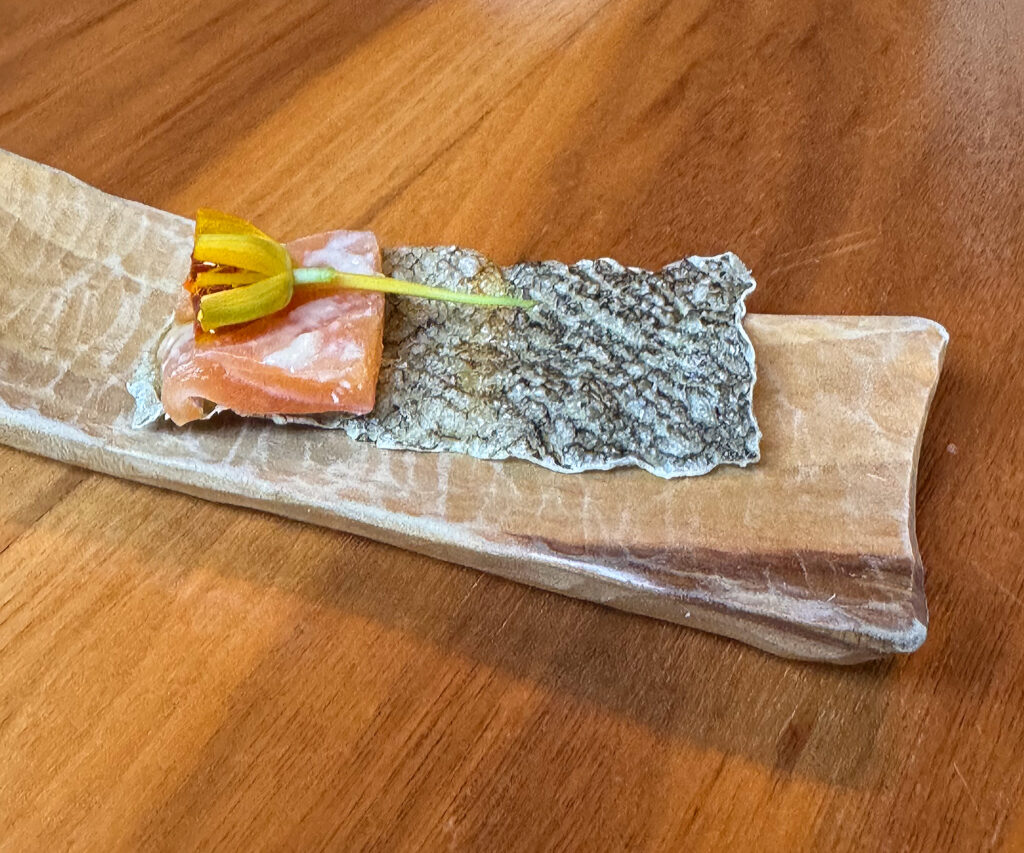
First, there’s a new preparation: the “Cured Trout Belly” that comes situated on a segment of crispy skin and crowned with a solitary nasturtium flower. Though certainly the simplest of the bunch, this bite delivers a brittle—then unctuous—mouthfeel with more than enough salt and an elegant sweetness on the finish. By representing this prime cut of the fish at its simplest, the kitchen overwhelmingly affirms the quality of the purveyor’s work.
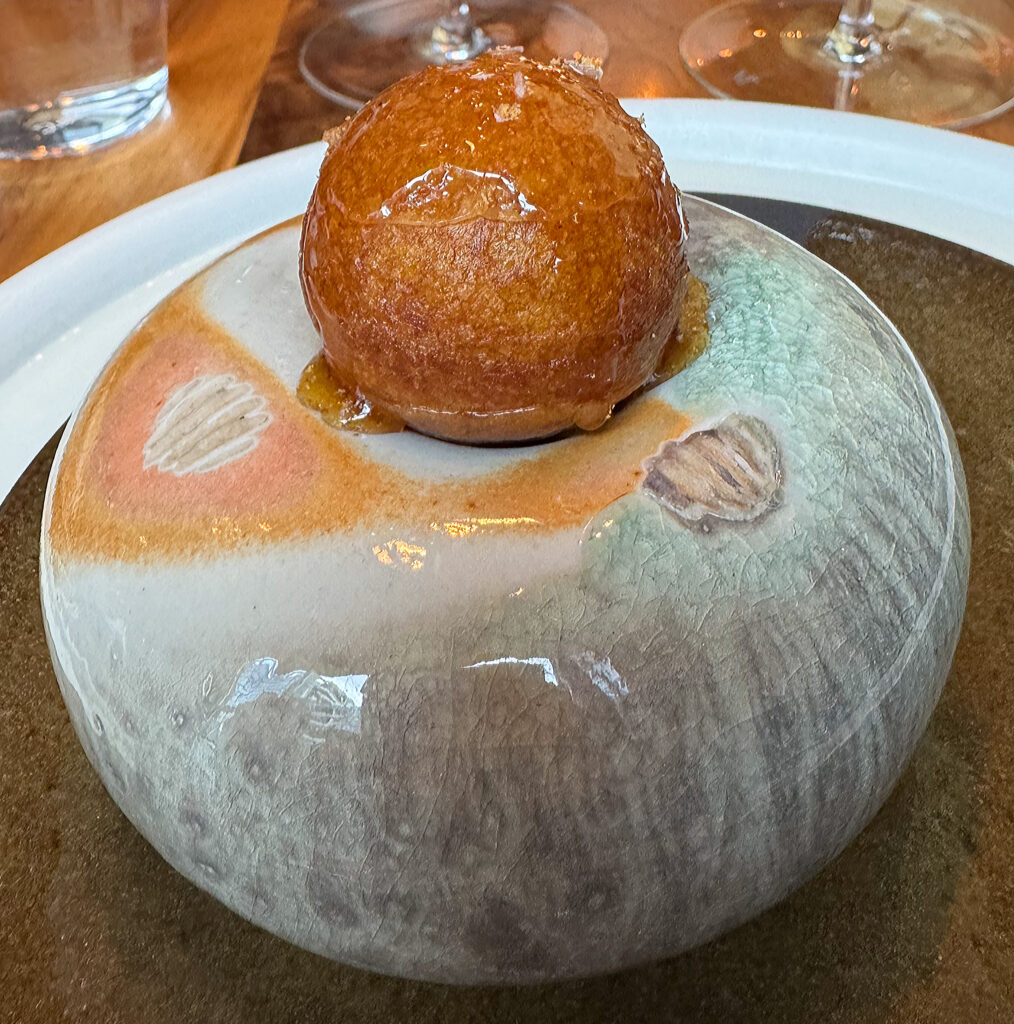
Arriving second, a “Smoked Trout Donut” is akin to dish I tasted back in October but, notably, diverges in its expression. Here, toppings of belly and radicchio, are traded for a grating of the fish’s cured roe. The interior, instead of being filled with squash purée, is comprised of apple jam, the titular smoked trout, and Pleasant Ridge Reserve cheese. On the palate, the donut’s exterior is firmer and crisper than expected. However, its crumb is beautifully fluffy and matched by a rich, gooey mouthfeel. The resulting flavor leads with mild sweetness before settling on a savory, somewhat fishy note that could prove polarizing. That said, opposite the refinement of the cured belly, this comparable boldness is rather nice: emphasizing an altogether different expression of the starring fish in a manner that enriches the wider sequence.
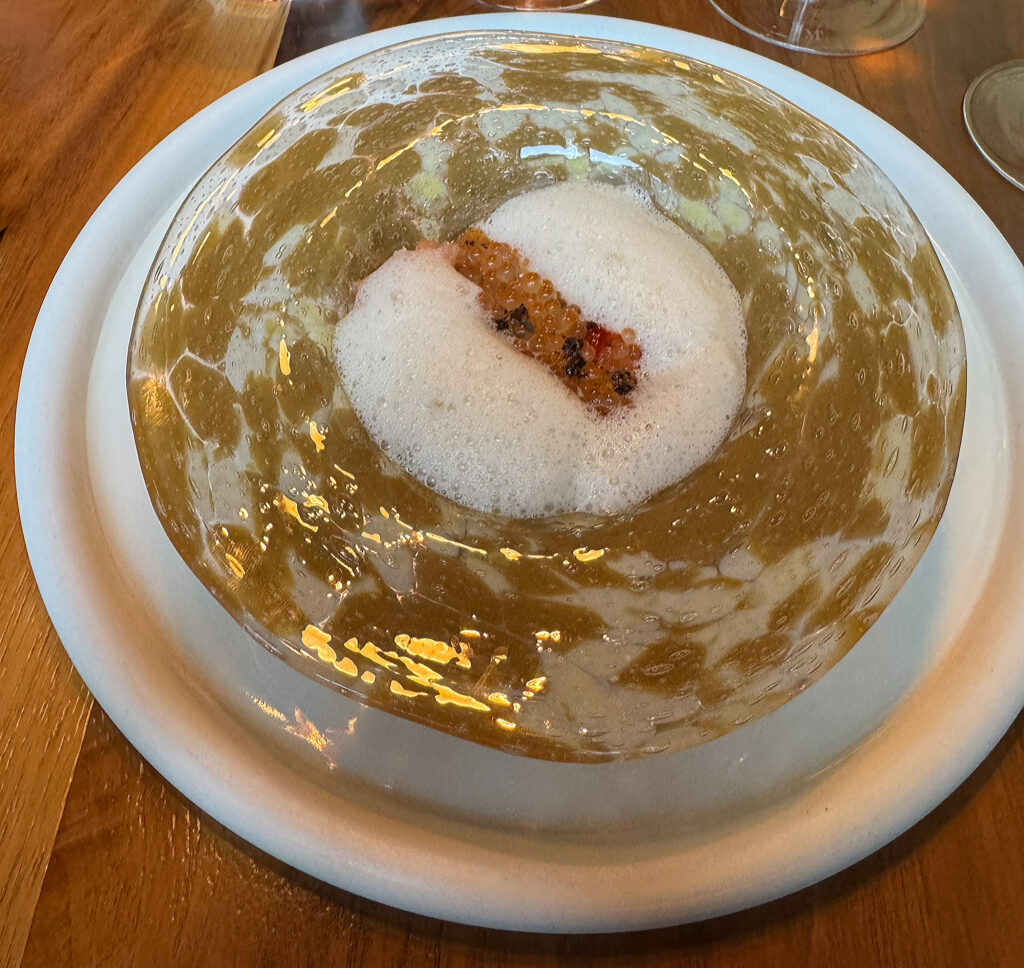
Lastly, we have the “Trout & Green Guava”—a clear evolution of the pineapple-inflected dishes that appeared on the menus during my past two visits. Visually, it’s hard to ignore the resemblance, but the constituents that make up this iteration are altogether distinct. They include a hearth-smoked slab of the fillet, a topping of roe, a surrounding tomato nage, and notes of sesame, habanada, kumquat, and the titular tropical fruit.
Texturally, this piece of the fish displays a melting, buttery consistency that even surpasses that cut of belly. Framed by the bursting, briny orbs of roe and a bolt of sour citrus, this luscious flesh settles on a rounded, tropically sweet flavor expression tinged with nuts and a complicating florality. Ultimately, the tomato provides just enough glutamate to carry the savory side of the recipe. And, while I always look for ample umami from these kinds of compositions, the fruity-smoky character I find is both enjoyable and distinctive.
Approaching the savory peak of the meal, I find another sequence: this one centered on Smyth’s favorite game bird.
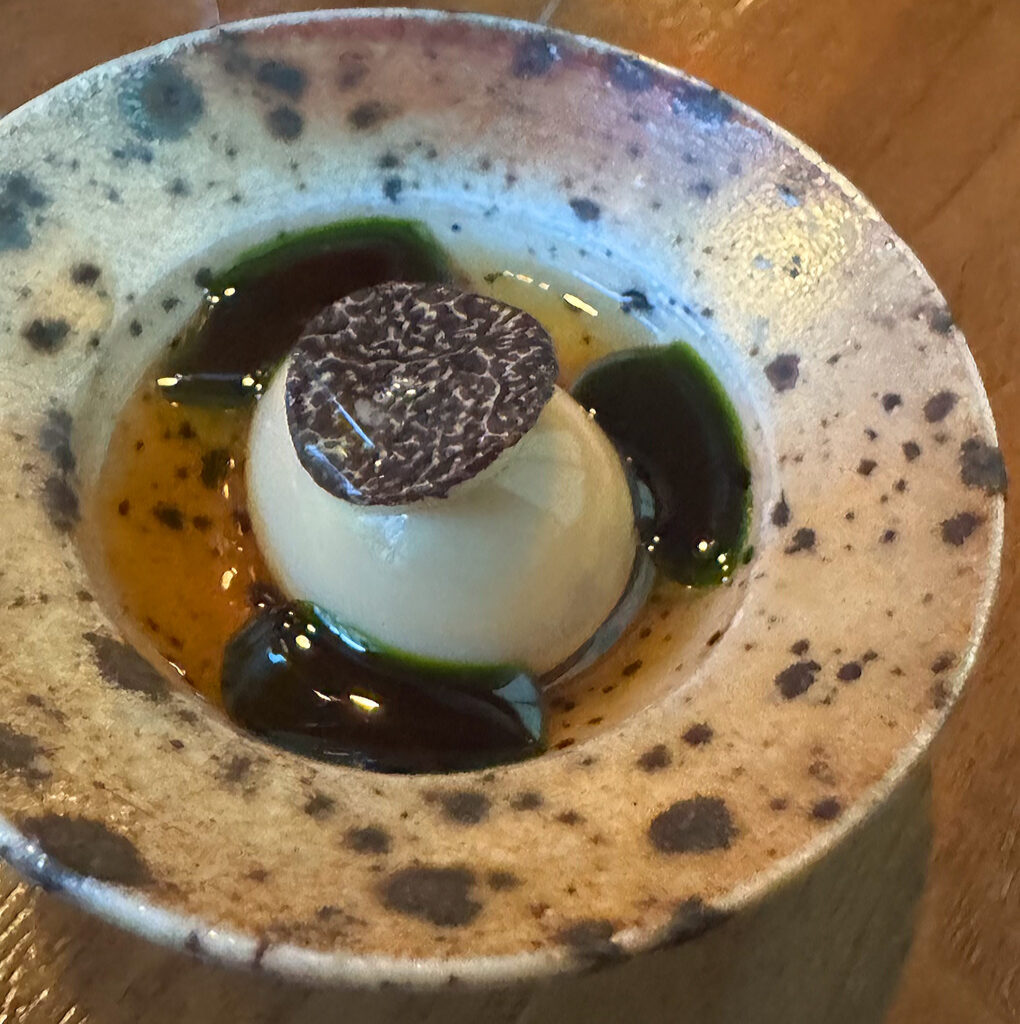
Listed first (though, in my experience, eaten last), the “Black Walnut Cured Quail Egg” is a bite I definitely struggled with in October and January. The plumpness of the starring ingredient is enjoyable enough, yet the gelatinous, too-sweet sauces it is sometimes paired with can leave me feeling queasy. Tonight, the kitchen dresses the egg with the same caramelized shallot consommé I encountered last time. Nonetheless, a few drops of parsley oil make a huge difference: cutting the richness (and any errant sweetness) with a resounding freshness that leaves this mouthful feeling much more likable than it has in the past. It’s still a curiosity—but one I can stomach!
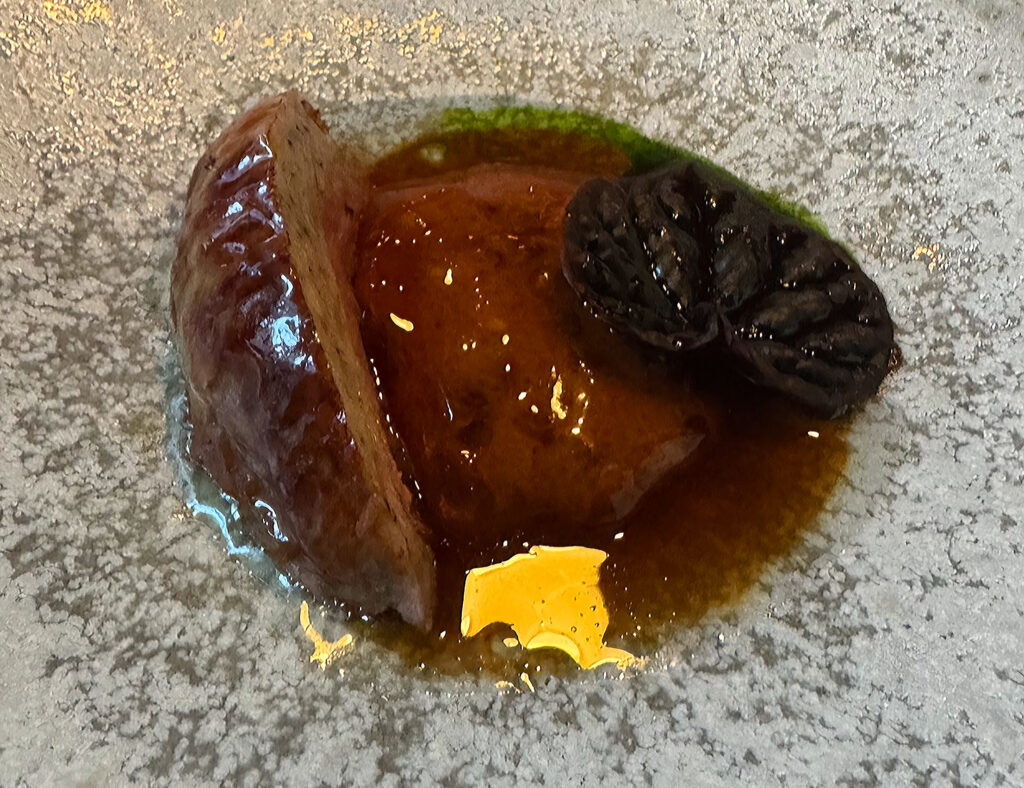
The ”Vermont Quail” undoubtedly forms the main event, and it takes a largely familiar form that, on this occasion, excises partnering elements like the boudin noir while preserving the same core structure. The bird’s breast is stuffed with guinea hen and truffle and roasted, yiedling a craggy layer of skin wrapped around its exterior. The resulting portion is placed atop a smear of quail pâté, which comes joined by a sprouted amaranth gelée and a couple spoonfuls of quail stock. Pepperleaf (also known as hoja santa) forms a new, distinguishing final touch.
On the palate, the texture of the meat—fleetingly crisp, with a satisfying lead-in of firmness, but tender and juicy through the finish—is superlative. The chefs have always nailed this dimension of the recipe. It’s the gelée (and any jarring sweetness) that I worry about, yet the soothing grains retain more of a fresh, nutty character despite traces of sugar. With the introduction of the pâté and the stock, the breast’s latent umami is amplified—only for the pepperleaf (with its warm, sassafras notes) to steer the quail’s richness and earthiness toward an almost caramelized expression of decadence. Despite being among the simpler constructions this bird has featured in, the effect here is profound. Indeed, without trading away any of the earlier preparations’ complexity, the present example delivers the kind of convincing satisfaction I have long been looking for.
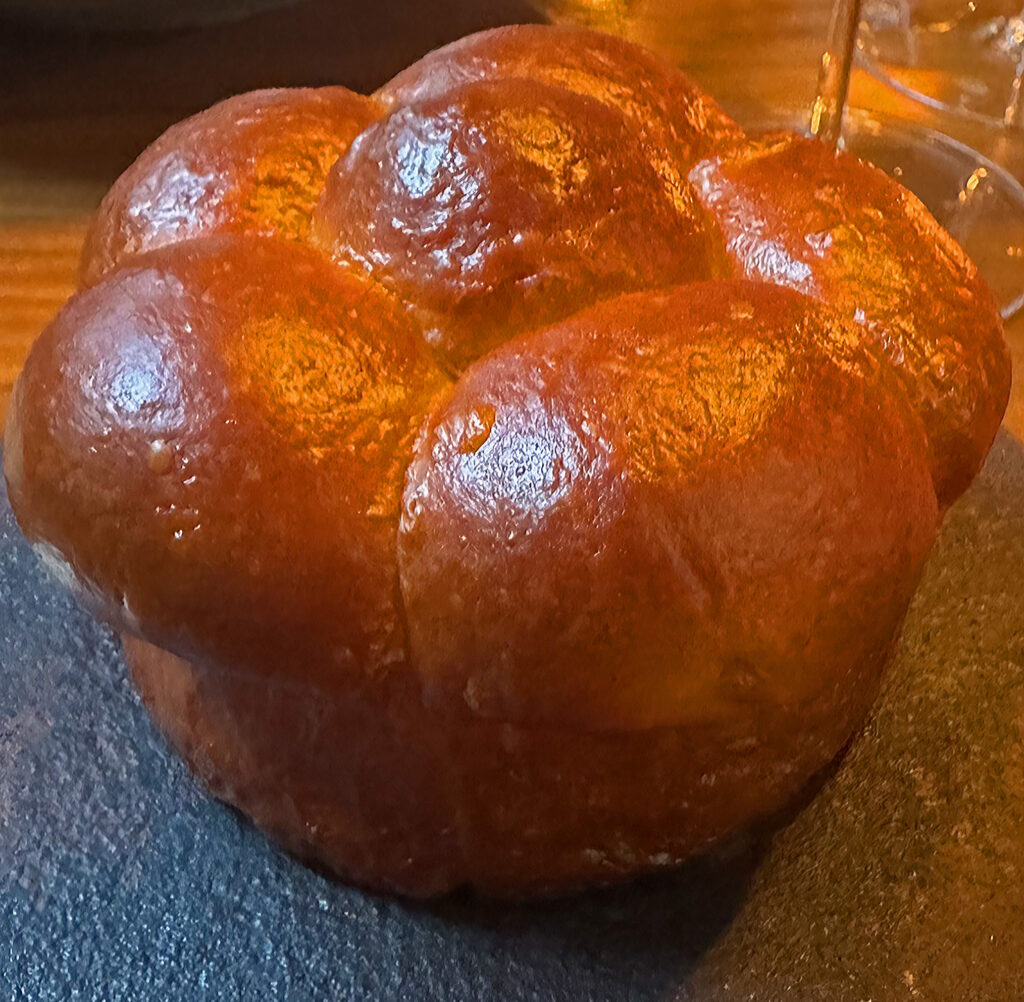
Completing the sequence, I find the “Malted Milk Bread.” This item has formed a longstanding successor to the brioche fat donuts of yesteryear, yet the accompanying pecan-toffee glaze and frequently tilted its flavor expression away from that maddening balance of sweet and savory toward total sweetness. This time, the chefs surprise with a version of the recipe (baked then fried) that arrives totally unadorned. Consequently, the bread offers a more straightforwardly crisp, fluffy, buttery sensation that is reminiscent of a warm dinner roll. An accompanying spread made from black garlic and more of the quail pâté adds a pleasing tang and umami to the party once incorporated. However, I love eating the plain version of this dish as a kind of reset, and its greater adaptability (sans glaze) goes nicely with the remnants of the quail stock too.
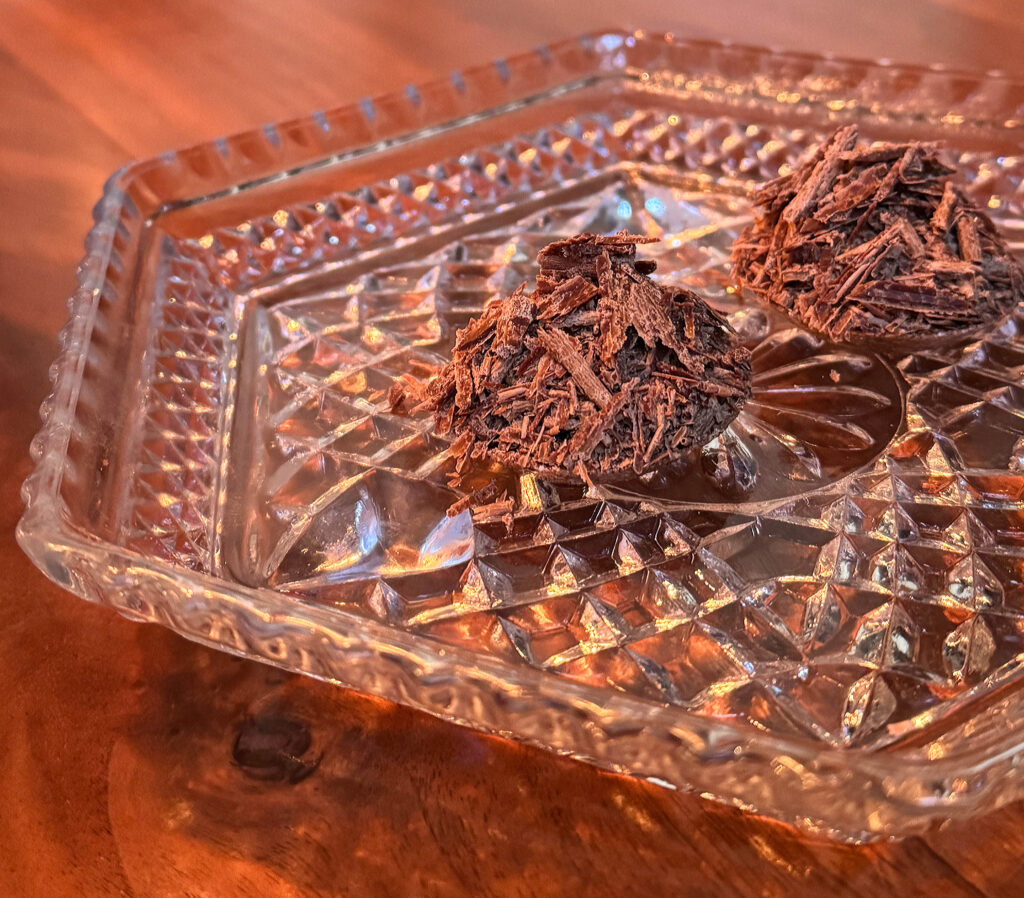
The final savory course kicks off with a bite of “Sprouted Grains & Koji Chocolate” that actually refers to another tart. On this occasion, the shell is made from roasted yeast and barley—and it comes filled with onion marmite butter, a bit more caviar, and the titular housemade chocolate (rendered as a jagged pile of shavings). While I found that the opening tart of uni and tomato ranked as one of Smyth’s most successful, the present example manages to push things even further. Yes, framed by a crumbly, melty mouthfeel, this recipe spans salty, roasted, caramelized, nutty, and cocoa notes that strike with tremendous intensity and length. One could say that the sturgeon roe, as utilized, gets lost in the shuffle, but it’s contribution to such a harmonious (subtly umami-laden) flavor expression cannot be discounted. In short, this is stunning.
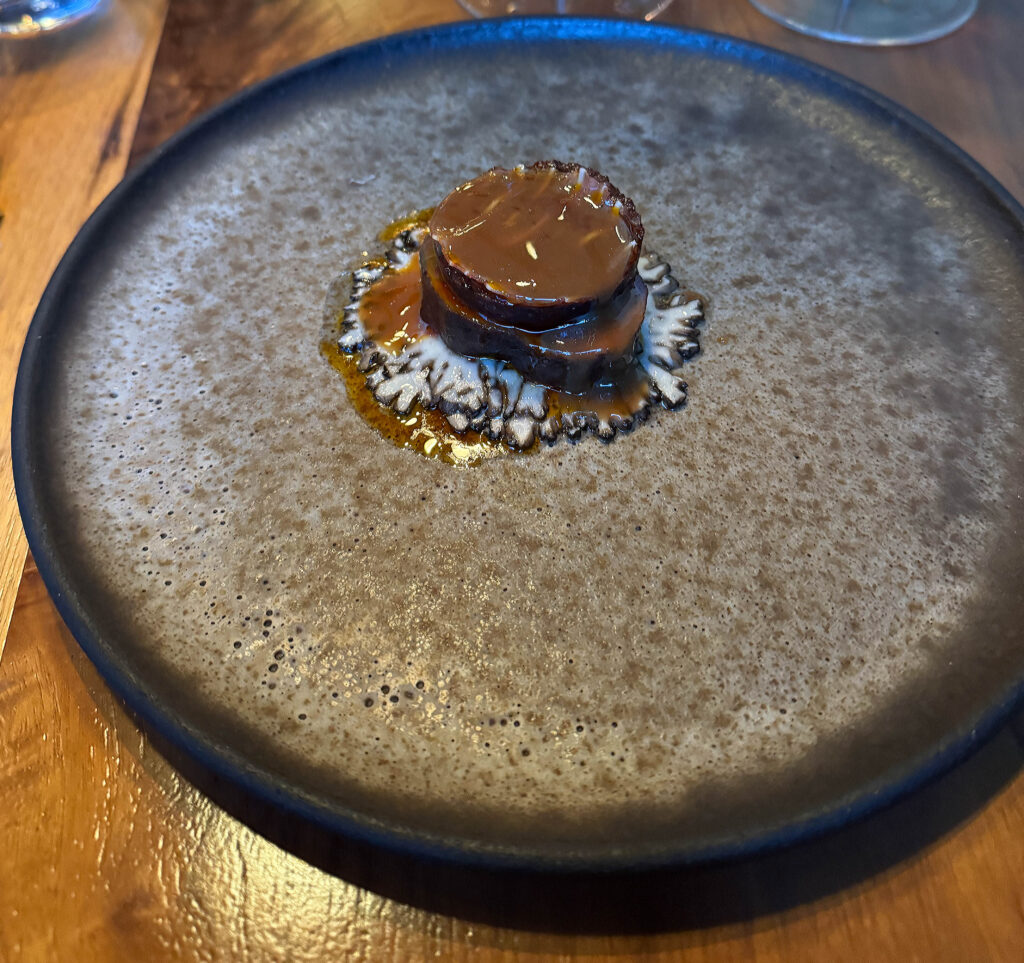
Playing off of the chocolate is a preparation of “Venison Royale” that I encountered (in slightly altered form) back in January. Here, the loin (sustainably sourced from Broken Arrow Ranch) is grilled in hay butter and stacked with cross-sections of maitake mushroom, tomato, pig ear terrine, and boudin noir. A maitake gastrique completes the recipe, which marries its quintet of layers (some crisper, some chewier, some luscious) via a shared juiciness that allows for a surprisingly homogenous textural effect.
The corresponding flavor leads with a triple dose of carnal intensity: an apotheosis of game and blood and offal that anchors the meal in an imposing fashion. However, it’s the alleviating tang and sweetness of the tomato and gastrique that prove key. Tinged with an earthy, woodsy quality (also echoed by the hay butter), these components gently contrast the assemblage of meat in a way that supercharges their supreme concentration of umami. The result feels beautifully cohesive and deeply, deeply satisfying in a way that the restaurant’s entrées (sometimes tending to go a step too far into weirdness) have rarely achieved.
Dessert, in the hands of chefs Karen Urie Shields and Jenna Pegg, has always artfully balanced novelty with deliciousness. Indeed, even when Smyth’s savory fare proves too challenging, the team’s work on the pastry side can be counted upon to redeem the meal.
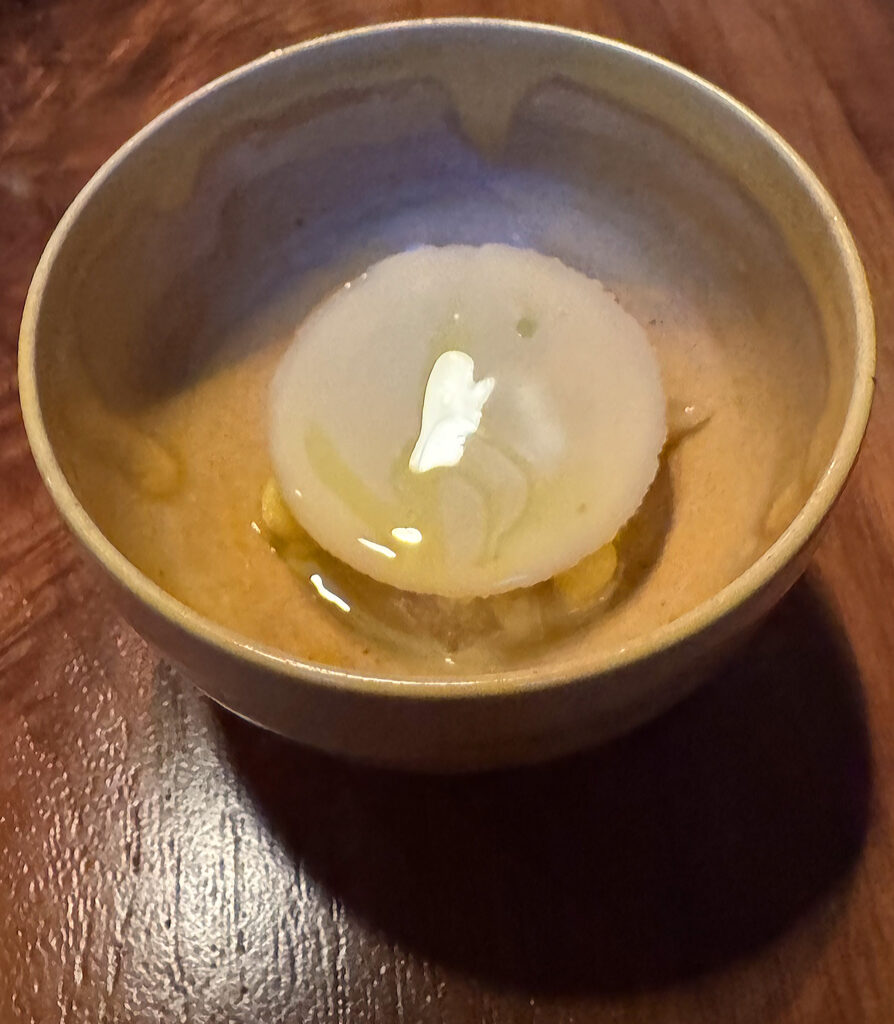
Tonight’s selection starts off with a preparation of “Rhubarb & Chamomile” that marries chunks of the stalky vegetable with a sauce made of the same, some pieces of pomelo, and flavors of rhubarb root, turmeric, oxalis, and the titular chamomile all tucked under a sugar tuile. The dish, which lacks any of the attention-grabbing elements (like a cake or meringue) that might testify to the kitchen’s virtuosity, is deceptively simple. It’s actually built like a recipe you’d find early in the meal: a worshipful presentation of a couple prime ingredients that reveals their surprising depth.
Here, the starring elements lead with the kind of firmness and juiciness and resoundingly sour sensation one would expect. However, the brittle tuile and supporting herbs and spices serve to cut this intensity: steering the rhubarb and pomelo’s shared brightness toward a tangier, earthier, warming, and almost smoky or mustardy expression that is so unexpected but beautifully woven together. Yes, helped by that accompanying dose of sugar, this course’s palate-cleansing properties broaden and lengthen in a way that is absolutely profound. There’s really no trick here either—just a very careful, intentional pursuit of harmony.
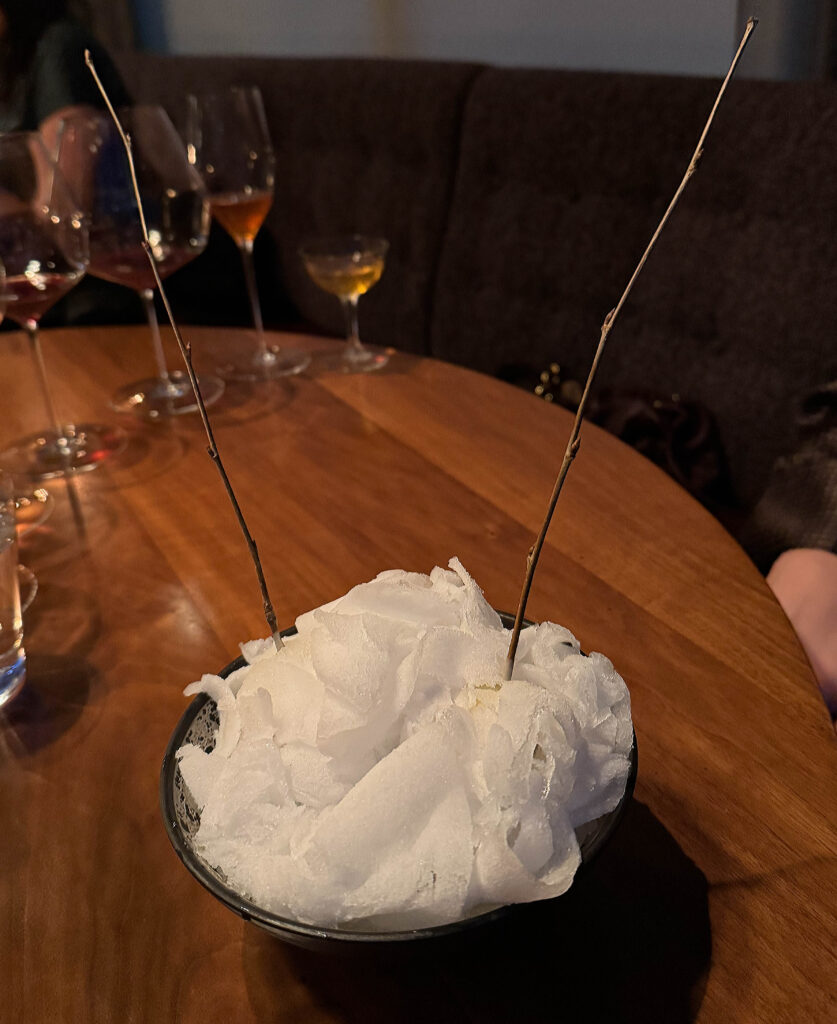
The ”Birch Ice Cream Bar” first appeared back in January (and represents a form, more generally, that has featured on and off throughout the restaurant’s history). The recipe—which combines a birch caramel center, a roasted birch ice cream base, a shell of housemade white chocolate, and a literal stick (as in branch) to hold it—remains the same on this occasion. And I find its balance of fresh, milky sweetness with dark, woody, and almost mapley concentration to be just as sublime. To be fair, I can understand why my dining companion finds the bar to be borderline cloying. Nonetheless, in lieu of any richer expression of cocoa (or, again, a texturally substantial cake), this ice cream successfully anchors the menu with a convincing degree of decadence. The playfulness of the presentation is just a bonus.
Reaching the end of the menu, I find a familiar trio of petit fours waiting to see me off.
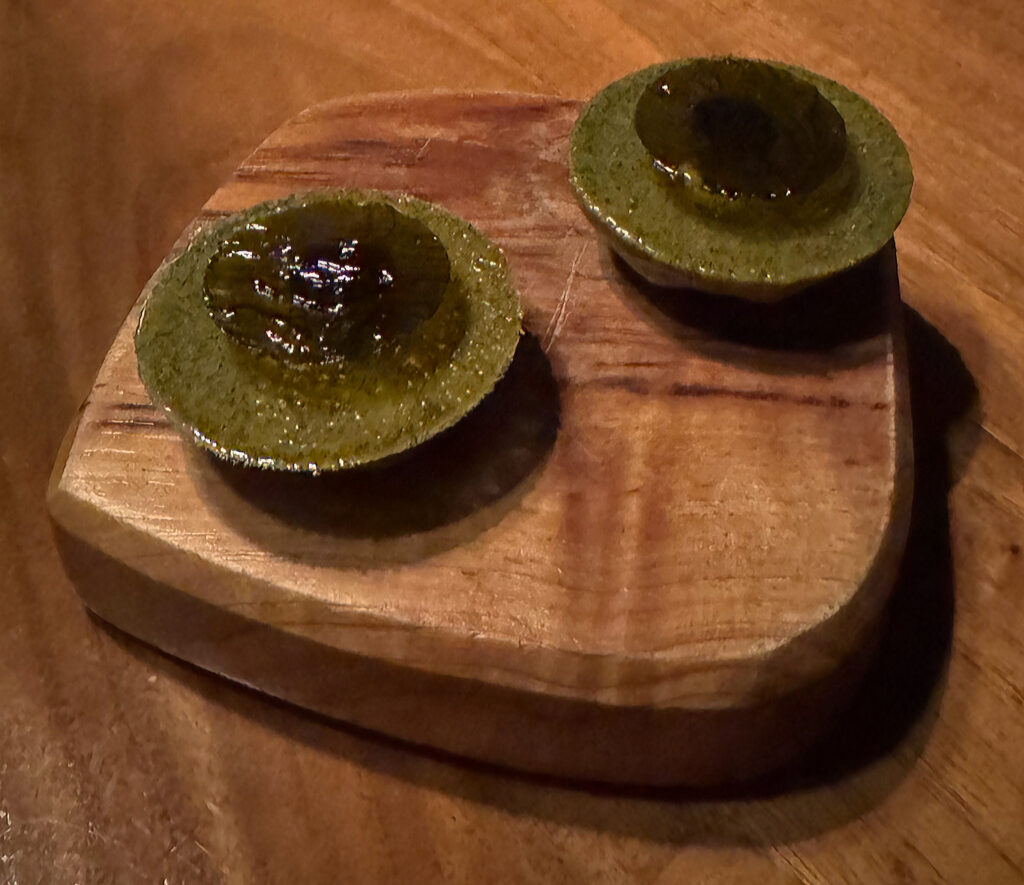
There’s the “Preserved Kombu Tart”—really a celebration of pistachio—whose creamy praline filling, invigorated by the savory quality of the seaweed, delivers one of the most enjoyable, persistent expressions of nuttiness I have still ever encountered. In a night filled with phenomenal tarts, this makes a late claim for the pennant.
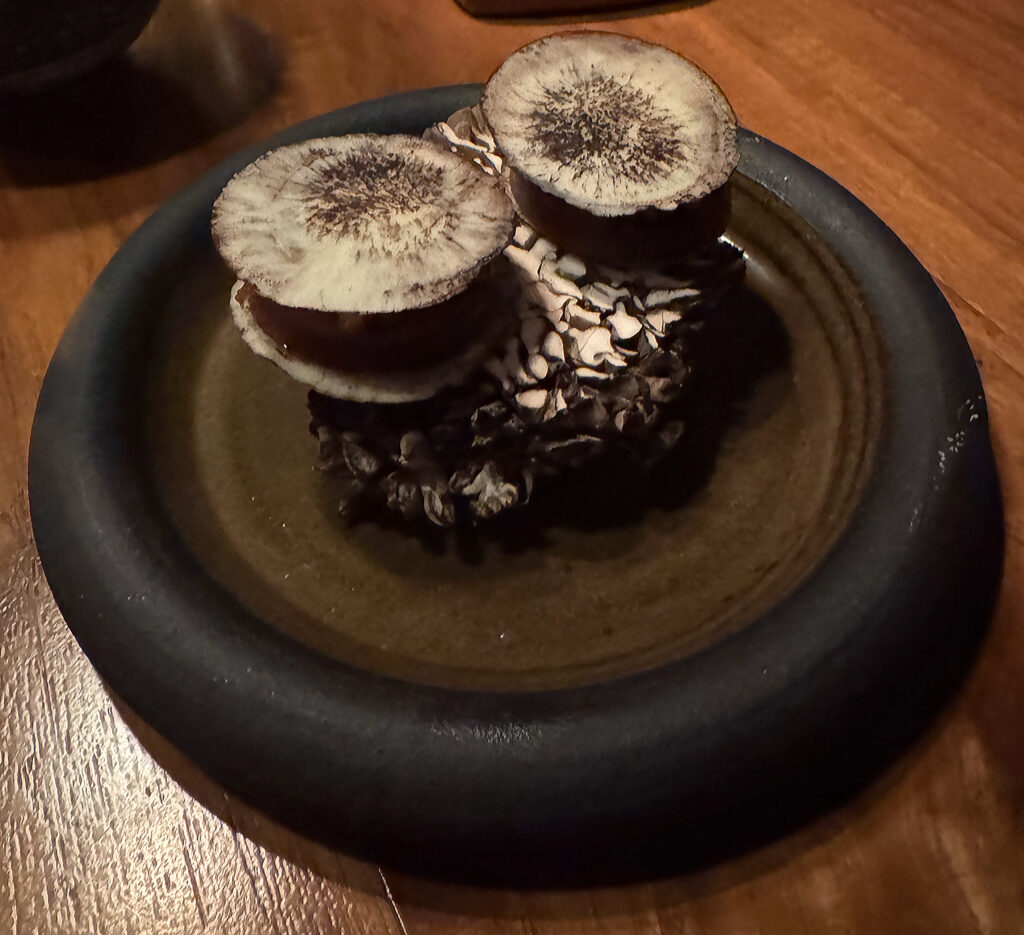
The “Bittersweet Chocolate & Maitake” is more complicated: visually impressive, certainly, but often let down by the jarring earthiness that its latter element inevitably brings. However, tonight, I find that the candied mushroom strikes a better synergy with its painted white chocolate wrapper. It cannot compete with the preceding bite, yet the blend of bitter, earthy, caramelized, and roasted tones is successfully (even pleasurably) managed.
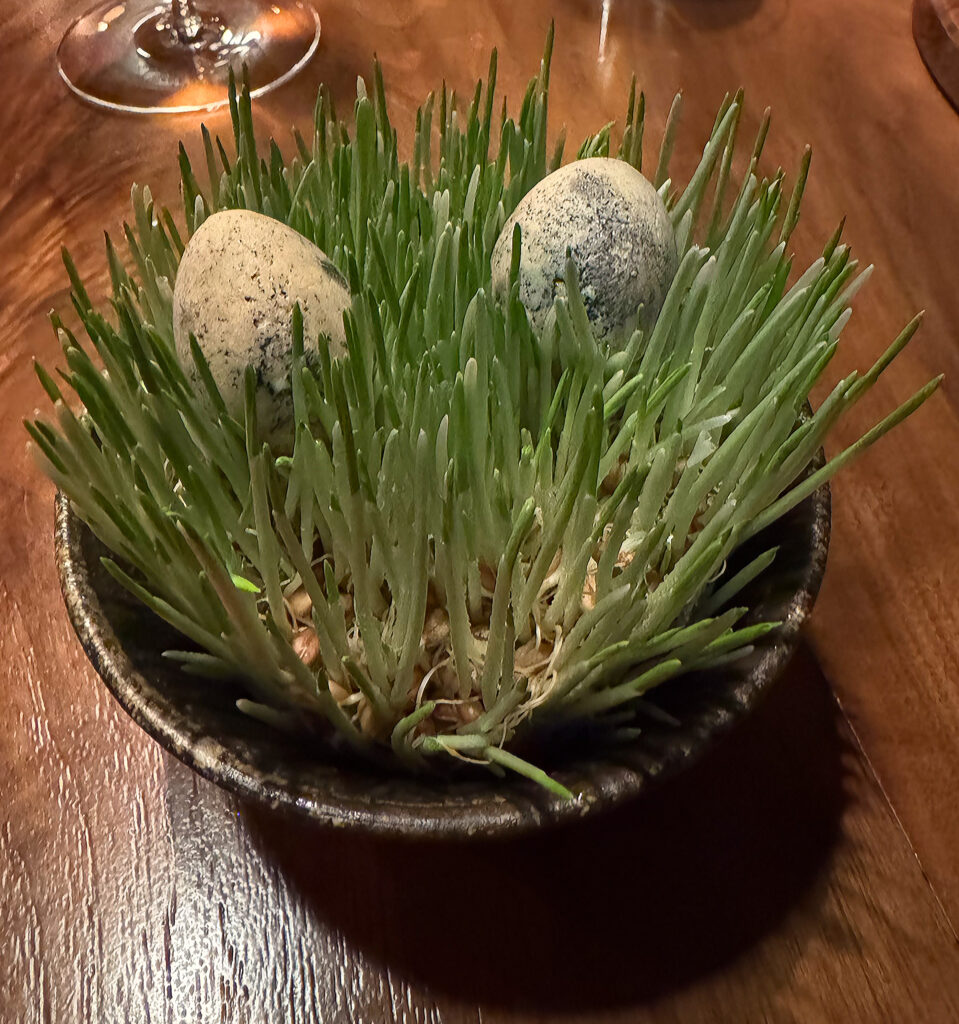
Finally, we have the “Cadbury™ Quail Egg,” a bite that is typically situated at the very start of dessert (forming a clever point of transition a course or two after the appearance of its savory doppelgänger). The presentation here is again impeccable, but I find the actual experience of eating the egg (which is crisp, custardy, and mildly tangy) to be forgettable. Novelty aside, the expression of flavor just doesn’t keep pace with everything else on offer.
With the arrival of the “Seaweed Caramels” and a hefty check (albeit, free of any service charge confusion), the Chef’s Menu now reaches its conclusion: some 18 dishes, spread across 12 courses, and paired with 10 pours of wine during the span of a mere 150 minutes.
It’s a breakneck pace for food of such intricacy—a testament to the kitchen’s organization and the team’s wider coordination. Factor in any chit chat with the captains or backwaiters, and one never really gets the sense that they’ve waited for food. It just appears (preceded by another bottle): new mysteries waiting to unfurl, novel impressions ready to be made, but ultimately permitting little time to dwell (be it on disappointment or delight).
Tonight, it’s almost entirely the latter. Yet it takes a moment of reflection—lost in the echoes of birch, rhubarb root, tomato, and nasturtium (as well as all the seaweeds, nut oils, and tropical fruits that remain eminent here) that resonate throughout the meal—to really appreciate just how striking many of the recipes were.
One cannot simply latch onto the cook of a prized protein (be it lobster claw or trout or quail or venison). Save for the donut and the milk bread, there’s nothing substantial like a potato or pasta or rice dish to look back on and salivate.
Instead, I am left savoring the surprising harmony of uni and tomato, the supreme concentration of that so-called lobster marzipan, the utter purity of those spring peas (in their sea lettuce wrapper), how the pepperleaf’s sassafras notes helped the larded quail soar, what koji can do when paired with chocolate, how rhubarb and citrus (help with the right herbs and spices) can transcend their tang.
I cannot deny that I seek a certain decadence—that is, convincing umami (on the savory side) or sweetness (on the pastry side)—from fine dining. Any sense of novelty (let alone provocation) quickly wears thin when you know you could be eating Chicago’s finest tuna and uni for the same price.
Yet Smyth, for all its quixotic experimentation, has earned its place in my heart. On nights like this one, the chefs achieve that sense of decadence and do so in a way that is totally unexpected and unique and, thus, ensure it strikes with a renewed force. Indeed, menus like this one (and they only come around a few times a year) are simply inspiring. They keep me engaged and keep me dreaming about the possibilities of a tasting menu format that increasingly seems restrictive and cynical at its core.
Here, the chefs’ deployment of new ideas and techniques works to reveal new depths of pleasure within ingredients that are otherwise familiar. Going on this journey—rediscovering a texture or a flavor you thought you fully knew and loved—remains one of the most fulfilling experiences in all of gastronomy.

In ranking the evening’s dishes:
I would place the “Maine Lobster Claw & Peanut Milk,” “Early Spring Pea & Sea Lettuce,” “Vermont Quail,” and “Sprouted Grain & Koji Chocolate” in the highest category: superlative recipes that stand among the best things I will be served in any restaurant this year.
The “Uni & Tomato Tart,” “Toasted Corn & Black Truffle,” “Maine Uni Parfait,” “Cured Trout Belly,” “Smoked Trout Donut,” “Malted Milk Bread,” “Venison Royale,” “Rhubarb & Chamomile,” “Birch Ice Cream Bar,” and “Preserved Kombu Tart” all land in the next stratum: great items that achieved a truly memorable degree of pleasure. I would love to encounter any of these again.
Next come the “Amazake,” “Caviar & Green Walnut,” “Trout & Green Guava,” “Black Walnut Cured Quail Egg,” and “Bittersweet Chocolate & Maitake”— good—even very good—preparations I would always be happy to sample again (but that just failed to elicit an extra degree of emotion).
Finally, there’s the “Cadbury™ Quail Egg”—a merely good (maybe just average) item that fell a bit short when it came to flavor.
Overall, this makes for a hit-rate of 95% (which really could be 100% if one considers how minor the “Cadbury™ Quail Egg” is in the grand scope of the menu) with some 70% of dishes meeting the “would love to have again” standard and 20% reaching that “best of the year” level of quality.
This is about as high a score as I can ever remember giving Smyth (though I acknowledge, in turn, I have only recently begun evaluating the restaurant in this manner). And, in some sense, it comes as a relief during a period (with three Michelin stars in tow and a ticket price to match it) when the team’s work has been at times polarizing.
But the thing to remember is that this accomplishment—while considerable—only represents one meal on one night: one point in a process that will always keep churning and changing and aiming at a form of perfection that is more about the craftsperson’s commitment to a set philosophy and to nature itself rather than the realization of pleasure (at least as the dining public conceives of it).
There are too many variables at hand—with Barker’s departure (though also the surviving legacy of his work), the Tuesday night timeslot (with its corresponding calmness), and my own sense of novelty (eating here after a break of two months rather than one)—to make any definitive statement on where Smyth is or where Smyth (armed with a new head chef) might be going.
If I were to point out a surprising detail, it would be that the “Avocado,” for the first time in a very long while, did not feature tonight. Other standbys, more broadly, seemed to benefit from a degree of streamlining that ensured their core expression (whether intended to be fresh and green or oceanic or carnal) struck without the kind interloping acidity or sweetness that has sometimes vexed me.
These perceptions might suggest a forthcoming stylistic shift, but, again, it’s too early (and my data points are too limited) to tell.
Until then, it’s enough to say that Smyth—through the wine, cuisine, and overarching hospitality on display—affirmed its place at the pinnacle of Chicago dining tonight. Anyone stepping in to lead this kitchen (alongside Shields) will be inheriting an operation that is still more than capable of reaching its maximum potential.
Of course, it’s maddening to think that each meal on each evening at this eye-popping price will not necessarily reach the same caliber. However, even my most challenging meals carry kernels of the pleasure that, someday, will come. And, if you are ever lucky enough to eat here on those occasions where all the imagination and experimentation and the vagaries of seasonality finally click, you’ll be chasing that high for the rest of your life.