
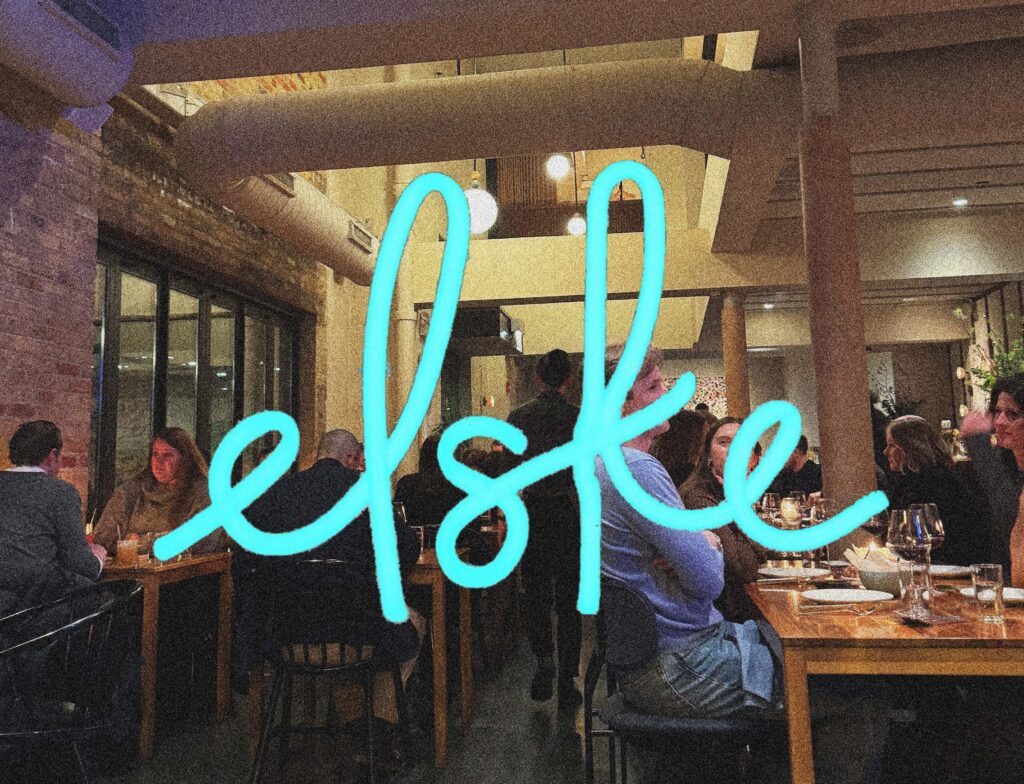
While I’ve been spending a lot of time at Creepies lately, any discussion of excellence in this city’s dining scene must certainly include Elske: David and Anna Posey’s flagship—a perennial Michelin star holder since opening—that is set to celebrate its 10th anniversary at the end of this year.
When I last wrote about this establishment, I mused that it might just be the dark horse candidate for “best restaurant in Chicago.” The concept has never been priced anywhere close to the two- and three-star gastronomic destinations that dominate such discussions. Frankly, it’s easy to spend more money at any decent steakhouse (not to mention any number of middling omakases).
Elske is nominally Danish, and maybe that raises an eyebrow among those seeking—from their fine dining outlay—a kind of conventional decadence. Maybe it’s more a question of wanting flavors to be familiar (or, better yet, nostalgic) when paying to see them refined. However, the chefs themselves describe the style here as being “modern American,” and so much of the restaurant’s beauty comes from how effectively blends the best qualities of its peers (whether more or less luxurious) while channeling them through a singular voice.
I speak of features like the clean, minimalist décor: eminently approachable, yet sprinkled with artwork, and matched with furniture (so solid, so comfortable) that one cannot help but stay a while. Service, from a cadre of aproned captains and bussers (assisted in the delivery of food by the cooks), proceeds casually and conversationally while belying the utmost precision. The short, sweet bar program from Monica Casillas-Rios and the natural-leaning (though by no means exclusionary) wine selection from Emily Sher rank among the finest in the city. And the cuisine itself—spread, uniquely, across a tasting and à la carte offerings—spans signature dishes, comforting forms, and seasonal creations that push smoky, earthy, tangy, and herbaceous notes to an extreme that keeps pace with Chicago’s most boundary-pushing kitchens.
Yes, Elske possesses that all-too-rare capacity to grow and continually challenge its guests from year to year. Nonetheless, it wraps this penchant for creativity (actualized via a legible, unmistakable approach to cookery) in so much guaranteed pleasure that, even when experimentation runs rampant, it’s almost impossible to have a bad meal. At its peak, the restaurant blends old and new—cherished and mind-expanding—in a manner that strikes all of dining’s emotional chords like few other places can.
Now, if I am being honest, pacing has sometimes presented a problem here: understandably so when one is inclined to order the entirety of the à la carte menu (which, taken as its own ersatz “tasting,” rivals what even the most expensive concepts in town are serving). My larger and more enduring critique (one I think that weighs more in determining, even hypothetically, is Elske could really be the “best”) has to do with the entrées. Whether centered on pork or beef or lamb, these main plates—in their effort to maintain the sense of novelty seen elsewhere—tilt their starring proteins more toward intrigue than satisfaction. I appreciate the intention never to serve a hackneyed hunk of meat, yet, in turn, I’m not sure I’ve ever found that killer item to anchor the dinner.
With the recent promotion of Sawyer Brooks to the position of chef de cuisine, there’s reason to believe that may finally change. At the very least, with Creepies continuing to forge its own path within a French-inspired format, there’s no better occasion to check in on what Elske—charged with this fresh perspective—is up to.
Let us begin.
As the westmost reaches of Randolph Row finally approach full development—those last shuttered businesses yielding to shining residential towers and new retail opportunities—the corner with Ada Street has only grown in cult appeal.
Creepies, still in the flush of its opening excitement, has reminded the city that this neck of the woods can sustain approachable, deliciously weird concepts among all its Michelin-starred jewel boxes and those sprawling outposts from established hospitality groups.
To be clear, the Poseys played the long game when bringing their funky Midwestern bistro to life. Indeed, I don’t exactly see upstarts finding a foothold to pursue their dreams in the West Loop (unless, like Maxwells Trading, they venture even further west). Yet, with Smyth and The Loyalist and Elske and Creepies now all jointly defining the block, I like to imagine that the neighborhood’s renegade spirit has somehow been preserved. Factor in looming chef changes and the room for advancement within these hallowed halls, and one might even say that this tiny ecosystem still has the power to propagate newer, bolder talent even as the world changes around it. Certainly, many diners are now traveling about a dozen blocks in pursuit of what’s new and delicious.
Famous burger aside, broad appeal has never been the principal goal here. Commercial success, however essential, feels more like a byproduct than a metric to be maximized. This shared philosophy—the ceaseless refinement of a singular culinary voice—has kept both the Shieldses and the Poseys at the peak of their craft. It’s also the reason why, on this frigid night, a stream of finely attired guests flows down and across this otherwise inconspicuous street.
Of any entrance, it’s Elske’s courtyard—complete with roaring fire and peeping gnome—that proves the most welcoming. Passing through a set of doors, I am warmly greeted and immediately whisked (at this early stage of the evening) to an empty corner of the dining room. An hour later, the entirety of the space will be filled: accommodating (despite all I have to say about the cuisine, sometimes, being challenging) an eclectic mix of ages and races all contributing to a lively din. (Ah, how nice it is to savor thought-provoking food and drink without feeling like you are seated in a mausoleum!)
This weekend marks Monica Casillas-Rios’s last behind the bar at Elske—an undoubted blow to the restaurant but, moreso, to the wider practice of cocktail craft in Chicago. One scarcely finds this level talent on the floor in the city’s finest restaurants (where, working alongside a great chef and sommelier, they can add untold depth to the dining experience). If it’s any consolation, Casillas-Rios has taken a role that allows her to shape a wider array of concepts throughout the dining scene. And, as with Brooks’s ascension in the kitchen, the foundation she has built sets the stage for the introduction of a new perspective that may very well hold the promise of newer, in some ways greater pleasures.
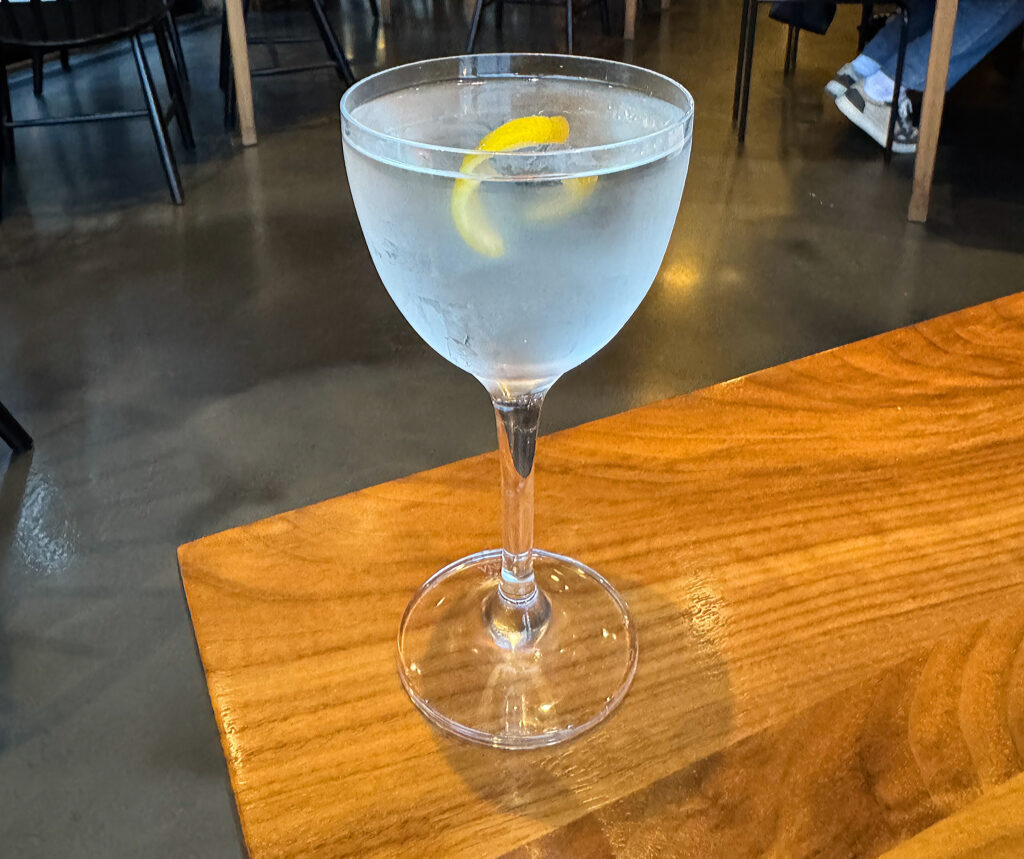
Tonight, the “Martini” ($16) forms a fitting send-off: being bracing on entry, rounded off with a touch of sweetness, but most of all distinguished by notes of dill, cucumber, lemon peel, and anise—so beautifully integrated, so strikingly refreshing—that have formed the bartender’s signature.
On the wine side, I enjoy seeing how Emily Sher distinguishes the list at Creepies (shorter, centered more on the sub-$100 price point, yet unafraid to break the $200 barrier if it gets Champagne, Burgundy, or Bordeaux in the guest’s glass) from her more longstanding work at Elske: where selections generally sit in the $100 to $200 range but the cultiest bottles can climb as high as $500. Of course, the celebration of minimal intervention practices acts as the common thread.
By concentrating on this premium price point (offset, as always, by affordable pairings, glass options, and those aforementioned cocktails), Sher is able to stock Elske’s list with some of the most hallowed names in natural wine while traversing a wider range of countries than what Creepies’s neo-bistro (and consequent French/domestic) focus allows for. Thus, one not only finds plenty more Champagne, Burgundy, and Bordeaux on offer here but, alongside that, expressions of Austrian Sauvignon Blanc, German Riesling, Jurassian Savagnin/Chardonnay, Loire Chenin Blanc, Barolo, Brunello, and Côte-Rôtie that rank among the world’s finest.
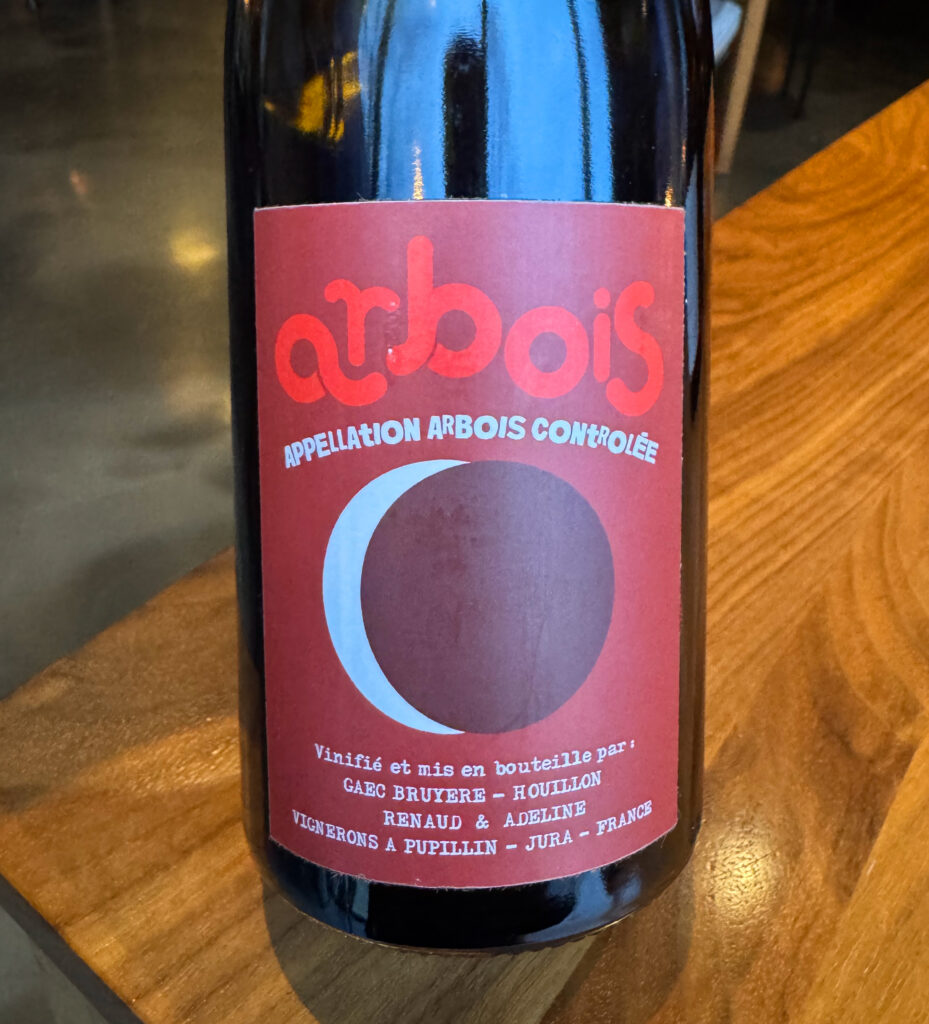
Scanning the list, I spy a bottle of 2020 Bruyère & Houillon Arbois Rouge ($300) offered at a mere 20% markup compared to what even the most conscientious retailers are charging. This producer’s wines are subject to a high degree of speculation, and their variability (with regard to polarizing notes of volatile acidity and brett) make purchasing them on the secondary market a fraught process. Yet Sher offers this rarity at a price in which it can actually be enjoyed (that is, without any errant expectations), and Elske, in turn, acts to protect its guests from ever having to pay for a bottle that is legitimately flawed.
For my taste, the blend of Poulsard and Trousseau—with its marriage of vivid red fruit, subtle tannin, and complicating earthiness—matches the full scope of the restaurant’s menu (even the salads and seafood preparations) quite well.
This evening’s meal is composed almost entirely from Elske’s à la carte offerings—save for one small bite I cannot help requesting from the tasting menu.
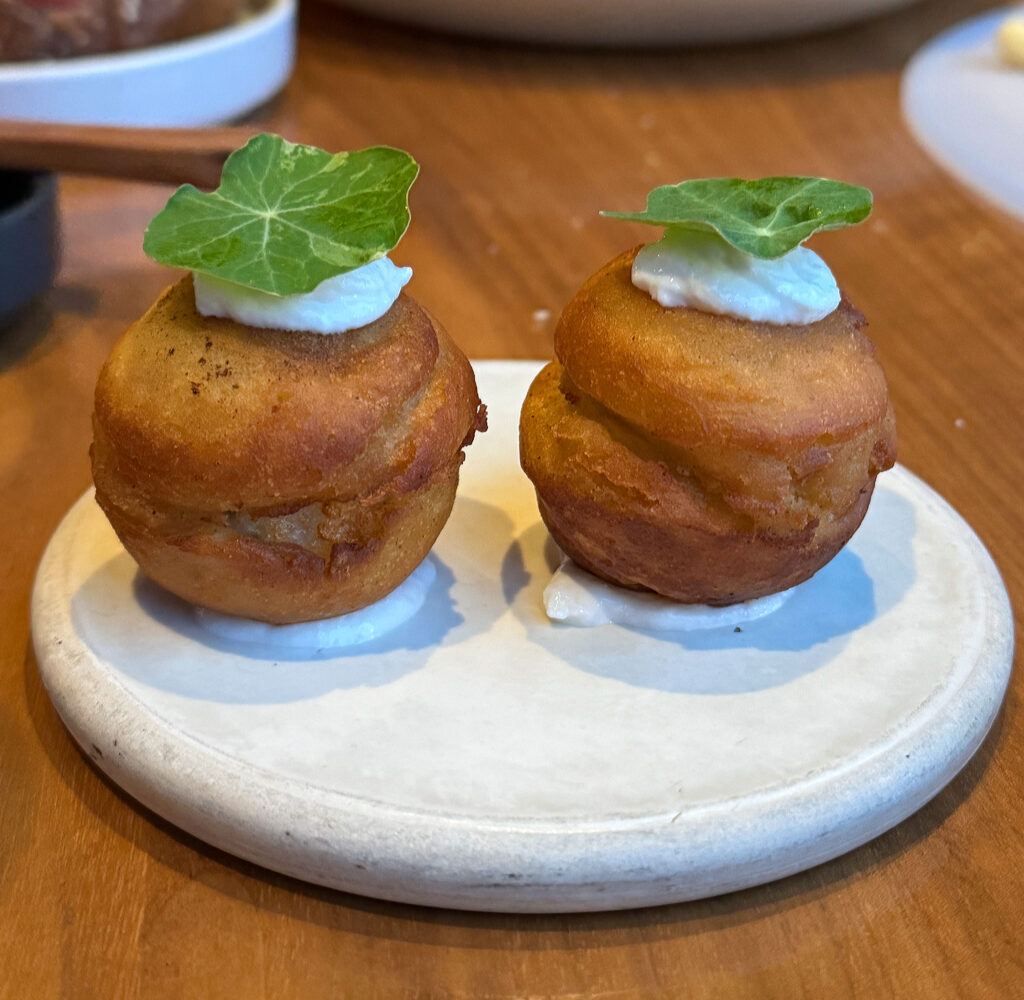
The “Æbleskiver” (an emblematic Danish snack comprising fried spheres of batter topped with jam) trades its usual, sweet connotation for a more inventive, savory recipe. The resulting serving looks just like the kind of airy donut I have encountered (back in the day) at Smyth and (more recently) at Feld. A crowning leaf of nasturtium (so jointly favored by these kitchens) certainly completes the effect.
However, the æbleskive’s combination of a crisp exterior, fluffy crumb, and warm shrimp center with the tangy-sweet notes of the accompanying horseradish cream is just sublime. Indeed, the form here—so instantly nostalgic even across cultures—lives up to the promised decadence in a way that some recipes, in their bids to be unique, totally lose sight of. Yes, Elske’s example balances intellectual appeal with a baseline of joy that cannot be resisted. I’d order a half dozen of these if I could.
Turning toward the à la carte fare, I find an evergreen trio of shareable snacks that has long formed the core of any Elske experience. It almost feels wrong to call these items signatures (because those composed dishes do, also, exist). Rather, these plates provide a reliable foundation of satisfaction and sustenance on which the concept’s more challenging compositions can more easily shine. Likewise, if one ever wanted to treat the Michelin-starred restaurant as more of a wine bar, this would be the right place to start.
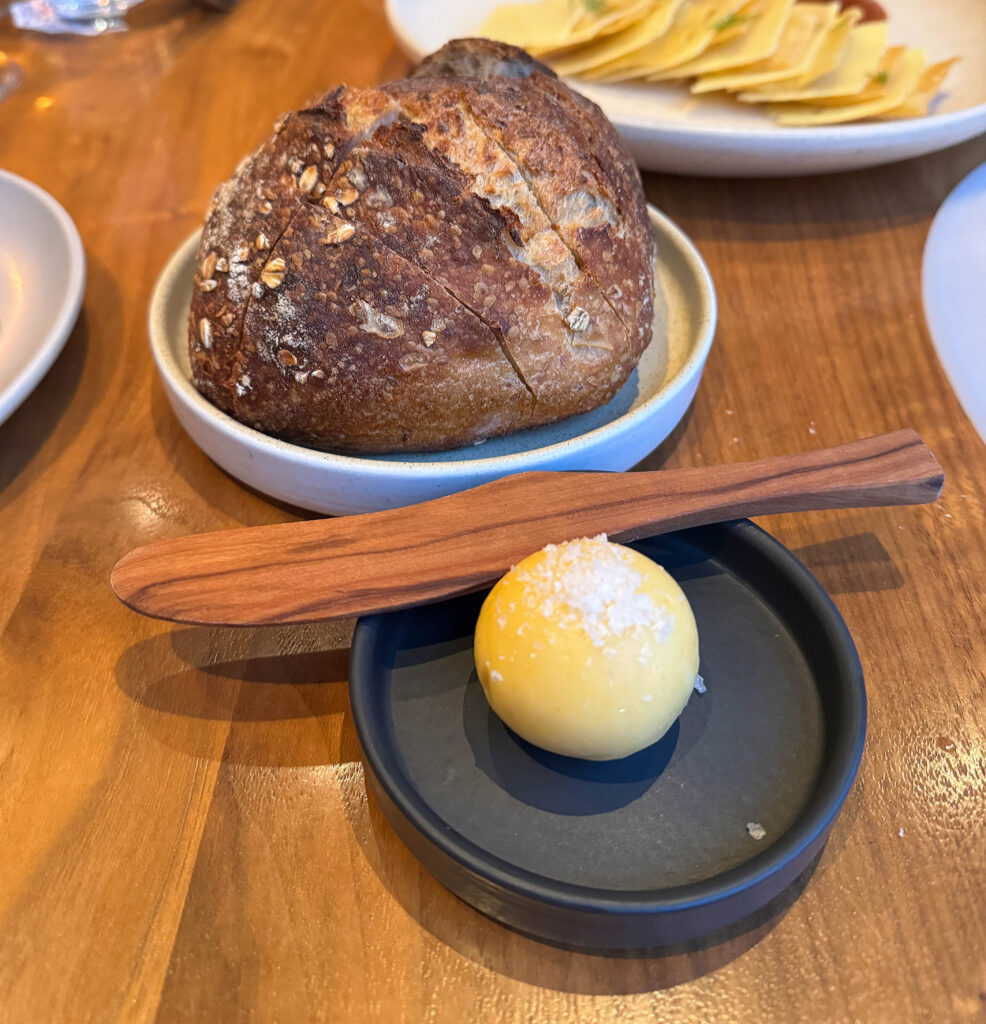
The “Oat Porridge Sourdough” ($12), sourced from Publican Quality Bread, can hardly be expected to change in any perceivable way. The loaf’s crust retains a pleasing rigidity, and the crumb—imbued with tangy, toasty flavor—contrasts it with an appealing warmth and softness. Nonetheless, it is worth noting that the housemade cultured koji butter now benefits from a heavier application of salt: one that does more to emphasize the spread’s own tangy and nutty and umami-laden notes. This change in seasoning reflexively boosts my perception of the bread, and, given the fact that diners who prefer less salt can easily scoop around the crystals, I think it makes for a clear enhancement of a longstanding (otherwise flawless) offering.
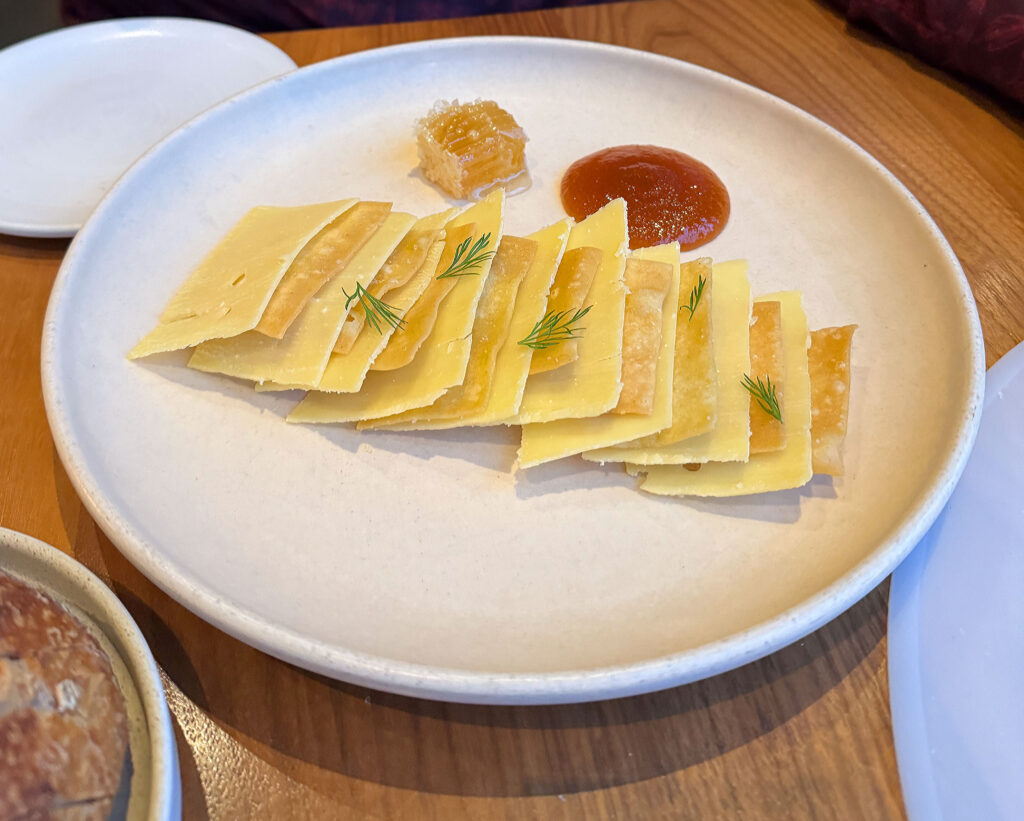
The “Aged Gouda” ($20) often undergoes some small changes with the passage of the seasons, yet the central idea always remains the same. Here, Elske sources the Wilde Weide variety of the titular cheese (one the chefs have reliably, though not singularly, favored over the years) produced by Jan and Roos van Schie in Zwanburgerpolder.
Their 15-month-aged wheels yield a crystalline, caramelized expression of Gouda with nutty, tropical undertones. And, while the accompanying crackers—finely crisp with an almost powdery finish and a robust wheaty flavor—soften and lengthen the savory power of the cheese, it’s the rotating jam (here made from apple and rosehip) that proves crucial. These leavening fruity, floral, and tart tones electrify one’s palate and tease out the Wilde Weide’s freshly sweet complexity, convincing even those guests (including myself) who would never think to reach for this particular style. The additional serving of honey only adds to the fun in what remains, year after year, one of Chicago’s most reliably pleasing “cheese plates.”
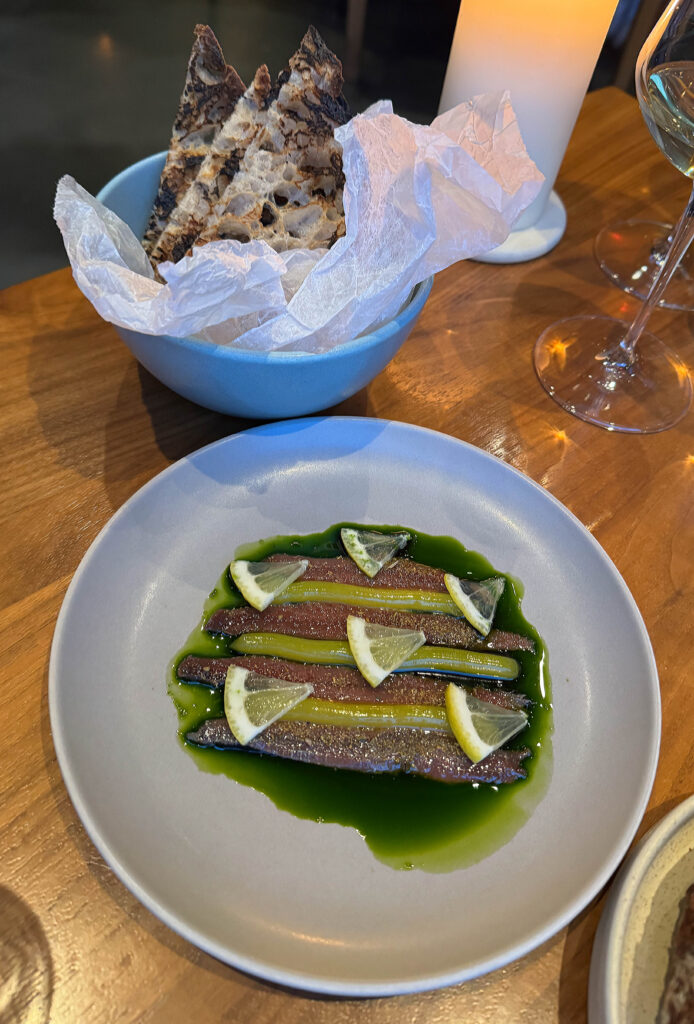
The ”Salt-Cured Anchovies” ($15) form the last of these opening snacks, and it’s one whose appeal (given the titular ingredient’s icky reputation) might not be as obvious. The diminutive fish—four slivers to an order—come trimmed by ribbons of lemon gel and generously dusted with fennel pollen. Placed atop the accompanying slices of grilled sourdough, they lead with a moist, salt-tinged sensation that veers toward tangy, charred, and sweet anise notes on the finish. The combination almost sounds offensive on paper, yet the sum effect, rather than being pungent or bitter, harmonizes in a manner that is pleasantly savory. The bread, even when eaten alongside the other loaf and the crackers, ties everything together: forming a crisp, semi-absorptive package for a uniquely satisfying anchovy toast.
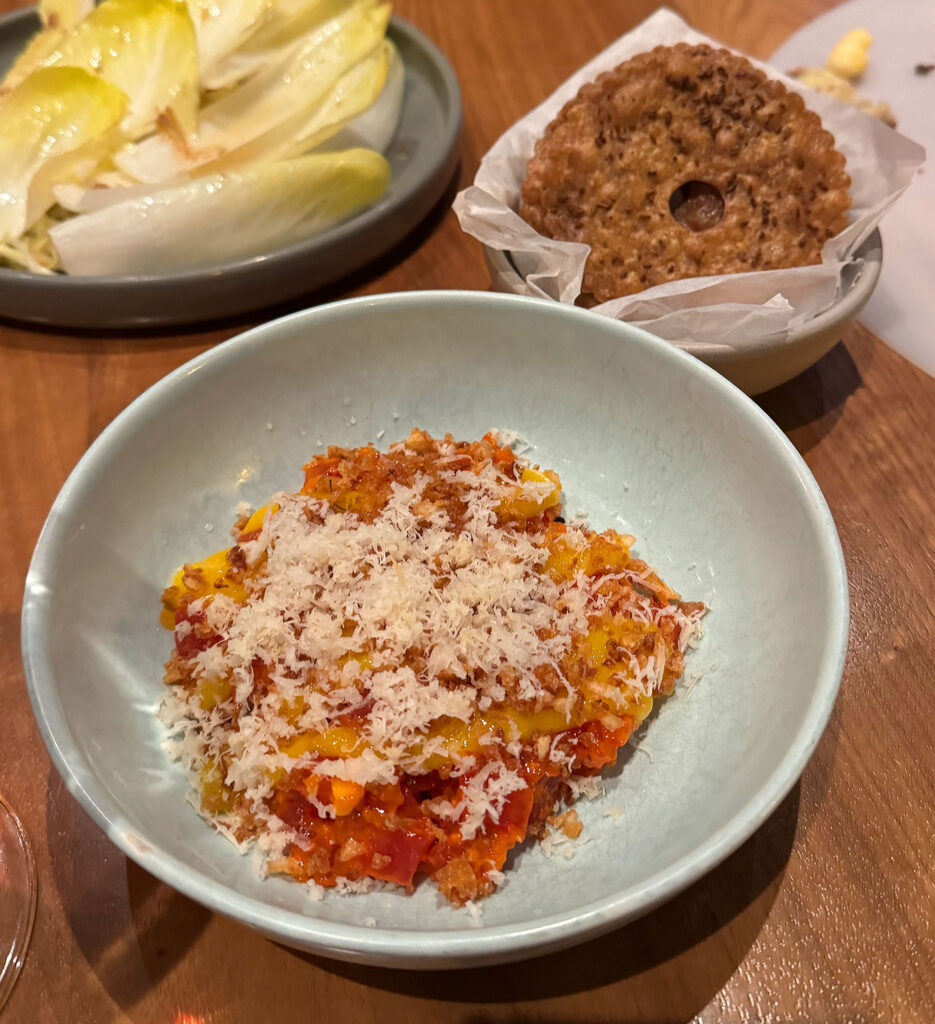
With the arrival of the “Tuna Tartare” ($28), I am treated to something entirely new. Opposite the anchovies, this dish centers on generous chunks of the titular fish that come dressed in ‘nduja (the spreadable sausage), egg yolk, breadcrumbs, and what looks to be grated parmigiano. A side of knäckebröd (a Swedish—but also broadly Scandinavian—rye cracker) completes the presentation.
On the palate, the tartare leads with a plump, unabashedly rich consistency that is subtly offset (and thus better defined) by traces of brittle crunch. The tuna, so thoroughly coated in what amounts to salami, displays a degree of salty intensity that (and I’m also thinking of the koji butter) breaks with what I’ve come to expect from Elske. Really, the concentration almost proves to be too much. However, when the well-seasoned fish meets the cracker—so craggy, so crisp, marked by earthy and herbaceous depth—the perceived sodium is cut, revealing nuttier and spicier notes that carry through the finish. Overall, this recipe pursues a kind of forthright savory flavor I don’t usually expect to find here. However, if this composition is in any way indicative of Brooks’s larger approach, I must count myself as an immediate fan. The word “explosive” comes to mind.
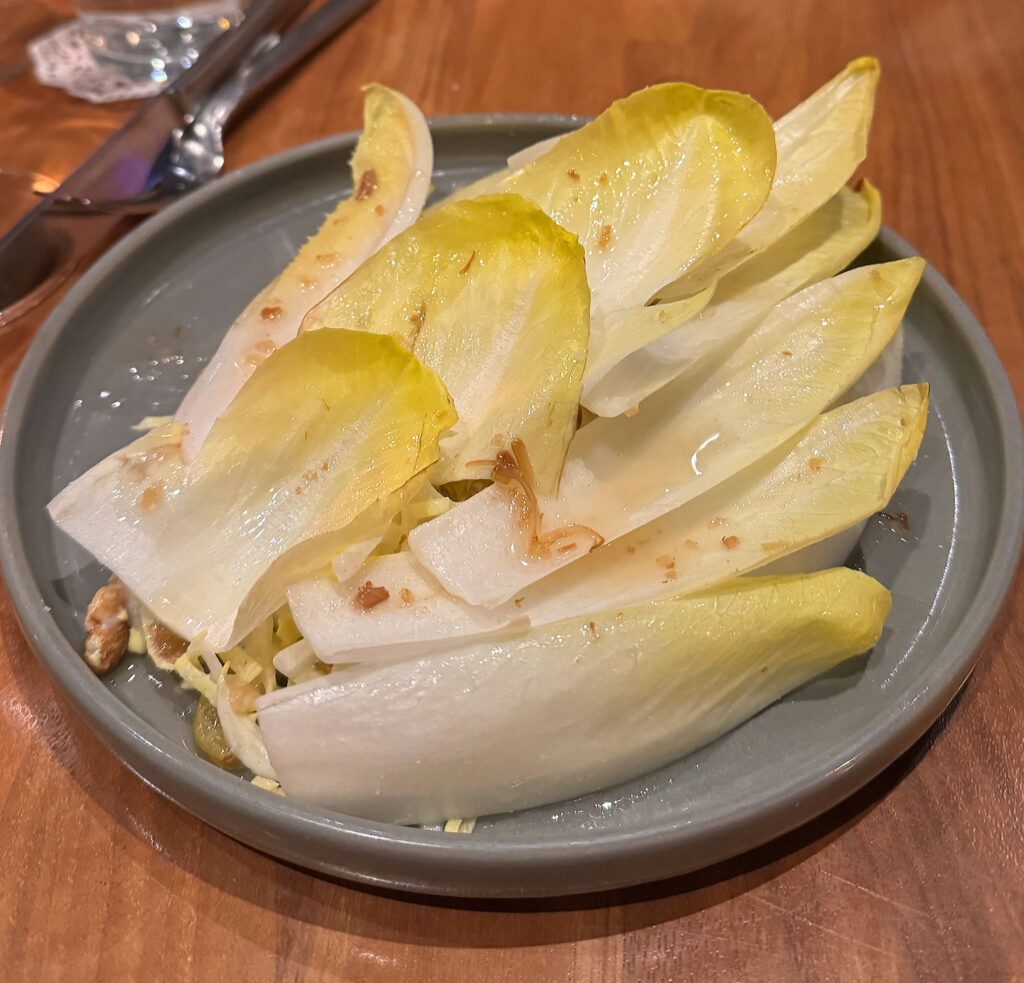
A salad of “Belgian Endive” ($24) shines as one of the restaurant’s most enduring preparations, and it is to the kitchen’s great credit that I can always expect a recipe like this to deliver. Tonight is no different, and there’s almost nothing to do with a plate that has been honed to such a fine point. In fact, when these layered leaves arrive at the table, I get so eager that I cannot help but grab them like chips: turning them inward (coating of dressing be damned) and loading them up with the medley of shredded endive, pickled raisin, and walnut that awaits underneath. These loaded bites—crisp, crunchy, fleetingly chewy, yet charged with a maddening balance of tang, sweetness, and bitterness—distill the dish’s undying appeal. Those who (politely) opt for knife and fork can certainly secure all the same pleasure. But why not greet this salad, this stalwart, with the kind of enthusiasm it so unquestionably deserves?
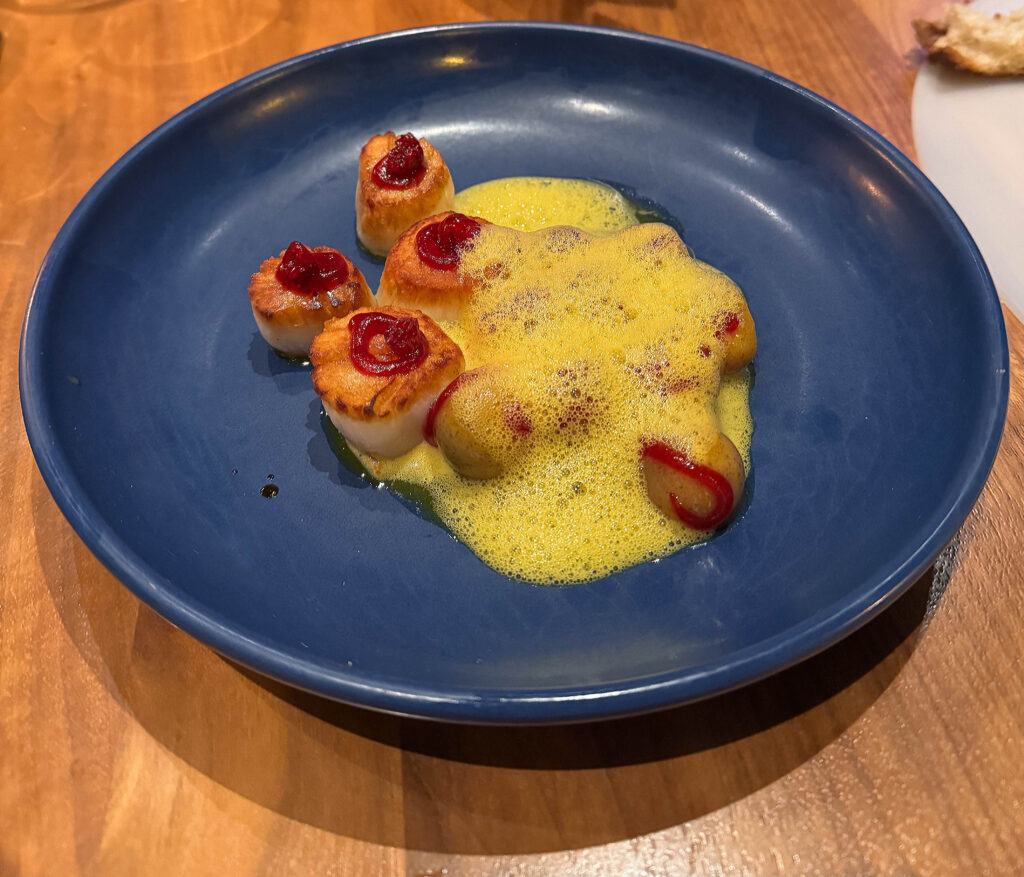
The “Seared Scallops” ($44) make their debut during this visit, and, given that the mollusks rank as the second most expensive item on the menu, expectations run high. Here, the bivalves are seared (on one side) to develop a golden-brown crust, paired with a handful of new potatoes, then jointly garnished with pumpkin foam and a cranberry gel.
Texturally, the shellfish treads the line of raw and cooked beautifully: displaying a hint of crispness and firmness on entry followed by a richer, delectably gummy mouthfeel that reveals an exquisite sweetness with further mastication. The potatoes, in turn, are flawlessly smooth and creamy, yet one almost wonders why they’ve been incorporated. Then the flavor of pumpkin strikes, building off the tubers’ buttery blandness with a concentration of sweet, nutty, and earthy notes that are unobscured by the usual accompanying spice. The cranberry, far from steering the recipe toward a strange Thanksgiving excess, provides an electric acidity (functioning almost as citrus would) that actually softens the influence of the squash. In this manner, the pumpkin foam’s sweetness seems to flow naturally from the scallop’s own caramelization and latent glycogen, making for an expression of the seafood that achieves uncommon depth and satisfaction without any lapse in balance. Indeed, it’s hard to imagine ever blending these flavors together, yet the result is sublime.
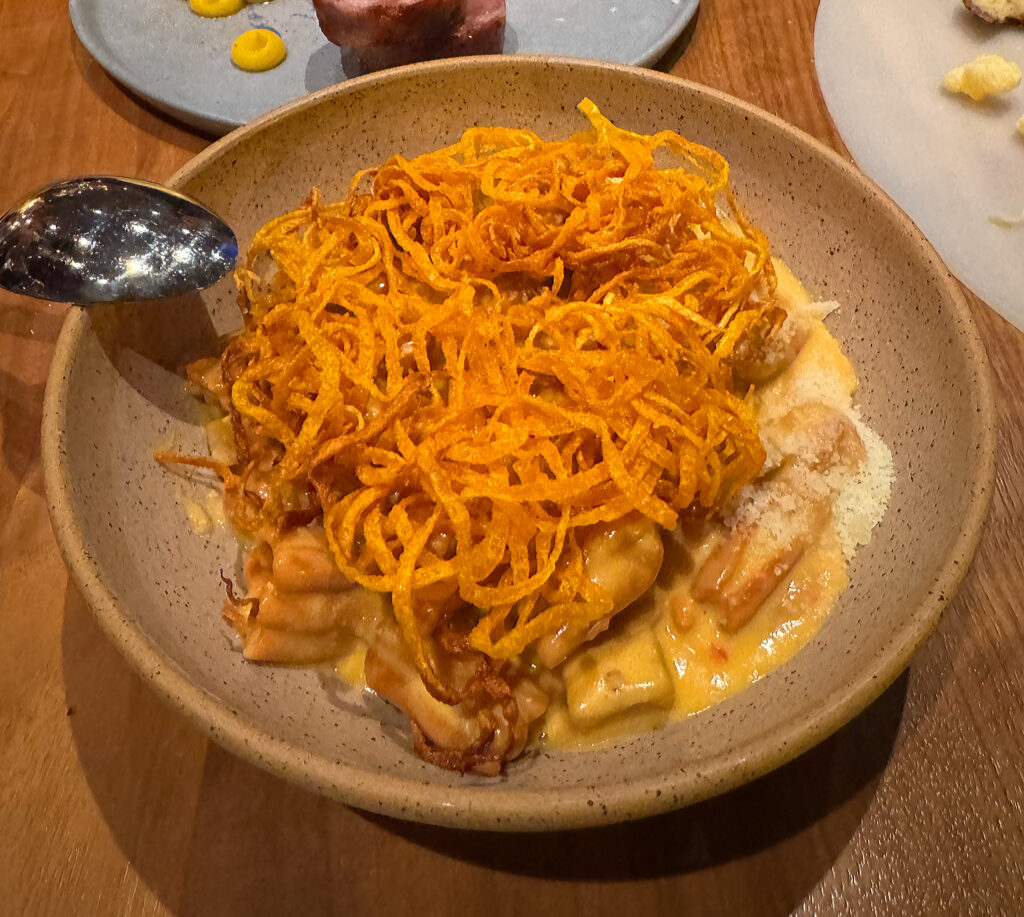
For this evening’s pasta course, I find a preparation of “Annatto Zucca” ($28)—a pumpkin-shaped piece colored with the seeds of the achiote tree—that has featured, on and off, over the years. The present rendition centers on familiar notes of Calabrian chili and pecorino. However, on this occasion, the gourd element (always emblematic) is entirely unique. Yes, the accompanying butternut squash is transformed into a kind of crispy tangle that stretches across the bowl.
Matched by roasted chunks of the same ingredient that sit among the zucca, this crowning element blankets the yielding pasta (so much so that it breaks apart into individual noodles) with a hint of crispness. The resulting flavor here is, like the “Tuna Tartare,” marked by a generous application of salt. Yet I find that the sodium content does well to enliven the “mac and cheese” richness of the pecorino-derived sauce, and the finish here—woven with earthy sweetness and lasting heat—impresses with a memorable degree of depth. For my taste, this recipe has never shown better. Increasingly varied textures and concentrated (while still finely detailed) flavors make for a corresponding increase in satisfaction.
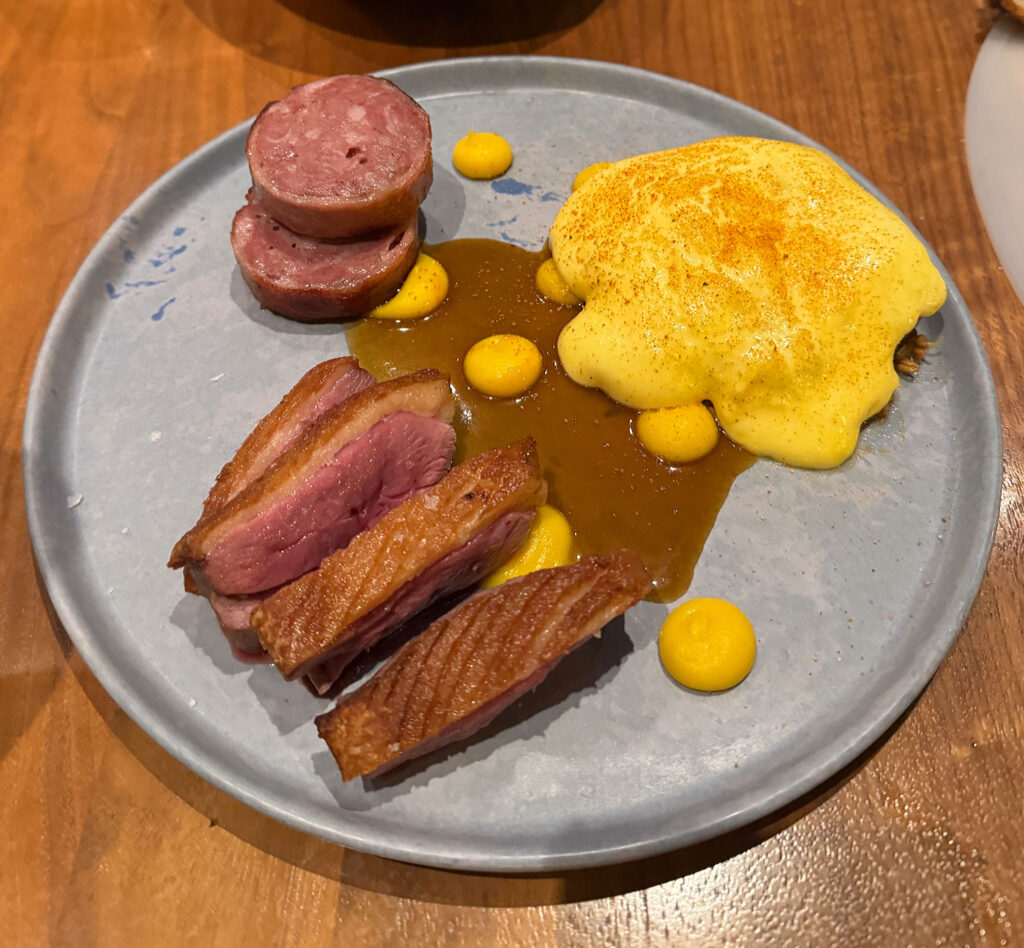
Turning toward the entrées—the moment of truth—I find a presentation of “Roasted Duck Breast and Sausage” ($43) that looks to doubly satisfy my craving for this king of culinary birds. The meat itself arrives looking picture perfect: combining a scored, golden-brown layer of skin with a strip of shining subcutaneous fat and a pinkish-reddish interior. (The sausage, in turn, is browned around the exterior and finely grained throughout.) A drizzle of duck jus forms a fitting accompaniment, but it’s really the other elements that catch my eye. Namely, dollops of a gooseberry cream lead toward a torched cloud of hollandaise (reminiscent of the restaurant’s signature “Charred Leeks Vinaigrette”) that serves to shield a serving of golden beets and some cooked grains of sprouted rye.
These tones of orange and yellow (opposite the carnal hues of the protein) are visually arresting, and the constituent ingredients shine just as brightly on the palate. First, there’s the duck breast itself—crisp on entry, fleetingly chewy, yet mouthfilling in its juiciness—and the accompanying forcemeat, which marries a clean snap with attractive moistness of its own. Opposite these engaging textures, the chunks of root vegetable and smaller bits of rye (all coated in the airy sauce) provide a more soothing, creamy mouthfeel. However, their flavor—charged with sweet and sour topnotes and an undercurrent of earthy, nutty depth—enlivens the savory character of the starring poultry. The sum effect, unlike so many Elske entrées from meals past, does nothing to sap pleasure. Rather, through the construction of a balanced (rather unique) contrasting side, the duck achieves a deeper satisfaction than it would if eaten on its own. Well done!
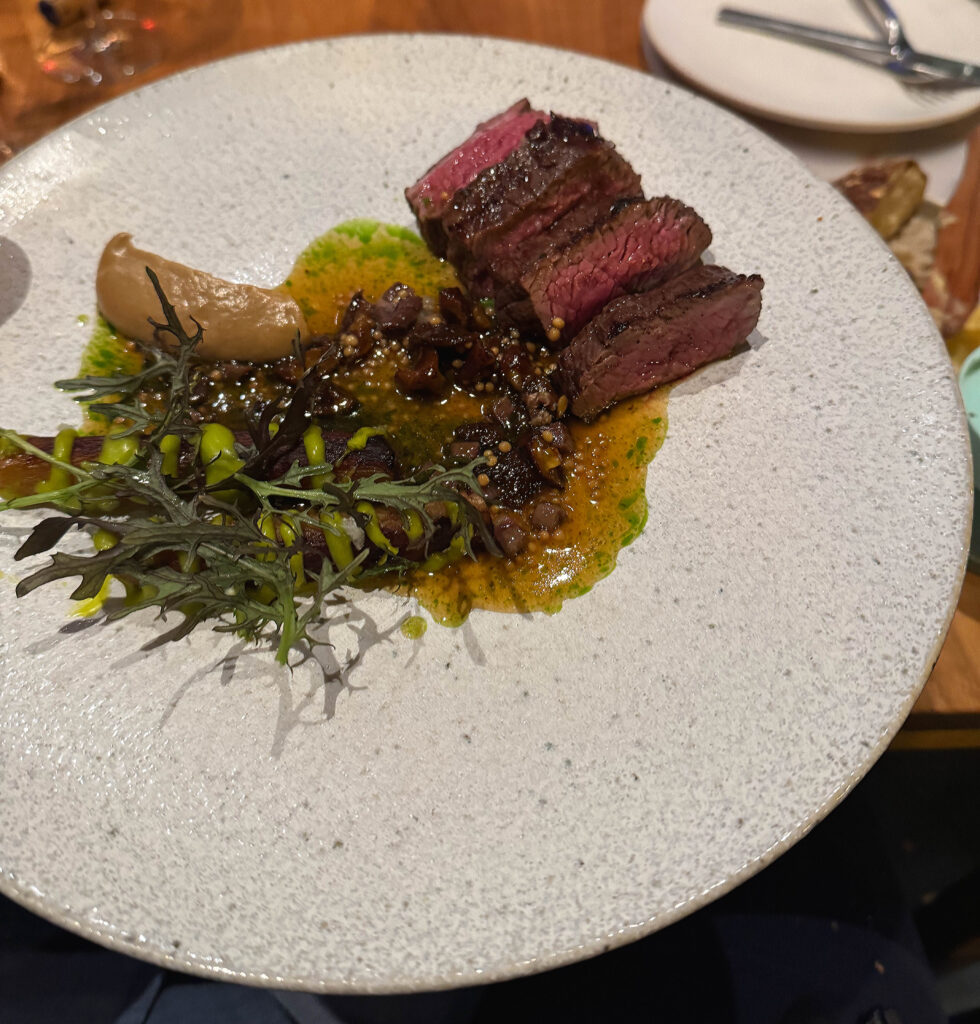
The ”Marinated Shoulder Tender” ($50) ranks as the most expensive item on the à la carte menu: centering on a somewhat obscure cut from the cow (also known as the teres major) that, in the right hands, can approach the quality of an actual tenderloin. Here, the steak takes the form of four generous, red-centered slices with a surrounding imprint of char. Segments of roasted salsify, smaller chunks of chestnut mushroom, and a tangle of mustard greens—all dressed in a combination of beef jus and mustard seed—complete the preparation.
Texturally, the shoulder tender lives up to its name, displaying a supreme, tongue-whetting tenderness matched with (and this is one of the cut’s virtues) a robust, meaty flavor. In a manner not unlike the preceding dish, the earthy sweetness of the salsify (cooked to a wonderful softness) and pervading pungency of the mustard elements help—via subtle contrast—to enhance the umami of the beef. Nonetheless, on this occasion, I really cherish the rich, nutty character of the mushrooms that, by soaking up the jus, deliver just the kind of savory concentration (tinged with smoke) I am after when ordering steak. In short, this is another strong showing from one of Elske’s headlining plates.
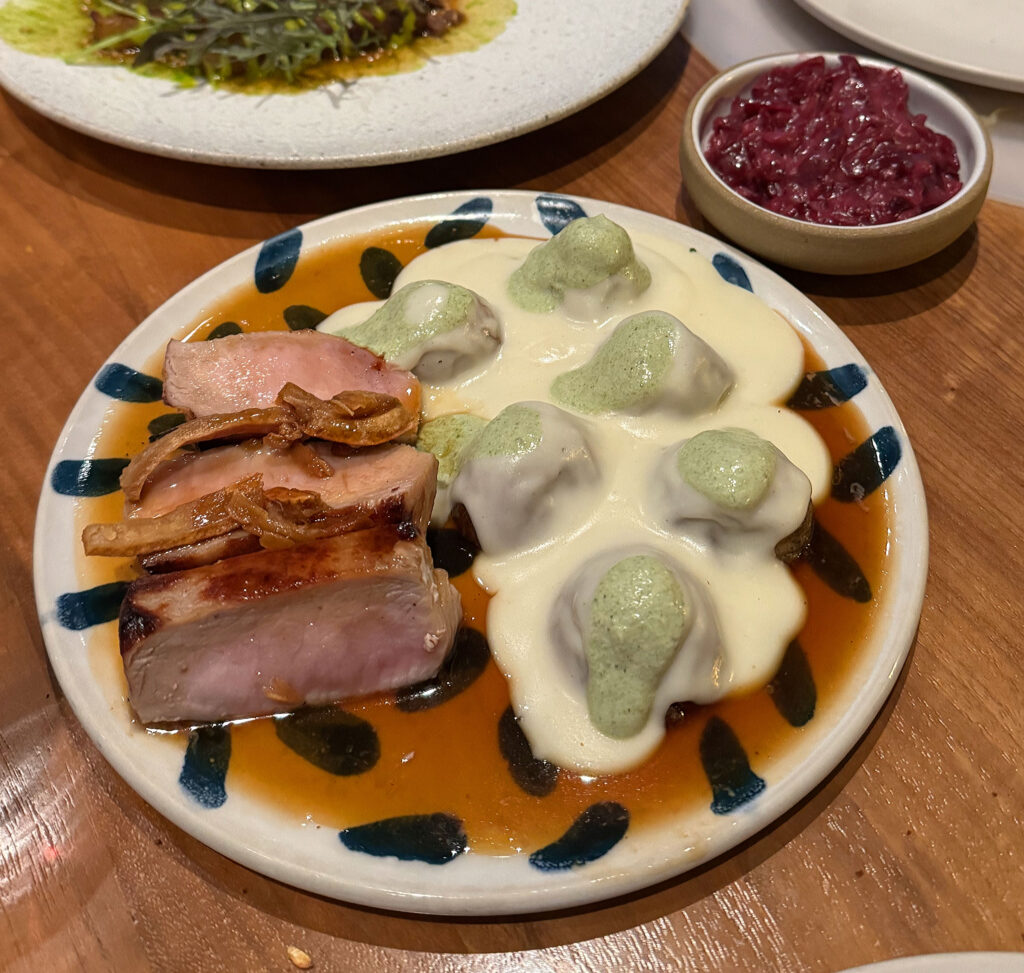
Closing out the savory section of the meal is a “Grilled Pork Loin” ($40). Paired with confit potatoes, a parsley cream sauce, and a side of braised cabbage, this entrée seems set to please in an even more straightforward manner than the duck or beef. The portion of meat here feels generous, and crowning shards of crackly skin make for a textural thrill.
Nonetheless, the loin itself strikes me as a bit too chewy, and, given the size of the slices, it feels like a bit of a chore to get through. Otherwise, I at least enjoy the healthy pool of accompanying jus and the quality of the potatoes, which are soft on entry and marked by the freshly tangy sauce. Even the wet, melty heap of cabbage is well rendered with its own sweet-and-sour intensity. It’s not hard at all to appreciate what this recipe is going for. Tonight, the cook on the pork represents the only letdown and, thankfully, the easiest component to improve upon in the future.
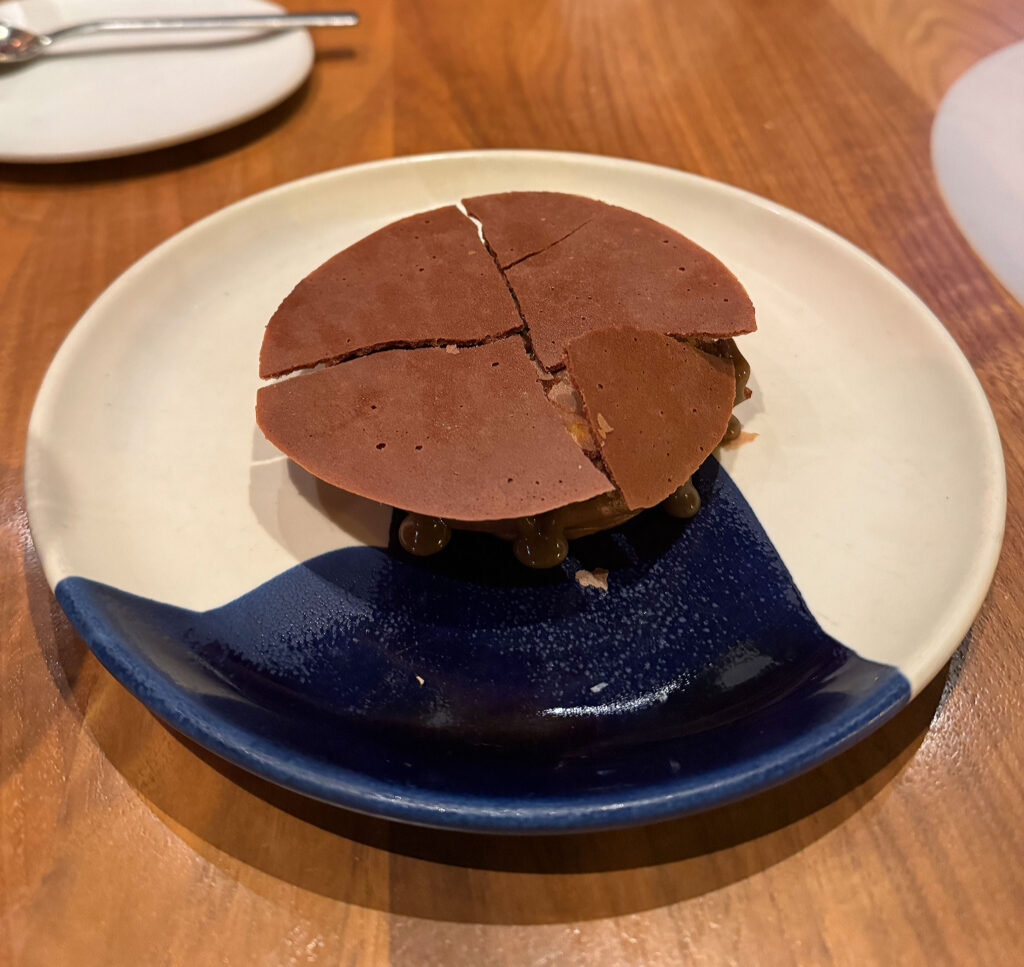
Moving on to dessert (and the work of pastry chef TC Lumbar), I opt for a solitary preparation that seems to break from Elske’s brighter recipes and embrace total decadence. The “Dark Chocolate Mousse” ($18), arriving tucked beneath a crowning chocolate tuile, distinguishes its titular element with chunks of crispy sunchoke, globs of sunchoke caramel, and a generous application of sea salt.
Seeing these root vegetables (also called Jerusalem artichokes) feature in such a seemingly indulgent dish prompts a moment of pause. However, I’ve seen this trick before (Smyth comes to mind) and know how versatile this tuber can be. On the palate, the mousse displays an expectedly rich, creamy consistency that comes alive via the shattery effect (almost reminiscent of crème brûlée) provided by the salt. Importantly, the expression of chocolate here stops short of being too dark or bitter. One can appreciate (again thanks to the salt) the intensity of the cocoa, yet the double dose of sunchoke shifts the plate’s flavor profile toward nutty, caramelized, and subtly earthy notes that are both surprising and nostalgic. The sum effect is a dessert that, by means of an unexpected ingredient, delivers the kind of deep satisfaction the kitchen (always looking to challenge itself) couldn’t aim for otherwise. What a strong finish.
In ranking the evening’s dishes:
I would place the “Æbleskiver,” “Oat Porridge Sourdough,” “Aged Gouda,” “Tuna Tartare,” and “Seared Scallops” in the highest category: great recipes that achieved a truly memorable degree of pleasure. I would love to encounter any of these again.
Next come the ”Salt-Cured Anchovies,” “Belgian Endive,” “Annatto Zucca,” “Roasted Duck Breast and Sausage,” ”Marinated Shoulder Tender,” and “Dark Chocolate Mousse”—good—even very good—preparations I would always be happy to sample again (but that just failed to elicit an extra degree of emotion).
Finally, there’s the “Grilled Pork Loin”—a merely good item that fell short when it came to texture. That said, the underlying ideas shaping this entrée were sound, and its quality could easily be improved with a better cook on the meat.
Overall, this makes for a hit-rate of 92% with a sizable 42% of dishes landing in that memorable, “would love to have again” stratum.
It is worth noting that a third of the recipes I ordered tonight (i.e., the “Sourdough,” “Gouda,” “Anchovies,” and “Endive”) are evergreens. They only needed to deliver in the manner that they have for years (and, really, how hard it is to screw up a plate of bread or salad or cheese and crackers?). Still, I do not take for granted the fact that stalwarts still deliver such pleasure: forming the kind of foundation that guarantees pleasure even if the rest of the, in its experimentation, goes off the rails. Plus, if the extra salt on the koji butter is anything to go by, it seems there is always room to refine these classics just a little more too.
The real story is that the other two-thirds of my menu was comprised entirely of new (or at least meaningfully reinterpreted) items—of which all but one succeeded and three, immediately, ranked among the finest offerings of the night.
It is true that I avoided ordering a few things (e.g., a “Smoked Char with Brussels Sprouts,” the signature “Celeriac Risotto,” and a serving of “Frikadeller with Sweet Potato”) that I felt more skeptical of. However, in turn, I did decide to tackle the three most expensive entrées with an aim to reevaluate Elske’s longstanding weak point. Putting aside the texture of the “Pork Loin” (which the kitchen is now roasting instead of grilling), I noticed an immediate paradigm shift in how these starring proteins emphasized deep, savory satisfaction without totally sacrificing the creative accompaniments this cuisine is known for.
Yes, from the “Æbleskiver,” “Tuna Tartare,” and “Seared Scallops” to the “Annatto Zucca,” “Shoulder Tender,” and “Dark Chocolate Mousse” I have, here and now, encountered some of the boldest and most enjoyable food I can ever remember having at Elske.
I cannot say with any certainty that this is all a result of Sawyer Brooks becoming chef de cuisine (though my captain acknowledges that what I am tasting—and responding so strongly to—is characteristic). Me choosing to dine at the right time of year (and being treated to so many ingredients I tend to like) might have simply weighed in the kitchen’s favor.
But I don’t need to discount the fact that, even when balancing its new concept next door and faced with the departure of a pillar like Casillas-Rios, Elske has never seemed stronger. Indeed, if the slight stylistic shift I sensed tonight proves to be persistent, the restaurant—nearly 10 years later—may only just be hitting its stride.