
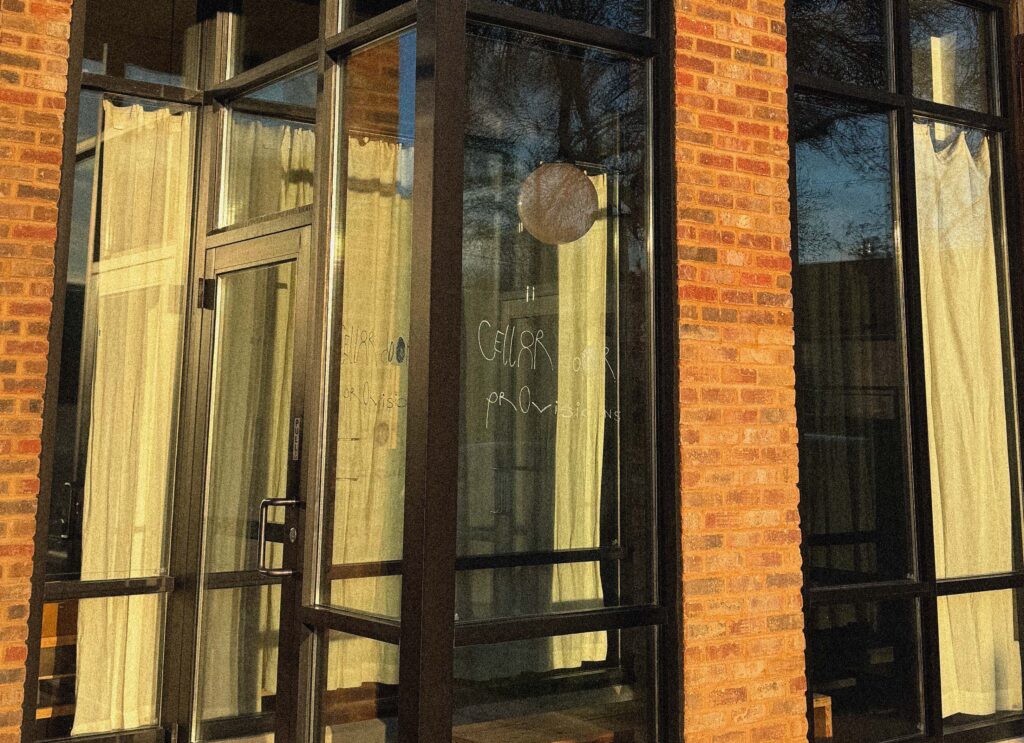
Fresh off the back of four pieces detailing Chicago’s greatest tasting menus (i.e., Feld, Smyth, Oriole, and—if one accepts certain quirks—Kyōten), it always feels rewarding to return to Cellar Door Provisions.
In many ways, it forms a reset: a total deconstruction of the formality that characterizes these peak expressions of gastronomy (to say nothing of the ticket price, the time commitment, or the essential surrender of control to the kitchen’s whims they also entail).
Within a breezy bistro setting, chefs Ethan Pikas and Alex Cochran serve à la carte fare whose dynamism, creativity, and outright deliciousness can rival the work of those one-, two-, and three-Michelin-star sanctums. Indeed, it is perhaps because the restaurant (though holding a Bib Gourmand) is free of those suffocating “fine dining” expectations that it can afford to take such big swings.
The resulting dishes may at times be challenging, but they always have something interesting to say: pushing sourcing, technique, and the very conception of what a “starring” ingredient can or should be to a thought-provoking (though never needlessly provocative) extreme. Ironically, this is not even the most polarizing iteration of CDP to exist. However, by tempering its locavore philosophy just a little, the team—post-pandemic—has shaped a cuisine that reliably restores and reinvigorates even the most jaded of palates.
Yes, whenever the city’s glut of “contemporary American” concepts starts to feel utterly uninspired (being centered on the same luxury tropes given slightly different window dressing), a visit here restores my faith. Though born of nearly reckless passion, CDP offers a way forward: demanding you play by its rules (no less when it comes to the wine list) yet channeling that trust toward an ardent pursuit of craft while offering a few key concessions (e.g., the bread, the burger, the panna cotta) along the way.
It’s the one place in town you could eat at two or three or five times a week and never get bored, for the cooking—each night—is so singular and granular in its ever-evolving character. It’s one of two independent restaurants (the other being Elske) I think you could drop into New York or Paris or Tokyo and (assuming the chefs are able to forge the same relationships with local purveyors) see succeed. Nonetheless, the mixed reaction CDP receives, to this day, from Chicago’s own dining scene demonstrates just how arcane the kitchen’s privileging of experimentation and novelty can still feel.
Eight meals later, I am undoubtedly a believer in what Pikas and Cochran are doing. But, as with any of the establishments I have frequented this year, achieving a sense of satisfaction is paramount.
Resolving this tension—distinguishing the surface thrill of something new from the transcendent pleasure that unseen textures and flavors can, in the right hands, yield—makes Cellar Door Provisions endlessly fascinating.
On its night, no other restaurant offers more superlative value or, in fact, does more to collapse the city’s traditional hierarchy of fine dining altogether.
What will I find on this occasion?
Let us begin.
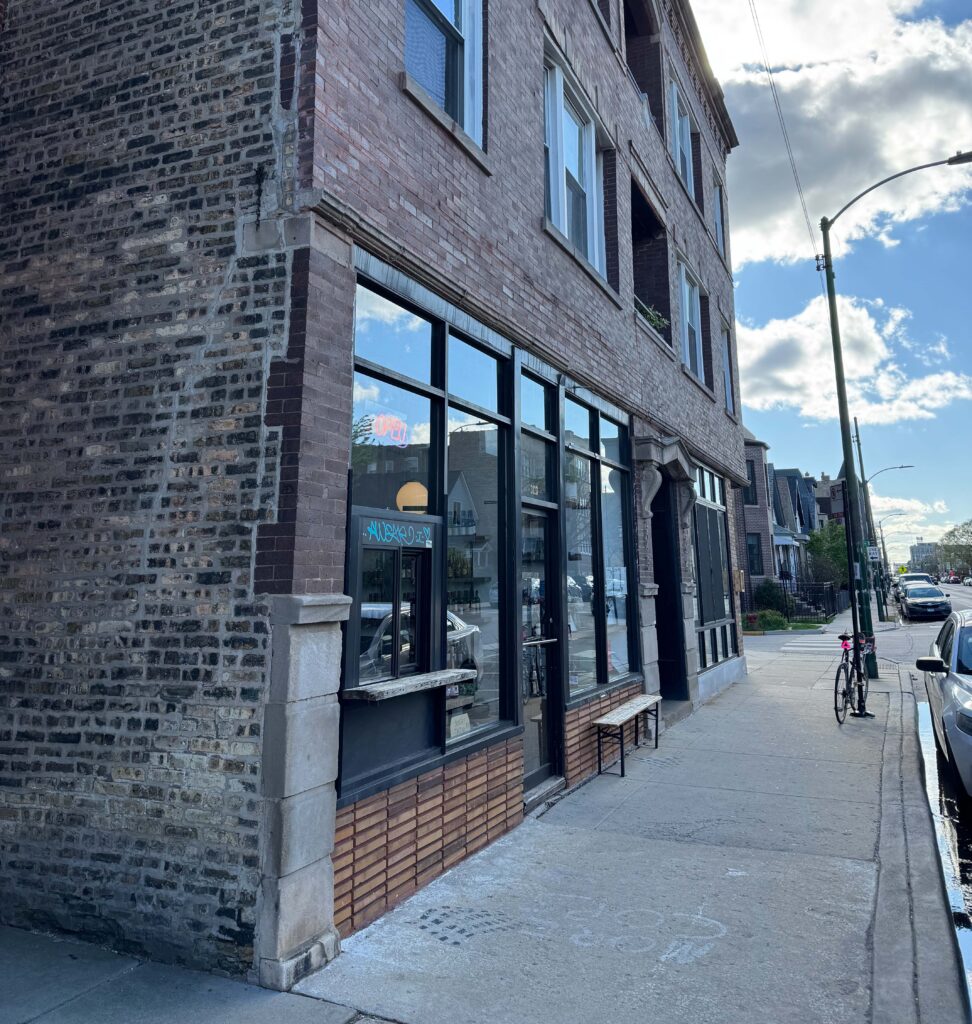
It’s Saturday again: the end of the Cellar Door Provisions team’s week and the point in which Tuesday’s and Wednesday’s ideas—those that survived, those whose ingredients can still be sourced—approach their full potential.
When I go online to look at the restaurant’s menus (which change daily but are generally updated weekly on the website), I inevitably rue the fact that I missed out on something delectable. In this case, I spy preparations of duck liver mousse, confit duck leg, porchetta (with smashed fava beans), and pistachio ice cream only to be palpably disappointed when they are missing from the bill of fare the following day. These dishes, so uncomplicated in their embrace of French and Italian cuisine, speak to a side of the concept (no doubt fueled by the same unerring technique) that seems comparably straightforward in its appeal.
Yet there are always substitutions to speak of, and I cannot blame the concept for channeling its prototypically bold, challenging recipes toward the weekend—the point in which an everyday, neighborhood crowd gives way to a peripatetic dining population looking for fine food on their night out. I desperately want to join the former group but am damned (by circumstance and stubbornness) to the join the latter. At the very least, I get to see how the team operates when the bistro is at its busiest.
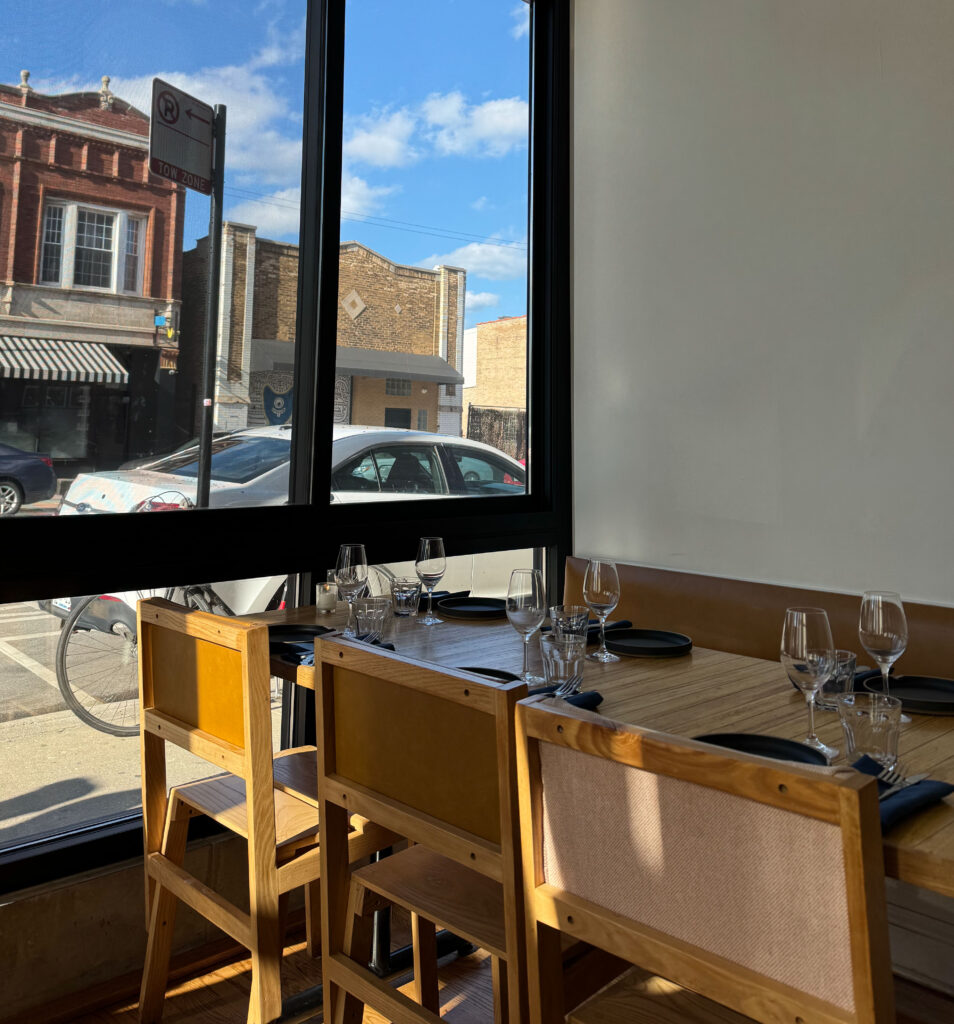
Tonight, I’m the first party to be seated, and I note how, about an hour after opening, nearly all the tables and half the bar have filled. It’s largely a sophisticated audience: the middle-aged whites and Asians (some wearing jackets) you’d find at Michelin-starred venues. However, they coexist easily with the comfortable, casual customers looking to walk in and grab a bite.
Warming temperatures and the latening sunset lend the dining room, wrapped with windows, an infectious energy. Pikas and Cochran do their part running and describing the plates—a practical necessity, no doubt, yet one that is hugely charming once one gains any familiarity with the caliber of their work and the peer group to which they belong.
The other cooks, when they make an appearance, exude warmth and pride. The servers, even as the restaurant reaches peak capacity, remain unflappable. I marvel at how patiently and tenderly they guide inquisitive guests through a gamut of unfamiliar grapes and ingredients. On this occasion, even I do not mind indulging an adjacent party who looks over at my table for some inspiration regarding what to order.
I respect the sense of shared adventure that unites the diners here, and, while I notice that corkage does seem to be allowed for certain people under certain conditions, it is the wine list that, for many, forms the first hurdle.
Following Emily Sher’s departure to focus solely on the programs at Elske and Creepies, the number of bottles on offer has undoubtedly narrowed a bit. Nonetheless (and this has always been true), the selection—if one bends just a little to embrace its philosophy—clears the bar of offering broad appeal.
In the sparkling category, we’ll have to wait and see if CDP is ever able to source another sub-$100, sulfur-free Champagne like the Chavost “Blanc d’Assemblage.” However, on the white side, I favor a rich, textured Pinot Blanc from Gérard Schueller ($85), a brighter (though still plenty expressive) Chardonnay/Sauvignon Blanc blend from Tricot, and a balanced, oxidative Cortese from Cascina Degli Ulivi ($102). Those looking to splurge will find that a magnum of Valette’s “Et Pourtant…” ($280), a multi-vintage blend of Chardonnay from 70-year-old vines, combines concentrated fruit, electric acidity, and mild oxidative notes in a way that matches the finest expressions of biodynamic Burgundy.
On the red side, an Alpine (but surprisingly Burgundian in its own right) Pinot Noir from Domaine du Perron ($107) and expressions of Beaujolais from Foillard ($72) and Dutraive ($120) are eminently approachable for those seeking elegance. Those in search of greater structure will find that a Merlot from Azienda Agricola Farnea ($79), a Sangiovese blend from Le Coste ($83), and a Loire Cabernet Franc/Cabernet Sauvignon blend from Thierry Beclair offer power without sacrificing accessibility in their youth.
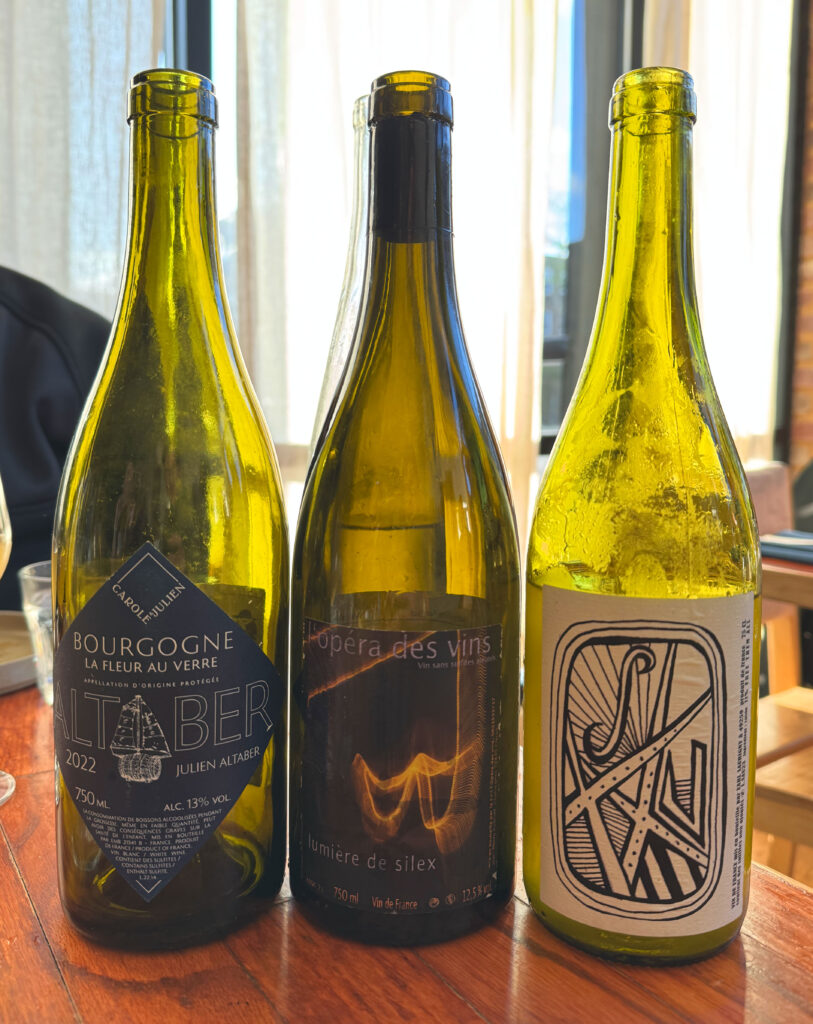
Personally, I opt for three bottles:
- 2022 Julien Altaber Bourgogne “La Fleur au Verre” ($90 on the list, $53 at national retail)
- 2021 Jean-Pierre Robinot “Lumière de Silex” ($115 on the list, $58 at national retail)
- 2023 Jérôme Saurigny “Sau” ($107 on the list, $55 at national retail)
Each of which, despite being made from Chardonnay, Chenin Blanc, and Sauvignon Blanc respectively, offers the kind of clean, fresh, and mouthwatering sensation (with alternating hints of butter, honey, or exotic fruit) I am always after. The latter, benefitting from a 10-day maceration, also provides a bit of tannin to go with the menu’s more substantial fare.
With markups landing between 70% and 98% on top of retail price, these wines—beyond avoiding the pitfalls that can plague natural production—feel like a real deal. Moreover, they pair brilliantly with the (sometimes extreme) notes of brine, bitterness, zest, fermentation, and umami that pop up in the food.
As much as I may dream of bringing my own bottles here (a possibility at all the concepts I am comparing CDP to), I must admit I feel wholly satisfied with what I am drinking. Indeed, across all my visits, I’ve never really ever had to go out on a limb and order something I don’t know or like. If the day comes, I think I’ve spent enough time at the restaurant to know that a bit of submission and trust is dually rewarded.
Yes, when I’m informed that all three of my selections (each of which the team only received one bottle of) need to be chilled to the appropriate temperature, a complimentary pour of Raventós i Blanc is deeply appreciated. It signals, as much as the wine program here exists outside of many customers’ comfort zones, that the intention always remains to please.
That doesn’t mean you cannot or will not make wrong turns when choosing (especially if your palate skews traditional). Yet, with the help of the staff, we embrace the risk for the sake of maybe discovering something that thrills us like never before. I think the parallel with the cuisine, rooted in the same overarching philosophy, is obvious.
Turning toward the evening’s menu, I opt to order everything on offer except for the “Burger” (which, while routinely excellent, takes up a bit of space that could be better devoted toward enjoying what’s new).
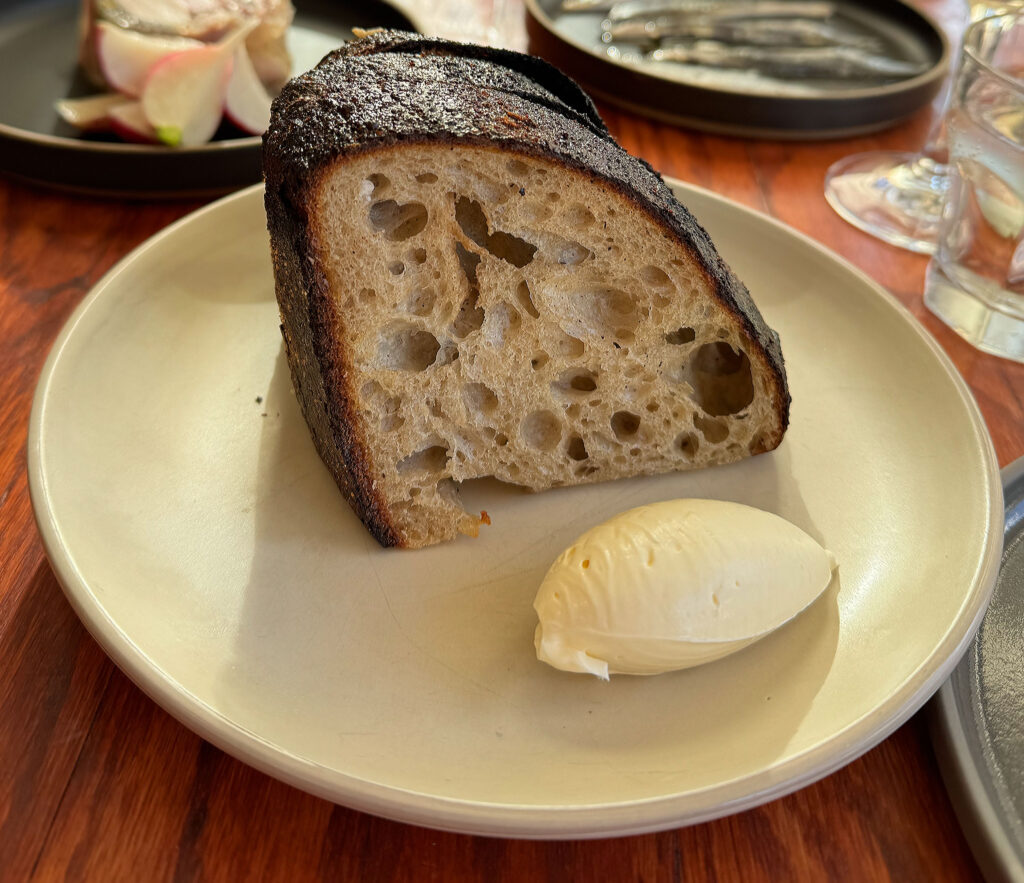
The “Rye Country Bread & Kefir Cultured Butter” ($10) kicks things off, boasting the kind of crust—charred and a touch bitter—that I am not used to seeing here. Still, the contrast between the brittlely crisp exterior and the robust, chewy crumb is well managed. Likewise, while the flavor of the butter remains too subtle for my taste, its creamy, moistening effect enhances the flavor even further. Ultimately, this bread does not rank among the best I’ve ever been served at CDP; however, once its burnt notes are subsumed by the earthy (and slightly tangy) depth of the rye, the loaf’s overall expression remains highly pleasurable.
Accompanying the bread, we have the:
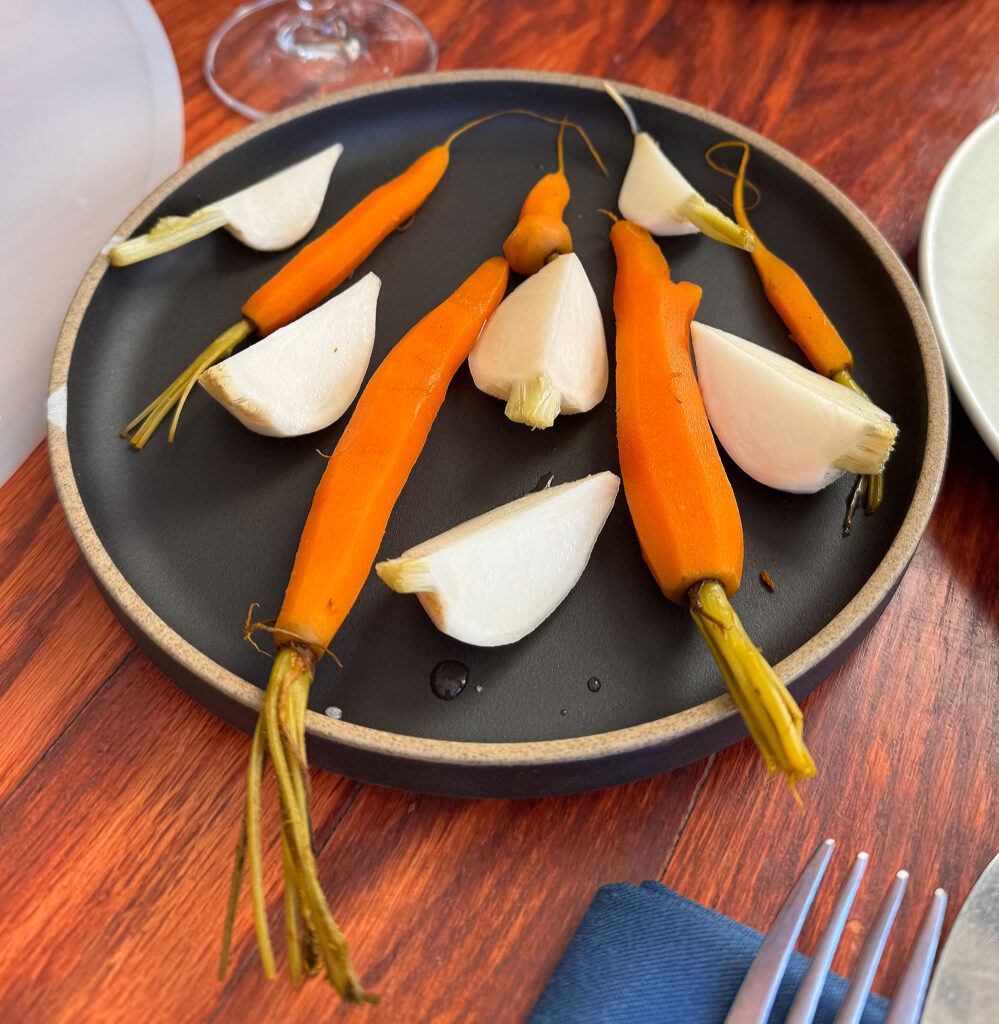
“Pickles” ($6), a neat assortment of crisp, fresh carrots and crunchy, more noticeably sour daikon. The word “restraint” comes to mind when eating my way through this plate, but—mild or not—the vegetables add a welcome sense of contrast to this spread.
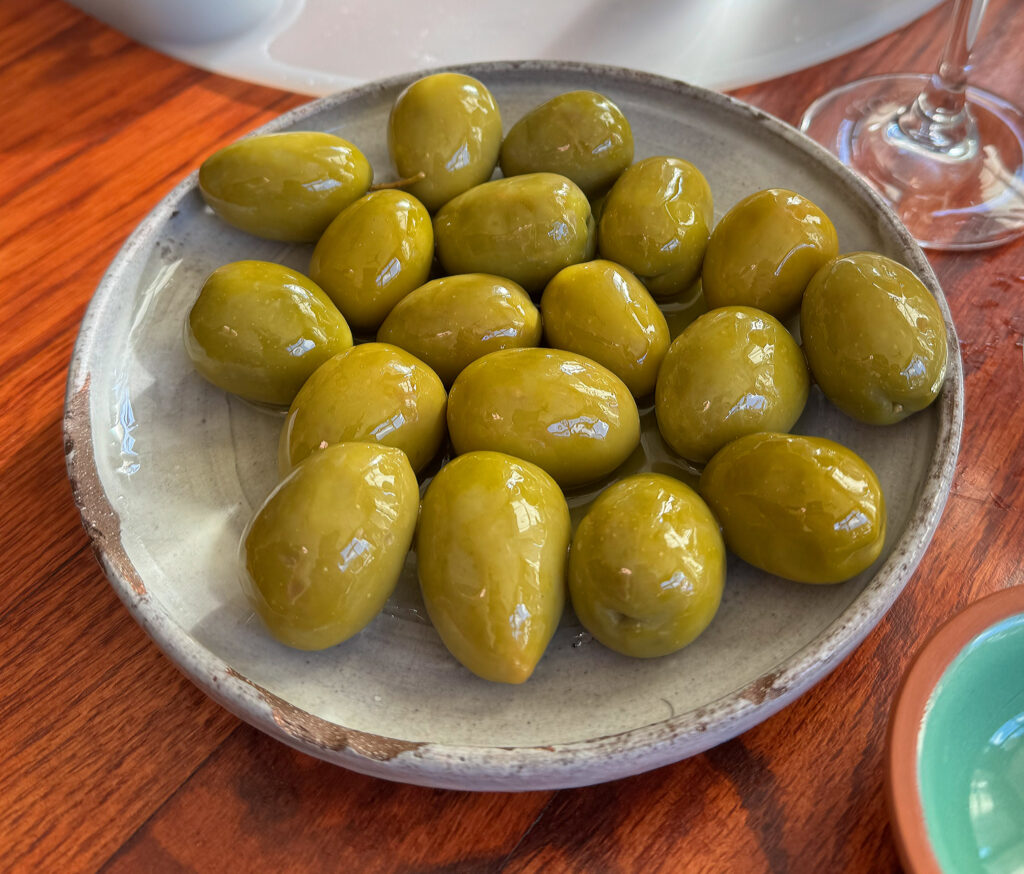
“Gordal Olive Escabeche” ($9), a hefty portion comprising 18 pieces of the titular fruit that arrive at the table having been gently marinated and warmed. This sizable variety—still retaining its pit—is sure to scare anyone with an aversion to the form. However, as an olive lover, I savor each bite’s meaty, juicy character—all backed by an interplay of sweetness, salt, and lasting richness.
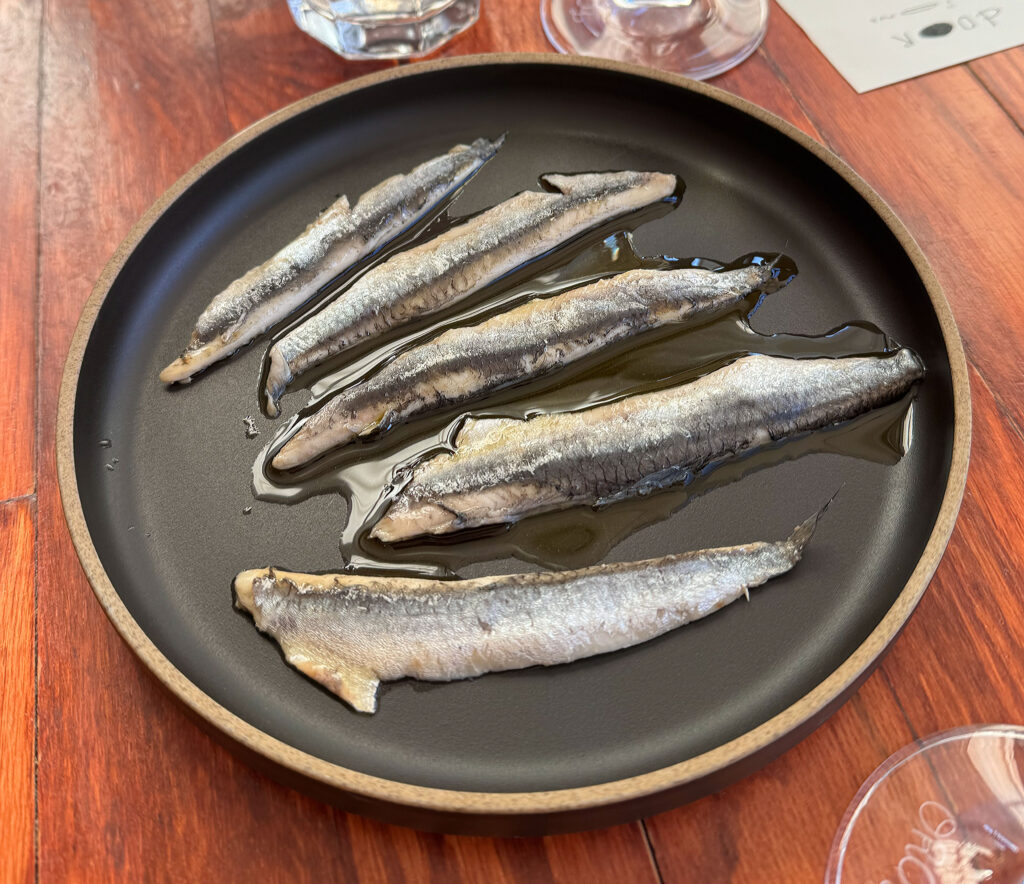
“Boquerones” ($8), or marinated white anchovies, promise the most pronounced flavor of the bunch. Nonetheless, framed by a plump, moist mouthfeel, the fish strikes with a briny, moderately tangy, and altogether clean quality whose latent umami shines without overshadowing the rest of the accoutrements.
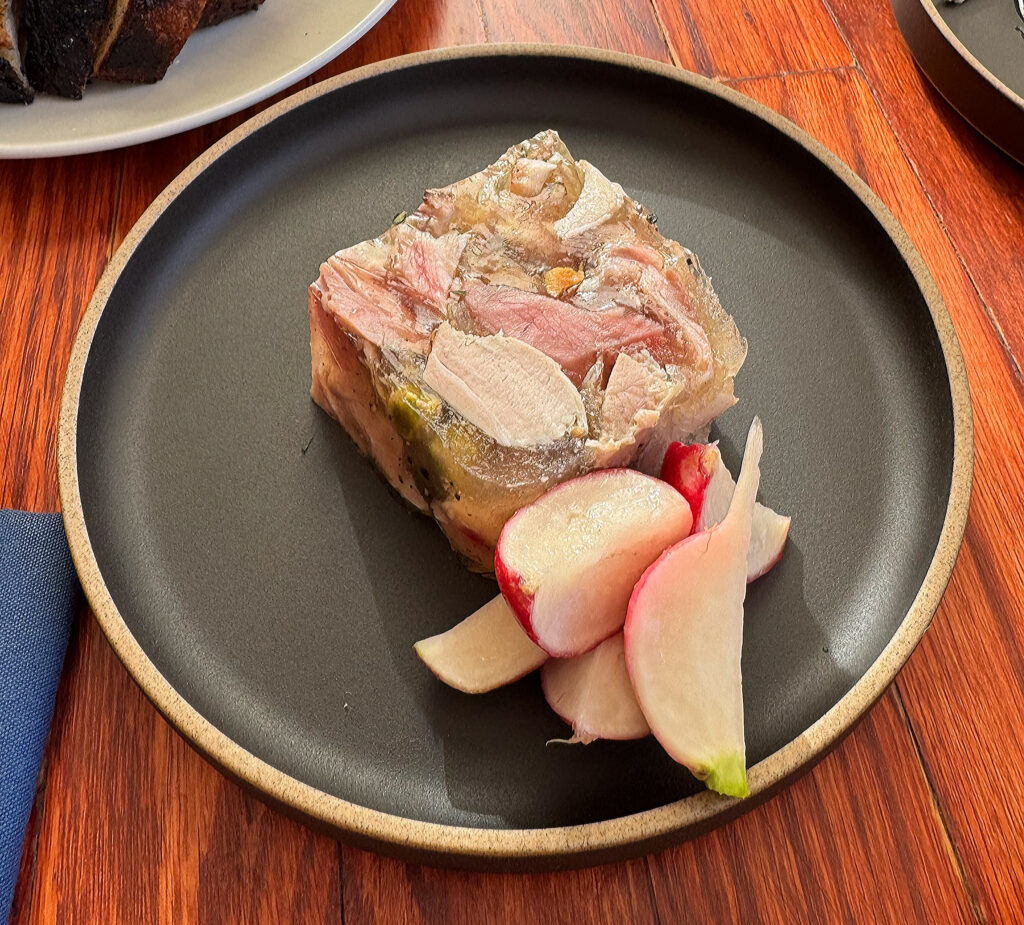
and “Tête de Cochon” ($14), an unapologetic take on the classic French charcuterie whose large chunks of meat and gelatin give me pause. However, the assembled textures (punctuated by the occasional pistachio) are assuringly refined. And the resulting flavor—pure, surprisingly fresh, yet smacking of sweet, porky depth—is wholly enjoyable (even if I think this recipe, rendered in such a thick slab, is best suited for enthusiasts of the form).
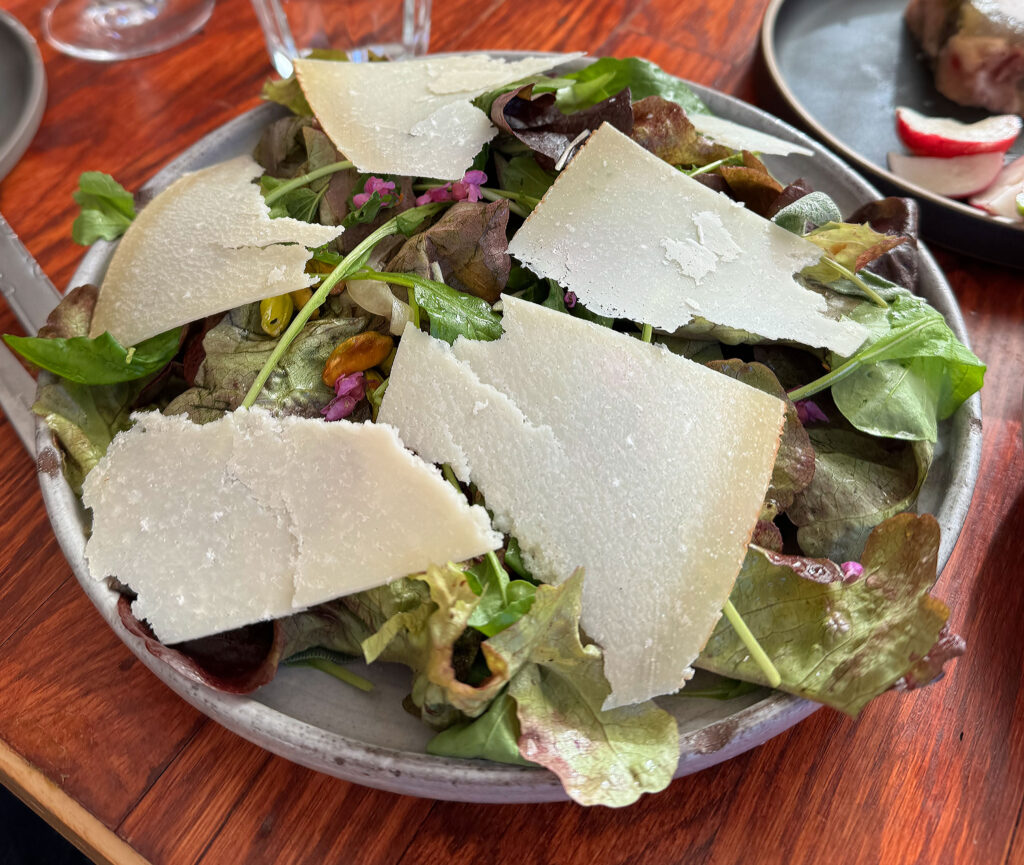
Moving into the heart of the menu, a “Salade Verte” ($19) enters into a long line of leafy preparations that have ranked—alternatingly—among the most delicious and most challenging served here. On this occasion, the recipe leans more toward the former: combining spring gem, arugula, early spinach, carrot greens, soft herbs, and pistachio pieces to build a broad, ever-engaging gradient of crunch.
The resulting flavor is so powerfully zesty and herbaceous (tending toward sage and mint) that I wonder how the dish can possibly come into balance. Yet a blend of sweet, tangy verjus blanc and a richer, nutty pistachio vinaigrette serve to counteract the resounding freshness. Sizable shavings of aged parmigiano (one of CDP’s favorite garnishes for its salads) drive everything home: delivering a dose of salt and underlying umami that transforms this garden of greens into something that feels weighty and satisfying on the finish.
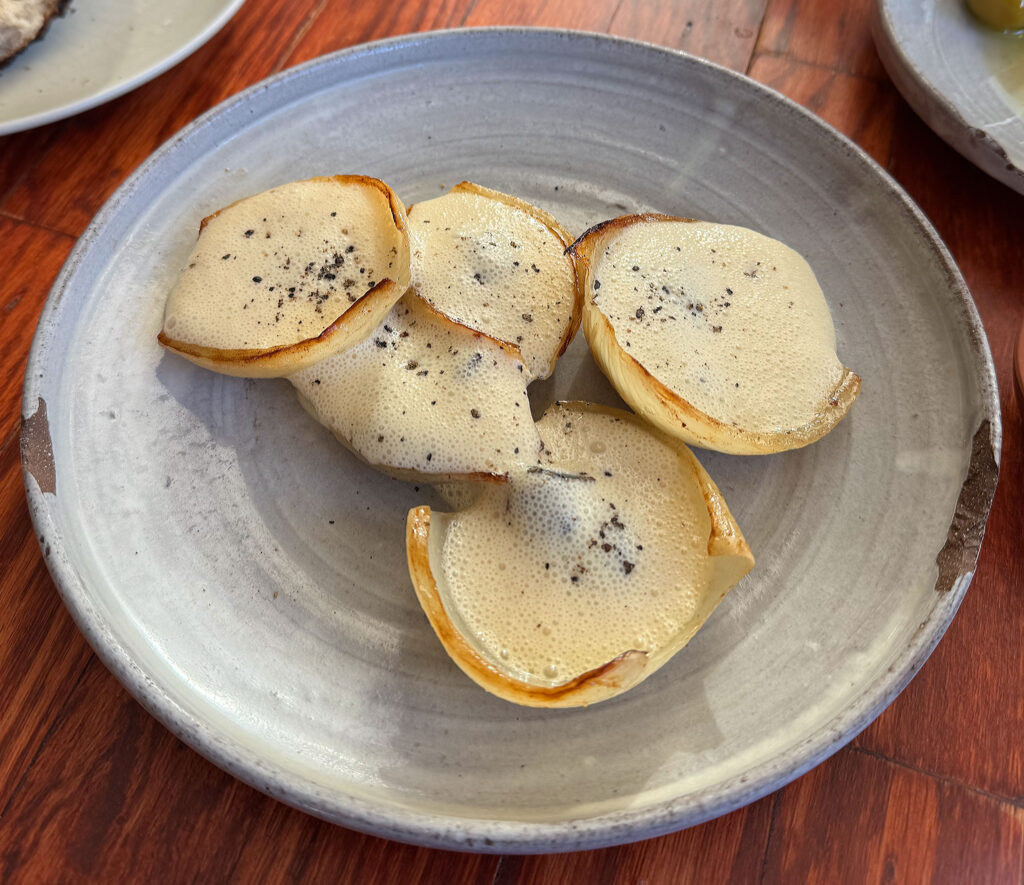
The “Whole Roasted White Phantom Onions” ($18)—a variety known for its consistent production of single-centered (i.e., large-diameter) bulbs—is the kind of item that inspires disbelief. “Nearly $20 for a plate centered on this humble allium?” you may think to yourself, but I grow giddy at the thought of what this worshipful presentation may offer.
The onions arrive looking not unlike a plate of shellfish: being cupped, facing up, displaying an attractive frill of browning, and containing a one-two punch of Gordal olive tapenade and aerated parmigiano rind brodo. Each bite invites the diner to reimagine this vessel (forever a background player) as a bonafide star, and the resulting mouthfuls—crisp then juicy and bursting with sweet, salty, and smoky layers of umami—more than prove the point. The combination, simple on paper and so elegantly packaged, absolutely explodes. Ultimately, this makes for the kind of recipe that you could only get at Cellar Door Provisions, and it’s one, cleverly conceived and utterly delicious, I will not soon forget.
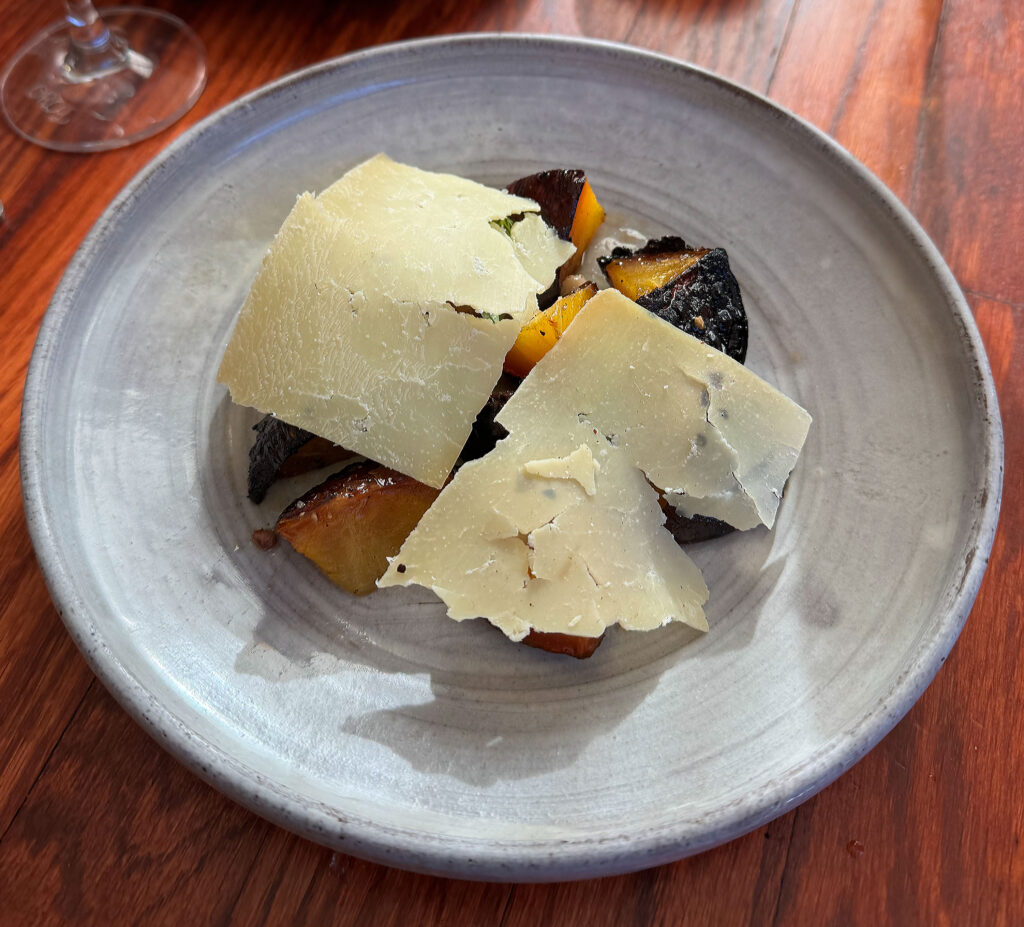
The “Over Wintered Beets” ($19) represents the kitchen’s latest take on a root vegetable—stereotyped for its dirty, earthy tones—that stands among the most polarizing. Here, as usual, they choose to feature a golden variety in which that jarring note is softened. Instead, sweetness takes the lead, and the process of overwintering (i.e., delaying the harvest of) the crop ensures a fresh, particularly concentrated example of the ingredient well into spring.
The beets come roasted, paired with French gray shallots, dressed with a vinaigrette made from Slow Dance’s “Little Skipper” Port (technically a domestic dessert wine), and crowned with slices of Clothbound Cheddar. Seeing such diverse and exciting accompaniments deployed excites me. The resulting textures—clean, crunchy, with a creamy finish from the cheese—and flavors—layered with sweetness (tinged with earth, allium, red fruit, and caramel), marked by a jolt of salt—are easy to like too. However, harmony aside, I am left missing an extra degree of intensity through which the dish might add up to something more than the sum of its parts. With supporting elements of this caliber, I expect fireworks.
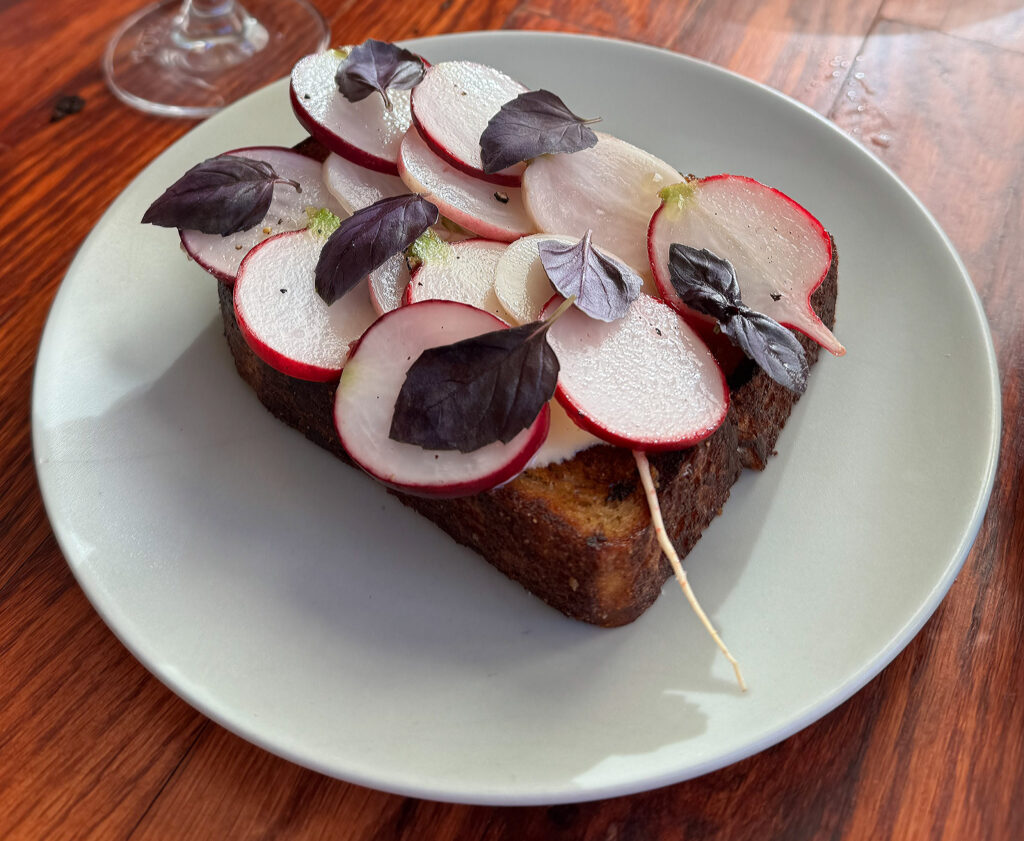
Following in a long line of “ingredient on toast” preparations served at CDP, the “Cherry Belle Radish & Black Emmer Pan de Mie” ($18) seems to lack any obvious appeal. I mean, the bread itself—a soft, fluffy “sandwich loaf” variety bolstered by the earthy complexity of the titular ancient grain—certainly sounds enticing, but why pair it with such an innocuous topping?
Nonetheless, helped along by a smear of whipped duck fat and a few purple basil leaves, the root vegetable sings. The radish, though fresh and crisp on entry, sees its subtle sweetness amplified by the mass of rich, caramelized, delicately spiced, and deeply nutty notes that accompany it. Yes, cushioned by the dense, crumbly toast, the starring ingredient achieves a kind of decadence you’d never think it was capable of. Overall, this recipe is hugely satisfying and forms one of the surprise hits of the night.
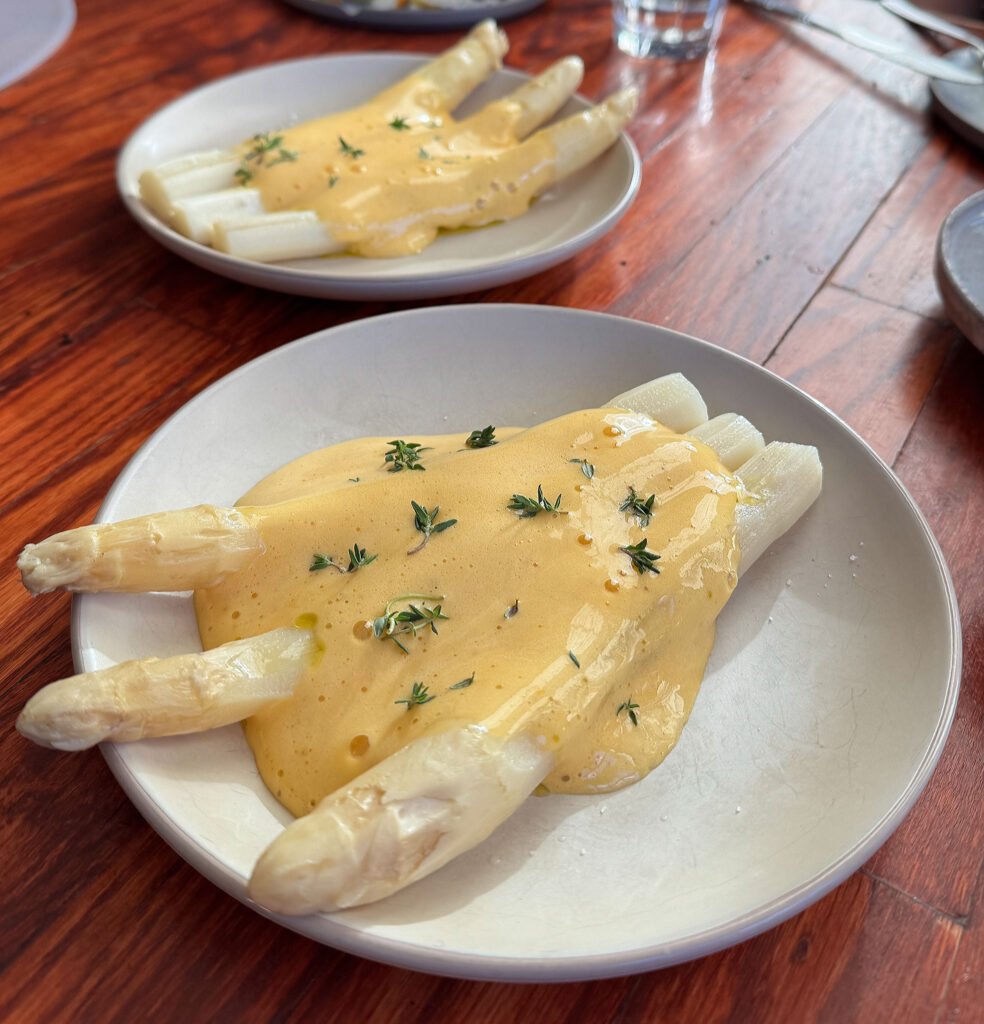
The “Poached White Asparagus” ($24) comes highly recommended by our server, and, indeed, it’s exciting to see the kitchen work with produce that carries such a luxurious connotation. Here, the stalks (in a manner reminiscent of the onions I enjoyed so much) are dressed simply: being slathered in an aerated sauce made from sake and Dover sole bottarga then garnished with a handful of flowering thyme.
On the palate, the asparagus proves surprisingly cold and offers a moderate, largely pleasing crunch that (avoiding any stringiness) remains clean. Though the accompanying sauce looks like it will form a rich, creamy counterpoint to the vegetable, its consistency—light and frothy—is actually rather fleeting. Indeed, I detect traces of the umami that the bottarga is supposed to provide, yet the asparagus is just so thick. The recipe, instead, leads with a rather pristine note of vegetal sweetness that is helped along by the uplifting notes of citrus and mint drawn from the thyme. Ultimately, I respect the fact that the starring ingredient expresses itself with such clarity. However, I can also imagine what the aeration, with a bit more staying power, hoped to provide. I’d love to see this element show a little more influence in the future.
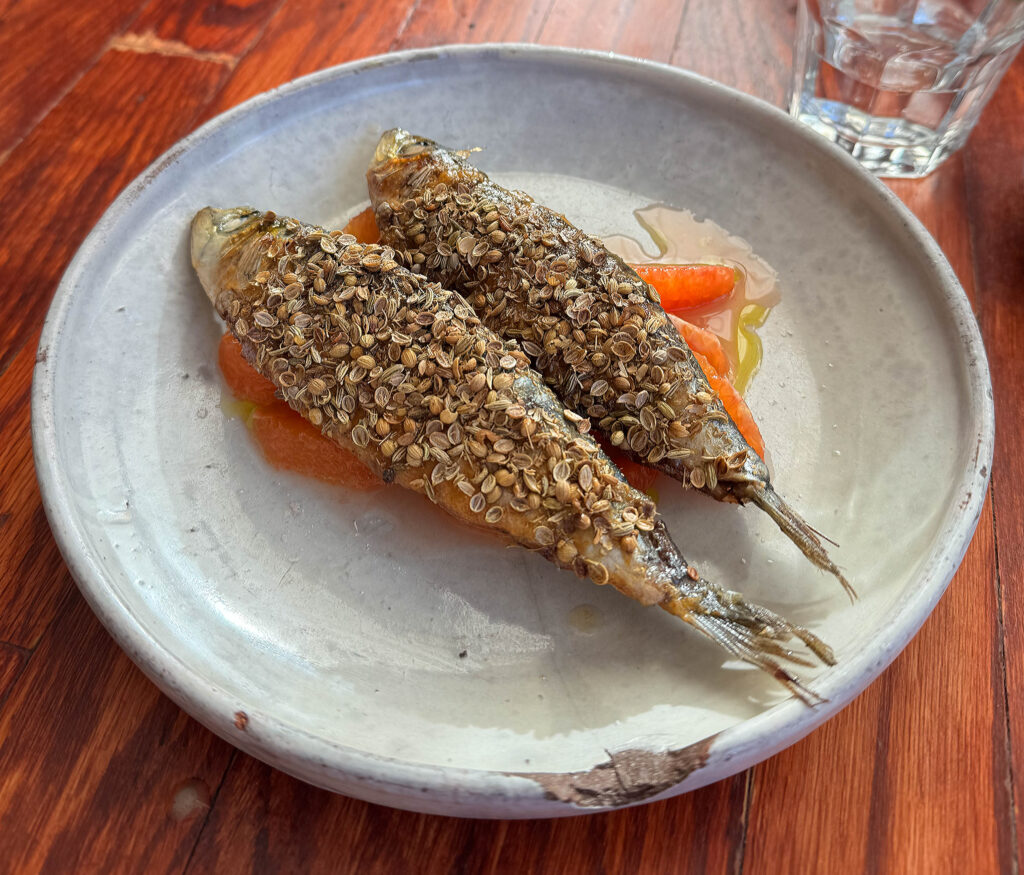
A “Smoked Wild Sardine” ($19), thoroughly coated in coriander and fennel seed, has to rank as one of the most visually striking dishes I’ve seen anywhere lately. There’s almost something a terrifying (think trypophobia) about the effect. Nonetheless, the juxtaposition of crunching spice, crispy skin, and tender flesh is well managed, and the accompanying flavor—strikingly warm, sharply bitter, loaded with fishy umami, yet electrified by the sweetness and tang of blood orange—is both bold and beautiful. Something about this recipe manages to feel Japanese. Still, it veers off in a direction I’ve never encountered before: delivering a memorable and entirely unexpected degree of pleasure.
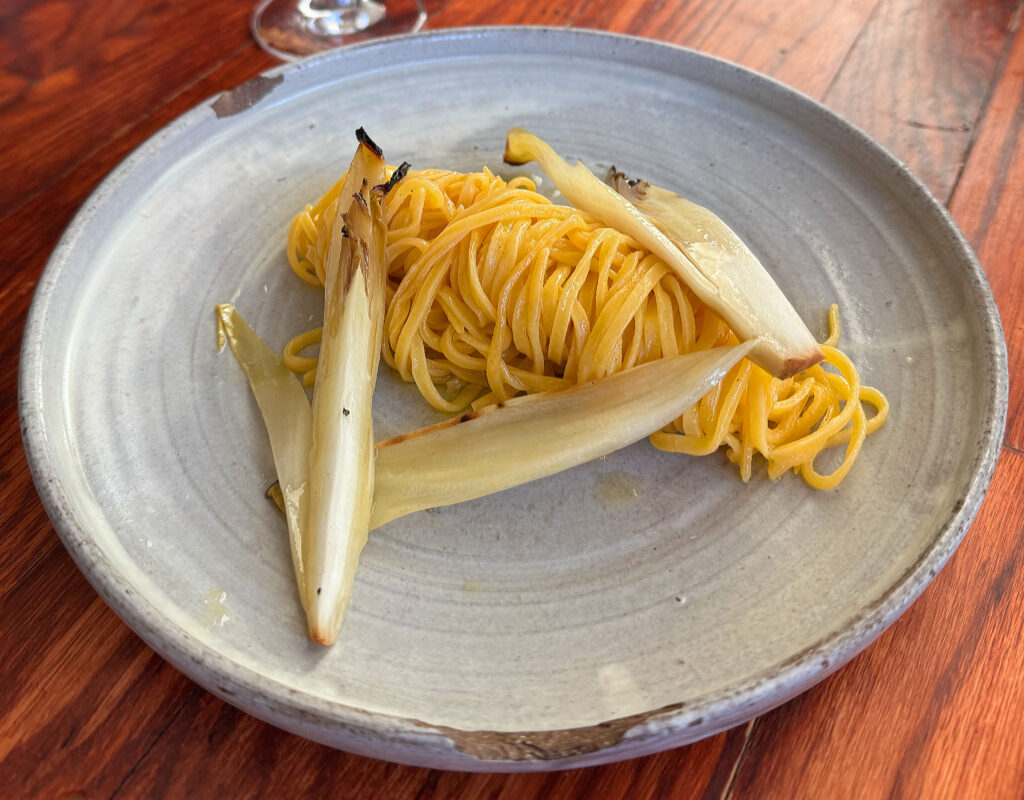
The “Spaghetti alla Chitarra” ($24) has been a staple of my visits to the restaurant (and despite the chefs’ tendency to play around with other pastas from time to time). Tonight, the noodles are paired simply with fennel pollen and a couple pieces of witloof (i.e., “white leaf” or Belgian) endive that have been blanched in vinegar and preserve in olive oil. This method of preparation (sott’olio) cuts some of the chicory’s signature bitterness, ensuring—despite the vegetables’ hearty crunchy—the recipe’s sweeter undertones have a chance to shine. The noodles themselves, for what it’s worth, are fleetingly chewy with a remarkable butteriness. Their quality, despite the composition’s embrace of a riskier flavor profile, makes for a pasta of real sophistication.
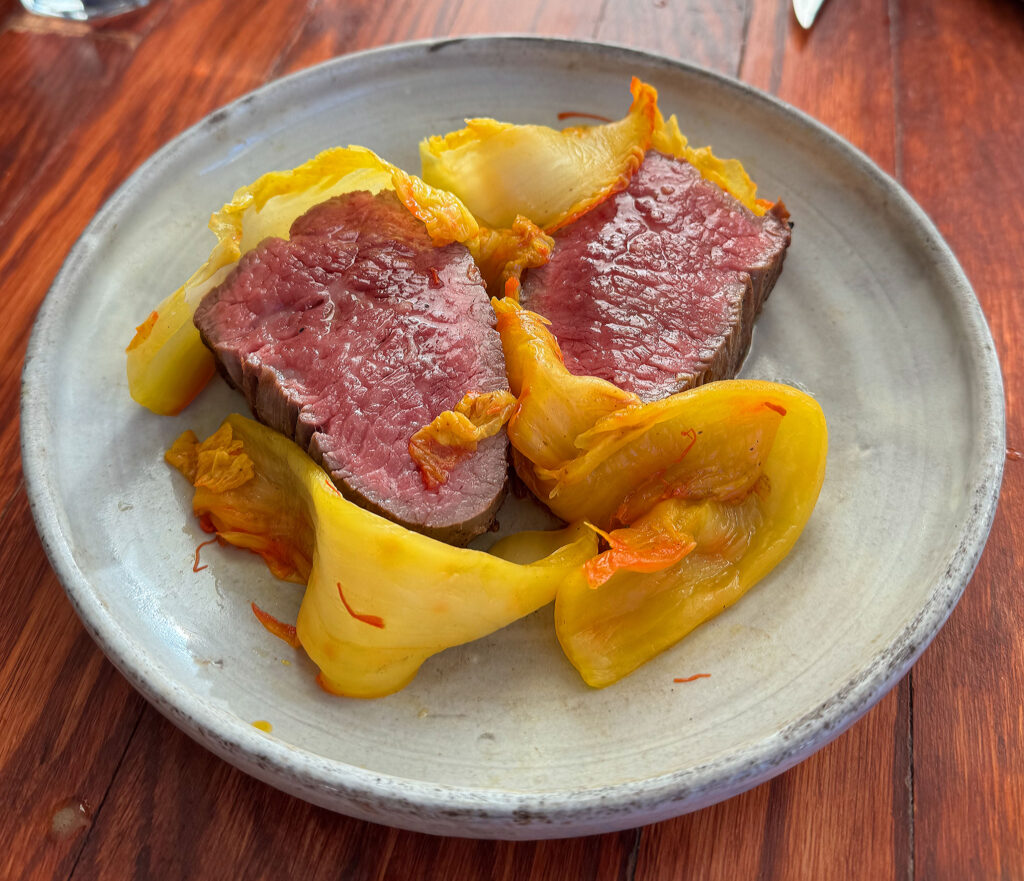
Approaching the menu’s entrées, I acknowledge that the kitchen—faced with serving up a more substantial portion of protein—can sometimes struggle. The sense of genius that proves so adept at elevating humble produce and shellfish can seem overwrought when applied to fish or meat, denying some of these ingredients’ essential pleasure. That said, the “American Wagyu Tri-Tip” ($48) I encounter tonight totally reverses this trend. It ranks among the best dishes of its kind I’ve ever encountered here, as well as the kind of steak that could take on any cut served anywhere else in town.
The manner of preparation here is decidedly simple: two thick, blushing medallions of the beef sit at the center of the plate, being dressed in a Sungold shoyu tare (a concentrated, umami-rich condiment in the style of soy sauce) and surrounded by strips of white saffron kimchi. Texturally, the wagyu (even if it’s sourced domestically) lives up to its coveted status by displaying a supreme softness and a juicy, melty finish. The fermented cabbage provides an expected contrast, yet I appreciate just how clean its crunch is. The resulting flavor is mildly sour, and it does well to emphasize the robust vein of salt (marked with a touch of tomato sweetness) that amply seasons the meat. Overall, this steak is memorably satisfying, and it achieves its pleasure while still honoring techniques and influences that are emblematic of CDP.
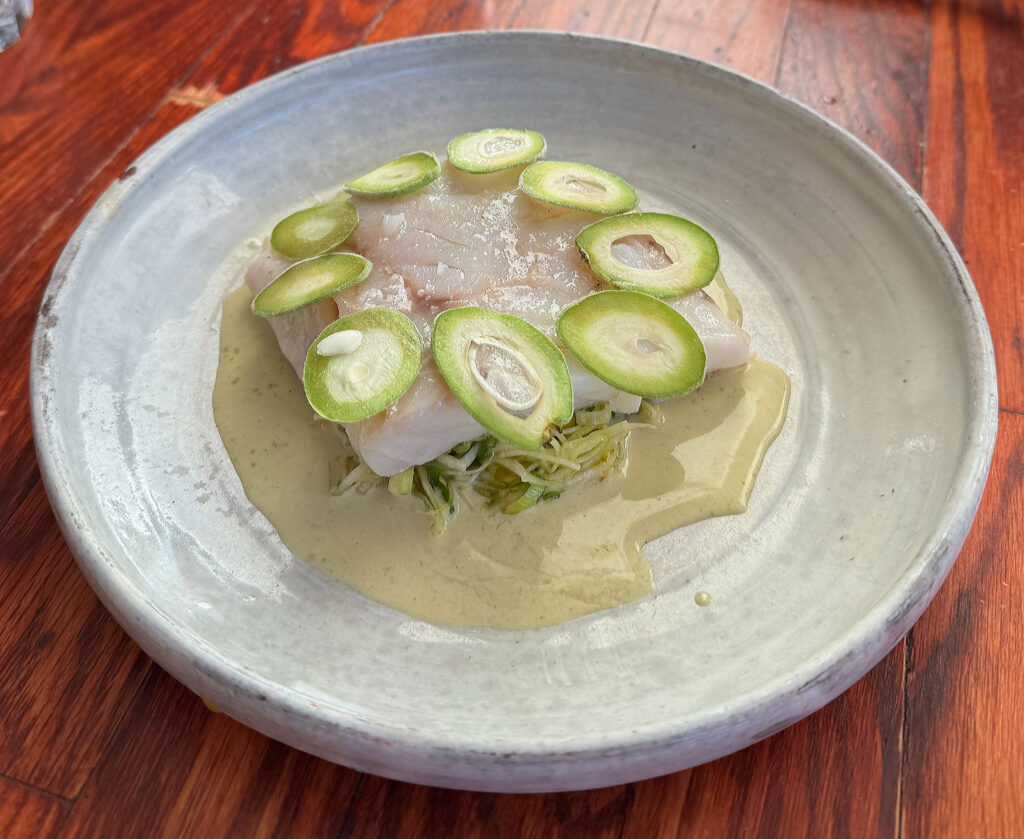
The “Wild Atlantic Pollack” ($42)—which, indeed, comes listed after the tri-tip—looks to conjure the same kind of effect. The chefs present the fish’s pristine fillet with a crown of green almonds and set it atop a chiffonade of Lancelot leeks. A base layer of bay leaf butter forms the principal flavoring element: one whose concentration of woody, peppery, and piney notes come to dominate the dish. Indeed, while the interplay between the remarkably soft pollack, the subtly crisp, grassy green almonds, and the crunchy, bitter leek “slaw” feels well conceived, the butter whispers rather than driving everything home.
With further mouthfuls, I actually come to enjoy the recipe a bit more. The bay leaf, so long and layered in its expression, actually builds toward a small degree of sweetness. Nonetheless, it predominantly plays in a realm of intense herbaceousness that seems to counteract savory pleasure. Thus, I’m left feeling that this preparation is more interesting and challenging than it is truly satisfying, but, in the context of a largely successful meal, I also do not mind trying it.
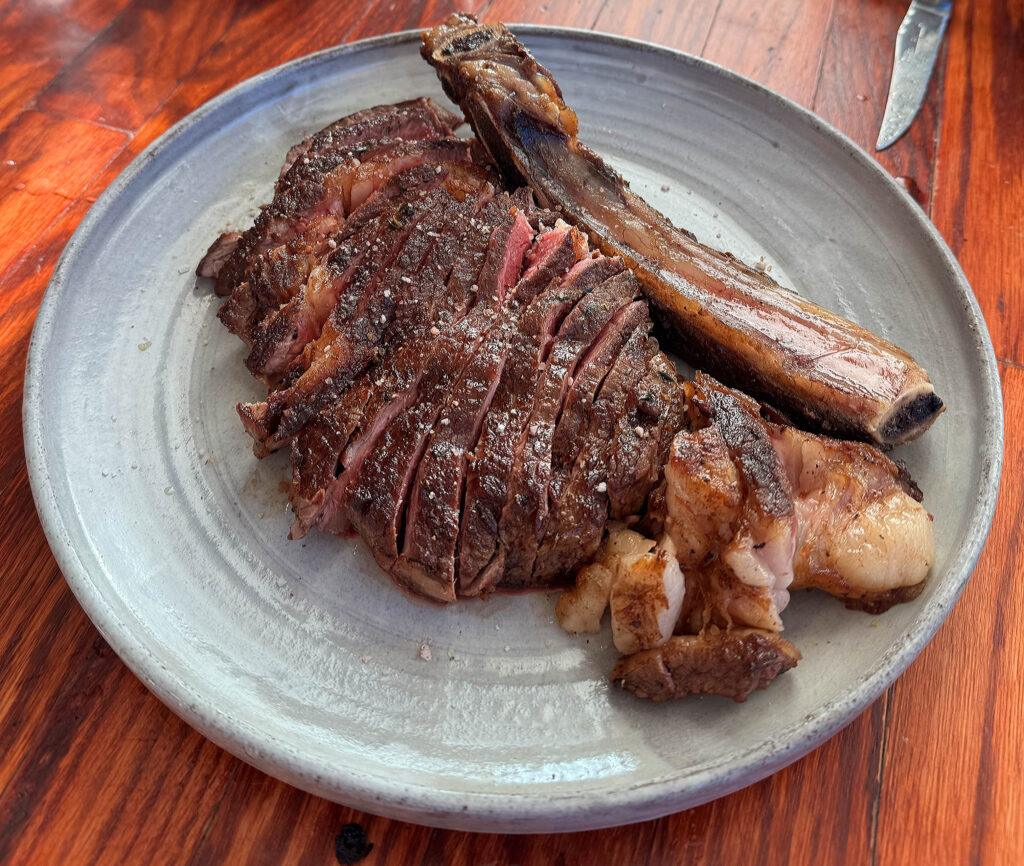
Closing out the savory side of the menu, we have a “21 Day Day-Aged Ribeye” ($86) that stands among the most sizable and expensive entrées I have ever encountered here. Yes, while the burger always stands ready to soothe diners who do not find what they are looking for, this sizable slab of beef takes things one step further than the tri-tip—toward competition with Chicago’s actual steakhouses (or, at least, with popular eateries that are far less prone to experimentation).
Visually, I like what I find: more than a dozen slices of meat (fat and bone deposited to one side) cooked just above medium-rare then slathered with aïgo boulido (a Provençal soup rendered here as something like an herbed garlic butter) and sprinkled with a salt made from Jimmy Red corn koji. These singular accompaniments ensure that each bite of the ribeye tastes beautifully buttery and appropriately salted (with undertones of sweetness, nuttiness, and earth) all the way through. Nonetheless, while the flesh is juicy, I am faced with a touch too much chew to really (relative to other steaks served at other restaurants) be impressed. Still, the preparation remains mildly successful, and I enjoy seeing the chefs explore this avenue.
For everything that’s sometimes challenging about CDP’s cooking, dessert is a realm in which the kitchen just doesn’t miss. In fact, their output routinely ranks among the most satisfying of any concept in the city.
Tonight, I find:
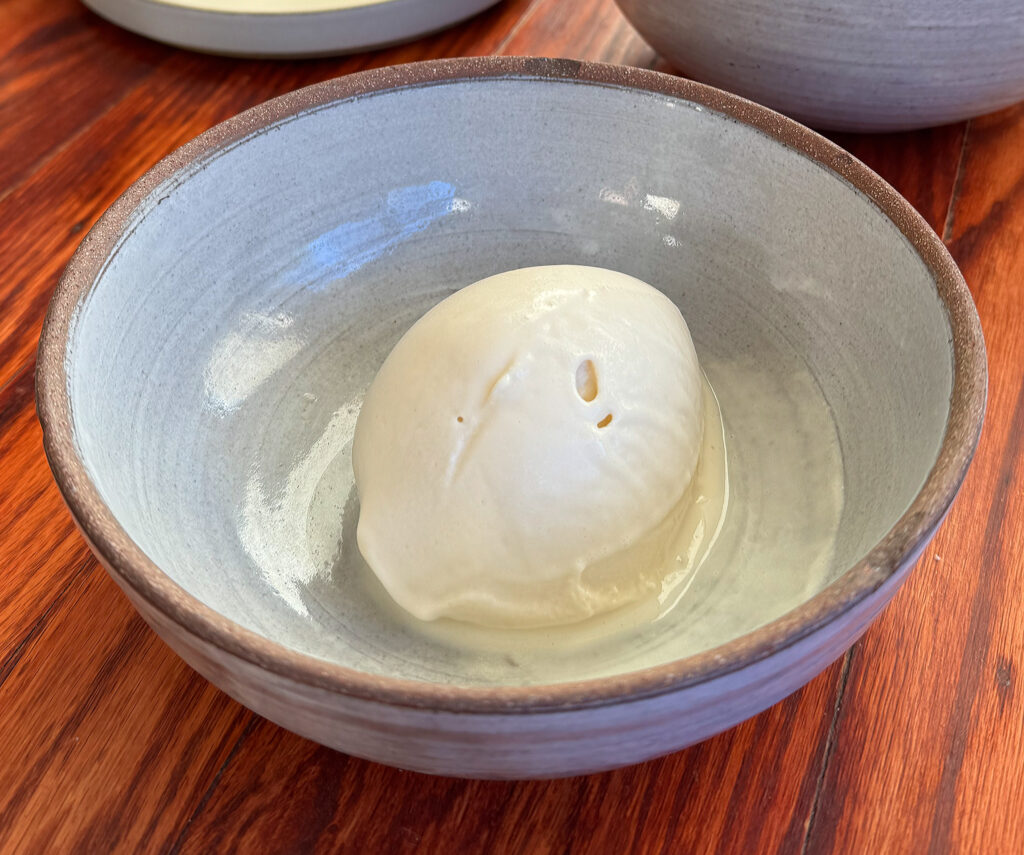
The “Wildflower Honey & Verjus Blanc Ice Cream” ($10)—a scoop of superlative creaminess whose fruitier, tangier tones do not detract from a core flavor that freshly milky and soothingly sweet. It’s hard to think of a better example of this form (no less one that arrives completely unadorned).
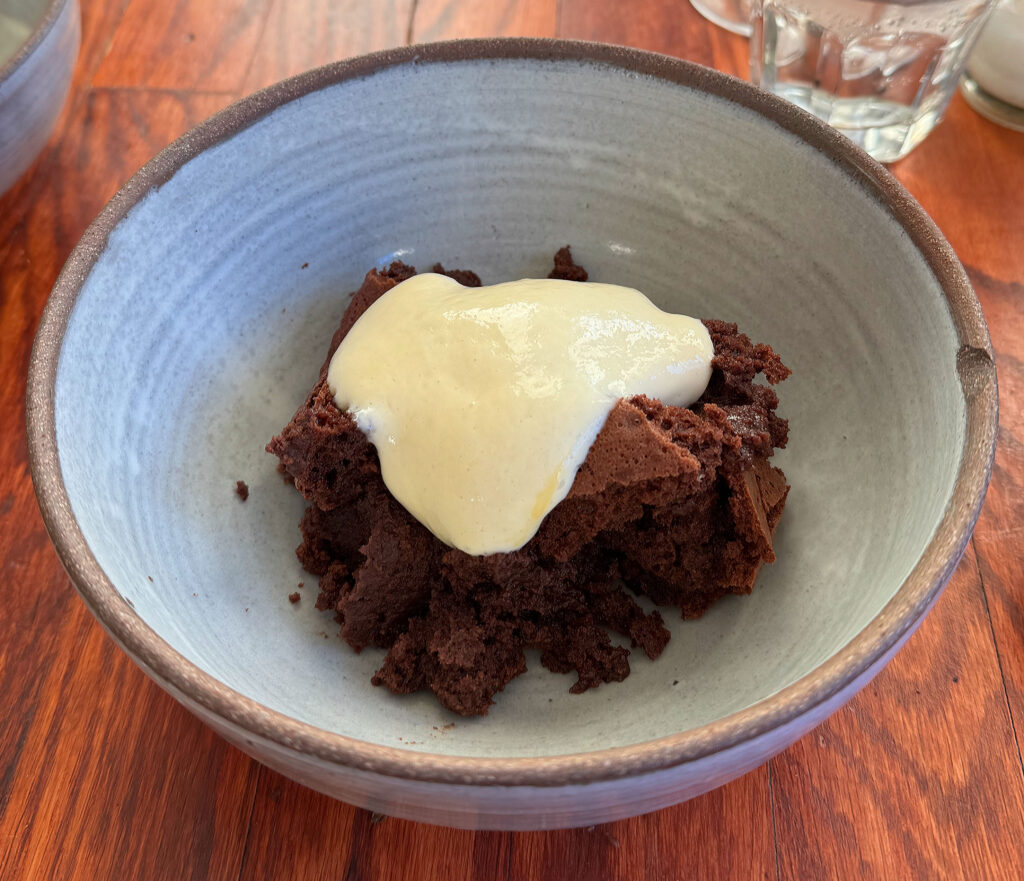
The “Chocolate Cake” ($12) has formed a familiar (if ever-changing) option, and the present rendition—flavored with Irish cream liqueur and a brandied cherry sabayon—might just represent a new peak for the recipe. Texturally, the starring element blends a faintly crisp crust with lovely moistness throughout the crumb. Flavor, despite the caramel notes of whiskey and the bright, spiced character of the fruit, draws on these accompaniments (free of errant booziness) to emphasize the depth and pleasure of the cocoa. This sense of restraint (and the desire to wholly embrace the chocolate’s decadence) is phenomenal.
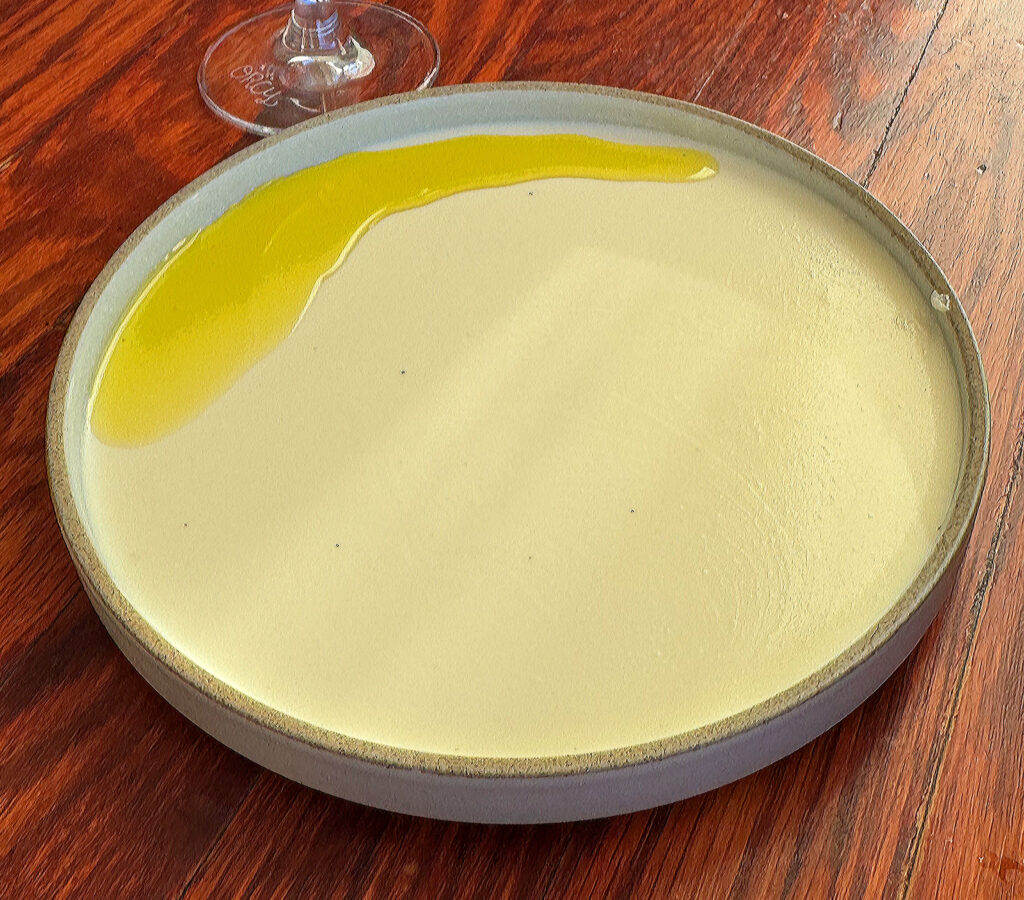
Finally, there’s the “Panna Cotta & Hojiblanca Olive Oil” ($10)—a dish I know well at this point but whose capacity to delight remains (if the moans of my dining companions are anything to go by) ironclad. Relative to my past encounters, this example maintains top form: blending a seamless, creamy consistency with a concentration of sweet vanilla flavor (further intensified by notes of fruit and bitterness) that is truly profound.
The meal—spanning 90 minutes, 18 dishes, and three bottles of wine—now reaches its conclusion: having maintained a friendly, flowing pace (worthy of that 3% service fee) even as the dining room filled.
One does get the sense (on this, the restaurant’s busiest night), that the team is conscientious about readying the table for their next party. Some might chafe at the sight of the dessert menu or check before the appointed moment. But I sense the warmth and respect (maximizing my party’s time, ensuring the next groups gets off to the right start) that underlies the server’s anticipation. And, though I must always acknowledge I came to CDP at a later point in its lifetime, I do have some sense of how fragile, how worthy of protection its work is.
Plus, when the food comes hot and fast, hits and the occasional miss tend to blend together (think peak–end rule), shaping an experience that is challenging, rewarding, and impossible to grow tired of.
In ranking the evening’s dishes:
I would place the “Chocolate Cake” and “Panna Cotta & Hojiblanca Olive Oil” in the highest category: superlative items that stand among the best things I will be served in any restaurant this year.
The ”Whole Roasted White Phantom Onions,” “Cherry Belle Radish & Black Emmer Pan de Mie,” “Smoked Wild Sardine,” “American Wagyu Tri-Tip,” and “Wildflower Honey & Verjus Blanc Ice Cream” land in the following stratum: great recipes that achieved a truly memorable degree of pleasure. I would love to encounter any of these again.
Next come the “Rye Country Bread & Kefir Cultured Butter” (with its four accoutrements), “Salade Verte,” “Over Wintered Beets,” “Poached White Asparagus,” “Spaghetti alla Chitarra,” and “21 Day Day-Aged Ribeye”—good—even very good—preparations I would always be happy to sample again (but that just failed to elicit an extra degree of emotion).
Finally, there’s the “Wild Atlantic Pollack”—a merely good (or maybe just intriguing) item that fell short when it came to texture and flavor. That said, the underlying ideas shaping this dish were sound, and it could easily be improved with a little more fine-tuning.
Overall, this makes for a hit-rate of 93% with a full 50% of items landing in that “would love to have again” category: a slight improvement on the already impressive figures (88% and 50% respectively) I reported in January. When one considers that I skipped the burger tonight, it’s not hard to imagine that these percentages might’ve been even higher.
In the final analysis, it’s always tempting to categorize Cellar Door Provisions as a more value-driven gateway toward starred concepts like Elske, Feld, and Smyth: restaurants whose philosophies meaningfully differ but whom are united, I think, by a shared degree of risk-taking that embraces a broader palette of textures and flavors than one finds at their straightforwardly hedonistic peers.
However, with each visit and cycling through of these kindred menus, I find that Pikas and Cochran have carved out a niche that is every bit worthy of direct comparison. Take away the frills of service (and beverage programs that, in their scope, are better equipped to please natural wine skeptics), and one comes to understand that CDP is channeling the same caliber of sourcing and technique toward full plates, individually sold, that might even carry higher expectations.
Of course, if one orders the whole menu, they are granted an overarching experience that (as I just stated) can roughly compare to the immersive effect of a tasting menu. Yet many customers are only getting a glimpse of the chefs’ vision. They’re rolling the dice (with the help of the servers’ suggestions), and it takes real fortitude to present a dish like the “Phantom Onions,” “Pan de Mie,” “Smoked Wild Sardine,” or “Wild Atlantic Pollack” and let the chips fall.
When you’re putting out portion sizes that are much larger than fine dining, there’s understandably less room for error. Bites cannot be designed with the same granularity, and a bad bite or two still leaves a plate’s worth to struggle with. When something’s good, you’ll—correspondingly—really get to revel in it.
But what I find most interesting are those recipes that land somewhere in between. The kind in which the kitchen’s stranger flavor combinations (I think of the greener, bitter dimension they frequently favor) only begin to offer pleasure when you reach those last few mouthfuls.
Having dined as part of a group of four tonight (a rarity), I often felt that a one or two bite margin—frequently a portion someone else elected not to finish—transformed my appreciation of a dish. Given that parties can double up on orders when necessary, it’s worth thinking through just how fully one needs to savor each of the plate’s elements (as well as how they combine and change over time) in order to really perceive what Pikas and Cochran are going for.
Ultimately, I still feel like I am only scratching the surface of what Cellar Door Provisions is capable of: the depth of pleasure that can only be perceived with further acclimation to the chefs’ way of cooking and the kind of ebullient experimentation they reserve for the restaurant’s weekday service.
My window into what goes on at the concept remains small, but I savor every moment I get to spend here. For I am forever reminded there is no greater virtue in craft than being capable of a safe kind of excellence (though I would hardly call the burger or panna cotta “safe”) and still deciding to push outside your—and the audience’s—comfort zone.
I cannot wait to taste what comes next.